
How to Grow Cosmos from Seed

Cosmos are the kind of flowers that make you feel like a gardening genius. You sprinkle a few seeds, give them a little sun, and suddenly you have airy ferny foliage and blooms that bob like confetti in a breeze. They are also wonderfully forgiving, which is my favorite trait in a plant and in people.
Below you will find two simple paths: direct-sow right in the garden, or start indoors for earlier blooms. Either way, cosmos reward you most when you do a little less. Less fussing, less fertilizer, and less overwatering.

Cosmos basics
- Type: Typically grown as an annual from seed (often treated as an annual in most climates)
- Sun: Full sun is best for strong stems and abundant blooms
- Height: Dwarf varieties 12 to 24 inches; tall varieties 3 to 6 feet
- Bloom time: Typically 70 to 90 days from seed, depending on variety and conditions
- Soil: Average to lean, well-draining soil
- Water: Moderate while establishing, then fairly drought tolerant
One key truth: cosmos flower best when they are not pampered. When soil is too rich or you add lots of nitrogen fertilizer, the plant often pours its energy into lush foliage instead of blooms.
Choosing a cosmos type
Most gardens grow one of two main cosmos “personalities.” Both are easy, but they shine in slightly different conditions.
- Cosmos bipinnatus: the classic, airy, cottage-garden look with pinks and whites. Great for cutting, often taller, and very willing to self-seed.
- Cosmos sulphureus: the sunny yellow, orange, and red “sulphur cosmos.” It tends to be more heat-loving and can be a little tougher in hot summers.
If you are not sure which to choose, start with C. bipinnatus for that floaty bouquet look, and add a patch of sulphur cosmos if your summers run hot and bright.
When to plant cosmos seeds
Soil temperature target
Cosmos germinate best when soil is consistently warm. Aim for soil temperatures around 60 to 70°F. Think of 60°F as the practical minimum, and closer to 70°F as the “we are in a hurry” setting. In cold, wet soil, growth is slower and seeds are more prone to rotting.
Direct-sow timeline
Direct-sow outdoors: after your last frost date, once the soil has warmed and spring rains are not keeping the bed soggy.
- Cool spring climate: 1 to 3 weeks after last frost is often ideal
- Mild spring climate: as soon as nights stay reliably above freezing and soil warms
Indoor-start timeline
Start seeds indoors: 4 to 6 weeks before your last frost date. This gives you earlier blooms and a head start on weeds, especially if your spring is short.
If you start too early indoors, cosmos can get lanky and root-bound. They are happiest with a short, efficient indoor childhood.
Direct-sowing cosmos step by step
Direct-sowing is my favorite method for cosmos because the plants grow sturdier when they start where they will live.
1) Pick a sunny spot with decent drainage
If your soil is heavy clay, loosen the top 6 to 8 inches and mix in compost. Keep it modest. A little compost improves structure, but you do not need a rich, fluffy bed the way you might for tomatoes.
2) Rake smooth and water lightly
You want evenly moist soil, not muddy soil.
3) Sow seeds
- Plant seeds about 1/8 to 1/4 inch deep and gently cover with soil
- Or press them into the surface and dust with a thin layer of soil (barely covered is perfect)
Cosmos seeds are slim and easy to handle. If they land a little unevenly, do not worry. Nature is not a measuring tape.
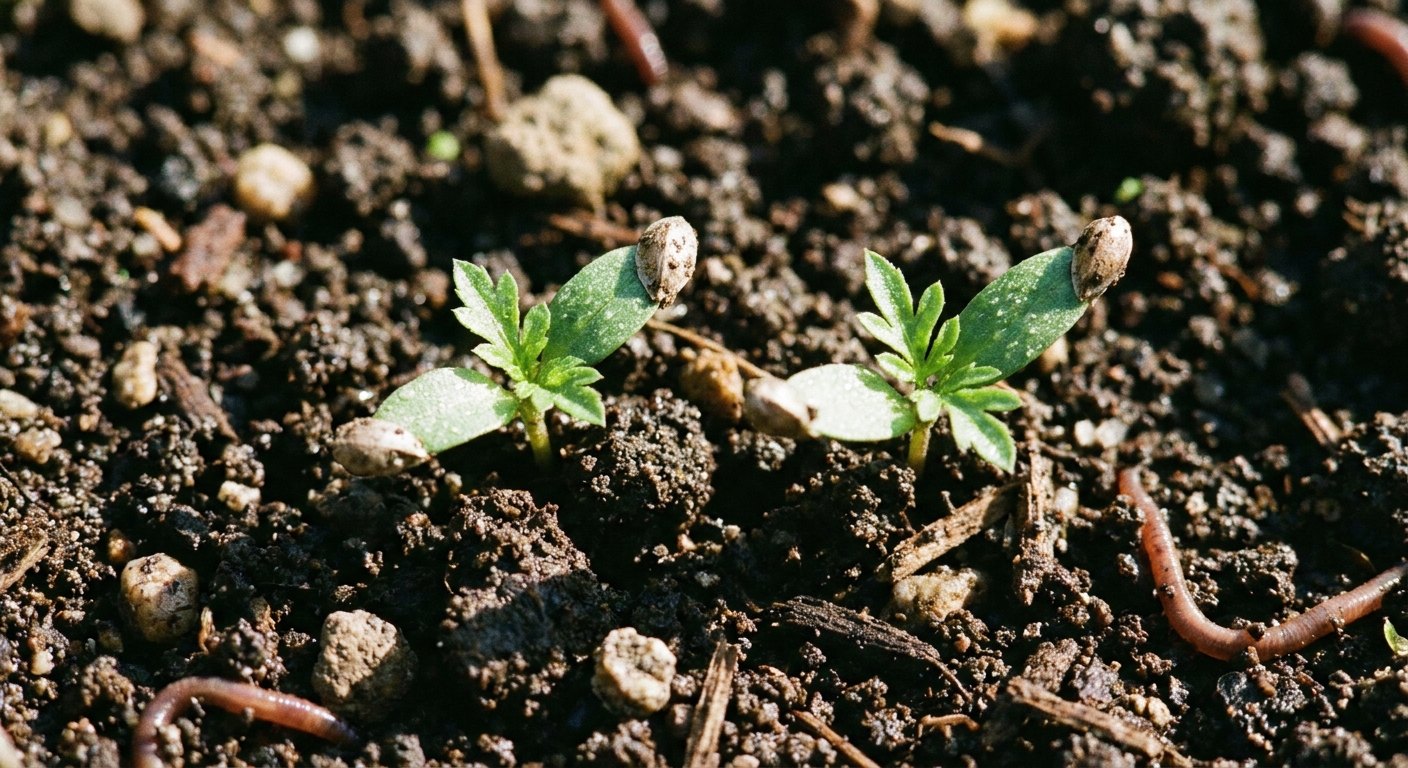
4) Keep the bed lightly moist until germination
Seeds typically sprout in 7 to 14 days (often closer to 5 to 7 in warm soil). Once you see seedlings, ease off frequent watering and let roots go searching.
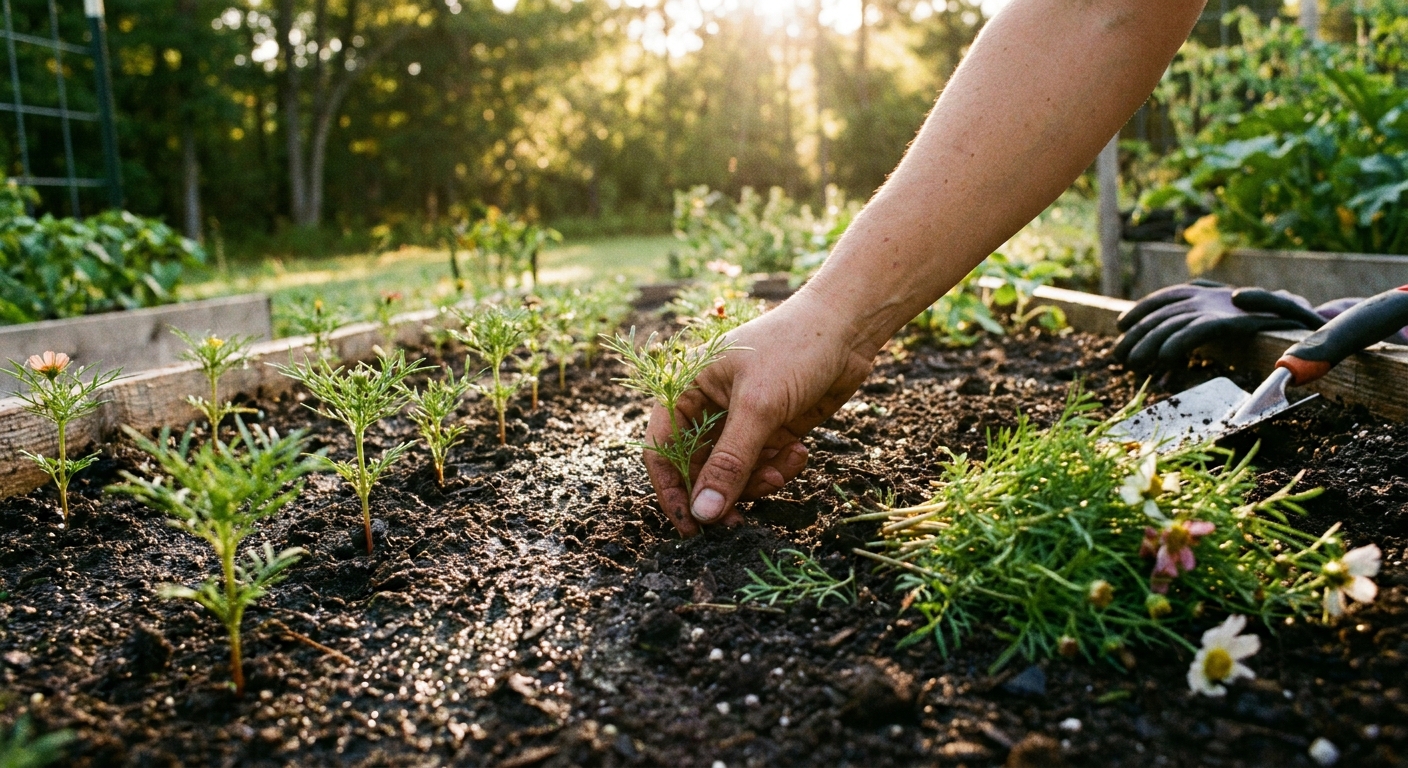
5) Thin for airflow
This is where cosmos go from “cute” to “wow.” Good spacing improves airflow, reduces mildew risk, and helps stems grow strong.
- Dwarf cosmos: thin to 8 to 12 inches apart
- Tall cosmos: thin to 12 to 18 inches apart
- Very tall or extra-branchy varieties: consider 18 to 24 inches, especially in wind or humidity
- For extra airflow in humid areas: lean toward the wider end of the range
Starting cosmos indoors step by step
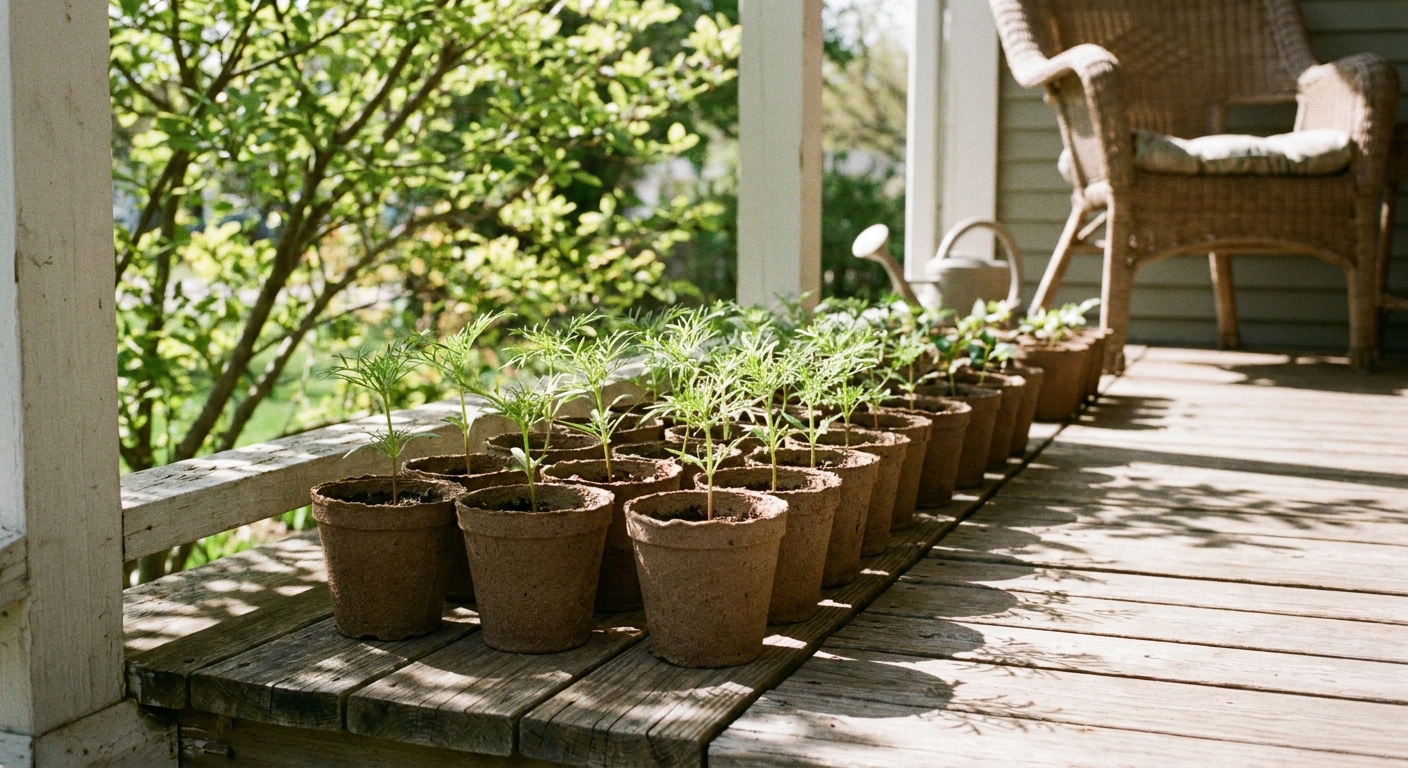
Indoor starting is great if you want earlier flowers, you garden in a windy spot where tiny seedlings struggle, or you simply enjoy the cozy ritual of seed trays on a windowsill.
1) Use a sterile seed-starting mix
A light seed mix drains well and helps prevent damping off. Avoid heavy garden soil in pots.
2) Sow shallowly
- Plant 1 to 2 seeds per cell
- Cover with 1/8 to 1/4 inch of mix
- Keep at 65 to 75°F for quick germination
3) Give strong light
Once they sprout, cosmos need bright light to avoid stretching. A sunny window can work, but a grow light placed close above the seedlings works even better. Also, avoid the classic trap of warm indoor air plus weak light (hello, lanky seedlings). If your windowsill is toasty and dim, add a light or move them cooler.
4) Pot up only if needed
If seedlings outgrow their cells before transplant time, move them to a slightly larger pot. Try not to let them sit cramped for long.
5) Harden off and transplant
About a week before planting out, gradually introduce seedlings to outdoor conditions. Transplant after your last frost date, spacing them just like direct-sown plants.
Spacing and airflow
Cosmos look delicate, but overcrowding makes them sulk. Tight spacing can lead to weak, floppy stems and more disease pressure.
- Aim for open, breezy plants: you should be able to see some light through the foliage
- Water at the base: keeping leaves dry helps prevent powdery mildew
- Weed early: once cosmos bush out, they shade the soil nicely, but seedlings hate competition
Pinching tall varieties
If you grow tall cosmos and want more stems, more flowers, and a sturdier shape, pinching is your secret handshake.
When to pinch
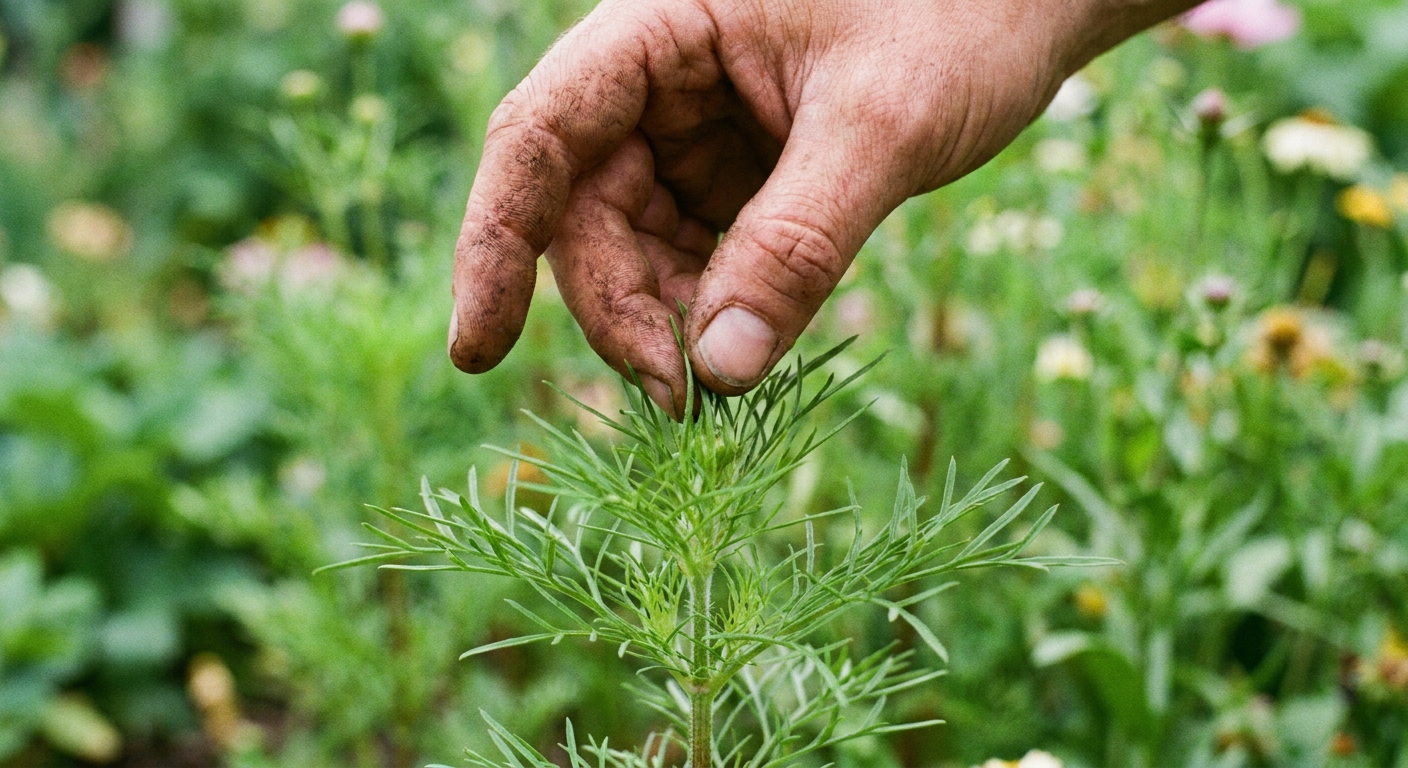
When plants are about 8 to 12 inches tall and have several sets of true leaves.
How to pinch
Use clean fingers or snips and remove the top growing tip just above a set of leaves. The plant will branch, giving you more flowering stems.
If you are growing cosmos for cutting, pinching is especially worth it. More branches means more bouquets.
Deadheading for longer bloom
Cosmos are generous bloomers, but they bloom even longer when you stay on top of fading flowers.
How to deadhead
- Snip spent blooms back to the next set of leaves or a side bud
- Do this a few times per week during peak summer
If you miss a week and seed heads start forming, do not panic. Just cut them off and the plant usually gets right back to business.
Bonus: Cutting cosmos for bouquets is basically deadheading with a vase involved.
Staking in wind
In calm weather, cosmos can often stand on their own, especially if they were spaced well and not overfed. But in real-life gardens with gusts and thunderstorms, tall varieties may need support.
Easy staking options
- Single stakes: place a stake early and loosely tie stems as they grow
- Ring supports: good for creating a tidy clump
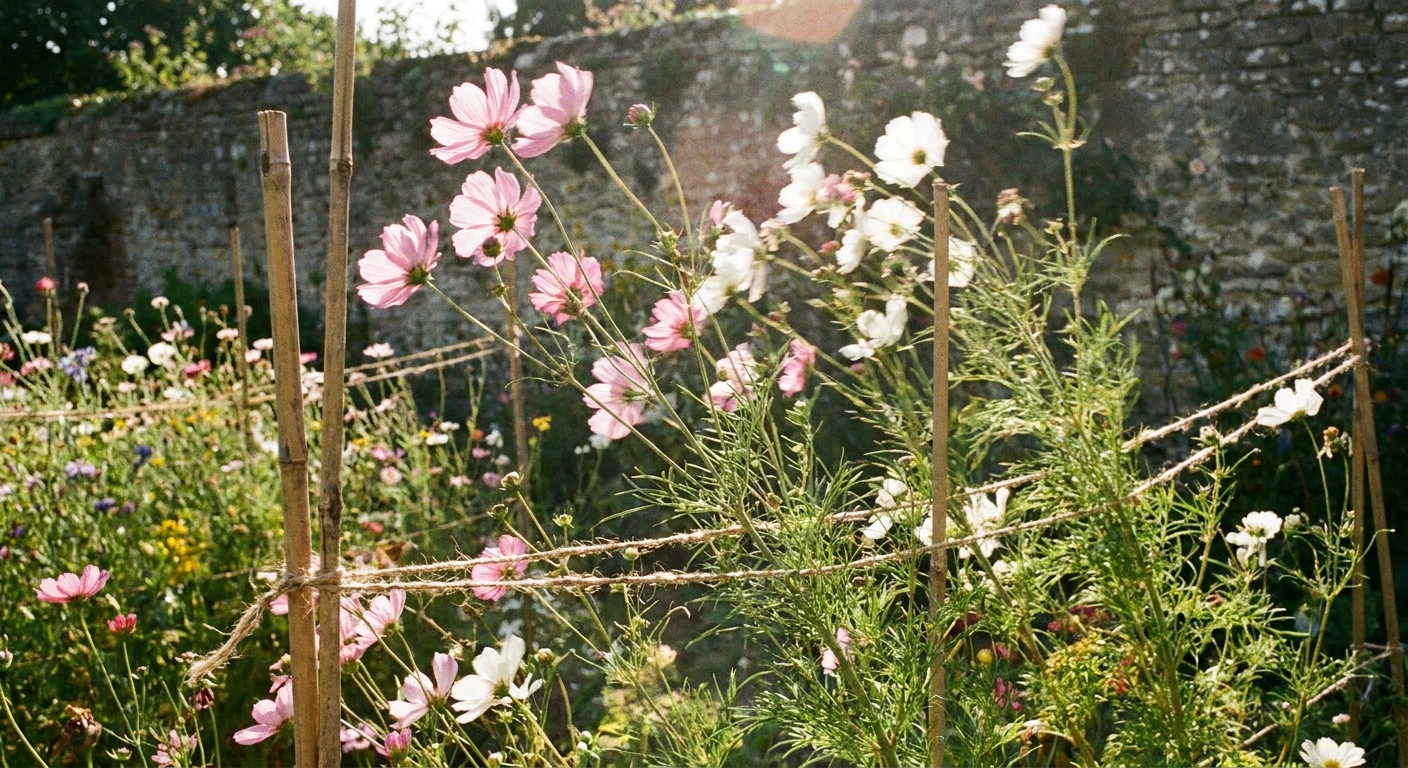
- Corralling method: drive 3 to 4 stakes around a patch and run soft twine around the perimeter in a few tiers
Stake early if you can. Adding stakes after the plant flops always feels like trying to put socks on a toddler.
Watering
Once established, cosmos are impressively drought tolerant. That said, seedlings and new transplants need consistent moisture while roots are getting settled.
- First 2 to 3 weeks: water when the top inch of soil dries out
- Established plants: water deeply during prolonged dry spells, especially in containers
The goal is not to “stress” your plants on purpose. It is simply to avoid consistently wet soil and frequent shallow watering, which tend to produce softer growth and fewer blooms.
Fertilizer
If you remember one cosmos rule, make it this: avoid high-nitrogen fertilizer. Nitrogen pushes leafy growth, and cosmos are already excellent at making foliage. Too much fertility often means huge plants with very few flowers.
What to do instead
- If your soil is average, you likely need no fertilizer
- If your soil is very sandy or exhausted, mix in a small amount of compost at planting
- If plants look pale and stalled, use a light application of a balanced organic fertilizer, then stop
Cosmos are at their best in “pretty good” soil, not “buffet dinner” soil.
Cosmos in containers
Cosmos can be genuinely lovely in pots, especially dwarf varieties. The main difference is that containers dry out faster and tall types can turn into sails.
- Pot size: aim for at least 10 to 12 inches wide for dwarf types; go larger for tall varieties
- Soil: use a well-draining potting mix and do not over-fertilize
- Water: check more often in heat and wind, and water deeply when the top inch dries
- Support: stake tall cosmos early, or choose compact cultivars for less drama
Pests and other visitors
Cosmos are mostly unbothered, but a few common garden characters may stop by.
- Aphids: blast off with a firm spray of water, or use insecticidal soap if they keep returning
- Thrips: can cause streaking or distorted petals; remove badly affected blooms and consider insecticidal soap
- Caterpillars: hand-pick if you see chewing, especially on young plants
On the bright side, cosmos also attract pollinators, and that is the kind of garden traffic I will always make room for.
Quick troubleshooting
Lots of leaves, no flowers
- Too much nitrogen or overly rich soil
- Not enough sun
Skip feeding, ensure full sun, and consider pinching to encourage branching and bud formation.
Flopping over
- Plants spaced too tightly
- Too much fertilizer or too much shade leading to weak stems
- Wind exposure without support
Thin for airflow, stop fertilizing, and stake tall varieties early.
Powdery mildew
- Common in humid weather with crowded plants
Space wider, water at the base, and remove badly affected leaves to improve airflow.
Self-seeding or not
Cosmos love to drop a few seeds and return like they never left. If you want volunteers next year, let a handful of blooms mature into dry seed heads at the end of the season.
- Want self-seeding: stop deadheading in late summer or early fall and let some seed heads dry
- Want a tidier reset: keep deadheading and pull plants before seeds fully mature
Either choice is valid. This is your garden. You get to decide whether it runs like a library or like a friendly backyard party.
Timelines at a glance
Direct-sow outdoors
- When: after last frost, once soil is about 60 to 70°F
- Germination: 7 to 14 days (faster in warm soil)
- Thin to: 8 to 12 inches (dwarf), 12 to 18 inches (tall), or up to 24 inches for very tall types
- First blooms: roughly 70 to 90 days from sowing
Start indoors
- When: 4 to 6 weeks before last frost
- Transplant: after last frost, once hardened off
- First blooms: earlier than direct-sown, often by a couple of weeks
A final nudge
If you are nervous about growing flowers from seed, cosmos are your friendly gateway plant. Sow a few now, save a few for a second sowing 3 to 4 weeks later, and you will stretch your bloom season even longer. And if some seeds fail, that is not a verdict on your gardening skills. It is just gardening doing what gardening does.