How to Grow Corn at Home

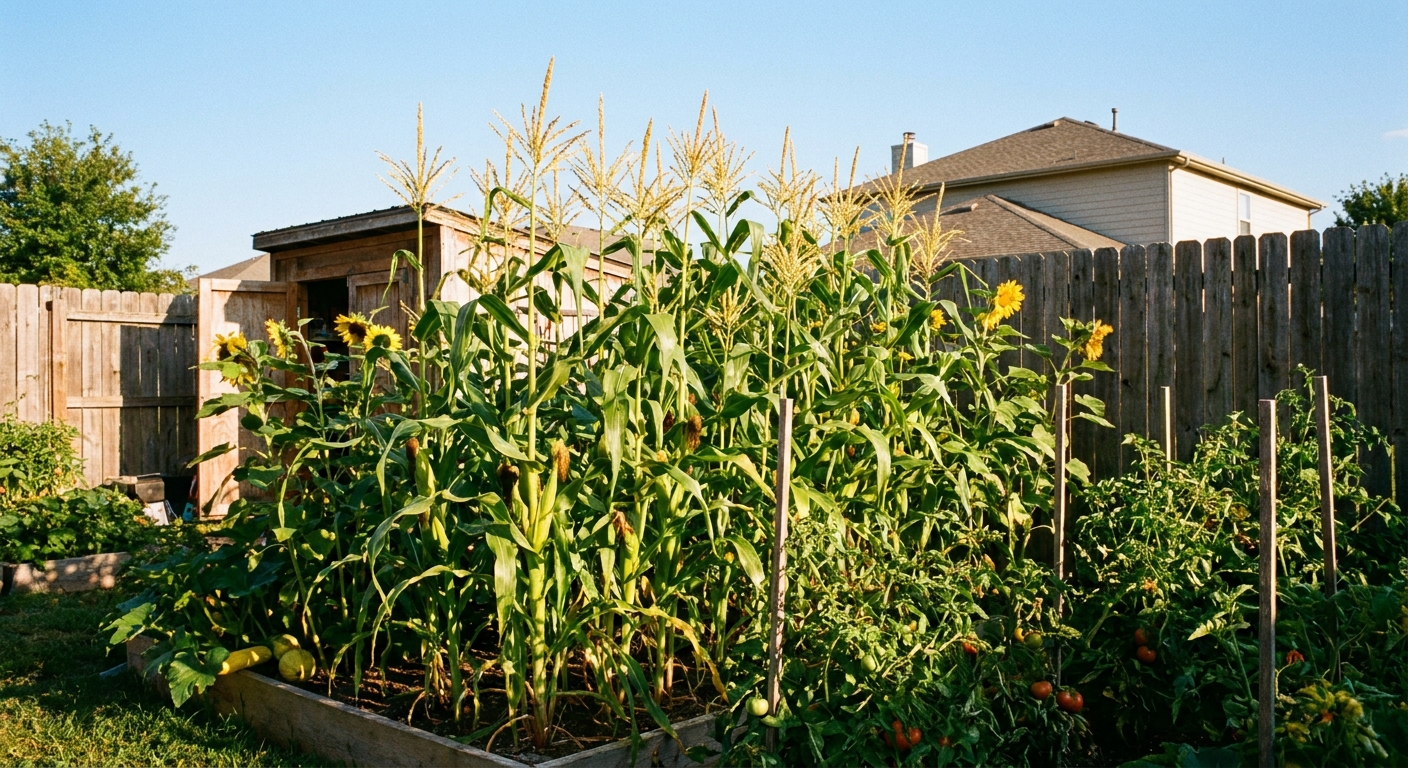
Homegrown sweet corn is one of those garden joys that feels like a small miracle. One minute you are staring at skinny grass-like seedlings, and a few warm weeks later you are standing in a leafy green maze with tassels shaking in the breeze. The secret is not fancy gear. It is timing, warmth, and planting in a way that helps corn do what it does best: pollinate itself.
If you have ever grown corn that made beautiful stalks but disappointing ears, you did not “mess up.” You probably just needed tighter block planting, steadier watering through silking, or a little midseason feeding. Let’s fix all of that.

Pick the right type of corn
For most home gardens, sweet corn is the goal. It is bred for tenderness and sugar, not for grinding into meal. When you shop seed packets, you will see a few categories:
- SU (standard sweet): classic flavor, but sugars convert to starch quickly after harvest. Eat it fast.
- SE or SE+: sweeter and stays tender longer than SU, usually very home-garden friendly.
- SH2 (supersweet): very sweet and holds sugar longer, but seeds can be fussier in cool soil and seedlings may be less vigorous.
Important: Different sweet corn types can cross-pollinate. This matters most when SH2 gets pollinated by SU or SE, which can reduce eating quality (less sweet, more starchy, tougher) in that harvest. Many mixes are less noticeable, but if you want predictable results, keep types separate.
How to isolate: Use distance (often 200 to 400 feet is suggested by extension-style guidance, but wind and barriers change the real-world outcome), or use timing so varieties tassel at different weeks. If you only have space for one patch, timing is usually the most practical option.
Block planting for pollination
Corn is wind-pollinated. Each strand of silk on an ear needs pollen to land on it to form a kernel. That is why corn planted in a single long row can look fine but fill poorly. Wind is unpredictable, but a block creates a thicker cloud of pollen right where you need it.
How to plant in blocks
- Minimum: 4 short rows side-by-side.
- Even better: a square block, like 4 x 4 or 5 x 5.
- Small space: two smaller blocks near each other is still better than one skinny row.
Think of it like a neighborhood instead of a highway. The closer the plants are in a group, the easier it is for pollen from the tassels to land on nearby silks.
Soil warmth and planting time
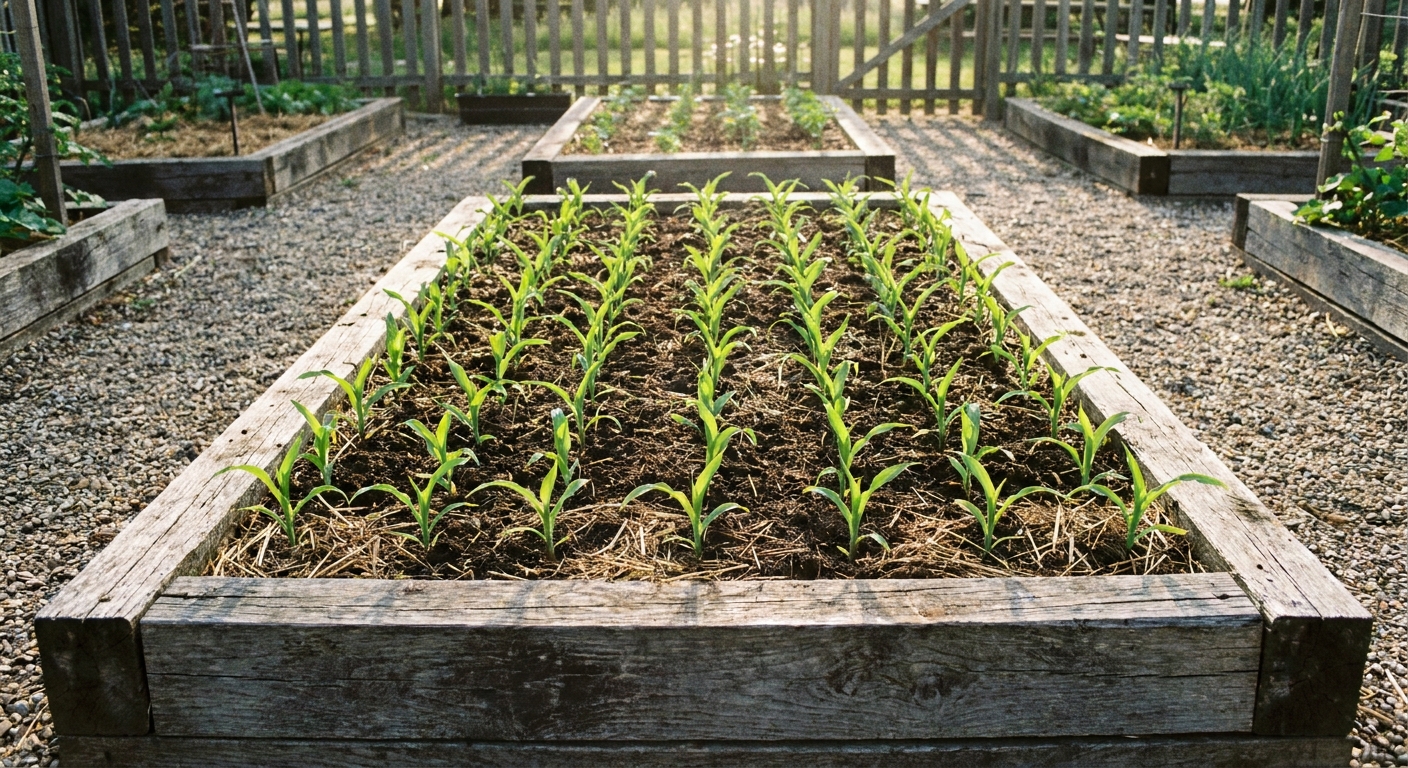
Corn wants warm feet. If you plant into chilly soil, seeds can rot or sprout slowly and unevenly.
- Minimum soil temperature: about 60°F (16°C) for most sweet corn.
- Better: 65 to 70°F (18 to 21°C) for faster, more reliable germination.
If spring is dragging its heels, warm the bed by covering it for a week or two with black plastic or a dark tarp, then remove it right before sowing. In containers, soil often warms faster, which can help in cool climates, as long as you keep up with watering.
Direct sow
Corn dislikes root disturbance. For best results, direct sow seeds where they will grow. If you must start indoors, use biodegradable pots and transplant very young seedlings carefully, but direct sowing is usually simpler and more reliable.
Sow, thin, and fill gaps
For more uniform stands, you can sow 2 seeds per spot and thin to the strongest seedling once they are up. If you have gaps, replant early while the rest are still small. Even growth helps pollination later.
Spacing for full ears
Corn needs enough light and airflow, but it also needs to be close enough for strong pollination. Here is a reliable home-garden spacing that balances both:
- Between plants: 8 to 12 inches
- Between rows: 18 to 24 inches (in a block)
- Seed depth: 1 to 1.5 inches
If your soil is rich and you water consistently, you can often use the tighter end of those ranges. If your soil is lean or you are in a hot, dry area, give more space so each stalk can access moisture.
What to expect: Many sweet corn varieties produce 1 to 2 good ears per plant. Some produce more, but size and sweetness usually win over sheer ear count.
Beds vs containers
In-ground and raised beds
A bed is ideal because corn has a dense, thirsty root system and it appreciates consistent moisture. Build fertility before planting with finished compost and a balanced organic fertilizer.
Large containers
You can grow corn in containers if you go big and you commit to watering. The biggest mistake is trying to cram a whole corn patch into a normal patio pot.
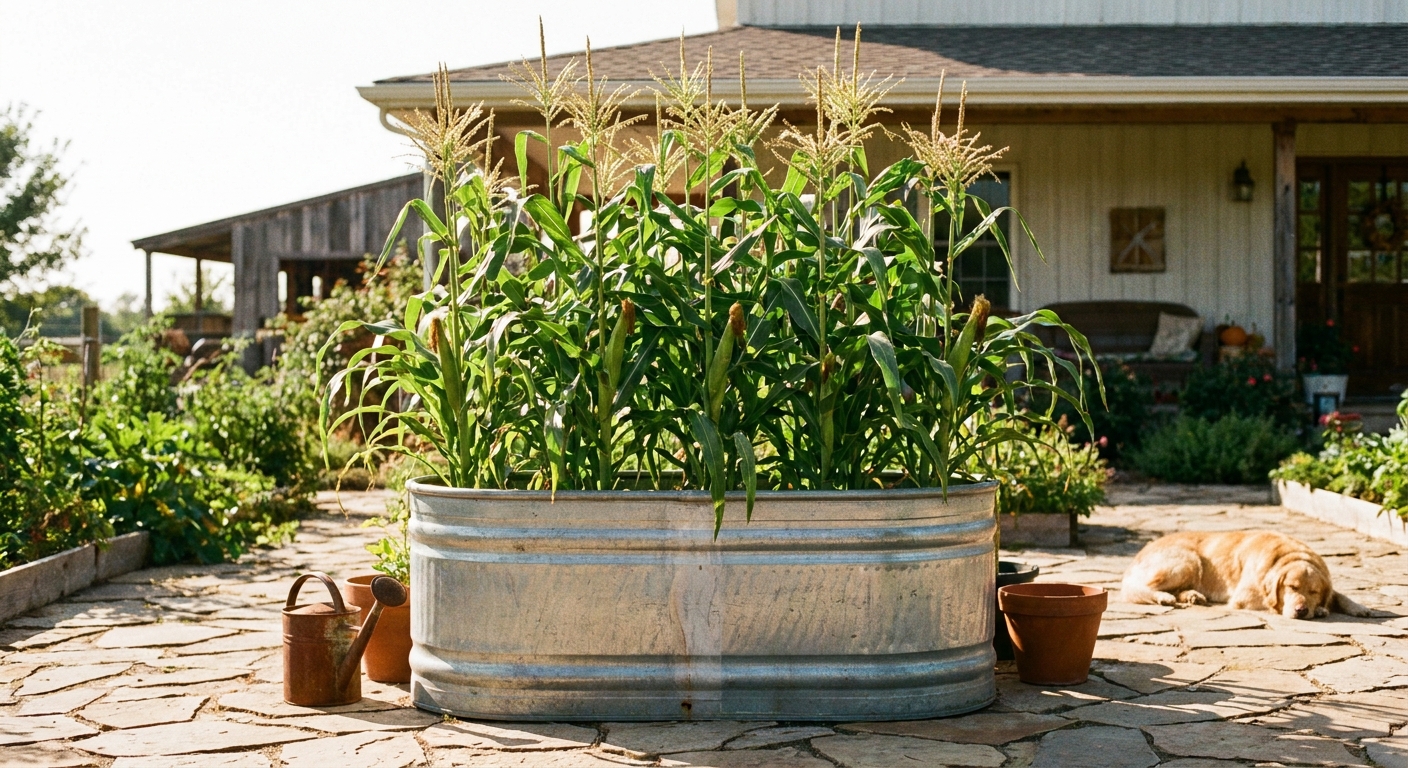
- Best container choice: a stock tank, half barrel, or raised planter that is roughly 2 x 3 feet, 2 x 4 feet, or similar.
- Plant count: in a container that size, aim for 9 to 16 plants spaced 8 to 10 inches apart in a block.
- Typical 15 to 20 gallon pot (often 18 to 20 inches across): plan on 3 to 4 plants max at that same spacing. More than that is usually overcrowding.
- Variety tip: short-season or dwarf types often perform best in containers, especially in windy or hot spots.
- Soil mix: high-quality potting mix blended with compost. Avoid heavy garden soil in pots.
- Wind: place containers where they are sheltered, or stake a few outer stalks if your site is breezy.
Succession sowing
Corn is at its best when it goes from stalk to pot quickly. Succession planting lets you harvest in waves instead of getting 40 ears all at once.
Simple succession plan
- Plant your first block when soil is warm enough.
- Plant a second block 10 to 14 days later.
- If your season is long, plant a third block another 10 to 14 days after that.
Tip: If you are trying to keep types pure, avoid having different types tassel at the same time. Staggering by two weeks often helps, but weather can compress timing. Check “days to maturity” on the packet and watch for tassels.
Watering and silking
Corn is a thirsty, fast-growing plant. If you want plump, well-filled ears, focus on consistent moisture, especially during tasseling and silking.
How much water?
A good target is about 1 to 1.5 inches of water per week from rain and irrigation combined, more in hot weather or sandy soil. Containers may need daily watering during heat.
Critical stages
- From knee-high to tasseling: steady growth needs steady moisture.
- Tasseling and silking: drought stress here can cause poor pollination and missing kernels.
- Ear fill: keep soil evenly moist until close to harvest.
Water deeply at the base, ideally in the morning. Mulch (straw, shredded leaves, untreated grass clippings in thin layers) helps keep the soil from swinging between soggy and bone-dry.
Feeding and side-dressing
Corn is a heavy feeder, especially for nitrogen. If you give it a great start and then never feed again, it will often reward you with tall stalks but smaller ears. I like a simple organic rhythm: build the soil, then side-dress at key moments.
Before planting
- Mix in compost.
- Add an organic, balanced fertilizer if your soil is not already rich.
Side-dress schedule
- When plants are 12 to 18 inches tall: side-dress with compost, worm castings, or an organic nitrogen source (like alfalfa meal or a higher-nitrogen organic blend).
- Again at tasseling (especially in containers or sandy soil): a lighter side-dress can support ear fill.
To side-dress, sprinkle fertilizer in a band a few inches from the stalks, scratch it into the soil surface, then water well. Keep fertilizer off the stem to avoid burn.
Small caution: Products like blood meal work, but they can burn if overapplied and may attract animals. Follow label rates and consider milder options if critters are a problem.
Extra help for pollination
Most of the time, wind does the job. But cool, rainy stretches during tasseling can reduce pollen shed.
Hand-pollination in a pinch
On a dry morning, gently shake stalks so pollen falls like pale dust. You can also tap tassels over a clean container and then sprinkle the pollen onto exposed silks. It feels a little quirky, but so is talking to your ferns, and I do that too.
Wind and support
Corn can get top-heavy, and its roots are not as deep as you might expect. A few simple habits help keep a patch standing:
- Avoid deep hoeing near the stalks once plants are established, so you do not nick roots.
- Hill lightly by pulling a bit of soil up around the base when plants are 12 to 18 inches tall, especially in windy sites. Do not bury the stalk, just give it a little extra brace.
- Blocks help here too. Plants support each other better in a group.
Common pests and clues
Corn is not “hard,” but it is popular with hungry visitors. The key is spotting the early signs so you can respond before your harvest becomes someone else’s dinner.
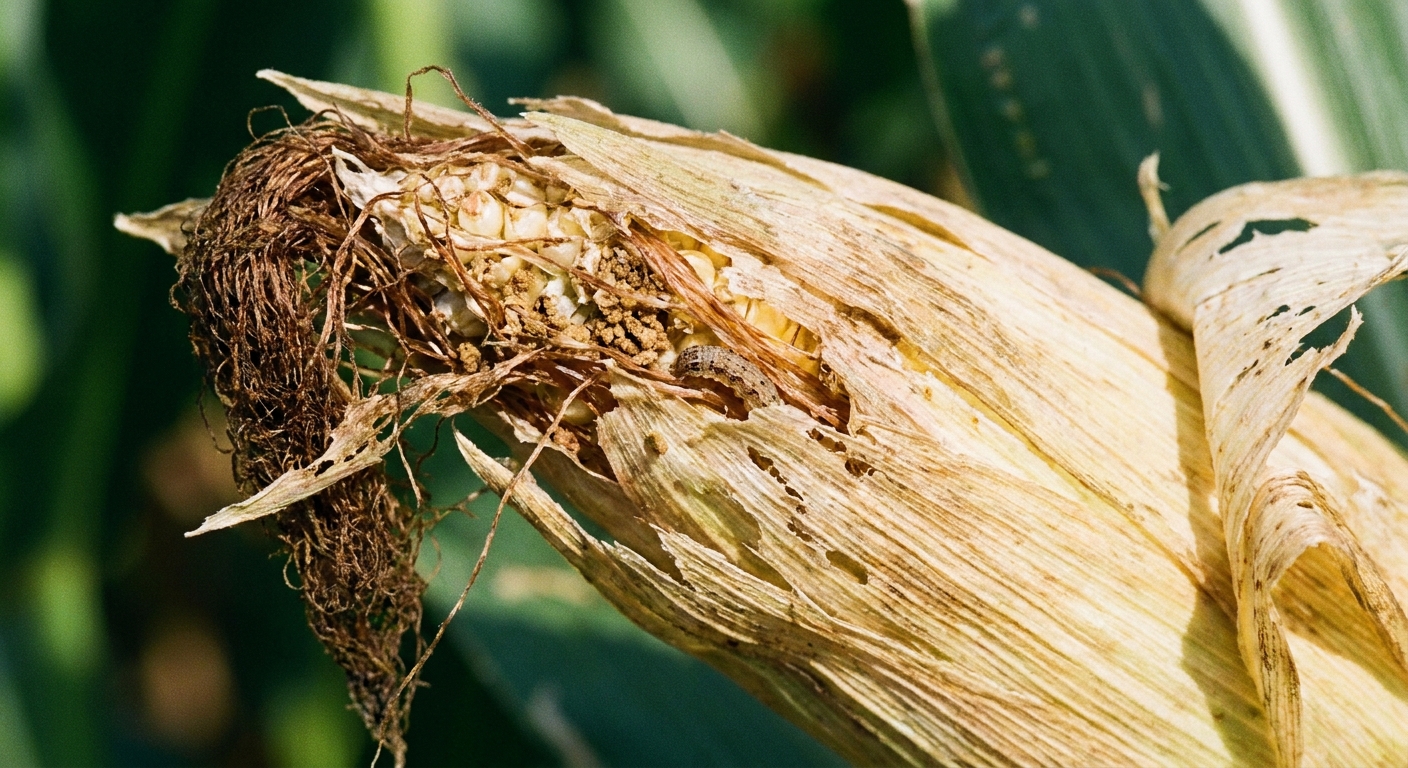
Corn earworm
Clues: Chewed or ragged silk tips, frass (tiny dark droppings) near the ear tip, and worms tucked into the top of the ear when you peel it back.
What helps:
- Harvest promptly when ears are ready.
- Some gardeners apply a few drops of mineral oil to the silk channel a few days after silks emerge. Results vary, so check local extension guidance for your area and variety.
- Bt (Bacillus thuringiensis) products labeled for caterpillars can be an effective option when used correctly and at the right timing. Follow label directions.
- Encourage beneficial insects by planting diverse flowers nearby and avoiding broad-spectrum sprays.
Raccoons and other mammals
Clues: Stalks bent or snapped, husks ripped open, ears partially eaten, and muddy paw prints around the patch. Raccoons often strike right when ears are at peak sweetness, which is rude but predictable.
What helps:
- Physical barriers are the most reliable. A sturdy fence, often electric where legal and appropriate, works far better than repellents.
- Harvest as soon as ears test ready, even if it is a day earlier than your “ideal.”
- Keep the area clean of fallen fruit or pet food that attracts nighttime visitors.
Other issues to watch
- Cutworms: seedlings clipped at soil line. Use collars around young plants and keep weeds down early.
- Armyworms: ragged leaves and chewing damage in the whorl. Inspect inside the whorl for caterpillars.
- Wireworms: poor germination, seeds hollowed out. Plant into warm soil and consider crop rotation if you have repeated trouble.
When to harvest
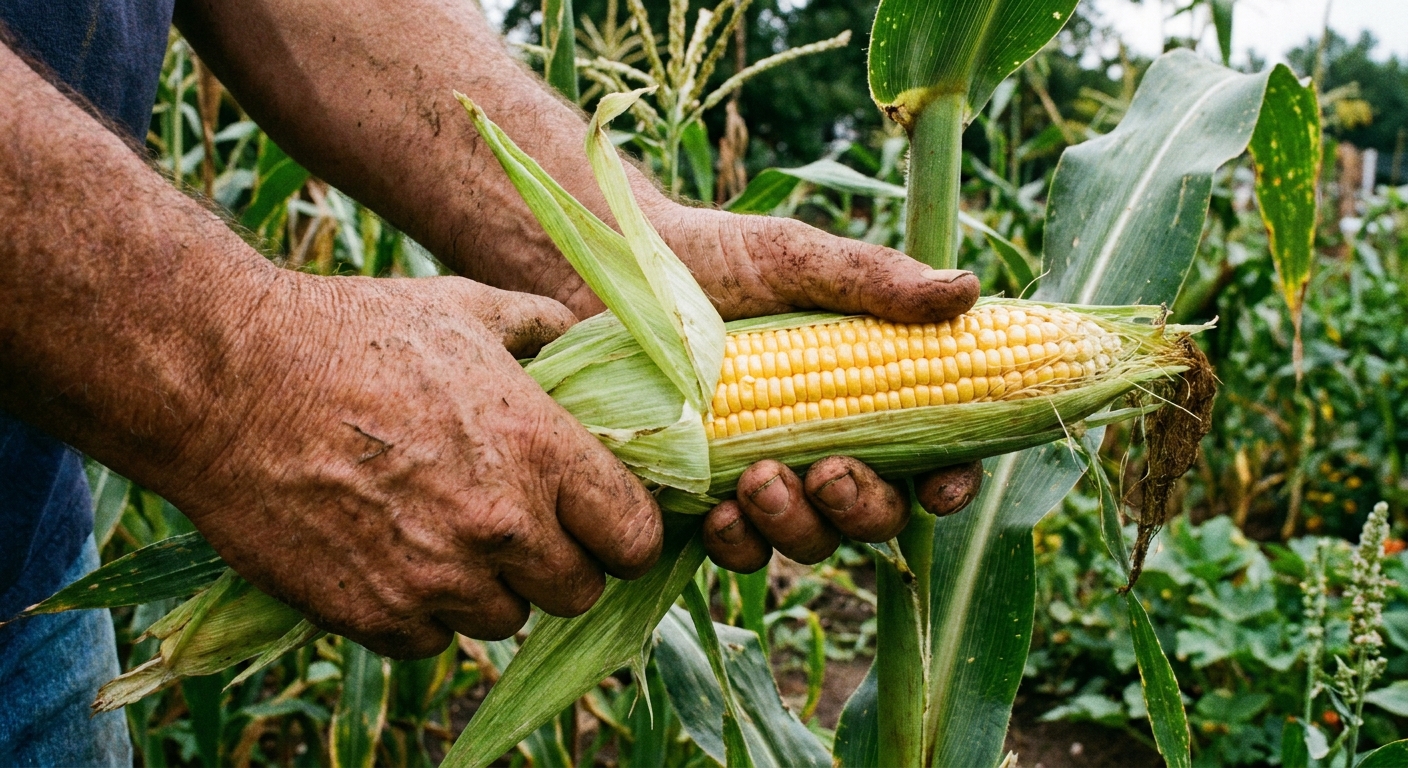
Sweet corn has a short window where it tastes like candy and crunches like summer. The best harvest test is not the calendar. It is your hands and eyes.
Look for these signs
- Silks turn brown and begin to dry, but the husk is still green.
- Ears feel full when you gently squeeze through the husk.
- Kernel test: peel back a small section and puncture a kernel with a fingernail.
The milk stage test
When the ear is ready, the kernel should release a milky, cloudy juice. If it is clear and watery, wait a little longer. If it is thick and doughy, you are late and sugars are converting to starch.
Harvest timing tips
- Harvest in the morning for best sweetness and crispness.
- Twist the ear down and away from the stalk with a firm snap.
- Cool quickly. Sweet corn starts converting sugar to starch soon after picking. If you can, chill it promptly and cook the same day.
Storing and saving extras
If you cannot cook immediately, keep ears cold and leave the husks on to help hold moisture. For longer storage, blanch, cut kernels off the cob, and freeze. Future you will be very pleased.
Quick troubleshooting
- Missing kernels: usually poor pollination. Plant in a block, water during silking, and consider gentle shaking during tasseling.
- Small ears: often low fertility, drought stress, or crowding. Side-dress nitrogen, water consistently, and keep spacing reasonable.
- Tough kernels: harvested late, or variety type. Pick at milk stage and match variety to your taste.
- Stalks falling over: wind and shallow rooting, sometimes from uneven watering or root disturbance. Mulch, water deeply, avoid aggressive cultivation near stalks, and plant in blocks for mutual support.
A simple home corn plan
If you want the “just tell me what to do” version, here is a friendly baseline:
- Wait for soil to hit 60°F or warmer (65°F is even better).
- Direct sow in a 4 x 4 block (or bigger), 8 to 12 inches apart.
- If germination is spotty, thin to one strong seedling per spot and replant gaps early.
- Keep soil evenly moist, and do not let it dry out during silking.
- Side-dress when plants reach 12 to 18 inches, then again at tasseling if needed.
- Watch for earworm signs at the silk tips and raccoon mischief as harvest nears.
- Harvest at the milk stage and eat quickly, or chill and freeze extras.
And if your first patch is not perfect, welcome to the club. Corn teaches patience and timing. Next season, you will be listening for tassels rustling like they are telling you secrets, because honestly, they kind of are.