
How to Get Rid of Spotted Lanternflies Naturally

If you have spotted lanternflies in your yard, you are not alone. This flashy, polka-dotted pest has been spreading through many parts of the eastern U.S. and expanding westward, and it can hit hard, especially if you grow grapes, keep fruit trees, or have big maples near the house.
The good news is you can make a real dent naturally with a few consistent habits. Think of this like weeding a garden bed. One day helps, but a little effort each week changes the whole season.
Quick note up front: where and when lanternflies show up shifts by region and year. If you want the most current footprint and timing, check your state extension maps and advisories.

First, make sure it is spotted lanternfly
Accurate ID saves you from squishing beneficial insects and helps you choose the right timing for control.
Small caution: some native insects can look similar at a glance, especially to the untrained eye. When in doubt, compare photos from your state extension office before you go full stomp patrol.
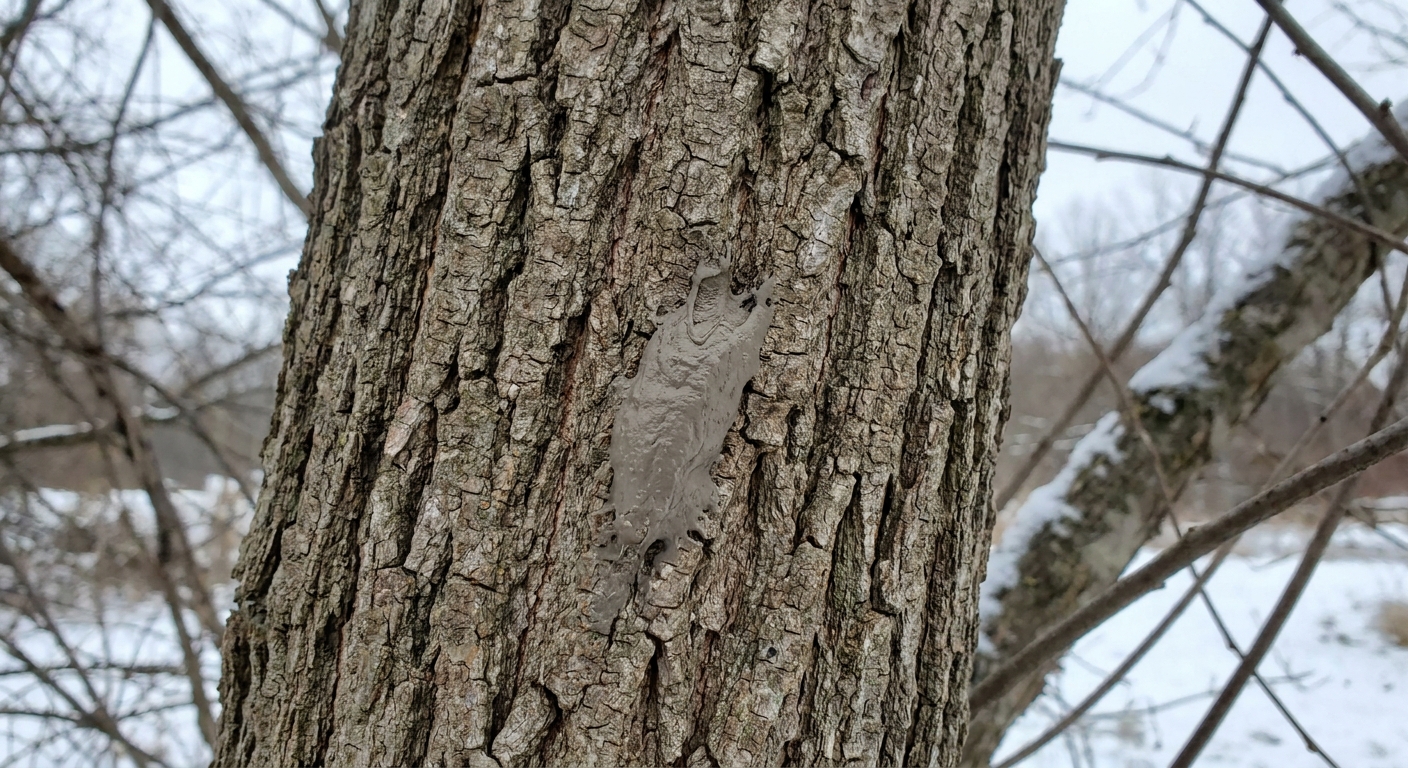
Egg masses (late fall through early spring)
Lanternfly eggs look like someone smeared a little patch of dried mud on a surface. Fresh masses are gray and putty-like. Older ones crack and look like dried clay with little rows underneath. You can find them on:
- Tree trunks and branches
- Fence posts, outdoor furniture, grills
- Stone, firewood, pallets, and vehicles
Nymphs (spring through mid-summer)
Nymphs go through several stages.
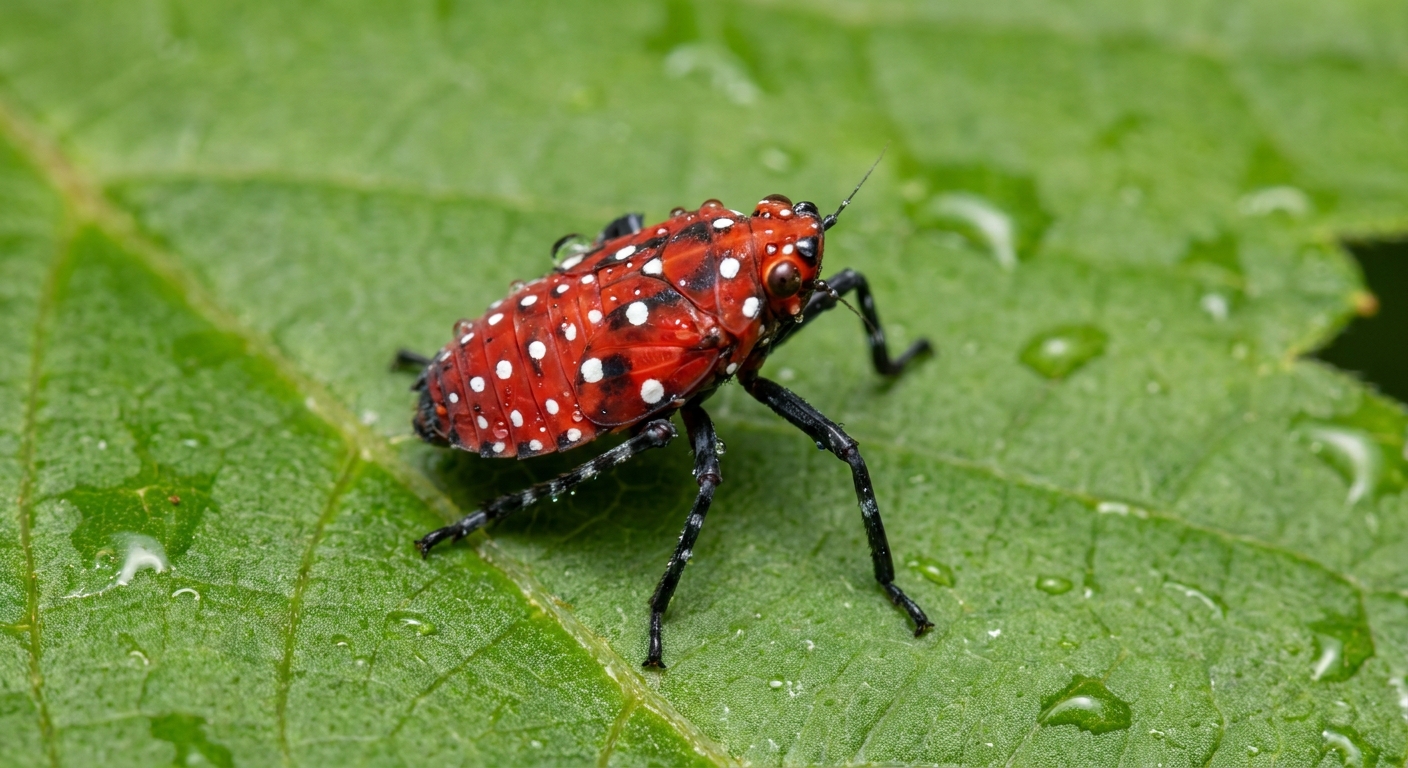
- Early nymphs: tiny black insects with bright white spots
- Later nymphs: red, black, and white with a bolder look
They hop, they scatter, and they often gather on tender growth.
Adults (mid-summer through fall)
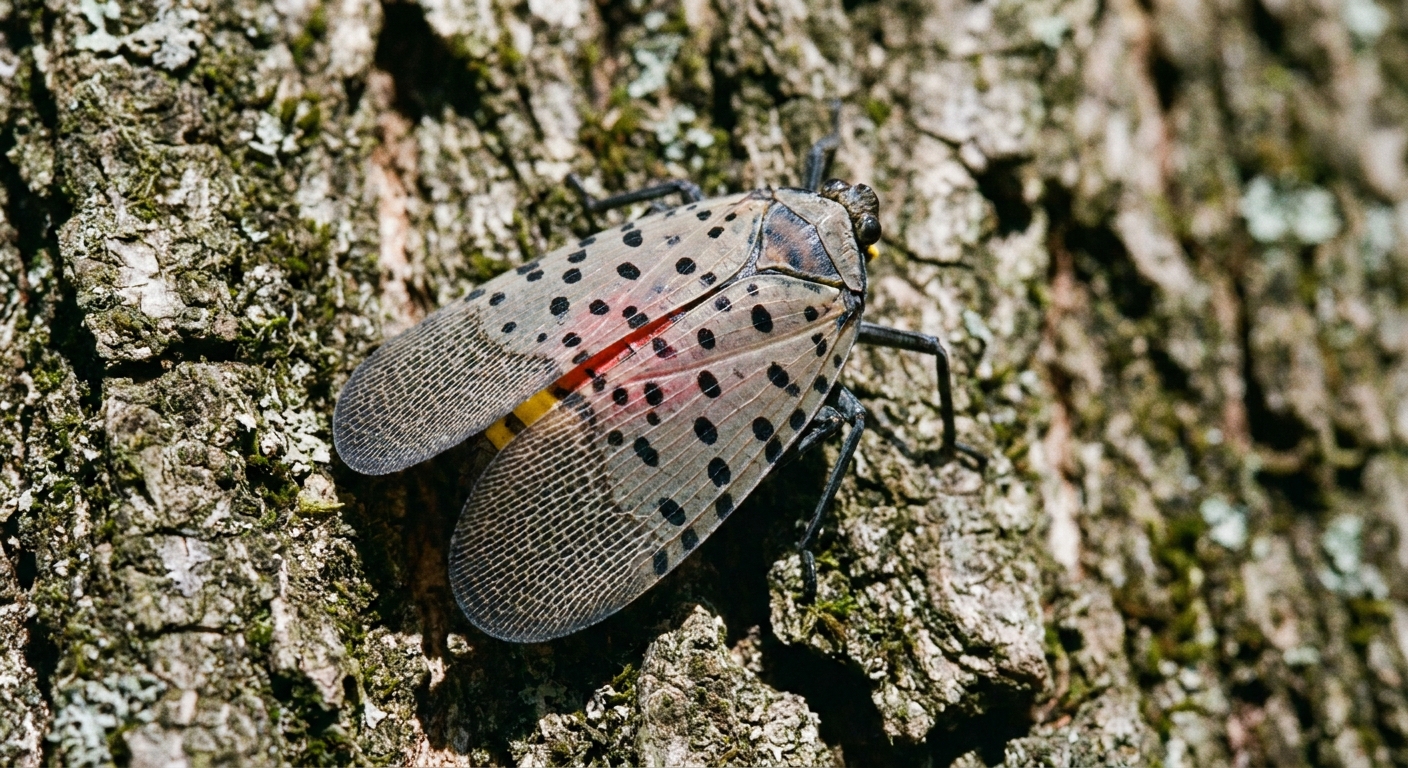
Adults have gray wings with black spots. When they open their wings, you will see a surprise burst of red and black underneath. Adults feed, mate, and lay eggs from late summer into fall.
If you are unsure, check your state extension office website for local look-alikes and current maps.
Why lanternflies are a big deal for grapes, fruit trees, and maples
Spotted lanternflies feed by piercing plant tissue and drinking sap. Low numbers rarely kill mature plants, but lanternflies are crowding pests. When numbers build, the stress adds up fast. Grapes can be an exception here, since heavy feeding can seriously weaken vines.
Commonly affected plants in home landscapes
Severity varies by plant and by outbreak size. In many home settings, the most noticeable issue is the honeydew mess and sooty mold rather than immediate tree decline.
- Grapes (wild and cultivated)
- Fruit trees like apple, peach, cherry, and plum (often nuisance impacts, sometimes stress when populations are heavy)
- Maples (especially when adults congregate)
- Walnut
- Willow, birch, poplar and other common shade trees
Honeydew and sooty mold
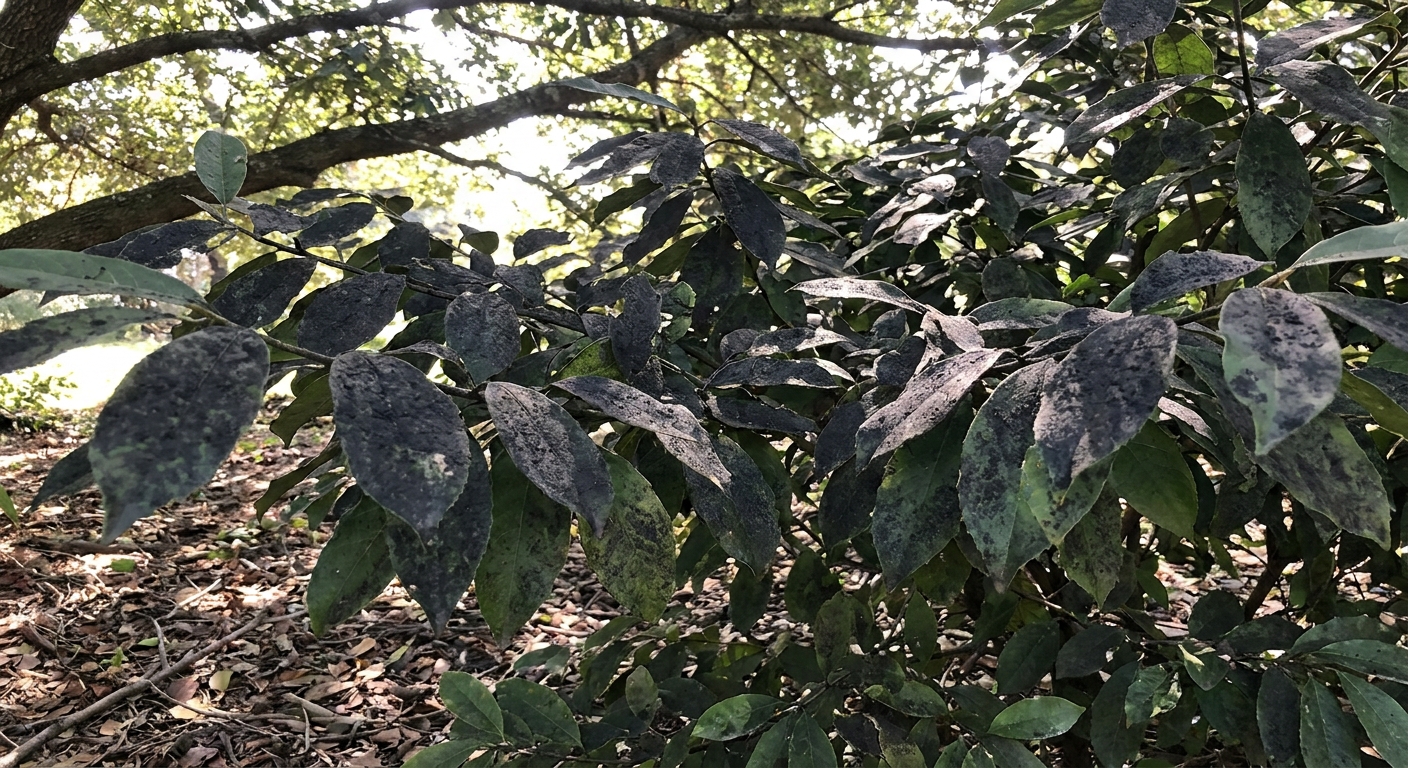
As lanternflies feed, they excrete sugary honeydew. That sticky coating invites sooty mold, a black film that can cover leaves, patio furniture, and anything under the tree canopy. It is not just unpleasant. It reduces photosynthesis and can weaken plants over time.
Your natural control plan
Organic lanternfly control is all about hitting multiple life stages. Here is the approach I use, in the same rhythm I use for keeping squash bugs and aphids from getting the upper hand.
1) Scrape egg masses the right way
Egg scraping is one of the most satisfying controls because it removes dozens of future insects in seconds.
What you need: a plastic card or putty knife, a sealable bag or jar, and rubbing alcohol or hand sanitizer.
- Spot the mass on bark or outdoor surfaces.
- Scrape firmly downward so eggs drop off, not just smear.
- Destroy the eggs by dropping them into a bag or jar with alcohol or hand sanitizer. Seal it.
- Trash it when you are done.
Tip from the dirt side of life: scraping onto the ground is not enough. Eggs can still hatch if they land intact.
Disposal note: do not compost scraped eggs. Keep them sealed, then put them in the trash. If you are dealing with lots of egg masses, double-bagging is not a bad idea.
2) Hand removal and stomp patrol
If you have a small yard, simple daily removal can be surprisingly effective, especially in the morning when insects are sluggish.
- Wear gloves if you prefer, and watch your footing on steep slopes.
- Use a jar with soapy water to knock bugs into, especially on vines and small trees.
- On grapes and young fruit trees, check the underside of leaves and tender shoots.
This is also the moment when I talk to my ferns and mutter at lanternflies, so if a neighbor sees you, just wave like it is normal.
3) Banding and trapping safely
Traps can help reduce numbers, but they need to be used carefully. Traditional sticky bands can catch songbirds, bats, and beneficial insects. If you band, choose safer options and keep checking them.
Safer banding options
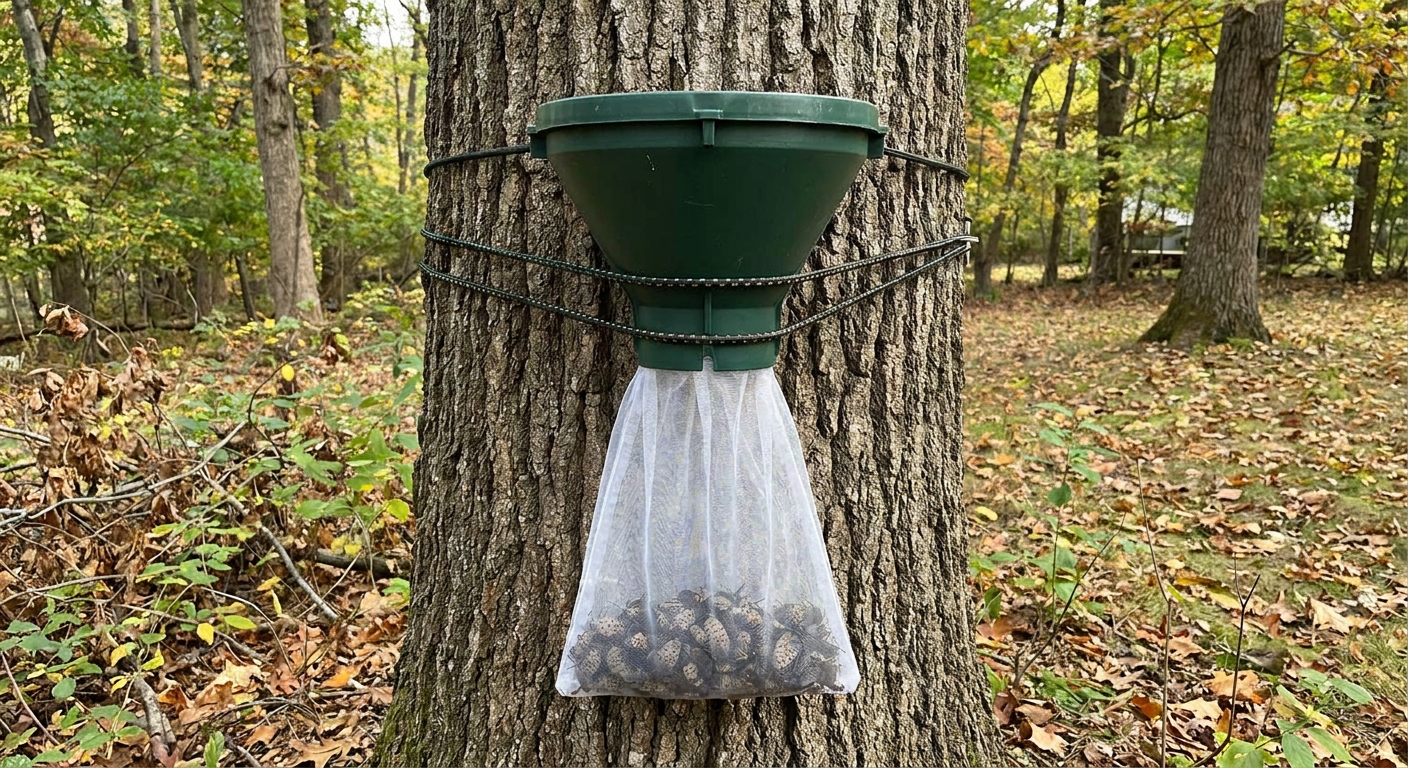
- Circle traps (funnel-style traps) around the trunk guide lanternflies into a collection bag.
- Sticky bands with wildlife guards, used with extreme care and checked often.
Best practice: place traps where you see lanternflies walking up and down the trunk, often on their favorite host trees. Check and empty collection bags frequently.
4) Reduce nearby host pressure
Spotted lanternflies are strongly associated with tree-of-heaven (Ailanthus altissima), an invasive tree that often grows along roadsides, fence lines, and neglected edges. Managing it can reduce local lanternfly pressure.
How to recognize tree-of-heaven: long compound leaves with many leaflets, a strong unpleasant odor when crushed, and smooth gray bark on younger trees.
Important: do not just cut it down and walk away. Tree-of-heaven resprouts aggressively. In many areas, effective removal involves targeted herbicide applied at the right time. If you want a strictly chemical-free approach, repeated cutting can slowly weaken it, but it takes persistence. If a large tree is involved, consider a licensed professional so you do not end up with a thicket.
5) Horticultural oil timing
Horticultural oil can be a useful organic tool, but timing and coverage matter.
- When: late winter to early spring, before bud break on many plants, is often a safer window for dormant oil applications. Always follow the product label for temperature limits and plant sensitivity.
- Where it helps: it may suppress eggs if you thoroughly coat the egg mass and the surface around it.
- Where to be cautious: tender new growth and hot days. Oil can burn leaves if applied in high heat or improper dilution.
My gentle reminder: extension guidance often notes that results on eggs can be inconsistent unless coverage is excellent. Scraping is still your most reliable low-tech option when you can reach the mass.
6) If you go beyond mechanical control
If numbers are high and you need another organic nudge, products like insecticidal soap work by contact. They are most effective on exposed nymphs and only if you hit the insect directly. Avoid broad-spectrum spraying, even if the label says it is natural, because it can knock back beneficial insects too.
Protect grapes, fruit trees, and maples
If you only have the time or energy for a few steps, focus where lanternfly damage hurts the most.
Grapes
- Inspect vines weekly from late spring through fall.
- Remove nymphs early, before they grow into adults that swarm.
- Keep weeds and wild grape under control near the trellis.
- Use a circle trap on a nearby favored trunk if you see lanternflies marching upward.
Fruit trees
- Scrape egg masses on trunks, stakes, and nearby structures in winter.
- Encourage airflow with proper pruning, which also makes scouting easier.
- Rinse honeydew and sooty mold from leaves when practical, especially on young trees. This helps temporarily, but it usually comes back unless you reduce the insects making the honeydew.
Maples and shade trees
- Focus on trunk-based controls like circle traps where adults cluster.
- Manage what is underneath: honeydew drips can make patios slick and sooty mold can build quickly.
- Do not stress trees further with drought. Deep watering during dry spells helps them cope with sap-feeding insects.
What not to do
- Do not rely on one big weekend. Lanternfly control is a season-long rhythm.
- Do not use unguarded sticky bands where birds or bats can get caught.
- Do not move firewood, patio items, or outdoor equipment without checking for egg masses in fall and winter.
- Do not ignore the edges of your property. Fencelines and sheds are classic egg-laying spots.
When to report heavy infestations
Reporting guidance varies by state and changes as lanternflies spread. In places where lanternflies are still newly established, reporting helps agencies track and respond. Even in established areas, local reports can inform management in parks, vineyards, and woodlots.
Report if:
- You see a large cluster of adults covering trunks or vines
- You find many egg masses on vehicles, trailers, or outdoor equipment
- You are in a county or region where lanternflies are not yet widespread
Search for your state’s “spotted lanternfly report” page or contact your local extension office. If you are moving or traveling, do a quick inspection of vehicles and outdoor items first. It is one of the simplest ways to slow the spread.
A simple seasonal schedule
Timing varies by region, so use this as a general rhythm and adjust based on what you are seeing outside and what your local extension alerts recommend.
Late fall through early spring
- Scrape egg masses weekly when you are outside anyway
- Inspect outdoor furniture, firewood stacks, and fence posts
- Consider dormant horticultural oil where appropriate and labeled
Spring through early summer
- Scout for nymphs on grapes, fruit trees, and nearby weeds
- Hand-remove and jar with soapy water
- Install circle traps if you are seeing trunk traffic
Mid-summer through fall
- Keep trapping and hand removal going
- Watch for honeydew, wasp activity around sticky sap, and sooty mold
- Start looking for fresh egg masses as the season winds down
And if you miss a week, you did not fail. You are just gardening, and gardening is always an ongoing conversation with the living world.
Quick FAQ
Will neem oil get rid of spotted lanternflies?
Neem and other botanicals may help on small, exposed nymphs when they are contacted directly, but they are not a magic wand. For most home gardeners, egg scraping, hand removal, and safe trapping are more reliable first steps.
Do birds eat spotted lanternflies?
Some birds and predators will sample them, but you cannot count on wildlife alone to control outbreaks. Focus on reducing egg masses and preventing big populations from building.
Are spotted lanternflies dangerous to people or pets?
They do not bite or sting, but the honeydew mess can attract wasps. If you have kids or pets playing under infested trees, keep an eye out for slippery sticky surfaces and increased stinging insect activity.