
How to Get Rid of Skunks in Your Yard Naturally

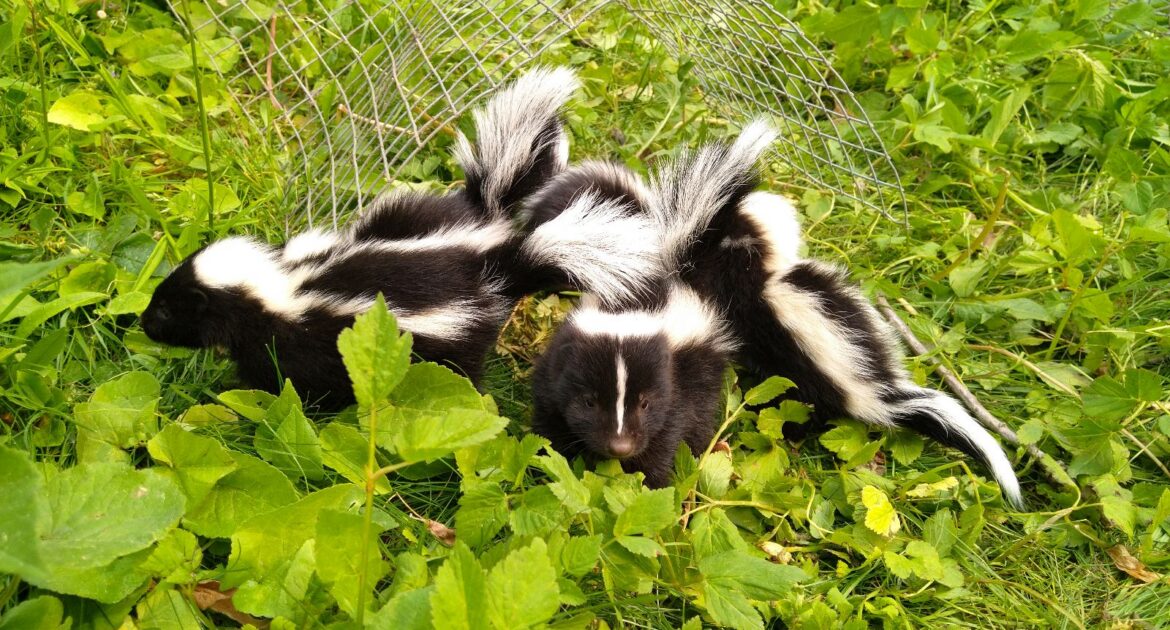
Skunks are one of those backyard visitors that feel like a personal insult. One night your lawn is smooth and tidy, the next morning it looks like someone took a tiny rototiller to it. And then there is the fear factor, because nobody wants a surprise spray when they are in slippers taking out the recycling.
The good news is you can usually persuade skunks to move along without poison, traps, or drama. Skunks are not out to “take over.” They are mostly looking for an easy dinner and a safe place to nap. If we remove the buffet and block the cozy hideouts, they typically choose a different yard.
First, make sure it is actually a skunk
Before you change your whole yard routine, take a minute to confirm the culprit. Skunk damage often gets blamed on moles or raccoons, but the patterns are different.
Signs skunks are visiting
- Small cone-shaped holes in turf, typically about 1 to 4 inches wide (sometimes larger), often in clusters. This is classic skunk foraging for grubs and beetle larvae.
- Shallow divots and scuffed turf where they have been sniffing and scraping.
- Lifted or flipped sod in small sections if they found a juicy pocket and kept going. If your lawn is peeled back like a carpet in big sheets, raccoons are usually the more likely culprit.
- Distinct musky odor lingering near a deck, shed, or fence line, sometimes even without a direct spray event.
- Nighttime activity captured on a doorbell or trail camera, often slow and methodical sniffing along the ground.
If you suspect a skunk is living under a structure, look for a low, shallow entrance hole near the edge of a deck, concrete slab, or shed. You may also see tracks, scattered soil, and flattened vegetation leading to the opening.
Humane ground rules (and why they matter)
I am an organic gardener, so I think in systems: soil, insects, birds, and yes, mammals. Skunks are part of that web. They eat a lot of pest insects and rodents, and they do not usually stick around if your yard stops being convenient.
- Avoid poison baits. They can harm pets, owls, hawks, and other wildlife through secondary poisoning.
- Do not seal an opening if a skunk might be inside. Exclusion works best when you confirm the space is empty.
- Check local laws before trapping or relocating. In many areas, relocation is illegal or highly regulated because it can spread disease and often leads to the animal dying anyway.
- Keep pets inside at dusk and dawn while you are working through deterrence. This reduces the chance of a stressful encounter for everyone.
If you ever see a skunk acting disoriented, unusually aggressive, or out in bright midday repeatedly, contact local animal control or wildlife services for guidance. Occasional daytime movement can happen (especially for nursing mothers), but repeated odd behavior is not typical and is not something to troubleshoot yourself.
How to avoid getting sprayed
Most spraying happens when a skunk feels cornered. A little etiquette goes a long way.
- Give them an exit. Do not chase them into a corner, under a porch step, or between fences.
- Move slowly and back away. If you see stomping, tail raising, or the classic handstand posture, pause and increase distance.
- Leash dogs at night and use a flashlight before letting them into the yard.
- If a pet gets sprayed, keep them outside if you can (so the smell stays out of the house) and use a proven de-skunking method or call your vet or groomer for guidance. Avoid “tomato juice” folklore. It masks odor for some noses but does not reliably break down the oils.
Remove what skunks want most: easy food
If I could bottle one piece of skunk advice, it would be this: your yard is either a cafeteria or it is not. Start by making meals harder to come by.
Secure trash, recycling, and outdoor food
- Use locking bins or add bungee cords to lids. Skunks are not as adept at climbing as raccoons, but they are persistent and strong enough to nudge loose lids.
- Rinse food containers before tossing them in the recycling. The smell is the invitation.
- Feed pets indoors, or pick up bowls right after meals if feeding outside is unavoidable.
- Clean grills and keep drip trays from becoming a greasy snack station.
Compost without attracting night visitors
Compost is my love language, but it has to be managed like a pantry.
- Use a pest-resistant compost bin with a secure lid and no gaps along the base.
- Bury food scraps in the center of the pile and cover with browns like shredded leaves or straw.
- Avoid adding meat, fish, oily foods, and dairy if wildlife pressure is high in your area.

Fix the grub problem (the real reason they dig)
In many yards, skunks are not “attacking” your lawn. They are doing free pest control and your lawn just happens to be where the pests live. If you solve grubs, you often solve the skunk visits.
How to check for grubs
Pick a spot where you see fresh digging. Cut a small square of sod (about 1 foot by 1 foot), peel it back, and look in the top 2 to 3 inches of soil.
A practical benchmark: if you are seeing roughly 5 to 10 or more grubs per square foot, treatment can be worth considering. Thresholds vary by region, season, grass type, and grub species, so your local extension office is the best tie-breaker.
Natural grub control options
- Beneficial nematodes (often sold as Heterorhabditis bacteriophora). Apply when soil is moist and within the temperature range on the label (many products perform best roughly in the 55 to 85°F zone). Apply in the evening or on an overcast day to reduce UV exposure, water in well, and keep soil lightly moist for about a week so they can do their job.
- Milky spore (for Japanese beetle grubs). This is a longer-term approach and works best in regions where Japanese beetles are common.
- Healthier turf practices: mow a bit higher, avoid overwatering, and build soil health. Stressed lawns tend to invite pests.
If you are unsure which product fits your region and timing, your local extension office or a trusted local nursery can help you match grub species and season to the right biological control.
Remove shelter: habitat cleanup that works
Skunks are shy. They love an easy hideaway where they can tuck in close to the ground. Your job is to make those spots feel exposed and inconvenient.
What to tidy up
- Brush piles and wood stacks: keep firewood raised on a rack and at least a few feet away from buildings.
- Overgrown corners: trim tall weeds and dense groundcover along fences and sheds.
- Fallen fruit: pick up windfall apples, pears, and stone fruit. Fermenting fruit is a skunk magnet.
- Bird seed spillover: use seed catchers or sweep beneath feeders regularly.

Use motion deterrents (smart, not scary)
When you remove food and shelter, deterrents help reinforce the message: this yard is not relaxing. The most effective ones are predictably annoying, not harmful.
Motion-activated sprinklers
These are my favorite humane tool for skunks. A sudden burst of water startles them without injuring them, and it teaches them quickly that the area is unpleasant.
- Aim the sensor toward the path they use most, often along fences, garden beds, or under a deck edge.
- Use at night and early morning when skunks are active.
- Adjust sensitivity so it does not soak you every time you step outside with a mug of tea.
Motion-activated lights
Lights can help, especially near entry points under decks or sheds. Choose warm-white LEDs to reduce harsh glare for you and neighbors. Lights alone can be hit or miss, but paired with sprinklers they are a strong one-two punch.
Sound deterrents
Ultrasonic units are widely sold but results are mixed. If you try one, use it as a supplement, not your main plan, and reposition it occasionally so animals do not get used to it.
Exclude skunks from decks and sheds
If a skunk has moved in under your deck, the long-term fix is exclusion. This is where you trade a little weekend effort for a lot of peace.
Step 1: Confirm the space is empty
- Look for fresh tracks or newly disturbed soil at the entrance.
- Sprinkle a light layer of flour or sand near the opening at dusk. Check for prints in the morning.
- If you suspect a mother with kits (often spring to early summer), be extra cautious. This is a prime time to call a professional.
Step 2: Encourage a peaceful move (before you block anything)
For a few nights, you can try making the den area less appealing so the skunk chooses a new spot. These methods can help, but they are not magic, and you should skip DIY pressure tactics if you suspect kits.
- Place a bright work light near the opening (not inside).
- Run a radio at low volume during daytime hours if the space is under a deck and sound will not bother neighbors.
- Try mild scent disruption like a few rags soaked in white vinegar placed near, not inside, the entrance. Do not block the exit.
Avoid strong chemical repellents, mothballs, or ammonia. They can be harmful, and mothballs are not a safe outdoor wildlife tool.
Step 3: Install a one-way door, then seal
A one-way door (wildlife excluder) lets the skunk leave but not return. After at least 3 to 7 nights with no signs of activity (and after confirming no kits), you can seal the area permanently. Cool, rainy weather can slow movement, so give it time.
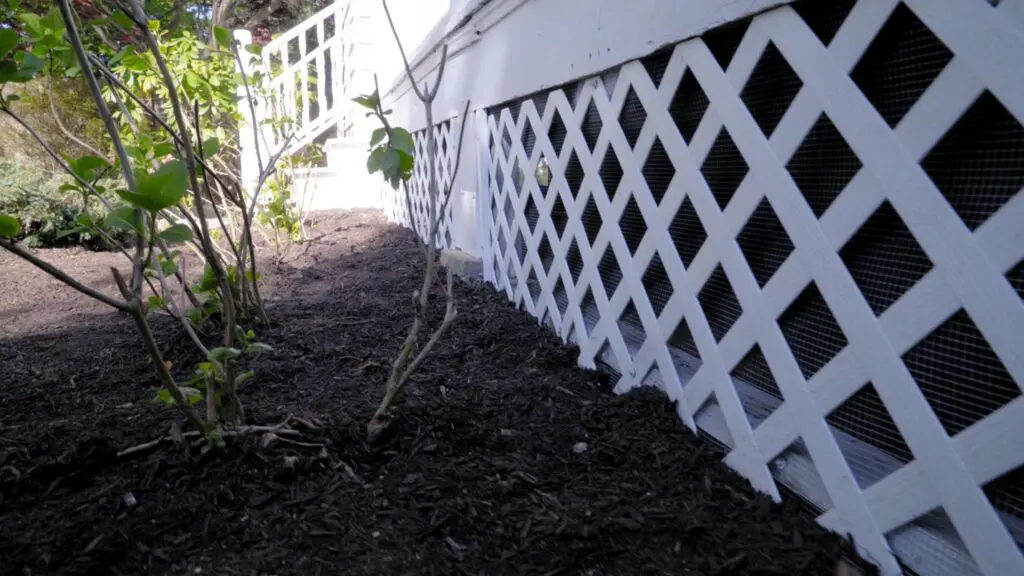
- Materials: 1/4-inch hardware cloth is sturdier than chicken wire. You will also want stakes, screws with washers, and a shovel.
- Dig a trench 6 to 12 inches deep along the edge you are closing so the barrier extends below ground. Skunks are diggers.
- Create an outward “L” footer: bend the hardware cloth outward at the bottom and bury it to discourage digging at the base.
- Close gaps around stairs, corners, and utility penetrations.
Protect your beds and lawn while you transition
Skunks are creatures of habit. While you are removing food sources and applying deterrents, protect the spots you cannot afford to have torn up.
- Temporary netting or row cover over freshly seeded lawn patches or newly planted beds, secured tight at the edges.
- Garden fencing that is at least 2 feet high with the bottom pinned down can discourage casual foraging.
- Reduce irrigation at night if possible. Moist soil can make grubs and worms more active near the surface, which is basically a dinner bell.
What about natural repellents?
I get asked about “skunk repellent” products all the time. Here is my gentle truth: most scent-based repellents are inconsistent outdoors because rain, sprinklers, and wind break them down fast.
If you want to try a repellent, use it as a short-term support while you do the big fixes (food, shelter, exclusion). Look for products labeled for skunks that rely on predator scents or plant oils, and always follow label directions. Reapply after rain.
Skip homebrew mixes that involve harmful chemicals. They are rough on pets, kids, beneficial insects, and your own lungs.
When to call a professional
There are times when DIY is not the humane choice, especially if babies are involved or if local regulations are strict. Rules can also vary by region and species (striped vs. spotted skunks), so when in doubt, ask locally.
Consider professional wildlife help if:
- You suspect a mother skunk and kits are under a deck or shed.
- The skunk has sprayed repeatedly near doors or high-traffic areas and you need a safer plan fast.
- You cannot safely access the space for exclusion work.
- Your city or state has rules about trapping, relocation, or handling wildlife and you want to stay compliant.
Look for a licensed wildlife control operator who emphasizes exclusion and humane practices, not just trapping. Ask what they do to prevent the next skunk from moving in.
A simple 7-day plan
If you like a tidy checklist, here is a realistic week of progress.
- Day 1: Secure trash, remove pet food, clean grill area, pick up fallen fruit.
- Day 2: Inspect yard edges, brush piles, and under structures. Trim dense hiding spots.
- Day 3: Check for grubs in a damaged area and decide on nematodes or other control based on local timing.
- Day 4: Set up motion-activated sprinklers near digging zones and likely travel paths.
- Day 5: If denning is suspected (and no kits), start gentle “move along” steps like light and mild disturbance while keeping exits open.
- Day 6: Install a one-way door and prepare hardware cloth barriers.
- Day 7: Continue monitoring. After 3 to 7 nights with no activity (and after confirming no young), seal and bury exclusion barriers.
Most people see a noticeable reduction in digging within the first week once food and grubs are addressed. The long-term goal is to reduce damage and prevent denning, even if the occasional skunk still passes through the neighborhood.
Keeping peace with wildlife long-term
I always tell readers: you do not have to choose between a healthy garden and a humane yard. The best “natural skunk control” is really natural yard design, where compost is secure, soil is healthy, and structures are buttoned up so nobody moves in uninvited.
If you take away their easiest meals and coziest hideouts, skunks almost always do the polite thing and wander off to somewhere simpler. And you get your lawn, your garden beds, and your calm evenings back.