
How to Get Rid of Leaf-Footed Bugs Naturally

Leaf-footed bugs have a way of showing up right when your tomatoes start blushing and your peppers finally look proud of themselves. They are not usually a “garden apocalypse” pest, but they can absolutely ruin the best fruit of the season with a few stealthy feeding sessions.
The good news: you can manage leaf-footed bugs naturally without carpet-bombing your garden. You can also do it without harming the pollinators and beneficial insects doing the real heavy lifting.
I will help you ID them correctly, confirm the damage, then walk you through a practical plan using hand-picking, exclusion, trap crops, kaolin clay, and habitat management.

Leaf-footed bugs: quick ID
Before you treat anything, make sure you are targeting the right pest. Leaf-footed bugs, stink bugs, and squash bugs are all true bugs that feed by piercing plants and sucking juices. They can look similar at a glance, especially when immature.
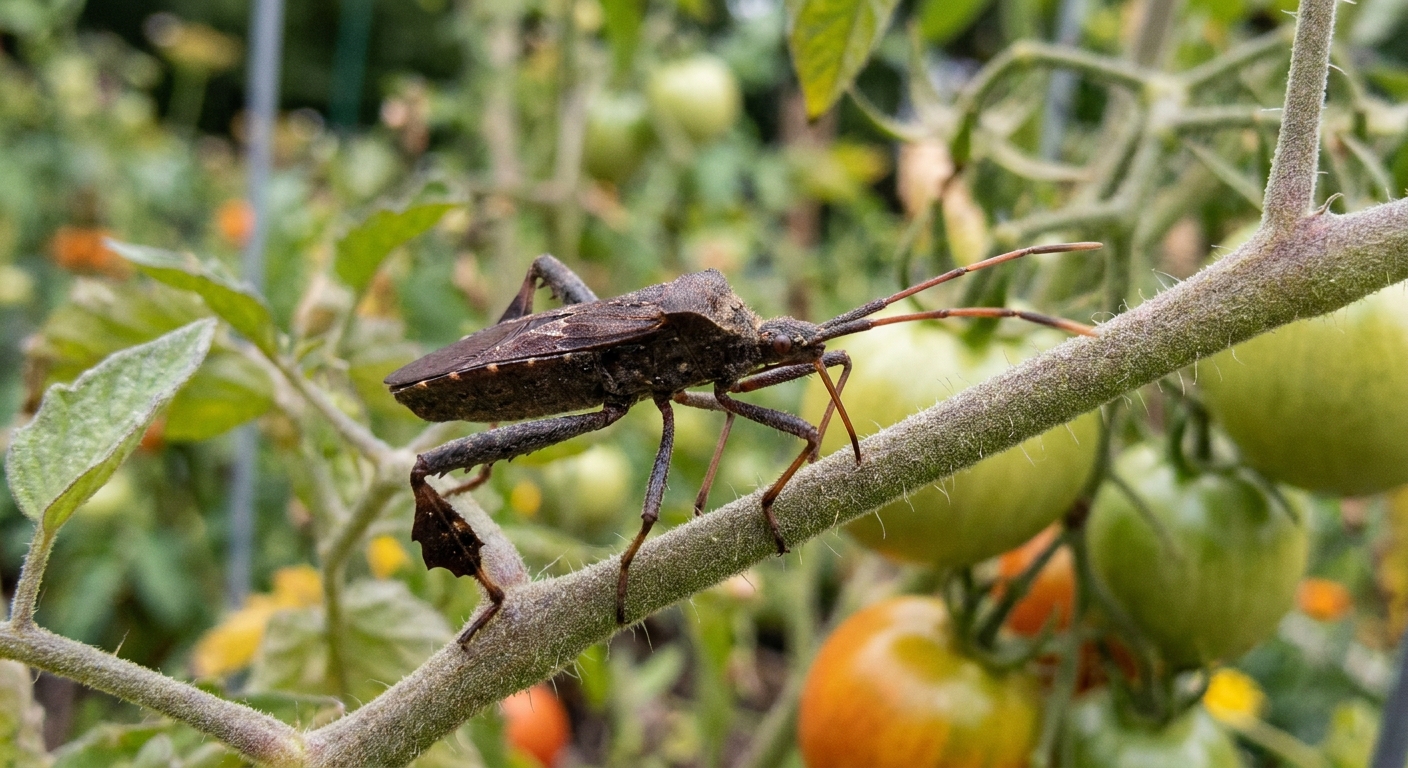
How to identify leaf-footed bugs
- Adults are long and narrow, usually brown to gray-brown, about 3/4 to 1 inch long.
- Signature “leaf” on the hind legs: many species have a flattened, leaf-like expansion on the back legs. That is the giveaway.
- Often show a light zigzag band across the wings (commonly seen in Leptoglossus species).
- Nymphs (young bugs) are smaller, often orange-red to reddish brown, and look spindly with long legs.
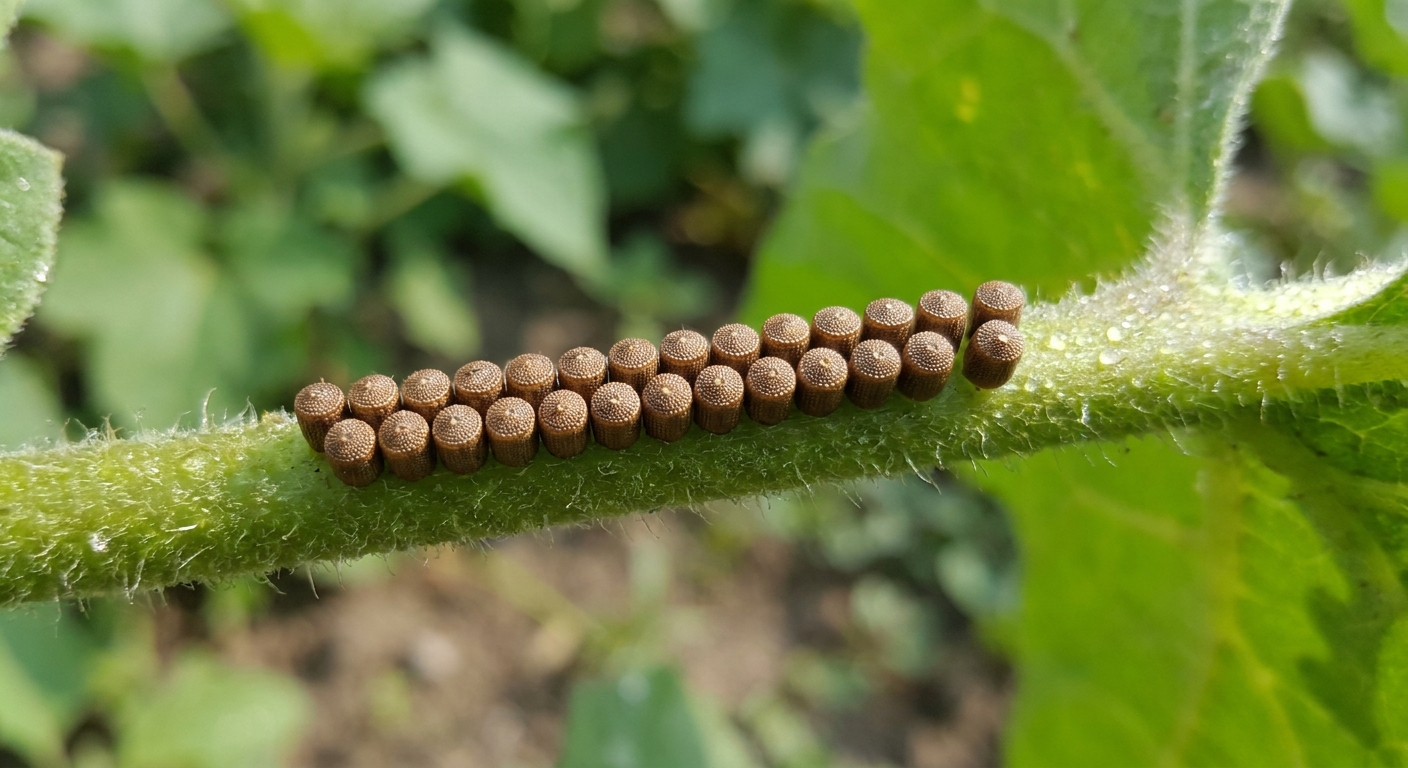
- Eggs are commonly laid in neat chains or rows along stems or the underside of leaves, like tiny bronze-brown beads.
Lookalikes: stink and squash bugs
Misidentification is the most common reason natural controls feel like they “do not work.” Here is how to separate the usual suspects.
Leaf-footed bug vs stink bug
- Body shape: leaf-footed bugs are elongated; stink bugs are shield-shaped and wider.
- Hind legs: leaf-footed bugs often have those flattened, leaf-like hind legs; stink bugs do not.
- Eggs: leaf-footed eggs tend to be in lines; stink bug eggs are usually laid in tight clusters.
Leaf-footed bug vs squash bug
- Where they hang out: squash bugs love cucurbits (squash, pumpkins, cucumbers) and often hide at the crown and under leaves; leaf-footed bugs are frequently found on tomatoes, peppers, pomegranates, citrus, some berries, and stone fruit, plus a mix of other garden plants depending on your region and species.
- Egg color and placement: squash bug eggs are typically bronze and laid in clusters on leaf undersides, often near veins; leaf-footed eggs are frequently in a line along stems or leaf midribs.
- Adult look: squash bugs are flatter and more mottled; leaf-footed bugs are more leggy and narrow.
If you are still unsure, observe what plant they are consistently feeding on and look for eggs. Eggs are the easiest stage to control, so it is worth the extra minute.
What damage looks like
Leaf-footed bugs feed by puncturing fruit and injecting saliva. The injury is not always dramatic at first, but it can lead to discoloration, tough spots, distortion, and secondary rot.
Common signs
- Cloudy spots or pale, yellowish blotches on tomatoes.
- Dimpled or distorted fruit, especially when feeding happens early while fruit is still small.
- Hard, corky areas under the skin where the tissue stopped developing normally.
- Small pinprick punctures that may be hard to see at first and can become entry points for rot later.
- Premature fruit drop on some fruit trees and ornamentals.

Timing: when to act
Natural control works best when you start early, before populations build and before adults are constantly flying in for fruit.
- Early season: watch for adults waking up and for egg chains on stems. This is prime time for prevention and egg removal.
- Fruit set through harvest: protect developing fruit. Feeding during this window causes the most noticeable quality damage.
- Late season: reduce overwintering sites so you start next year with fewer visitors.
Life cycle in plain English
Most leaf-footed bugs overwinter as adults in protected spots, then reappear when temperatures warm. They lay eggs, eggs hatch into nymphs, and nymphs grow into adults that can fly in fast once it is hot.
How intense the season gets depends on your climate. In cooler regions you may see one main wave, while warm areas can see overlapping generations and longer pressure. Translation: the earlier you start removing eggs, the less you are playing catch-up later.
Natural control plan
If you do just two things, do these: remove eggs and block access to fruit. Everything else builds on that foundation.
1) Hand-pick adults and nymphs
Leaf-footed bugs can be quick, but they are not unbeatable. Go out in the early morning when they are cooler and sluggish. Once it is warm, adults take flight fast and turn your calm little patrol into a cardio session.
- Supplies: a jar or bucket of soapy water (a squirt of dish soap in water is fine), garden gloves, and patience.
- Technique: hold the container under the bug and nudge it in, or gently grab it and drop it into the soapy water.
- Fast method: position a bucket under a cluster, then tap the stem or trellis so they drop right in.
- Check hiding spots: inside dense foliage, along tomato stakes, and on fruit clusters.
Tip from my own garden: if you tap the plant lightly first, some will drop. Be ready underneath with your bucket.
2) Remove eggs
Egg chains are the easiest stage to control because they do not run, fly, or fight back.
- Inspect stems, leaf midribs, and the underside of leaves.
- Scrape eggs off with a fingernail, an old credit card, or a piece of tape.
- Drop eggs into soapy water or seal them in a bag for the trash.
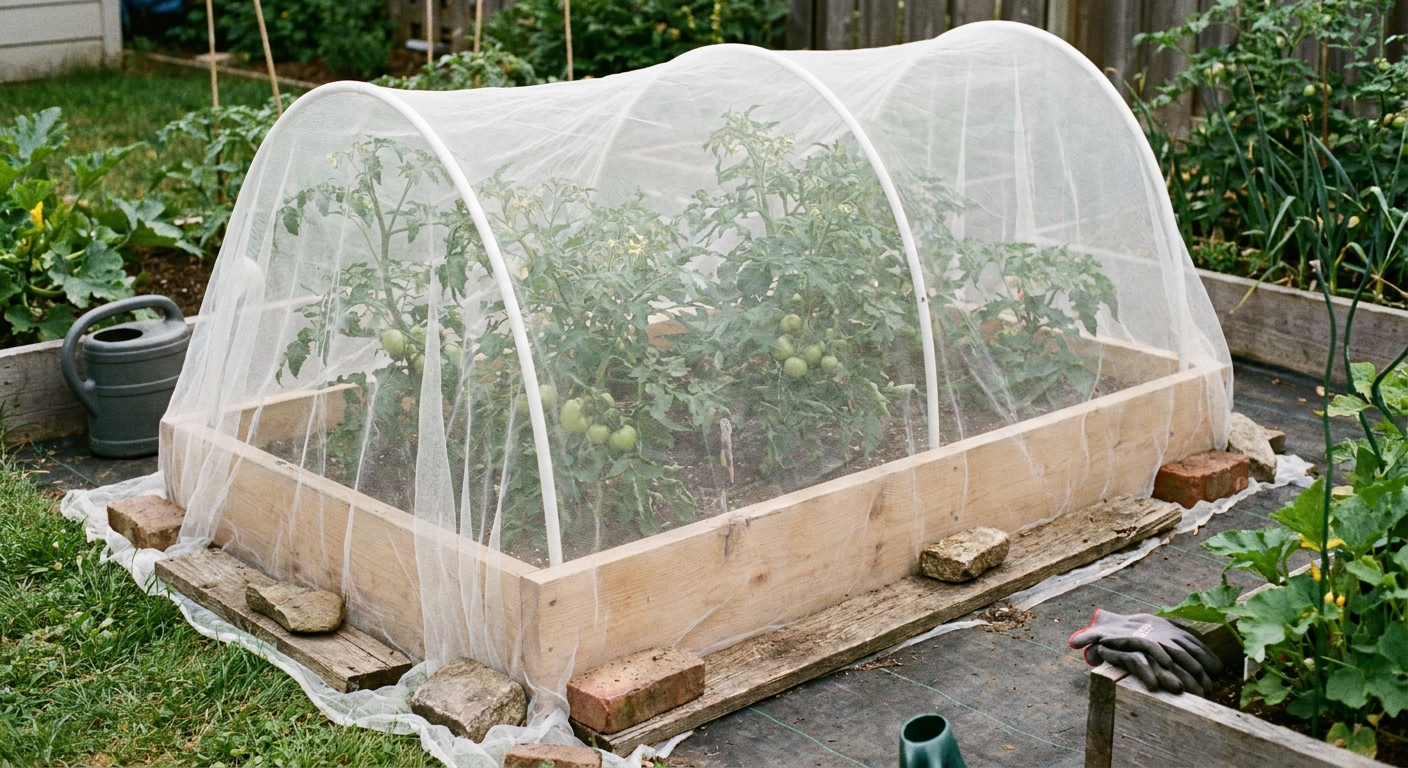
3) Exclude them with covers or netting
Lightweight row cover fabric and fine insect netting both work, but they behave differently.
- Insect netting is usually the better choice during heat because it breathes well.
- Row cover fabric adds a little warmth and frost protection, which is great in shoulder seasons.
They both work best when installed before bugs find your plants.
- Cover tomatoes and peppers as they start growing vigorously, ideally before flowering.
- Secure edges with soil, boards, or sandbags so bugs cannot crawl underneath.
- Pollination note: tomatoes self-pollinate, but under netting they can lose fruit set if there is not enough vibration from wind and visiting insects. If you keep covers on during flowering, shake the trellis daily or use an electric toothbrush to buzz flower clusters for a few seconds.
- Peppers are self-fertile, but yields often improve with pollinator visits. If you can, open covers briefly mid-day or hand-pollinate by gently tapping flowers.
Kaolin clay
Kaolin clay (often sold as a crop protectant) is a finely milled mineral that coats leaves and fruit with a light film. It makes plants less appealing to feeding insects and can reduce successful feeding.
How to use it well
- Apply with a sprayer to coat both sides of leaves and the surface of fruit.
- Reapply after heavy rain and as new growth appears.
- Start early when you first see adults or egg chains, not after damage is widespread.
Note: Kaolin leaves a visible pale cast. It washes off produce, but you will want to rinse fruit before eating or preserving.
Trap crops
Trap cropping is a fancy phrase for “give them something else to party on.” Leaf-footed bugs often prefer certain plants, and you can use that preference to your advantage.
One important caveat: what works as a trap crop is species- and region-dependent. Your best move is to watch what they choose first in your yard, then lean into that pattern.
Trap crop options to test
- Sunflowers
- Sorghum or millet (in some regions)
- Okra (where it grows well)
- Extra early sacrificial tomatoes planted a bit away from your main crop
How to make trap crops work
- Plant the trap crop at the edge of the garden, not intermingled.
- Inspect it often and remove bugs there so you do not breed a bigger problem.
- Combine with hand-picking or targeted exclusion on your main crop.
Habitat management
Leaf-footed bugs often overwinter as adults in protected spots. If your garden has endless cozy shelters, you can see heavier pressure year after year.
Do this now
- Weed control: keep tall weeds and dense groundcover in check near tomatoes and peppers.
- Remove fallen fruit: dropped fruit can attract feeding and provide shelter.
- Prune for airflow: a little thinning makes it easier to spot and remove bugs.
Do this at season’s end
- Clean up spent plants and excess debris where adults can hide.
- Move or tidy nearby refuges like brush piles, stacked pots, and unused lumber near beds. If you keep a woodpile, place it a bit farther from your most vulnerable crops.
- Store stakes and cages away from clutter and protected corners.
- Seal obvious entry points into sheds if you store garden materials there.
Keep some wildness for beneficials, of course. Just shift it a bit farther from your best tomatoes and peppers.
Protecting beneficials
One reason I love the methods above is they are behavior-based, not broad-spectrum poison-based. Covers, egg removal, trap crops, and kaolin clay all reduce pest pressure while minimizing harm to pollinators and predators.
Leaf-footed bugs do have natural enemies, including some birds, spiders, and predatory insects. Avoiding harsh sprays helps those helpers stick around.
What I do not recommend
Broad insecticides
Even organic-approved sprays can harm beneficial insects if used broadly. If you decide to use any pesticide product, choose the least harmful option, follow the label exactly, and apply at dusk when pollinators are not active.
Neem or soap as a main strategy
Neem and insecticidal soap can have limited impact on larger true bugs unless you hit small nymphs directly and thoroughly. They also can affect beneficial insects if sprayed carelessly. If you are reaching for a spray, it is usually a sign you will get more mileage from exclusion, egg removal, and consistent hand-picking first.
“Set it and forget it” bug zappers
They tend to kill lots of non-target insects and are not a targeted leaf-footed bug solution.
Quick threshold
Perfect numbers are hard in a home garden, so here is a practical rule:
- If you spot an occasional adult, stay in “patrol mode” (egg removal plus hand-picking).
- If you are seeing multiple bugs per plant or fresh damage showing up every few days, escalate to exclusion (netting) and or kaolin clay, plus daily morning checks until the pressure drops.
10-minute routine
- Walk your tomatoes, peppers, and nearby fruit plants in the morning.
- Look for egg chains on stems and leaf midribs. Remove them.
- Hand-pick nymphs and adults into soapy water.
- Confirm your netting or row covers are sealed at the edges (if using).
- Check trap crops and remove bugs there too.
If you do this a few times a week during peak season, you can usually keep damage low enough that your harvest still feels like a victory.
FAQ
Are leaf-footed bugs harmful to humans?
They are not dangerous, and they do not seek to bite people. If handled, they can poke with their mouthparts in self-defense, and some release an odor when stressed. Gloves make removal more comfortable.
Will leaf-footed bugs kill my tomato plants?
They usually do not kill healthy plants. The main issue is fruit quality and occasional fruit drop.
Why do I suddenly have so many this year?
Warm winters, nearby weedy areas, abundant host plants, and lots of protected overwintering sites can all contribute. The best long-term plan is early egg removal plus end-of-season cleanup and exclusion during fruiting.
Do I need to remove damaged fruit?
If fruit is badly dimpled, corky, or starting to rot, remove it to reduce rot and keep plants focused on new fruit. Slight cosmetic damage is often still edible if the interior is sound.
A gentle pep talk
If leaf-footed bugs found your garden, it does not mean you did anything wrong. It means you are growing the good stuff. Keep your approach simple: block access, remove eggs, and stay consistent for a few weeks. You will feel the tide turn, and your tomatoes will taste even sweeter for the effort.