
How to Get Rid of Grasshoppers in the Garden

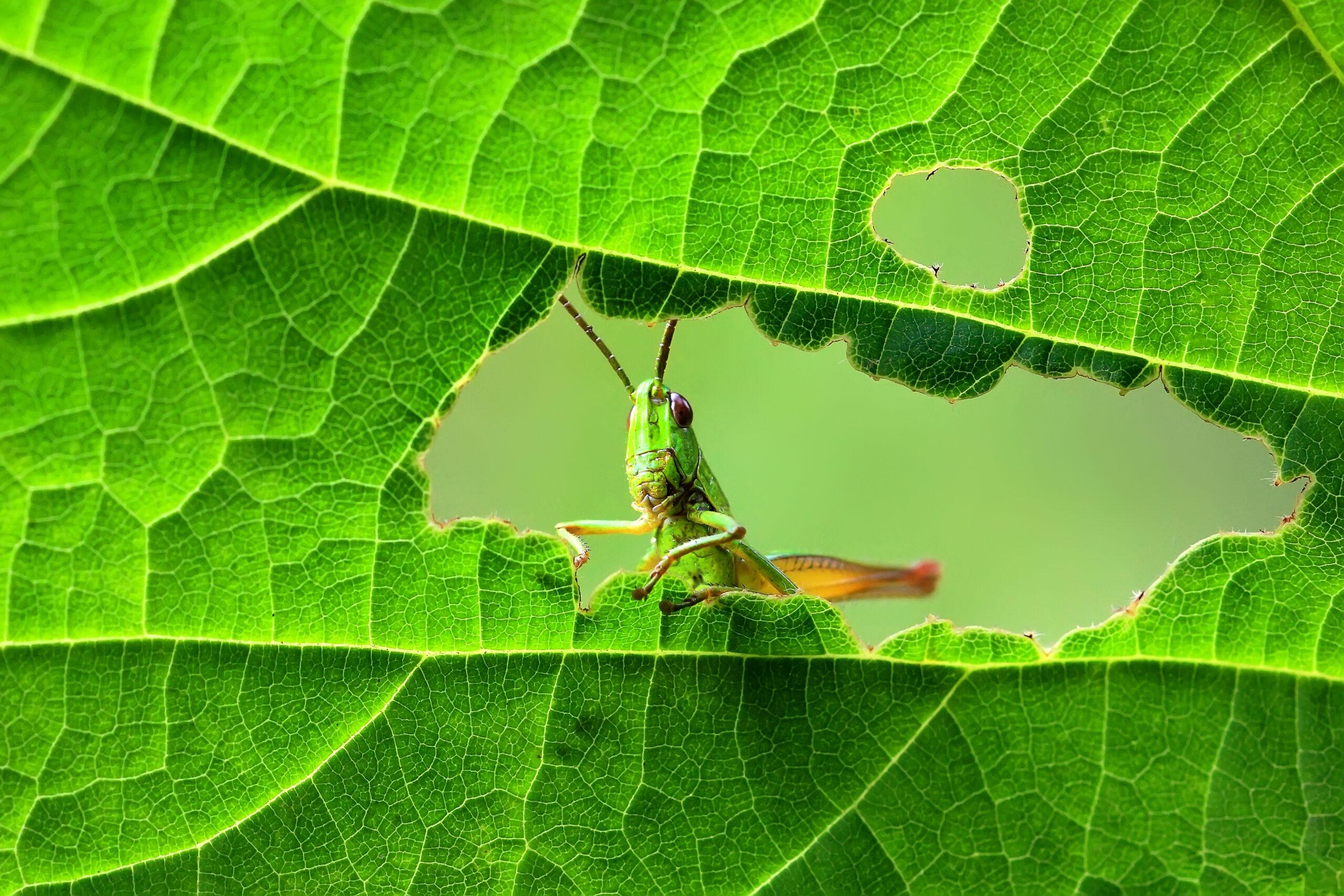
Grasshoppers are the kind of pest that can make you question your life choices in a single afternoon. One day your beans are lush, the next day they look like lace. The good news is you do not have to reach for harsh chemicals to get your garden back. With a mix of physical barriers, targeted organic treatments, and a few habitat tweaks, you can dramatically reduce grasshopper and locust damage and keep your plants growing.
Below is the exact approach I use when grasshoppers show up (especially in hot, dry years): protect the plants first, then reduce the population, then make the garden less inviting next season.
How to tell it is grasshopper damage
Grasshoppers chew with strong mouthparts, so the damage looks like ragged holes, missing leaf edges, and sometimes entire seedlings clipped off. They love tender new growth and can strip:
- Leafy greens (lettuce, chard, spinach)
- Beans and peas
- Carrots and beets (tops)
- Herbs (basil is a favorite snack)
- Fruit tree leaves and berry canes in severe years
Tip: If you go out mid-morning when it is warming up and you see insects launching away with that unmistakable click and hop, you have your culprit.
Nymph vs adult: Nymphs are smaller and wingless (or have tiny wing buds). Adults are larger with full wings and are harder to control with sprays.
Why timing matters
Grasshoppers typically overwinter as eggs in soil, then hatch in late spring to early summer. Those early, wingless nymphs stay closer to where they hatch and are much easier to manage. Once they are winged adults, they can move fast and do more damage.
First aid: protect plants today
1) Use row covers the right way
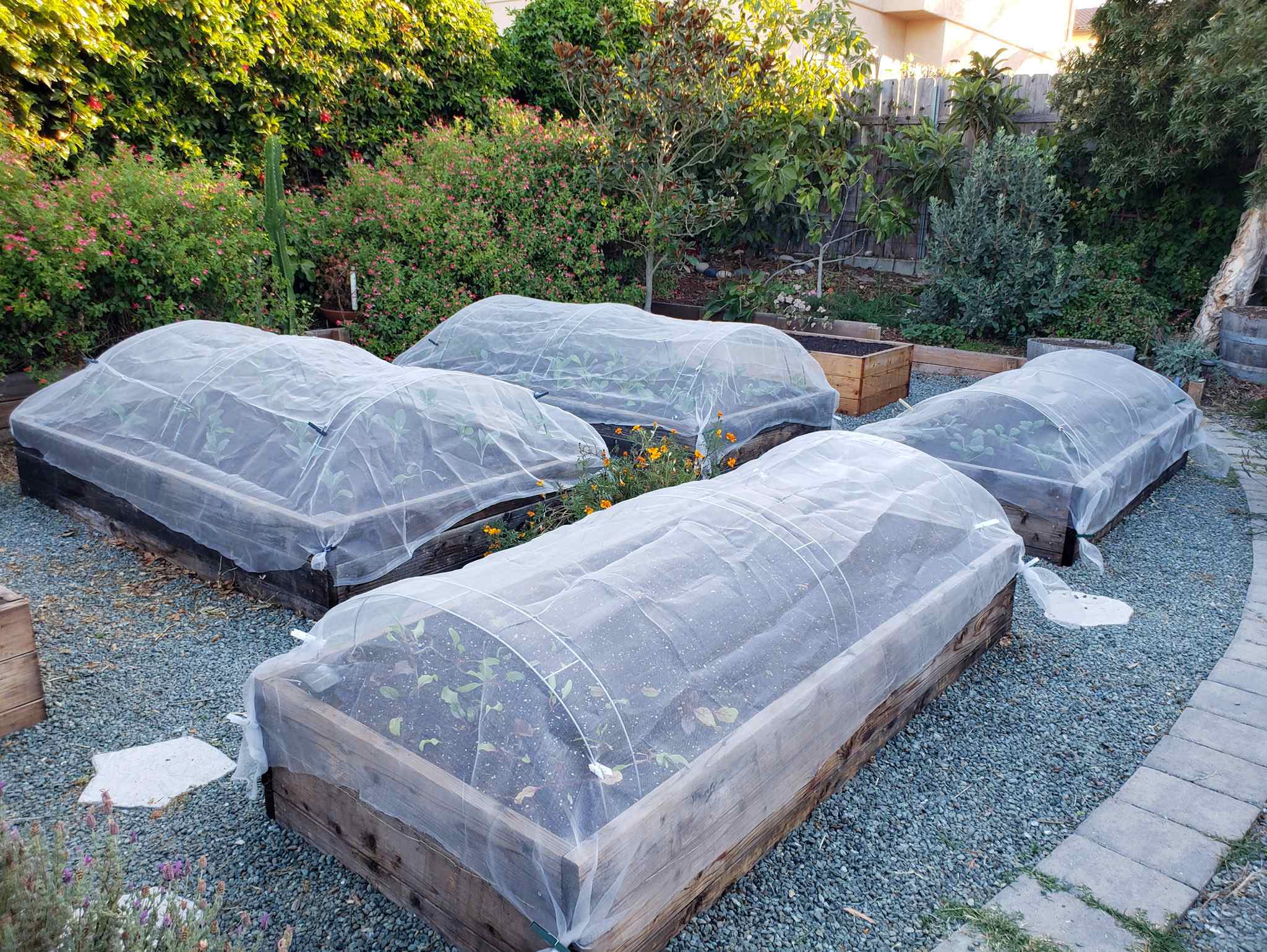
If you do one thing, do this. Physical exclusion is the most reliable organic control for grasshoppers, especially for seedlings and leafy crops.
- Use a lightweight floating row cover over hoops or a simple frame.
- Check inside first. If grasshoppers are already in the bed, you will trap them in with the good stuff. Hand remove before sealing.
- Seal the edges with soil, boards, rocks, or landscape staples. A tiny gap is an open door.
- Check that plants have room to grow and that flowers that need pollination (like squash) can be uncovered briefly when they bloom.
2) Hand pick in the cool hours
It is not glamorous, but it is effective when numbers are manageable. Grasshoppers are slower early in the morning or near dusk.
- Bring a bucket of soapy water (a small squirt of castile soap is plenty).
- Gently knock them in, especially from the plants you care about most.
- Focus on young nymphs, which are easier to control than winged adults.
Quick rule of thumb: If you are seeing multiple nymphs per plant (or you flush a little cloud with every step), skip straight to covers plus perimeter control. Sprays alone rarely keep up.
3) Create a sacrificial buffer (only if you can manage it)
In heavy grasshopper areas, a small patch of clover, grasses, or nasturtiums away from your prized beds can sometimes pull feeding pressure outward. This works best when paired with row covers or other controls, otherwise you are simply feeding the enemy.
Organic treatments that help
Neem oil (can help most with nymphs)
Neem works more like a feeding and growth disruptor than a quick knockdown. On chewing insects like grasshoppers, results can be variable, but it can help most on nymphs when you are consistent.
- Spray in the evening to reduce leaf burn risk and to be gentler around beneficial insects.
- Coat the foliage evenly (coverage matters), including undersides where pests may rest.
- Repeat every 5 to 7 days during active pressure, and after rain.
- Follow the product label, and avoid spraying in high heat. If temperatures are climbing, wait for a cooler window.
If you want my full mixing and timing tips, see our neem guide: neem oil for plants.
Important: Neem can impact insects it contacts, so avoid spraying open blossoms and do not spray when pollinators are actively foraging.
Diatomaceous earth (DE) in dry weather
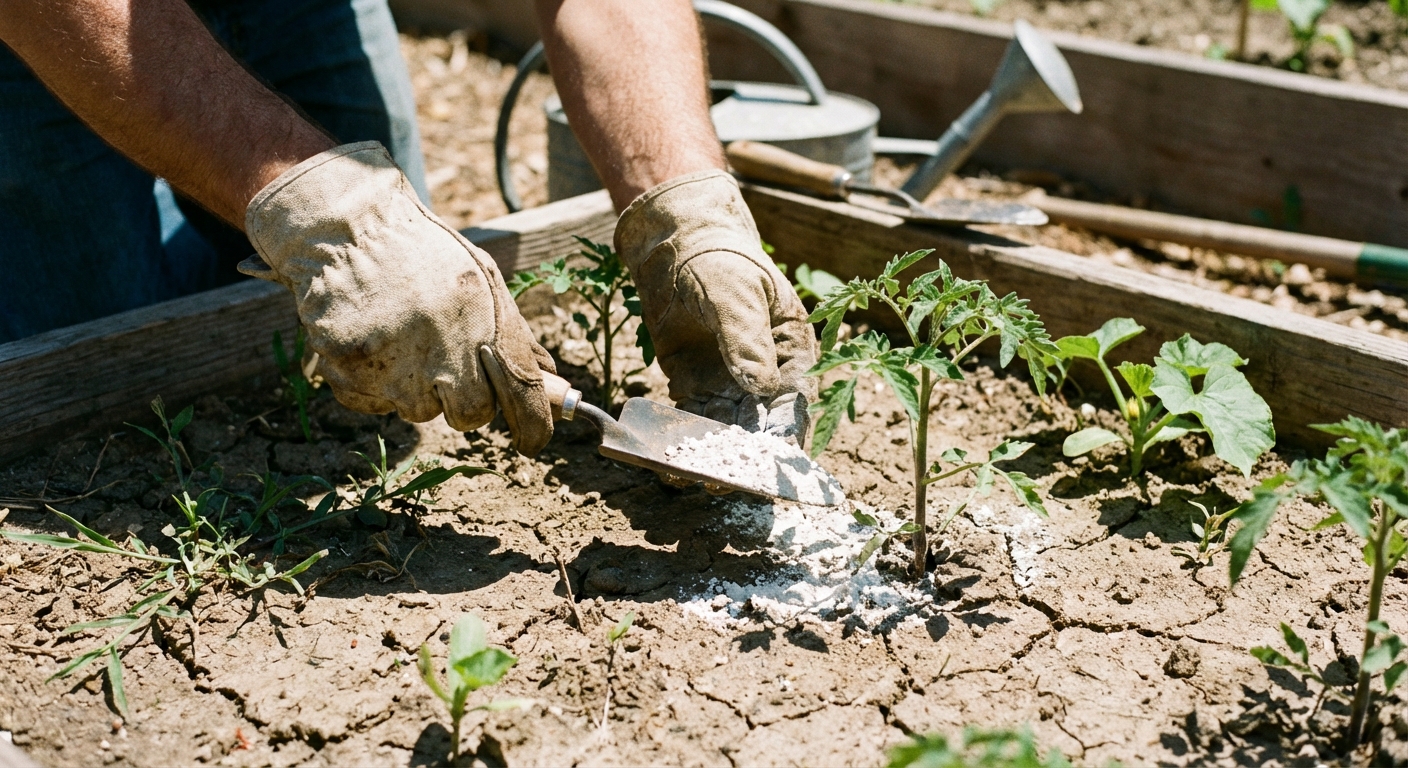
Food grade diatomaceous earth is a fine powder that works by abrading and drying the insect’s outer coating. It can affect many insects it contacts (not just soft-bodied ones), so use it deliberately. Grasshoppers are tougher than aphids, but DE can still help knock back young nymphs and slow feeding when conditions are right.
- Apply a light dusting on foliage and around the base of plants when leaves are dry.
- Reapply after rain or heavy dew (moisture makes it less effective).
- Use a mask while applying, and keep it out of your lungs.
- Keep it targeted to problem areas to reduce impact on beneficial insects.
Kaolin clay film (a helpful add-on)
Kaolin clay (often sold as a garden particle film) coats leaves with a pale, dusty layer that can discourage feeding. It is not in everyone’s toolkit, but it is surprisingly useful in grasshopper country, especially on fruit trees and shrubs.
- Mix and spray according to the product label, and keep the sprayer agitated so it stays evenly suspended.
- Reapply as the white film washes off.
- Do not overapply. A thick, caked layer can slightly reduce photosynthesis and look rough even if it is doing its job.
- Expect your plants to look dusty. That is the point.
Nosema bait (Nosema locustae) for longer-term pressure
Nosema locustae is a naturally occurring microbe used in baits for grasshoppers and some locusts. It is not an instant fix, but it can reduce populations over time when applied early in the season while grasshoppers are still young.
- Apply bait to areas where grasshoppers feed and travel, often the garden perimeter, ditches, tall grass, and weedy edges.
- Use it early when nymphs are small for best results.
- Follow label instructions carefully for timing and rates.
Reality check: results can be inconsistent depending on region and species, and the effect in a single home garden can be modest. It works best as a longer-term, property-wide tool, especially if surrounding areas are treated too.
Think of nosema bait as a population pressure tool for your property, not a rescue spray for already shredded lettuce.
Last resort options (if you are getting crushed)
If you are facing outbreak-level pressure, some gardeners turn to OMRI-listed products like spinosad or pyrethrins. These can harm beneficial insects if misused. If you go this route, follow the label exactly, avoid blooms, spray at dusk, and treat only what you must.
What about insecticidal soap or garlic sprays?
Insecticidal soap is great for soft-bodied pests, but grasshoppers are not impressed. Garlic and hot pepper sprays may offer mild deterrence, but they are usually unreliable during real outbreaks. I treat them as “extra credit,” not the main plan.
Bring in the good guys
Beneficial insects
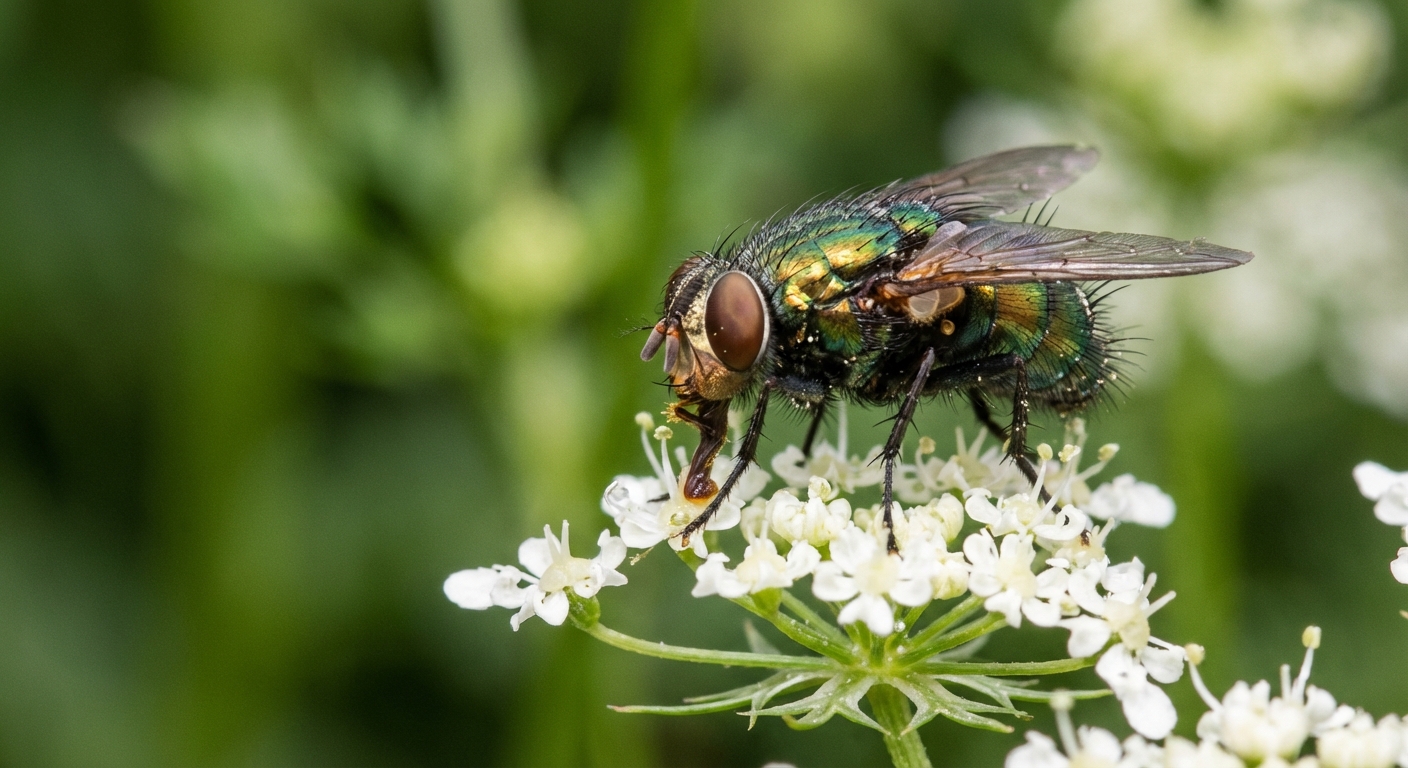
Several natural enemies help keep grasshoppers in check. Tachinid flies are a big one, along with certain parasitic wasps that target eggs.
You do not usually buy tachinid flies like you would ladybugs. Instead, you invite them by planting small-flowered, nectar-rich plants:
- Dill, fennel, cilantro (let some flower)
- Yarrow
- Alyssum
- Sweet clover
- Native wildflowers suited to your area
Birds, chickens, and other helpers
Birds will absolutely eat grasshoppers, and backyard chickens think grasshoppers are a snack from the heavens. If you can safely integrate them:
- Add a bird bath and native shrubs for cover.
- If you have chickens, do short, supervised “clean-up crews” in problem zones (protect seedlings with covers or fencing first).
Even frogs and lizards help in many climates, especially if you provide water and hiding spots.
Garden design for next season
Trim the launch pads
Grasshoppers often breed and build up in tall grass, weedy strips, and unmanaged edges, then move into the garden as things dry out.
- Mow or string-trim perimeter grass and weeds before peak season.
- Remove dense weeds near beds, especially in late spring and early summer.
- Keep mulch tidy. A thick, fluffy mulch layer is great for soil, but avoid creating weedy, overgrown hiding zones right next to tender plants.
Plant timing and toughness
If grasshoppers reliably show up in your region in midsummer, you can outsmart them by adjusting what you plant when.
- Get spring crops established early so they are sturdier by the time pressure hits.
- Grow fast crops (radishes, baby greens) under covers for quick harvests.
- Choose sturdier varieties for mid to late season, and consider transplanting instead of direct seeding for vulnerable plants.
Use borders
Grasshoppers often move in from outside. A simple border strategy can help:
- Put your most vulnerable beds closer to the house or inside a fenced zone.
- Keep a tidy, mowed strip around the garden to reduce shelter.
- Use physical barriers like fine mesh on the windward side if you see consistent movement from one direction.
My step-by-step plan
- Cover your most loved crops immediately with row cover, and remove any hoppers inside before you seal the edges.
- Scout daily for one week, especially mornings. Knock off what you can.
- If nymphs are present, apply neem in the evening on non-blooming foliage. Repeat weekly as needed (and follow the label).
- In dry weather, dust DE around seedlings and bed edges to slow young insects. Keep it targeted.
- Apply nosema bait early in the season to perimeter areas if grasshoppers are a yearly problem, keeping expectations realistic.
- Improve habitat for tachinid flies and other beneficials with small flowers and fewer broad-spectrum sprays.
- Clean up edges and mow weedy zones to reduce next year’s population.
Most importantly, do not blame yourself. Grasshopper years happen. Your job is not perfection, it is gentle persistence.
FAQ
Do grasshoppers eat tomato plants?
Yes. They often prefer tender leaves and new growth and may also nibble fruit. Tomatoes can recover if the main stems and growing tips are protected early with covers and the plants are otherwise healthy.
Will neem oil kill grasshoppers?
Sometimes, but neem is usually more effective on young grasshoppers and works best by disrupting feeding and development rather than instantly killing adults. It is a helpful tool when you have good coverage and repeat applications, especially when combined with row covers and perimeter management.
Is diatomaceous earth safe in vegetable gardens?
Food grade DE is commonly used in gardens, but it is a fine dust that can irritate lungs. Apply carefully on dry days, avoid breathing it in, and reapply after moisture. It can also harm beneficial insects it contacts, so use it in targeted areas rather than everywhere.
What is the fastest organic way to stop damage?
Row covers are the fastest damage stopper because they physically block feeding immediately. Hand picking at cool times can also make a noticeable dent, especially with nymphs.