
How to Get Rid of Fire Ants Naturally

Fire ants have a special talent for turning a peaceful barefoot backyard into a “nope” zone overnight. If you have kids, pets, or you just like walking to your mailbox without doing the stingy dance, I have good news. You can knock fire ants back naturally, without carpet-bombing your yard with harsh chemicals.
The secret is to treat the mound and the colony, then make your yard a less cozy place for them to rebuild. Let’s do this step by step, with safety front and center.
How to identify fire ants (and their mounds)
Before you treat anything, make sure you are dealing with fire ants, not harmless mound-building ants.
What fire ant mounds look like
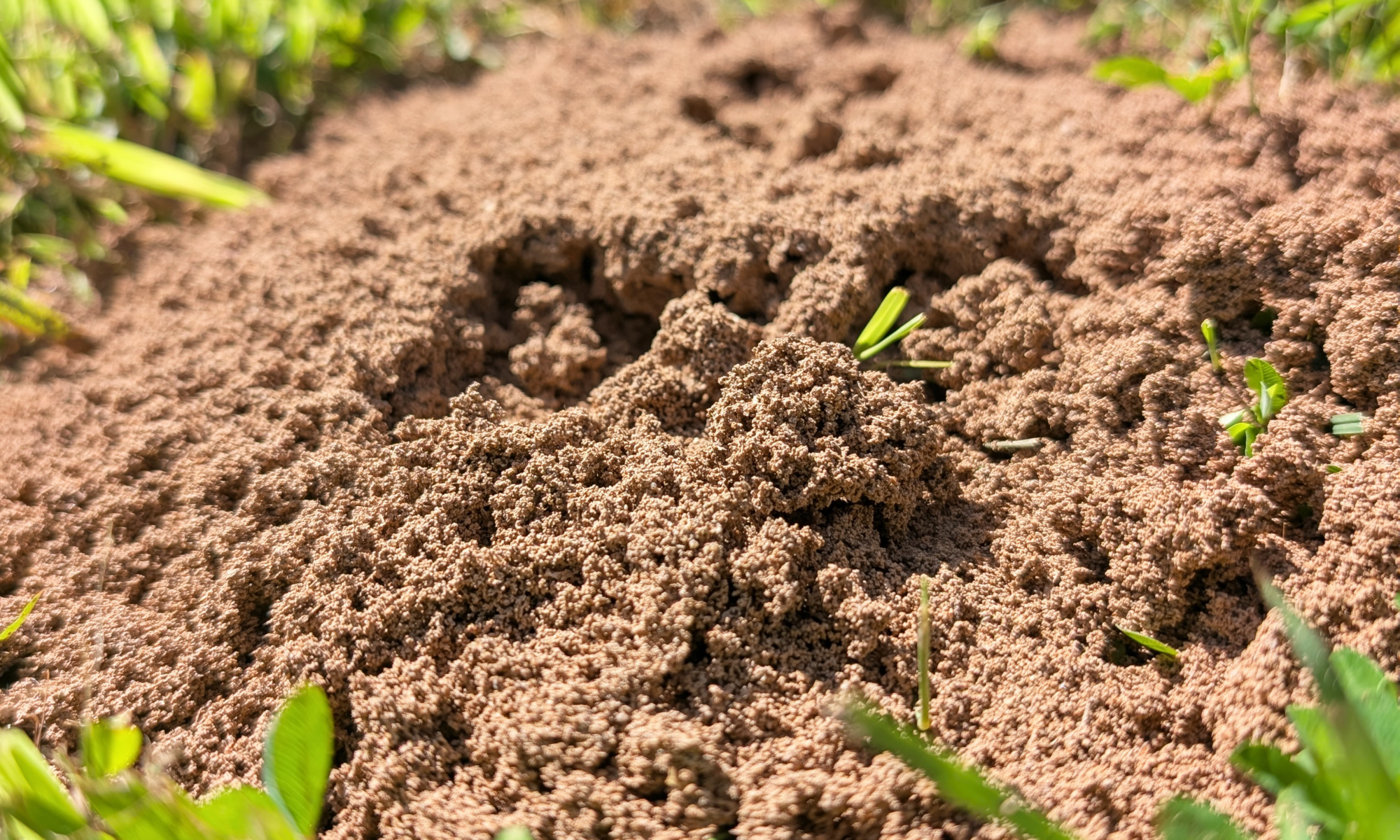
- Fluffy, loose soil piled into a dome or irregular mound, often 6 to 18 inches wide (sometimes much bigger).
- Often no obvious entrance hole on top. Fire ants usually enter from tunnels on the sides or below, but mound structure can vary with soil and moisture.
- Pop-up speed. A mound can seem to appear overnight after rain or irrigation.
What the ants look and act like
- Small, reddish-brown ants (often mixed sizes in the same colony).
- They swarm fast if the mound is disturbed and they climb up shoes and legs in seconds.
- Stings that burn, then often form white-topped pustules within a day.
Quick check: Place a small stick on the mound and gently tap. If ants boil up aggressively and start climbing, that is classic fire ant behavior.
Safety note: If anyone in your home has a history of severe allergic reactions to insect stings, treat fire ants with extra caution and consider calling a professional right away.
Safety first (especially with kids and pets)
Natural does not automatically mean harmless. The goal is “low-tox,” not “no-risk.”
- Block access: Keep children and pets away from active mounds until you have treated and rechecked them for several days.
- Wear protection: Closed-toe shoes, socks tucked into pants, gloves. Fire ants do not play fair.
- Have a sting plan: Wash stings with soap and water, use a cold compress, and consider an oral antihistamine for itching if appropriate. Seek medical help immediately for trouble breathing, facial swelling, or widespread hives.
- Avoid splash risks: Boiling water treatments can burn you badly. Only do them when kids and pets are inside and you have steady footing.
- Do not poke mounds for fun: Repeated disturbing can cause colonies to relocate or split. Check mounds quickly, then treat with purpose.
Natural ways to get rid of fire ants
Different yards need different tools. I like to start with the least fussy method for your situation, then follow up consistently.
1) Organic bait (best for whole-yard control)
If you only take one thing from this guide, take this: baits are one of the most effective low-tox ways to control fire ants across an entire yard when they are used correctly and ants are actively foraging. Contact treatments (boiling water, orange oil, DE) can be great for a few mounds, but they often miss the deeper colony and satellite nests when the infestation is widespread.
The organic option to know is spinosad, a naturally derived active ingredient from a soil bacterium. In ant baits, foraging workers carry it back to the colony and share it, which is exactly what you want.
- Choose the right product: Look for a fire ant bait labeled with spinosad and follow the label exactly.
- When to apply: Apply when ants are actively foraging, often late afternoon to early evening on a dry day.
- Quick foraging test: Set a tiny piece of greasy chip or peanut butter on a bit of cardboard near (not on) a mound. If it gets found within about 10 to 15 minutes, it is a good baiting window.
- How to apply: Broadcast lightly over the lawn or spot-treat around mounds (per label). Do not dump bait directly onto the mound unless the label says to.
- Keep it dry: Bait works best when it stays dry. Do not water it in, and avoid applying right before rain.
- Be patient: You usually see improvement in days, but full control can take 1 to 3 weeks. Reapply as the label allows, especially after heavy rain or new mound activity.
Kid and pet note: “Organic” does not mean “edible.” Store baits securely, apply with care, and keep kids and pets off treated areas until any granules are settled and per label guidance.
2) Boiling water (fast for a few mounds)
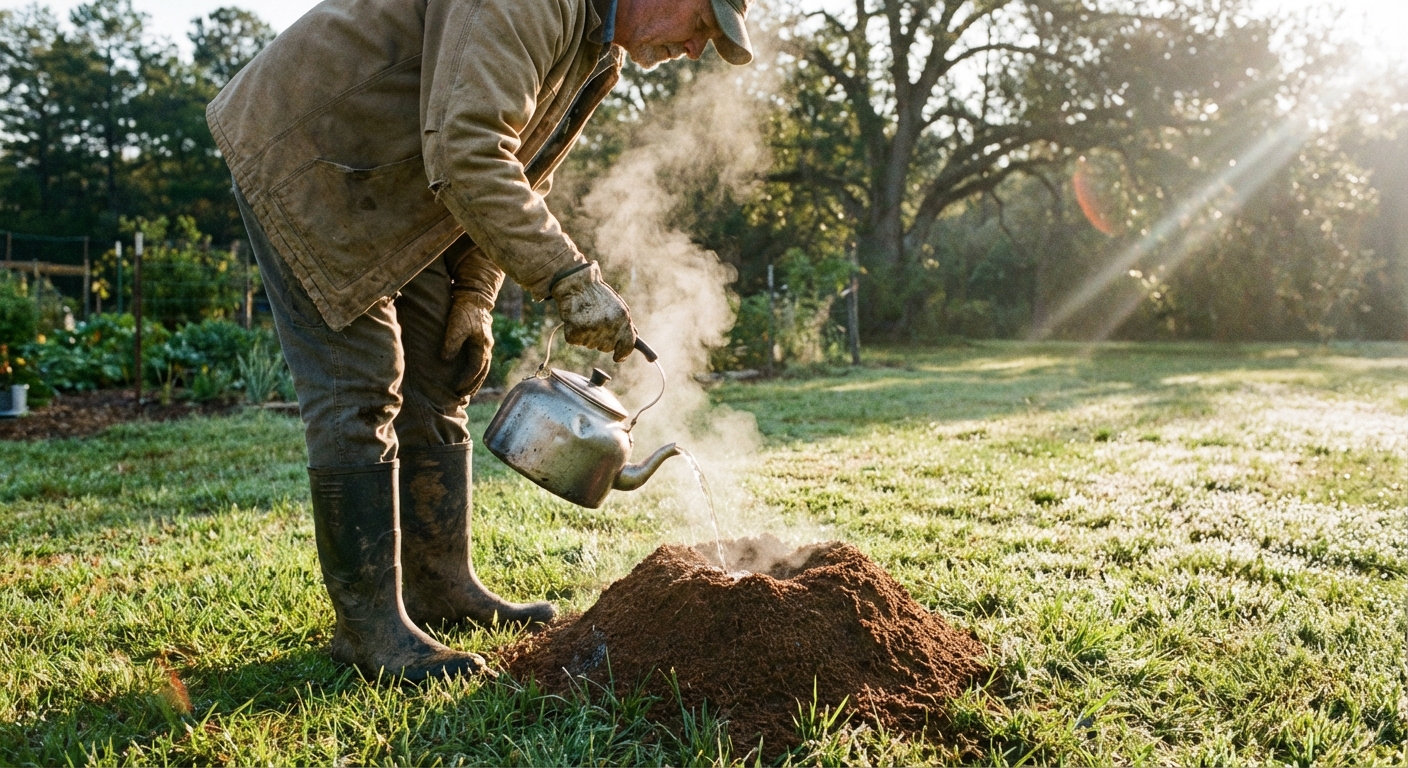
Boiling water can kill a large portion of a colony on contact, including the queen if you hit the right chambers. It is best for small infestations where you can target individual mounds.
- Best time: Early morning or late evening when more ants are in the mound.
- How much: Often 1 to 3 gallons per mound, depending on mound size.
- How to apply: Move slowly. Pour directly onto the mound, starting at the top and circling outward to soak the surrounding soil.
Optional helper: A small squirt of dish soap in the water can help break surface tension so the water penetrates the mound and tunnels more easily. Keep it modest. Too much soap can stress nearby plants.
What to expect: This can reduce activity quickly, but it often takes 2 to 3 treatments a few days apart to finish the job.
Important cautions: Boiling water can scald grass and plant roots. Use it in lawn areas where you can tolerate a dead patch, and avoid pouring near shallow-rooted ornamentals.
3) Food-grade diatomaceous earth (DE) (great as a dry barrier)
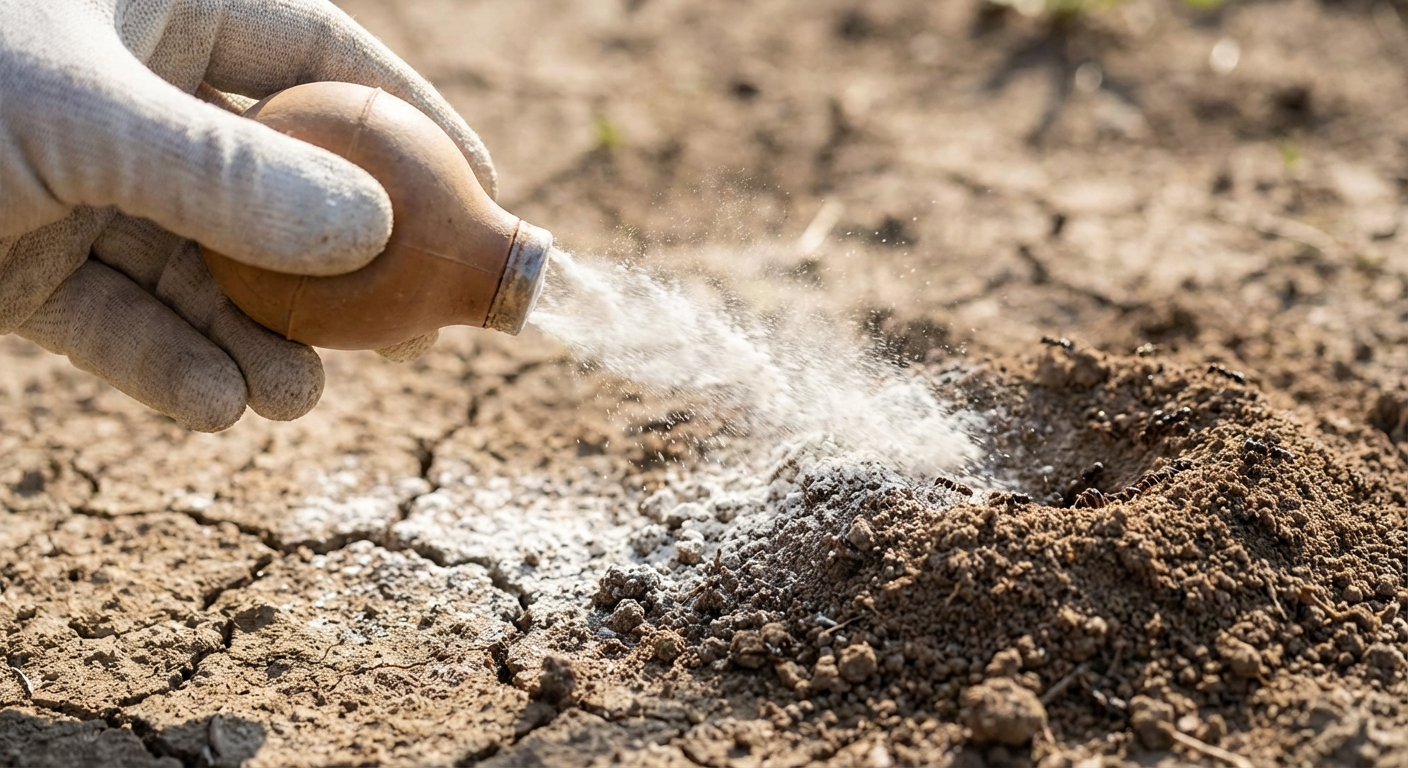
Diatomaceous earth is a fine powder made from fossilized algae. It works by damaging the waxy outer coating of insects, leading to dehydration. It is not a poison, but it must be dry to work.
- Choose the right kind: Use food-grade DE only. Pool-grade DE is not safe for this use.
- When to apply: On a dry day, when rain is not expected for 24 to 48 hours.
- How to apply: Lightly dust around the mound and along ant trails. A thin layer works better than a thick pile.
Tips from the garden: Reapply after rain or irrigation. If you live in a humid area, DE is best as a supplemental tool, not your only strategy.
Pet and kid note: Food-grade DE is generally considered low-tox, but the dust can irritate lungs. Keep everyone away during application, avoid windy days, and consider a mask if you are sensitive.
4) Orange oil (d-limonene) (a natural contact killer)
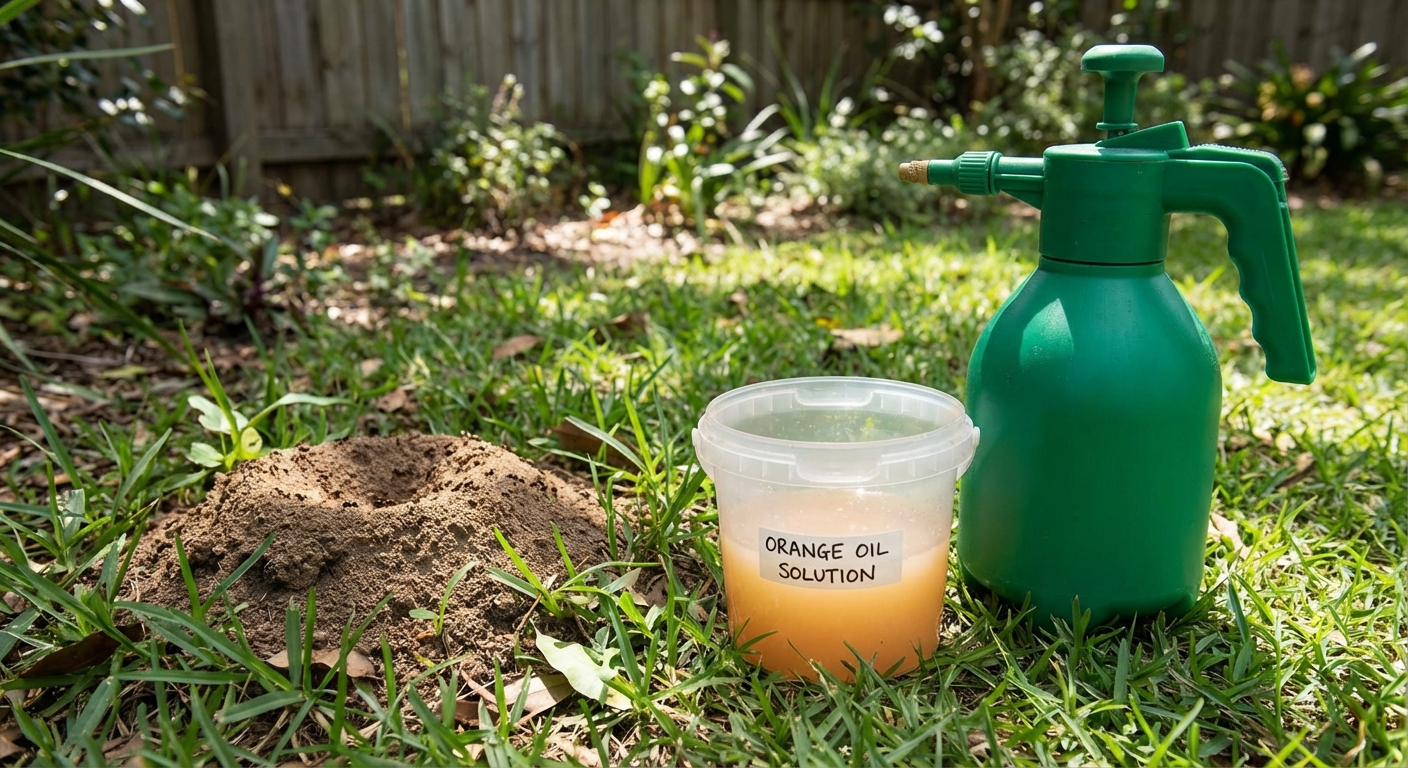
Orange oil products often rely on d-limonene, a citrus compound that can kill ants on contact and reduce mound activity when drenched into the mound. It can be effective, but it is also a common irritant, so handle it thoughtfully.
- Use a labeled product: Follow the label directions carefully for dilution and application.
- How to apply: Mix as directed and drench the mound slowly so the solution soaks downward.
- Repeat: Recheck in 2 to 3 days and retreat if you see activity.
Optional helper: Adding a small squirt of dish soap to the diluted drench can help it soak into dry soil and tunnels instead of beading on the surface. Keep it light and avoid oversoaping.
Plant caution: Concentrated citrus oils can burn plant tissue. Keep drenches away from desirable roots and avoid spraying foliage.
Pet caution: Citrus oils can be irritating to pets, especially cats. Keep pets away until the area is dry and always store concentrates securely.
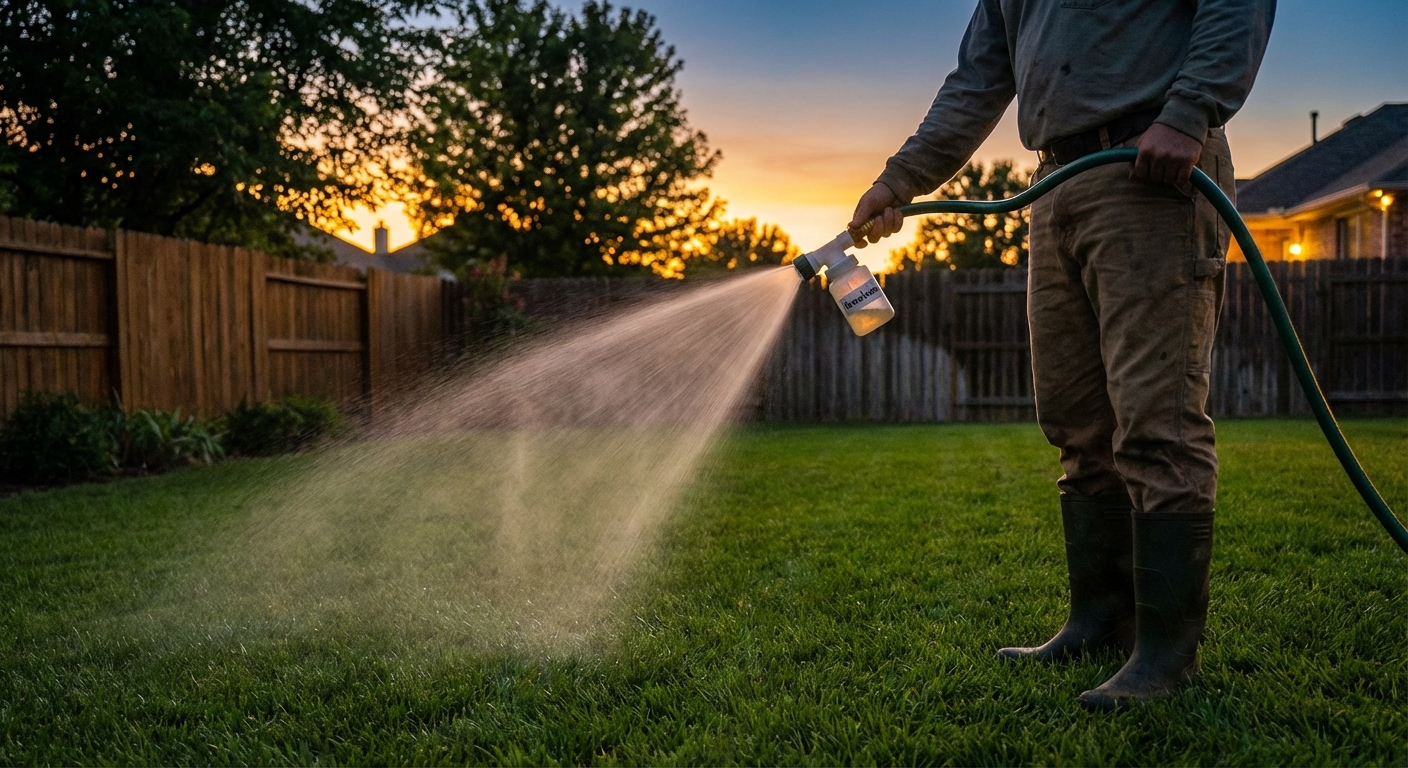
5) Beneficial nematodes (a soil support tool)
Beneficial nematodes are microscopic organisms that live in the soil and parasitize certain insect pests. They are well-supported for many soil pests, but for fire ants, results are mixed and variable. Depending on the product, species, soil conditions, and timing, nematodes may offer limited suppression and are best thought of as a supportive, soil-first step, not a stand-alone fire ant solution.
If you want to try them, buy from a reputable supplier and choose a product that clearly lists the nematode species (for example, you may see Steinernema carpocapsae marketed for soil-dwelling insects). Follow the product label and local extension guidance for your region, and keep your expectations realistic.
- Buy fresh: Purchase from a reputable supplier and check storage instructions.
- Apply at the right time: Usually in the evening or on cloudy days. UV light and heat can harm them.
- Keep soil moist: Lightly water before and after application, then keep the soil evenly moist for about a week (per product guidance).
Kid and pet note: Beneficial nematodes are generally considered safe for people and pets when used as directed.
A simple natural fire ant plan
If you want a straightforward plan that balances effectiveness and safety, here is what I suggest for most home yards:
- Mark the mounds with small flags so you can find them again.
- Use an organic bait (spinosad-based, labeled for fire ants) for whole-yard pressure, especially if you have multiple mounds.
- Wait 48 to 72 hours before doing mound drenches in the same areas, so you do not interrupt foraging and bait pickup.
- Treat hot-spot mounds with boiling water or an orange oil drench (choose one) for quick relief in high-traffic areas.
- Recheck after another 48 to 72 hours. If ants are still active at specific mounds, retreat those mounds.
- Use food-grade DE as a dry perimeter tool around problem areas and along trails, reapplying after rain.
- Consider beneficial nematodes as a soil support step, especially if you want a broader, soil-first approach.
Consistency beats intensity. A single heroic treatment is rarely the end of the story with fire ants.
Prevention: make your yard less inviting
You cannot control what your neighbors do, but you can make your space harder to colonize.
Yard habits that help
- Manage moisture: Fix leaky spigots and avoid overwatering. Constantly damp soil is prime real estate.
- Reduce food sources: Keep trash sealed, rinse recyclables, and do not leave pet food outside.
- Keep mulch in check: Mulch is wonderful, but thick, constantly moist mulch can shelter ants. Keep it a few inches away from foundations and apply at sensible depth.
- Edge maintenance: Mow regularly and trim weedy borders where mounds can go unnoticed.
- Check after rain: Walk your yard 24 to 48 hours after a storm. That is when new mounds love to announce themselves.
Protect play areas
For sandbox edges, swing sets, garden paths, and dog run corners, do quick weekly checks. I like to do a slow lap with my coffee, like a garden-loving security guard.
When to call a professional
I am all for natural methods, but there are times when you should bring in help.
- Large infestation: Multiple mounds across the yard that keep reappearing quickly.
- Mounds near high-risk spots: Child play areas, daycare yards, dog runs, patios, pool equipment, garden hoses, or electrical boxes.
- Allergy risk: Anyone in the household has had severe reactions to stings.
- Repeated failures: You have treated consistently for 2 to 4 weeks and activity remains high.
Ask for an integrated pest management (IPM) approach and tell them you prefer the least-toxic option that still works. A good pro will talk monitoring, targeted treatment, and prevention, not just blanket spraying.
FAQ
Will vinegar kill fire ants?
Vinegar can kill some ants on contact, but it usually does not reach deep enough to eliminate the colony. It is more of a temporary disruption than a true mound solution.
What is the most effective natural method for a whole yard?
For most people, a labeled organic fire ant bait (often spinosad-based) is one of the most effective low-tox approaches for widespread infestations because the workers carry it back to the colony. Results depend on correct timing, dry conditions, and following the label.
How long does it take to get rid of a mound naturally?
With boiling water or orange oil drenches, you may see a big drop in activity within a day. Full control often takes 1 to 3 weeks because you will likely need repeat treatments, baiting, and to catch new mounds early.
Is diatomaceous earth safe for dogs?
Food-grade DE is generally considered low-tox, but it can irritate lungs if inhaled. Apply lightly, avoid creating dust clouds, and keep pets away during application.
Why do fire ants keep coming back?
Fire ant colonies can move, split, or be reintroduced from nearby areas after rain. Prevention and regular scouting are what keep “one mound” from turning into “a whole neighborhood.”
One last gardener-to-gardener note
Fire ants can make you feel like your yard is under siege, but you are not helpless. Start with good identification, use baits when you need whole-yard control, treat the mounds you have, then stay gently stubborn about prevention. Your soil, your pets, your kids, and your bare feet will thank you.