How to Get Rid of Aphids Naturally


Aphids are the garden equivalent of uninvited houseguests who bring friends. They show up quietly, multiply quickly, and suddenly your tender new growth looks curled, sticky, and sad. The good news is you do not need harsh chemicals to get control. With a little observation and a few natural tools, you can knock aphids back and keep your plants thriving.
This guide walks you through identification, quick removal, homemade sprays (neem, soap, garlic), biological controls (ladybugs and lacewings), companion planting, and prevention for both outdoor gardens and indoor plants.
How to identify aphids (and the damage they cause)
Aphids are tiny, soft-bodied insects that suck sap from plants. They can be green, black, gray, yellow, brown, red, or even pink. Some are wingless, some have wings, and all of them love tender growth.
Common signs of aphids
- Clusters of tiny pear-shaped bugs on stems, leaf undersides, flower buds, and new tips
- Curled, puckered, or yellowing leaves, especially on fresh growth
- Sticky residue (honeydew) on leaves, pots, patio furniture, or the floor under houseplants
- Black sooty mold growing on that sticky honeydew
- Ant activity going up and down stems, since ants “farm” aphids for honeydew
- Stunted growth and distorted flowers or fruit
- White flakes or skins (shed aphid exoskeletons) stuck to leaves
Quick lookalikes
- Whiteflies: tiny white insects that flutter up when you disturb the plant
- Mealybugs: white, cottony clumps in leaf joints and along stems
- Spider mites: fine webbing and stippled (speckled) leaves, often in dry indoor air
- Thrips: slender insects that cause silvery scarring and distorted new growth
Where you will notice aphids first
They love the soft, juicy parts of plants. Check:
- New growth tips on roses, peppers, tomatoes, and beans
- Leaf undersides on kale, cabbage, broccoli, and other brassicas
- Flower buds on dahlias, zinnias, and nasturtiums
- Fresh houseplant growth, especially on pothos, hibiscus, citrus, and ficus
Tip: If your plant looks “crinkly” but you cannot see bugs, flip leaves and inspect with a flashlight. Aphids love hiding where your eyes do not naturally land.
One more important note: Aphids can spread plant viruses. If you see mosaic patterns, severe twisting that does not improve after aphids are gone, or oddly mottled leaves on vegetables, it can be safer to remove that plant to protect the rest of the bed.
First response: knock them off and isolate the problem
When an aphid population is still small, your best tool is simple physical removal. It is fast, cheap, and surprisingly effective.
For outdoor plants
- Blast with water: Use a firm spray from a hose to knock aphids off stems and leaf undersides. Many will not make it back, but repeat sprays every couple of days may be needed while you catch the stragglers.
- Pinch or prune: If aphids are concentrated on one tip or bud, snip it off and discard in the trash.
- Wipe gently: On sturdy plants, you can wipe clusters off with gloved fingers.
For houseplants
- Quarantine: Move the plant away from others immediately.
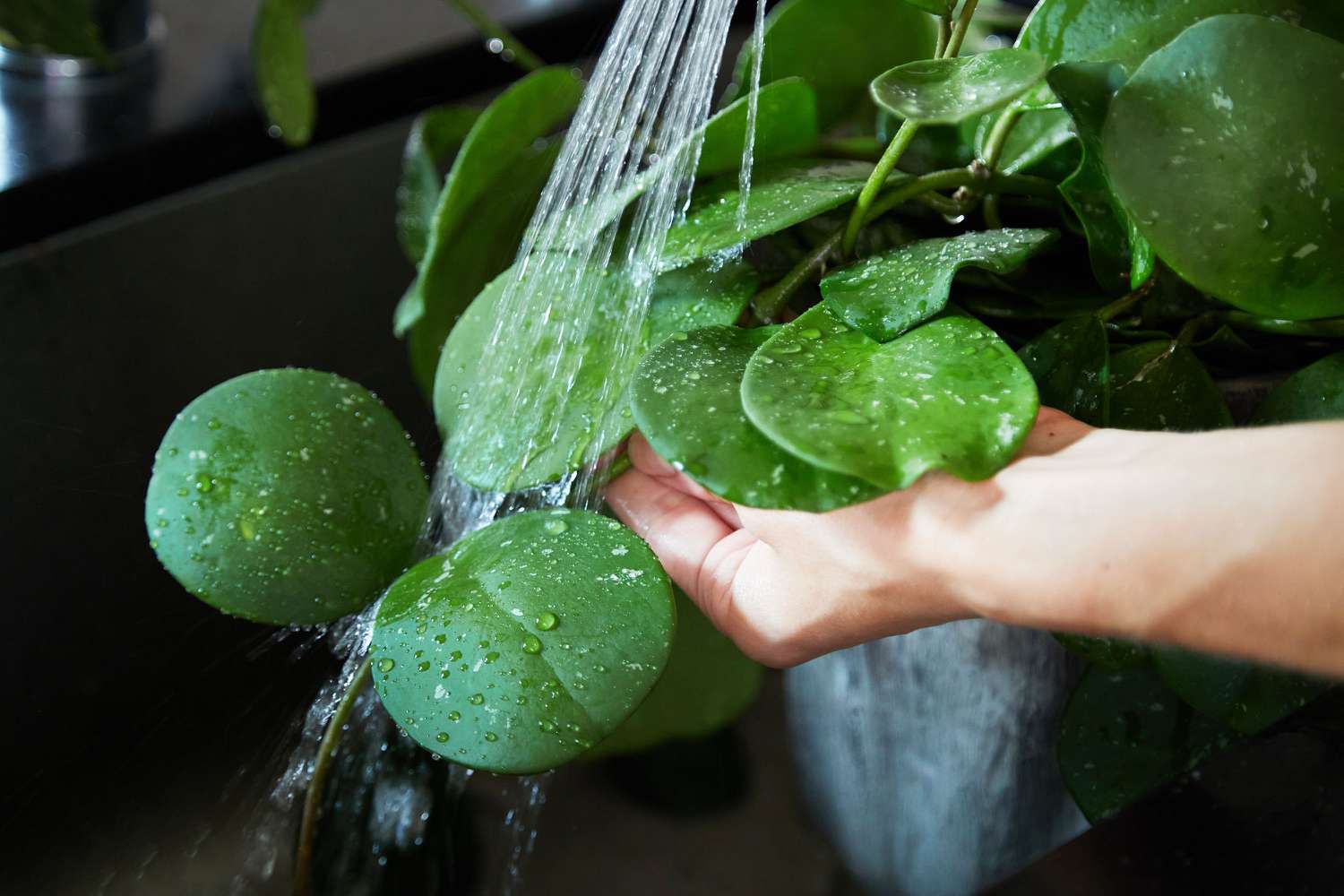
- Rinse in the sink or shower: Spray leaf undersides and stems thoroughly. Protect soil with foil or a plastic bag if you do not want to wash it out.
- Wipe the honeydew: Use a damp cloth to clean leaves so the plant can photosynthesize efficiently and so sticky residue does not invite mold.
- Check the neighbors: Inspect the plants on either side, plus any that share the same windowsill or shelf.
Homemade sprays that actually work
Natural sprays work best when you apply them thoroughly and repeat them. Aphids reproduce quickly, and missed pockets can bounce back within days.
Spray safety (quick but important): Avoid spraying open flowers when possible, and spray early morning or evening when pollinators are not active. Even gentle options like soap and neem can harm beneficial insects if hit directly.
1) Insecticidal soap spray (DIY)
Soap works by disrupting cell membranes and stripping the waxy outer coating, which causes aphids to dehydrate. It must contact the insect directly.
- Mix (gentle): 1 quart (4 cups) water + 1 teaspoon mild liquid soap (unscented castile or a gentle dish soap)
- How to use: Spray leaves and stems until wet, focusing on clusters and hiding spots. Reapply every 4 to 7 days for 2 to 3 rounds.
- Test first: Spray a few leaves and wait 24 hours. Some plants dislike soap, especially delicate ferns and certain succulents.
Important: Dish soaps vary a lot. If you are dealing with sensitive plants or you want the most consistent option, a store-bought insecticidal soap labeled for plants is usually safer than experimenting with higher DIY concentrations.
Tips for success: Spray early morning or evening so leaves do not sunburn. Avoid spraying when the plant is heat-stressed.
2) Neem oil spray
Neem can reduce feeding and disrupt growth and reproduction. It works best on young aphids and as a repeat treatment.
- Choose wisely: Not all “neem oil” products are the same. Use a product labeled for insect control on plants and follow its directions.
- Mix: Follow label instructions for your product. A common home mix is 1 to 2 teaspoons neem oil + 1 teaspoon mild soap (as an emulsifier) + 1 quart water.
- How to use: Shake often while spraying. Coat leaf undersides and tender tips. Reapply every 7 days, or after rain outdoors.
- When to avoid: Do not spray in full sun or high heat. Use caution on very tender seedlings and drought-stressed plants.
3) Garlic spray (deterrent)
Garlic spray is more of a “make this plant less appealing” approach than a guaranteed knockdown. Evidence is mixed, but it can help, especially paired with rinsing or soap sprays.
- Blend: 2 to 3 garlic cloves with 2 cups water. Let sit 12 to 24 hours, then strain well.
- Dilute: Add strained liquid to a spray bottle and top up to 1 quart with water.
- How to use: Mist leaves lightly and repeat every few days.
Important: Always strain thoroughly. Garlic bits can clog sprayers and can also sit on leaves and irritate them in hot sun.
What about vinegar or alcohol?
I skip vinegar because it can burn foliage and it is easy to overdo. Isopropyl alcohol (usually diluted) can work for a small houseplant outbreak, but it is also easy to damage leaves. If you try it, test one leaf first and keep it as a spot treatment, not a whole-plant drench.
Biological control: recruit the good bugs
In outdoor gardens, beneficial insects are your most sustainable aphid control. They turn an aphid buffet into a balanced ecosystem.
Top aphid predators
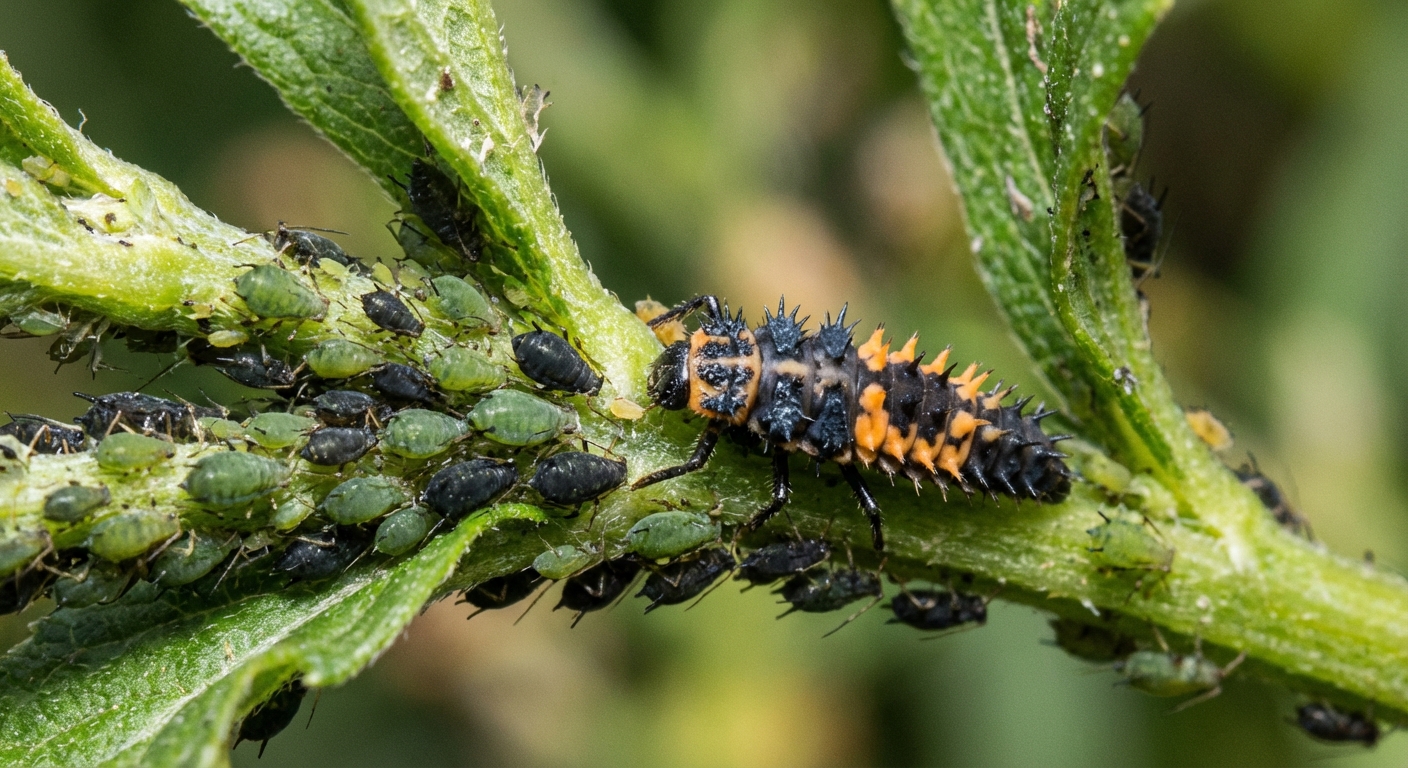
- Ladybugs (lady beetles): Adults and larvae both eat aphids. Larvae look like tiny black alligators with orange markings.
- Green lacewings: Lacewing larvae are sometimes called “aphid lions” for a reason.
- Syrphid (hoverfly) larvae: The adults look like small bees and are fantastic pollinators.
- Parasitic wasps: Tiny and generally harmless to humans. They turn aphids into tan “mummies.”
How to encourage beneficial insects (without buying them)
- Plant small-flowered nectar sources like dill, cilantro, alyssum, yarrow, calendula, and fennel.
- Skip broad-spectrum pesticides, even “natural” ones, when beneficials are active.
- Provide shallow water nearby, like a saucer with pebbles.
If you do buy ladybugs
Ladybugs can fly away. Also, many sold ladybugs are collected from the wild, which can mean heavy dispersal and inconsistent results. For the best chance of them sticking around:
- Release at dusk after lightly misting plants with water.
- Release onto plants with an active aphid population, not as a preventive.
- Expect some to leave. Think of it as a short-term boost, not a permanent solution.
Alternative: If you want to purchase a beneficial, lacewing eggs are often a steadier option for home gardens because they hatch where you place them.
Companion planting that can help
Companion planting will not magically prevent every aphid, but it can reduce pressure and make it easier for your garden to self-regulate. Results vary by garden, climate, and what else is planted nearby, so think of this as a helpful nudge, not a force field.
Plants that may repel or confuse aphids
- Chives, garlic, and onions: Often used around roses, lettuce, and brassicas.
- Catnip and mint: Strong scent deterrents. Keep mint in a pot so it does not take over.
- Marigolds: A popular mix-in for vegetable beds. They can help overall garden diversity even when pest effects are inconsistent.
Plants that attract helpful insects (most reliable)
- Dill, cilantro, parsley, and fennel: Let some flower.
- Alyssum, yarrow, calendula: Great “welcome mats” for beneficials.
Trap plants (take the hit on purpose)
Sometimes the easiest way to protect your favorites is to offer aphids something even tastier.
- Nasturtiums: Aphids often flock to them. You can hose off the nasturtiums or remove heavily infested growth.
- Mustard greens: Can lure pests away from other brassicas in larger beds.
Tip: Place trap plants a short distance from what you are trying to protect, not intertwined. It makes monitoring and removal simpler.
Prevention strategies (the part that saves your sanity)
Once you have knocked aphids back, prevention is about keeping plants resilient and making your space less aphid-friendly.
Keep new growth from getting too lush
Aphids adore nitrogen-heavy, tender growth. If you are fertilizing and seeing repeat infestations, ease up.
- Use slow-release compost instead of high-nitrogen quick feeds.
- Avoid over-fertilizing indoor plants in low light winter months.
Monitor weekly, especially in spring
- Check leaf undersides and tips of new growth.
- Look for ants, sticky honeydew, and curling leaves.
- Act early with a rinse or a light soap spray.
Manage ants
If ants are present, aphids are protected. Reducing ant access helps predators do their job.
- Use sticky barriers on stems for fruit trees and roses (follow product directions and avoid trapping beneficial insects).
- Trim branches that touch walls or fences to reduce “ant highways.”
Improve airflow and light
Crowded growth and low light stress plants and make pest problems feel endless.
- Thin crowded seedlings.
- Prune dense houseplants lightly.
- Give indoor plants brighter light where possible.
Clean up the “aphid nursery” spots
- Remove badly infested leaves.
- Clean honeydew off leaves and nearby surfaces.
- Rinse pots and saucers, especially indoors.
- Wipe down windowsills and shelves near infested houseplants.
Aphids on common plants: what it looks like
Roses
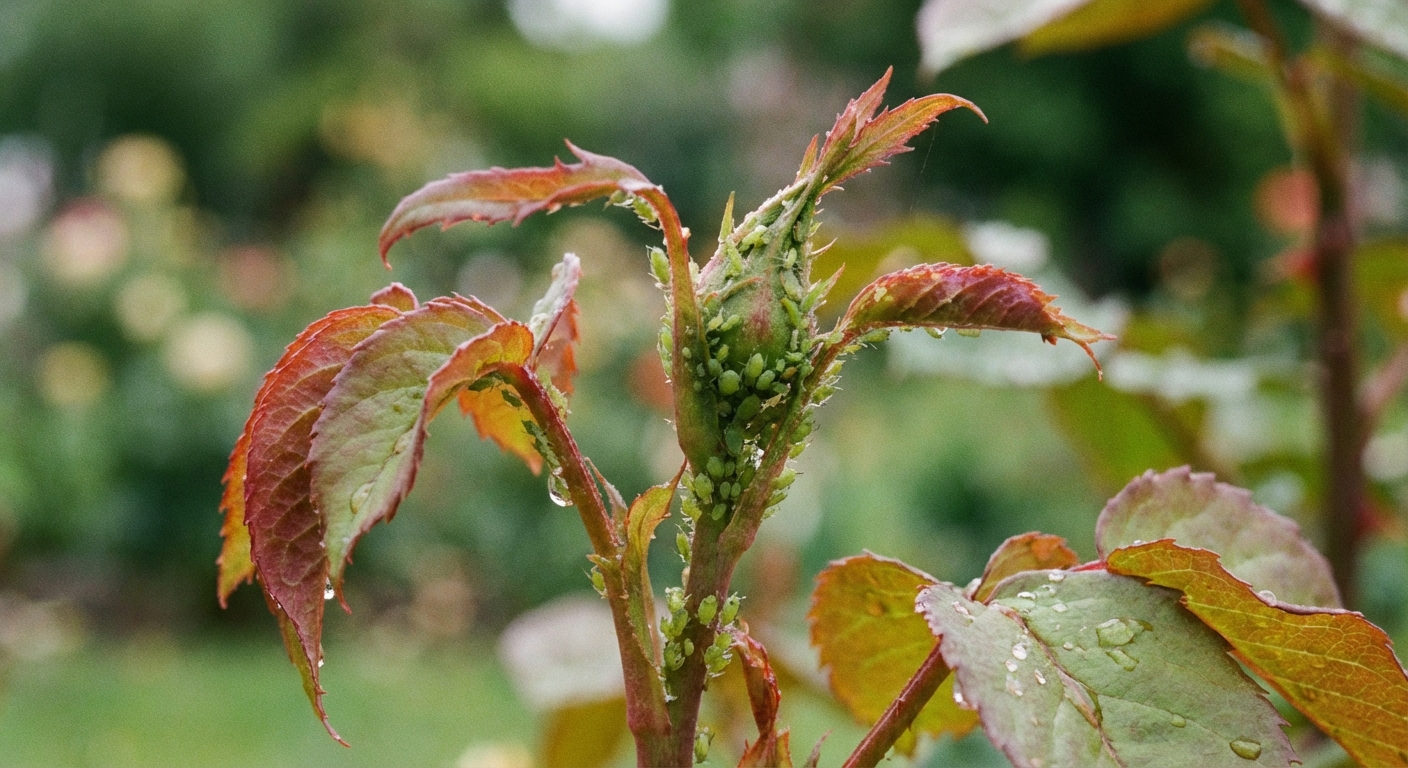
You will often see green aphids clustered on flower buds and soft tips. Buds can deform or fail to open. Start with a strong water spray every couple of days, then use soap or neem if needed.
Tomatoes and peppers
Look for curled new leaves and sticky stems. Outdoors, beneficial insects usually catch up if you avoid over-fertilizing and keep plants evenly watered.
Kale, cabbage, broccoli (brassicas)
Aphids love the undersides and the tight crinkles in leaves. Check deep folds and new centers. Soap spray works well here because you can be thorough.
Houseplants (pothos, hibiscus, citrus, ficus)
Indoor aphids often show up as sticky leaves and clusters around tender tips. Quarantine, rinse thoroughly, then repeat soap spray weekly until you see no new aphids for two weeks. Keep in mind that tiny nymphs can hide in fresh growth, so consistency matters more than strength.
Quick action plan
- Confirm: Check leaf undersides and new growth for clusters, shed skins, and honeydew.
- Reduce: Blast with water or rinse in the sink. Prune the worst tips.
- Treat: Use soap spray for quick contact control, or neem for repeat suppression. Reapply on schedule.
- Support: Encourage beneficial insects outdoors with flowering herbs and no broad sprays.
- Prevent: Avoid over-fertilizing, manage ants, and inspect weekly.
If you stay consistent for 2 to 3 weeks, most aphid problems turn from a panic into a manageable routine. And yes, you are allowed to mutter lovingly at your plants while you spray. I do.
FAQ
Will aphids go away on their own?
Sometimes outdoors, especially if predators are present and the plant is healthy. Indoors, they rarely disappear without intervention because there are fewer natural enemies.
How often should I spray?
For soap spray, every 4 to 7 days is a solid rhythm. For neem, weekly is common. Reapply after rain outdoors. Always follow label directions for purchased products.
Can I use these methods on edible plants?
Soap and neem are commonly used in organic gardening when applied properly. Wash produce well. Avoid spraying close to harvest unless the product label states a safe pre-harvest interval.
What is the sticky stuff on my leaves?
That is honeydew, a sugary waste aphids excrete. It can lead to sooty mold and can attract ants. Wipe or rinse it off to help your plant recover.