How to Fix Leggy Seedlings Indoors

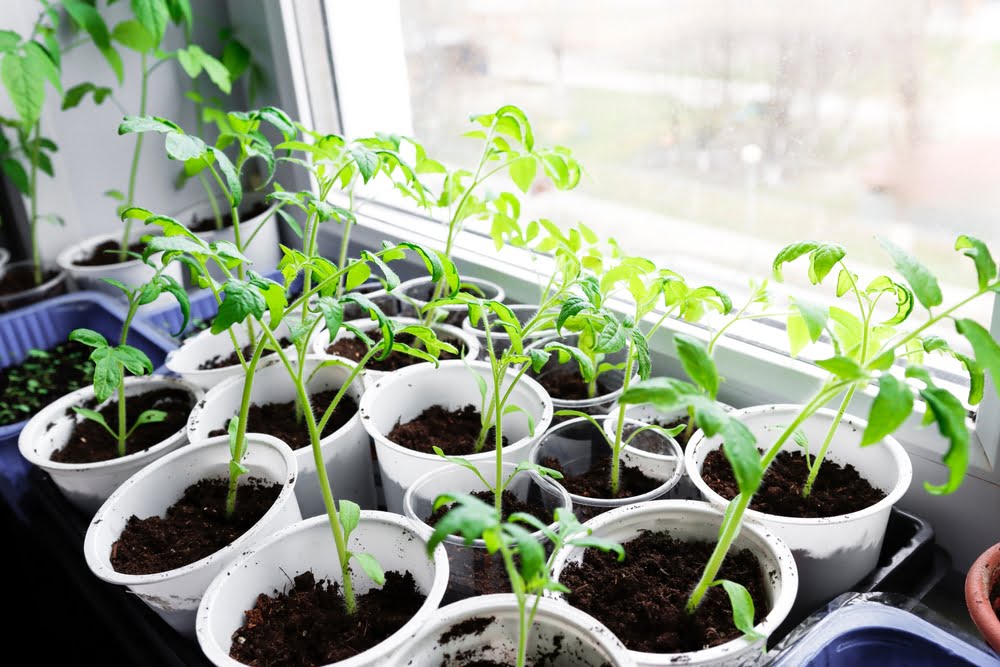
If your seedlings look like they are auditioning for a giraffe role, you are not alone. Leggy seedlings are one of the most common indoor seed-starting hiccups, and it most often happens because your baby plants are reaching for what they need.
The good news: you can often fix legginess, strengthen stems, and still end up with sturdy transplants. Below I will walk you through the “why,” the quick saves you can do today, and the moments when starting over is actually the kindest option.

What “leggy” means
Leggy seedlings have stems that are unusually long, thin, and weak compared with their leaf size. They may lean, flop over, or snap when you touch them. Often they are lighter green than they should be.
What is happening is called etiolation: the seedling is stretching toward light and prioritizing height over strength. It is not a moral failure. It is a lighting and environment problem.
Quick leaf note for beginners: cotyledons are the first “baby” leaves. True leaves come next and look like the plant’s adult leaves. Most feeding and potting decisions are based on true leaves.
The most common causes
Not enough light (or the light is too far away)
This is the big one. A bright window can still be too dim for strong seedlings, especially in late winter when the sun is low and days are short. And even good grow lights lose intensity quickly with distance. If the fixture is too weak or too high, seedlings stretch.
If you cannot lower the light enough, consider boosting intensity by:
- Adding a second fixture so light covers the whole tray evenly
- Using reflective surfaces (white walls, white poster board, or a reflective panel) around your setup
- Upgrading to a higher-output light designed for seedlings
Too much heat after sprouting
Warmth helps seeds germinate, but once they sprout, excessive heat encourages fast, soft growth. Combine warm air with borderline light, and legginess shows up fast.
Overcrowding
When seedlings are shoulder-to-shoulder, they shade each other and compete for light. The result is a tray full of skinny, leaning stems.
Seeds started too early
When seedlings have to live indoors for too long, they often outgrow the light setup you have. They stretch as they wait for outdoor conditions to cooperate.
Fix it fast: what to do today
1) Move your grow lights closer
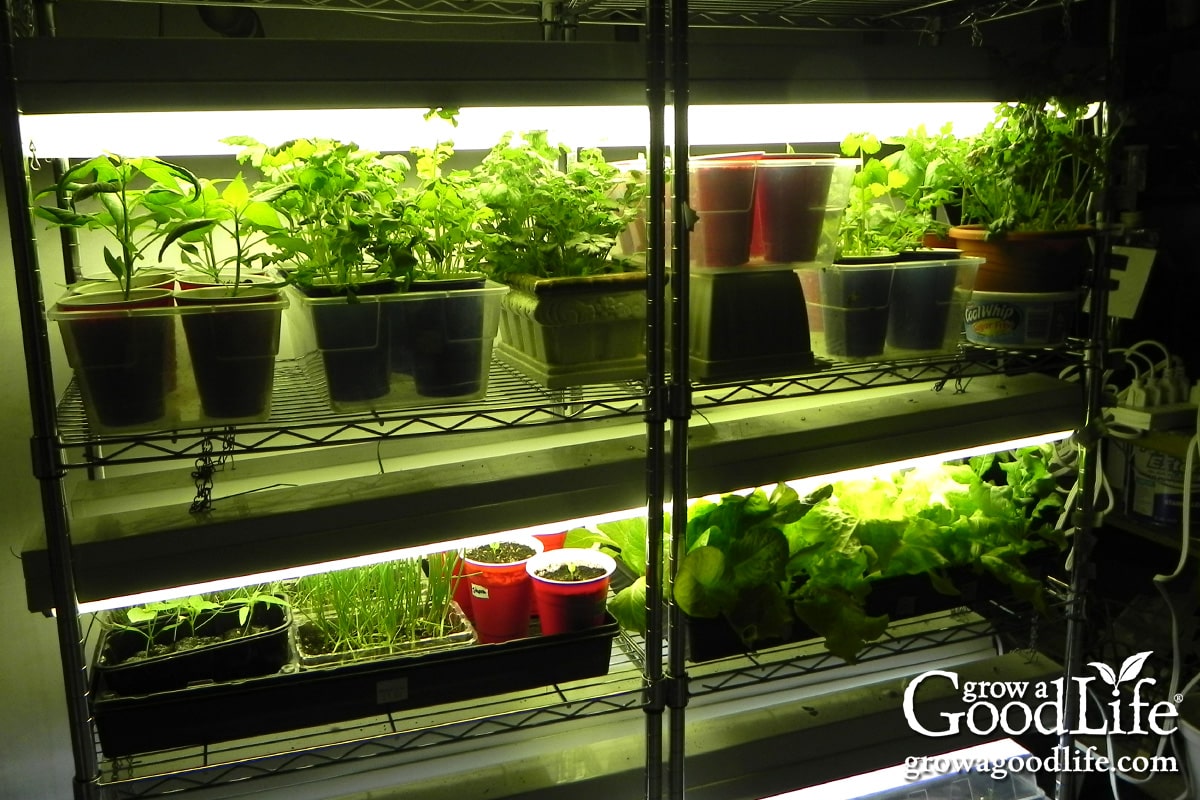
Put the light closer to the seedlings so they stop reaching. As a general starting point:
- LED shop lights: often 2 to 4 inches above the tops of seedlings
- Stronger LED grow panels: commonly 6 to 12 inches, depending on the model
Important caveat: every light is different. Follow your manufacturer’s guidance when you have it, and use plant behavior as your real-time feedback. If leaves look bleached, curled, or crispy, the light is too intense or too close.
After you adjust the light, you should see new growth come in more compact within a few days. Old stretch will not shrink, but you can absolutely grow your way out of it.
A simple rule: if your seedlings are leaning, rotate the tray and bring the light closer (safely). Then watch the new growth.
2) Give them a long, consistent “day”
A timer is your best seed-starting friend. Most seedlings do well with 14 to 16 hours of light per day, followed by darkness. Leaving lights on 24/7 can stress plants and still does not fix weak intensity.
3) Cool them down (within reason)
Once seeds have germinated, many common vegetables prefer slightly cooler conditions than we expect indoors.
- Aim for roughly 60 to 70°F for many seedlings after sprouting.
- Keep trays off heat mats once most have germinated.
- Move them away from heat vents, radiators, and the top of the fridge.
Warm-season exception: peppers and eggplant tend to like it warmer than that. If they are too cool, they may sulk and stall even if light is good. In that case, prioritize better light and keep them comfortably warm, rather than chilling them.
4) Add gentle airflow (supporting actor, not the star)
Outdoors, wind helps build stronger stems. Indoors, a little airflow can help seedlings thicken up and can also reduce the risk of damping off by keeping the soil surface from staying constantly soggy.
Two easy options:
- Use a small fan on a low setting a few feet away so seedlings barely wiggle.
- Brush the tops lightly with your hand once or twice a day. Consider it a tiny daily “good morning” that encourages sturdier stems.
Airflow helps, but remember: the main fix for legginess is still light (and not-too-hot temps).
5) Give them temporary support if they are flopping
While you fix the light and spacing, you can prop up very leggy seedlings with a toothpick, a small stake, or a loose loop of twine. This is not cheating. It is first aid.
Potting up: a great rescue move
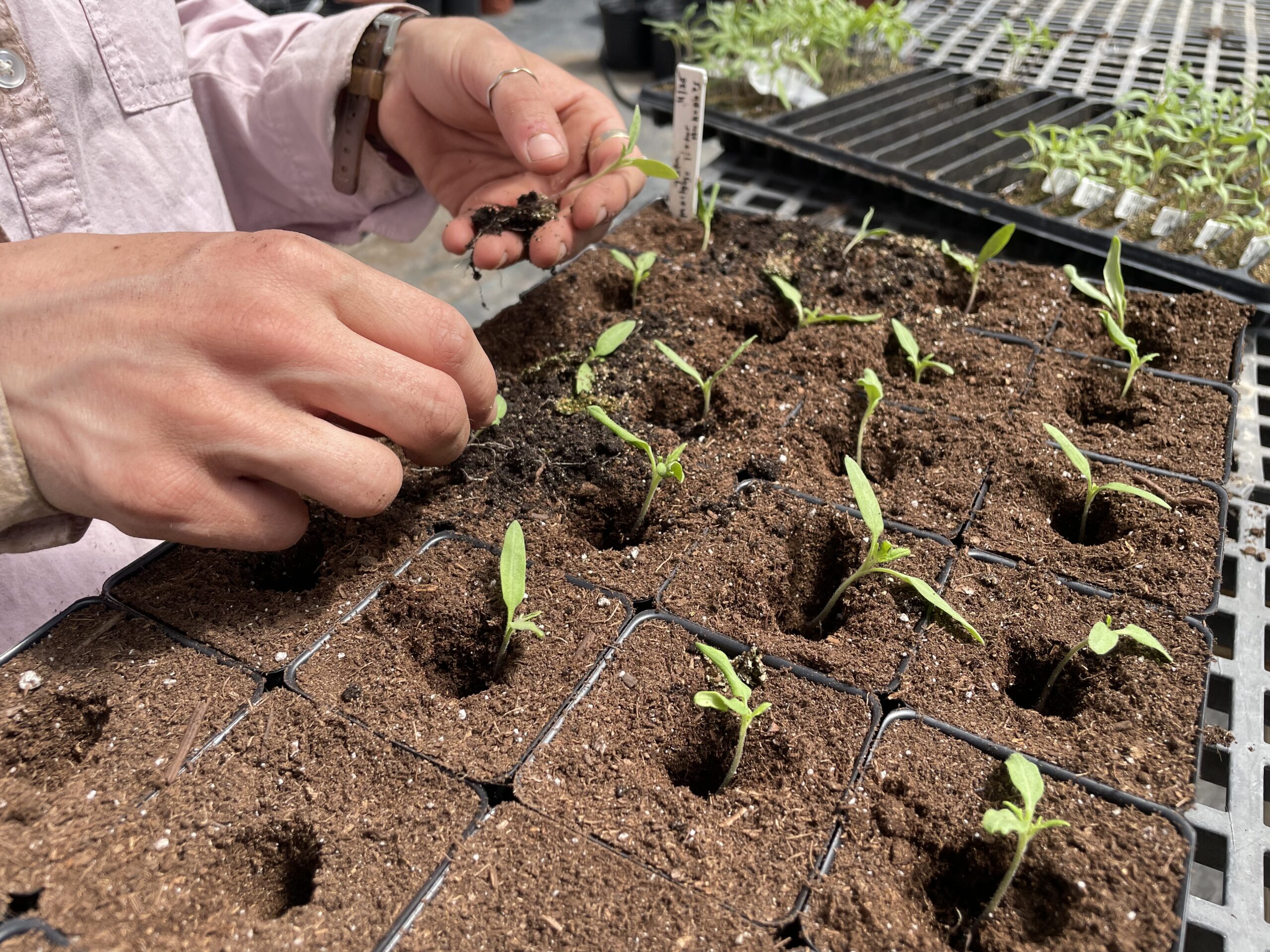
If your seedlings are already tall and wobbly, potting up is often the turning point. You move them into a deeper container and, for certain plants, bury part of the stem so the seedling can stabilize and grow additional roots.
Who can be planted deeper (usually yes)
- Tomatoes: the gold standard for deeper planting. They root along buried stems.
Who can be planted a little deeper (sometimes)
- Peppers: many growers keep peppers at the same depth, because they do not root along the stem like tomatoes. Some people pot them slightly deeper to correct a small stretch, but avoid burying a lot of stem. If in doubt, keep the original soil line and focus on stronger light and support.
- Brassicas (broccoli, kale, cabbage): you can often plant a bit deeper, sometimes up to the cotyledons, if they are stretched. Use caution: do not bury the growing point, and avoid leaving a wet stem buried deep where rot can start.
Who should NOT be planted deeper (use caution)
- Cucurbits (cucumbers, squash, melons): stems can rot if buried. Better to restart if severely leggy.
- Many herbs (basil, cilantro): can be potted slightly deeper, but they do not love having long stems buried in wet mix. Go shallow and keep airflow up.
How to pot up step by step
- Choose a container with drainage holes, one size up from what you have now.
- Pre-moisten seed-starting mix so it is evenly damp, not muddy.
- Hold seedlings by a leaf, not the stem, and lift gently.
- Set the seedling at the right depth for that plant, then backfill and lightly firm the mix.
- Water in to settle soil around the roots.
- Return under strong light with the fixture close.
Within a week, you should see sturdier new growth and less flopping.
Spacing fixes
If a tray is crowded, it is time to be brave. Overcrowding makes legginess worse and also reduces airflow.
- Thin direct-sown cells to one strong seedling per cell by snipping extras at the soil line.
- Separate seedlings grown in a shared container by gently teasing roots apart while small.
- Give leaves room so plants are not shading each other as they grow.
It feels ruthless. It is actually kindness. Strong plants need space.
Watering and feeding tweaks
Do not keep the mix constantly wet
Leggy seedlings often come with overwatering, partly because we are trying so hard to keep them happy. Let the surface dry slightly between waterings, then water thoroughly. Bottom watering works well for many setups.
Feed lightly after true leaves appear
Once seedlings have their first set of true leaves, a diluted liquid fertilizer can help, especially if they are in a sterile seed-starting mix. Use about one quarter to one half strength, and do not overdo it.
Fertilizer does not fix low light. It can actually make stretching worse if light is still inadequate.
When to restart
Sometimes restarting is the fastest path to a strong garden, especially if you are still early in your planting window.
Consider starting over if:
- Seedlings are so thin they cannot stand even with support.
- They have pinched, weak stems at the soil line or signs of damping off.
- They are severely leggy and the plant type does not tolerate deeper planting well, like cucumbers or squash.
- You cannot realistically improve light intensity in your space.
If you restart, fix the environment first, then sow again. You will be amazed how different the second batch looks.
Prevent legginess next time
- Use a real light setup: a simple shelf with LED lights and a timer can be enough for many veggies.
- Keep lights close: check daily and raise the fixture as seedlings grow. Watch for bleaching as a sign the light is too close.
- Boost intensity if needed: add a second light or use reflective surfaces to bounce light back onto seedlings.
- Adjust temps after germination: remove heat mats and avoid warm drafts (but keep warm-season crops comfortably warm).
- Start at the right time: match sowing dates to your last frost and your indoor space.
- Provide airflow: a gentle fan pays for itself in sturdier stems and healthier trays.
Next steps
Legginess is only one piece of the indoor seed-starting puzzle. If you want the whole system to feel easier and more predictable, pop over to our seed-starting basics and hardening off guidance:
Starting seeds indoors: timing, containers, soil mix, lights, and watering rhythm.
Hardening off seedlings: how to transition your indoor-grown plants to wind, sun, and real weather without shock.
Your seedlings do not need perfection. They need a few steady, sensible tweaks, and a gardener who keeps showing up. You have that part covered.