
How to Encourage Fenestration in Monstera Leaves

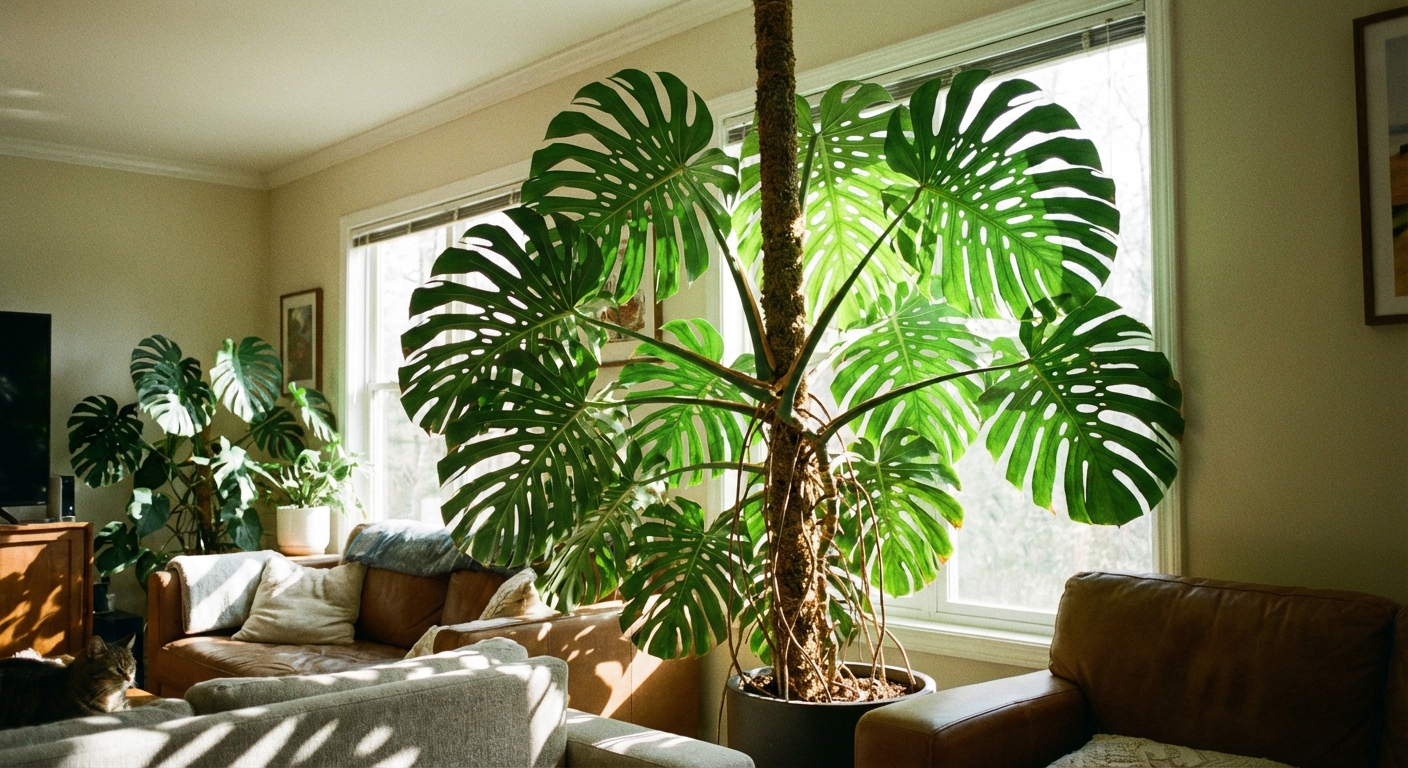
There is a moment every Monstera parent waits for: a new leaf unfurls and, instead of being a smooth green paddle, it reveals those gorgeous splits and little windows (fenestrations). If your Monstera deliciosa is still serving “big heart leaf” with no drama, you are not alone. Fenestration is not just luck. It is your plant responding to the right mix of light, maturity, support, and steady care.
I like to think of fenestration as your Monstera’s way of saying, “Ah yes, I live somewhere bright, stable, and worth investing in.” Let’s make your plant feel that confident.
What fenestration depends on
Splits and holes show up when a Monstera is:
- Mature enough to produce larger, more complex leaves (this often takes many leaves and nodes)
- Getting bright, consistent light (the biggest driver in most homes)
- Actively growing with enough water and nutrients to build big leaves
- Climbing upward like it wants to in nature
Some Monsteras fenestrate earlier than others because of genetics, the size of the cutting you started with, and how the plant was grown before it came home with you. That said, you can usually speed things up by improving the environment and reducing stress.
Light: the fast track
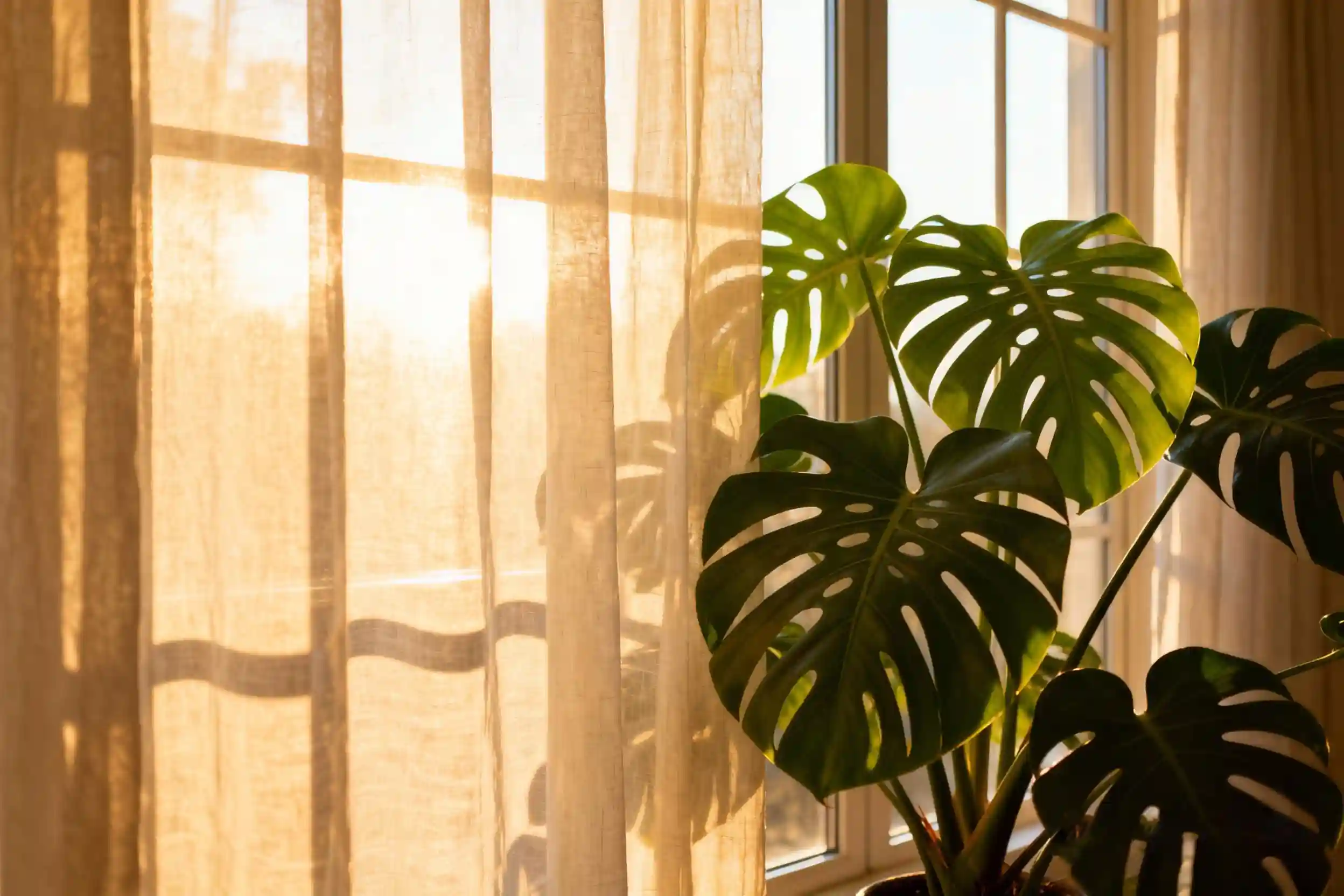
If I could only give you one lever to pull, it would be light. Bright light powers bigger leaves, tighter node spacing, and stronger stems that can support more dramatic fenestration.
Target: bright, indirect light
A Monstera that is “surviving” in medium light may stay green and keep making leaves, but it often stalls on fenestrations. For faster splits, aim for bright, indirect light for most of the day.
- East window: gentle morning sun is usually perfect
- South or west window: often excellent, but can be too intense in some climates or seasons, so filter with a sheer curtain or pull the plant a few feet back
Quick note: Window direction and intensity depend on your hemisphere, latitude, tree cover, and even glass coatings. If your plant is getting harsh sun, it will tell you.
Signs your light is too low
- Long gaps between leaves and slow unfurling
- Leggy growth reaching toward the window
- New leaves that stay small compared to older ones
- No increase in fenestrations over multiple growth cycles
Signs your light is too strong
- Bleaching or pale patches on newer leaves
- Crispy, scorched areas where the sun hits
- Leaf edges curling along with rapid drying
If you see these, back the plant up from the window, add a sheer, or reduce direct sun exposure gradually. Monsteras can acclimate, but they do not love sudden changes.
Grow lights count
If your best window is already spoken for by a cat, a toddler, or your own sanity, a grow light can be the difference between “cute plant” and “jungle statement piece.” “Full spectrum” is a nice phrase, but what matters most is brightness at the leaves. Choose a true plant grow light with enough output to actually reach your Monstera’s canopy.
- Duration: 10 to 12 hours daily is a solid starting point
- Distance: follow the manufacturer’s guidance, then adjust slowly if the plant stretches (too far) or pales (too intense)
Clara note: Rotating the pot can help even growth, but it is optional. If your Monstera is firmly tied to a pole and aerial roots are attached, do not force a weekly quarter-turn. Rotate slowly, or simply aim the front toward the light and let it settle in.
Support: help it climb
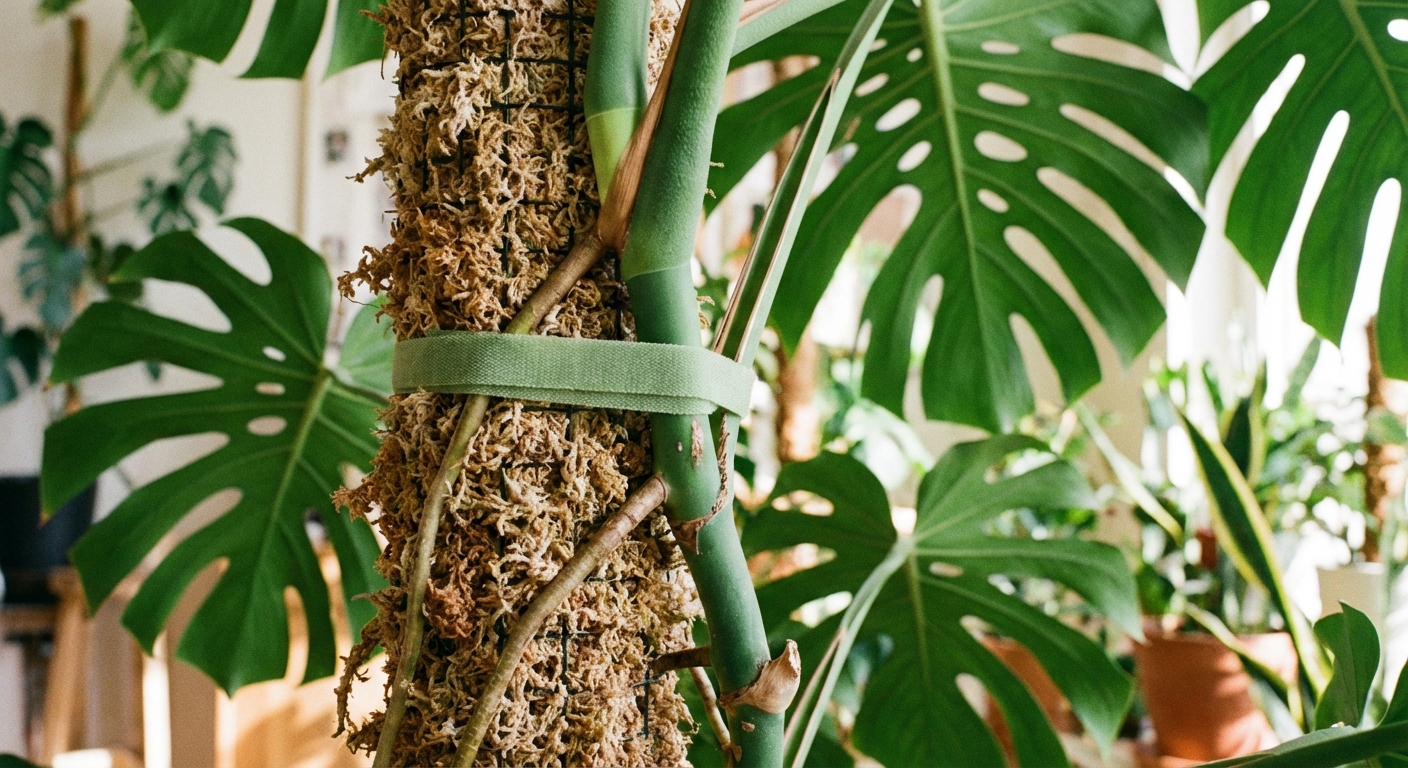
In the wild, Monstera deliciosa is a climber. When you let it sprawl, it spends energy making long stems that flop around looking for something to grab. When you give it a pole or plank, it switches into upward growth mode, which often leads to larger leaves and more fenestration.
Best supports
- Moss pole: great for aerial roots to grip
- Coir pole: lower maintenance than moss and still provides texture
- Cedar plank: a natural option that encourages upward growth
About moist moss poles
Keeping a moss pole lightly moist can encourage aerial roots to attach and can make training easier. It is not required for fenestration. Also, a constantly wet pole can invite fungus gnats, so keep it gentle and let it dry a bit between dampening.
How to tie it up
- Use soft plant ties or Velcro-style garden tape
- Secure the stem, not the leaf petioles (those leaf stalks need freedom to move and angle toward light)
- Add ties gradually as the plant grows, like guiding a teenager instead of wrestling a toddler
Watering: keep it steady
Fenestration shows up during active growth. Active growth needs consistent moisture, not soggy soil and not bone-dry cycles that stall the plant.
When to water
Water when the top part of the pot has dried out, then water thoroughly until excess drains out. Empty the saucer so the roots are never sitting in water.
- Small pots: let the top 1 inch dry
- Medium to large pots: let the top 2 to 3 inches dry, or roughly the top 25 to 40 percent of the pot
Issues that slow growth
- Chronic overwatering: roots struggle, growth slows, leaves may yellow
- Letting it get too dry too often: growth pauses and new leaves may unfurl smaller or with less complexity
- No drainage: fenestration dreams end quickly in a pot with no escape route
If you are unsure, lift the pot. A dry pot is surprisingly light. A recently watered pot has that satisfying, grounded heft.
Soil and pot: keep it airy
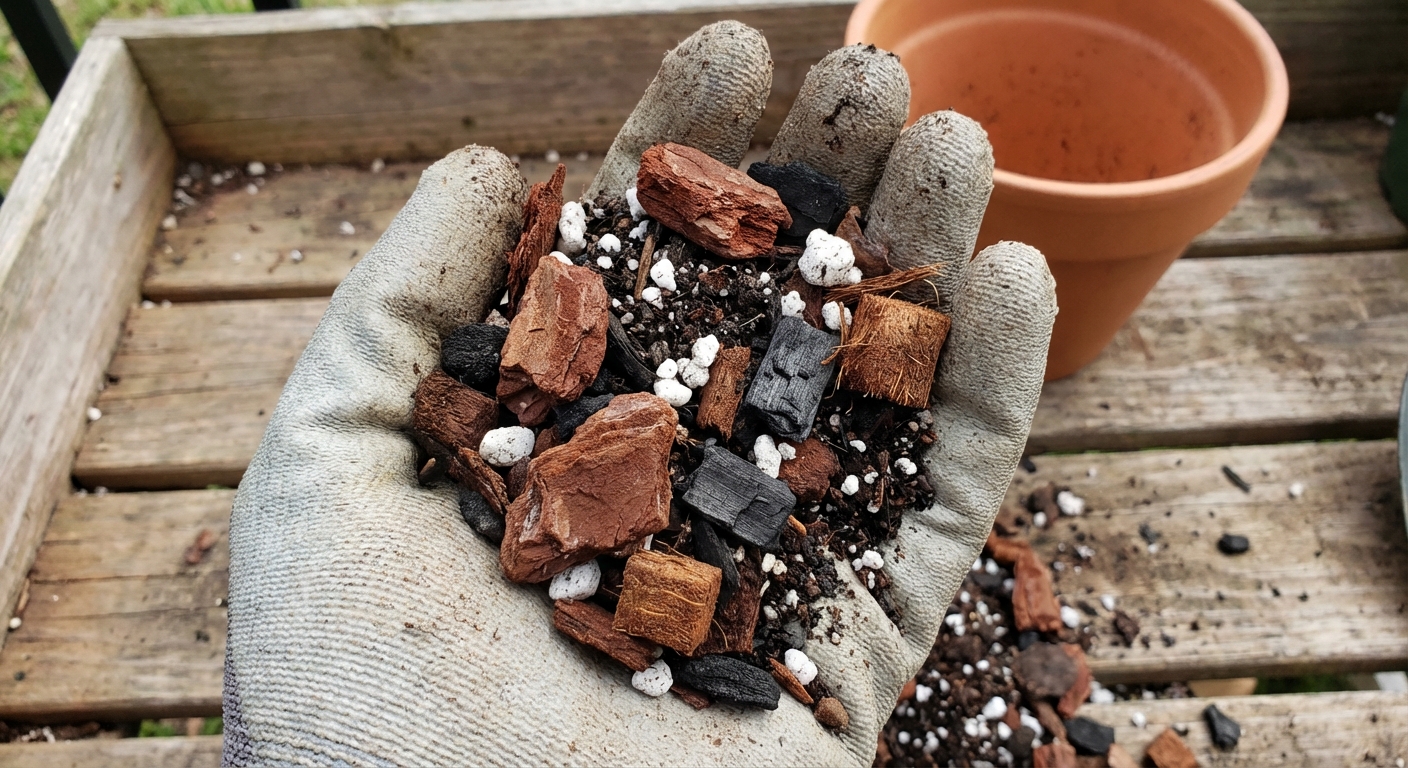
Monsteras want oxygen around their roots. Dense mixes can stay wet too long indoors, especially in lower light. For faster growth and healthier roots, use a chunky aroid-style mix.
A simple aroid mix
- Potting mix as a base
- Orchid bark for chunk and airflow
- Perlite or pumice for drainage
- Optional: a handful of worm castings for gentle nutrition
Do not oversize the pot
A pot that is too large holds moisture longer and can slow growth while the plant focuses on root expansion. Move up 1 to 2 inches in diameter when repotting, not a whole bucket.
Fertilizer: support leaf size
Fenestrations are easiest to achieve when your Monstera is producing larger leaves. Larger leaves require more resources. If your plant has been living on sunshine alone for months, it may still grow, but slowly and smaller.
When to fertilize
Feed during the active growing season, typically spring through early fall. If your Monstera keeps growing in winter under strong light, you can continue lightly, but do not force it.
What to use
- Foliage-leaning fertilizer: something in the neighborhood of 3-1-2 is a classic houseplant choice
- Balanced fertilizer: a general option like 10-10-10 can also work well
- Worm castings: as a top-dress for slow, gentle support
How much
I prefer a lighter, more frequent approach because it is forgiving:
- Start with half strength and follow the label directions
- Feed every 2 to 4 weeks during active growth
- Flush the soil with plain water occasionally (especially if you see white crust on the soil or pot)
Watch-out: Overfertilizing can cause brown leaf edges, stressed roots, and stalled growth. More fertilizer does not equal more fenestrations if the plant is unhappy.
Pruning and training
Pruning is not required for fenestration, but it can help if your plant is sprawling, lopsided, or putting energy into long, weak vines.
What to prune
- Leggy stretches: especially if you are improving light and want a fuller plant
- Truly failing leaves: fully yellowing, heavily damaged, diseased, or pest-infested leaves are fair to remove
- Extra-long vines: if they are hard to support and keep tipping the pot
Keep some green if you can
A partially damaged but mostly green leaf still photosynthesizes. I prune those mostly for aesthetics, space, or if the damage is spreading. Otherwise, I let the plant keep its solar panels.
Where to cut
Cut just above a node if you are shaping the plant, or take a cutting with at least one node if you want to propagate. Use clean, sharp pruners. I wipe mine with rubbing alcohol between plants, and yes, I talk to my ferns while I do it.
Tip: After pruning, give the plant better light and support right away. That is what encourages the next growth to be stronger and more likely to fenestrate.
Humidity and temp
Humidity will not replace bright light, but it does make leaf expansion smoother and can reduce crispy edges. Temperature also affects growth speed.
- Humidity: Aim for 40 to 60 percent if you can. Higher is welcome if airflow is good.
- Temperature: Warm and steady is best. Avoid cold drafts and keeping the plant pressed against a chilly window in winter.
If you use a humidifier, place it nearby but not blasting directly at the leaves all day. Gentle is the goal.
Fenestration vs damage
Fenestrations look intentional because they are. They are placed in the leaf as it forms and they have smooth, clean edges.
- Normal fenestration: symmetrical splits and holes, clean edges, the leaf still looks sturdy
- Accidental tears: jagged rips from rough unfurling, low humidity, pets, or bumping a tender new leaf
If your new leaf tears, do not panic. Focus on steadier moisture, gentler handling, and a bit more humidity while leaves are expanding.
Pests that stall leaves
If you are doing “everything right” and the plant still makes smaller leaves or looks a bit tired, check for pests. Thrips and spider mites are common culprits, and they can slow growth and reduce leaf size.
- Thrips: silvery scarring, tiny black specks, distorted new growth
- Spider mites: fine webbing, speckling, dull leaves
Inspect the undersides of leaves and along the stems. If you spot trouble, isolate the plant and treat promptly. A healthy, unstressed Monstera fenestrates faster.
How long it takes
Once conditions improve, you usually see the difference in the next one to three new leaves, not the old ones. Existing leaves will not suddenly develop new holes. Fenestration is built into the leaf as it forms.
In bright conditions with consistent care, a healthy Monstera can put out a new leaf every few weeks during the growing season. In lower light, it might be every couple of months. Either pace is normal. We are aiming for steady, not rushed.
Troubleshooting
It is young
Juvenile Monsteras often make solid leaves for a while, even in good conditions. If you started with a small cutting, it may simply need time and node count to mature. Keep the conditions strong and be patient with it.
Leaves are getting smaller
This usually points to insufficient light, inconsistent watering, lack of nutrition, or pests. Check light first, then review your watering rhythm, feeding, and leaf undersides.
It looks healthy but will not climb
Add support and train it upward. Monsteras that climb tend to size up faster.
Root problems
If growth has stalled, leaves yellow, or soil stays wet for too long, inspect for root rot. Healthy roots are firm and pale. Rotting roots are dark, mushy, and often smelly. Repot into a chunkier mix and adjust watering.
A simple weekly plan
If you like a checklist, here is the routine I suggest for most homes:
- Weekly: Check soil moisture and look over leaves for pests
- Light check: Make sure the plant is still getting bright, indirect light (season changes are sneaky)
- Water day: Water deeply and drain excess, then dampen the moss pole lightly if you use one
- Every 2 to 4 weeks (growing season): Fertilize at half strength
- Monthly: Adjust ties on the support and clean dust off leaves with a damp cloth so the plant can photosynthesize efficiently
That last one is sneakily important. Dusty leaves are like dirty windows, and Monsteras are light-hungry creatures.

Safety note
Since we are talking about cats and toddlers: Monstera leaves and stems contain calcium oxalate crystals and can be irritating if chewed or ingested. If you have curious pets or small kids, place the plant out of reach and consider training it upward on a sturdy support.
One last reassurance
If your Monstera is not fenestrating yet, it does not mean you are failing. It usually means your plant is asking for brighter light, a climbing path, or just a little time to grow up. Start with one change, stick with it, and watch what the next leaf decides to do. Monsteras love consistency, and they love to surprise you when you finally give them what they have been quietly requesting all along.