
How to Deadhead Flowers for More Blooms


Deadheading sounds a little spooky, but it is one of the gentlest, most rewarding garden habits you can learn. It simply means removing spent flowers so many plants stop pouring energy into making seeds and put that effort back into fresh buds instead. Think of it as a tiny, daily encouragement: “You are not done yet.”
If you have ever looked at your petunias in July and thought, “You look tired, friend,” deadheading is the pick-me-up. Below I will show you exactly where to pinch or snip for common garden flowers, plus a few important exceptions where deadheading is not the best move (or where you may want to pause).
What deadheading is (and why it works)
When a flower fades, the plant’s next goal is often to set seed. Seed-making takes energy, and that energy has to come from somewhere. By removing the spent bloom before seeds develop, you redirect the plant back into flowering mode in many repeat bloomers.
- More blooms: Many annuals and repeat-blooming perennials respond with quicker rebloom.
- Longer season: You can stretch color weeks longer, especially in containers.
- Cleaner look: Fewer brown, mushy flowers and less risk of rot in tight clusters.
- Fewer unwanted seedlings: Deadheading cuts down on self-seeding in beds.
One quick reality check: bloom is also influenced by heat, day length, water, and genetics. Some plants are simply done when they are done, no matter how lovingly you snip. We will cover common “do not deadhead” (or “deadhead early, leave later”) cases later.
Before you start: tools, timing, and a quick check
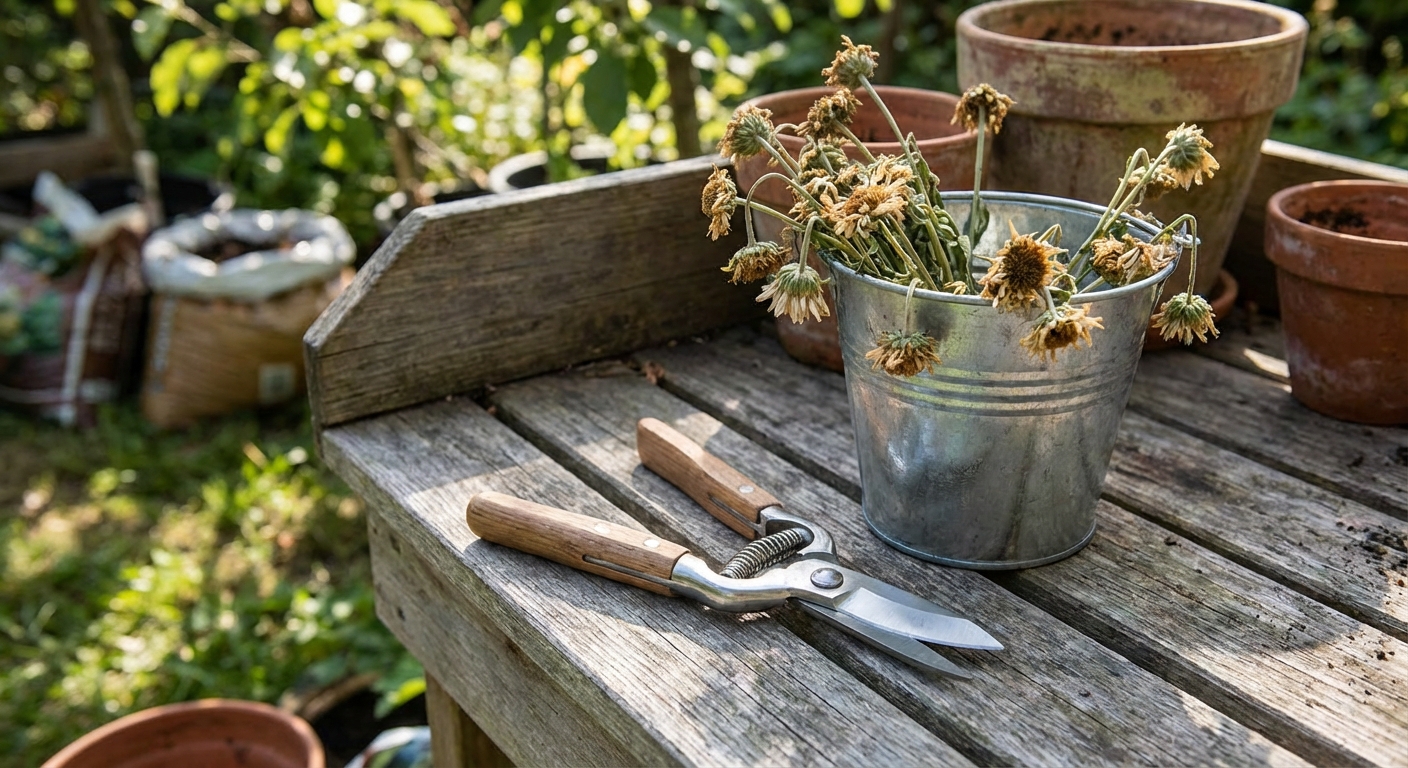
Tools
- Your fingers: Perfect for soft-stemmed annuals like petunias and marigolds.
- Clean snips or pruners: Best for roses, geraniums, and anything with tougher stems.
- A small bucket: Toss spent blooms in as you go, then compost them.
When to deadhead
- Do it early: The sooner you remove a fading bloom, the less energy goes into seed.
- Pick a rhythm: Containers often need a quick check every few days. Beds usually do well with a weekly stroll.
- Cool part of day: Morning or evening is easier on you and on the plants, especially in heat.
Quick safety and hygiene
If you are cutting through anything that looks diseased (moldy petals, blackened stems, suspicious spots), take 20 seconds and wipe your blades with rubbing alcohol between plants. Also, do not compost diseased material. Bag it or trash it so you do not invite problems back into your beds.
Quick check
Before you snip: look closely for new buds just below the spent flower. Your goal is to remove the old bloom without sacrificing the next round.
Visual cue: A spent bloom looks papery, browned, or collapsed. A developing bud looks firm, plump, and intentional.
The basic “where to snip” rule
Most garden flowers follow one of these patterns:
- Single flower on a stem: Remove the bloom and cut back to the next leaf node or bud.
- Cluster of blooms: Remove individual spent flowers, or remove the whole cluster once most of it is fading, cutting back to a strong set of leaves.
- Spikes: Snip off the spent portion, or remove the whole spike once it is done, depending on the plant.
Leaf node is just a fancy way of saying “the spot where leaves join the stem.” If you are unsure, cut back to the first set of healthy leaves below the spent flower. That is usually where dormant buds are waiting.
Easy visual rules: for clusters, remove the whole cluster when it looks mostly tired. For spikes, cut when about two-thirds of the spike has finished blooming and it is no longer pulling its weight.
How to deadhead common flowers
Below are my practical, dirt-under-the-fingernails instructions for the flowers most of us grow every year.
Petunias
Petunias are famous for blooming hard and then getting sticky and tired if we ignore them. Deadheading keeps them flowering and prevents that lanky, half-bald look.
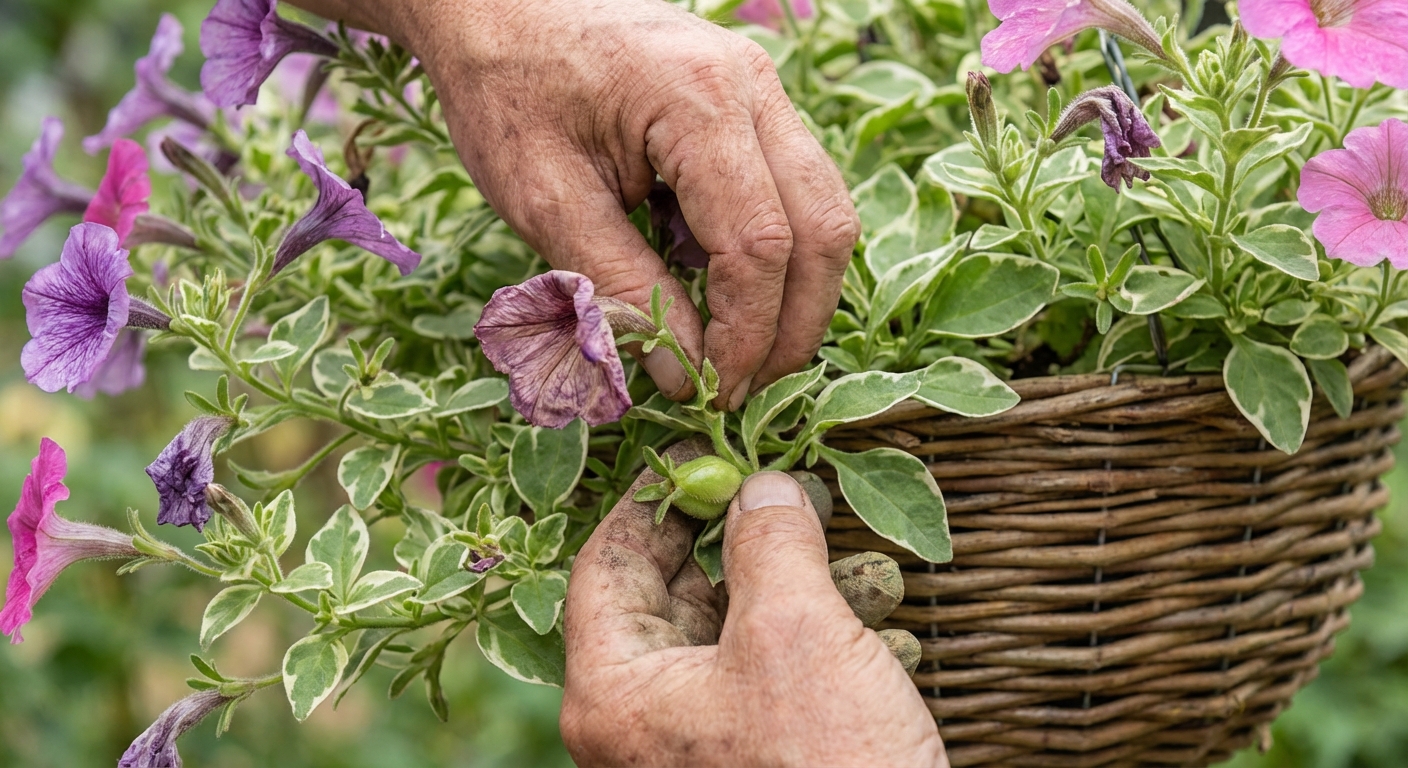
- Pinch method (easy): With your fingers, pinch off the faded flower and the little green swelling behind it (the ovary/seed pod). If you leave that swelling, the plant still thinks its job is to make seeds.
- Snip method (tidier): Use snips to cut the stem back to the next set of leaves below the spent bloom.
- Timing: Every 2 to 4 days in peak summer for hanging baskets and pots, weekly for garden beds.
Clara tip: If your petunias are long and stringy, combine deadheading with a light trim: cut back a few stems by one-third, water deeply, and they will bush out again.
Self-cleaning note: Some modern petunias and calibrachoa drop old blooms on their own. You can skip the tiny daily deadheading, but a light shear or trim every couple of weeks keeps them fuller and improves the next flush.
Roses
Deadheading roses can feel intimidating, but once you know what you are looking for, it becomes a calm little ritual. The goal is to remove the spent bloom and encourage a new flowering shoot.
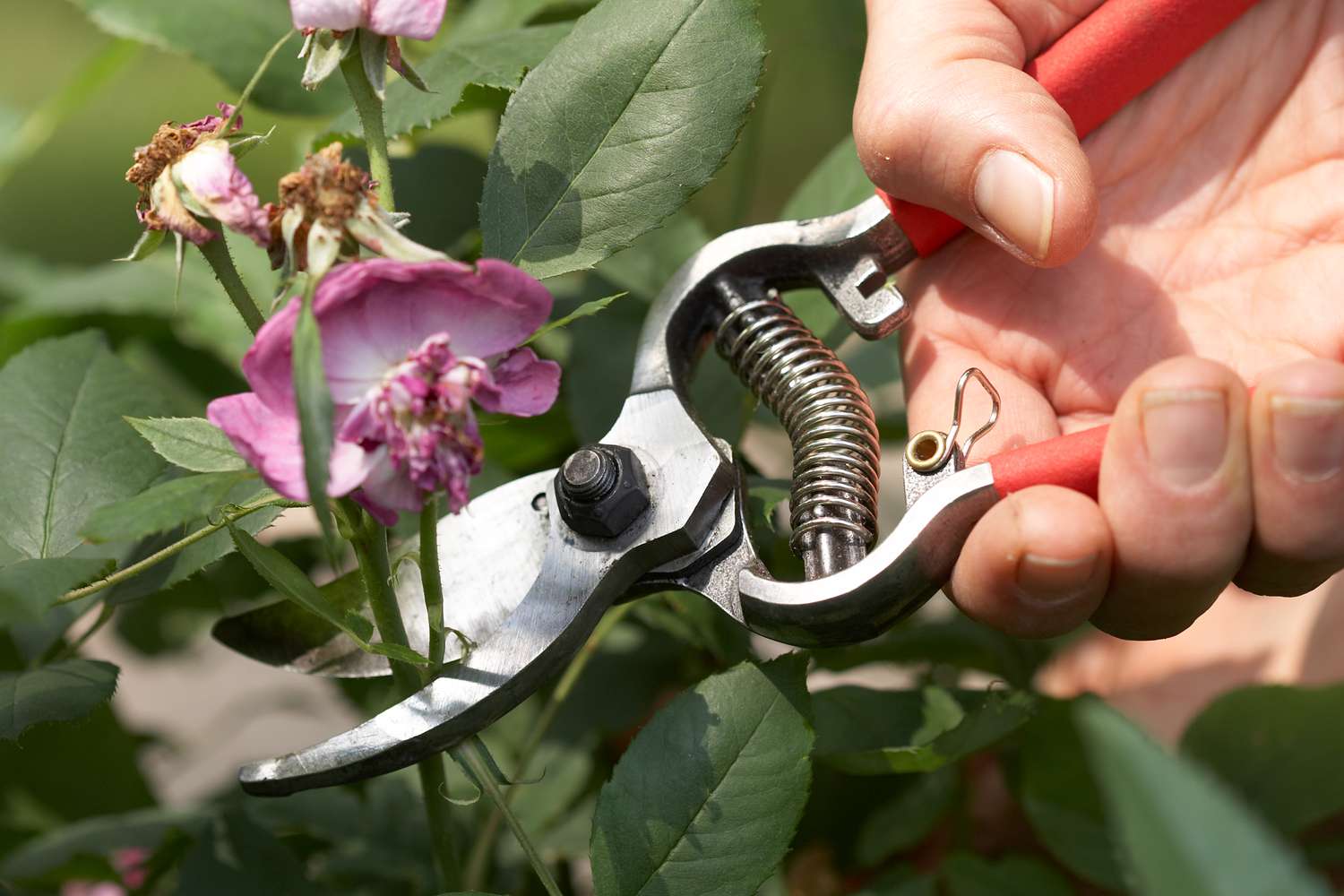
- What to remove: Snip off faded blooms as soon as petals drop or the flower browns.
- Where to cut (general guide): Follow the flower stem down to a strong, healthy leaf (often a leaf with 5 leaflets, especially on many hybrid teas and floribundas) and cut about 1/4 inch above that leaf junction at a slight angle. On some shrub roses, landscape roses, and modern cultivars, cutting to a sturdy 3 leaflet or 5 leaflet leaf with a visible bud eye is perfectly fine. Aim for balance and a plant shape you like.
- Timing: Weekly during flushes. After heavy rain, check sooner since old petals can mold.
Important exception: If you want rose hips for fall color and winter bird food, stop deadheading in late summer so hips can form on varieties that produce them.
Marigolds
Marigolds are wonderfully forgiving and respond fast to deadheading. Left alone, they will seed and slow down. Deadheaded, they keep pumping out flowers.
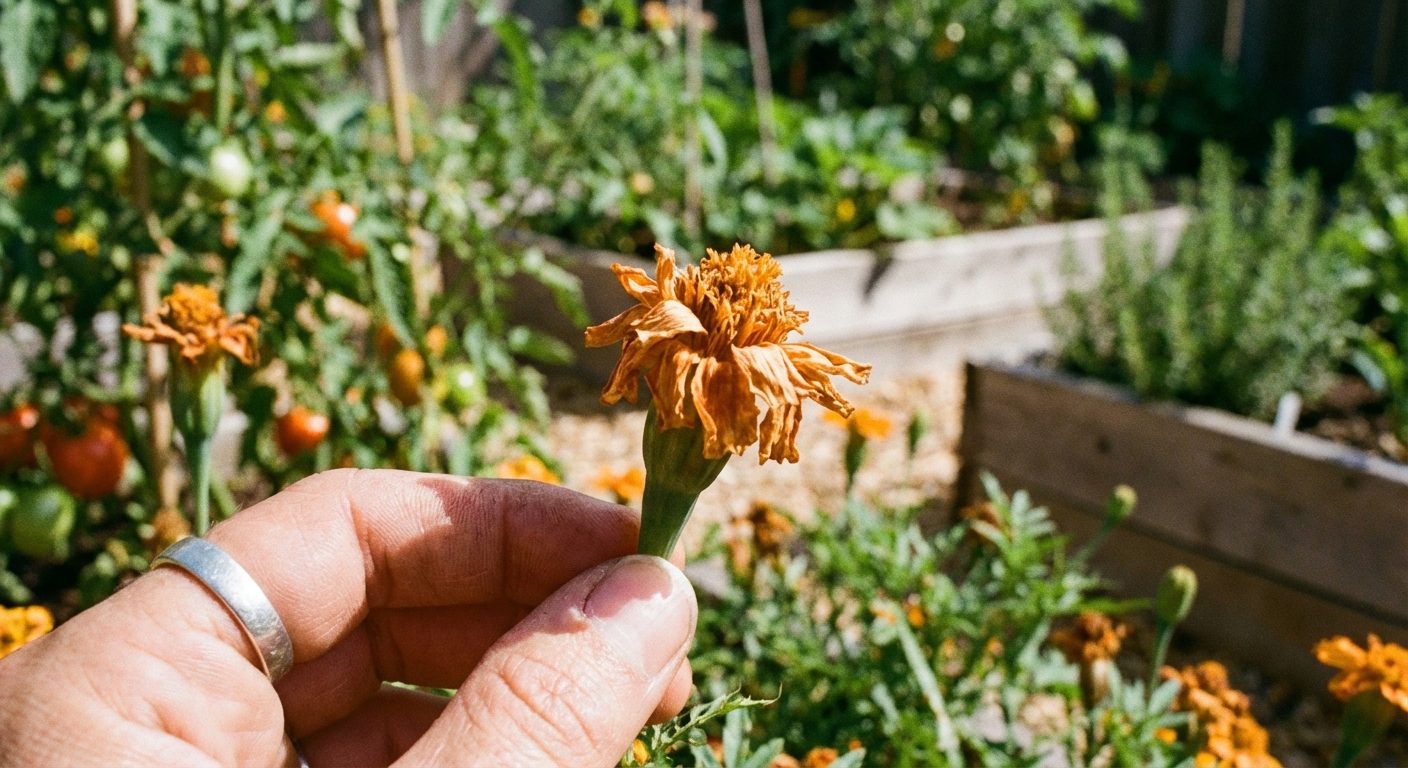
- Pinch: Pinch off each spent bloom right where the flower meets the stem.
- Or snip back: If a stem has several flowers and looks tired, cut the stem back to the nearest set of leaves to stimulate branching.
- Timing: Every few days in midsummer, especially for container marigolds.
Clara tip: Marigold stems can get a bit tough. If pinching tears the stem, switch to snips for cleaner cuts.
Zinnias
Zinnias are my “confidence builder” flower. They bloom like champions, and the more you cut, the more they bloom. Deadheading zinnias is basically the same as harvesting a bouquet.
- Where to cut: Find the spent flower, then trace the stem down to the next set of leaves or a side shoot. Snip just above that point. This encourages two new flowering stems to form.
- Timing: 1 to 2 times per week, or whenever you notice faded heads.
- Bonus: Cutting long stems for indoor vases counts as deadheading.
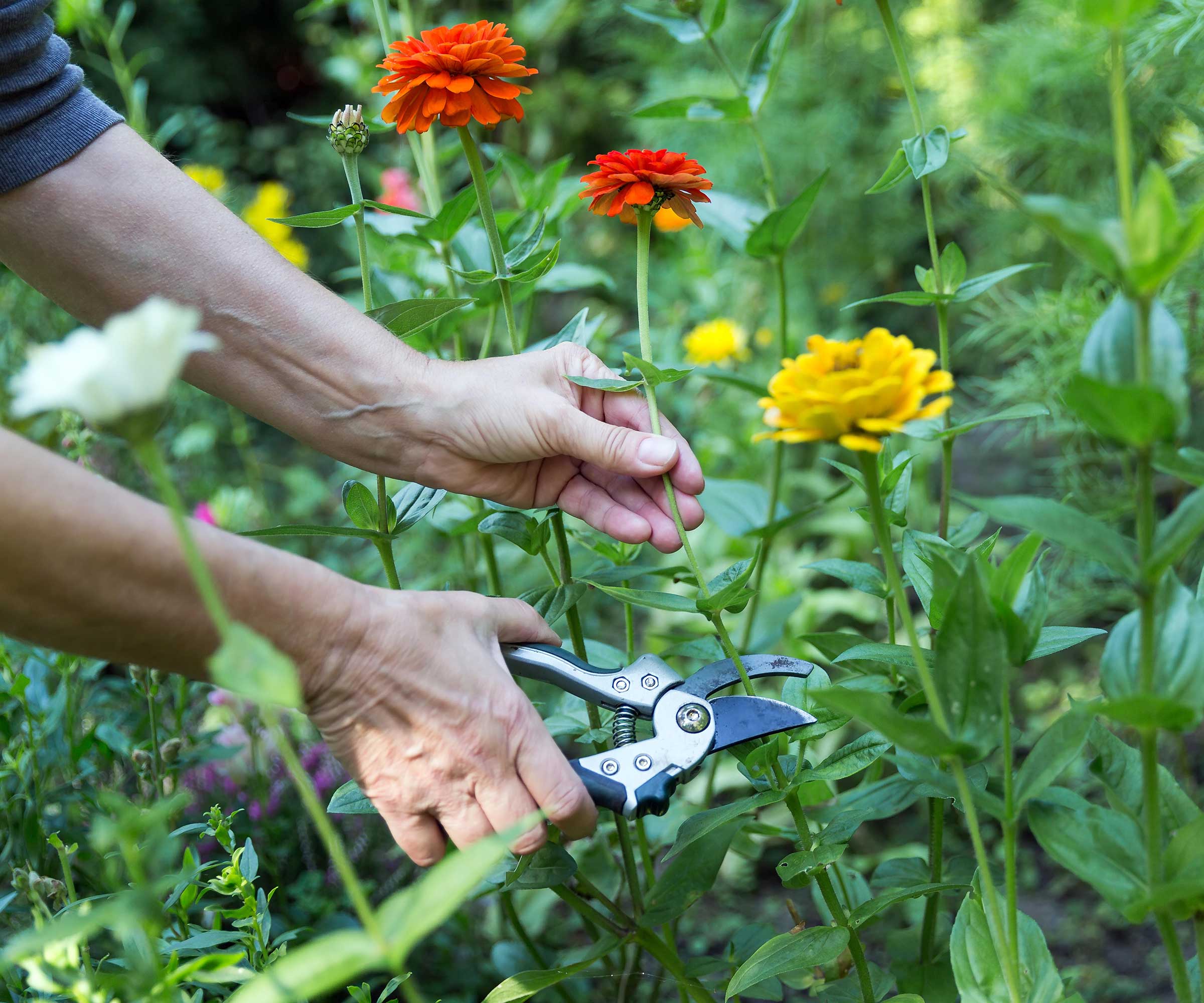
Watch for: If you want zinnia seeds for next year, let a few healthy flowers mature fully and dry on the plant near the end of the season.
Geraniums (Pelargonium)
These are the classic porch and window box geraniums. They bloom in clusters and look so much better when the whole spent cluster is removed cleanly.
- What to remove: The entire faded flower cluster (called an umbel), plus its stalk.
- Where to pull or cut: Follow the flower stalk down to where it meets the main stem, then snap it off cleanly with your fingers or snip it as close to the base as you can without nicking the main stem.
- Timing: Weekly, and more often in warm weather.
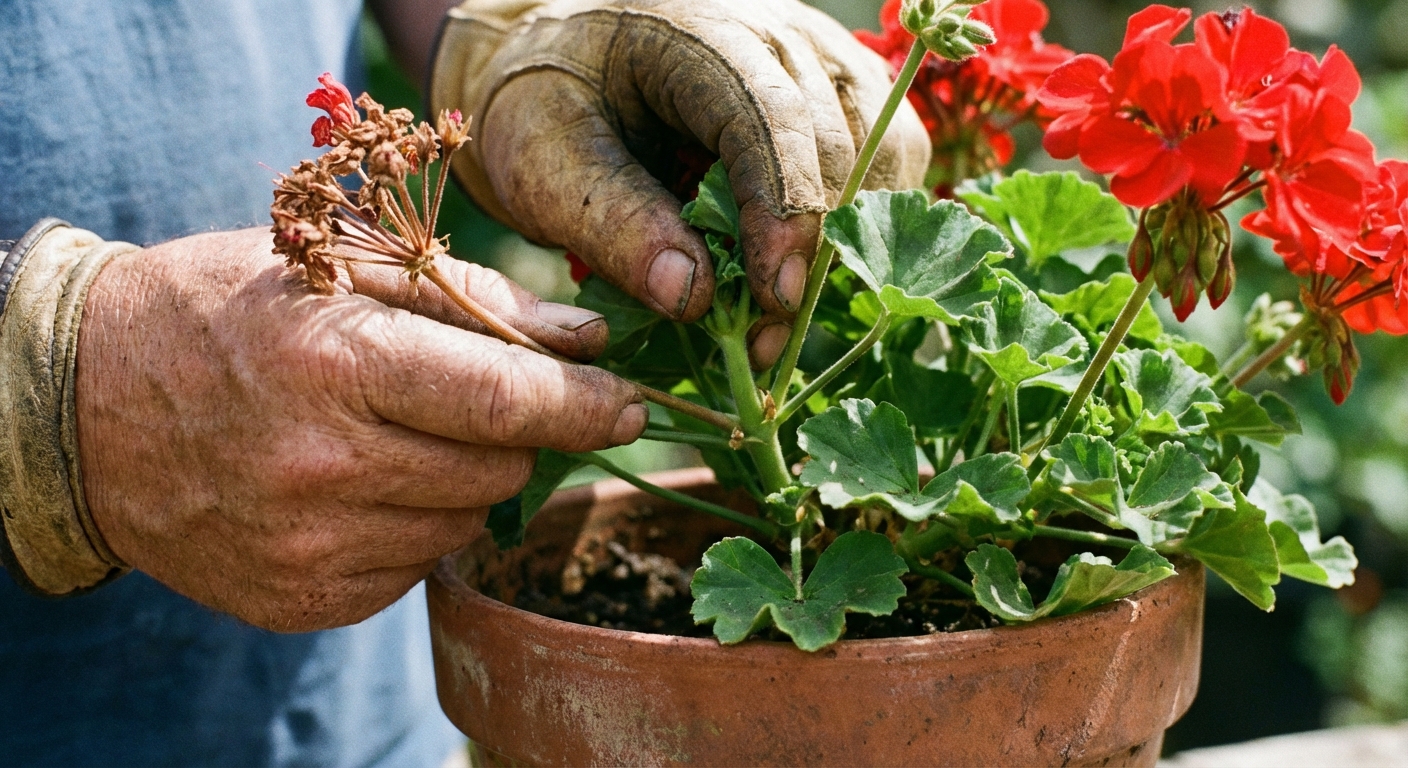
Clara tip: While you are there, remove any yellowing leaves at the base. Better airflow helps prevent common fungal issues like botrytis and general rot, especially after rain or heavy watering.
Salvia
Ornamental salvias come in a few forms, but many popular types bloom on spikes. Deadheading keeps the spikes coming and prevents the plant from shifting into seed mode too early.
- For spike-type salvia: When about two-thirds of a spike is spent and it looks mostly finished, cut the whole spike back to the nearest set of leaves or a side shoot that is starting to grow.
- For branching salvias: Snip spent stems back by a few inches to a healthy leaf node to encourage fresh branching and new spikes.
- Timing: Every 1 to 2 weeks in peak bloom.
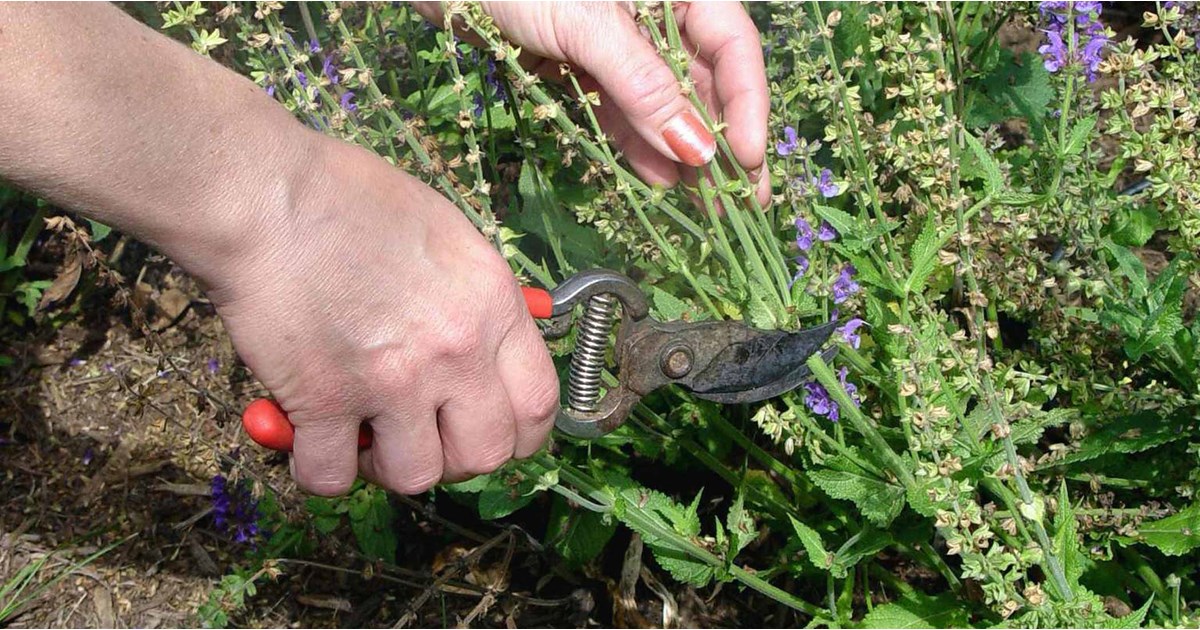
Pollinator note: If bees are actively working a spike that still has lots of fresh blooms, leave it alone until it is mostly done. Deadheading is helpful, but so is feeding your local pollinators.
Daylilies
Daylilies are low-drama, but their spent blooms can turn mushy fast. Deadheading here is mostly about tidiness, and sometimes a little extra bloom.
- What to remove: Pluck off each spent flower (it should come away easily).
- When the whole stalk is done: Once all buds on that leafless flower stalk (the scape) have finished, cut the scape down near the base.
Dahlias
Dahlias are generous bloomers, and deadheading keeps them focused. The trick is learning the difference between a spent flower and a new bud.
- Spot the bud: A dahlia bud is rounder and tighter. A spent bloom looks papery, open, and messy.
- Where to cut: Cut the spent flower stem back to the next leaf node or side shoot.
Cosmos
Cosmos are cheerful and fast. Deadheading makes them even more enthusiastic, especially in containers.
- Where to snip: Cut the stem back to a leaf node or side shoot, not just the flower head.
- If you want volunteers: Let a few flowers mature into seedheads late in the season.
Hydrangeas (quick note)
Hydrangeas are the plant that makes gardeners argue gently at the fence line. Deadheading depends on type. Many bigleaf hydrangeas (mopheads and lacecaps) can set next year’s buds on old wood, so cutting too far down can remove future flowers. If you deadhead, keep it conservative and remove just the spent bloom above the first healthy pair of leaves. For panicle hydrangeas, deadheading is mostly for looks, not required for bloom.
Deadheading timing cheatsheet
- Every few days: Petunias in baskets, marigolds in pots, anything in hot weather that browns quickly.
- Weekly: Roses, geraniums, zinnias, salvias in beds.
- After storms: Check roses and dense flowers for soggy petals that can rot.
If you can only do one quick pass a week, do not worry. Consistency matters more than perfection.
When to skip deadheading (or pause)
Some plants do not need deadheading to bloom well, and some are grown for their seedheads, berries, or self-seeding habit. Here are common “leave it be” situations:
- Plants grown for seedheads: Coneflower (Echinacea), black-eyed Susan (Rudbeckia), globe thistle (Echinops), ornamental alliums, and many ornamental grasses. You can deadhead early to encourage more flowers, then leave later seedheads for birds and winter structure.
- Self-seeding cottage garden favorites: Poppies, love-in-a-mist (Nigella), larkspur, and some calendula. Deadheading reduces volunteers next year.
- Once-blooming roses: Many old garden roses bloom once, then set hips. Deadheading will not create a second flush like repeat bloomers do.
- Plants that “clean” themselves: Some modern petunias and calibrachoa drop old blooms on their own, though a light trim can still improve looks and vigor.
My practical rule: If you want more flowers now, deadhead (for plants that rebloom). If you want seeds, hips, or winter beauty later, let some blooms mature.
Troubleshooting: when deadheading is not enough
Your plant is not reblooming
- Heat stress: Many flowers pause in extreme heat. Keep deadheading, water deeply, and wait for cooler nights.
- Needs feeding: Heavy bloomers in containers often need regular nutrients. A gentle organic liquid feed can help, especially for petunias and geraniums.
- Not enough sun: Zinnias and marigolds want strong sun for best repeat bloom.
- It might be a one-and-done bloomer: Some plants will not rebloom no matter what, especially certain spring bloomers and once-blooming varieties.
You keep cutting off buds
- Slow down: Look for the next bud or side shoot before you snip.
- Cut lower: For zinnias and salvias, cutting to a leaf node encourages branching and new buds.
Stems look ragged after pinching
Switch to snips. Clean cuts heal faster and look tidier, especially on tougher stems.
A deadheading routine you will keep
- Grab snips and a bucket.
- Start with containers (they show stress first).
- Remove the obvious spent blooms quickly without overthinking.
- Do one “quality cut” per plant where you cut back to a leaf node to encourage branching.
- Water after if soil is dry, and compost the trimmings (unless they are diseased).
That is it. Ten minutes, once or twice a week, keeps a garden looking like it is trying its best. And honestly, when a plant sees you coming with snips, it learns you mean business.
Quick reference: pinch vs cut
- Pinch: Petunias, marigolds (soft stems), occasional small rose blooms if you are careful (snips are usually better).
- Cut with snips: Roses, zinnias, geranium flower stalks, salvia spikes, any tough or stringy stems.
If you take nothing else from this page, take this: remove the spent bloom and the seed-forming part, and many common annuals and repeat bloomers will keep trying to bloom.