
How to Contain or Remove Running Bamboo

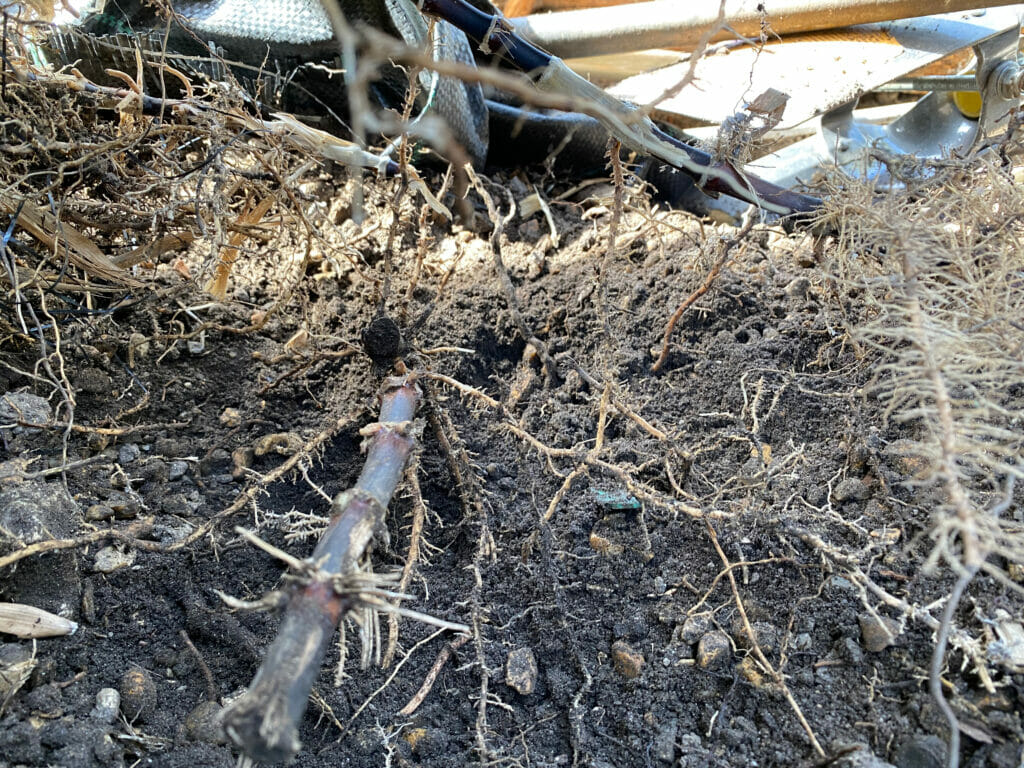
If your “bamboo” is suddenly popping up 10 feet away like a botanical game of whack-a-mole, you are not imagining it. That is classic running bamboo behavior, powered by underground stems called rhizomes that can cruise under lawns, fences, and flowerbeds.
Before we get our hands dirty, a quick but important note: the bamboo that invades yards is not the same thing as the “lucky bamboo” sold for desks and dorm rooms. Lucky bamboo is a Dracaena houseplant, not true bamboo, and it will not spread through your landscape.

First, make sure it is bamboo
Lucky bamboo vs true bamboo
Lucky bamboo (Dracaena) is typically grown indoors in water or potting mix, with smooth green stalks and tufts of narrow leaves at the top. It does not form outdoor thickets, and it does not spread through your yard.
It also is not cold-hardy. It cannot survive freezing temperatures, and can only live outdoors year-round in frost-free climates.
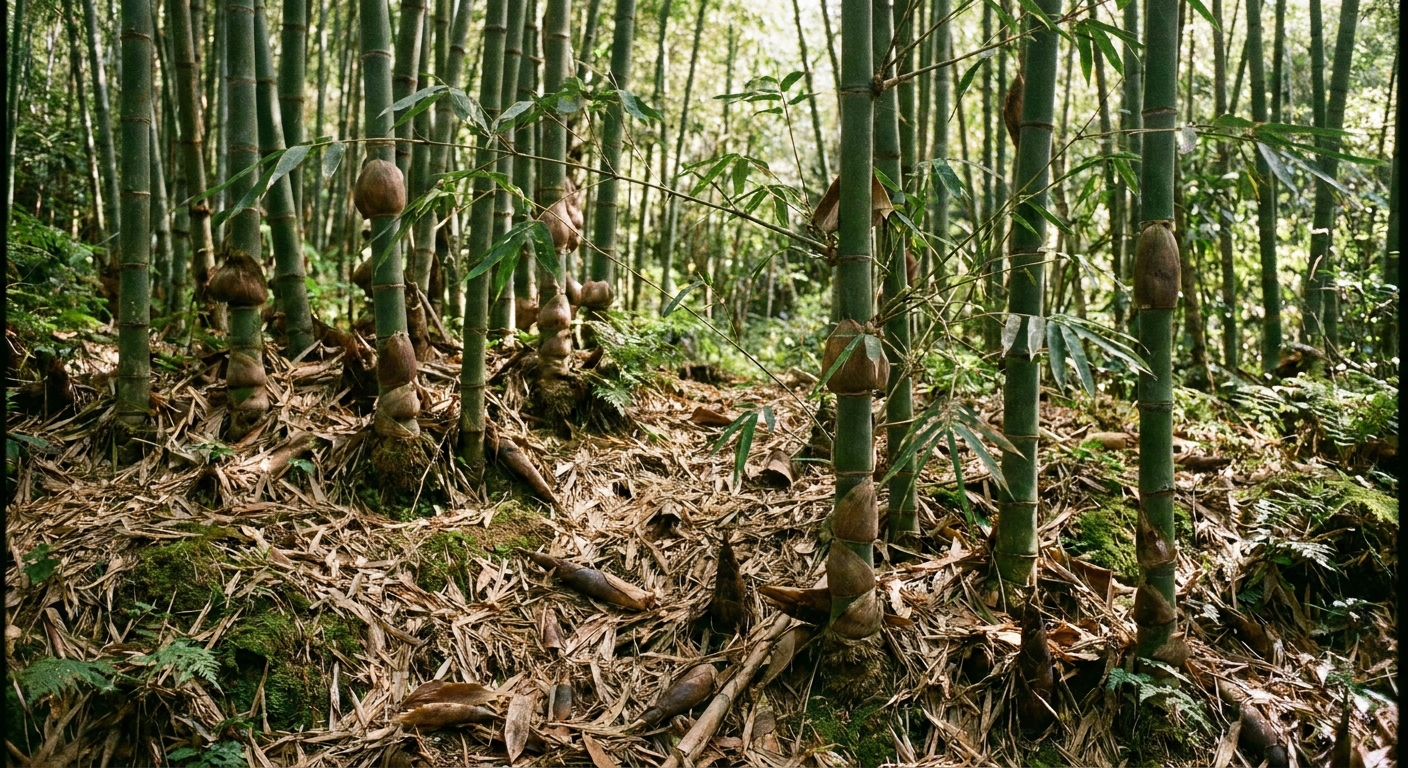
True bamboo is a grass. Outdoors, it forms woody canes with obvious joints (nodes), papery sheaths, and lots of narrow leaves along branching stems. If you have canes and spreading shoots in the yard, you are dealing with true bamboo.
Running vs clumping: the ID cues
This distinction decides your strategy.
- Running bamboo spreads via long rhizomes that travel horizontally, then send up new shoots at a distance. New shoots may appear well outside the original planting.
- Clumping bamboo expands more slowly outward from the base, making a tight fountain-like clump. New shoots usually stay close to the mother plant.
Quick yard test: dig a small hole 8 to 12 inches deep near the edge of the patch. If you find long, ropey, horizontal rhizomes heading away, that is running bamboo.
Small but important note: plant tags and nursery labels are not always perfect. If you were told it was “clumping” but it is sending shoots far away, believe what your shovel is showing you and confirm the species or cultivar if you can.
Pick your goal
With running bamboo, you usually have three realistic goals:
- Contain it so it stays in one zone and behaves like a screen.
- Reclaim space by pushing it back from lawns, beds, and property lines.
- Remove it entirely, which takes persistence and often a season or more.
My rule of thumb: if bamboo is within a few feet of a fence, driveway, or a neighbor’s yard, containment needs to be your immediate priority, even if full removal comes later.
Safety and legal first
- Call before you dig: have utilities located before trenching or installing barriers.
- Check local rules: some municipalities restrict certain bamboo species or require containment near property lines.
- Neighbor factor: if it is crossing a boundary, document what you are seeing and talk early. Joint solutions are faster and cheaper than fighting two separate battles.
Containment 1: root-pruning
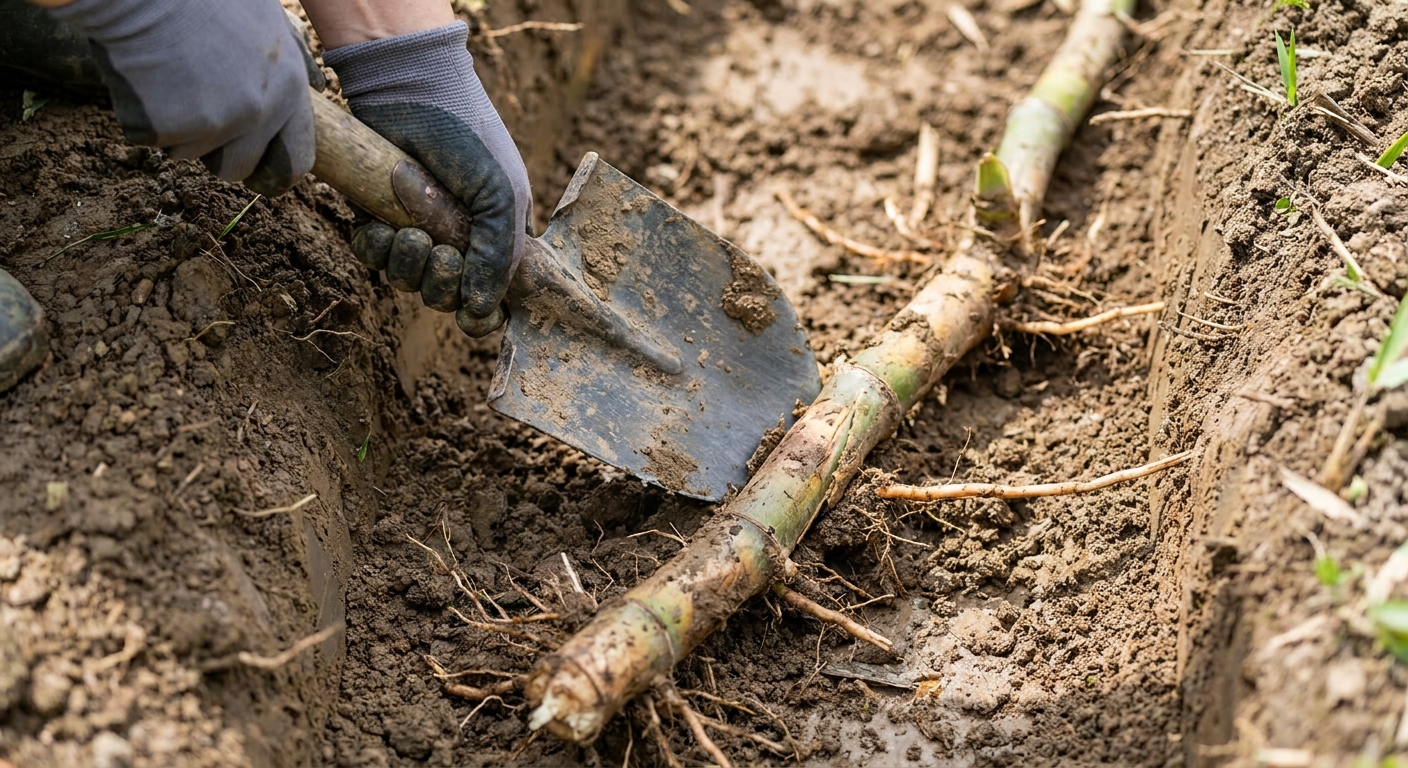
Root-pruning means slicing through outward-traveling rhizomes on a schedule so new shoots cannot keep marching into new territory.
Depth reality check: many rhizomes run in the top 12 to 18 inches of soil, but not always. Soil type, irrigation, and species can influence how deep you find runners.
How to do it
- Mark your boundary. Use a hose or string to outline the “allowed” bamboo zone.
- Cut a trench line about 8 to 12 inches deep along that boundary (deeper if you are consistently finding rhizomes below that).
- Sever rhizomes with a sharp spade, trenching shovel, or a reciprocating saw (with a pruning blade) for thicker mats.
- Remove cut pieces on the outside of the boundary so they cannot re-root.
- Repeat 1 to 2 times per year, usually in spring and late summer or early fall.
Best for: homeowners who do not mind ongoing maintenance and want to avoid installing a plastic barrier.
Watch-out: root-pruning works because you are consistent. Skip a year and the rhizomes will happily take the invitation.
Containment 2: open trench
An open-face trench is a trench around the bamboo zone that stays mostly open (or lightly mulched) so you can spot and snip rhizomes as they try to cross.
Typical dimensions
- Depth: often 12 to 18 inches.
- Width: often 8 to 12 inches.
- Maintenance: inspect monthly during growing season, cut any rhizomes you see.
Depth reality check (again, because it matters): many running bamboo rhizomes stay fairly shallow, but some can travel deeper. If you keep finding runners under your trench, deepen that section or switch to a barrier approach.
Why it works: when rhizomes hit open air, they are easy to see and cut.
Best for: people who like a clear inspection zone and do not want to rely on buried plastic.
Containment 3: bamboo barrier
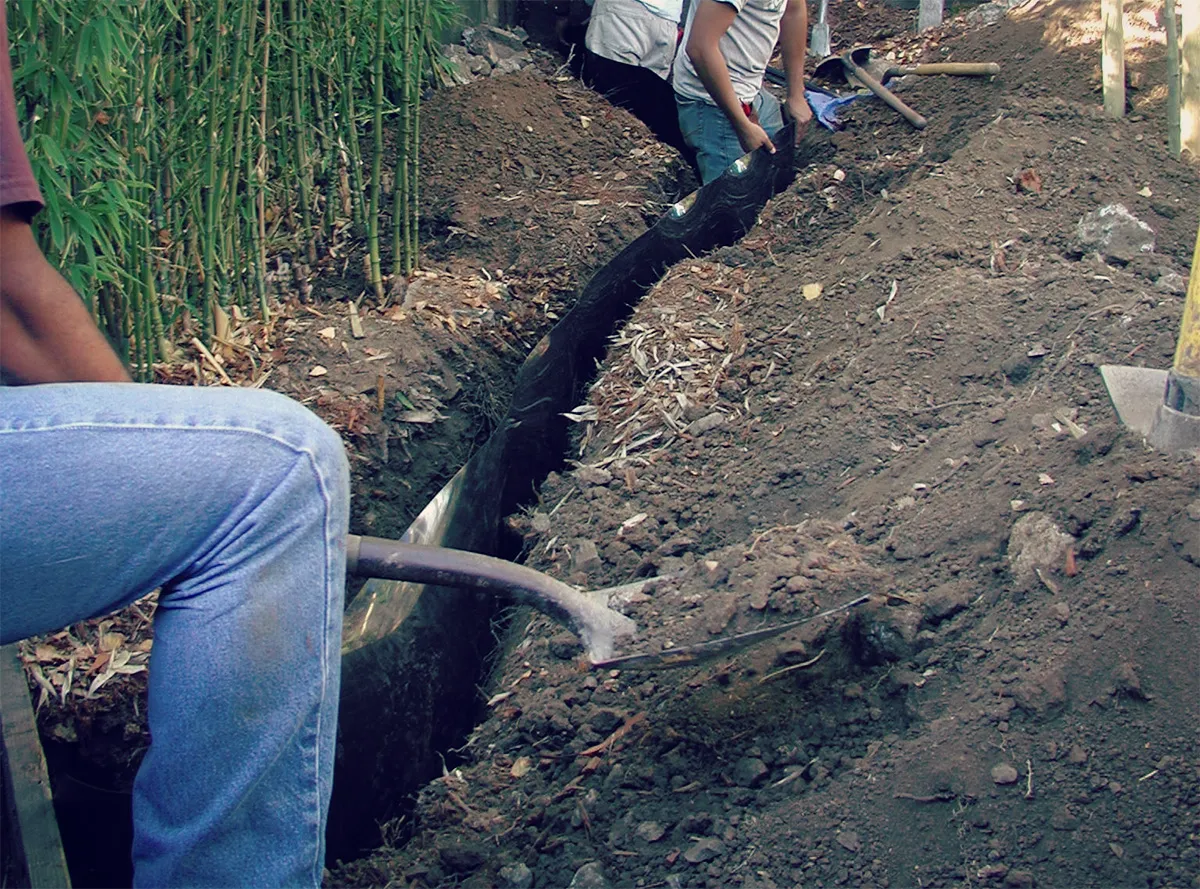
A buried barrier can be effective, but only if it is installed correctly. A flimsy edging strip will be defeated quickly by an established patch.
Barrier basics
- Material: high-density polyethylene (HDPE) bamboo barrier is commonly used.
- Depth: commonly 24 to 36 inches, depending on species and site. Follow manufacturer guidance and what you learn from digging in your soil.
- Above-ground lip: leave 2 to 3 inches above soil so you can spot and cut any rhizomes that try to ride up and over.
- Seams: overlap and clamp or use manufacturer-approved fastening. A weak seam is a future escape hatch.
- Angle: many installers tilt the barrier slightly outward so rhizomes are encouraged to surface where you can cut them.
DIY install (overview)
- Dig a trench around the bamboo area to the recommended depth.
- Set the barrier in place with the top edge above the soil line.
- Secure seams tightly.
- Backfill and tamp gently to reduce air gaps.
- Inspect the perimeter several times per year and cut any rhizomes that try to curl up and over.
Best for: containment along fences and property lines, or when you need a cleaner look than an open trench.
Important: barriers do not eliminate bamboo. They simply fence it in. You still need perimeter checks.
Best timing
- Digging and barrier installs: late winter to early spring, or fall, is often easier because soil is workable and growth is not at peak sprint (timing varies by region).
- Shoot season: new shoots typically appear in spring and early summer for many species, but local climate and species can shift the window.
How to remove running bamboo
Removal works by exhausting the rhizomes. Those underground stems are basically a pantry. Your job is to stop the plant from restocking it.
Method A: cut shoots (exhaustion)
This is the most accessible option and, done faithfully, it works.
- Cut every new shoot as soon as it appears. Slice it at ground level or slightly below.
- Keep cutting all season. Early and frequent is the whole game.
- Do not let it leaf out. Once shoots leaf out, they photosynthesize and recharge the rhizomes.
- Repeat next season as needed. Many patches weaken dramatically in one growing season, but established stands often take longer.
Tip from my own battles: set a calendar reminder during shoot season. A seven-day vacation can undo weeks of progress.
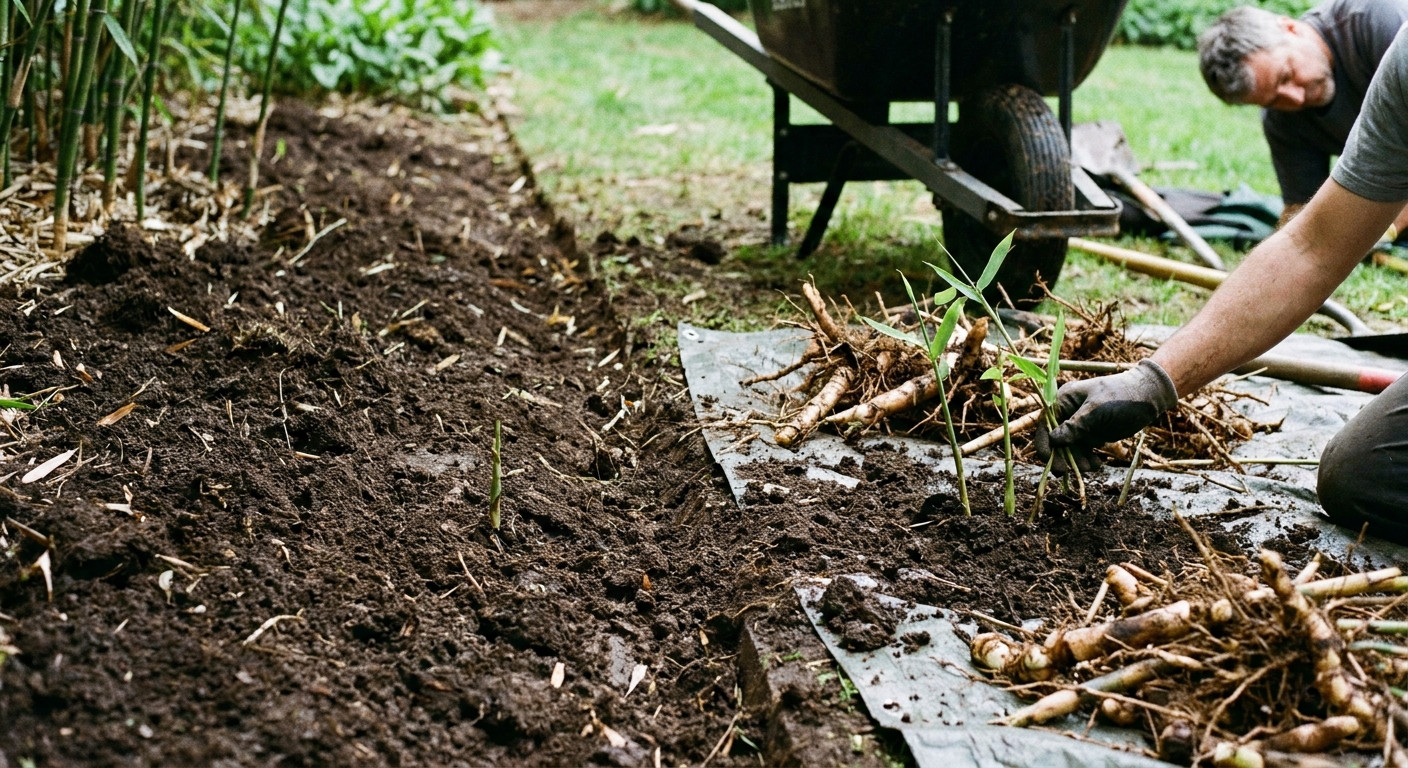
Method B: dig rhizomes (fastest, most labor)
Digging can be effective for small patches or where you can access the whole network.
- Water the area the day before to soften soil.
- Cut canes down to waist height for easier handling.
- Dig 12 to 18 inches deep and start teasing out rhizomes (go deeper if your site shows deeper runners).
- Remove as much as possible, including long runners heading outward.
- Watch for resprouts and cut them immediately.
Reality check: one missed rhizome segment can resprout. Digging is often paired with repeated cutting afterward.
Method C: smothering (support strategy)
Smothering can help weaken bamboo, especially in contained areas, but bamboo is tough and can push through thin materials.
- Cut everything to the ground.
- Lay heavy cardboard in overlapping layers.
- Top with a thick layer of mulch.
- Check edges and punctures, and cut any shoots that escape.
Best for: small areas, or after you have already reduced vigor with cutting.
Herbicide: use with care
Some gardeners choose targeted herbicide as part of removal, especially for large, established stands. I lean toward mechanical control first because it is effective and avoids drift risks, but I also believe in being honest about scale.
If you do choose herbicide, bamboo control typically relies on systemic products used at the right time while the plant is actively growing. Depending on the product and label directions, this may involve treating regrowth leaves or applying to freshly cut stems. Either way, results often require repeat treatments, and timing matters.
Follow the product label and local regulations closely. Keep treatments away from desirable plants and water sources, and consider hiring a licensed professional if you are near wells, streams, or sensitive plantings.
Local note: some areas restrict bamboo species and control methods. Check municipal or county guidance if bamboo is considered invasive where you live.
When to hire a pro
Call in a professional when any of these are true:
- The bamboo has spread into multiple neighboring yards or along a long property line.
- Rhizomes are pushing under hardscapes like patios, retaining walls, or driveways.
- You need heavy excavation near utilities.
- The patch is so large that cutting and digging would take an unrealistic amount of time.
- You are dealing with a conflict situation with neighbors and want documentation and a clear plan.
A good bamboo removal contractor should explain containment, disposal, and the follow-up plan. Bamboo is rarely a one-and-done visit.
Disposal and cleanup
Running bamboo can spread from living rhizome pieces, so disposal matters.
- Do not dump rhizomes in woods or vacant lots.
- Desiccate rhizomes if your local rules allow: spread them on a hard surface until they are thoroughly dried and non-viable (often brittle), then dispose according to local guidelines.
- Bag and trash viable rhizomes if required by your municipality.
- Compost with caution: canes and leaves are fine when chopped. Rhizomes are risky in home compost unless you are sure they are dead.
Keep it from coming back
Even after a big win, bamboo likes a comeback tour. These habits keep you in charge:
- Walk the perimeter every 2 to 4 weeks during the growing season.
- Cut new shoots immediately, especially after rain.
- Maintain trenches and barrier lips so they stay visible.
- Limit fertilizer near bamboo if you are trying to weaken it. High nitrogen feeds aggressive growth.
If you want to replace it with something calmer, choose shrubs or grasses with well-behaved root systems. Your soil will thank you, and your neighbors might too.
Troubleshooting
I cut it once and it came back thicker
Totally normal. Cutting once is like giving bamboo a haircut. The exhaustion method requires repeated cutting the moment shoots appear.
Shoots are coming up far away
That means rhizomes already traveled. Cut those shoots immediately, then trace back by digging carefully to find the direction of the runner. Consider a barrier or root-pruning boundary between the source patch and the lawn.
It is coming from my neighbor
You can protect your side with a barrier or trench along the property line, but talk with your neighbor early if possible. Joint solutions are faster and cheaper than fighting two separate battles.
Quick plan
- If you want it as a screen: install a proper barrier or maintain an open trench, then inspect and snip rhizomes a few times per year.
- If you want your lawn back: cut shoots on sight, add a boundary (trench or barrier) between lawn and patch, and keep at it through the season.
- If you want it gone: combine digging (where possible) with relentless shoot cutting, and plan on follow-up for at least one full growing season.
Realistic takeaway
Running bamboo is not unbeatable, it is just persistent. If you contain first, then commit to either root-pruning or repeated shoot cutting, you can absolutely reclaim your yard. It is not glamorous work, but it is deeply satisfying. The first spring you realize the bamboo has stopped surprising you is the moment you get your garden back.