
Honeysuckle Vine Care

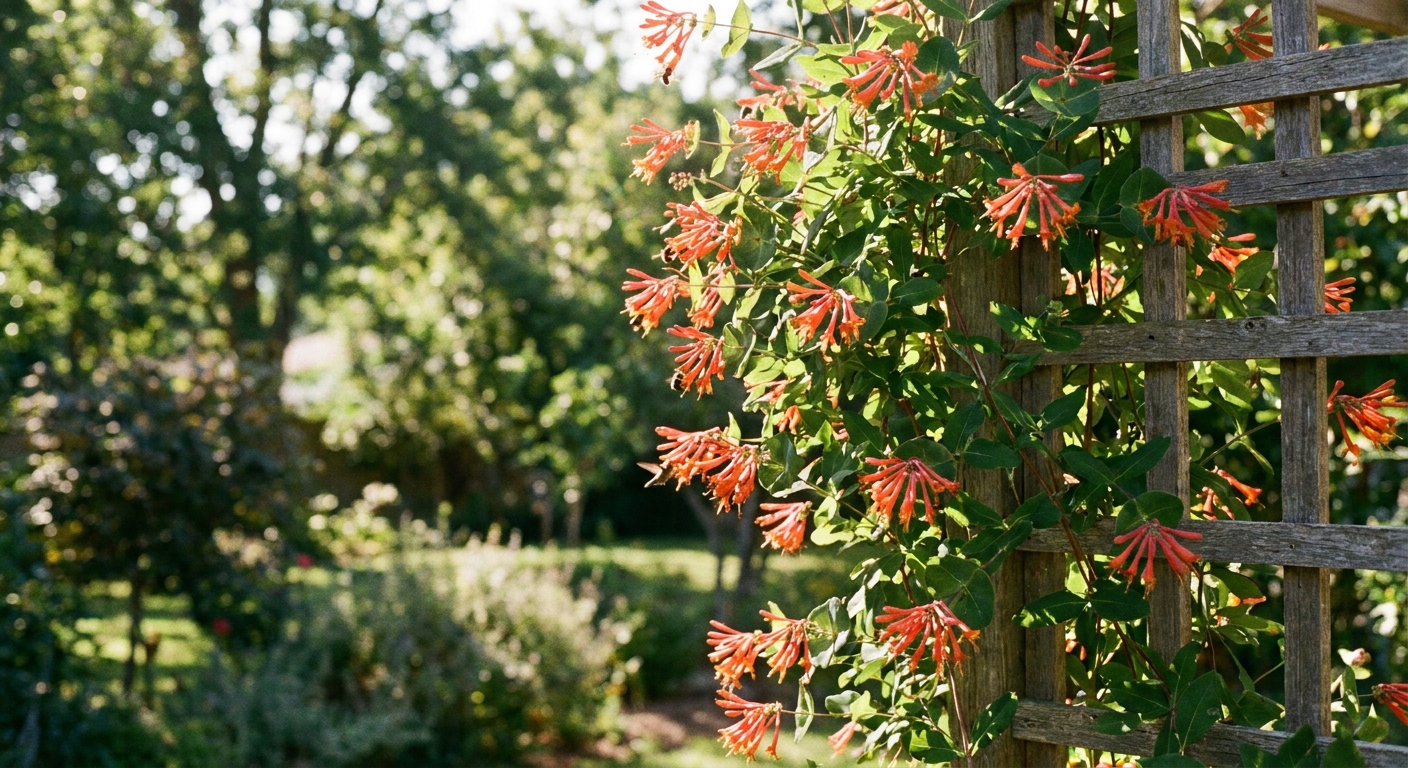
Honeysuckle is one of those plants that can make a garden feel instantly lived in. Give it something to climb, and it will happily lace a fence with leaves, perfume the evening air (sometimes), and invite hummingbirds and bees to dinner. But not all honeysuckles behave the same way, and that is where most “black thumb” stress starts.
Let’s make this easy. We will cover the two common groups you will see at nurseries, how to plant and train them, when to prune (this is the big one), and how to stay ahead of powdery mildew and aphids without going nuclear on your yard.

Know your honeysuckle: coral vs Japanese
Most home gardeners searching for “honeysuckle vine care” are usually dealing with one of these:
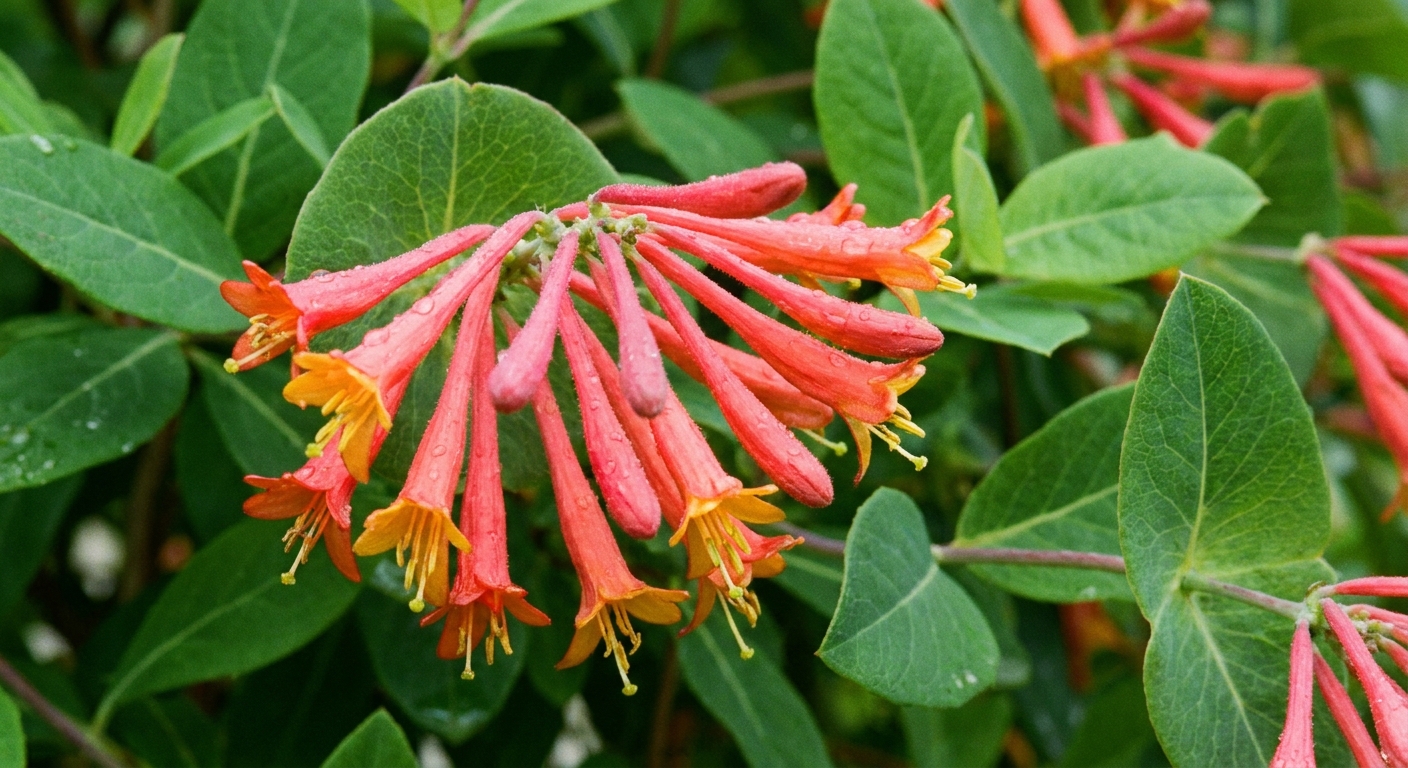
Coral honeysuckle (Lonicera sempervirens)
- Why gardeners love it: Tubular red, coral, or orange blooms that hummingbirds can spot from a mile away.
- Scent: Usually little to no fragrance. It is more of a hummingbird magnet than a “perfume the patio” vine.
- Growth habit: A twining vine that is generally well-mannered compared to the aggressive types.
- Season: Heavy bloom in late spring to early summer, often with repeat flowering.
- Bonus: In many areas of North America, coral honeysuckle is considered a more responsible choice for wildlife-friendly gardens.
Japanese honeysuckle (Lonicera japonica)
- Why people plant it: Strong fragrance, fast coverage, lots of blooms.
- Growth habit: Fast and vigorous. In many regions it can spread beyond where you planted it.
- Season: Long bloom window in warm climates.
Important note on invasiveness: Japanese honeysuckle is considered invasive in many parts of the United States and other regions. That means it can escape cultivation, smother native plants, and change local habitats. Before you buy, check your local extension office or invasive species list. If it is flagged where you live, choose coral honeysuckle or another non-invasive vine instead.
Climate and hardiness
Most honeysuckle vines commonly sold for home gardens grow well in USDA Hardiness Zones 4 to 9. Some cultivars push a little colder or warmer, so if you are shopping near the edge of that range, check the plant tag (or the nursery listing) for your specific variety.
Where to plant for best blooms and fewer problems
Light
Honeysuckle will tolerate some shade, but it blooms best with at least 6 hours of sun. If your vine looks leafy but stingy with flowers, light is usually the reason.
Soil
Aim for soil that is well-draining and organically rich. Honeysuckle is not overly picky, but it hates “wet feet.” If your soil stays soggy after rain, amend with compost and consider raising the planting area slightly.
Airflow matters
When people get powdery mildew, it is often because the vine is planted in a tight corner with still air. Give it a little breathing room and do not let it form a dense, tangled mat on the trellis.
Planting basics
- Dig a hole about twice as wide as the root ball.
- Plant at the same depth it was in the pot.
- Backfill with native soil mixed with compost (think: soil first, compost as a booster).
- Water deeply after planting, then mulch 2 to 3 inches with shredded leaves or bark, keeping mulch a few inches away from the stem.
Watering and feeding without overdoing it
Watering
- New vines: Water deeply 1 to 2 times per week for the first month, then taper as roots establish. Adjust for heat and rainfall.
- Established vines: Water during dry spells. A good soak is better than frequent sips.
If the top 2 inches of soil are dry and the plant looks a bit droopy by late morning, it is asking for a drink.
Fertilizing
Honeysuckle does not need heavy feeding. Too much nitrogen can mean lots of leaves and fewer flowers.
- Top-dress with compost in spring.
- If growth is weak, use a balanced, slow-release fertilizer once in spring, following label directions.
- Avoid repeated fertilizing in summer unless your soil is truly depleted.
Trellis training: set the vine up for success
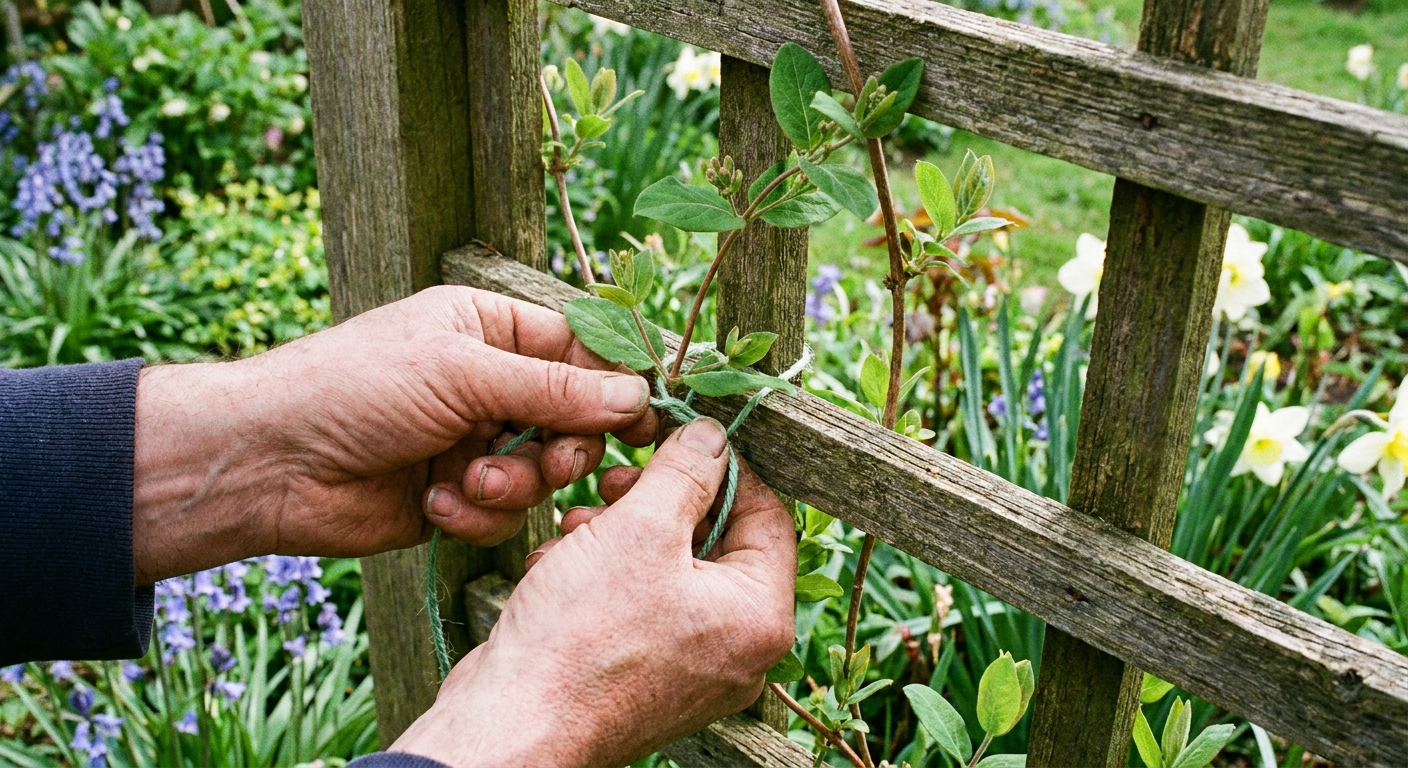
Honeysuckle is a twining vine. It wants to wrap around something slender enough to grip. A flat wall with nothing to hold onto is like asking a toddler to climb a glass door.
Best supports
- Sturdy trellis with vertical and horizontal slats
- Fence panels or cattle panels
- Arbor or pergola posts with twine or wire guides
How to train it
- Choose 2 to 4 main stems to be your “leaders.”
- Gently wrap the leaders around the trellis or guide them with soft ties.
- Tie loosely using garden tape or cloth strips. You want support, not a tourniquet.
- Spread stems out like a fan. This improves airflow and makes a fuller, prettier wall of green.
- Check monthly in the growing season. Redirect wandering stems before they turn into a knot.
Pruning: timing depends on the type
If I could stand in every garden center and whisper one sentence into every cart, it would be this: pruning timing is honeysuckle-type specific.
Here is the simple rule that keeps your flowers intact and your vine under control.
Coral honeysuckle pruning
Coral honeysuckle does much of its flowering on older growth for that first big spring flush. So the safest, most flower-friendly timing is: prune right after it finishes blooming.
- Main prune: Right after the biggest flush of flowers fades.
- Light tidying: Anytime you see dead, damaged, or diseased stems.
- Hard renovation (if needed): Late winter to early spring, only when the vine is wildly overgrown or neglected. Expect fewer flowers that spring if you go hard.
Japanese honeysuckle pruning
Japanese honeysuckle blooms on new growth, which means you can be more aggressive without ruining summer flowers. In fact, a firm cutback is often the only way to keep it from eating the mailbox.
- Main prune: Late winter to early spring for size control and to encourage fresh, flowering growth.
- In-season trims: Snip runners anytime they wander where they do not belong.
How to prune
- Start with the 3 Ds: remove dead, damaged, and diseased stems.
- Thin for airflow: take out a few of the oldest, woodiest stems at the base to reduce congestion.
- Shape gently: shorten long runners that are swallowing windows, gutters, or nearby shrubs.
- Keep structure in mind: maintain a handful of strong leaders and let side shoots fill in.
Tip from my own slightly chaotic garden: Step back every few cuts. Honeysuckle can trick you into “just one more snip” until you have accidentally given it a haircut it did not ask for.
Powdery mildew prevention (and what to do if it shows up)
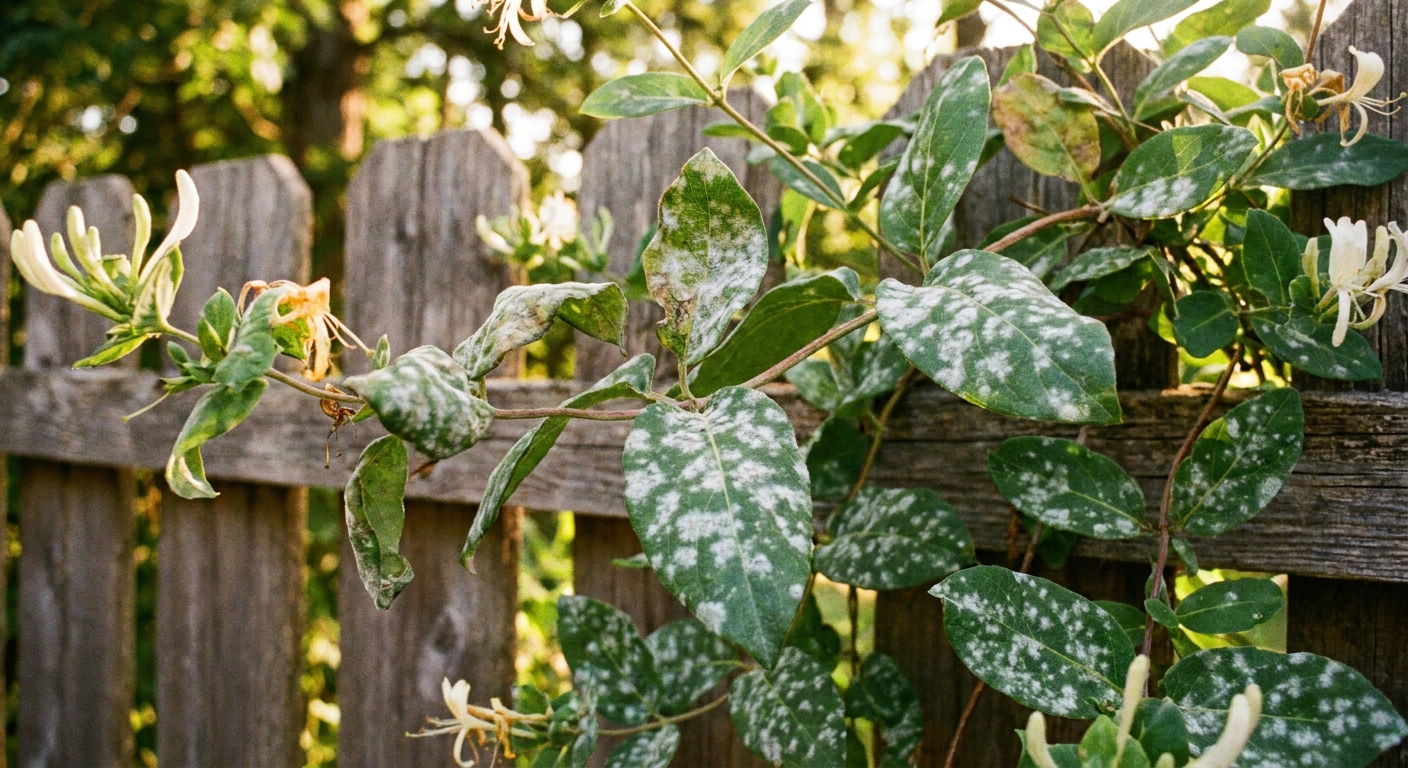
Powdery mildew looks like someone dusted the leaves with flour. It is common in warm days and cool nights, especially when airflow is poor.
Prevention checklist
- Sun: more sun usually means less mildew.
- Airflow: train and thin the vine so air can move through it.
- Water the soil, not the leaves: use drip irrigation or water at the base in the morning.
- Clean up: remove badly infected leaves that drop, especially late in the season.
If you already have mildew
- Prune to open the canopy.
- Remove heavily affected leaves (do not compost if disease pressure is high in your yard).
- Consider an organic spray option such as sulfur or potassium bicarbonate, following label directions and avoiding spraying in high heat.
Most importantly: do not panic. Mild powdery mildew is often more cosmetic than deadly, and your vine can still bloom beautifully.
Aphid checks: the 60-second habit that prevents a mess
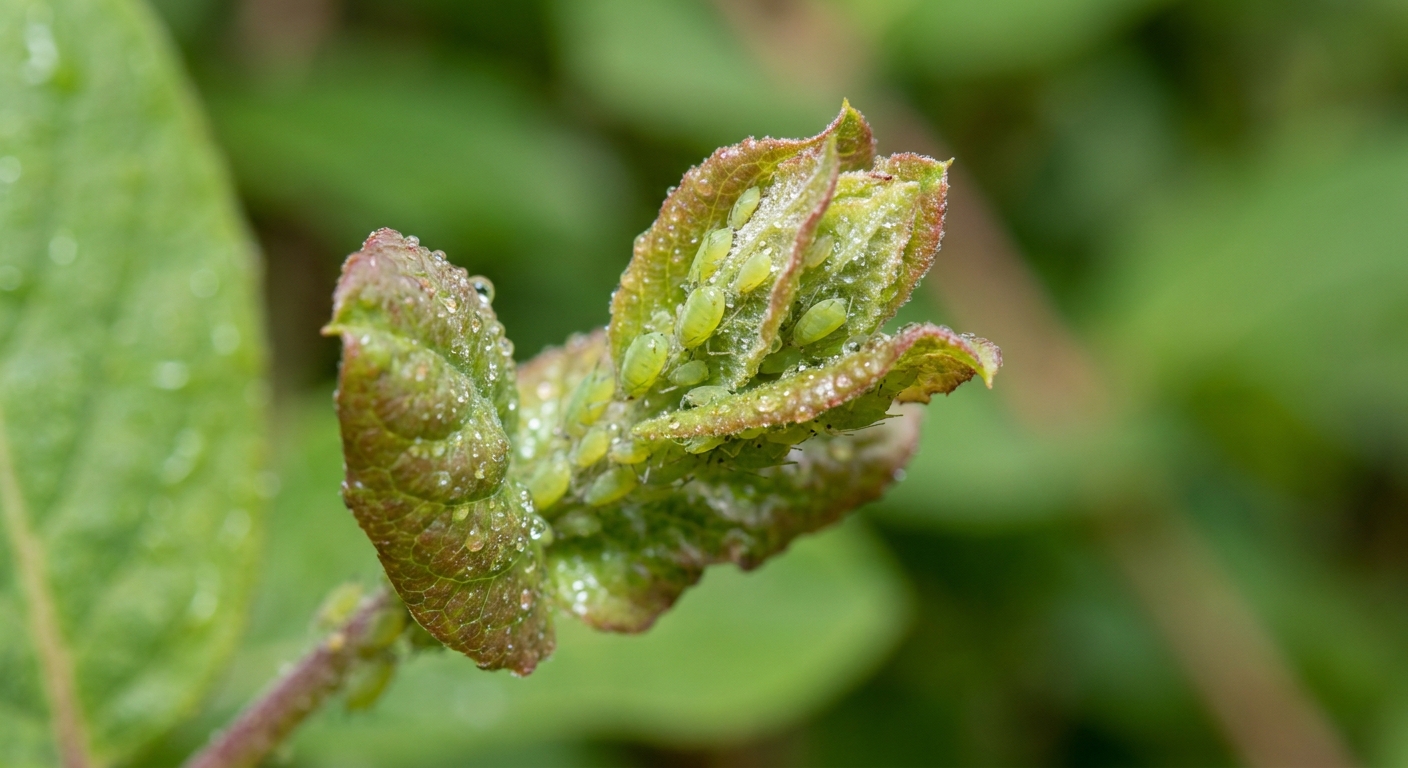
Aphids love tender new growth. If you catch them early, you can usually handle the situation with low-effort, low-impact methods.
How to check
- Look at the undersides of young leaves and the tips of fresh shoots.
- Watch for curling leaves, sticky residue (honeydew), and ants farming the aphids.
What to do
- Blast with water: a firm spray from the hose knocks them off.
- Pinch and prune: remove the most infested tips.
- Encourage predators: lady beetles, lacewings, and tiny parasitic wasps are your allies. Avoid broad-spectrum pesticides that wipe them out.
- Insecticidal soap: effective if you coat the aphids directly. Reapply as directed.
If you see a few aphids but also lots of ladybug larvae, I would personally let nature do its slow, satisfying thing.
Responsible growing: keep vigorous vines in bounds
Even well-behaved honeysuckle can be enthusiastic. If you want the fragrance and flowers without the regret, set boundaries early.
- Do not let it root where stems touch soil: lift and tie down long runners instead of letting them sprawl.
- Remove seedlings: birds can spread seeds, especially with berry-forming types.
- Deadhead lightly (optional): snipping spent blooms can reduce some seed set and keeps things tidy.
- Choose non-invasive options: when Japanese honeysuckle is a known problem locally, opt for coral honeysuckle or other region-appropriate vines.
If you inherited an invasive honeysuckle and removing it is an option, you are not “giving up.” You are making room for a healthier ecosystem and a garden that is easier to manage.
Safety: berries and pets
A quick, practical heads-up: honeysuckle berries are generally considered mildly toxic to humans and many pets if eaten. A curious nibble is usually more of a stomach-upset situation than a true emergency, but it is still worth preventing. If you have kids or pets that snack first and ask questions never, treat the berries as “look, do not eat” and call your vet or local poison control if ingestion happens.
Seasonal care calendar
Spring
- Top-dress with compost
- Check ties and supports
- Guide new growth onto the trellis
- Start quick weekly aphid checks
- For Japanese honeysuckle, do your main cutback in late winter to early spring
Summer
- Water deeply during dry spells
- For coral honeysuckle, prune right after the main bloom flush
- Watch for powdery mildew in humid, low-airflow spots
Fall
- Light shaping if needed
- Rake up diseased leaves if mildew was an issue
- Add mulch to protect roots going into winter
Winter
- Inspect structure, repair trellis or wires
- Plan a renovation prune only if the vine is truly out of control
Troubleshooting quick fixes
- No flowers: not enough sun, pruning at the wrong time, or too much nitrogen.
- Lots of leaves, few blooms: ease up on fertilizer and make sure it gets sun.
- Yellowing leaves: often water stress (too wet or too dry) or compacted soil. Check drainage first.
- Leaves look dusty white: powdery mildew, improve airflow and avoid overhead watering.
- Sticky leaves and ants: aphids, hose spray and targeted treatment if needed.
My best honeysuckle advice
Honeysuckle is happiest when you treat it like a friendly, overexcited puppy. Give it a strong support, a little guidance, and a consistent routine, and it will reward you with blooms that stop people mid-walk.
If you tell me your region and whether your vine is coral or Japanese, I can help you dial in pruning timing and the simplest plan for pests and mildew in your climate.