Hollyhock Care: Rust Prevention and Staking

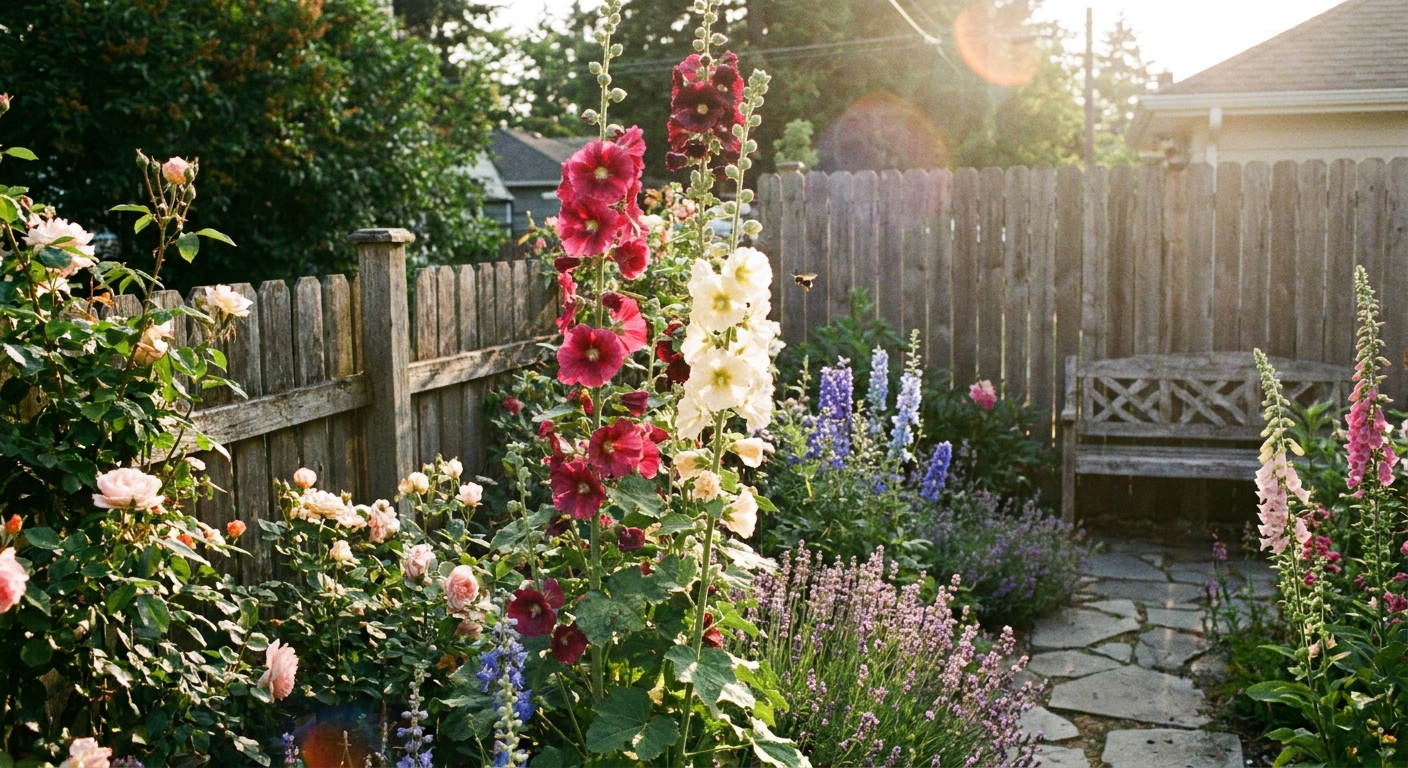
Hollyhocks are the charming, old-fashioned giants of the garden. They also have a bit of a reputation: gorgeous flower spikes up top, and then, inevitably, those polka-dotted, rusty-looking leaves down below.
The good news is you do not need harsh chemicals or perfect conditions to grow healthy hollyhocks. You just need a few habits that stack the odds in your favor: pick the right spot, support them early, keep leaf wetness brief, and be a little ruthless about sanitation when rust shows up.

Place hollyhocks where rust struggles
If I could give every hollyhock grower one superpower, it would be airflow. Hollyhock rust thrives when leaves stay damp for long stretches, especially overnight. Your job is to help foliage dry quickly.
Best placement basics
- Full sun (6 to 8+ hours). Morning sun is especially helpful because it dries dew fast.
- Room to breathe. Avoid tucking hollyhocks into a tight corner where air sits still.
- Good drainage. Soggy soil stresses plants and invites trouble. If you have heavy clay, amend with compost or plant on a slight mound.
- Avoid frequent overhead watering. The real problem is prolonged leaf wetness. If you must water overhead, do it early so leaves dry fast.
Spacing tip: Space hollyhocks typically 18 to 24 inches apart, or 24 to 36 inches for larger types. If you know the mature spread of your variety, use that as your guide. It feels generous in spring and then July arrives and you will be glad you did it.
Walls and fences
Hollyhocks look magical against fences, sheds, and sunny walls, but those spots can also trap humidity. If you plant along a wall, keep plants a bit forward so air can move behind the leaves, and avoid crowding them with dense shrubs.
Stake early
Hollyhocks do not politely ask for support. They wait until they are 5 to 7 feet tall and then flop in a thunderstorm like a fainting Victorian.
The trick is to stake them while they are still leafy and low. It is easier on the plant, easier on you, and you will not snap roots trying to shove a stake into dry summer soil.
Simple staking options
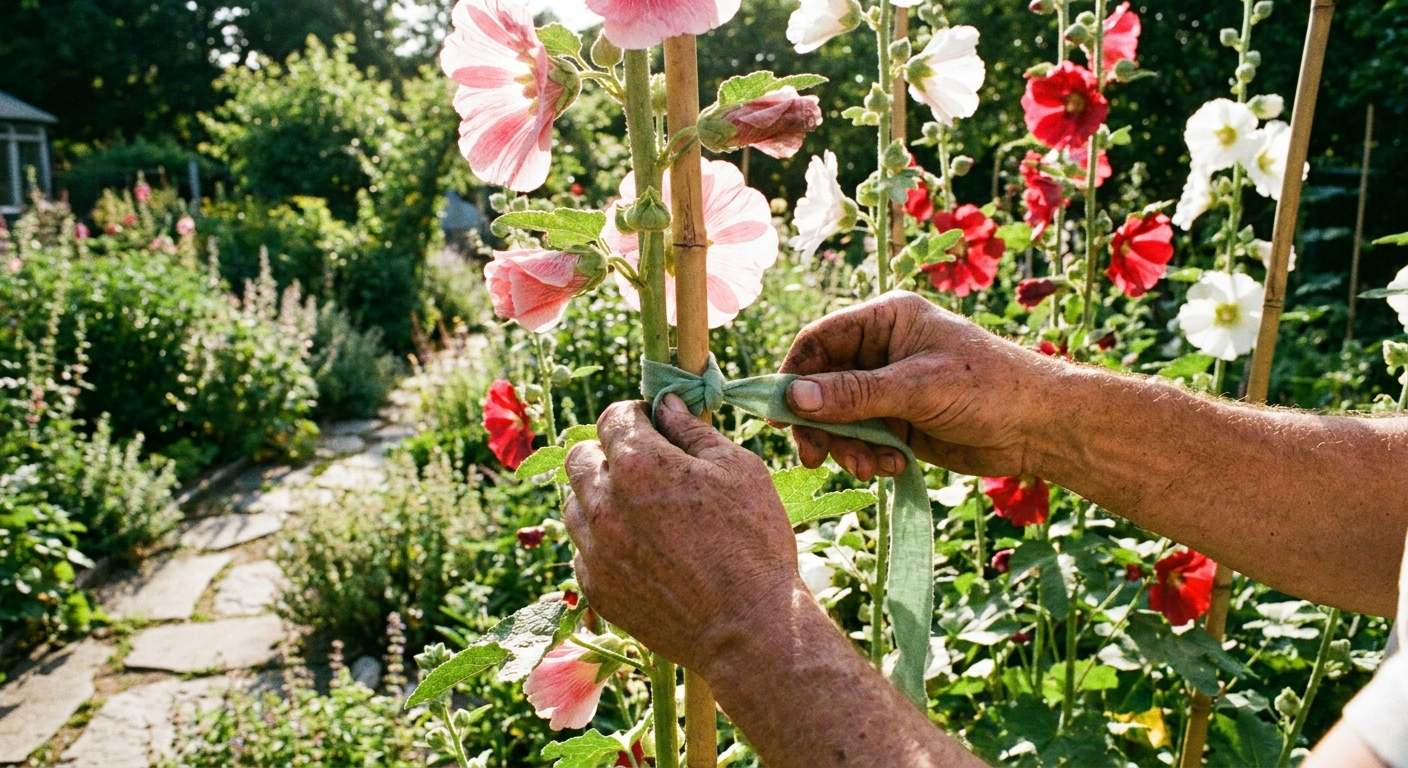
- Single stake: A bamboo cane, cedar stake, or metal rod placed 2 to 3 inches from the stem.
- Soft ties: Use stretchy garden tape, cloth strips, or soft plant Velcro. Avoid thin string that can cut into stems.
- Ring support: A peony ring or tall support ring can work well for clumps, especially in windy yards.
How to stake
- Install the stake when plants are 12 to 18 inches tall. Earlier is fine.
- Push the stake in deeply (8 to 12 inches, more in sandy soil) so it does not wiggle.
- Tie loosely in a figure-eight. One loop around the stake, one around the stem, with a little slack for growth.
- Add ties as the plant grows. Place a tie every 12 to 18 inches up the stem.
- Lean into the wind if needed. In very exposed gardens, angle the stake slightly into the prevailing wind so the plant presses into the stake rather than away from it.
Water at the base
If rust prevention had a love language, it would be leaves that dry quickly.
Best watering habits
- Water early in the day so any splashes dry quickly.
- Soak the root zone rather than misting the plant.
- Use drip irrigation or a soaker hose whenever possible.
- Mulch with compost, shredded leaves, or straw to reduce soil splash, which can move spores onto lower leaves.
How much water? Aim for deep watering when the top couple inches of soil are dry. Hollyhocks are fairly drought-tolerant once established, but consistent moisture helps them resist stress and bloom better.
Hollyhock rust basics
Hollyhock rust is commonly caused by the fungus Puccinia malvacearum, and related Puccinia species may be involved in some regions. It usually starts low and works its way up, which is why people often notice it right when the plants are getting beautiful.
How to identify rust
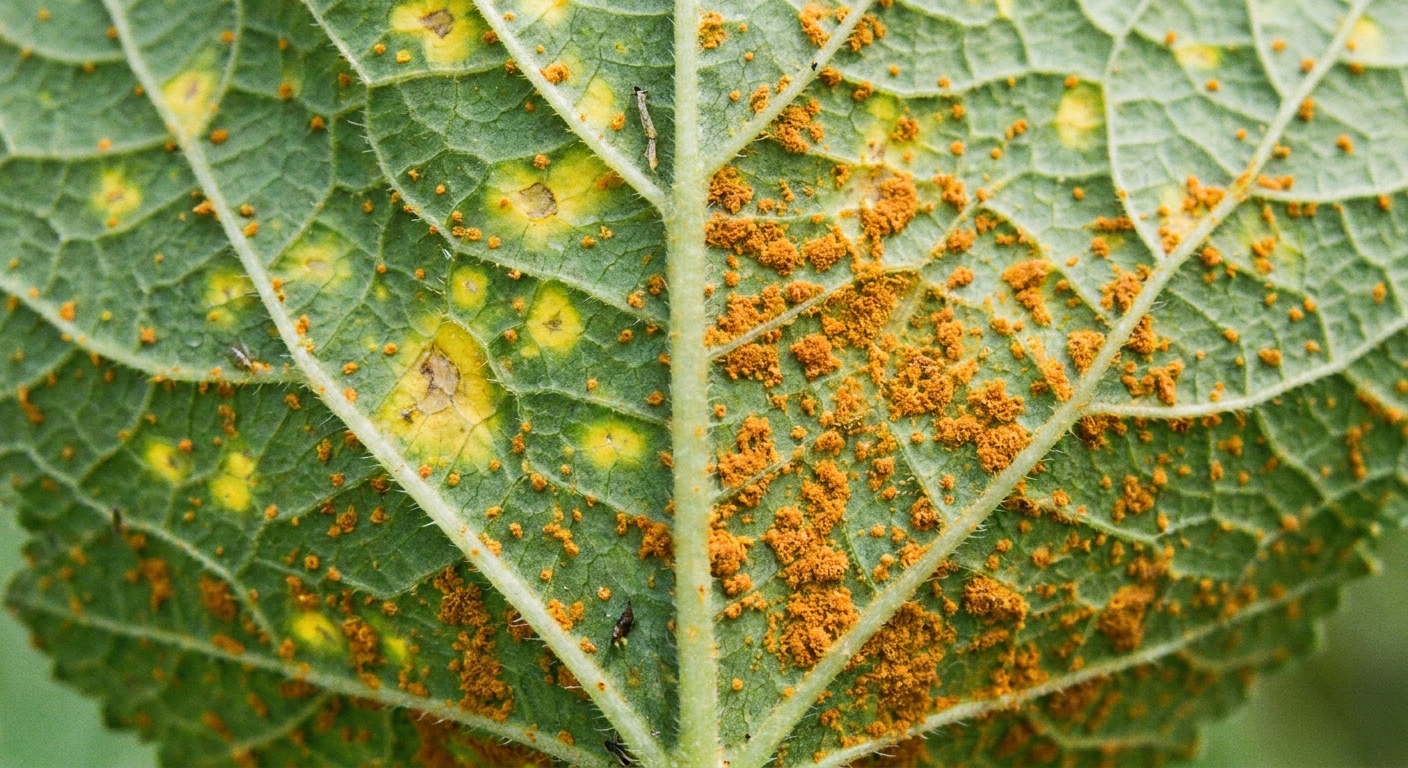
- Small yellow spots on the upper leaf surface.
- Orange to rust-brown powdery bumps on the undersides of leaves. If you rub them, you may get orange dust on your fingers.
- Leaf yellowing and drop as the infection worsens, starting with lower leaves.
Rust spreads via spores that move on wind, splashing water, and even your hands or tools. Warm days plus damp leaves is basically an engraved invitation.
Sanitation works
I know, “sanitation” sounds like a lecture. But with hollyhocks, it is honestly the most effective non-synthetic strategy.
When you see the first spots
- Remove the worst lower leaves right away, especially those touching the ground.
- Bag infected foliage in the trash. Do not compost it unless your compost reliably heats up.
- Clean your hands and snips after working on infected plants.
- Thin nearby plants if airflow is poor. You can often reduce humidity by simply giving hollyhocks a little elbow room.
How aggressive should you be? If rust is light, removing a few leaves can slow it down enough that the plant still blooms beautifully. If rust is heavy and moving fast, it can be kinder to cut the plant back after flowering and focus on preventing next year’s reinfection.
One caution: Do not strip the plant bare. Removing too many leaves at once can stress hollyhocks and reduce flowering. Think “surgical and steady,” not “scorched earth.”
Organic prevention that helps
Organic rust control is about reducing leaf wetness time, strengthening the plant, and using gentle protectants before infection gets out of hand.
1) Grow the plant
- Feed the soil: Add compost in spring and again as a light top-dress midseason if your soil is lean.
- Avoid high-nitrogen blasts: Too much quick nitrogen can produce soft growth that is more disease-prone.
- Keep mulch a few inches back from the stem: This discourages stem rot and improves airflow at the base.
2) Reduce splash and crowding
- Mulch to stop soil splash onto lower leaves.
- Remove bottom leaves proactively once the plant is tall and sturdy, especially if they touch the soil.
- Stake to lift and steady stems so leaves are not flopping into damp neighboring plants.
3) Organic sprays (protective, not magic)
If rust is a yearly problem in your garden, a preventative spray can help, but timing matters. Most organic options work best before heavy infection, and they need reapplication, especially after rain.
- Neem oil: May help suppress rust when used preventatively (and can reduce sporulation), but it has limited effect once rust is established. It is better as a shield than a rescue. Spray in the evening or early morning to reduce leaf burn and avoid spraying when pollinators are active.
- Sulfur: Often used preventatively for fungal issues. Avoid using during extreme heat since it can injure plants, and do not use sulfur close to oil-based sprays.
- Copper: Effective as a protectant (not a curative). Use sparingly and precisely. Copper can build up in soil over time, which is why I treat it as a last resort in organic gardens.
Spray safety note: Always follow label directions, and test on a small area first. Sprays cannot replace airflow, base watering, and cleanup. They are support, not the whole show.
Mildew vs rust
Hollyhocks can also get powdery mildew. The care overlaps, but the symptoms are different.
- Rust: Orange-brown spots and powdery bumps, usually starting on lower leaves.
- Powdery mildew: White, dusty coating on leaf surfaces, often appearing in warm weather with humid nights and dry days.
For both, prioritize sun, airflow, watering at the base, and removing heavily infected leaves.
Start with smarter plants
Some hollyhocks and close relatives handle rust better than others. If rust is a known annual visitor in your yard, it helps to start with the healthiest, cleanest material you can.
- Buy or start rust-free plants: Avoid seedlings with any spotting, especially on lower leaves.
- Look for tolerance notes: Some named varieties are marketed as more rust-tolerant, and you may notice certain colors or strains in your garden simply hold up better. If one self-sown line stays clean, save seeds from that one.
- Consider cousins: If classic hollyhocks always melt down, you might have better luck with other Malvaceae ornamentals in a different spot (and with good spacing) rather than replanting the same problem patch over and over.
Hollyhock life cycle
Hollyhocks are often biennial or short-lived perennials. Many grow leafy the first year, then bloom hard the second year, then fade out. Rust pressure tends to be worse in older, crowded, self-sown patches, which is another reason thinning and renewal matter.
If you love the self-sown cottage look, keep it, just edit it. Thin seedlings early, keep the best-spaced ones, and remove the weaklings. You get the charm without the swampy leaf layer.
End-of-season cleanup
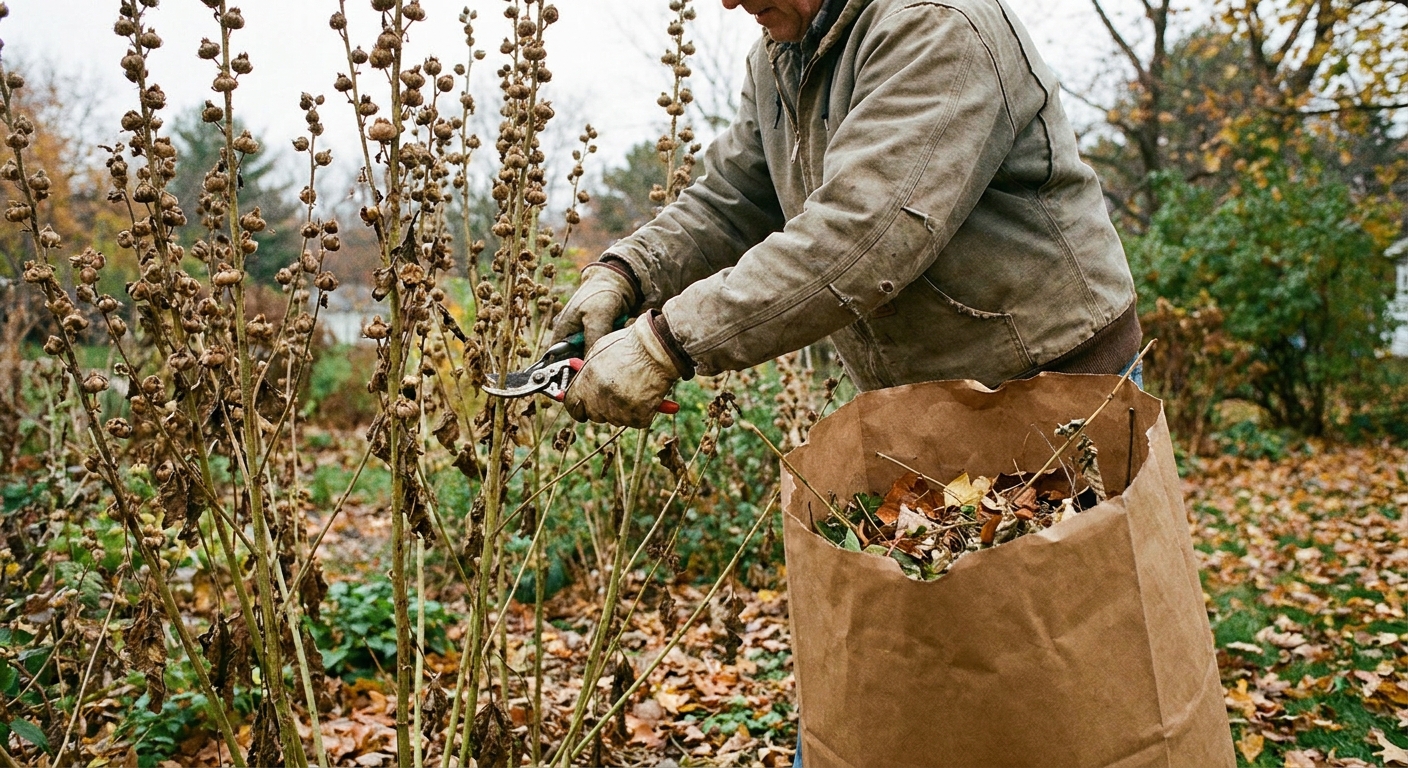
This is where next year’s success gets decided. Rust spores can overwinter on infected plant debris. If you leave a crispy rust buffet on the ground, spring will begin with a head start you did not want.
Fall cleanup checklist
- Cut hollyhocks down after hard frost or when they finish for the season.
- Remove and trash infected leaves and stems.
- Rake thoroughly around the base to remove fallen leaves.
- Refresh mulch after cleanup to cover any remaining spores and reduce splash next season.
- Rotate if possible: If rust was severe, consider planting hollyhocks in a different spot next year. Also avoid other mallow-family plants in that same bed for a bit, such as mallow, hibiscus, rose of Sharon, and okra.
If you let a few healthy seedlings self-sow, keep an eye on them next spring. Thin them early so they grow with airflow from day one.
When to escalate
If rust defoliates your hollyhocks early every year, even with good spacing and cleanup, it may be time to change tactics. That can mean replacing the plant with a more reliable bloomer in that spot, or using a labeled fungicide according to local guidance and the product label. There is no shame in choosing a garden that works.
Quick care plan
If you want the short, repeatable routine, here is my hollyhock rhythm:
- Spring: Plant in full sun with space. Add compost. Install stakes early.
- Early summer: Mulch, water at the base, and remove any lower leaves touching soil.
- Mid to late summer: Scout weekly for rust. Remove infected leaves promptly. Consider a preventative protectant if rust returns every year.
- Fall: Cut back, rake, and remove debris. Refresh mulch.
And if rust still shows up, do not take it personally. Hollyhocks are a little wild-hearted. With steady habits, you will still get those towering blooms that make you stop in your tracks, dirt on your knees and a grin on your face.