
Growing Peonies in Pots and Containers

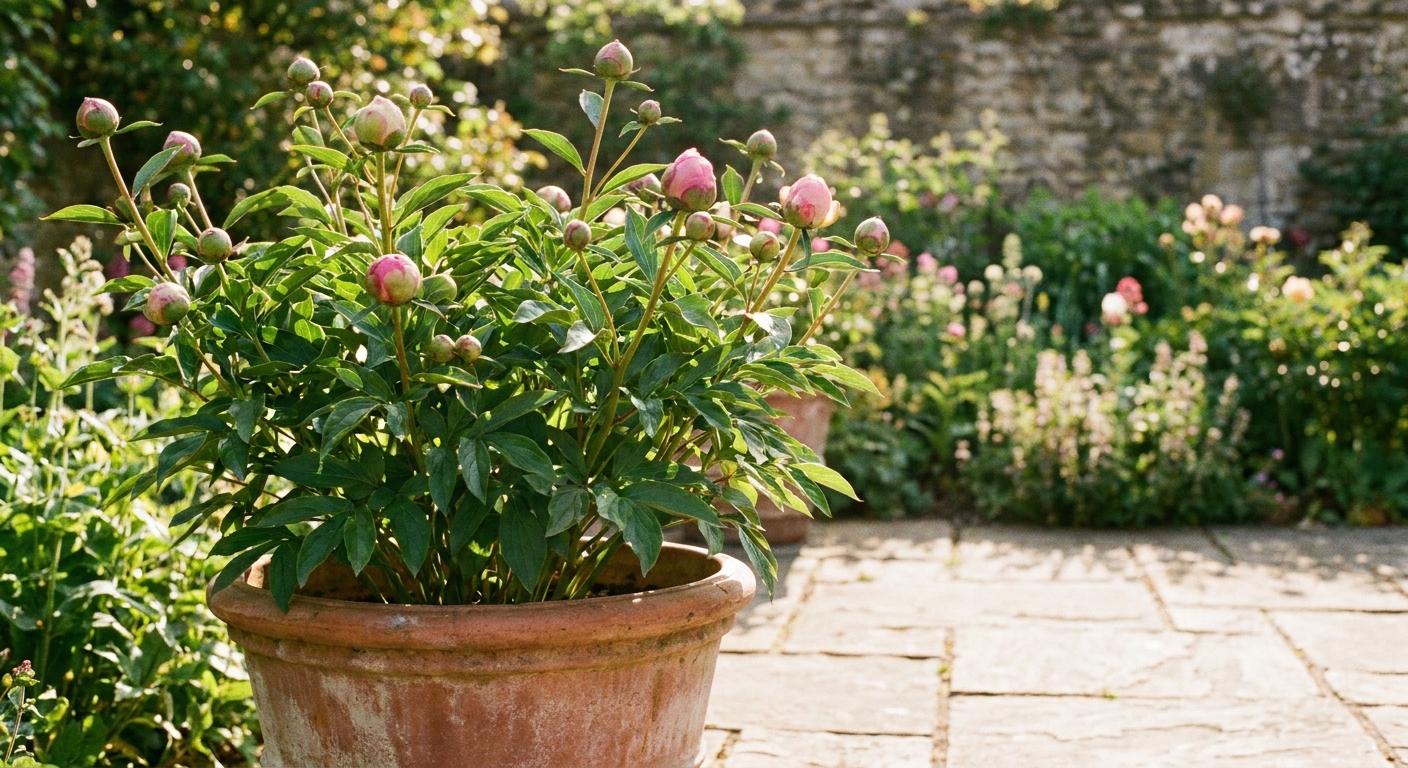
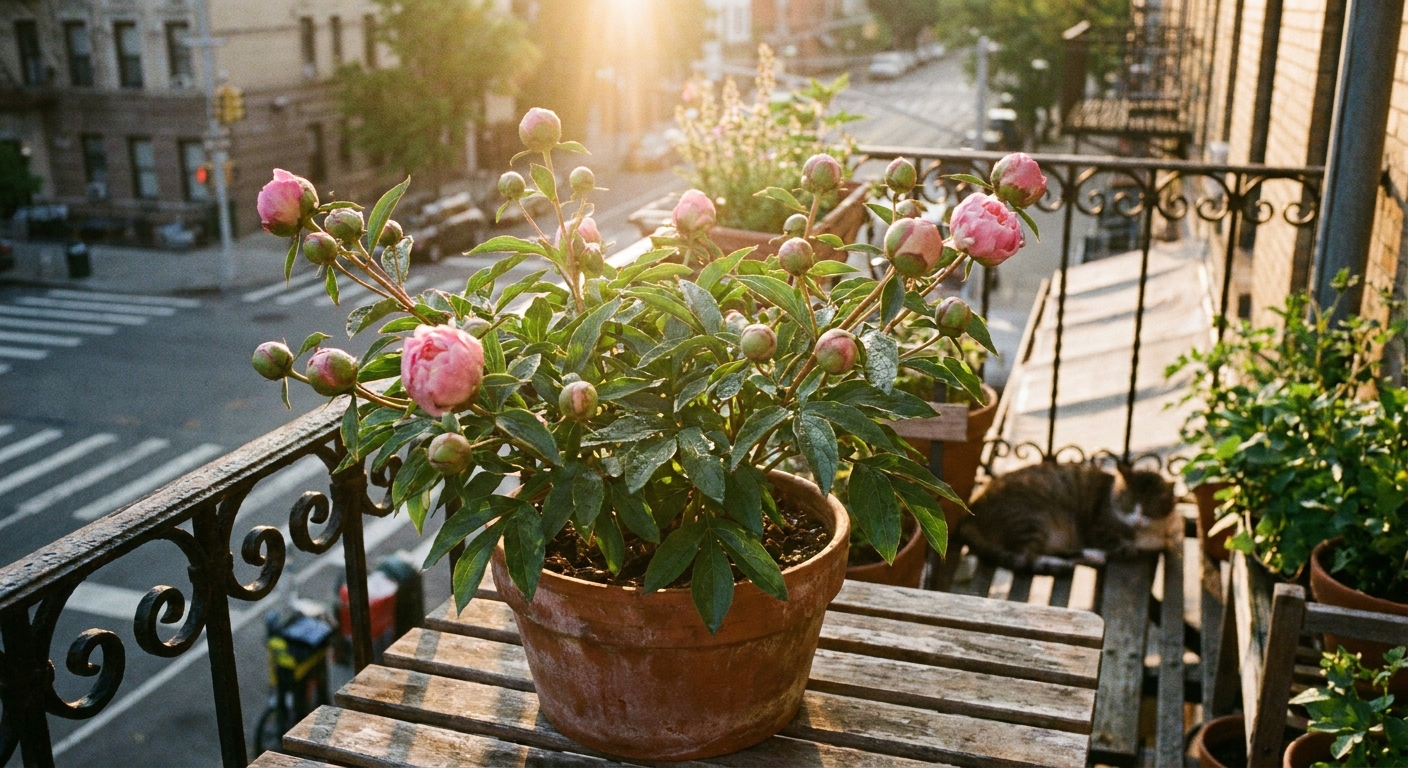
Peonies have a reputation for being old-fashioned garden royalty, happiest with their feet in the ground and decades to settle in. And yes, in-ground peonies are usually the easiest. But if you are working with a patio, balcony, driveway edge, or a rental yard that changes every few years, you can absolutely grow peonies in pots and still get those lush, ruffled blooms.
The trick is treating the container like a tiny, high-performance garden bed: big enough to buffer heat and cold, fast-draining enough to prevent rot, and protected enough in winter so the roots do not freeze solid. Let’s set you up for success.

Can peonies really live in pots?
Yes, especially herbaceous peonies (the classic die-back-to-the-ground types) and many intersectional Itoh peonies (a hybrid with sturdy stems and great flower power). Tree peonies can be grown in large containers too, but they are woodier, slower, and much less forgiving of winter container freeze.
Container life does come with tradeoffs:
- Blooming can be slower. A newly potted peony may focus on roots for a season or two.
- Watering is more hands-on. Pots dry out faster than garden soil.
- Winter survival takes planning. Roots in pots are exposed to colder temperatures than roots in the ground.
If you are okay with a little extra care, container peonies are wonderfully doable.
Choose the right pot (this matters more than almost anything)
If there is one place I refuse to “make do,” it is pot size. Peonies have thick, hungry roots and they like stability.
Best container size
- Minimum: 18 inches wide and 18 inches deep (roughly 10 to 15 gallons)
- Better: 20 to 24 inches wide and 18 to 24 inches deep (15 to 25 gallons)
Bigger pots buffer temperature swings and hold moisture more evenly, which is exactly what peonies crave.
Drainage is non-negotiable
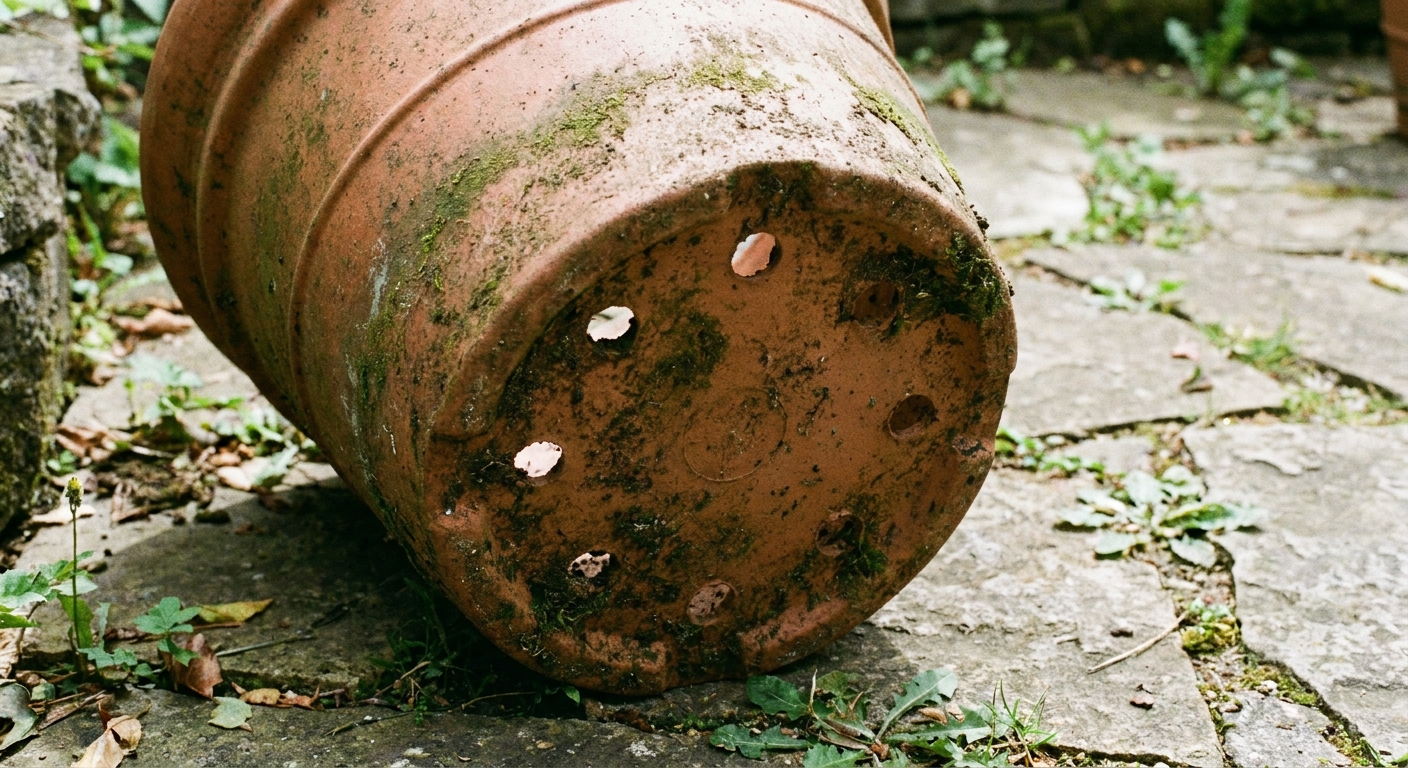
Your pot must have several drainage holes. One tiny hole in the center is not enough for a peony that will sit there for years.
- Do not use a “self-watering” style container for peonies.
- Do not add rocks at the bottom. They do not improve drainage in a meaningful way. Use a better soil mix instead.
Material tips
- Terracotta: Breathable, but dries faster and can crack in freezing climates if waterlogged.
- Heavy resin or fiberglass: Great insulation and easier to move than ceramic.
- Glazed ceramic: Gorgeous, but heavy and can be fragile in hard freezes.
If you live somewhere with real winter, plan ahead for how you will move or protect the container before you fall in love with a 200-pound pot.
Soil for container peonies: fast-draining but still rich
Garden soil in a pot is a recipe for compaction and soggy roots. Peonies hate sitting wet, especially in cool weather. You want a mix that drains quickly but still holds enough moisture to keep the plant steady between waterings.
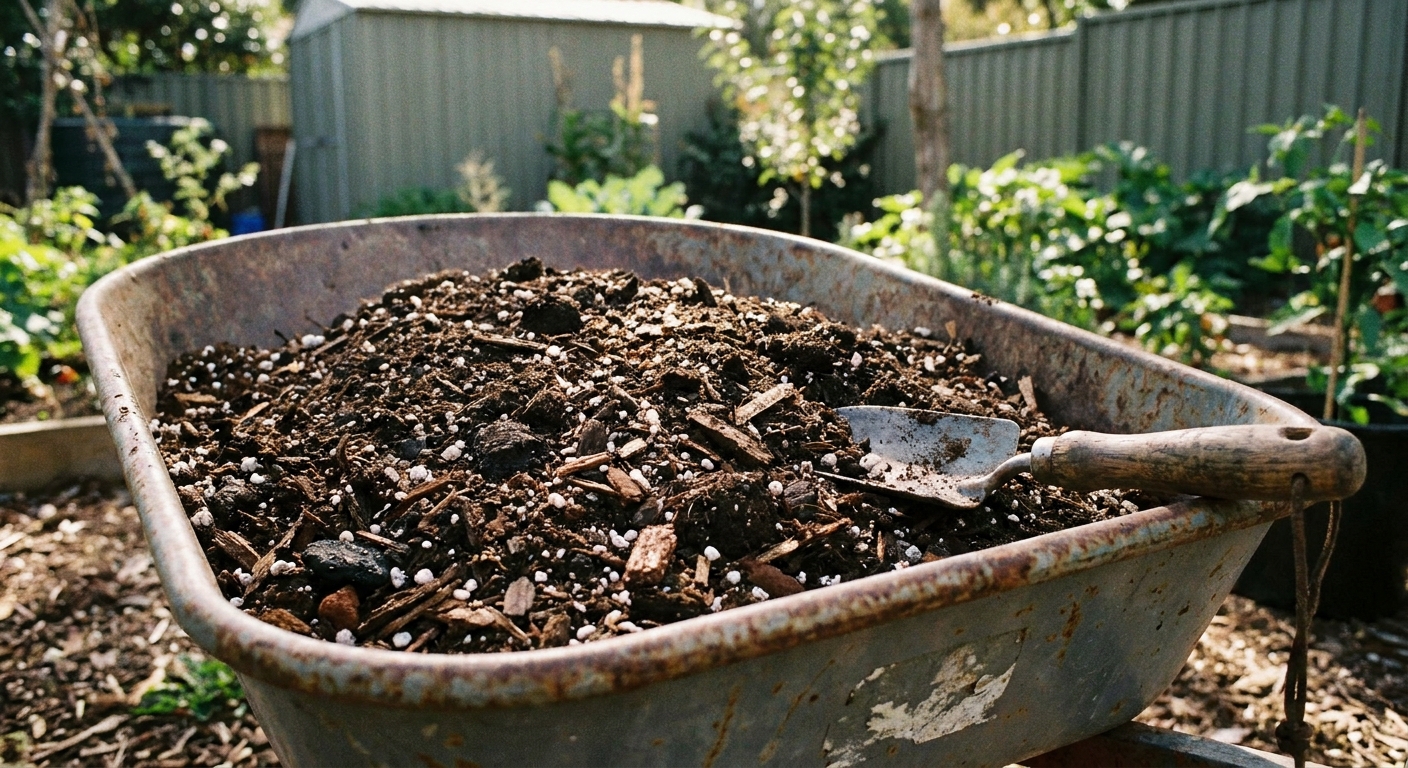
A reliable DIY mix
Here is my go-to container blend for peonies:
- 50% high-quality potting mix (not topsoil)
- 25% compost (finished, earthy-smelling, not chunky)
- 25% drainage booster like perlite, pumice, or pine bark fines
If your potting mix is already very light and fluffy, you can dial the perlite down a bit. If it is heavy or peat-dense, keep that drainage booster closer to 30%.
pH and nutrients
Peonies prefer soil that is slightly acidic to neutral (roughly pH 6.5 to 7.0). In containers, you can keep things simple:
- Use compost for slow, steady nutrition.
- Add a small amount of balanced slow-release fertilizer in spring, not a heavy hand.
Planting depth: the easiest way to accidentally prevent blooms
Peonies are famous for being picky about planting depth. Too deep and you get gorgeous foliage and zero flowers.
How deep to plant peony eyes in a pot
- Look for the pinkish-red buds on the crown, called eyes.
- Set the crown so the eyes sit about 1 to 2 inches below the soil surface.
- In warmer zones, stay closer to 1 inch. In colder zones, closer to 2 inches is fine.
After watering, the soil will settle. Check depth again and top up gently if needed.
When to plant
For bare-root peonies, fall is ideal. Early spring can work too, but fall planting gives roots time to establish before summer heat.
Sun: how much light container peonies need
Peonies bloom best with full sun, which means at least 6 hours of direct light. In containers, sun can be a little more intense because the pot warms up quickly.
- Cooler climates: Aim for 6 to 8+ hours of direct sun.
- Hotter climates: Morning sun with a bit of afternoon shade can prevent crispy petals and heat stress.
If your plant looks healthy but blooms scorch quickly, move the pot where it gets gentle afternoon protection. Your peony will not sulk about a few hours of shade if the tradeoff is less heat.
Watering rhythm: deep, then let it breathe
Container peonies like consistent moisture, but they also need oxygen around the roots. Think of watering as a rhythm, not a daily chore.
How to water
- Water slowly until you see water run from the drainage holes.
- Then wait until the top 1 to 2 inches of soil feels dry before watering again.
Seasonal watering tips
- Spring: Steady moisture as growth takes off and buds form.
- Summer: Water deeply, especially during heat waves. Containers can dry fast.
- Fall: Gradually reduce as the plant goes dormant, but do not let the pot stay bone dry.
- Winter: If the pot is kept in a protected area that stays above freezing, water lightly once in a while if the soil is very dry.
Red flag: If the soil is staying wet for days, you likely need a grittier mix, more drainage holes, or a pot that is not sitting in a saucer of water.
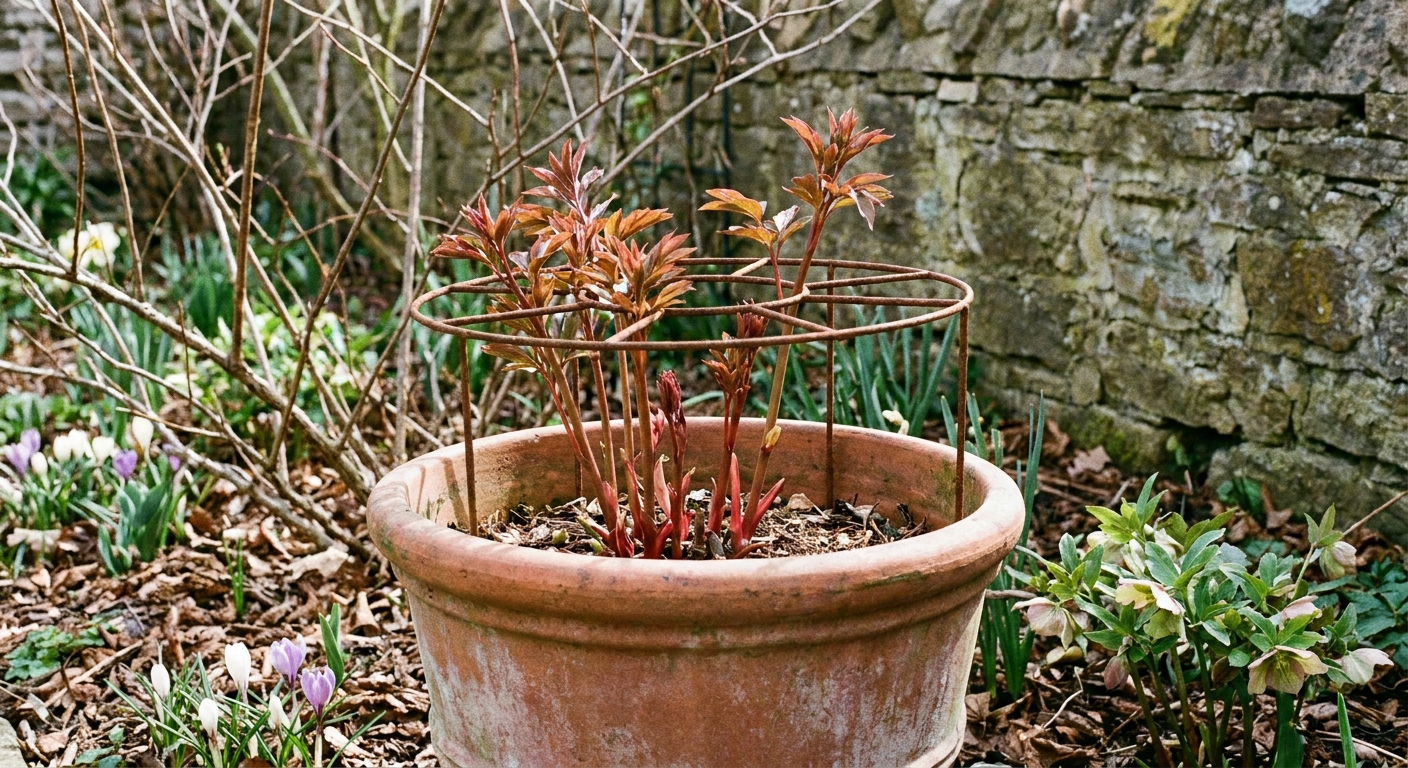
Staking: do it early, and you will thank yourself later
Even “sturdy” peonies can flop when they are covered in big blooms and hit by rain. In a pot, they are even more top-heavy.
- Put supports on in early spring when shoots are 6 to 10 inches tall.
- Use a peony ring, tomato cage, or a discreet grid of bamboo stakes and soft ties.
Waiting until the plant is already leaning is like trying to put a belt on after dessert. Possible, but not graceful.
Fertilizer timing: feed for roots and blooms, not for giant leaves
Peonies are not heavy feeders, and too much nitrogen can push lush foliage at the expense of flowers. In containers, nutrients wash out faster, so a light, well-timed approach works best.
Simple feeding schedule
- Early spring: Apply a balanced slow-release fertilizer (something like 10-10-10) at label rate, or a small handful of organic bulb fertilizer.
- After bloom (late spring to early summer): Top-dress with compost, or use a gentle liquid feed once or twice to help the plant rebuild reserves.
- Late summer and fall: Stop fertilizing. Let the plant ease into dormancy.
If you only do one feeding, do it in spring when growth starts.
Winter survival: the container challenge (and how to win it)
In the ground, soil acts like a blanket. In a pot, cold can hit the root ball from all sides. The goal is not to keep the plant warm all winter. Peonies need chilling to bloom. The goal is to keep roots from repeatedly freezing and thawing, or freezing into a solid brick for weeks on end.
Know your zone reality
- USDA zones 3 to 4: Container overwintering is possible, but protection is essential. A pot left fully exposed is high risk.
- Zones 5 to 7: Usually manageable with insulation and a sheltered spot.
- Zones 8 and warmer: Winter is easier, but heat and lack of chill can limit blooms for many peony varieties.
Best overwintering options
Option 1: Sink the pot into the ground (my favorite)
- After the plant goes dormant, dig a hole and set the whole pot into the ground up to the rim.
- Mulch around it with leaves or straw.
- Pull it back out in spring once the worst freeze risk passes.
Option 2: Move it to an unheated, sheltered location
- An unheated garage, shed, or cold basement that stays around 30°F to 40°F is excellent.
- Keep it dark or low-light during dormancy. That is fine.
- Water sparingly, only if the soil gets very dry.
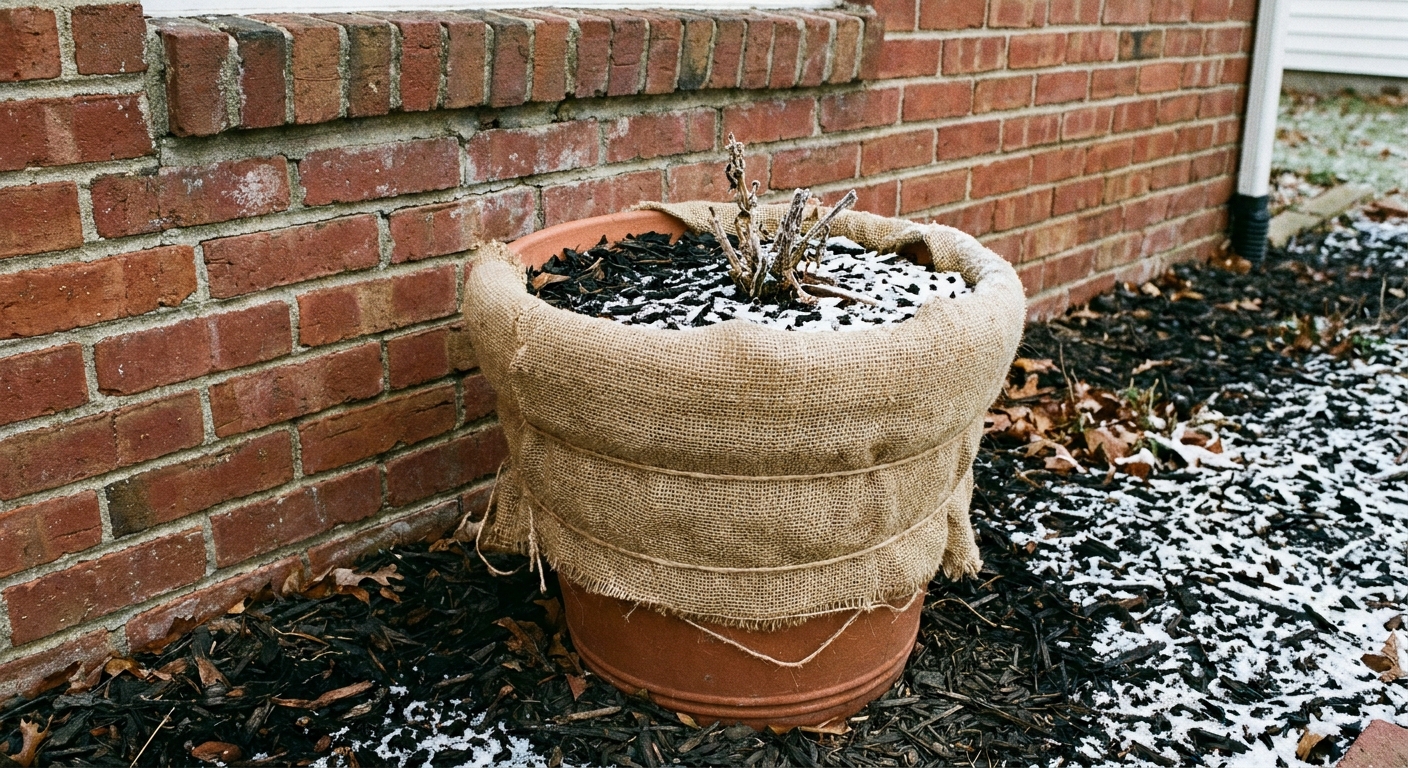
Option 3: Insulate it outdoors
- Move the pot against a house wall out of winter wind.
- Wrap the pot with burlap, old blankets, or bubble wrap, then add a thick layer of mulch on top of the soil.
- Keep drainage holes clear so winter rains do not leave the roots soggy.
Cutback and cleanup
For herbaceous peonies, once foliage yellows after frost, cut stems down to a couple inches and remove the debris. This helps reduce disease carryover. For Itoh peonies, cut back similarly after frost. For tree peonies, do not cut woody stems back hard. Only remove dead wood in spring.
When to avoid pots entirely
I love a good container challenge, but I also love setting you up for the kind of success that feels calm and sustainable.
Consider skipping the pot if:
- You can only offer a small container (under 15 gallons) long-term.
- You live in a very cold zone and cannot move, sink, or insulate the pot for winter.
- Your only outdoor space is blazing hot afternoon sun with no shade options and intense reflected heat.
- You want instant, huge blooms the first season. Peonies reward patience.
If any of these hit home, an in-ground peony, or even a different container-friendly bloomer, may bring you more joy with less stress.
Quick container peony checklist
- Pot: 18 to 24 inches wide and deep, lots of drainage holes
- Soil: Potting mix + compost + perlite or bark for fast drainage
- Planting depth: Eyes 1 to 2 inches below soil surface
- Sun: 6+ hours, morning sun is gold in hot climates
- Water: Deeply, then let top 1 to 2 inches dry
- Support: Add stakes or ring early in spring
- Feed: Light spring fertilizer, compost after bloom, stop by late summer
- Winter: Sink pot, shelter in an unheated space, or insulate outdoors
If you try this and your peony takes a season to settle, you did not fail. You just gave a long-lived plant a new home. Keep showing up, keep the soil healthy, and let the roots do their quiet work.