
Growing Blackberries in Pots and Containers

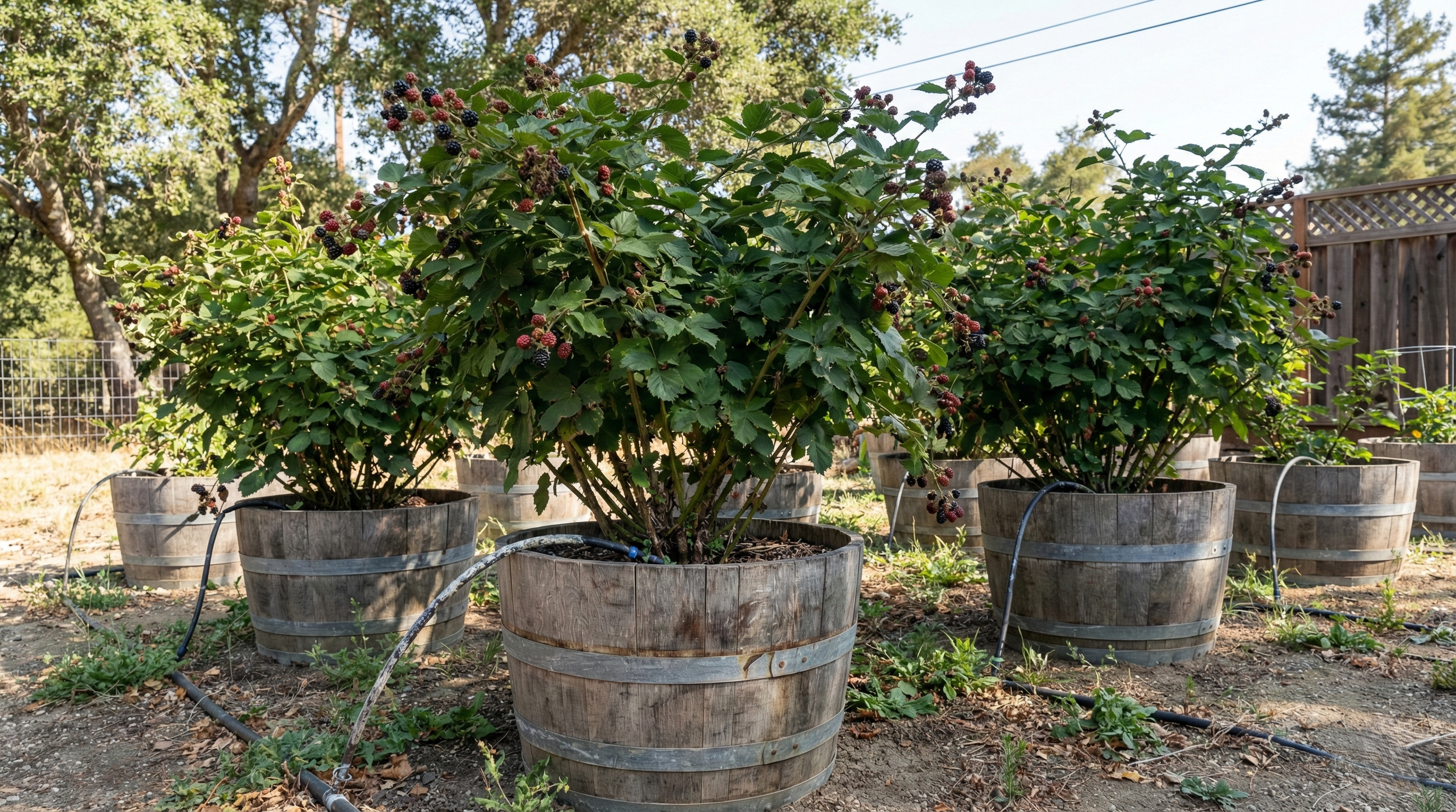
Blackberries in a pot can feel a little like a magic trick. One minute you have a leafy cane tucked beside a chair, and later on you are picking glossy, sun-warmed berries within arm’s reach of your kitchen door. The secret is not luck. It is choosing a container-friendly variety, giving roots enough room, and staying steady with water and pruning.
If you have ever been told blackberries are only for big gardens, I am here to kindly disagree. With a solid pot, a trellis, and a little seasonal rhythm, patio blackberries are absolutely doable.
One realistic note on timing: most blackberries do not go from planting to harvest in a few weeks. Many floricane types fruit mainly in their second year. Primocane-fruiting varieties can produce on first-year canes, but usually later in the season, and only if your weather cooperates.

Best varieties for pots
For pots, you want plants that stay compact, fruit heavily, and do not turn your balcony into a thorny jungle. Most container gardeners are happiest with thornless and semi-erect or compact types.
Top picks
- Baby Cakes: Dwarf, thornless, bred for containers. Perfect for small patios and big balcony planters. Expect good harvests with sun and consistent feeding, but not the massive yields of field-grown plants.
- Navaho: Thornless and upright with good flavor, but it can be tall and vigorous. It can be managed in a large pot with regular tipping, pruning, and support.
- Arapaho: Thornless, earlier harvest than many, upright habit and generally easier to keep tidy.
- Prime-Ark Freedom and Prime-Ark Traveler: Thornless, primocane-fruiting types that can fruit on first-year canes. In cooler or short-season areas, the primocane crop may ripen late or not fully, so think of that first-year harvest as a bonus, not a promise.
What to avoid in tight spaces: Very vigorous trailing blackberries (often sold for field production) can be frustrating in containers unless you truly enjoy training long canes and have a sturdy trellis setup.
Quick vocabulary that saves headaches:
- Floricane: Second-year cane that fruits once, then dies.
- Primocane: First-year cane. In primocane-fruiting varieties, the primocane can fruit late in the season.
Pot size and drainage
Blackberries are not delicate little herbs. They are hungry, thirsty perennials with serious roots. A generous pot keeps moisture steadier, reduces summer stress, and supports better fruiting.
Minimum pot size
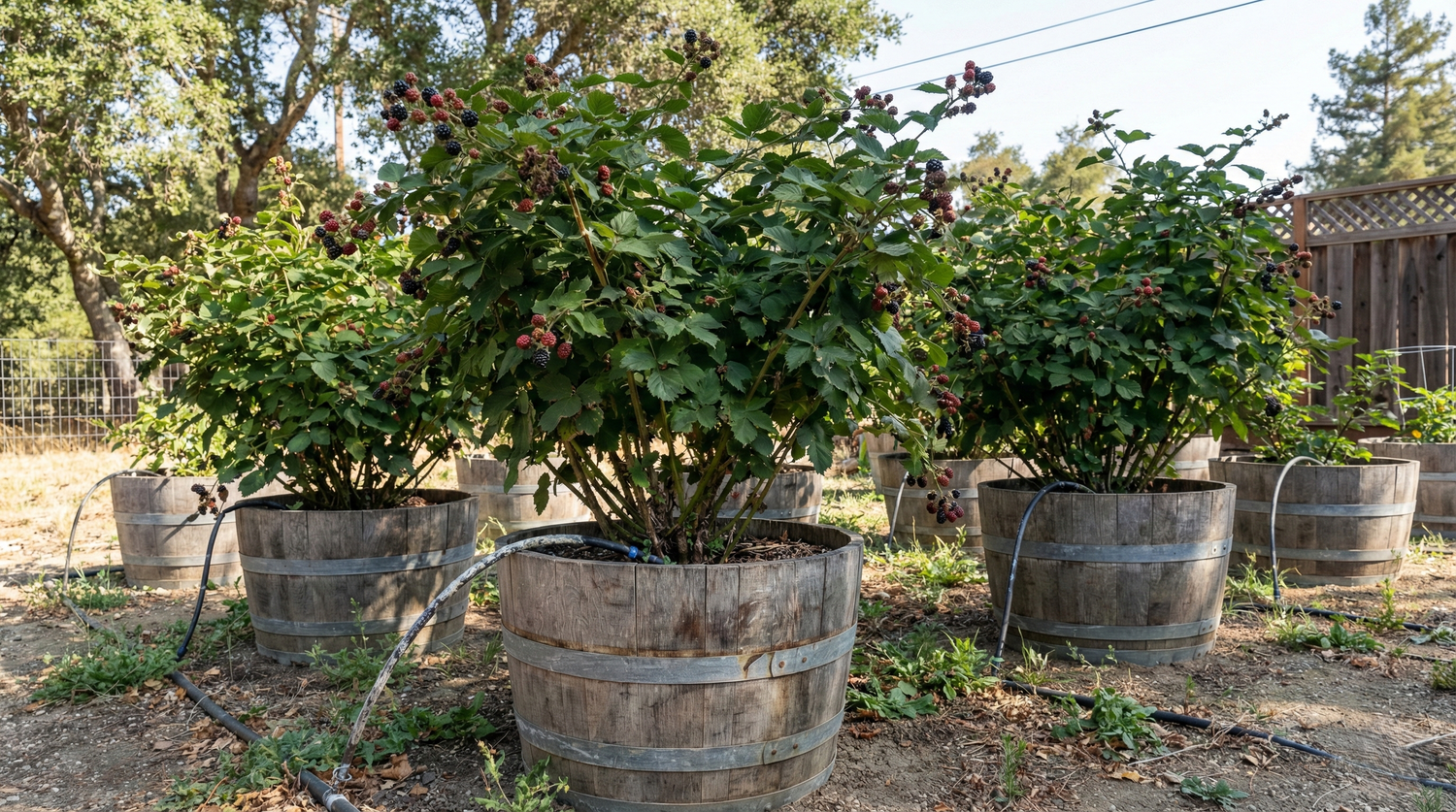
- Dwarf types: 10 to 15 gallon container minimum.
- Full-size upright thornless types: 15 to 25 gallon container is ideal.
- Depth target: At least 14 to 18 inches deep, deeper is better.
Container material tips
- Fabric grow bags: Great drainage and root health, but they dry out fast in heat and wind. Plan for more frequent watering.
- Plastic or resin pots: Hold moisture well and are lighter than ceramic, especially helpful if you need to move the pot for winter protection.
- Terracotta: Pretty, but dries quickly and can crack in freezing climates.
Drainage is non-negotiable: Your pot needs multiple drainage holes. If the container has a saucer, empty it after watering so roots do not sit in water.
Support that works
Even upright blackberries appreciate support in a pot. It keeps canes from snapping in wind, improves airflow, and makes harvesting feel like a pleasant ritual instead of a wrestling match.
Easy support options
- One sturdy stake: Works for dwarf types, especially when canes are short.
- Tomato cage: A quick solution for compact plants, but choose a heavy-duty cage that will not topple once loaded with berries.
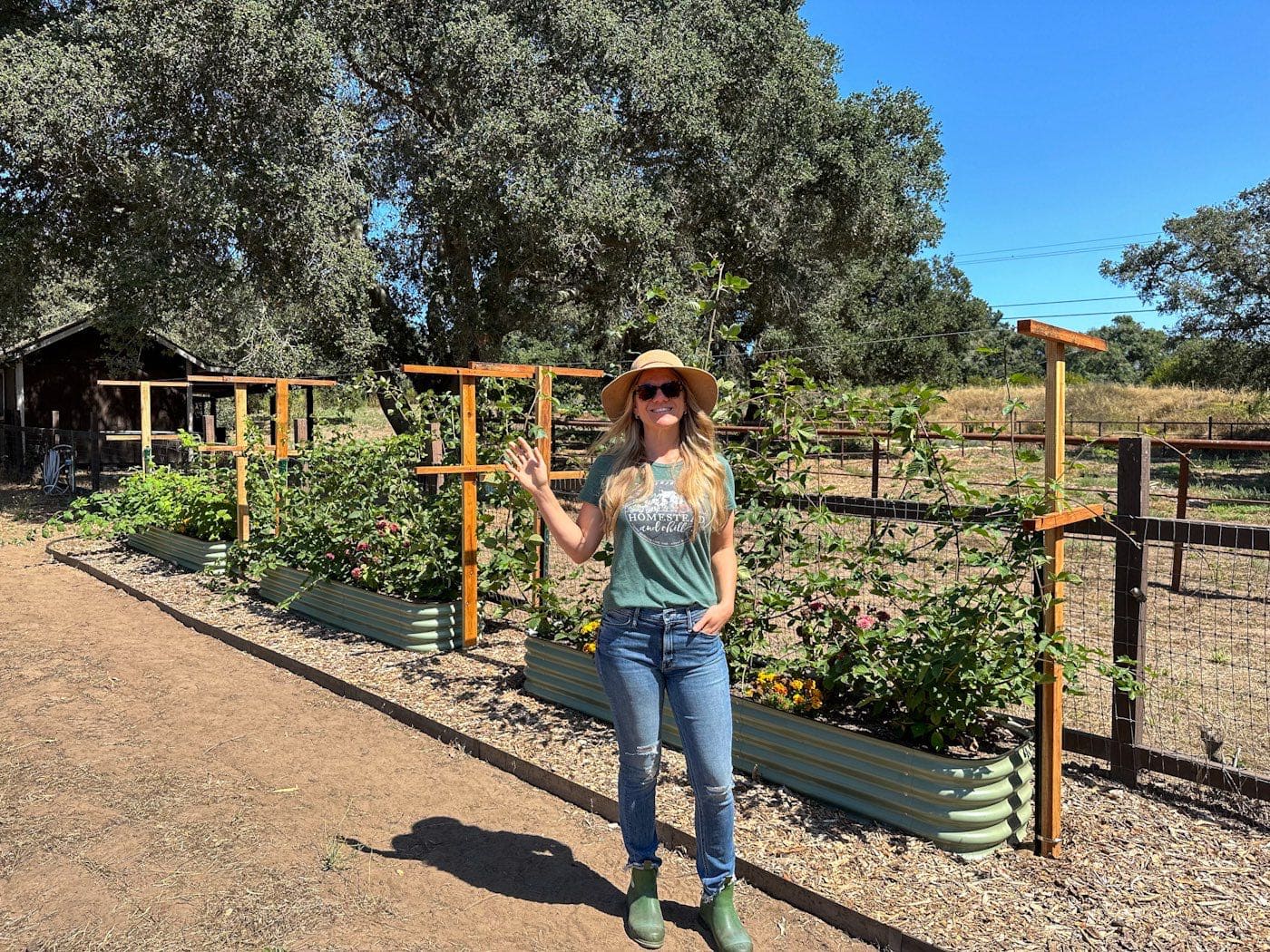
- Small trellis: Best all-around for upright varieties. Place it at planting time so you do not stab roots later.
- Two-post and wire system: If you have a wider container and want a tidy look, run two or three lines of wire or twine to fan canes out.
Tie tip: Use soft plant ties (not wire), and check them a few times a season so they do not bite as canes thicken.
Soil mix for containers
Container soil is your whole world, so it needs to drain well while still holding moisture. Skip heavy garden soil. It compacts like a brick in pots.
A reliable DIY mix
- 60% high quality peat-free potting mix (or a premium potting mix)
- 20% compost (finished, earthy-smelling, not chunky and raw)
- 20% pine bark fines or perlite for drainage and air
pH note: Blackberries are happiest in slightly acidic soil, roughly pH 5.5 to 6.5. They can tolerate closer to neutral, but if you can aim a little on the acidic side, they usually thank you for it. If you already grow blueberries, do not reuse that strongly acidic blueberry mix here.
Mulch helps in pots: Add 1 to 2 inches of straw, shredded leaves, or fine bark on top. It keeps roots cooler and reduces watering swings.
Planting steps
- Pick the sunniest spot you have: Aim for 6 to 8 hours of direct sun for best sweetness and fruiting.
- Moisten your soil mix: Slightly damp soil settles better and hydrates roots faster.
- Plant at the same depth: Keep the crown at the same level it was in the nursery pot.
- Water deeply: Water until it runs freely from drainage holes.
- Add support immediately: Install a trellis or stake now.
- Mulch: Keep mulch a finger-width away from the main stem to prevent rot.
Spacing note: One blackberry plant per container is usually best. Crowding leads to weak growth and more disease pressure.
Watering in heat
In containers, watering is the make or break habit. Berries are mostly water, and drought stress during flowering and fruit fill is the fast track to small, tart berries or poor fruit set.
How often to water
Use these as starting points, not rules. Your sun, wind, pot size, and pot material change everything.
- Spring: Often 2 to 4 times per week.
- Summer heat: Often daily, and sometimes twice a day during heat waves, especially in fabric pots.
- Fall: Reduce as temperatures drop, but do not let the root ball fully dry out.
How to tell when to water
Stick a finger 2 inches into the soil. If it feels dry at that depth, water. If it is still evenly moist, wait.
Heat wave survival tips
- Water early in the morning so plants go into the day hydrated.
- Shade the pot, not the leaves: Wrap the container with burlap or place it inside a larger decorative pot to reduce root-zone heat.
- Increase mulch slightly during peak summer.
- Consider drip irrigation on a timer if you travel or routinely hit 90°F to 100°F days.
Fertilizer timing
Container plants rely on you for nutrients. The trick is feeding enough to support growth and fruit, but not so much that you get a jungle of leaves with few berries.
A simple seasonal schedule
- Early spring (bud break): Apply a balanced slow-release organic fertilizer (something in the general range of 4-4-4 or 5-5-5). Follow label rates for container size.
- Late spring (pre-bloom): Top dress with a thin layer of compost, or add a light feeding of an organic berry fertilizer.
- After harvest: Lightly feed again if the plant looks pale or growth is weak, especially for primocane-fruiting varieties that are still growing hard.
- Stop heavy feeding 6 to 8 weeks before first frost: Late nitrogen can push tender growth that struggles in winter.
One small but helpful check: Many potting mixes include starter fertilizer. If yours does, go easy at first and avoid double-feeding for the first 4 to 6 weeks.
Micronutrients matter in pots: If you see persistent yellowing between leaf veins, a chelated iron drench may help, but always check watering and pH first.
Pollination notes
Most blackberries are self-fertile, so you do not need a second plant to get fruit. That said, yields can improve when you grow another variety nearby, simply because pollinators move around more.
If your container sits on a screened porch or a spot with very few bees, you may need to help. A gentle shake of the canes during bloom or a soft paintbrush across a few flowers can improve fruit set.
Winter protection
In the ground, blackberry roots are insulated by earth. In a pot, they are exposed to cold air on all sides. That means container blackberries often need extra winter help, even if the variety is hardy in your zone in the ground.
Zone 8 to 10
- Usually fine outdoors year-round.
- Keep watering lightly during dry stretches. Slightly moist soil protects roots better than bone-dry soil.
Zone 6 to 7
- Move pots to a protected spot: against the house, out of wind, under an eave.
- Insulate the container: wrap with burlap, bubble wrap covered by burlap, or tuck it into a larger pot with straw packed between.
- Mulch the surface: 2 to 3 inches helps buffer temperature swings.
Zone 3 to 5
- Best options: an unheated garage or shed where temperatures stay cold but not brutally so, often roughly 25°F to 40°F.
- Basements are only a fit if they stay consistently cold (many do not). Low light is usually fine during dormancy, but a little natural light never hurts.
- Water sparingly: about once every 3 to 5 weeks, just enough to keep the root ball from drying out completely.
- If you keep it outdoors, choose the largest container you can manage and insulate heavily, but expect more winter dieback risk.
Watch for early spring wake-ups: If warm spells start growth and then hard freezes return, move pots back to shelter at night or cover canes with frost cloth.
Pruning for pots
Pruning is where container blackberries become calm, tidy patio plants instead of chaos. You are shaping the plant to fit your space while encouraging strong fruiting wood.
If you have a floricane-fruiting blackberry (most common)
- After harvest: Cut the canes that fruited (floricanes) down to soil level. They will not fruit again.
- Throughout summer: Train new primocanes to your support as they grow.
- Late winter or very early spring: Thin to 3 to 6 strong canes in a container (depending on pot size and vigor). Trim side shoots to keep the plant compact and easier to harvest.
If you have a primocane-fruiting blackberry
You have two common approaches:
- One crop, simpler: Cut all canes to the ground in late winter. You will get a later season crop on new primocanes.
- Two crops, more management: Keep some canes to fruit as floricanes early, while new primocanes develop for later fruit. This is productive but can feel crowded in a container, so be ruthless about thinning.
Container-friendly tip: Aim for airflow you can feel with your hand between canes. Crowding invites mildew and makes berries harder to pick.
Repotting and refresh
A blackberry can live in a container for years, but the mix does not stay perfect forever.
- Every 2 to 3 years: Plan to refresh the potting mix and check the roots.
- If it is root-bound: In early spring, you can step up to a larger pot, or root-prune (trim a bit off the outer root mass), then replant with fresh mix.
- Clue it is time: Water runs straight through, growth stalls, or the plant dries out constantly even with good care.
Pests and diseases
Patio blackberries are often easier than in-ground brambles, but a few issues still show up. The best prevention is airflow, clean pruning, and frequent harvesting.
- Spotted wing drosophila: Tiny fruit fly that targets soft fruit. Harvest often, do not leave overripe berries on the plant, and refrigerate picked berries promptly.
- Aphids and spider mites: More common in hot, dry conditions. A strong spray of water, insecticidal soap, and keeping plants well-watered (not stressed) can help.
- Powdery mildew and cane diseases: Encourage airflow with thinning, avoid wetting foliage late in the day, remove spent floricanes promptly, and clean up fallen leaves.
Troubleshooting
Pale leaves (yellowing)
Pale leaves can be caused by several issues in pots. Here is how I narrow it down without guessing.
- Most common: inconsistent watering. If soil swings from soggy to bone dry, roots stop working well. Fix by watering deeply when the top 2 inches are dry, and using mulch.
- Nitrogen deficiency: Older leaves may yellow first, and growth looks weak. Feed lightly in spring with a balanced fertilizer or compost top dressing.
- Iron chlorosis (often from high pH or hard water): New leaves may yellow while veins stay greener. Test pH if you can. If pH is high, repot with fresh mix and consider using rainwater. Chelated iron can help as a short-term support.
- Root-bound plant: If the pot is packed with roots and water runs straight through, it may be time to step up to a larger container or root-prune and refresh soil in early spring.
Poor fruit set (flowers but few berries)
- Not enough sun: Less than 6 hours often means fewer flowers and less sweetness. Move the pot if possible.
- Heat stress during bloom: Extreme heat can reduce pollination. Keep soil evenly moist and consider giving light afternoon shade during the hottest week, especially in very hot climates.
- Pollination issues: Blackberries are largely self-fertile, but they still need pollinators to move pollen. Add nearby flowers, avoid spraying pesticides, and keep plants where bees visit. On screened patios, hand-pollination can help.
- Too much nitrogen: Lush leaves with few flowers often means overfeeding. Ease up on fertilizer, especially high-nitrogen blends.
- Pruning timing mistake: For floricane types, if you accidentally cut last year’s canes in late winter, you may cut off this year’s fruiting wood. Label canes in fall if it helps you remember.
Small, seedy, or dry berries
- Underwatering while fruit is filling: Increase consistency, especially during hot afternoons.
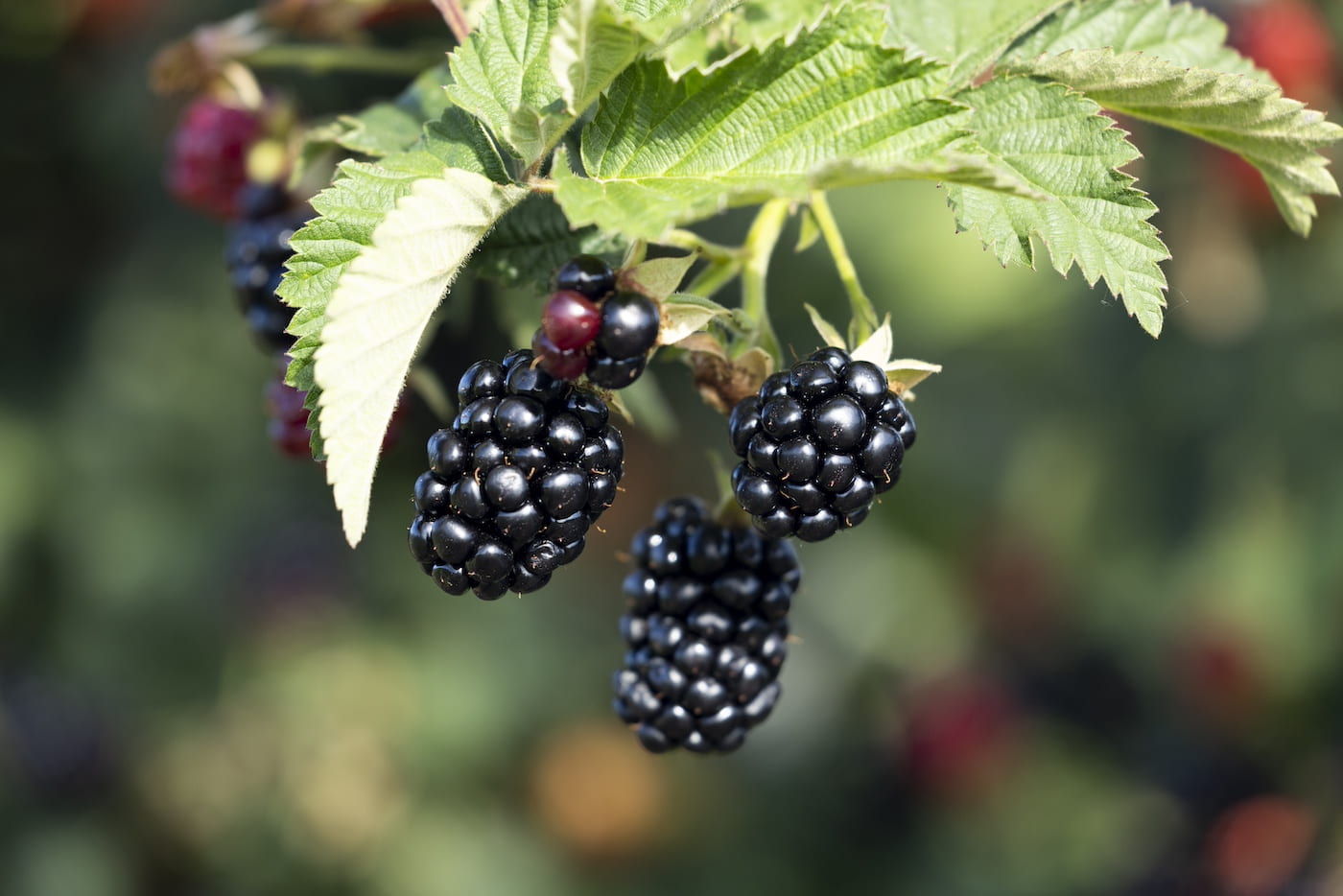
- Harvest timing: Blackberries do not sweeten much after picking. Harvest when they are fully black, glossy to slightly dull, and release easily with a gentle tug.
A simple routine
If you want the short version you can tape to the inside of a potting shed door, here it is:
- Spring: Fertilize (lightly if your mix has starter feed), check support, train new growth.
- Summer: Water consistently, mulch, harvest often, remove spent floricanes after harvest.
- Fall: Reduce feeding, keep watering steady, tidy and thin if crowded.
- Winter: Protect the pot by zone, water lightly during dormancy, prune in late winter based on your blackberry type.
And if something goes a little sideways, please do not label yourself a black thumb. Plants are just honest. They tell us what they need, and we get better at listening each season.