
Grow an Avocado Tree from a Pit Indoors

Growing an avocado tree from a pit indoors is one of those small gardening miracles you can do with kitchen scraps and a little patience. You do not need fancy gear, but you do need realistic expectations: you are growing a lovely house tree first, and a fruiting avocado second. If fruit happens someday, it is a bonus.

I will walk you through the classic toothpick method, when to move to soil, how to give it enough light indoors without turning it into a lanky noodle, and what it takes to keep an avocado happy in a container long term.
Before you start: what to expect
Avocado pits sprout readily, but indoor conditions change the game as the plant matures.
- Time to sprout: commonly 2 to 8 weeks, sometimes longer.
- Time to look like a little tree: a few months.
- Will it fruit indoors? Sometimes, but it is uncommon. Most seed-grown avocados take years to mature (often 5 to 13+ years) and may not match the fruit you ate. Container size, light levels, humidity, and pollination all matter.
- Worth it anyway: absolutely. The foliage is glossy, architectural, and surprisingly soothing to raise from a seed.
Choose and prep the pit
Pick a good candidate
Use a pit from a ripe avocado that was not bruised or moldy inside. A firm, intact seed coat is ideal.
Clean it gently
Rinse off all the clinging fruit. Leftover flesh can rot in water and invite fungus. If the thin brown skin flakes a bit, that is fine. Do not gouge the pit.
Know which end is up
The pointier end goes up and the flatter, broader end goes down. Roots typically emerge from the bottom, and the shoot comes from the top.
Sprout the pit in water
This is the classic windowsill science experiment, and it works well indoors because you can watch the process and catch issues early.
Step by step
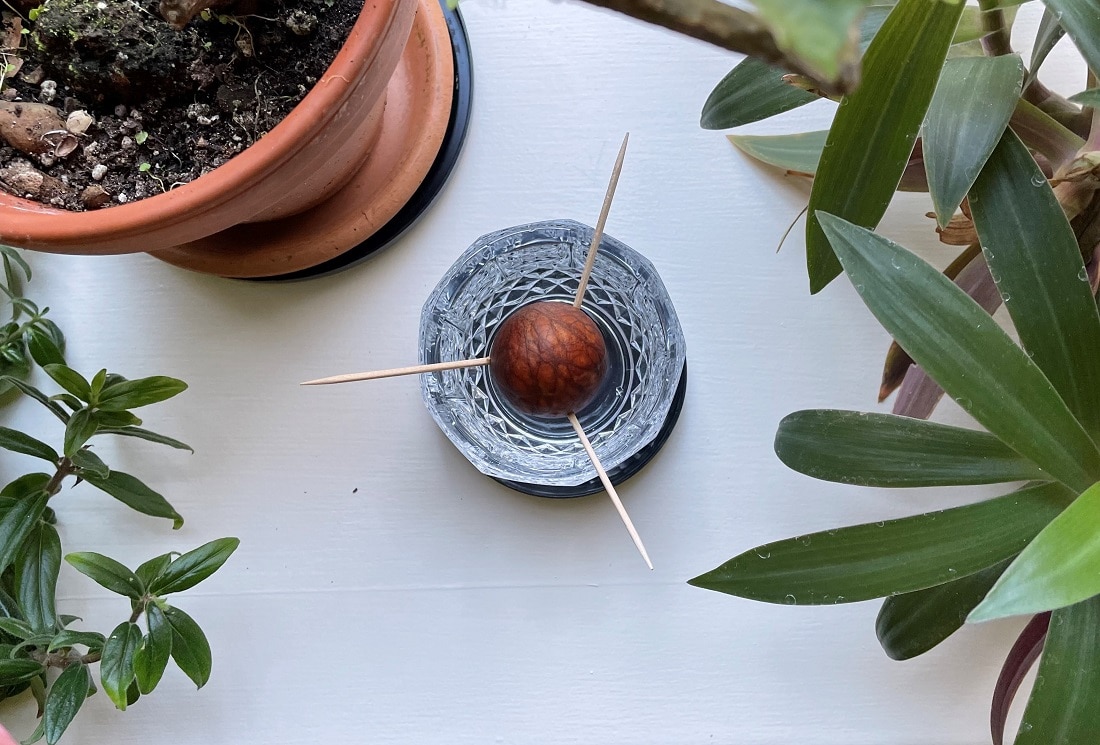
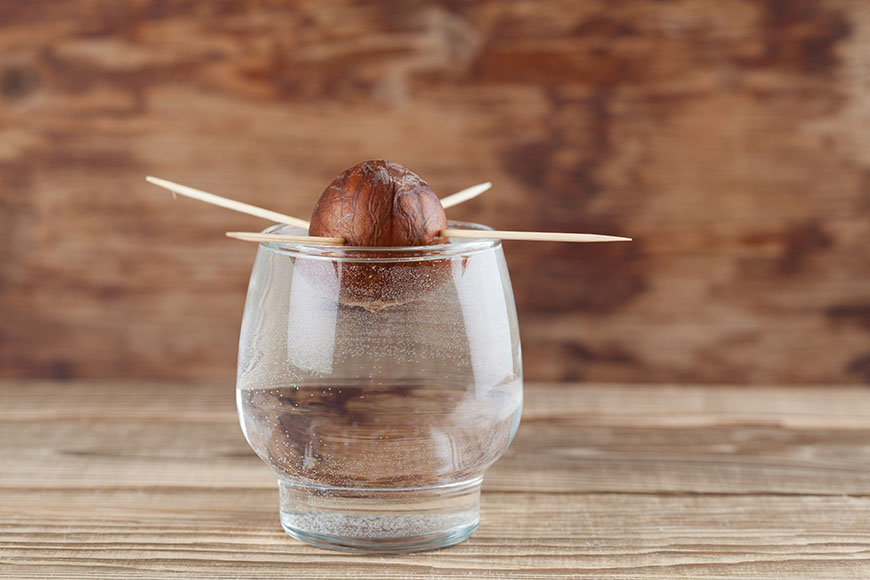
- Insert toothpicks: Push 3 to 4 toothpicks into the pit around its middle, evenly spaced, so it can perch on the rim of a glass.
- Fill a glass with water: Set the pit so about 1 inch (2 to 3 cm) of the broad base is submerged. You are aiming to keep the bottom portion wet, not half the seed.
- Give it bright light and room warmth: A bright window is fine. Sprouting does not require direct sun, but it does appreciate steady light. Keep it at typical indoor temperatures and away from cold, drafty sills.
- Refresh water: Top off as it evaporates. Change the water about weekly (or every 2 to 3 days if it gets cloudy), and rinse the glass to reduce bacterial growth and rot.
What you will see
Most pits follow a similar rhythm.
- Cracking: The pit splits as the root system begins. This is good news.
- Root: A thick root emerges downward first. Let it grow several inches long.
- Shoot: A stem rises from the top, then unfurls leaves.
Common issues
- Cloudy water or slime: Change the water more often and rinse the glass. Make sure no fruit residue remains.
- Mold on the pit: Gently wipe it off and refresh water. A small amount can happen, but heavy mold often means the pit is rotting.
- No action after 8 to 10 weeks: Keep going if the pit still feels firm and healthy. If it becomes soft, dark, and smelly, compost it and start again.
When to move to soil
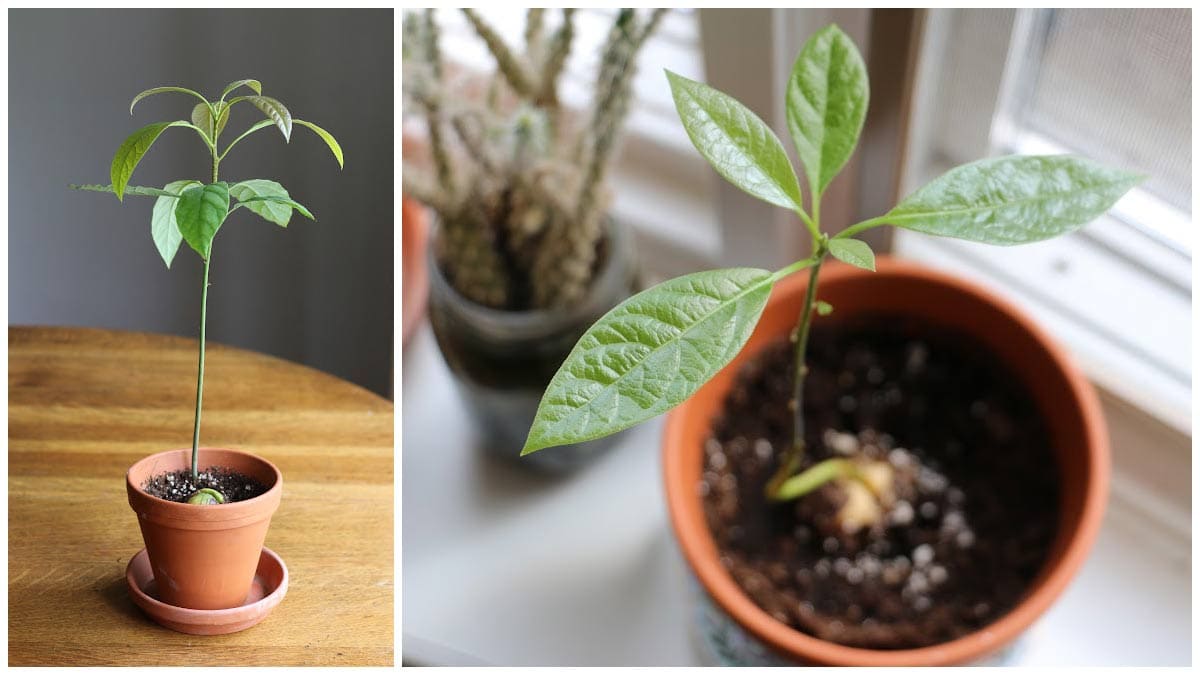
Move to soil once you have a strong root system and a shoot with leaves. My sweet spot is:
- Root is 4 to 6 inches (10 to 15 cm) long (or longer) and branching.
- Stem is 6 to 8 inches (15 to 20 cm) tall with at least a couple of leaves.
Waiting too long in water can lead to a root that struggles to adapt to soil. Think of water as the nursery, and soil as the real home.
Potting up basics
Use a pot with drainage
Drainage is non-negotiable for avocados. Start with a pot around 6 to 8 inches (15 to 20 cm) wide with a drainage hole. You can size up later as it grows.
Use a fast-draining mix
Indoors, the biggest killer for many growers is soggy soil. Use a quality indoor potting mix amended for extra drainage. A simple approach:
- 2 parts potting mix
- 1 part perlite or pumice
- Optional: a small handful of compost for biology, not density
Planting depth
Set the pit so the top third to half stays above the soil line. Burying it too deep can encourage rot near the crown. Nestle the roots down gently, backfill, and water thoroughly.
Indoor light needs
If your avocado becomes tall, thin, and floppy, it is begging for more light. Indoors, light is usually the limiting factor.
How much light?
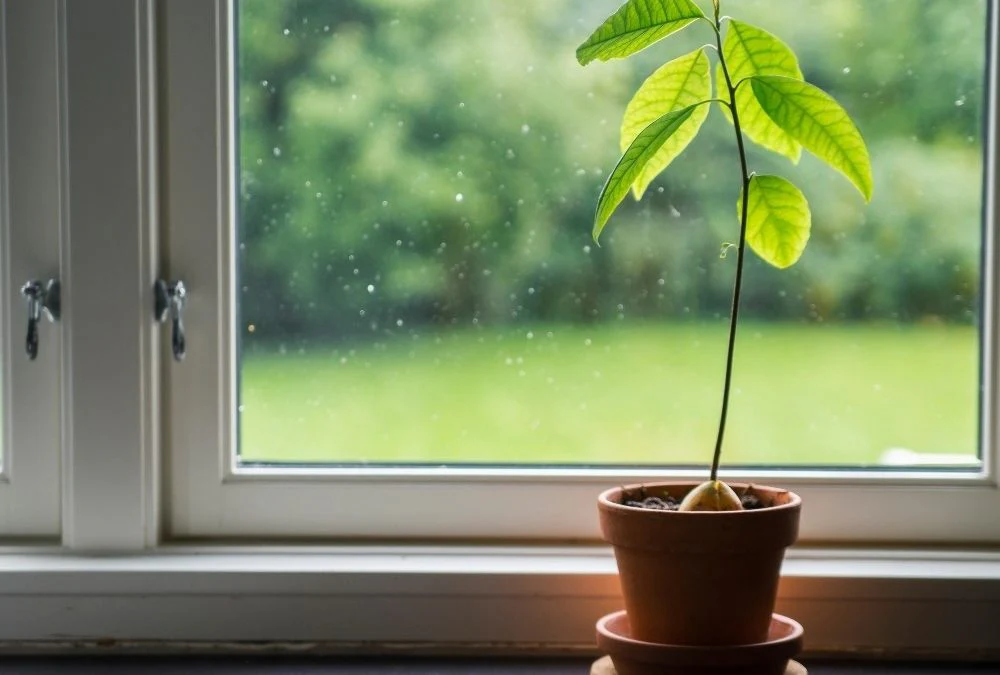
- Best: very bright light for much of the day, such as a sunny south- or west-facing window.
- Good backup: a grow light positioned close enough to make a difference.
Grow light tips
- Place the light 8 to 16 inches (20 to 40 cm) above the top leaves (follow your light’s guidance).
- Run it 12 to 14 hours per day for steady, compact growth.
- Rotate the pot weekly so the tree grows straight.
My rule of thumb: if the leaves are spaced far apart on the stem, or the plant leans hard toward the window, increase light and rotate the pot.
Pinching and pruning
Avocados naturally want to grow upward. Indoors, that can turn into a lanky stem with leaves only at the top. Pinching encourages branching, which makes a sturdier, nicer looking plant.
When to pinch
When the stem reaches about 8 to 12 inches (20 to 30 cm) tall, pinch off the growing tip just above a leaf node. Use clean fingers or snips.
What happens next
The plant redirects energy into side shoots. You may need to repeat gentle pinching as it grows to keep it compact.
If you feel nervous about cutting, I get it. I still talk to my ferns before pruning days. But with avocados, a little pinch now often saves you from a wobbly, top-heavy plant later.
Watering without root rot
Overwatering is the number one indoor avocado heartbreak for many people. Water deeply, then let the mix breathe.
- Water when the top 1 to 2 inches (2.5 to 5 cm) of soil feels dry.
- Water until it runs from the drainage hole, then empty the saucer.
- In winter, growth slows, and watering needs usually drop.
Signs you are overwatering
- Drooping leaves with persistently wet soil
- Yellowing leaves, especially lower ones
- Musty smell from the potting mix
Signs you are underwatering
- Leaves looking dull, curled, or crispy at the edges
- Soil pulling away from the pot sides
Temperature and humidity
Avocados like comfort. Think warm, bright, and gently humid.
- Temperature: typical indoor temps are fine. Avoid cold drafts and direct blasts from heaters.
- Humidity: if your home is very dry, group plants together or use a humidifier nearby. Leaf tips can brown in dry air.
- Airflow: gentle airflow helps prevent fungal issues, but do not park it in a windy doorway.
Feeding your avocado
A young avocado does not need heavy fertilizing, but it will appreciate steady nutrition once it is actively growing.
- Start feeding when it has several sets of leaves and is growing reliably.
- Use a balanced, gentle fertilizer at a diluted rate during spring and summer.
- Pause or reduce feeding in fall and winter when growth slows.
If you prefer the slow and steady organic route, a light top dressing of compost plus a mild organic fertilizer can work beautifully, as long as your soil stays airy.
Repotting and long term care
As your avocado grows, it will need more root room, but do not jump to a huge pot too fast. Oversized pots hold water longer, which increases rot risk indoors.
- Repot when roots circle the bottom or poke from drainage holes.
- Move up just 1 to 2 inches (2.5 to 5 cm) wider in pot diameter each time.
- Refresh the mix to keep it fluffy and well-draining.
Fruiting expectations
Let’s talk honestly, because the internet can be a little too rosy about avocado pits turning into guacamole factories.
Why fruiting is hard indoors
- Seed-grown trees take time: often 5 to 13+ years, and they may never fruit indoors.
- Genetics are unpredictable: a pit does not reliably produce the same fruit as the parent avocado.
- Light intensity indoors is lower: even bright windows are dim compared to outdoor sun.
- Pollination is tricky: avocado flowers have unusual timing, and indoor air is still.
If you want fruit sooner
For indoor and patio growing, look for a grafted, container-suitable cultivar (often sold as “dwarf,” even when it is really a naturally smaller variety plus pruning). Under good conditions, grafted trees can sometimes fruit in roughly 2 to 4 years. You can still keep your pit-grown tree as a leafy companion plant, and there is nothing wrong with that.
My favorite mindset: grow the pit for the joy of the process, and grow a grafted tree for the goal of fruit.
Quick troubleshooting
My avocado is leggy
- Increase light or add a grow light.
- Rotate the pot weekly.
- Pinch the tip to encourage branching.
Leaves are browning at the tips
- Check for dry air and consider a humidifier.
- Review watering consistency.
- Salt or mineral buildup can happen with some tap water and frequent fertilizing. Flush the pot with water occasionally and let it drain fully. If it keeps happening, try filtered water or rainwater.
Leaves are yellowing
- Most often: soil staying too wet.
- Also possible: low light, a nutrient issue, or normal older-leaf shedding.
- Confirm drainage, let the soil dry a bit more between waterings, and consider a faster-draining mix. If the newest leaves are pale and growth is slow, review light and feeding.
Pests and pet safety
Common indoor pests
Indoors, avocados can attract spider mites and scale, especially in dry air.
- First response: rinse or shower the leaves, then wipe them down.
- If they persist: use insecticidal soap or horticultural oil, following the label, and repeat as needed.
Pets
One important indoor note: avocado pits, leaves, and stems can be toxic to pets, with birds being especially sensitive. If you share your home with curious nibblers, keep the plant out of reach and clean up dropped leaves.
My simple indoor routine
If you want an easy baseline to follow, this keeps most pit-grown avocados happy indoors:
- Brightest window you have plus a grow light in winter if needed.
- Water when the top 1 to 2 inches (2.5 to 5 cm) are dry, then drain the saucer.
- Pinch at 8 to 12 inches (20 to 30 cm) to prevent a single tall stem.
- Repot gradually into a slightly larger pot when roots fill the container.
And if it drops a few leaves while adjusting, do not panic. Plants are allowed to have bad weeks. So are we.