
Get Rid of Yellow Wood Sorrel Naturally

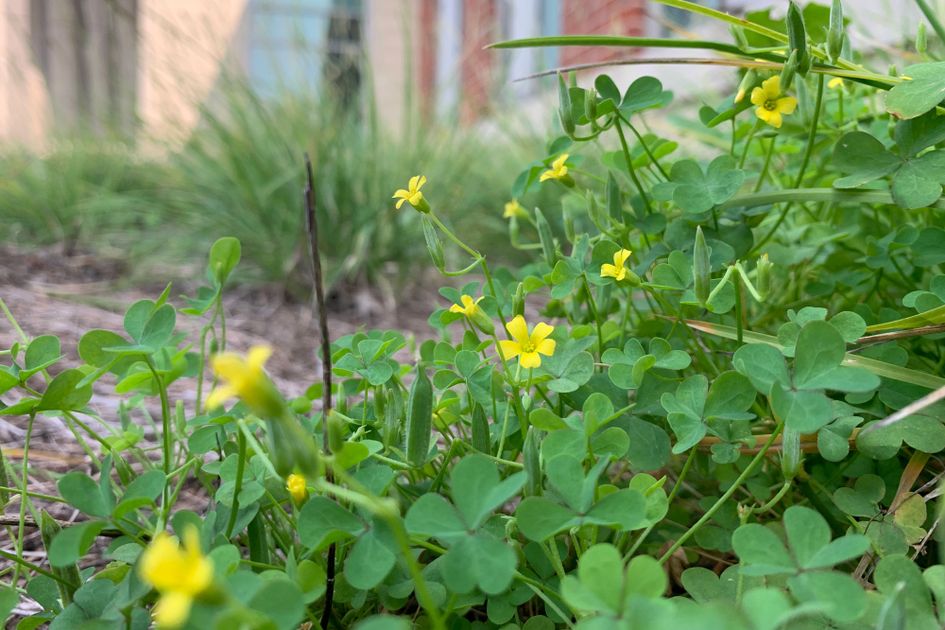
Yellow wood sorrel and its close cousin, creeping wood sorrel, have a way of popping up exactly where you want them least. One week you have a tidy bed or a mostly solid lawn, and the next you have little shamrock leaves and cheerful yellow flowers winking at you like they pay rent.
The good news is that yellow-flowered oxalis is very beatable with natural methods. The trick is understanding what you are dealing with , why it spreads, and how to interrupt its life cycle long enough for your grass or garden plants to take back the space.
Quick name note (because common names get messy): “Yellow wood sorrel” is often Oxalis stricta (more upright). “Creeping oxalis” usually refers to Oxalis corniculata (lower, more mat-forming, and more likely to root along stems). The control plan below works for both, and I will point out where habits differ.

How to identify yellow-flowered oxalis
Before you start pulling, make sure you are dealing with the right plant. Oxalis control is all about timing, and misidentifying it can waste weeks.
Key ID features
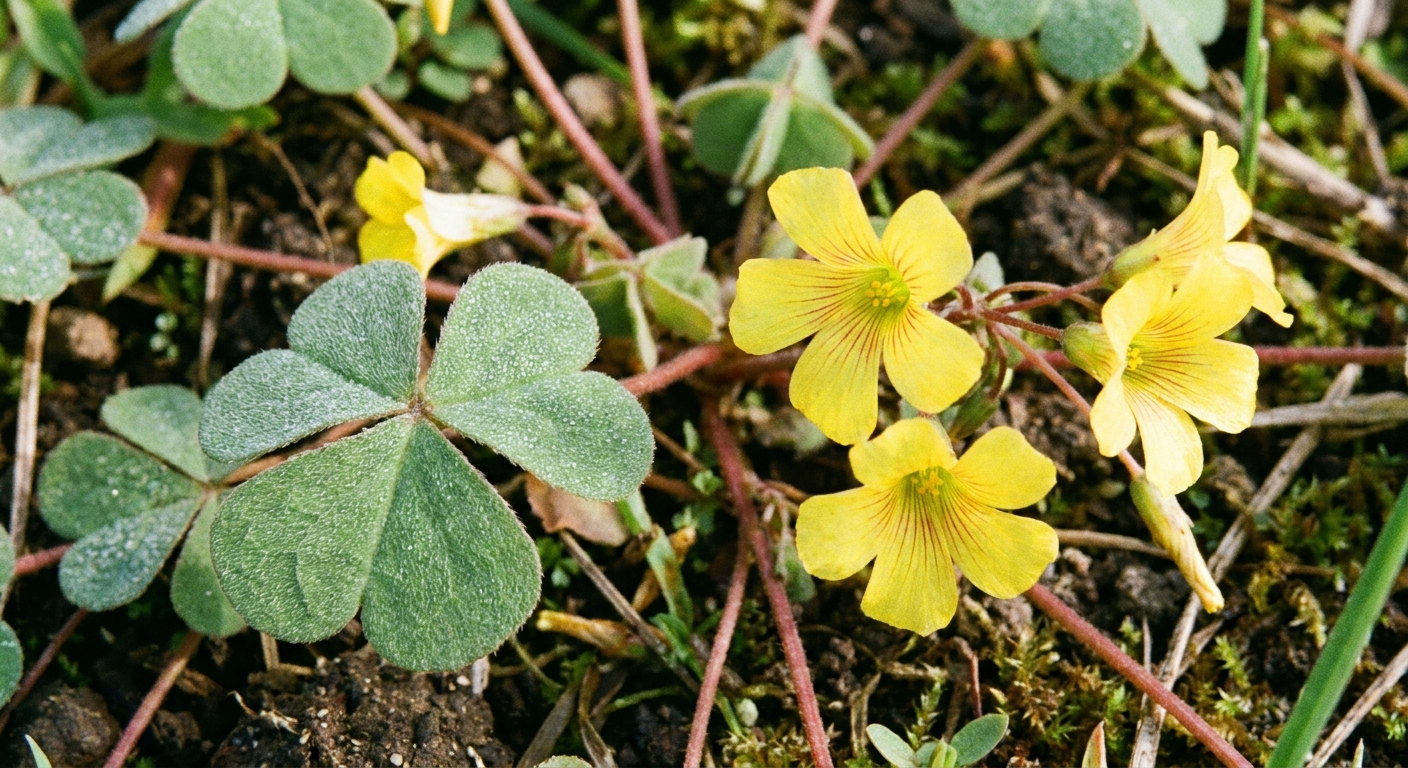
- Leaves: Three heart-shaped leaflets per leaf, often with a small crease down the center. The leaflets can fold up at night or in harsh sun.
- Flowers: Small, five-petaled, bright yellow blooms held above the foliage.
- Seed pods: Slender pods that, when mature, can “pop” and fling seeds.
Growth habit: upright vs creeping
- Yellow wood sorrel (Oxalis stricta): Often more upright and tufted, especially in beds and open soil.
- Creeping wood sorrel (Oxalis corniculata): Low, spreading, and mat-forming. It can root at nodes where stems touch soil, which helps it “stitch” itself through thin turf and mulched beds.
Common look-alikes
- Clover: Clover leaves are usually more oval and often show a pale chevron mark. Clover flowers are white or pinkish, not bright yellow.
- Black medic: Has three leaflets like clover, but flowers are tiny yellow clusters and it later makes little black seed pods. Leaves are not heart-shaped.
- Other oxalis species: Some oxalis look similar. The control methods below still help, but the growth habit can vary.
If you are on the fence, wait until you see the yellow flowers and check for the heart-shaped leaflets. Those two together are the classic “yep, that’s wood sorrel” combo.
Why oxalis spreads so easily
Wood sorrel is not spreading because you are a bad gardener. It is spreading because it is built for opportunity.
- It loves disturbed soil: Freshly worked beds, thin lawns, bare patches, and open mulch are basically an invitation.
- It produces lots of seed: Those pods can fling seed several feet. Mowing and foot traffic can move seeds around too.
- Some types root along stems: Creeping oxalis (O. corniculata) can root where stems touch moist soil, which makes small patches turn into mats.
- It tolerates low fertility and compaction: Stressed turf and compacted soil give it a competitive edge.
- It can act like a seasonal weed: Depending on your region, it may behave like a summer annual, a winter annual, or a short-lived perennial. That is why it can feel like it “never leaves.”
Natural control is less about a single dramatic moment and more about closing the openings it exploits.
The natural game plan
If you take nothing else from this page, take this: prevent seed, remove crowns and roots, then fill the space with something you actually want.
Step 1: Stop it from seeding
Once you see flowers, you are on a clock. Pulling or cutting before seed pods mature is one of the highest-impact things you can do.
- In lawns, mow regularly and do not let patches bloom freely.
- In beds, pinch off flowers while you work through removal.
Step 2: Remove plants when the soil is cooperative
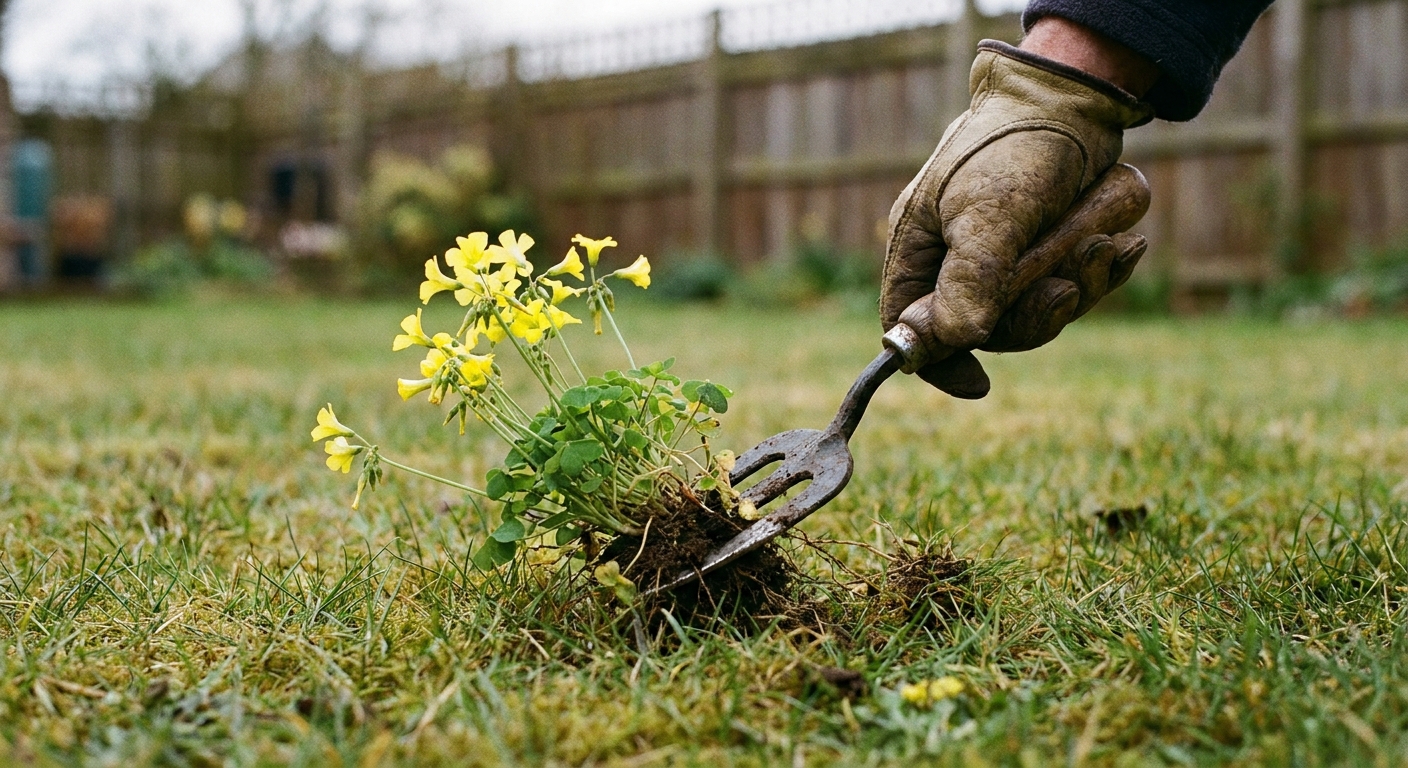
Oxalis comes out best when the soil is slightly moist. After a rain or a deep watering, use a hand weeder or a narrow trowel and lift from underneath so you get the crown and as much root as possible.
Step 3: Cover bare soil fast
Any time you create a little bare spot, oxalis will happily move in. Replace it with:
- Dense turf in lawns
- Mulch plus living plants in beds
- Groundcovers where you do not want to keep mulching forever
Step 4: Improve conditions for the plants you want
Wood sorrel loves a lawn that is thin and a bed that is open. A modest soil and care tune-up often reduces it dramatically over one to two seasons.
Natural control in lawns
In turf, yellow-flowered oxalis is usually a symptom of thin grass, compacted soil, or inconsistent watering. Fix those and you stop playing whack-a-weed.
1) Hand pull small patches
For light infestations, hand pulling is genuinely effective. Grab low and pull slowly. If the stems snap and leave the crown behind, the plant can re-sprout.
- Pull after rain or watering for cleaner removal.
- Use a dandelion fork or narrow weeder to pop the crown up.
- Disposal tip: Bag plants with flowers or seed pods. Do not toss them in a casual compost pile. Use municipal yard waste or hot compost only.
2) Mow at the right height for your grass
Taller grass shades the soil and reduces germination. As a general rule, many cool-season lawns do well around 3 to 4 inches.
Warm-season grasses vary a lot by species. Some (like St. Augustine) prefer higher mowing, while others (like Bermuda) are often kept lower. Check your specific grass type and aim for the taller end of its healthy range.
3) Overseed to crowd it out
If you can see soil between grass plants, oxalis can see a home. Overseed at the right season for your grass:
- Cool-season lawns: early fall is prime.
- Warm-season lawns: late spring to early summer, depending on region.
Topdress thin areas with a light layer of compost, then seed, then keep evenly moist until established.
4) Aerate compacted areas
Compaction favors weeds that tolerate stress. Core aeration in the right season helps grass roots dive deeper and compete.
5) Water deeply, less often
Frequent light watering trains shallow roots. Deep watering encourages deeper turf roots, which makes the lawn more resilient and less weed-friendly.
What about natural sprays for lawns?
Non-selective natural herbicides like vinegar-based products can burn oxalis foliage, but they also burn grass. In lawns, they are usually best reserved for spot treatments in non-turf areas like cracks, gravel edges, or along fence lines.
Natural control in garden beds
Garden beds give you more options because you can mulch, smother, and redesign the surface layer in ways a lawn cannot.
1) Pull or hoe when plants are small
Tiny oxalis seedlings are easy. Big mats are annoying. A quick weekly pass with a stirrup hoe or a sharp hand hoe when the soil is dry-ish can slice seedlings at the surface.
For larger plants, loosen the soil and lift the crown. If you leave chunks behind, you will be revisiting the same spot.
2) Mulch deeply and consistently
A thin dusting of mulch does not slow oxalis much. For suppression, aim for:
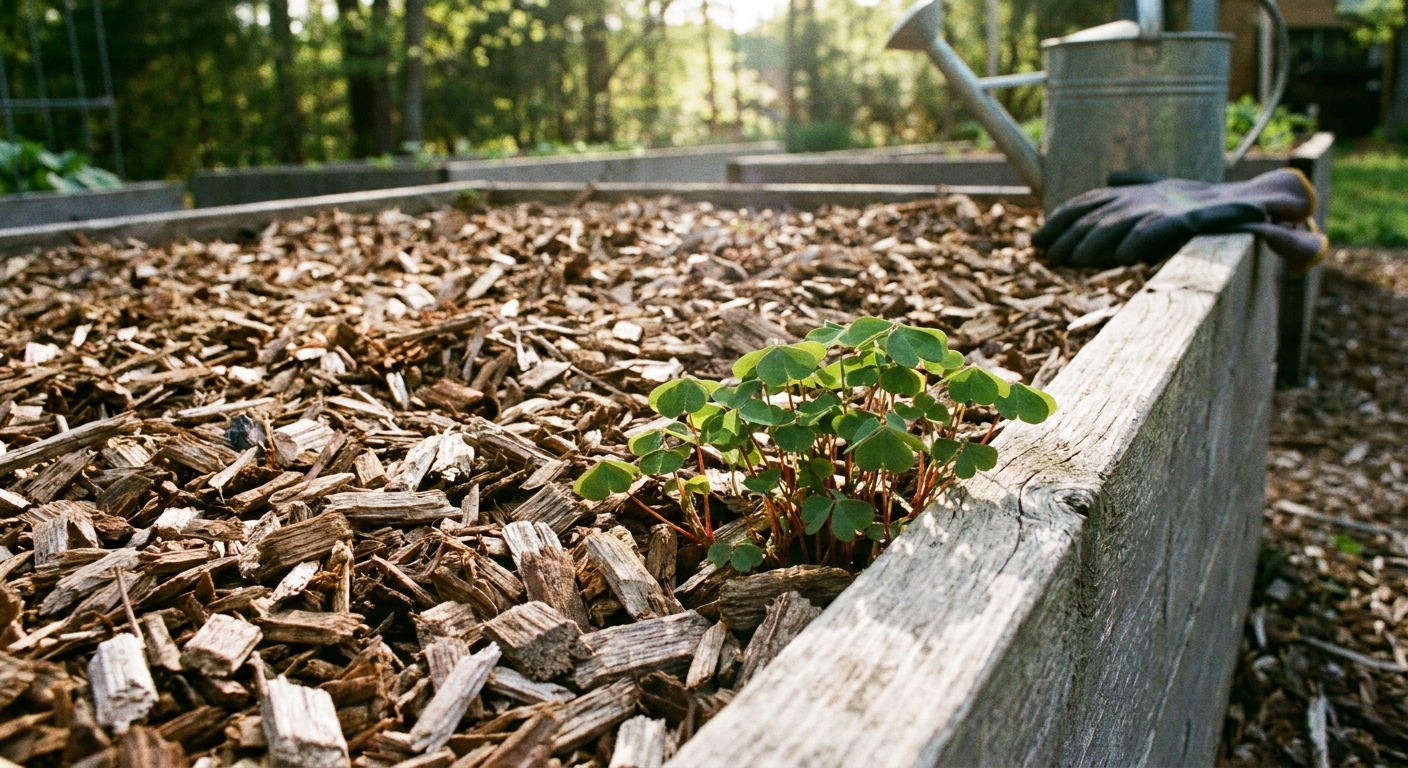
- 2 to 3 inches of shredded bark or leaf mulch around established plants
- 3 to 4 inches in paths and open bed areas (keep mulch pulled back from plant stems)
Oxalis seeds tend to germinate best right at the soil surface. A consistent mulch layer makes it harder for seedlings to get started and stay alive.
3) Try a cardboard smother in empty spaces
If you have a bed you are reworking, sheet mulching is a very natural, very satisfying reset.
- Cut oxalis down low and remove as much as you can.
- Lay plain, non-waxed cardboard overlapping by several inches.
- Wet it thoroughly.
- Cover with 3 to 5 inches of mulch or a compost-mulch blend.
Plant into openings you cut in the cardboard. This blocks new seedlings and weakens existing plants that were relying on light.
4) Densely plant the bed
Oxalis thrives in open real estate. Fill gaps with the plants you like, or use living mulches like sweet alyssum, creeping thyme (where appropriate), or low groundcovers suited to your climate.
5) Optional spot treatments
If pulling is not realistic in a specific spot, you can use natural, non-selective options carefully.
- Horticultural-strength vinegar products: Burn back top growth on sunny, warm days. Avoid desirable plants. Understand regrowth is common. Wear eye and skin protection, and follow the label. It is non-selective and can damage nearby plants and soil life where it lands.
- Boiling water: Works in cracks, gravel, and hardscape edges. Not for areas with desirable roots nearby.
- Flame weeding: Effective for seedlings on paths and gravel. Use only where fire risk is low and local rules allow it.
These methods work best as support, not the whole plan. The long-term win comes from mulch, shade, and filled-in planting.
Timing: when to tackle wood sorrel
Oxalis can germinate in multiple waves, which is why it feels endless. Your goal is to get ahead of the first big flush and then stay annoyingly consistent.
- Early season: Start pulling when plants are small and before flowers.
- During bloom: Prioritize removal of flowering plants to prevent seed.
- After rain: Great time to pull crowns cleanly.
- After you disturb soil: Expect new seedlings. Plan to mulch or plant immediately.
If you have ever watched a seed pod pop when you brush against it, you understand why I am so fussy about “before seed.” Those little pods do not play.
Realistic timelines
Natural control is absolutely doable, but it is rarely instant. Here is what I see most often in real gardens:
- Small patches: noticeable improvement in 2 to 4 weeks with weekly pulling and mulch touch-ups.
- Moderate infestations: big reduction in 1 season if you prevent seed and fill bare spaces.
- Heavy, established infestations: expect one full year of consistent work, sometimes two seasons, especially if surrounding areas are also seeding into your space.
The most common reason oxalis “comes back” is not that your method failed. It is usually that new seedlings germinated from seeds already in the soil, seeds arriving from nearby patches, or because a thin lawn spot stayed thin.
Prevention habits
Once you knock it back, keep it from re-establishing with a few steady habits.
- Mulch refresh: top up mulch when it thins to under 2 inches.
- Edge management: keep fence lines, walkway cracks, and bed edges weeded so they do not become seed factories.
- Don’t leave bare soil: plant, mulch, or cover crop. Bare soil is a blank check for weeds.
- Feed soil, not weeds: compost topdressing and appropriate fertilization strengthens desired plants so they can compete.
- Clean tools when needed: if you are moving through heavily seeded patches, a quick tool brush-off can reduce seed spread.

Quick FAQ
Is yellow wood sorrel the same as clover?
No. They look similar at a glance, but oxalis has heart-shaped leaflets and small bright yellow flowers. Clover leaves are more oval and usually have white or pink flowers.
Will pulling make it worse?
Pulling helps, especially before seed set. The only time it feels worse is when pulling exposes bare soil and new seedlings germinate. That is why you should mulch or reseed right after.
Does vinegar kill wood sorrel permanently?
Usually it burns back top growth. Many plants re-sprout from the crown. It can be useful for repeated spot treatments in hardscape areas, but it is not a one-and-done cure in beds or lawns.
Can I compost pulled oxalis?
If there are flowers or seed pods, skip the backyard compost pile unless you are confident you are running hot compost. Bag it, send it to municipal yard waste, or dispose of it so you do not re-seed your own garden.
Is wood sorrel edible?
Some wood sorrels are eaten in small amounts for their tangy flavor, but they are high in oxalates and can be contaminated by lawn chemicals or roadside grime. If you are not 100 percent sure of the ID and source, treat it as a weed, not a snack.
What if it is out of control?
If you are dealing with a severe infestation and you are open to selective herbicides, check with your local extension office for the best option for your oxalis species and grass type. Even then, the long-term fix is still density, mulch, and healthier turf or beds.
A gentle final note
Wood sorrel is one of those weeds that can make you feel like your yard is judging you. I promise it is not. It is just opportunistic and fast.
Start with the easiest wins: pull after rain, do not let it seed, and cover the soil. Give it a season of consistent pressure, and you will be amazed how quickly your lawn and beds start looking like yours again.