
Get Rid of Wild Violets Naturally

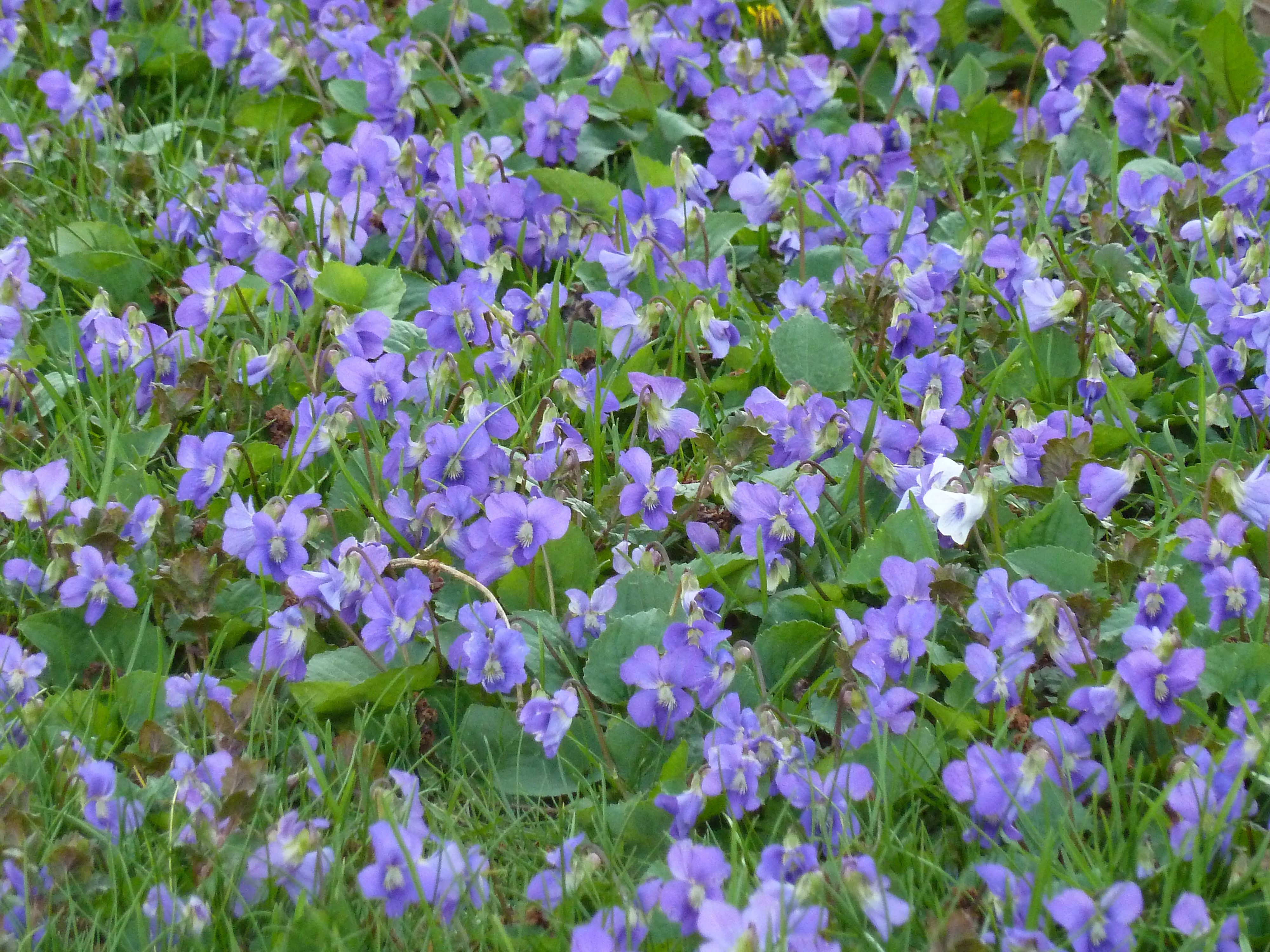
Wild violets are adorable in a woodland garden. In a lawn, they can feel like that one houseguest who shows up early, rearranges the furniture, and then politely refuses to leave.
The good news is you can get rid of wild violets naturally. The honest news is that it is rarely a one-weekend project. Violets win because they exploit the exact conditions that make grass struggle: shade, thin turf, compacted soil, and inconsistent mowing.

Below is my dirt-under-the-fingernails approach: identify what you are dealing with, remove what you can, smother what you cannot, and then build a lawn so dense the violets stop finding open space to colonize.
Know your opponent
What wild violets look like
Many lawn infestations are common blue violet (Viola sororia) or a close relative, but the exact species varies by region. What matters for control is the growth habit. You will usually see:
- Heart-shaped leaves with slightly scalloped edges, often forming a low rosette.
- Purple or blue flowers in spring, sometimes white.
- Low, spreading patches that feel like a mat compared with upright grass blades.
Quick lookalikes
Before you go to war, make sure you are not dealing with a different lawn invader:
- Creeping Charlie (ground ivy) : rounder leaves with scalloped edges on creeping stems; strong minty smell when crushed; purple flowers.
- Henbit: upright square stems, fuzzy leaves, and purple flowers in spring.
- Dollarweed: round “penny” leaves on long stems, often in wet spots.
- Dicondra: kidney-shaped leaves that form a very dense mat, usually in warmer regions.
If your plant has true violet-style flowers and that classic heart-shaped leaf on a long petiole, you are likely in the right place.
Why violets outcompete grass
Violets are built for the exact “tired lawn” niche:
- Shade tolerance: They tolerate low light better than many turfgrasses, where grass naturally thins.
- Low growth habit: They sit below mower height and keep plenty of leaf surface even after mowing.
- Crowns and short rhizomes: They can creep and fill gaps, and established plants can regenerate if roots or crowns are left behind.
- Seed spread, too: Violets also spread by seed, including small self-seeding flowers that may go unnoticed. That is why a “mostly gone” patch can reappear next season.
- They exploit bare soil: Thin turf is an invitation. Violets move in first and then help keep it thin by shading the soil surface.
If you do only removal but do not fix the “why,” the violets will be back. Removal is Step One. Turf thickening is Step Two.
Natural removal methods
1) Hand digging, but do it strategically
For small patches, hand removal is the cleanest, safest option around ornamentals, and it works best when the soil is moist.
Best time: After a soaking rain or deep watering, when the soil gives easily.
- Mow first (if needed) so you can see the violet crowns clearly.
- Use a dandelion weeder or narrow trowel to get under the crown.
- Lift slowly and aim to remove as much root and crown as possible. Any fragments left behind can resprout.
- Backfill the hole with a little compost or topsoil and tamp lightly so you do not leave divots.
- Overseed when seasonal timing is right so grass occupies the space you just opened.
Tip: If you are pulling in summer heat, do it in the evening and water after. Grass recovers better, and you will not feel like a wilted basil plant yourself.
2) Repeated crown slicing for stubborn clumps
If a patch is too dense to dig neatly, you can weaken it by repeatedly removing its leaves and slicing the crown.
- How: Use a sharp hand hoe or soil knife to slice the violet crowns at or just below soil level.
- Frequency: Every 10 to 14 days during active growth.
- Goal: Starve the plant by denying it leaf area, while you help grass fill in.
This method is slow, but it is very safe near ornamentals because you are not introducing anything that can drift or leach.
3) Smothering, the chemical-free reset
Smothering is my favorite solution for large, concentrated violet patches where grass is already sparse. It is also great if you want zero herbicides and you do not mind a temporary bare spot.
Best time: Late spring through summer, when warmth speeds the process.
- Mow the area short and rake out debris.
- Water lightly so the soil is damp.
- Cover with plain cardboard (remove tape and glossy print) and overlap seams by 6 inches.
- Top with 2 to 4 inches of compost or a compost and topsoil mix.
- Keep edges pinned with rocks or landscape staples so wind does not lift it.
- Wait 6 to 10 weeks, then check for regrowth. In cooler weather or deep shade, it may take longer. Remove remaining cardboard fragments on the surface and then seed or sod.
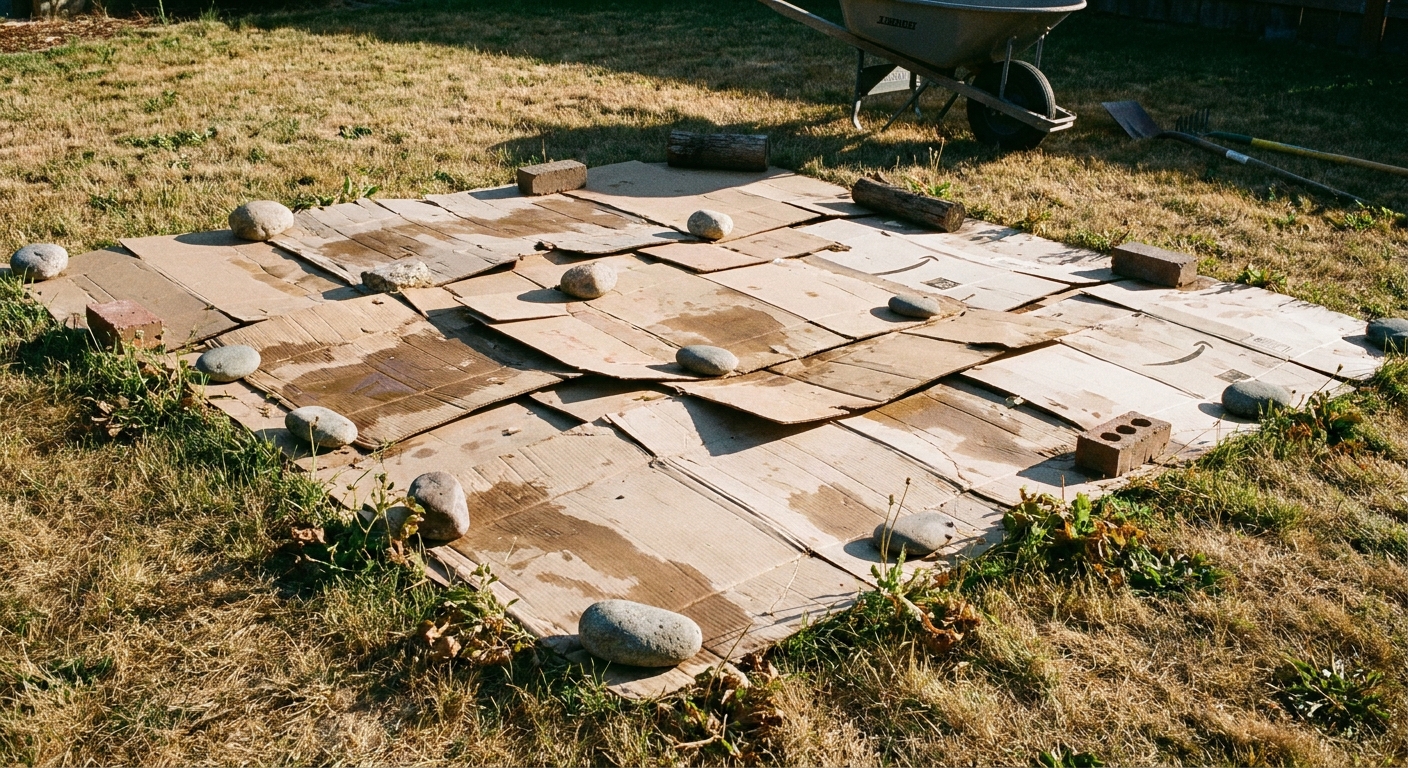
Where smothering is safe: On open lawn areas. Avoid covering the root zones of shallow-rooted ornamentals or groundcovers you want to keep, since smothering can temporarily reduce air and water exchange.
4) Solarization for sunny infestations
If the violet patch is in full sun, solarization can help. This uses clear plastic to heat the top layer of soil and kill vegetation.
- How: Mow low, water, then stretch clear plastic tightly over the area and seal edges with soil or boards.
- Timeline: Often 4 to 8 weeks in the hottest part of summer. In cooler or coastal climates, expect 6 to 10+ weeks.
- Tradeoff: It can reduce some beneficial soil life in the top layer. I reserve it for places that are truly a mess and need a reboot.
Near ornamentals: Not recommended. Heat can damage nearby plants, and the plastic can bake roots at the edges.
What not to do
- Do not just mow lower. Violets are low growers. Scalping weakens grass and usually helps violets.
- Do not yank dry plants and call it done. Dry soil breaks roots and leaves pieces behind.
- Do not leave bare soil. If you remove violets and do not fill the gap with grass, something will recolonize it. Often more violets.
- Skip “natural” lawn sprays like vinegar or salt. They burn whatever they touch, including grass, and salt can damage soil structure and make it harder to grow anything afterward.
Build turf that crowds them out
Wild violets are more symptom than villain. They show you where the lawn is struggling. If you improve conditions for grass, you reduce reinvasion dramatically.
Thicken turf with overseeding
Best timing:
- Cool-season lawns (fescue, bluegrass, rye): overseed in late summer to early fall.
- Warm-season lawns (bermuda, zoysia): overseed or plug in late spring to early summer when growth is ramping up.
Steps:
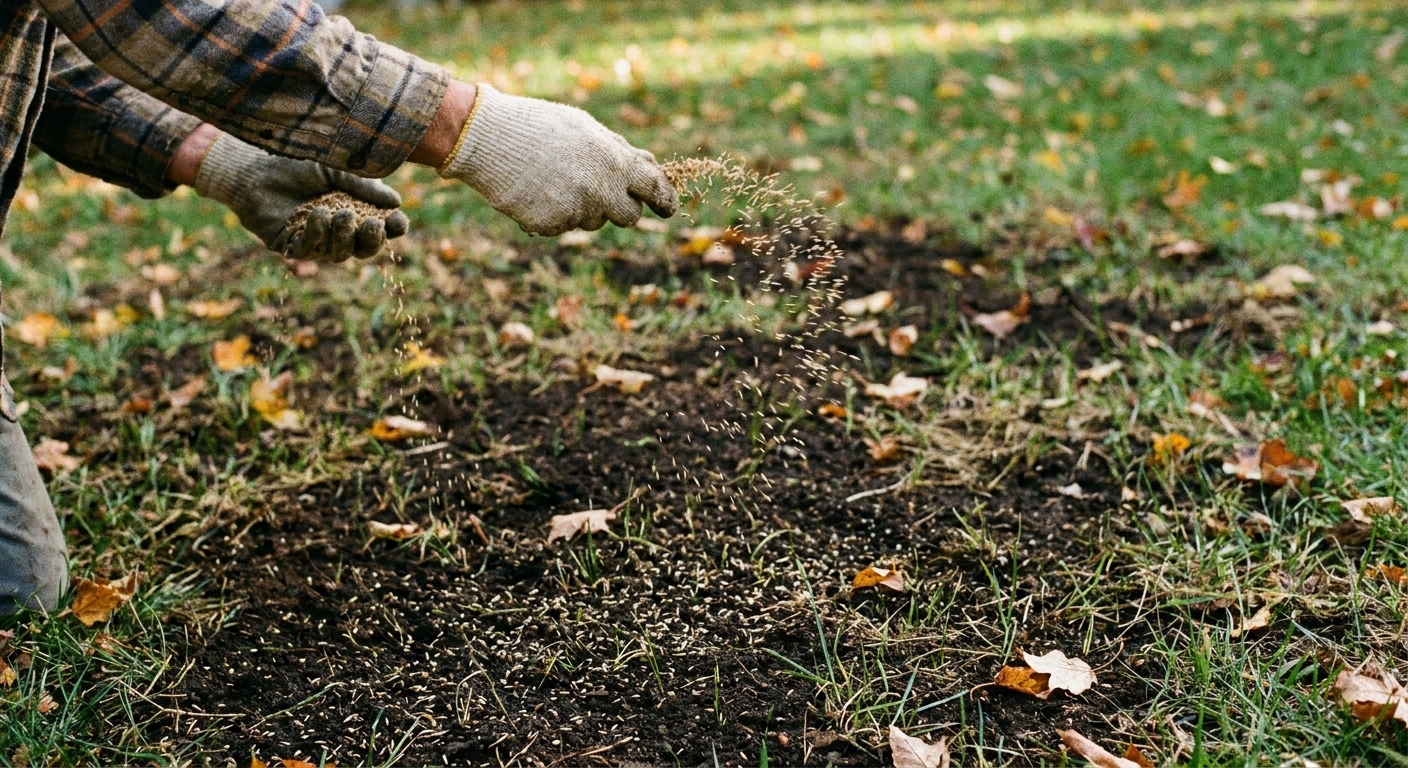
- Rake or core-aerate thin areas so seed contacts soil.
- Broadcast quality seed at the recommended rate.
- Topdress with a thin layer of compost, about 1/4 inch, like a light blanket.
- Keep the surface consistently moist until germination, then transition to deeper, less frequent watering.
Mow to favor grass
Most lawns do better when you mow a little higher.
- Cut height: Aim for 3 to 4 inches for many cool-season grasses. Warm-season grasses vary, so follow your turf type.
- Rule: Never remove more than one-third of the blade at a time.
- Why it helps: Taller grass builds deeper roots and improves turf density, which means fewer thin spots for violets to start (from seed or creeping growth).
Improve soil, especially in shade
Violets often thrive where soil is compacted or low in organic matter.
- Core aerate in the proper season for your grass type to reduce compaction.
- Topdress with compost once or twice a year to feed soil life and improve structure.
- Test your soil every few years. If pH is far off for your turf, grass will struggle and violets will take advantage.
Rethink lawn in deep shade
If violets are concentrated under a dense tree canopy, the lawn may be fighting a losing battle. In heavy shade, even perfect maintenance cannot create sun.
Options that still look intentional:
- Prune tree limbs to increase dappled light and airflow (without overdoing it).
- Switch to a shade-tolerant grass mix if appropriate for your region.
- Create a mulched bed or shade garden and let the lawn end where grass can actually thrive.
Timeline
- 2 to 6 weeks: Visible reduction in leaves if you are slicing crowns or digging consistently.
- 6 to 10 weeks: Smothering often finishes off a patch in warm weather. In cooler conditions, it can take longer. Check for regrowth before seeding.
- 1 season: Noticeably fewer violets once you overseed and mow correctly.
- 1 to 2 years: Major infestations often take this long to fully turn around, especially in shade or compacted soil.
If that sounds slow, I get it. But the upside is that every step you take improves your lawn and soil for the long haul, not just “winning” a temporary battle.
Near ornamentals and beds
If you have violets creeping out of beds and into turf, or vice versa, the safest methods are the most targeted ones.
Safest options
- Hand digging with a narrow tool, working slowly to avoid disturbing roots of nearby perennials.
- Repeated crown slicing (cutting at soil level) around delicate plants.
- Sheet mulching in beds (cardboard plus mulch) around established shrubs and perennials, keeping mulch a few inches away from stems and crowns.
Use caution
- Smothering in turf right at the bed edge: Fine for lawn areas, but do not extend cardboard under prized perennials or over shallow roots.
- Solarization: Heat can damage nearby plants and stress tree roots.
Cleanup and disposal
- If plants are flowering or have seed pods, do not toss them in an open compost pile. Bag and dispose, or hot compost only if you are confident your pile heats thoroughly.
- Rake up loose crowns and fragments after digging or slicing.
- Rinse tools so you are not accidentally carrying seed or plant bits to the next spot.
Bed-edge trick: Install or re-cut a crisp edge between bed and lawn, then keep a 2 to 3 inch mulch layer in the bed. That dry, mulched buffer makes it harder for violets to creep back.
Can you live with them?
Honestly, yes, if you want a more natural lawn and the violets are not taking over. Wild violets bloom early, offering an early-season nectar source for insects, and they stay green in tough conditions. If you are aiming for perfectly uniform turf, you will likely want to reduce them. If you are aiming for resilient, low-input green space, you might decide they can stay in the “guest room” instead of getting evicted.
My gentle middle path: remove violets where they are thickest, then focus on thickening the lawn so they become occasional accents instead of a takeover.
Quick checklist
- Confirm it is violet, not a lookalike.
- Remove small patches by digging after rain or watering.
- For larger patches, choose smothering or repeated crown slicing.
- Clean up fragments and avoid composting seeded plants.
- Overseed at the right season to fill gaps fast.
- Mow higher and consistently.
- Aerate and topdress with compost to improve soil.
- Address shade, or redesign deeply shaded lawn areas.
If you tell me your grass type, how much sun the area gets, and roughly how big the violet patch is, I can help you pick the most realistic plan for your yard.