
Get Rid of Dandelions Naturally

Dandelions are the ultimate lawn freeloaders. They show up early, flower like they own the place, and drop seeds with the confidence of a plant that knows you are busy. The good news is you can absolutely reclaim your lawn naturally, without nuking everything with harsh chemicals.
The secret is this: dandelions are not just a “weed problem.” They are a soil and turf competition problem. If you remove the plant and make your grass a better competitor, the dandelions slowly run out of room to thrive.

Know Why They Return
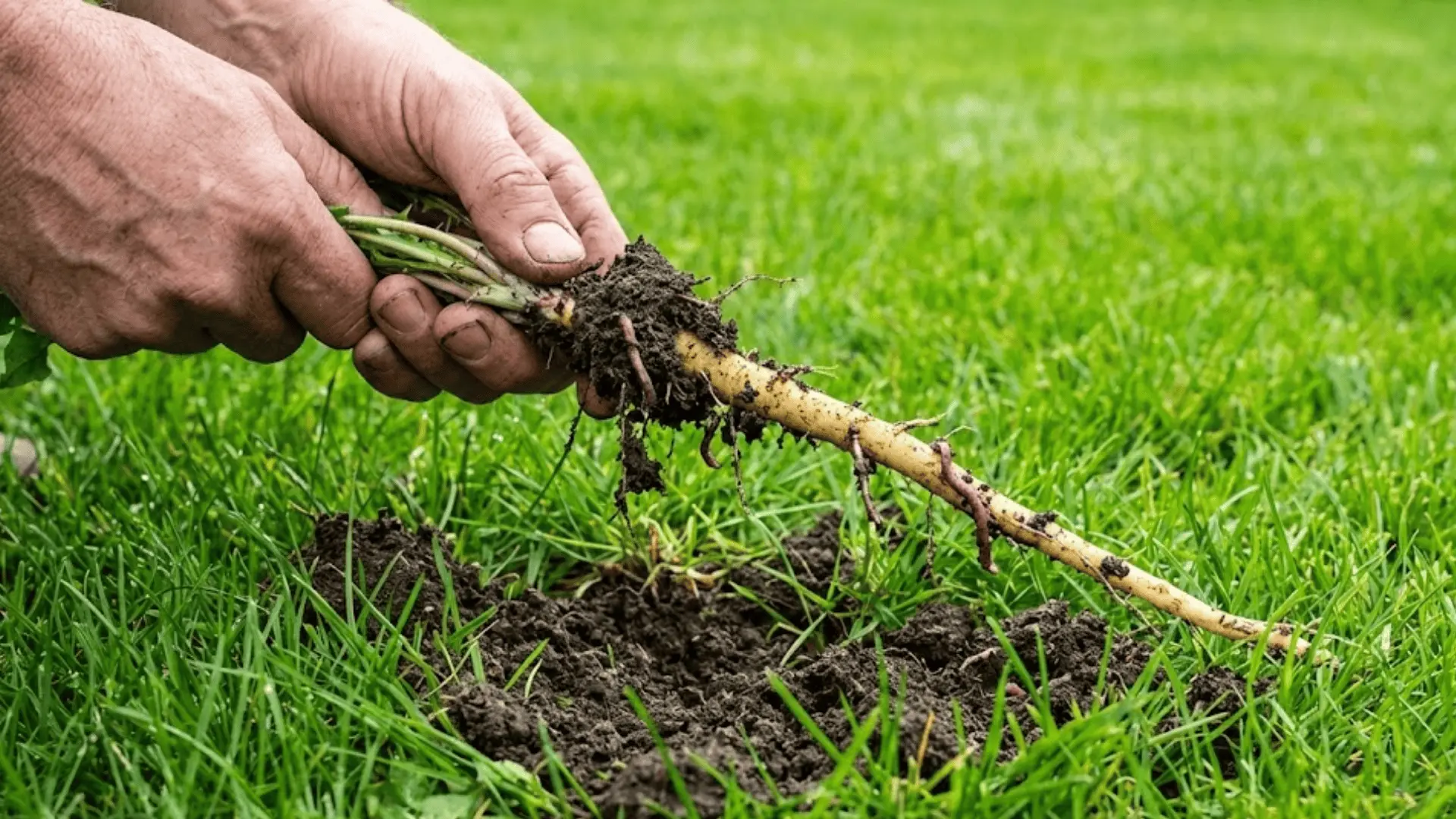
Dandelions (Taraxacum officinale) are perennial broadleaf plants with a deep taproot. That root stores energy, which is why a dandelion can look unfazed after mowing and can regrow if you leave even a small chunk behind.
Quick ID note: True dandelion typically has one flower per hollow, leafless stem and a basal rosette of toothed leaves. Look-alikes like catsear and false dandelion often have branched stems and sometimes hairier leaves. If you are unsure, confirm before you commit to a whole-lawn plan.
- They love thin turf. Bare spots and weak grass are basically an open invitation.
- They exploit compacted soil. Their taproots can push into tough ground where grass struggles.
- They seed easily. One puffball can carry 100 to 200 or more seeds, especially in spring and early summer.
So our natural strategy has four parts: remove, weaken, suppress new seedlings, and outcompete.
Dig or Weaken?
If you want fast, satisfying results, hand removal is your friend. If you have a lawn that is more “dandelion meadow,” root weakening plus turf-building is often more realistic than trying to dig every single plant.
Option A: Dig them out
For small to moderate infestations, removing the whole taproot is the most reliable natural method.
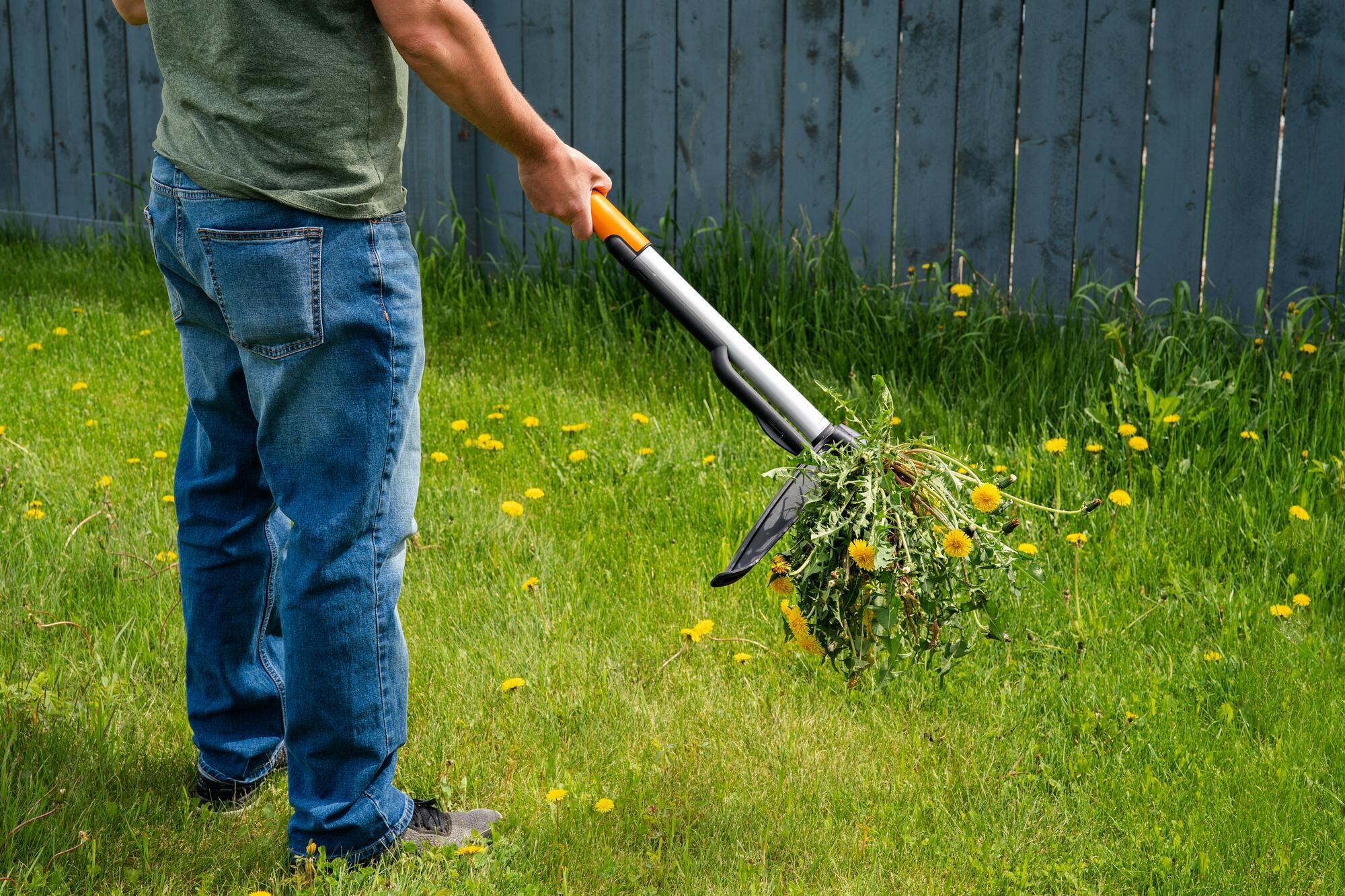
- Best tools: a dandelion weeder (forked tip), a hori hori knife, or a narrow hand trowel.
- Best timing: the day after rain or after watering, when soil is moist and roots slide out more cleanly.
- How deep: aim for 3 to 6 inches or more if the soil allows. Taproots can be deeper. The goal is to remove the crown and as much upper root as you can.
Step-by-step:
- Moisten soil (rain, irrigation, or a slow soak).
- Insert the tool alongside the crown (where leaves meet soil).
- Rock gently to loosen the taproot, then pull slowly from the base, not the leaves.
- Fill the divot with a little compost or topsoil and sprinkle grass seed if it is a bare spot.
Disposal tip: If you pull dandelions with flowers or seed heads, do not toss them into a casual, cool compost pile. Bag them for trash or follow your local yard-waste rules, unless your compost gets reliably hot.
Option B: Weaken the root
If your lawn has hundreds, digging can become a full-time job. In that case, focus on draining the taproot’s energy reserves so the plant loses steam over time.
- Frequent mowing helps. It prevents flowering and reduces seed spread. Keep the blade sharp so grass heals quickly.
- Remove flower heads before they puff. If you only do one thing, do this. Bag or collect them so seeds do not scatter.
- Repeated crown removal works. Use a weeder to pop out the crown (the growth point just below soil level). The plant may resprout, but each regrowth costs stored energy.
This is slower than full taproot removal, but it pairs beautifully with the “thicken the turf” steps later in this page.
Natural Suppressants
Natural pre-emergent products can reduce new dandelions from seed. They do not kill established dandelions with mature taproots. Think of suppressants as your “next season insurance,” not a quick fix.
Corn gluten meal (CGM)
Corn gluten meal is often used as a natural pre-emergent. When timed well, it may inhibit root formation in newly germinated seeds, which means seedlings can dry out and fail. Results are inconsistent across lawns because timing, application rate, and weather matter a lot.
- Use it before seeds germinate. For many lawns, this is early spring. A second application is sometimes used in late summer for fall-germinating weeds.
- Follow the label for watering and timing. Some products call for light watering in, then a dry period. Heavy rain right after application can reduce effectiveness.
- Apply at the labeled rate. CGM is not a sprinkle-and-hope product. It often works best as part of a multi-year approach.
- Do not apply where you plan to seed. CGM can also interfere with grass seed germination. If you are overseeding, skip CGM in that area.
Rule of thumb: If you are overseeding this season, prioritize seed and soil contact over corn gluten. A thicker lawn beats dandelions better than any single product.
Other natural approaches
- Vinegar: Household vinegar can scorch leaves, but it rarely kills the taproot. Strong horticultural vinegar can burn skin and eyes and will damage grass on contact. If you use it anywhere, wear gloves and eye protection and keep it off plants you want to keep.
- Boiling water: It can kill the dandelion top, but it will also kill surrounding grass and can damage nearby plants. In a lawn, it is usually collateral damage.
- Iron-based selective herbicides: Some products use chelated iron (often listed as iron HEDTA) to target broadleaf weeds. These are commonly considered a “softer” option than many synthetic herbicides, but they are still pesticides. They can stain hardscapes and may temporarily darken turf. Use only as a spot treatment and follow label directions.
Make Grass Win
If I could lean in like a friend at the nursery and whisper one lawn truth, it would be this: dandelions love empty space. Your long-term win comes from filling that space with healthy grass.
Mow higher
Most cool-season lawns do better when you mow at 3 to 4 inches. Taller grass shades the soil, keeps it cooler, and makes it harder for dandelion seedlings to get established.
- Follow the one-third rule: never remove more than one-third of the blade length in a single mow.
- Leave clippings if the lawn is healthy. They return nitrogen and help soil life.
Feed the soil
Dandelions often show up where grass is stressed. Improving soil structure and steady nutrition makes turf denser.
- Topdress lightly with compost (a thin layer) to add organic matter and support microbial life.
- Use slow, natural fertilizers if needed, like composted manure or an organic lawn blend. Follow label rates to avoid excess growth spurts and runoff.
- Check drainage and compaction. If your soil is hard and tight, consider core aeration. Dandelions do not mind compacted ground, but grass definitely does.
- Consider a soil test. A basic test helps you avoid guessing on fertilizer and lime, which saves money and prevents overfeeding.
Overseed on schedule
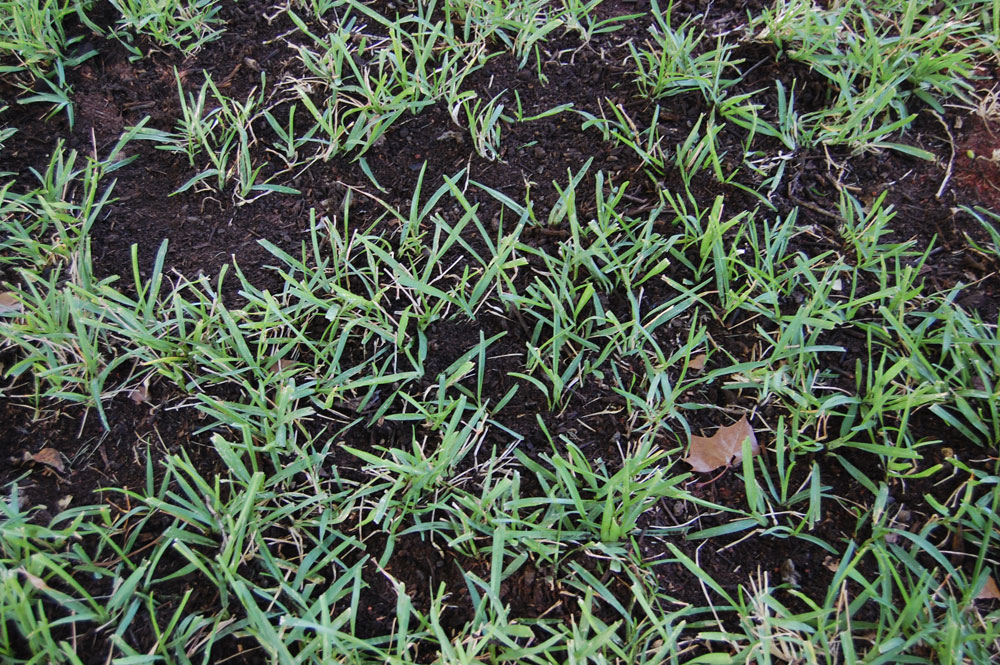
If your lawn has bare patches, overseeding is one of the most natural “weed controls” there is.
- Best time for cool-season grasses: late summer to early fall is often ideal because soil is warm and weeds are less aggressive.
- Best time for warm-season grasses: late spring into early summer, when growth is active.
- Key detail: seed needs soil contact. Rake lightly, seed, then press in with your foot or a roller.
Watering helps more than people think: Once established, water deeply and less often to encourage deeper grass roots. Shallow, frequent watering tends to favor shallow-rooted weeds and weak turf.
Water gently and consistently until seedlings establish. Once grass fills in, dandelions have far fewer places to land.
Spot Treat or Improve?
It is tempting to go full battle mode, but most lawns do better with a calm, targeted approach. Think like a gardener, not a fighter pilot.
When spot treatment works
- You have scattered dandelions.
- You are willing to dig or pop crowns weekly for a month.
- Your grass is otherwise healthy and thick.
In this case, a bucket, a weeder, and a little patience usually solve the problem without touching the rest of the lawn.
When lawn improvement is the fix
- Dandelions are everywhere.
- The lawn is thin, compacted, or underfed.
- You keep removing weeds but they return in the same weak spots.
Here, prioritize mowing height, soil improvement, overseeding, and pre-emergent timing. You will still spot-remove the worst offenders, but your main goal is to change the conditions that invite them.
Simple Game Plan
If you want a plan that feels doable, start here.
This weekend
- Walk the lawn and dig out the biggest dandelions after watering or rain.
- Bag flower heads that are close to going to seed.
- Fill holes and seed any bare spots (or at least topdress with a pinch of compost).
Over the next month
- Mow a little higher.
- Keep removing crowns or taproots as you see them.
- Start a light soil-building routine: compost topdressing or a gentle organic feed if your lawn is pale and slow.
Next season
- If you are not seeding, consider corn gluten meal before peak germination, and follow label directions closely.
- Plan an overseeding window to thicken turf and crowd out future weeds.
Common Mistakes
- Pulling only the leaves. It feels productive, but the taproot will resprout.
- Mowing too short. Short grass exposes soil, which helps dandelion seeds settle and sprout.
- Using corn gluten and then overseeding. Choose one, or separate them by timing and area.
- Ignoring bare spots. Every hole you leave is a future dandelion address.
Quick FAQ
Will dandelions die if I just keep mowing?
Mowing helps prevent seeding and slowly weakens plants, but established dandelions often persist. Pair mowing with crown removal or digging for best results.
What is the most effective natural method?
For most home lawns: digging after rain plus overseeding thin areas. That combo removes today’s weeds and prevents tomorrow’s.
Are dandelions a sign of “bad soil”?
Not always, but they do thrive where turf is stressed, soil is compacted, or nutrients are out of balance. Improving soil structure and grass density is the long game that pays off.
Want to tailor this to your yard? Start by identifying whether you have cool-season or warm-season grass, then pick the right overseeding window and mowing height. With those two dialed in, the rest of this plan gets much easier.