
Geranium Care Outdoors

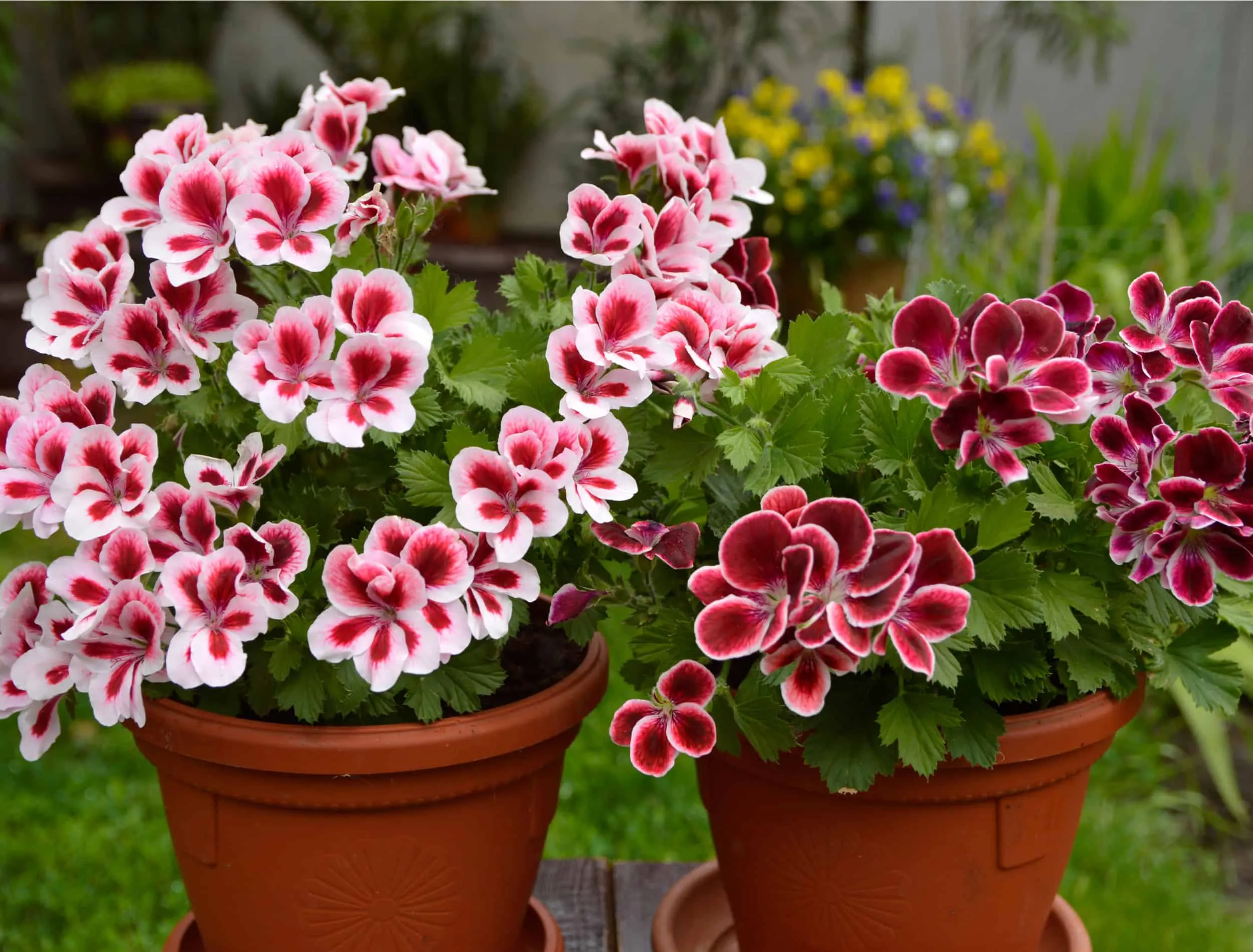
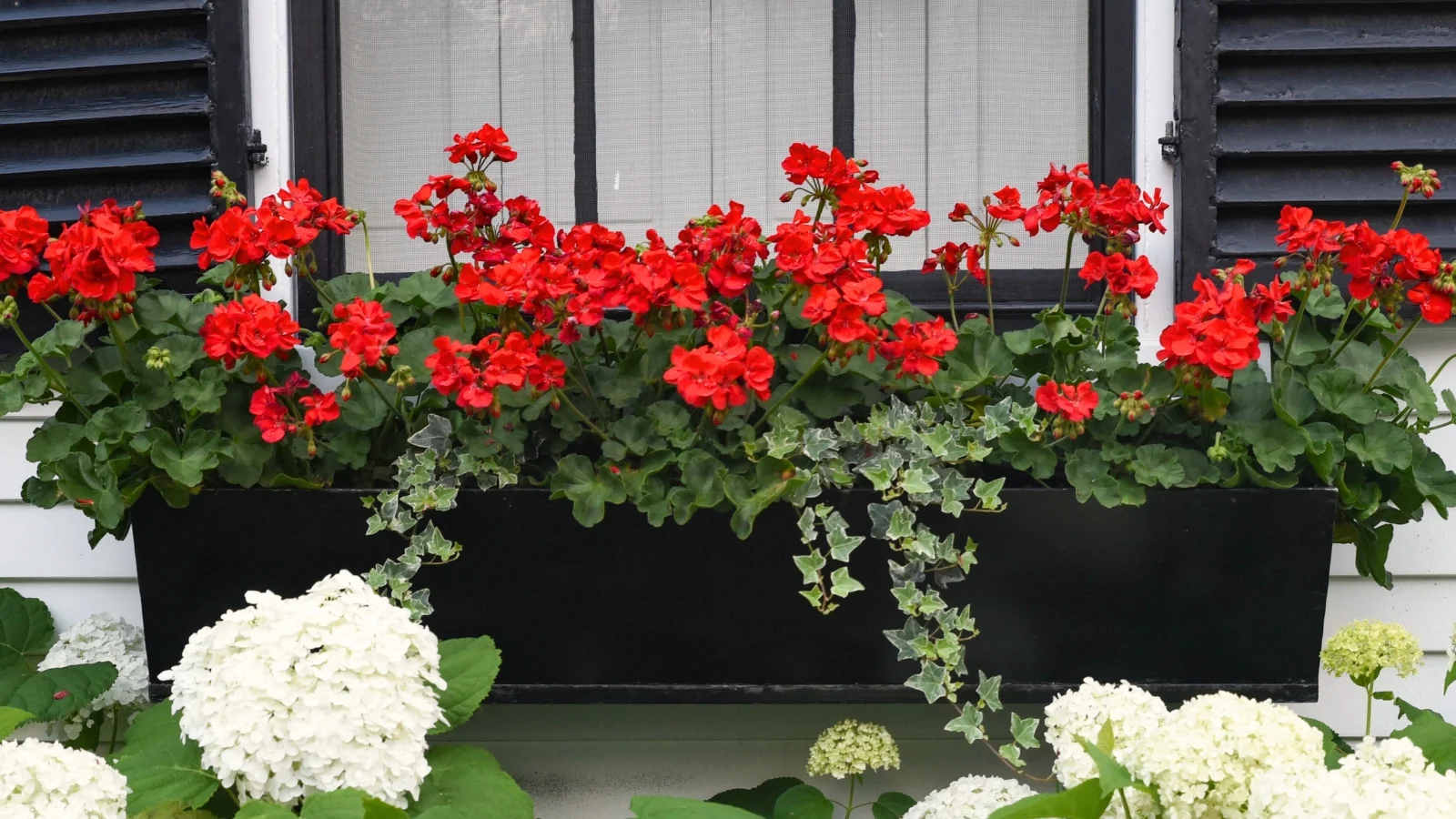
Outdoor “geraniums” sold in garden centers are usually Pelargoniums, the cheerful bedding plants that spill from porch pots and punch up borders with steady color. (True Geranium, the hardy cranesbill, is a different genus altogether and behaves more like a cold-hardy perennial.) Pelargoniums are tough, forgiving, and wildly rewarding once you learn two simple truths: they like strong light, and they prefer to dry a bit between waterings.
This page focuses on the classic annual types: zonal geraniums (upright, round leaves with a darker “zone”), ivy geraniums (trailing), and many scented-leaf varieties. If you garden where winters freeze, I will also walk you through a few easy ways to overwinter them so you can keep a favorite plant going for years.

Quick start checklist
- Light: Typically 6+ hours for best bloom. In intense heat, protect from harsh afternoon sun.
- Soil: Fast-draining potting mix in containers (avoid heavy garden soil in pots). In beds, amend so soil does not stay soggy.
- Water: Deeply, then wait until the top 1 to 2 inches dry.
- Food: Light, consistent fertilizer during active growth.
- Grooming: Deadhead spent clusters and pinch leggy stems.
- Temps: Frost-tender. Growth slows below about 50°F (10°C).
- Watch for: Yellowing from overwatering, botrytis in cool humid spells, and caterpillars or aphids.
Sun and placement
Pelargonium geraniums are happiest when they get plenty of light and good airflow. More light usually equals more blooms and sturdier stems, but in very hot climates a little protection can actually keep them happier and prettier.
How much sun?
- Best (most gardens): Full sun to bright light, about 6 to 8 hours.
- Hot climates: Morning sun with afternoon shade helps prevent scorching, especially in reflected heat near walls and pavement.
- Part shade: Many varieties still bloom with 4 to 6 hours, but they may stretch and flower less than they would in stronger light.
Containers vs in-ground
Geraniums thrive in pots because you control drainage. In-ground plantings can be gorgeous too, as long as the soil does not stay wet. If you have clay soil, mix in compost and consider planting on a slight mound to keep roots from sitting in water.
A quick note on varieties
- Ivy geraniums: Often appreciate a bit more protection from extreme heat and harsh afternoon sun than zonals, especially in baskets that dry fast.
- Scented-leaf types: Grown mainly for foliage and fragrance. Many flower less than zonals and that is normal.
Watering without guesswork
Most geranium problems start with love that is a little too wet. These plants store some moisture in their stems and prefer a cycle of thorough watering followed by a brief dry-down.
How often to water
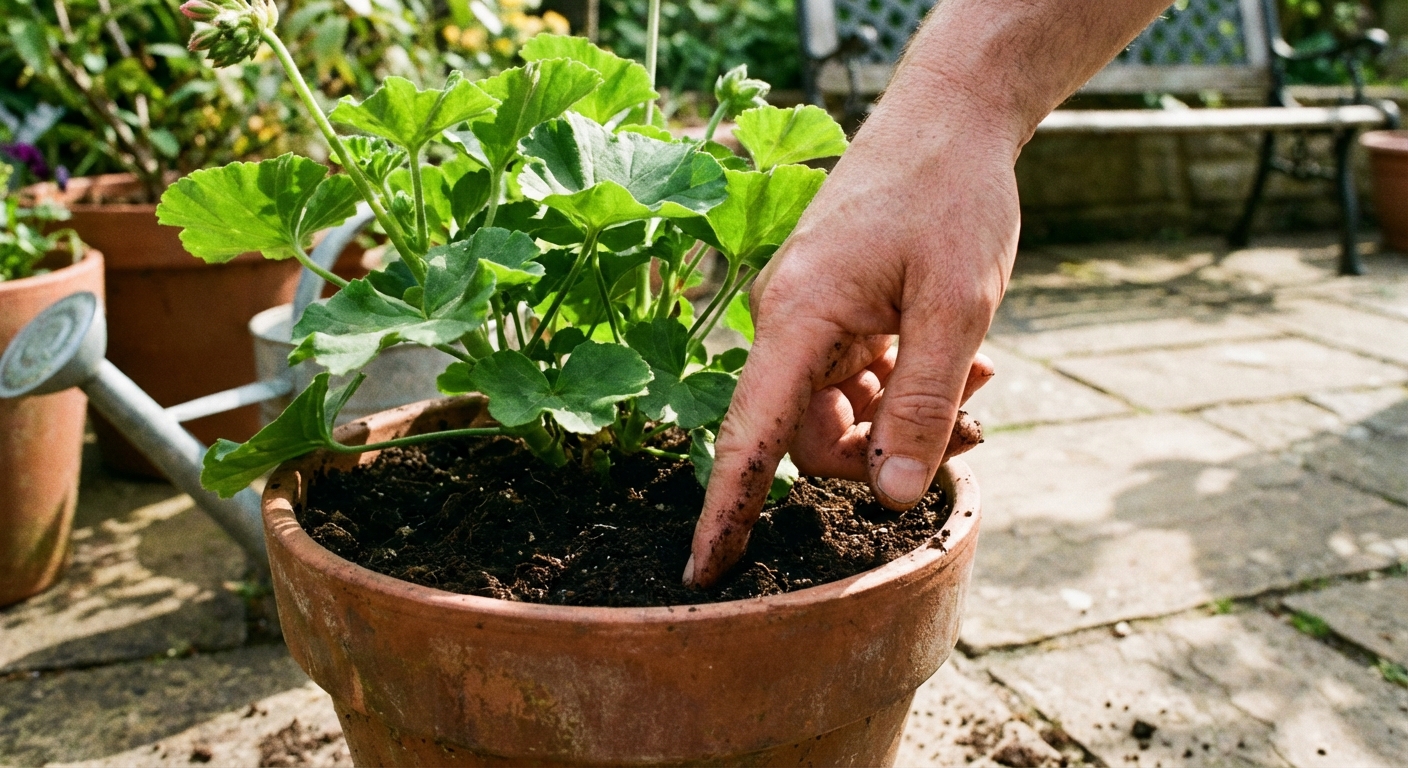
Use your finger, not the calendar:
- Water when the top 1 to 2 inches of soil feel dry.
- In summer heat, containers may need water every 1 to 3 days. A 10 to 12 inch pot in 90°F (32°C) heat can easily need daily watering.
- In mild weather, it could be once a week.
- In-ground geraniums usually need less frequent watering once established.
How to water the right way
- Soak the root zone until water drains from the bottom of pots.
- Try to keep blooms and foliage from staying wet, especially late in the day. Botrytis is mainly a cool, humid, low-airflow problem, and lingering moisture can tip the scales in its favor.
- Empty saucers under containers so roots never sit in standing water.
Signs you are overwatering (most common)
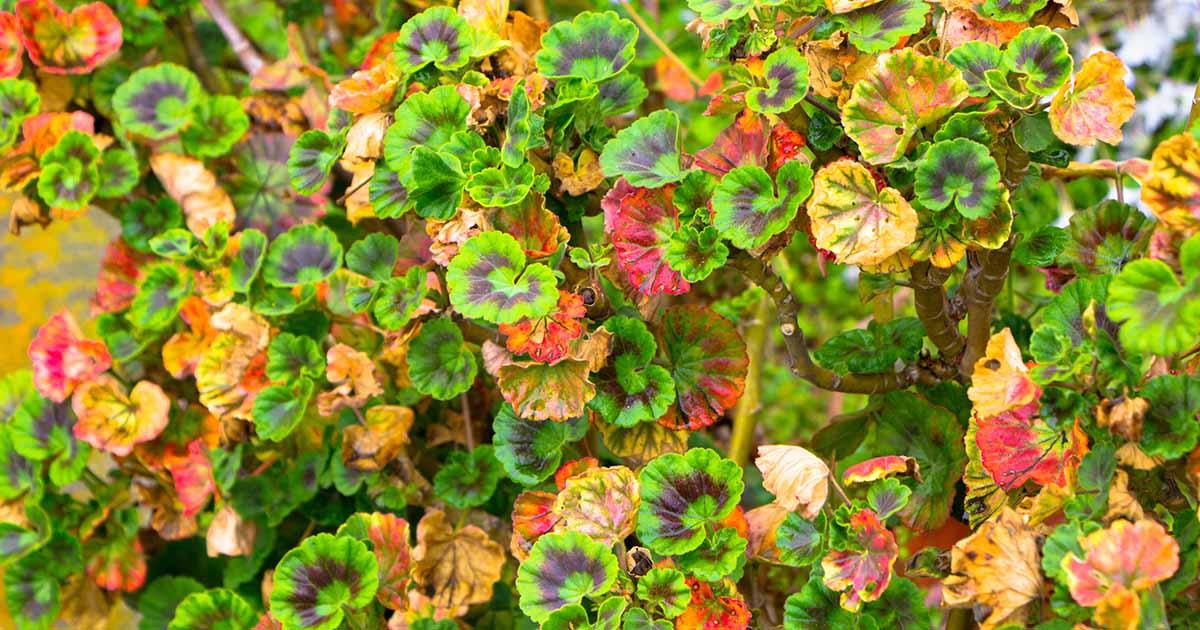
- Yellowing lower leaves
- Soft stems, mushy crown, or a sour smell in the pot
- Flowers dropping quickly and fewer new buds
If this sounds familiar, let the pot dry more between waterings, and check that your container has drainage holes and a light, well-aerated potting mix.
Deadheading and pruning
Geraniums bloom in clusters, and each cluster has a natural life cycle. When you remove the spent cluster, the plant redirects energy into fresh buds instead of seed production.
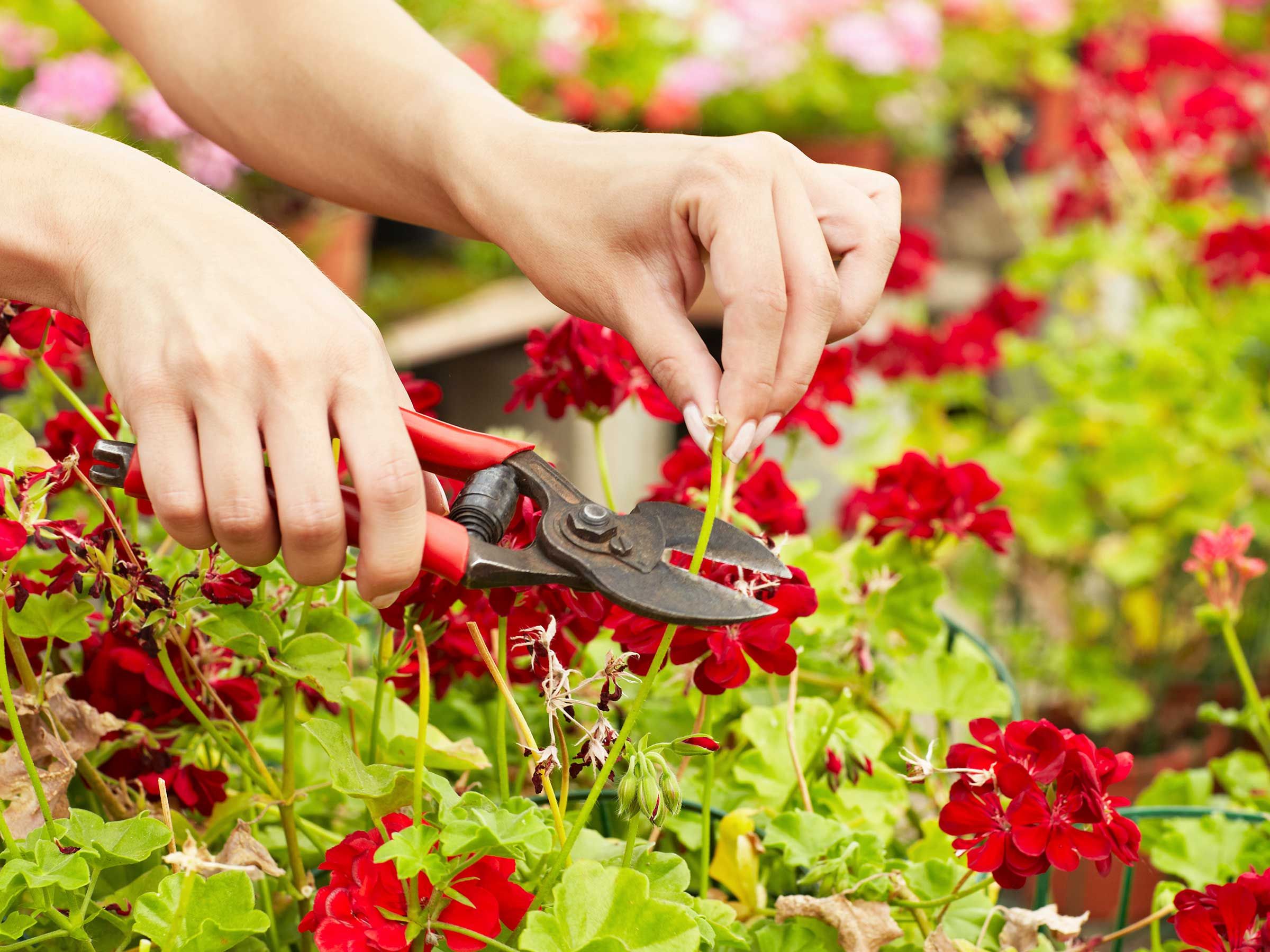
How to deadhead
- Find the flower stalk that holds the whole cluster.
- Follow it down to where it meets the main stem.
- Snap or cut the stalk off cleanly at the base.
If you only pick off individual faded petals, the plant often keeps that stalk longer than necessary.
Pinching back leggy growth
If stems stretch and look bare, do not be afraid to prune. I promise they bounce back.
- Pinch the soft tips of new growth to encourage branching.
- Cut back long stems by 1/3 when the plant gets floppy or sparse.
- Always leave a few healthy leaves on each stem section so the plant can photosynthesize and regrow quickly.
After a more serious haircut, water normally and give a light feeding. New growth usually appears within a week or two in warm weather.
Fertilizer for blooms
Geraniums are not heavy feeders, but they do appreciate steady nutrition, especially in containers where nutrients wash out with frequent watering.
Best fertilizer approach
- Slow-release granules: Mix into potting soil at planting time for an easy baseline.
- Liquid feed: Use every 2 to 4 weeks during active growth, especially for pots and hanging baskets.
What NPK to look for
A balanced fertilizer is fine, but if your plant is all leaves and no flowers, choose a formula with slightly lower nitrogen, such as something close to 5-10-5 or similar bloom-friendly ratios.
A simple seasonal rhythm
- Spring to late summer: Feed lightly but consistently.
- Late summer to fall: Ease off feeding, especially if you plan to overwinter the plant.
- Winter indoors: Little to no fertilizer unless it is actively growing under strong light.
Soil and drainage
If Pelargoniums had a motto, it would be “Drainage first.” They will forgive a lot, but soggy roots are not one of those things.
- Containers: Use a quality potting mix and consider mixing in perlite or pumice for extra air and drainage.
- Skip heavy soil in pots: Garden soil compacts in containers and stays wet too long.
- In beds: Improve heavy soil with compost, and plant slightly raised if water tends to pool.
Common problems
Most issues show up first in the leaves. A two-minute check when you water can prevent a full-blown mess later. Flip a few leaves and look underneath while you are there.
Yellow leaves
- Most likely: Overwatering or poor drainage.
- Also possible: Natural aging of a few lower leaves, or nutrient deficiency in a long-season container.
Remove yellow leaves, adjust watering, and consider a light feeding if the plant has been in the same potting mix for months.
Gray, fuzzy mold (botrytis)
This often appears during cool, humid stretches or when plants are crowded.
- Deadhead spent blooms promptly.
- Increase airflow and avoid overhead watering when conditions are already damp.
- Remove affected parts and discard them, do not compost.
Rust spots on leaves
Rust can show as small yellow spots on top with rusty pustules underneath. It is more common in humid or coastal conditions, and in crowded plantings with limited airflow.
- Remove the worst leaves.
- Water at soil level.
- Give plants more space and sun.
- If it keeps spreading, a labeled fungicide may be needed. Follow local guidance and label directions.
Pests to watch
- Aphids: Cluster on new growth. Blast off with water or use insecticidal soap.
- Spider mites: Fine webbing and stippled leaves in hot, dry conditions. Rinse foliage, especially undersides, reduce drought stress, and treat with horticultural oil or soap if damage continues.
- Caterpillars and budworms: Chewed buds and holes. Hand-pick or use Bt if damage is ongoing.
Prevention habits
- Inspect new plants before they join your pots and beds.
- Sanitize pruners between plants when you are cutting back or removing disease.
- Do not crowd containers. Airflow is quiet magic.
Overwintering in cold climates
If you live where frost ends the season, you have options. Pelargoniums are tender perennials, meaning they can live for years if protected from freezing temperatures.
Option 1: Bring the plant indoors
This works best if you can offer bright light, like a sunny south window or a grow light.
- Before first frost, inspect for pests and rinse the plant gently.
- Prune lightly to reduce size by about 1/3.
- Move it inside to a bright spot with good airflow.
- Water less often. Let the top few inches dry before watering again.
Expect a little leaf drop while the plant adjusts. That is normal. What you are aiming for is survival and steady, slow growth, not a huge bloom show.
Option 2: Take cuttings
Cuttings are insurance. Even if the mother plant struggles indoors, you still have fresh plants for spring.
- Cut 3 to 5 inch stems just below a node.
- Remove lower leaves and any flower buds.
- Let cut ends dry for a few hours to callus.
- Stick into a lightly moist, well-draining mix and keep in bright, indirect light.
Once rooted, pinch tips to encourage bushiness.
Option 3: Store bare-root
This is the classic method for zonal geraniums if you have a cool, dark place that stays above freezing.
- After a light frost or before a hard freeze, dig plants up.
- Shake off most soil and trim back top growth.
- Hang plants upside down or store them in paper bags in a cool area around 40 to 55°F (4 to 13°C).
- Check monthly. If stems shrivel badly, lightly mist roots or soak briefly, then let them dry again.
In spring, pot them up, water thoroughly, and place in bright light. New growth can take a couple of weeks, so be patient.
Spring wake-up
When danger of frost has passed, help overwintered plants transition back outside gradually.
- Harden off: Start with a few hours outside in shade, then increase sun over 7 to 10 days.
- Refresh the soil: Repot in fresh mix or top-dress containers with compost.
- Prune for shape: Cut back weak or leggy stems to encourage a fuller plant.
- Resume feeding: Once you see active growth, begin a light fertilizer schedule.
Small habits
- Turn pots weekly so plants grow evenly toward the light.
- Remove spent blooms every time you water. It becomes a soothing little ritual.
- Prioritize drainage over fancy pot size. A modest pot with great drainage beats a big soggy one every time.
- Talk to your plants if you want. I do. My ferns pretend not to enjoy it, but they absolutely do.
If you take nothing else from this guide, let it be this: outdoor Pelargoniums want bright light, breathing room, and a chance to dry out between drinks. Give them that, and they will repay you with months of color.