
Gasteria Care for Beginners

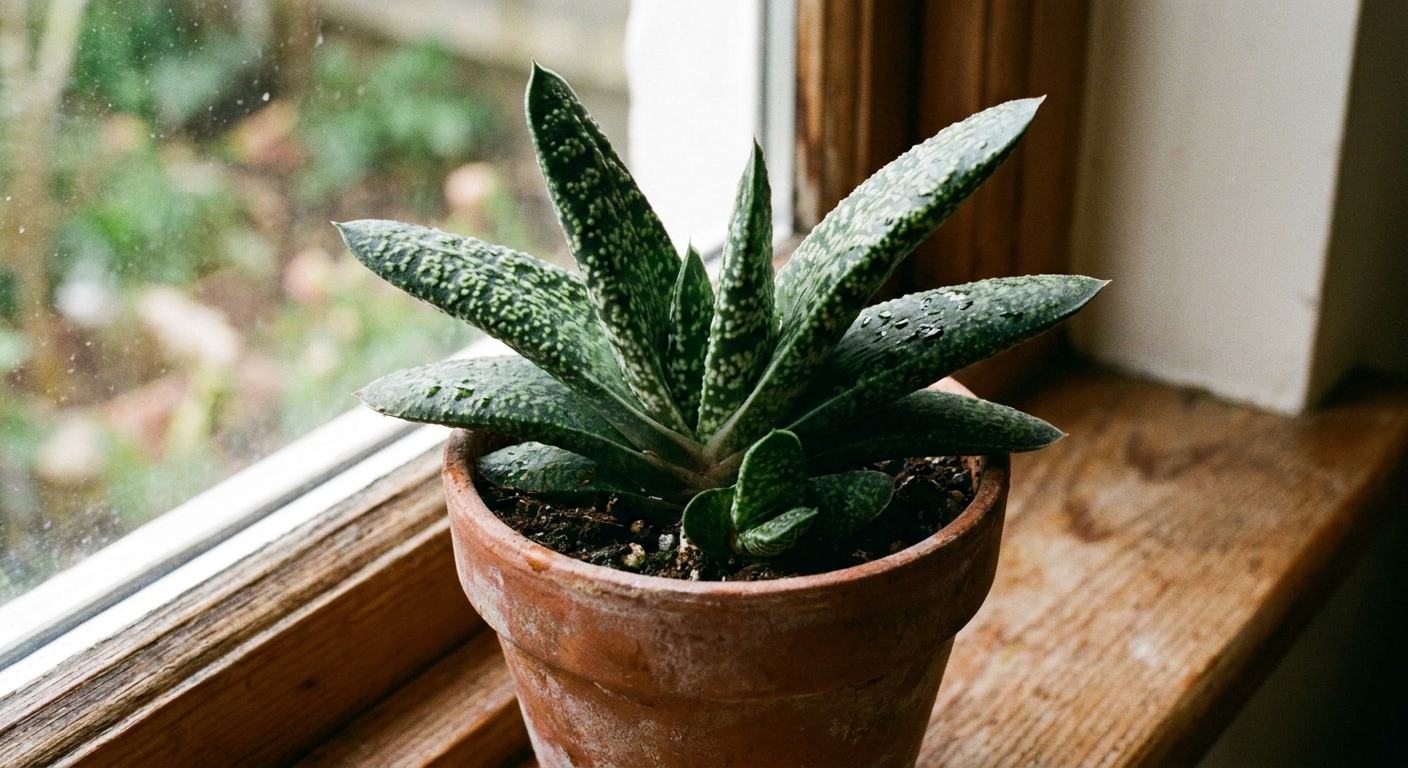
Gasteria is the succulent I recommend to anyone who swears they “kill everything.” It stays compact, tolerates lower light than most succulents, and forgives the occasional missed watering. Those thick, tongue-shaped leaves are basically built for busy humans.
Below is everything you need to keep your Gasteria happy, including how to water with the soak-and-dry method, what kind of gritty soil it actually wants, how to separate pups, and what to do if you run into root rot, sunburn, or pests.

Meet Gasteria
Gasteria (gas-TEER-ee-uh) is a group of South African succulents known for:
- Thick, often speckled leaves that store water
- Slow growth and a tidy footprint, perfect for windowsills
- Better low-light tolerance than many sun-hungry succulents
- Pups (baby offsets) that pop up around the base as the plant matures
You will see labels like Gasteria, Gasteraloe (a hybrid with Aloe), or simply “ox tongue succulent.” Care is generally similar across them, but light and watering needs can vary by species, pot size, and whether you grow indoors or outdoors.
Pet safety
Gasteria is commonly listed as non-toxic to cats and dogs, which is a big perk for indoor plant people. That said, labels and hybrid IDs can get messy, so if you need absolute certainty for a pet that chews, double-check with a trusted source (like the ASPCA list) and keep plants out of reach anyway. Even “non-toxic” plants can still upset a stomach if a pet eats a lot.
Light: Bright, not blazing
Gasteria is famous for handling lower light, but “low light” does not mean “no light.” Think bright shade or gentle indoor light rather than direct, blazing sun.
Best indoor placement
- East-facing window: often perfect, with soft morning sun
- South or west-facing window: great if filtered with a sheer curtain, or set the plant back from the glass (about 12 to 24 inches is a good starting point)
- North-facing window: can work, but growth may slow and leaves may stretch
How Gasteria compares to other succulents
- Echeveria: needs stronger sun to stay compact. In low light it stretches fast.
- Haworthia: similar low-light tolerance, though many Haworthias handle even shadier spots.
- Aloe: usually wants brighter light than Gasteria, especially outdoors.
Quick read on your plant: If your Gasteria is staying compact with firm leaves and clear markings, your light is working. If leaves become long, thin, or widely spaced, it is asking for more light.
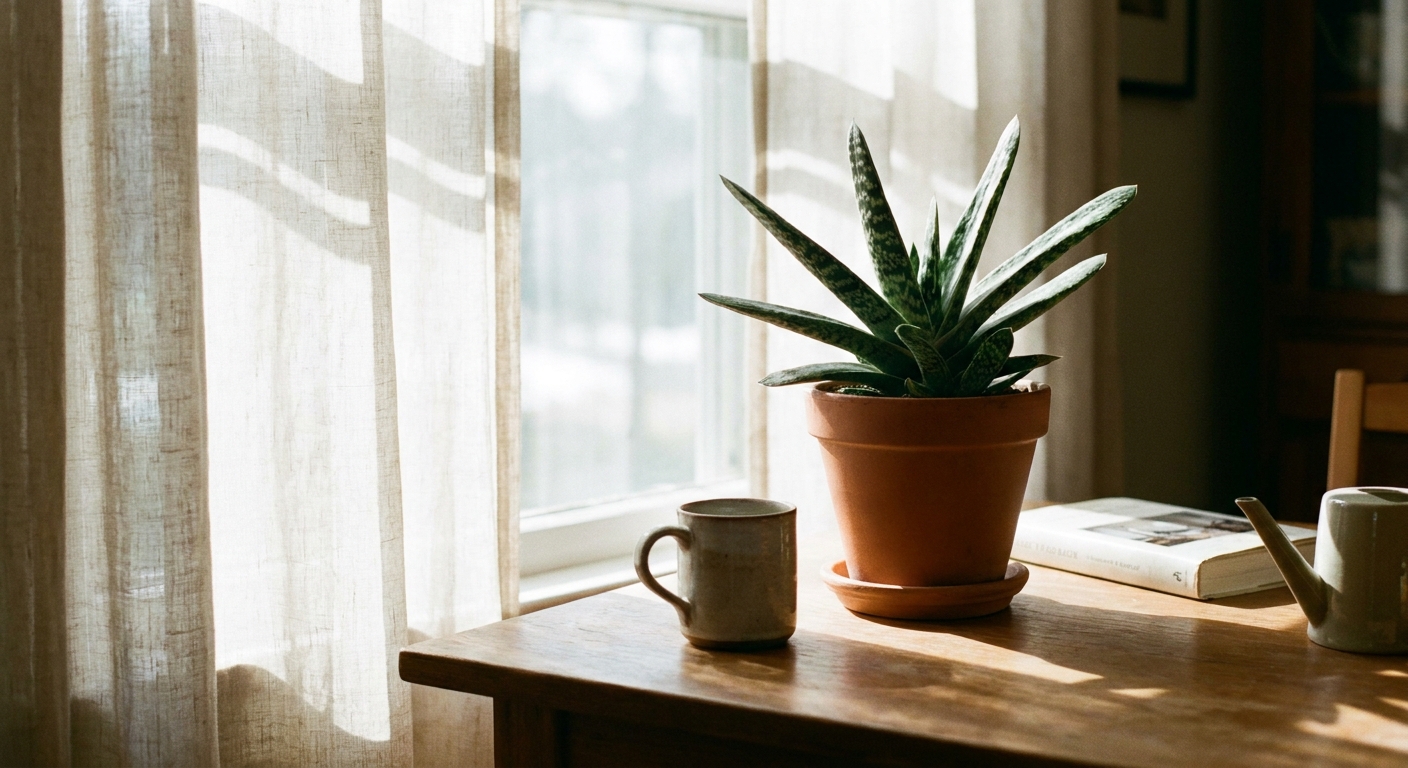
Watering: Soak-and-dry
The biggest beginner mistake with Gasteria is loving it too often with a watering can. This is a succulent that would rather be slightly thirsty than constantly damp.
The soak-and-dry method
- Check dryness first. Insert a wooden skewer or chopstick deep into the pot. If it comes out cool or damp, wait.
- Water thoroughly. When it is dry, water until it runs out the drainage holes.
- Drain completely. Never let the pot sit in a saucer of water.
- Wait again. Do not water on a schedule. Water on dryness.
How often to water (typical ranges)
These are realistic indoor ranges, assuming a pot with drainage and a gritty mix. Your exact timing depends on light, temperature, and how fast your pot dries.
- Spring and fall: about every 2 to 4 weeks
- Winter: about every 3 to 6 weeks (sometimes longer in cool rooms)
- Summer: varies. Some plants slow down in heat, while others keep growing if conditions are mild and bright.
Leaf cues: Slightly thinner, less plump leaves can mean it is time to water. Mushy or translucent leaves usually mean too much water or rot, but cold exposure can cause similar damage.
Soil: Gritty and fast
Gasteria wants oxygen around its roots. That means a mix that drains quickly and does not stay soggy for days.
An easy gritty mix recipe
Start with a quality cactus and succulent mix, then make it sharper:
- 2 parts cactus/succulent potting mix
- 1 part pumice or perlite
- 1 part coarse grit such as crushed lava rock or horticultural grit
If you only have perlite, you can still improve drainage by mixing roughly 50 percent succulent mix and 50 percent perlite. It is not fancy, but it works.
One important detail: skip fine sand. It can compact and slow drainage. If you use sand at all, it should be very coarse and gritty.
Pot choice matters
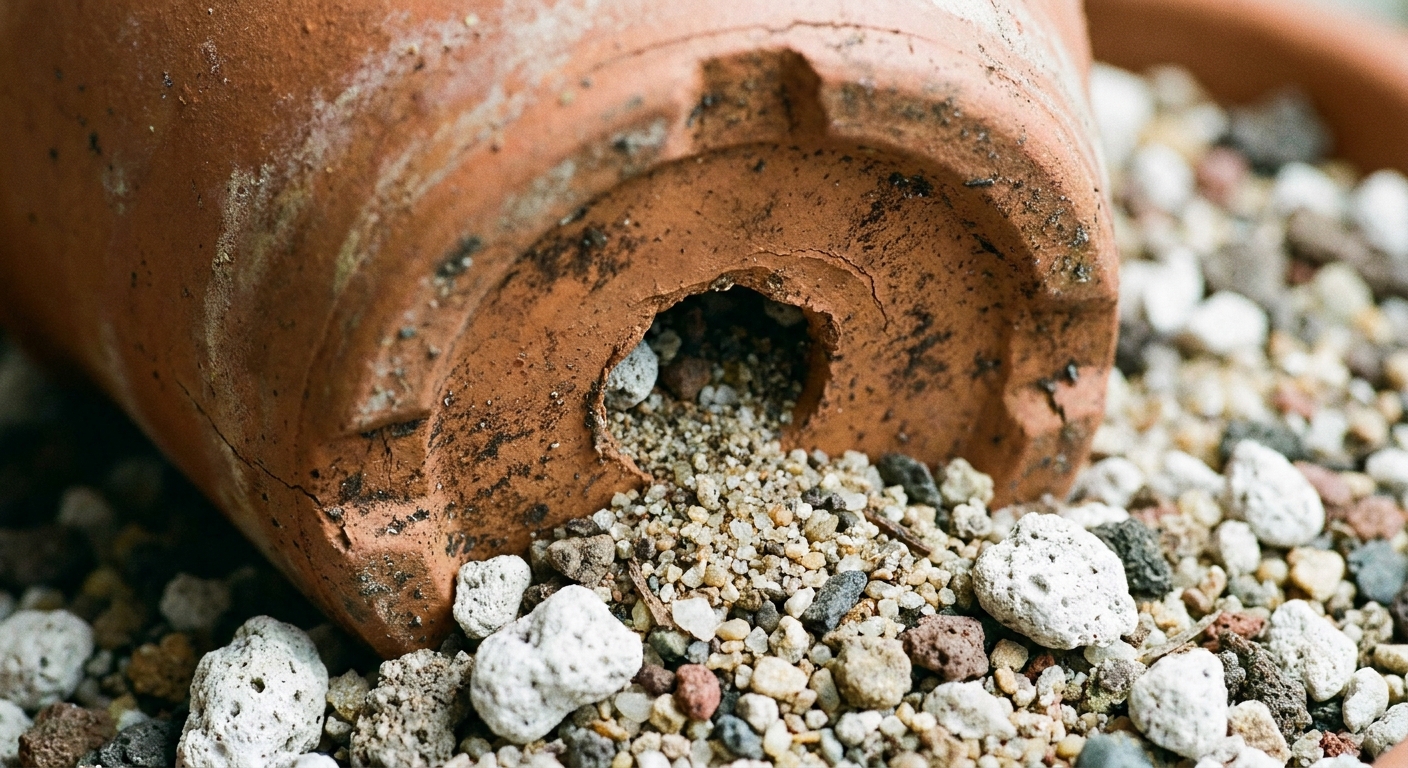
- A drainage hole is non-negotiable.
- Terracotta helps beginners because it breathes and dries faster.
- Choose snug, not massive. Oversized pots hold extra wet soil and invite rot.
Temp and airflow
Gasteria is an easy indoor plant because it likes typical home conditions.
- Temperature: happiest around 60 to 80 F (16 to 27 C). Protect from frost and cold windows in winter.
- Humidity: average household humidity is fine.
- Airflow: gentle airflow helps prevent soil staying damp too long, especially in winter.
If you summer your plants outdoors, introduce sun slowly and keep it in bright shade at first. Outdoor sun is stronger than indoor sun, and Gasteria can burn quickly.
Fertilizer: Light feeding
Gasteria is a slow grower. Too much fertilizer can cause weak, overly soft growth.
- When: spring through early fall, only if the plant is actively growing
- How often: every 6 to 8 weeks is plenty
- What: a balanced succulent fertilizer or houseplant fertilizer diluted to 1/4 strength
If you forget fertilizer entirely, your Gasteria will not hold a grudge. Good light and good soil do most of the work.
Repotting and slowdowns
When to repot
Repot every 2 to 3 years, or when you notice:
- Roots circling the pot or poking from drainage holes
- Soil that has broken down and stays wet too long
- So many pups the pot is crowded and hard to water evenly
How to repot
- Let the soil dry out for a few days first.
- Slide the plant out and brush away loose old mix.
- Check roots. Trim any black, mushy roots with clean scissors.
- Set into fresh gritty mix at the same depth as before.
- Wait 5 to 7 days to water so any tiny root nicks can callus.
The growth rhythm
Many Gasterias slow their growth in hot summer weather, especially indoors without strong light. Some also slow in winter, and some grow on and off year-round indoors. The takeaway is simple: growth is not constant, so watering cannot be constant.
What to do: keep watering tied to dryness, not the calendar. If your pot is still damp 10 to 14 days after watering, extend the interval and consider more light, a smaller pot, or a grittier mix.
Propagation: Pup division
Most Gasterias eventually produce offsets, also called pups. Dividing them is the easiest way to get more plants without any complicated steps.
Best time
Spring through early fall, when the plant is more likely to root quickly.
Step-by-step pup division
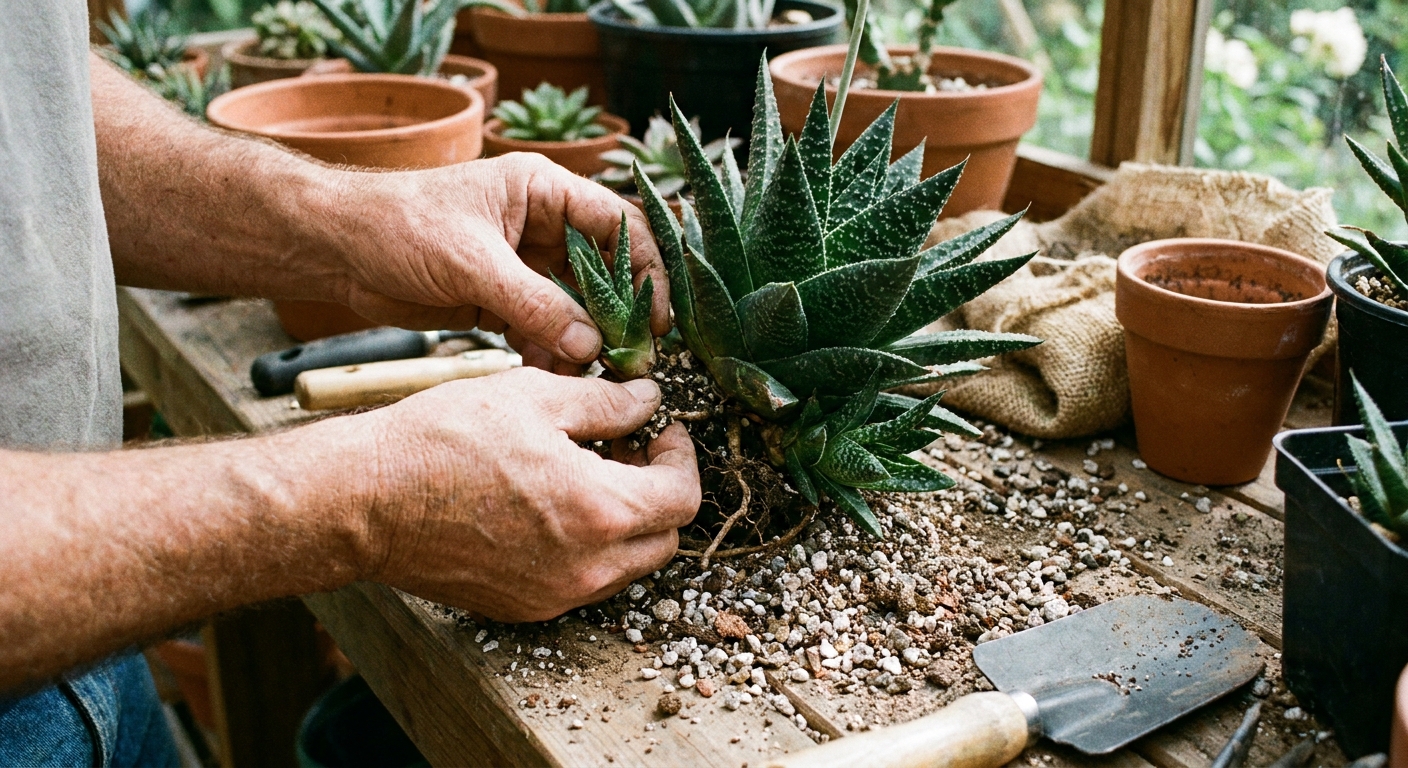
- Unpot the plant and gently remove soil so you can see where the pup connects.
- Choose a pup that is at least a few inches tall and has its own roots, if possible.
- Separate cleanly with a sterile knife or by gently twisting at the connection point.
- Let it callus for 24 to 72 hours in a dry, shaded spot.
- Pot it up in dry gritty mix.
- Wait to water about a week, then water lightly and return to soak-and-dry once it shows signs of settling in.
Troubleshooting
Root rot
Common causes: frequent watering, dense soil, no drainage hole, oversized pot, or cool conditions with wet soil.
Signs:
- Mushy, translucent leaves
- Plant feels loose or wobbly in the pot
- Dark, soft roots with a sour smell
What to do:
- Unpot immediately and remove all wet soil.
- Trim rotted roots and any mushy leaf bases with sterile scissors.
- Let the plant dry and callus for 1 to 3 days in bright shade.
- Repot into dry gritty mix in a pot with drainage.
- Wait about a week before watering, then water sparingly at first.
If the base (the crown) is fully mushy, the plant may not be salvageable. If there are healthy pups, you can often save those by separating and re-rooting them.
Sunburn
Gasteria can scorch when moved suddenly into strong sun, especially outdoors.
Signs:
- Tan, beige, or white patches on leaves
- Tissue may look dry and papery
What to do: Move the plant to bright shade. Damaged tissue will not turn green again, but new growth should come in healthy. If you want more light, acclimate slowly over 1 to 2 weeks.
Pests (especially mealybugs)
Gasterias have tight leaf crevices, which makes them a favorite hiding place for mealybugs. You may also see scale or, less commonly indoors, spider mites.
What to look for: white cottony fluff in leaf joints, sticky residue, or pale, scuffed patches on leaves.
What to do:
- Isolate the plant so pests do not spread.
- Swab mealybugs with a cotton swab dipped in 70 percent isopropyl alcohol.
- Follow up with insecticidal soap or horticultural oil, getting into the crevices. Repeat weekly for a few rounds.
- Check the roots if the plant keeps declining. Root mealybugs are sneaky and look like fuzz in the soil.
Wrinkled leaves
- Most likely: the plant is genuinely thirsty. Water deeply, then let it dry again.
- Also possible: roots are damaged from past overwatering, so the plant cannot drink well. Check roots if wrinkling persists after watering.
Stretching or leaning
This is usually a light issue. Move closer to a brighter window or add a grow light. Rotate the pot a quarter turn every week or two for even growth.
Brown tips
Often from mineral-heavy water and salt buildup, inconsistent watering, or minor heat stress. It is usually cosmetic. If your tap water is hard, try using filtered water occasionally and flush the pot thoroughly every few months to wash out salts.
Beginner checklist
- Pot: small to medium, with a drainage hole
- Soil: gritty and fast draining
- Light: bright indirect, with gentle morning sun if possible
- Water: soak-and-dry, no strict schedule
- Seasonal rhythm: expect growth to speed up and slow down depending on light and temperature
If you take nothing else from this page, take this: Gasteria is happiest when you let it dry out completely between waterings. That little pause is where the magic happens.