
Fuchsia Care for Beginners

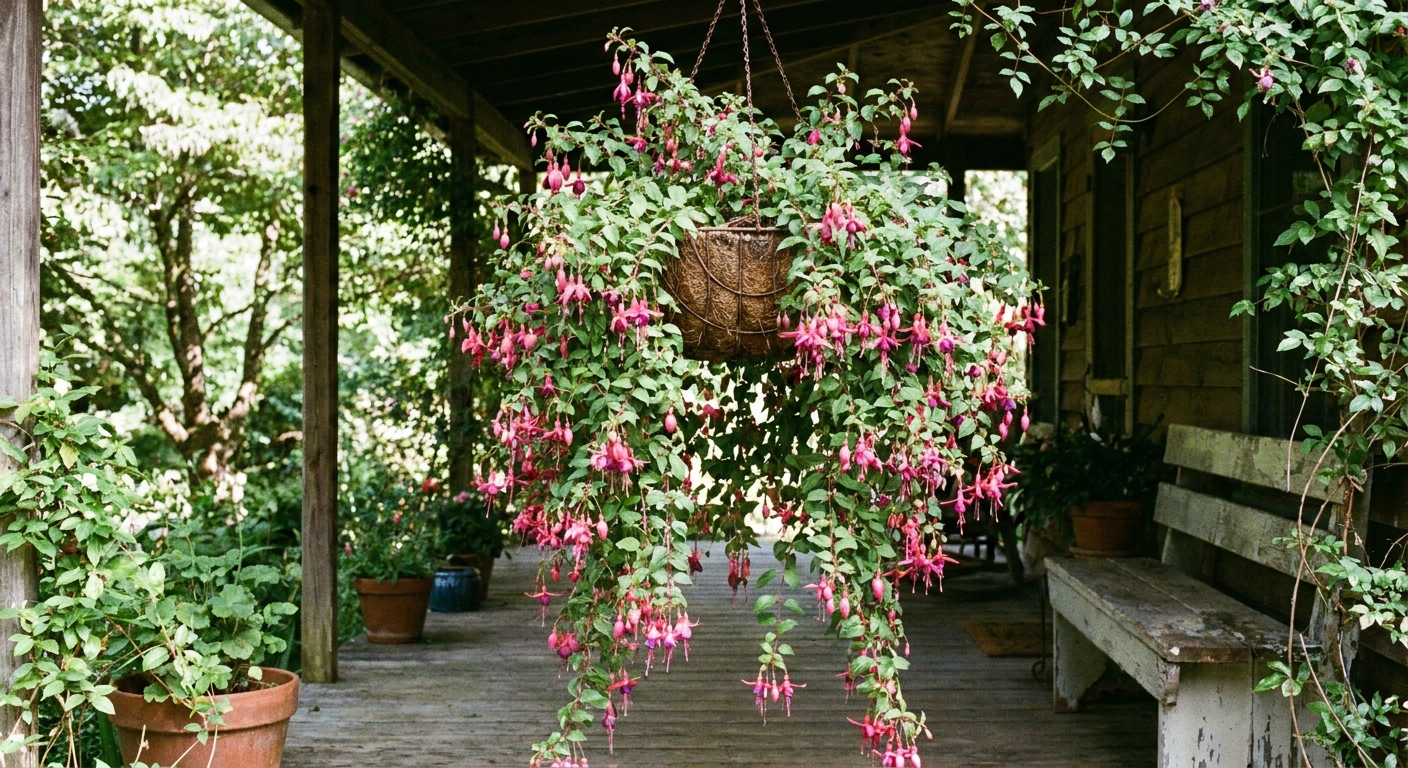
Fuchsias are the jewelry of the shade patio: dangling buds like tiny lanterns, blooms that look like ballerinas, and colors that practically hum. They are also one of those plants that gets labeled “fussy” when really most popular container and basket fuchsias just have two big requests: cool roots and consistent moisture. Give them that, plus bright shade, and they will reward you all season.
Whether your fuchsia is spilling out of a hanging basket or standing upright in a pot, this guide will walk you through the basics with a calm, beginner-friendly rhythm. You do not need a perfect routine. You just need a few good habits.

Know your fuchsia: trailing vs upright
Before you tweak light or pruning, it helps to know which growth habit you have. Most care is the same, but how you shape the plant and where you place it can differ.
Trailing fuchsia
- Best for: hanging baskets, window boxes, tall planters.
- Growth: stems cascade and bloom along the drape.
- Pruning focus: pinch tips early to encourage a fuller “waterfall.”
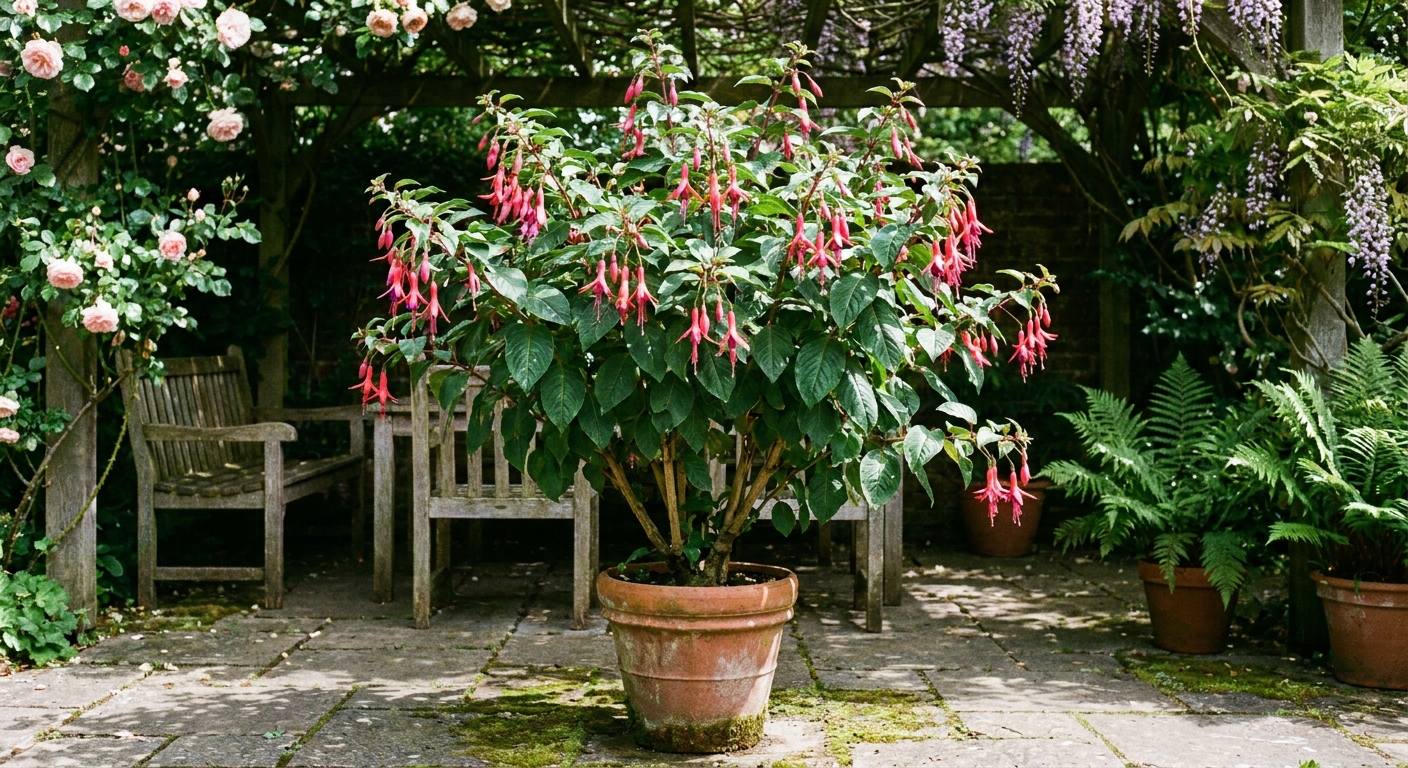
Upright fuchsia
- Best for: pots, patio containers, mixed planters, sometimes trained as standards (small tree form).
- Growth: more vertical, shrub-like shape.
- Pruning focus: pinch to branch, then lightly shape through the season.
If the nursery tag is missing, look at the stems. If they naturally arch and tumble, it is trailing. If they hold themselves up and branch like a little shrub, it is upright.
Light: bright, indirect, and gentle
Fuchsias want light that feels like a cool morning, not a scorching afternoon. Think bright shade or filtered sun. Some modern cultivars tolerate more sun than others, but few enjoy baking heat.
- Ideal: morning sun and afternoon shade, or dappled light under a tree canopy.
- Too much sun looks like: crispy edges, faded leaves, drooping even when the soil is moist.
- Too little light looks like: lots of green growth but fewer flowers, long leggy stems reaching for brightness.
On a balcony, an east-facing exposure is usually a sweet spot. West-facing can work if you provide shade cloth or tuck the pot where it is protected from late-day heat.
Temperature: cool nights help
Fuchsias shine when days are mild and nights cool. Prolonged heat can pause flowering and trigger bud drop, especially in baskets that dry quickly. If your summers run hot, plan for afternoon shade and a little extra attention to watering.
Soil and pots: airy mix, excellent drainage, cool roots
Fuchsia roots like to breathe. They also hate sitting in swampy soil. In containers, the goal is a mix that holds moisture but drains fast.
A beginner-friendly potting mix
- Use a quality potting mix as your base.
- For extra airiness, blend in perlite or pine bark fines.
- Avoid heavy garden soil in pots. It compacts and suffocates roots.
Container tips that make fuchsias happier
- Drainage holes are non-negotiable.
- Choose lighter-colored pots or line baskets if you garden in hot summers. Dark containers heat up fast and warm the root zone.
- Do not oversize the pot. A pot that is too big stays wet too long. Move up one size when roots fill the current container.
If your fuchsia came in a hanging basket, it may already be packed with roots by midseason. That is not a moral failing on your part. It is just how fast they grow when they are happy. If water starts running straight through, consider top-dressing with fresh mix or repotting into the next size basket.
Now that the roots have the right setup, the next piece is simple, but important: steady watering.
Watering: consistent moisture without soggy soil
This is the heartbeat of fuchsia care. Most beginner trouble comes from a cycle of “bone dry” followed by “flooded.” Aim for steady.
How to check if it needs water
- Stick your finger into the soil about 1 inch deep.
- If it feels slightly dry at that depth, water.
- If it still feels cool and moist, wait and check again later.
How to water well
- Water slowly until it runs out the drainage holes.
- Empty saucers so the pot does not sit in water.
- In summer, hanging baskets may need water daily, sometimes twice during heat waves.
Quick rescue: If a basket dries out and wilts dramatically, soak it in a tub or bucket for 10 to 20 minutes, then let it drain fully. One deep rehydration is kinder than repeatedly splashing the surface.
Feeding: gentle, regular fertilizer for nonstop blooms
Fuchsias are enthusiastic bloomers, especially in baskets, and that takes energy. A light feeding routine keeps flowers coming without turning the plant into an all-leaves, no-bloom situation.
- During active growth and flowering: feed every 1 to 2 weeks with a balanced liquid fertilizer at half strength.
- If your plant is leafy but stingy with flowers: ease off high-nitrogen feeds and choose a more balanced or bloom-leaning formula.
- If you prefer slow release: use a container-friendly slow-release fertilizer and supplement with occasional liquid feed if blooming slows.
- Pause feeding: when you bring plants in to overwinter and they slow down or go dormant.
Organic gardeners can use fish emulsion or seaweed-based feeds, just know the scent can be… memorable on a small balcony. Your neighbors may have opinions.
Deadheading and pinching: the secret to rebloom
Fuchsias bloom generously when you keep them tidy. Two simple actions make a huge difference.
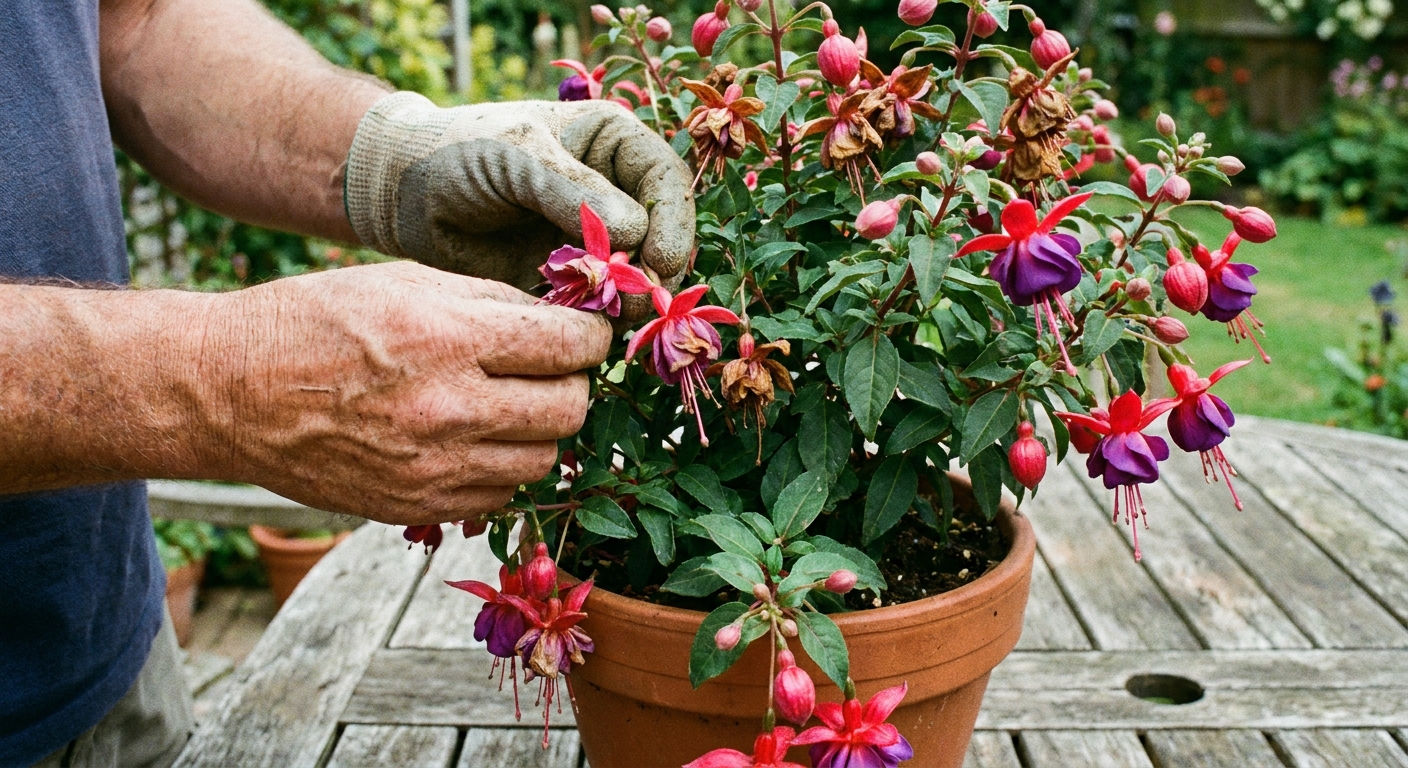
Deadheading (for more flowers)
After a bloom fades, remove the spent flower and the developing seed pod behind it. Many fuchsias bloom more freely when they are not putting energy into seeds, although results can vary by cultivar and conditions.
- Pinch off the faded bloom.
- Gently remove the little swollen green nub (the seed pod) at the base.
Pinching (for a fuller plant)
In spring and early summer, pinch the tips of new growth (just above a leaf pair). This encourages branching, which means more places for blooms.
- Trailing types: pinch early for fullness, then let them cascade.
- Upright types: pinch to shape a compact, bushy plant.
Summer heat survival: keep roots cool and plants breathing
Fuchsias are at their best in cool, mild weather. When summer turns into a hair dryer, your job is to lower stress.
Heat protection checklist
- Move to afternoon shade. Even an extra two hours out of hot sun helps.
- Cool the root zone. Use a cachepot, double potting, or place the basket where it is shaded by a railing or larger plant.
- Water earlier in the day. Morning watering supports the plant through peak heat.
- Increase airflow. Crowded corners trap heat and invite pests.
About misting: A light mist can feel helpful, but it is not a substitute for watering the root zone. In humid or cool, damp conditions it can also encourage fungal issues like botrytis. If you mist, do it early and make sure the foliage dries quickly.
If your fuchsia drops buds during a heat wave, do not panic. It is often a temporary stress response. Focus on shade, moisture, and cooler nights, and it usually rebounds.
Common pests: quick checks that prevent big problems
Get in the habit of turning a few leaves over when you water. This tiny ritual catches pests early, when they are easiest to manage.
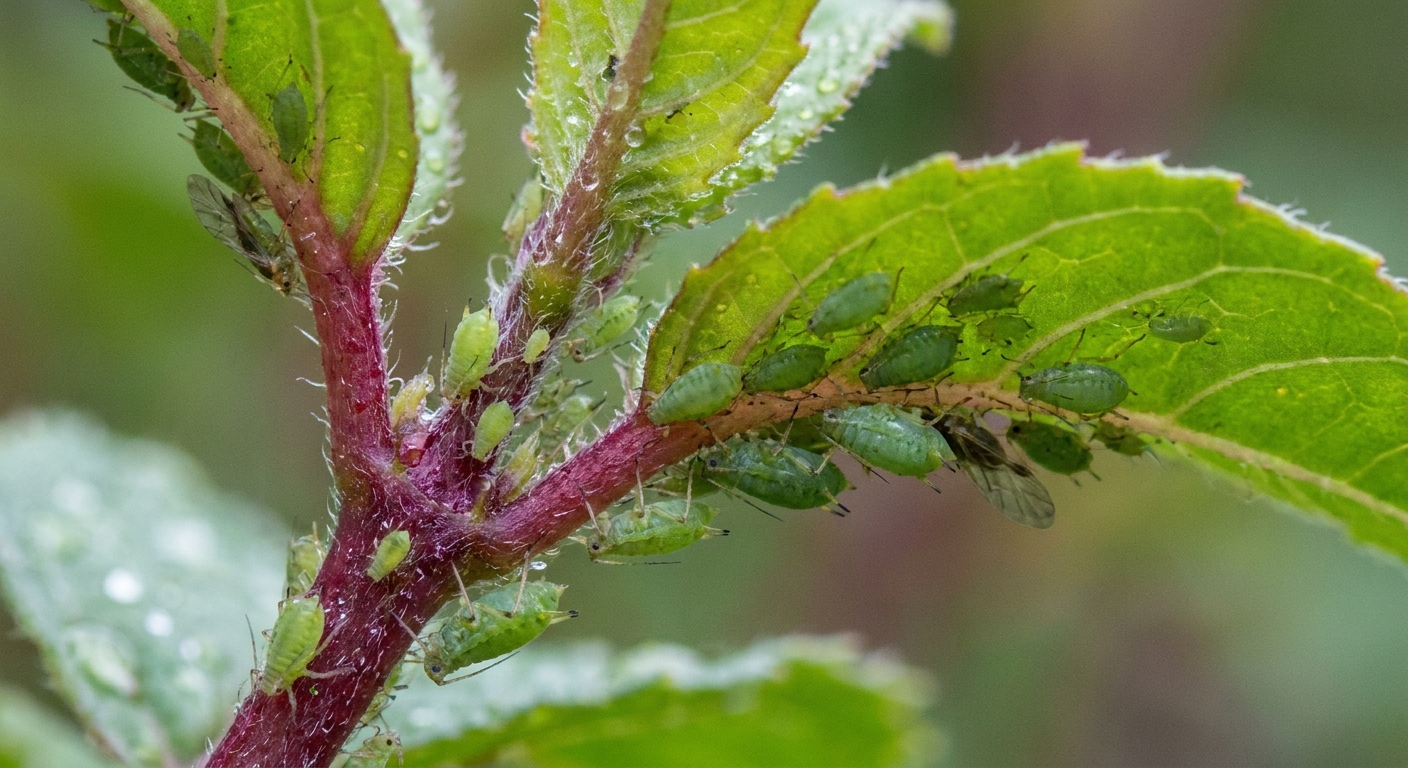
Aphids
- Signs: clusters of soft green or black insects on new growth, sticky residue.
- What to do: blast off with water, then use insecticidal soap if needed.
Whiteflies
- Signs: tiny white insects that flutter up when you touch the plant.
- What to do: yellow sticky traps plus insecticidal soap, repeat weekly for a few rounds.
Spider mites
- Signs: stippled, dusty-looking leaves, fine webbing, worse in hot dry conditions.
- What to do: rinse foliage thoroughly, increase humidity slightly, treat with soap or horticultural oil (follow label and avoid spraying in heat).
Thrips (less common, very annoying)
- Signs: distorted flowers, streaking or scarring on petals and leaves.
- What to do: remove damaged blooms, use sticky traps, and consider spinosad if infestations persist (follow label instructions).
If you see ants farming aphids, treat the aphids and address the ants too. Ants protect aphids because they want the sweet honeydew.
Common problems and easy fixes
Wilting even though the soil is wet
- Likely cause: waterlogged roots or poor drainage.
- Fix: ensure drainage holes are open, let the mix dry slightly, consider repotting into a lighter mix if the soil is dense.
Yellowing leaves
- Likely causes: inconsistent watering, nutrient deficiency, or low light.
- Fix: stabilize watering rhythm, feed lightly, and move to brighter shade.
Leaf drop
- Likely causes: sudden heat, cold nights, drought, or a move to a new location.
- Fix: reduce stress with steady moisture and stable placement. Some drop is normal during transitions.
Few flowers
- Likely causes: not enough light, not deadheading, too much nitrogen, or not pinching early.
- Fix: brighten the spot, deadhead regularly, switch to a balanced feed, pinch new growth to encourage branching.
Overwintering: keep your fuchsia year after year
If you live where frost hits, you have two main options: treat fuchsia as a seasonal plant, or overwinter it. Overwintering is absolutely doable, and honestly kind of satisfying. It feels like saving a little piece of summer.
Quick note on types: Most fuchsias sold in hanging baskets are tender and need frost-free storage. There are also hardy garden fuchsias that can survive winters outdoors in some climates. If you are not sure what you have, assume tender and protect it from frost.
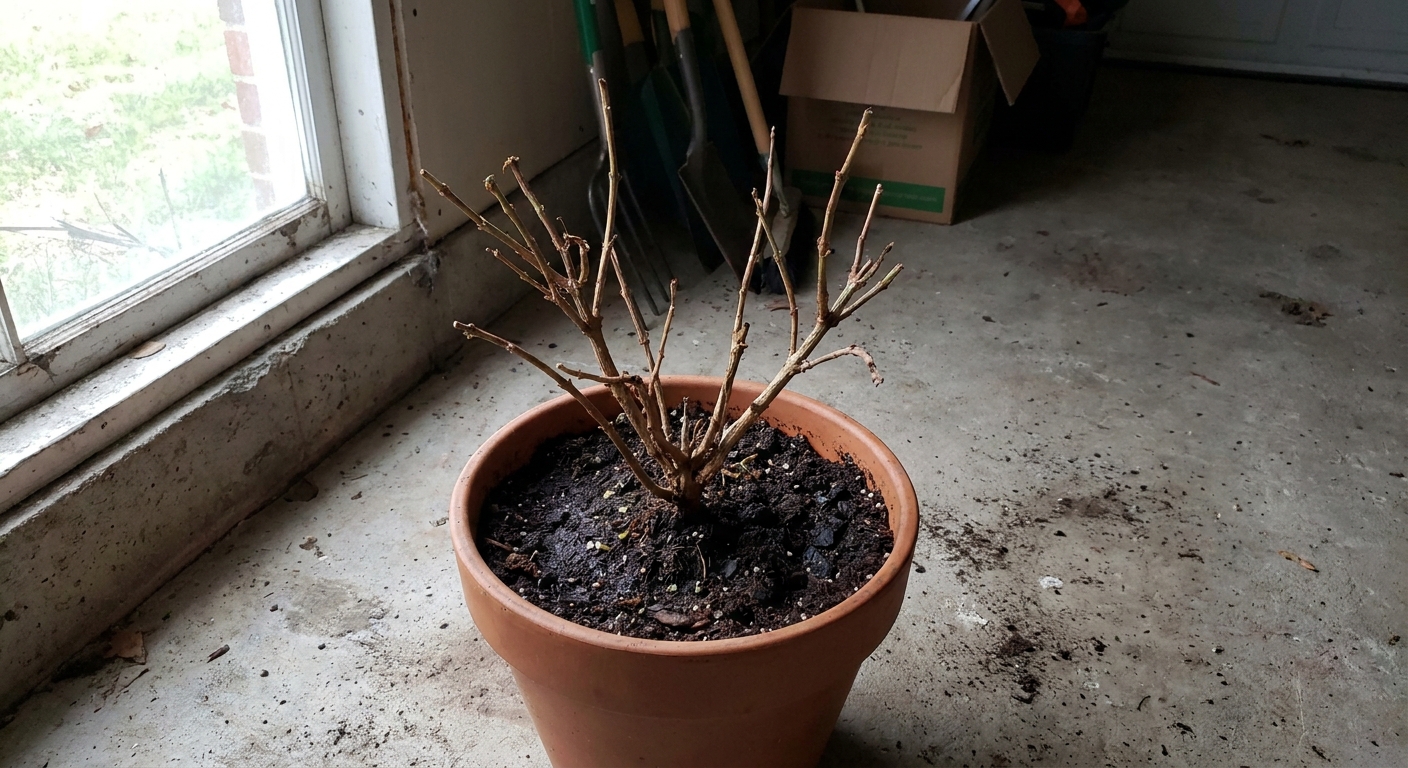
Option 1: Overwinter dormant (easiest)
This works well for gardeners in colder climates and for plants that would be too big to keep as a full houseplant.
- Before first frost: bring the plant inside before nights regularly dip near freezing.
- Store cool and frost-free: an unheated basement, a garage with a window, or a cool porch can work (often around 40 to 55°F / 4 to 13°C).
- Cut back: trim stems by about one-third to one-half. Remove any remaining flowers and weak growth.
- Reduce watering: keep the soil barely moist. Not bone dry, not wet.
- Let it rest: leaves may drop. That is normal in dormancy.
- In late winter to early spring: move to brighter light, water a bit more, and begin light feeding once new growth starts.
Option 2: Keep it growing indoors
- Provide very bright light near a sunny window or with a grow light.
- Expect slower growth and fewer flowers.
- Watch closely for whiteflies and spider mites, which love indoor conditions.
Either way, do a pest check before bringing plants in. I like to rinse the foliage gently and inspect leaf undersides. It is much easier to solve problems outdoors than in your living room.
Beginner fuchsia routine (steal this)
If you want a simple rhythm to follow, here is the one I would write on a sticky note:
- Every day in summer: quick look for wilting, check basket moisture, rotate the pot or basket if one side is always facing the light.
- 2 to 4 times per week: water thoroughly as needed, especially for hanging baskets.
- Once a week: deadhead and do a leaf-under check for pests.
- Every 1 to 2 weeks: feed lightly during active blooming.
- During heat waves: move to deeper shade and protect the pot from hot afternoon sun.
And if you forget for a day and the plant sulks, welcome to gardening. Most fuchsias are more forgiving than their reputation. Give them a drink, a cool spot, and a little kindness, and they usually bounce right back.