
Foxglove Care for Beginners

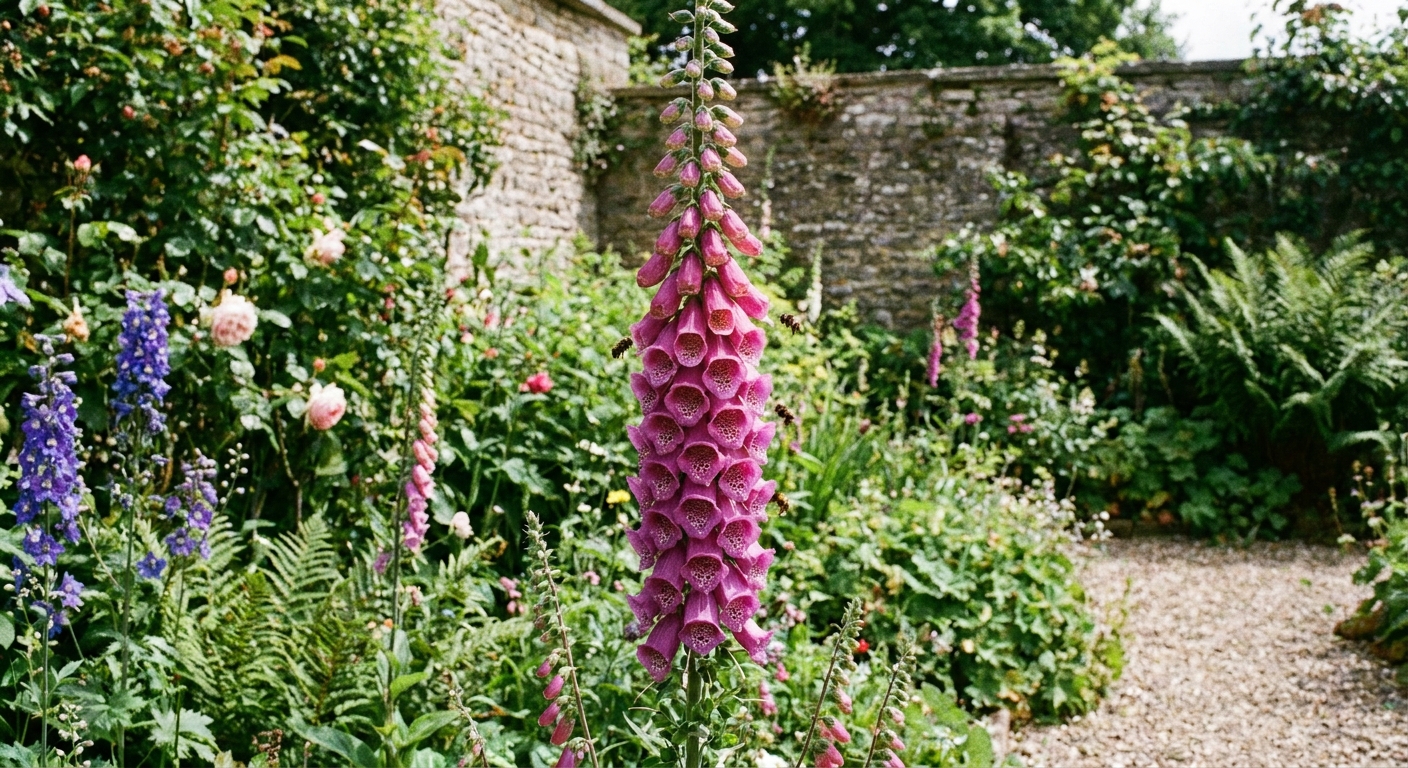
Foxglove is one of those cottage-garden plants that looks like it wandered in from a fairytale and decided to stay. Those tall spires of bell-shaped blooms bring instant vertical drama to borders, under trees, and along fences. The best part for beginners is that foxglove is not fussy once you give it the basics: gentle light, moisture-retentive soil, and a little breathing room.
Quick reality check: garden foxgloves grow best in USDA Zones 4 to 9 in most cases (varies a bit by species and cultivar). In hotter areas, they may behave more like cool-season biennials, while in milder regions they can hang on longer.
I also want to say the quiet part out loud: foxglove is toxic. It is absolutely still worth growing, but it is a plant to place thoughtfully if you have curious kids or pets. This guide covers safe placement and handling so you can enjoy the magic without anxiety.

Meet foxglove (and why it acts differently)
One of the most common cottage-garden foxgloves is Digitalis purpurea, but you will also see other popular species (like D. grandiflora and D. lutea) plus plenty of hybrids and named series at garden centers.
Many foxgloves are grown as biennials, which means they usually follow a two-year rhythm:
- Year 1: Leaves only, forming a low rosette.
- Year 2: A tall flowering spike, then the plant often dies after setting seed.
That sounds like a one-and-done deal, but foxglove loves to self-seed. If you let a few plants set seed each year, you can have a continuous “colony” that blooms annually, with new rosettes coming along behind the scenes.
You may also see perennial or short-lived perennial foxgloves (including some hybrids and species). Their care is similar, but they may bloom for multiple years, especially if conditions are mild and the plant is not stressed. Some modern series can even flower the first year if started early enough from seed.
Where to plant: light matters by climate
Foxglove thrives in part shade, especially in warm or hot-summer climates. Think morning sun with afternoon shade, or filtered light under open-canopy trees.
- Common sweet spot: Part shade with a few hours of sun (morning sun is especially kind).
- Cool-summer climates: Foxglove can often handle (and sometimes prefer) more sun, as long as soil moisture is steady.
- Hot sun: Plants can wilt, scorch, or race through blooming unless the soil stays consistently moist.
- Deep shade: Plants can stretch, flop, and bloom less.
If you are not sure where to put it, start with dappled shade and watch how it behaves. A happy foxglove looks sturdy at the base, with a straight stalk and leaves that are not constantly wilting by afternoon.
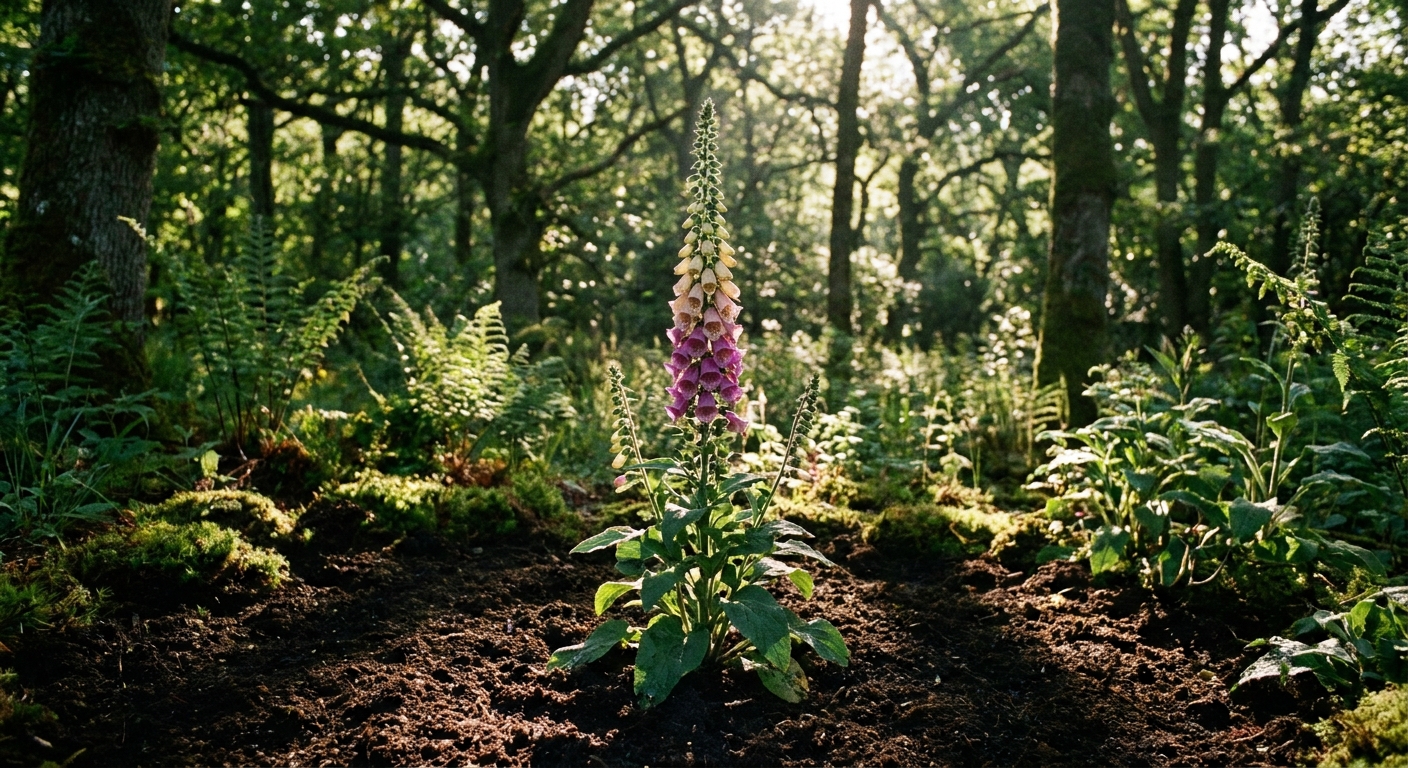
Soil: rich, crumbly, and evenly moist
Foxglove roots like soil that feels like chocolate cake crumbs in your hand: airy, rich, and able to hold moisture without staying swampy.
Soil checklist
- Texture: Loamy, well-drained, moisture-retentive.
- Fertility: Moderately rich. Too much nitrogen can make leaves lush but stems weak.
- pH: Slightly acidic to neutral is typically fine.
Easy organic prep
Before planting, mix in 2 to 3 inches of compost. If your soil is heavy clay, add compost plus a little leaf mold or fine bark to improve structure. If your soil is sandy, compost is your best friend for holding moisture.
Planting and spacing: give leaves airflow
Foxglove can get tall and surprisingly broad at the base, so crowding it is a fast track to mildew and floppy stems.
Spacing guidelines
- Standard spacing: 12 to 18 inches apart.
- Larger varieties: 18 to 24 inches apart.
Aim for a layout where you can easily reach in to weed and water. Your future self will thank you, especially after a humid week.
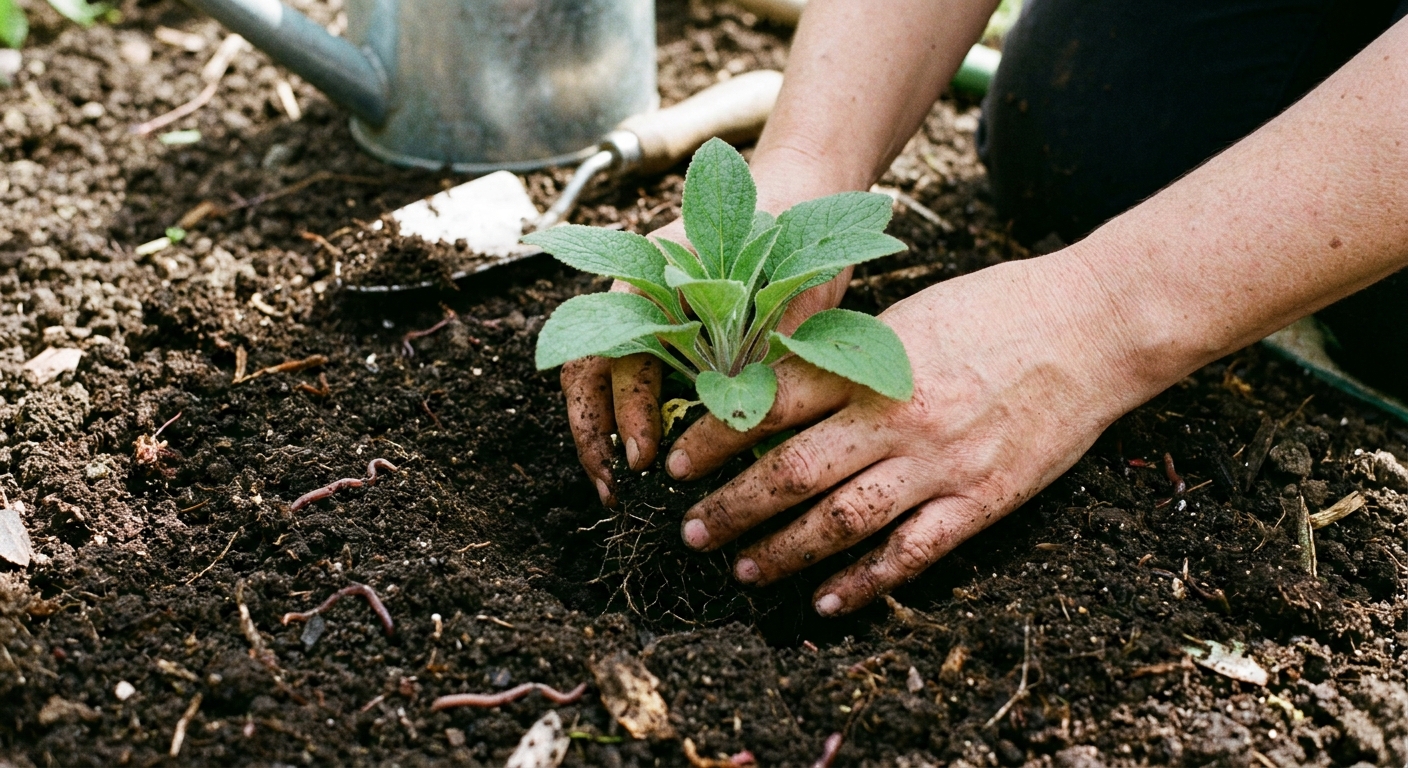
Planting steps
- Dig a hole about as deep as the root ball and twice as wide.
- Set the plant so the crown sits at soil level.
- Backfill with your soil and compost mix.
- Water deeply to settle soil around the roots.
- Mulch lightly (1 to 2 inches) to keep moisture steady, but keep mulch off the crown.
Watering: steady moisture, not soggy soil
Foxglove likes consistent moisture, especially while it is establishing and while it is building those towering flower spikes.
- New plants: Water when the top 1 inch of soil feels dry.
- Established plants: Deep watering during dry spells is better than frequent light sprinkles.
- Best technique: Water at the base to keep foliage drier and reduce disease pressure.
Mulch helps smooth out the feast-or-famine cycle that can stress plants and shorten bloom time.
Feeding: compost first, fertilizer lightly
In most home gardens, foxglove does best with a soil-first approach.
- Each spring: Top-dress with compost around the plant.
- If growth is pale or slow: Use a balanced organic fertilizer at half strength, once in spring.
Avoid overfeeding, especially with high-nitrogen fertilizers. Big leaves look impressive, but they can come with weaker stems that topple right when the flowers get heavy.
Staking: support without fuss
When foxglove is happy, it can shoot up fast. Wind, rain, and top-heavy blooms can bend spikes, especially in rich soil or partial shade.
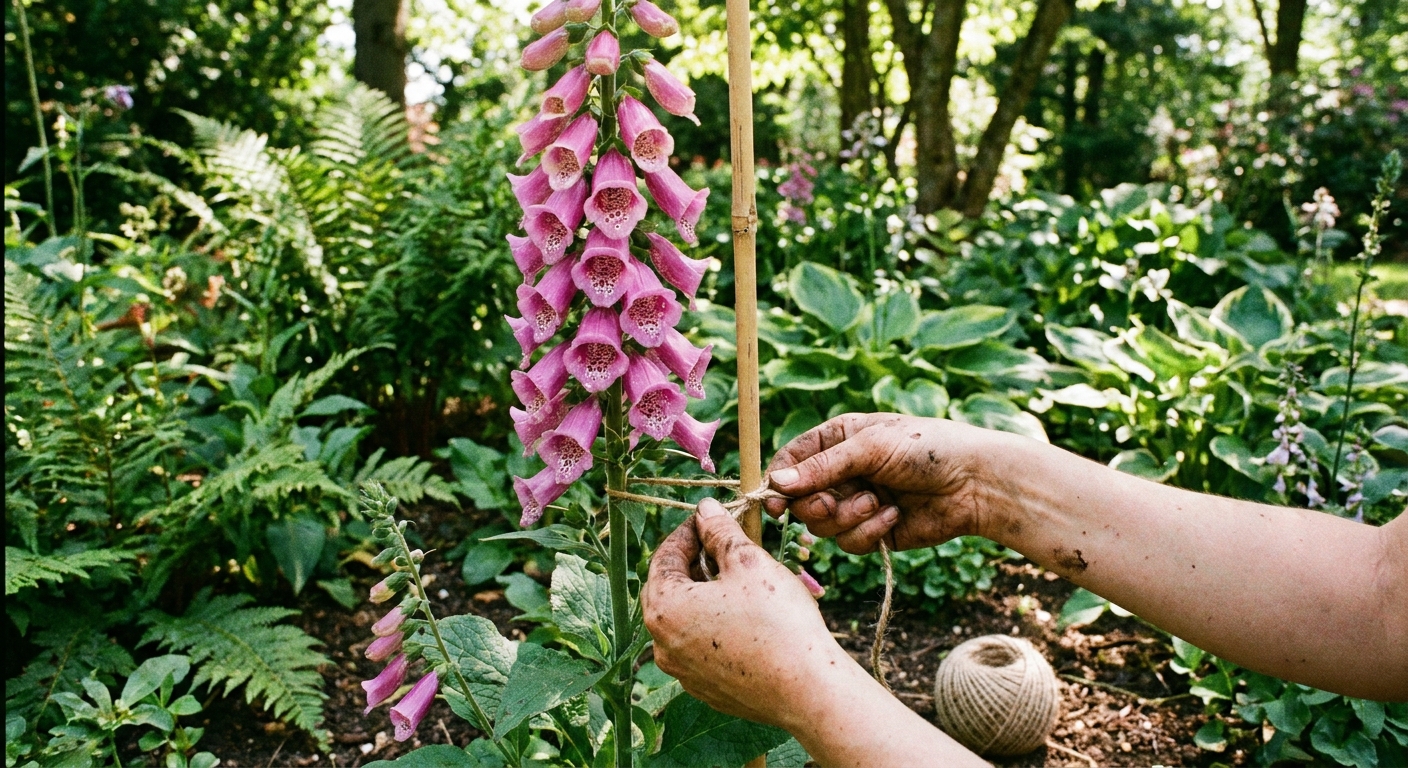
How to stake foxglove
- Stake early: Put supports in when the flower stalk is still growing, not after it flops.
- Use soft ties: Garden twine, stretchy plant tape, or cloth strips prevent stem damage.
- Hide the support: A slender bamboo stake placed behind the stalk disappears once blooms fill in.
If you plant in clusters, neighboring plants can help keep each other upright. Just do not crowd so tightly that airflow suffers.
Deadheading and self-seeding: pick your style
This is where foxglove becomes wonderfully customizable. You get to decide whether you want tidy control, a gentle sprinkle of volunteers, or a full-on cottage-garden drift.
Option 1: Deadhead for tidiness
Snip the flower spike off after most blooms fade, especially if you do not want seeds. Cut back to a set of healthy leaves or to a smaller side shoot. Some plants may produce smaller secondary spikes, but it is not guaranteed and the follow-up bloom is usually lighter.
Option 2: Let it seed for next year
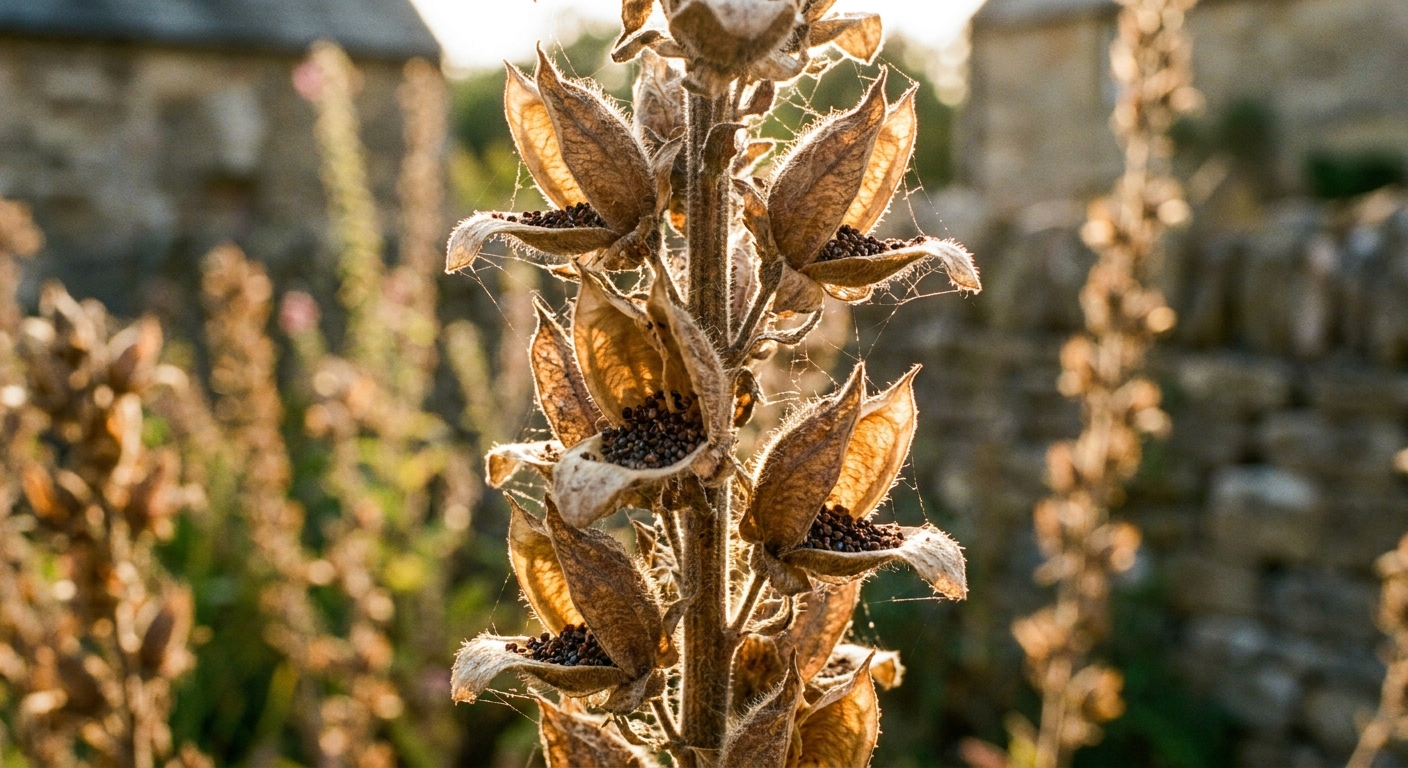
If you want foxglove to naturalize, let a few of your best spikes mature into seed pods. When pods turn brown and dry, seeds will drop with wind and movement.
Option 3: Controlled self-seeding (my favorite)
- Let one or two plants set seed.
- Deadhead the rest.
- In late summer, look for tiny rosettes and gently transplant extras where you want them.
Tip: Foxglove seedlings transplant best when small and the weather is mild. Water them in well and keep them shaded for a few days.
Starting from seed: easy and budget friendly
If you are growing foxglove from seed, you are in luck. It is one of the more beginner-friendly cottage-garden plants to start, as long as you know one key thing: foxglove seeds need light to germinate.
How to sow
- When: Sow in late spring through mid-summer for flowers next year (timing varies by climate and cultivar).
- How deep: Surface-sow and press in. Do not cover, or cover only with the thinnest dusting of fine mix.
- Moisture: Keep evenly moist, not wet. A clear cover or humidity dome helps indoors.
- Light: Bright light helps germination. Outdoors, choose a lightly shaded seedbed.
Once seedlings have a few true leaves, pot them up or space them out. Plant rosettes into the garden in late summer or early fall so they can settle in before winter.
Overwintering: rosettes need a little care
In cold-winter regions, foxglove usually overwinters as a low rosette. It is tougher than it looks, but it appreciates stability.
- Mulch after hard frosts: A light layer of leaf mold or shredded leaves helps protect roots from freeze-thaw swings.
- Avoid burying the crown: Keep mulch pulled back from the center of the rosette to discourage rot.
- Winter wet is the enemy: Good drainage matters even more in the off-season.
Keeping foxglove healthy: simple habits
Foxglove is fairly sturdy, but it can run into a few common issues, especially in humid gardens or crowded borders.
Powdery mildew
- What you see: White dusty coating on leaves.
- What helps: More spacing, a bit of sun, watering at the base, and removing badly affected leaves.
Crown rot and soggy soil problems
- What you see: Wilting despite wet soil, mushy crown, sudden collapse.
- What helps: Improve drainage, avoid burying the crown, and avoid piling mulch onto the plant.
Aphids on flower spikes
- What you see: Clusters of small insects, sticky residue.
- What helps: A firm spray of water, encouraging ladybugs, or insecticidal soap if needed.
Slugs and snails
- What you see: Ragged holes in young leaves, especially on rosettes.
- What helps: Nighttime hand-picking, iron phosphate bait (pet-safe when used as directed), and keeping mulch from staying constantly damp right against the plant.
Deer and rabbits
Foxglove is often described as deer-resistant because of its toxicity, but “resistant” is not “deer-proof.” If wildlife pressure is high, consider temporary fencing around young plants.
Whenever you remove diseased leaves or spent stalks, toss them in the trash rather than composting if the problem is severe. That simple habit can reduce repeat issues next season.
Toxicity warning (kids and pets)
Foxglove contains cardiac glycosides (including digitoxin and related compounds). All parts of the plant are poisonous if eaten, for people and for many animals. This includes leaves, flowers, and seeds. Even small amounts can be dangerous.
Smart safety habits
- Placement: Plant toward the back of borders or in areas not used for play or pet roaming.
- Handling: Wear gloves if you have sensitive skin and wash hands after pruning.
- Cut flowers: Keep arrangements out of reach of children and pets, and do not use foxglove in areas where animals chew greenery.
- Education: Teach kids “we look, we do not taste” for all garden plants.
If ingestion is suspected, contact your local poison control center or a veterinarian immediately.
Beginner plan
If you want a simple path that works in most gardens, here is the routine I suggest:
Spring
- Top-dress with compost.
- Check spacing and thin or transplant crowded seedlings.
- Add discreet stakes early if spikes are forming.
Summer (bloom time)
- Water deeply during dry stretches.
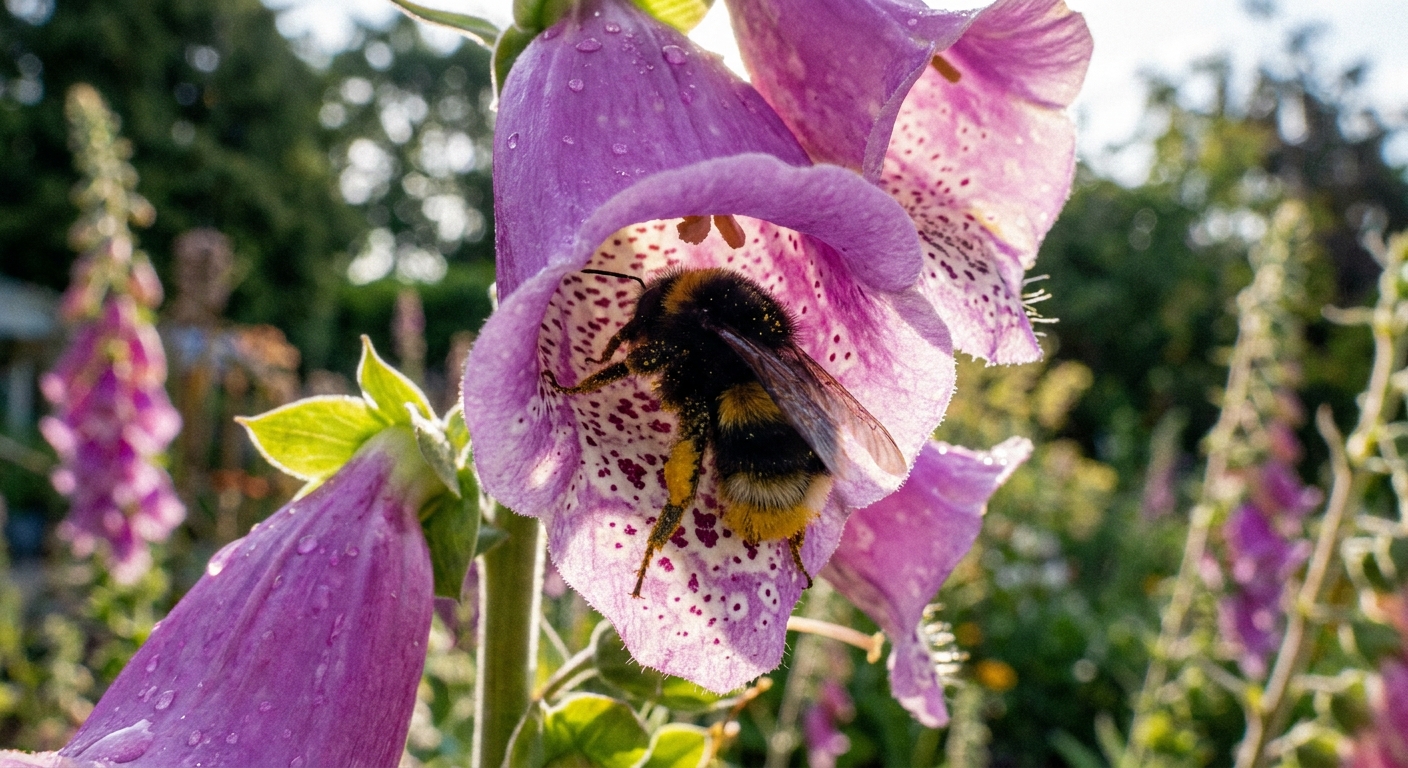
- Enjoy the pollinators. Foxglove is a bee magnet.
- Deadhead most spikes if you want tidiness, but leave one or two to set seed for next year.
Late summer to fall
- Watch for new rosettes and decide where you want them.
- Plant out seedlings or young rosettes so they can root in before winter.
- Mulch lightly after hard frosts in colder climates.
Once you get that rhythm going, foxglove becomes one of those plants that makes you look like you have been gardening forever, even if you are still learning where you left your pruners.
Quick FAQ
Is foxglove a perennial?
Many foxgloves are biennials or short-lived perennials. They often behave like perennials in gardens because they self-seed readily.
Will foxglove grow in full shade?
It can survive, but flowering is usually weaker and plants may stretch. Part shade or sun with reliable moisture is the sweet spot, depending on your climate.
Should I cut foxglove back after flowering?
Cut back spent spikes if you want to prevent seeding or tidy the plant. Leave a few spikes if you want seedlings for future blooms.
Does foxglove spread?
It spreads mainly by seed. Seedlings are easy to pull or transplant, so you can keep it contained with a little seasonal attention.