Forsythia Shrub Care and Pruning

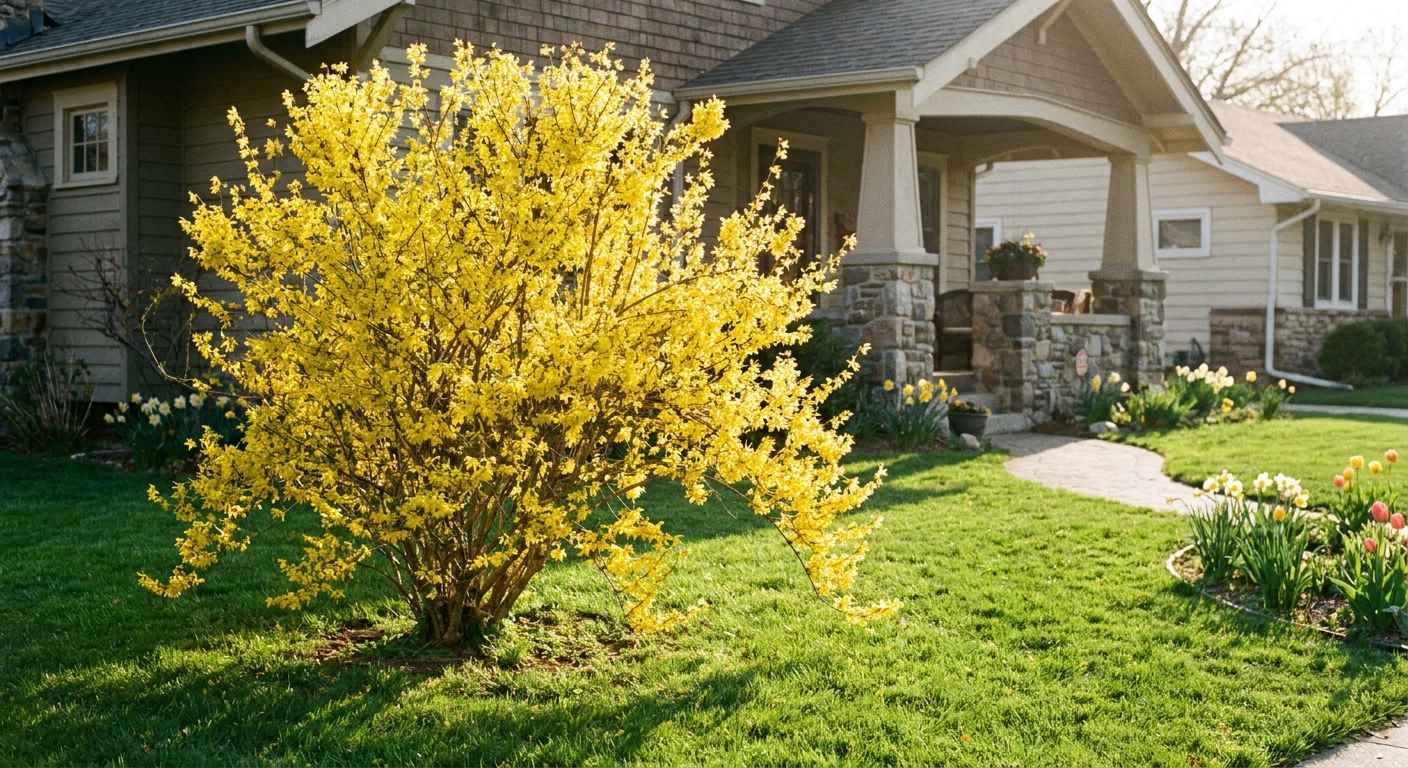
Forsythia is the shout of spring: those bright yellow bells that make the whole yard look sunnier, even on a chilly day. Then the flowers fade, the leaves show up, and suddenly you are staring at a green shrub wondering, “Now what?”
This guide covers landscape forsythia care after the spring show: choosing a good planting spot, keeping the shrub full and blooming, pruning at the right time, and rescuing the old, leggy forsythia that has gotten away from you. And just to be crystal clear, this is not the same thing as forcing cut forsythia branches indoors in late winter. This is about the real shrub, out in the garden, living its best life.

Know your forsythia rhythm
Forsythia is a spring-flowering shrub that blooms on old wood. That phrase sounds technical, but it is the whole secret to pruning.
- It sets next year’s flower buds after it blooms, usually in late spring and early summer.
- Exact timing can shift a little by cultivar and climate, but the practical rule stays the same.
- If you prune too late in the season, you will remove many of those buds and get fewer flowers next year.
- The sweet spot for most pruning is right after flowering finishes.
Forsythia is also naturally vigorous. It wants to send up new canes from the base and arch outward. Your job is mostly to guide that energy, not fight it.
Planting site
If your forsythia is alive but stingy with flowers, the planting site is often the real culprit. This shrub can tolerate a lot, but it blooms best with a few basics.
Hardiness zones
Most common landscape forsythias (especially Forsythia × intermedia types) are hardy in USDA Zones 3 to 9. If you are on the edge of that range, winter bud damage can be the difference between “glowing yellow” and “a few sad blooms at the tips.”
Sunlight
- Full sun is ideal, meaning 6 or more hours of direct light.
- Part shade is survivable, but it commonly causes sparse flowering and more open, leggy growth.
Soil and drainage
- Forsythia prefers well-drained soil. Constantly soggy soil can lead to weak growth and dieback.
- It is adaptable to many soil types, but it performs best when the soil has good structure and organic matter.
Space (this is the one people underestimate)
Many standard varieties want to be 6 to 10 feet tall and wide at maturity. When they are squeezed into a tight foundation bed, you end up “shearing for survival,” which usually creates a thick outer shell and bare sticks inside.
If you are planting new, check the mature size on the tag and give it room. Your future self will feel downright smug about this.
How to plant
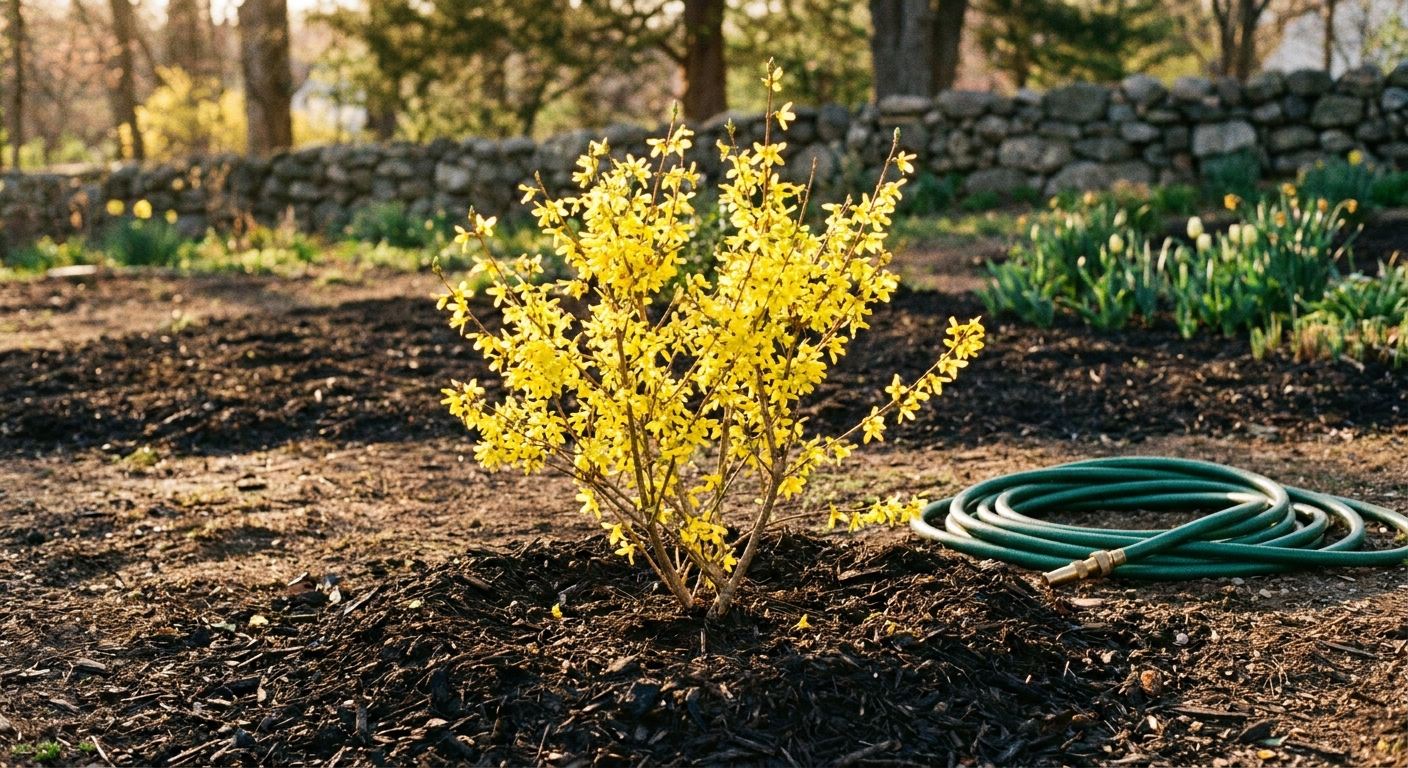
You do not need a ceremonial planting ritual, but a few basics help forsythia settle in fast.
- Dig a wide hole about 2 times as wide as the root ball, and just as deep.
- Set it at the same depth it was growing in the pot or nursery soil.
- Backfill with the native soil you dug out. If your soil is truly miserable, mix in a little compost, but do not create a fancy pocket the roots will refuse to leave.
- Water in deeply to settle soil around the roots.
- Mulch 2 to 3 inches, keeping it a few inches off the stems.
- Skip major pruning at planting. If there are broken stems, snip those out. Otherwise, let it root in and show you its shape first.
Everyday care after bloom
Forsythia is low drama once established, but a little care helps it stay dense, healthy, and bloom-ready.
Water
- First year: Water deeply when the top couple inches of soil feel dry, especially during hot weeks.
- Established shrubs: Established shrubs are fairly drought tolerant, but you will get better growth and bud set with consistent moisture during extended dry spells.
Mulch and soil health
A 2 to 3 inch layer of organic mulch over the root zone helps hold moisture, buffer temperature swings, and feed soil life as it breaks down.
- Keep mulch a few inches away from the stems to prevent rot and rodent damage.
- If the soil is very tired or compacted, top-dress with compost in spring or fall.
Fertilizer
Forsythia typically does not need heavy feeding. Too much nitrogen can contribute to leafy growth at the expense of flowers, especially if lawn fertilizer wanders into the bed. If growth is weak or the shrub looks pale, a light compost top-dress or a gentle, balanced organic fertilizer in spring is usually enough.
Pruning basics
Here is the rule I repeat like a garden lullaby: prune forsythia right after it finishes flowering.
In most climates, that means late spring. In warmer zones, that window can be as early as March. In colder zones, it might be May. Either way, aim for as soon as flowering ends, before the plant spends the rest of the season setting next year’s buds.
Tools that make it easier
- Hand pruners for small stems
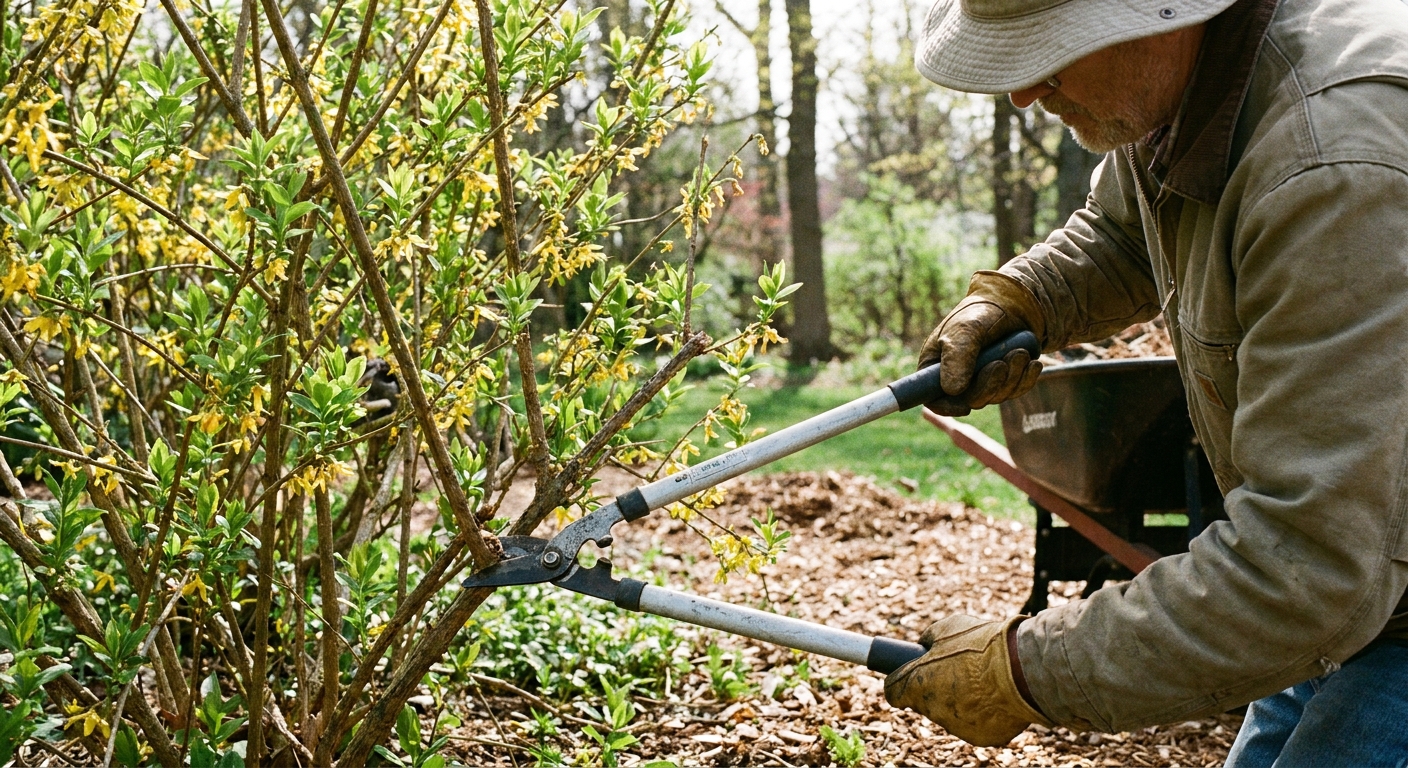
- Loppers for thicker canes
- A pruning saw for old, woody stems
- Rubbing alcohol or disinfectant wipes to clean blades between plants, especially if you see disease
- Gloves and eye protection, especially when you are cutting springy, arching canes
Renewal pruning
If you want a forsythia that stays vigorous and flowers well for years, think in terms of renewal, not haircuts.
Renewal pruning means removing a portion of the oldest canes at the base so the shrub constantly replaces itself with fresh, bloom-ready stems.
Step-by-step (right after bloom)
- Stand back and look. Identify the thickest, oldest canes. They are usually darker, woodier, and less flexible.
- Cut 1/4 to 1/3 of the oldest canes all the way down near ground level.
- Thin for air and light. Remove a few inward-growing or crossing stems.
- Light shaping last. If needed, shorten a few wayward shoots, but avoid heavy overall shortening.
This method keeps the shrub open enough for light to reach the interior, which helps prevent the “green meatball with a dead center” effect.
How much can you remove?
For a healthy, established shrub, removing up to about one-third of the oldest stems in a season is generally safe. If you remove more, the plant may respond with a burst of long, whippy growth.
Control size
Forsythia gets big. The mistake I see most is repeated shearing, especially in summer, which removes flower buds and encourages a dense outer layer with bare legs inside.
Better options
- Choose the right variety for the space. If you need something smaller, look for compact cultivars instead of trying to force a large one to behave. Two reliable options to shop for are ‘Show Off’ (tidier, more compact) and ‘Gold Tide’ (a low, spreading type that works beautifully on slopes or as an edging shrub).
- Use renewal pruning every year. This naturally limits size by replacing older, taller canes with younger ones.
- Selective shortening right after bloom. If a few stems are truly out of bounds, shorten those individual stems back to a lower side branch.
If you must shear
If you are maintaining a hedge line and you are committed to shearing, do it immediately after bloom and understand you are trading some flowers for a tight shape. In most home landscapes, selective pruning gives a prettier, more natural result.
Rejuvenation
Old forsythia can get leggy, flop outward, and bloom mostly at the tips. The good news is that it usually responds beautifully to a reset.
Option 1: Gradual (keeps some bloom)
This is essentially renewal pruning on a strict 3-year plan. For 2 to 3 years, right after bloom, remove 1/3 of the oldest canes at the base. Each year, you will see more fresh shoots and more blooms closer to the ground. Stick with it, because the payoff is cumulative.
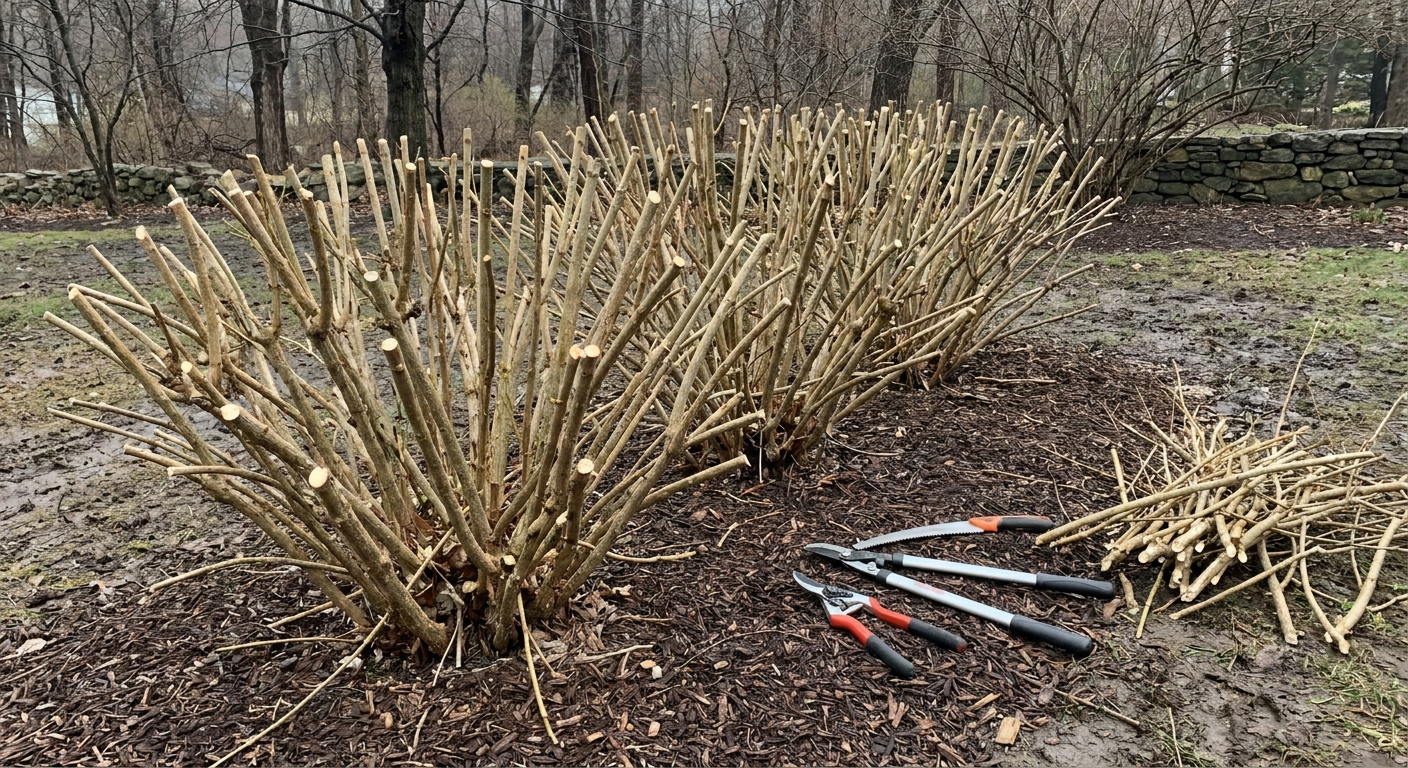
Option 2: Hard cutback (fastest, sacrifices bloom)
If the shrub is truly a thicket of old wood, you can do a hard cutback.
- In late winter or very early spring, cut the entire shrub down to about 4 to 8 inches from the ground.
- Expect vigorous regrowth that season and reduced flowering for 1 to 2 springs while it rebuilds, depending on how fast it grows in your climate.
I consider this the “fresh start” option. It can feel scary, but forsythia is tough. If the roots are healthy, it usually bounces back.
Why it is not blooming
When forsythia disappoints, it is almost always one of a handful of causes.
Common reasons
- Pruned at the wrong time: Summer, fall, or winter pruning removes flower buds.
- Too much shade: Less sun equals fewer blooms.
- Shearing habit: Repeated hedge trimming encourages leaves, not flowers, and creates bare interior stems.
- Winter bud damage: Late frosts or very cold snaps can kill buds in some climates, especially in exposed spots.
- Too much nitrogen: Lush leaves with few flowers can happen when the shrub is getting extra nitrogen, often from nearby lawn fertilizer.
- Browsing: Deer and rabbits sometimes nip twigs and buds, which can erase blooms on the lower parts of the shrub.
Quick fix checklist
- Commit to pruning right after bloom only.
- Thin out old canes with renewal pruning.
- Improve sunlight if possible by thinning nearby branches or moving the shrub when practical.
- Keep lawn fertilizer away from the root zone.
- If browsing is a known issue, protect the plant in winter with fencing or repellents so the buds make it to spring.
Leggy growth and flopping
That long-legged look is classic forsythia, especially when the shrub is shaded, crowded, or has been sheared for years.
What helps
- Renewal pruning: Removing older canes at the base encourages new shoots from the crown.
- Light: More sun helps the shrub leaf out more densely.
- Space: Air and light through the plant reduces that empty interior.
What to avoid
- Topping the whole shrub in an attempt to reduce height. It usually causes a flush of upright shoots at the top and an even barer lower half.
- Letting it root where it touches the ground if you do not want it spreading. Forsythia can layer itself when arching stems contact soil.
Common issues
Forsythia is generally sturdy, but a few problems show up now and then.
Dieback and dead twigs
- Prune out dead wood any time you notice it, cutting back to healthy tissue.
- Check for poor drainage or drought stress, both can weaken stems.
- If you see scattered twig dieback year after year, it can be a sign of twig blight. Thinning for airflow and removing affected stems promptly helps.
Leaf spots and fungal issues
- Usually cosmetic.
- Improve air circulation with thinning and avoid overhead watering when possible.
- Rake up and dispose of heavily infected fallen leaves to reduce carryover.
Odd growths on stems
Occasionally you may see bumpy, warty swellings on stems, called forsythia gall. Prune out affected stems well below the growth and discard them. Cleaning tools between cuts is a good habit here.
Pests
Forsythia is not a major pest magnet. If you see aphids or minor chewing, a strong spray of water or encouraging beneficial insects is often enough. In an organic garden, I try to intervene only when the plant is truly suffering.
Care calendar
- Late winter: Remove dead wood; consider hard rejuvenation only if needed.
- Spring bloom time: Enjoy the show, then plan pruning.
- Right after bloom: Best time for renewal pruning and selective shaping.
- Summer: Water during drought; avoid major pruning.
- Fall: Refresh mulch, add compost if desired, and let the shrub set buds in peace.
A gentle final note
Forsythia is not a fussy shrub. Most of the time, it just needs sun and the right pruning window. If yours has gotten leggy or stopped blooming like it used to, that is not a failure. It is simply a shrub asking for a little reset and a little patience.
Give it one good post-bloom pruning, then watch what happens. Forsythia loves a second chance.