
Forced Hyacinth Bulbs Indoors

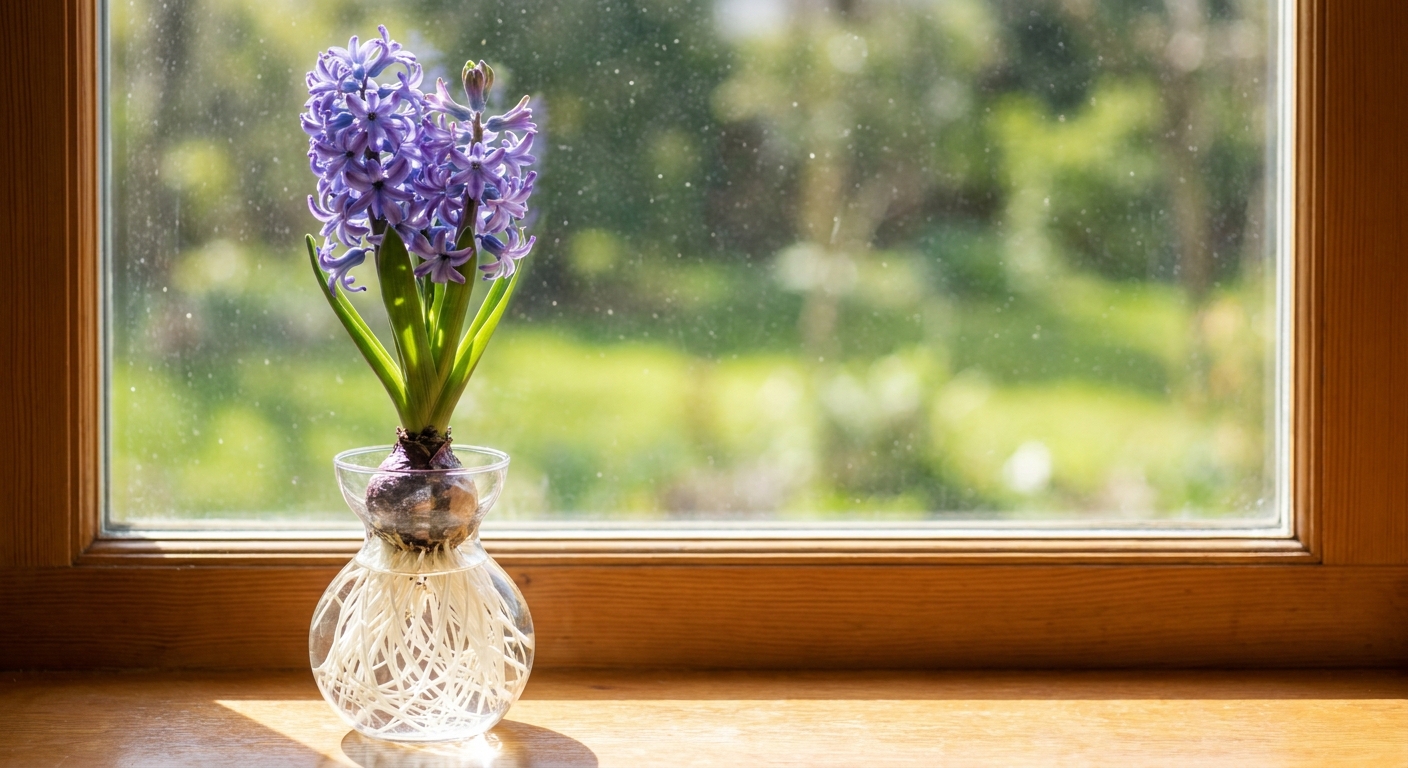
There are few indoor scents that can stop you in your socks the way a blooming hyacinth can. One day it is a tidy little bulb, the next it is a fountain of tight buds opening into a perfume that makes winter feel like it is finally letting go.
Forced hyacinths are not difficult, but they are particular. The secret is cold time, and a little patience. Below is my no-fuss roadmap for chilling, growing in a water bulb vase (or in potting mix), keeping blooms looking their best, and deciding what to do with the bulb once the show is over.
Quick safety note: Hyacinth bulbs can irritate skin (the classic “hyacinth itch”), and they are not a snack for pets or kids. If you are sensitive, wear gloves when handling bulbs, and keep them out of reach.

How forcing hyacinths works
Hyacinths are spring bulbs that need a long cold period before they will reliably bloom. Outdoors, winter provides that. Indoors, we mimic it by chilling the bulb for weeks, then bringing it into warmth and light to trigger growth and flowering.
When done right, you get sturdy stems, tight flower clusters, and that classic hyacinth fragrance. When done without enough chill time, you often get leaves with little or no bloom, or floppy stems that cannot hold the heavy flower spike.
Forcing calendar
Plan backward from when you want flowers. Hyacinths generally need:
- Chilling: 10 to 14 weeks (12 is a sweet spot for many varieties, but check your variety’s label)
- Growing and blooming indoors: 2 to 4 weeks after chilling
Example timelines
- Blooms for late December: Start chilling in early to mid September
- Blooms for Valentine’s Day: Start chilling in early to mid October
- Blooms for March: Start chilling in late November to early December
If you are buying bulbs in late fall and want flowers quickly, look for bulbs labeled pre-chilled or prepared for forcing. They have already completed some or all of the cold requirement.
Pre-chilled vs fridge chilling
Option 1: Pre-chilled bulbs
This is the easiest route. You skip most of the waiting and go straight to the fun part. Pre-chilled bulbs are especially helpful if you are forcing hyacinths for a holiday window and you do not want to gamble on timing.
Tip: Still check the package. Some bulbs are only partially chilled and need a few additional weeks cold at home.
Option 2: Chill bulbs yourself
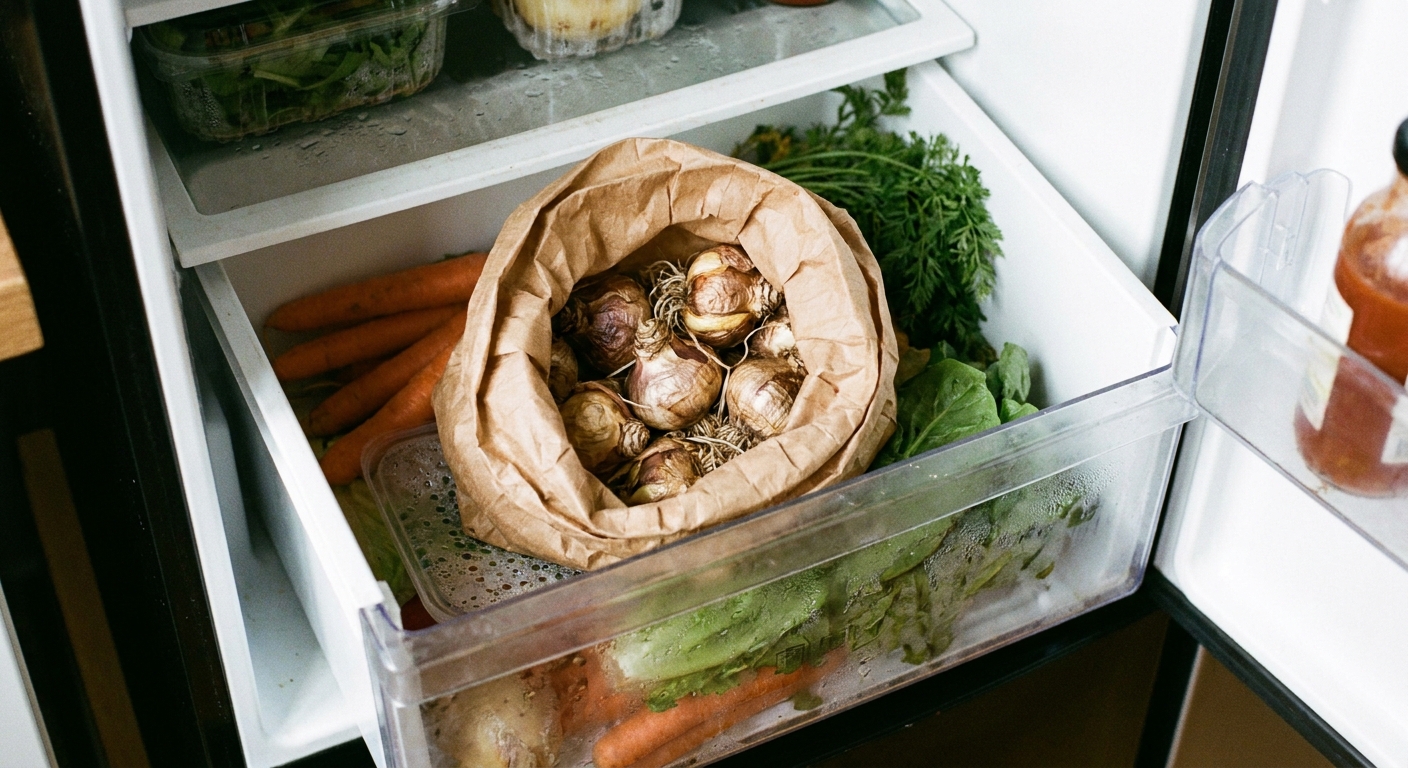
You can absolutely DIY the chill period. The goal is steady cold, not freezing. Aim for about 40 to 45°F (about 4 to 7°C). A slightly wider range can work, but try to avoid sustained near-freezing temps.
- Where: Refrigerator crisper drawer, unheated garage, or a cold basement that stays in range
- How long: 10 to 14 weeks (again, check the label when you can)
- How to store: Keep bulbs dry in a breathable paper bag or mesh bag
- Moisture: Avoid sealed plastic bags that trap condensation and encourage rot
Important: Do not chill bulbs next to ripening fruit, especially apples. Fruit releases ethylene gas, which can damage the flower embryo inside the bulb and lead to disappointing blooms. Best practice is to store bulbs in a fruit-free drawer or a separate fridge if you have one.
Choosing the right bulb
For indoor forcing, choose large, firm bulbs. You are asking the bulb to do a big job without the buffering effect of outdoor soil and weather.
- Pick: Heavy bulbs with intact skins, no soft spots, no mold
- Avoid: Cuts, mushy areas, or bulbs that feel hollow or lightweight
- Single vs double: Double-flowering varieties are gorgeous but can be heavier and more prone to flopping indoors. Singles often stand up better.
Forcing in water
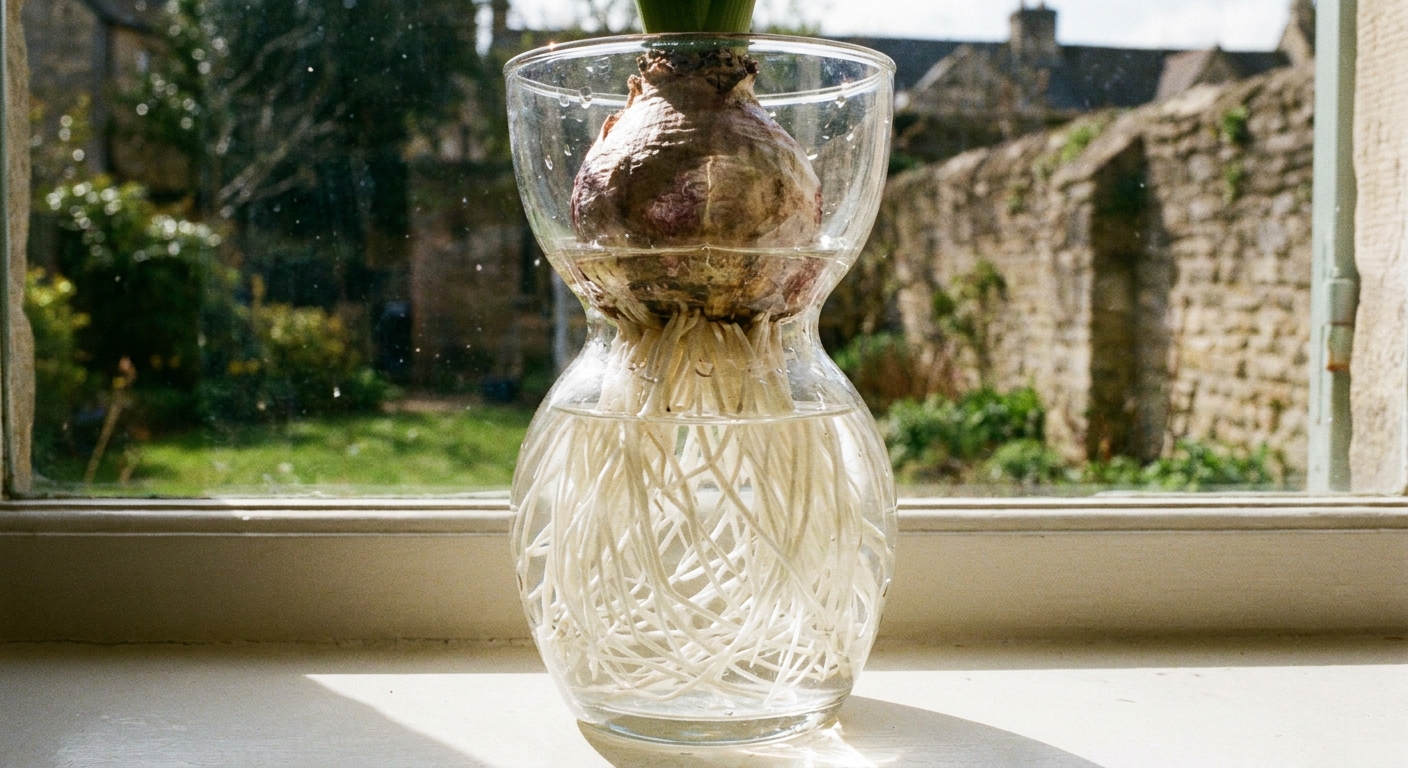
If you have never used a hyacinth bulb vase, it feels like a small magic trick. The vase holds the bulb above the waterline while roots grow down into the water. It is clean, simple, and you can watch the whole process happen.
What a bulb vase does
- Supports the bulb so it does not tip
- Keeps the bulb base close to water without soaking it
- Lets roots grow in the reservoir
Step-by-step
- Start after chilling. Once the bulb has completed its cold period, remove it from storage.
- Fill the vase. Add clean water so the water level sits just below the base of the bulb.
- Set the bulb. Place it in the vase with the pointed end up.
- Rooting phase (optional but helpful). For the first 1 to 2 weeks, a cool spot (about 50 to 60°F) with low light can help roots establish before the plant hits brighter light.
- Move to bright light. Once roots are strong and you see a green shoot, move it to bright, indirect light.
Water care
- Change the water: Every 5 to 7 days, or sooner if it looks cloudy
- Rinse the vase: A quick rinse helps reduce odor and bacteria
- Top up: Keep the water level just below the bulb base as roots drink
Rot warning: The bulb’s basal plate should hover above the water, not sit in it. If the bulb base is touching water and turns soft or smells off, dump the water, rinse the vase, trim away any mushy roots with clean scissors, and reset with fresh water kept just below the bulb.
If you do not have a bulb vase
You can improvise, but stability matters. A narrow-necked vase sometimes works if the bulb can perch without slipping. You can also force in potting mix, which is often easier than jury-rigging a water setup.
Forcing in pots
If you want a fuller display or you prefer less water maintenance, pot forcing is a great option. Hyacinths forced in mix often have a bit more stability than water-grown bulbs.
What you need
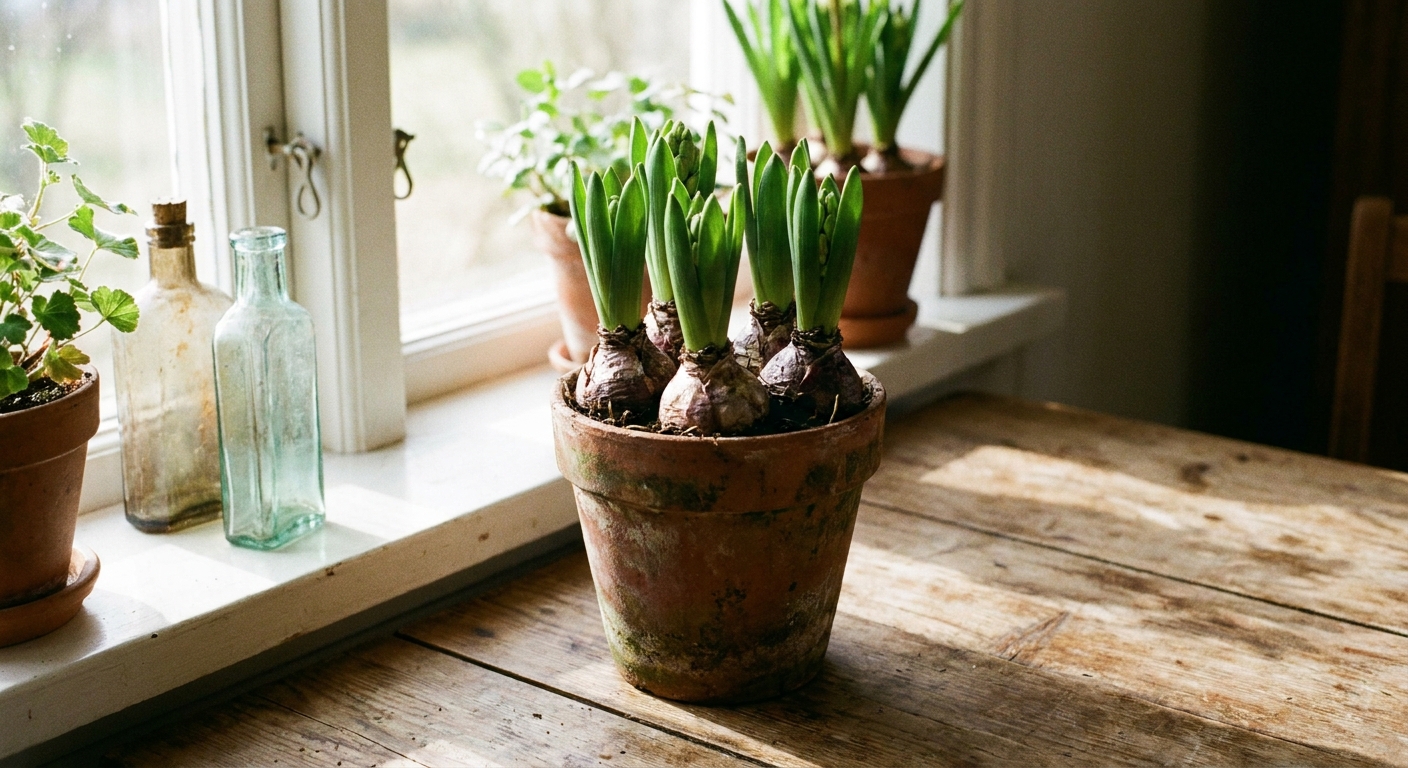
- A pot with drainage holes
- Potting mix that drains well
- Chilled hyacinth bulbs
Step-by-step
- Fill the pot with mix, leaving room for bulbs.
- Plant bulbs with the point up, with about the top third of each bulb above the soil line.
- Water thoroughly, then let excess drain.
- If you are chilling bulbs in the pot: Place the pot in a cold, dim spot at about 40 to 48°F for the full chilling period.
- If your bulbs were chilled loose: After planting, keep the pot cool and dim for 1 to 2 weeks to establish roots, then move into brighter light.
- Bring into bright, indirect light as shoots emerge and turn green.
Planting density: You can plant bulbs closer than you would outdoors for a lush indoor pot, as long as bulbs are not pressing hard against each other.
Keeping blooms upright
Hyacinth flower spikes are heavy. Indoors, warm rooms and low light can stretch stems fast, which leads to flopping.
How to prevent flopping
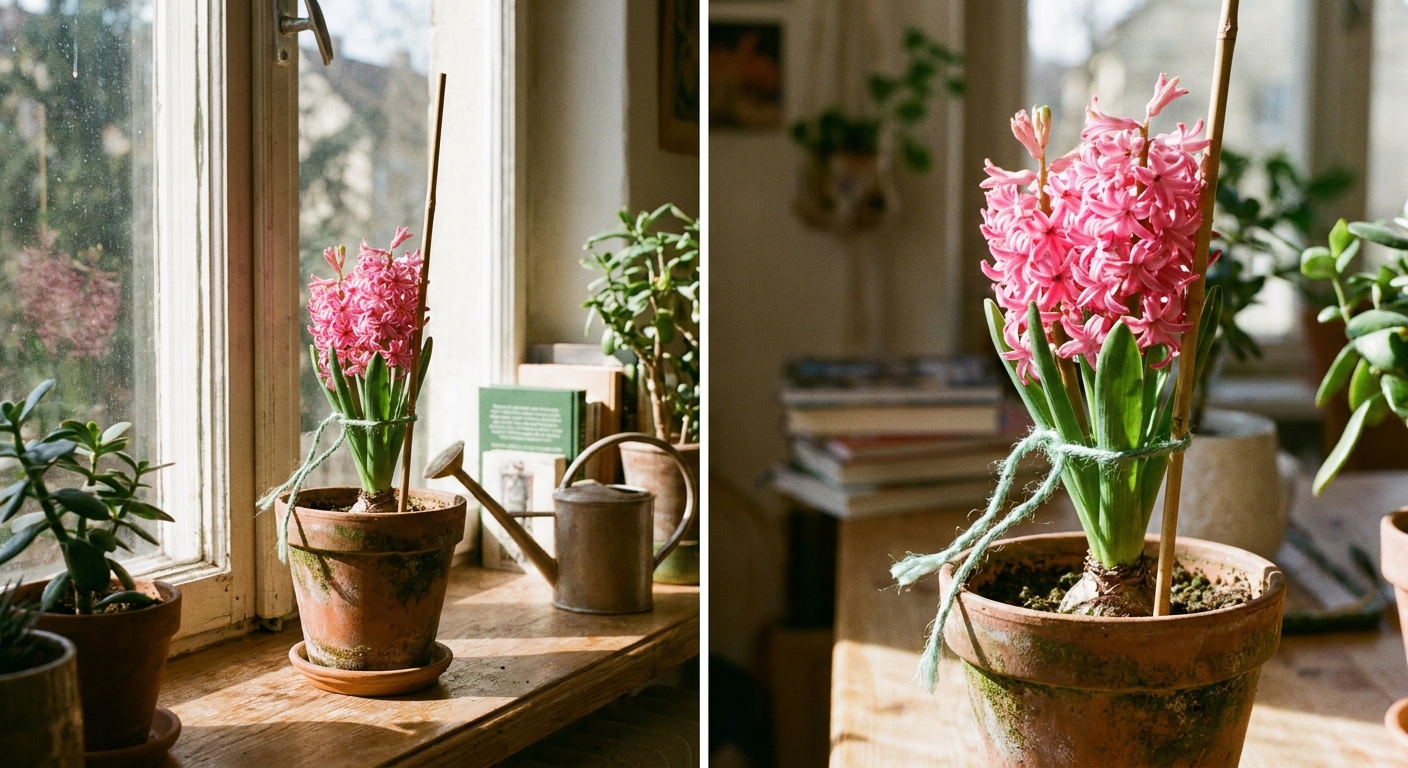
- Give bright light: A sunny windowsill is great, but rotate the pot or vase every day or two so stems stay straight.
- Keep it cool once buds color: Around 55 to 65°F helps blooms last longer and stems stay sturdier.
- Avoid heat sources: Keep away from radiators, vents, and the top of the fridge.
- Short winter days: If growth is stretching, a small grow light for a few hours a day can make a noticeable difference.
When to stake
If the flower spike starts leaning, stake early. A small bamboo stake and soft plant tie works well. For water vases, some people use a discreet ring stake behind the spike. I do not mind a little support, think of it as a tiny hyacinth crutch.
Care while blooming
Once the buds start opening, your job is mostly to slow things down so you get more days with flowers.
- Light: Bright indirect light is ideal while blooming. Direct hot sun can shorten the show.
- Water in pots: Keep soil lightly moist, not soggy.
- Water in vases: Maintain water level below the bulb base and change weekly.
- Temperature: Cooler rooms make blooms last longer.
On fragrance: Hyacinths can be powerfully scented. If the perfume feels too intense, move the plant to a cooler room at night or a larger space during the day. The scent will soften, and the blooms often last longer too.
After the blooms
This is the part nobody tells you in the store aisle. Forced hyacinths have used a lot of stored energy to bloom indoors, especially if grown in water. You have a few honest options, and none of them involve guilt.
Step 1: Deadhead
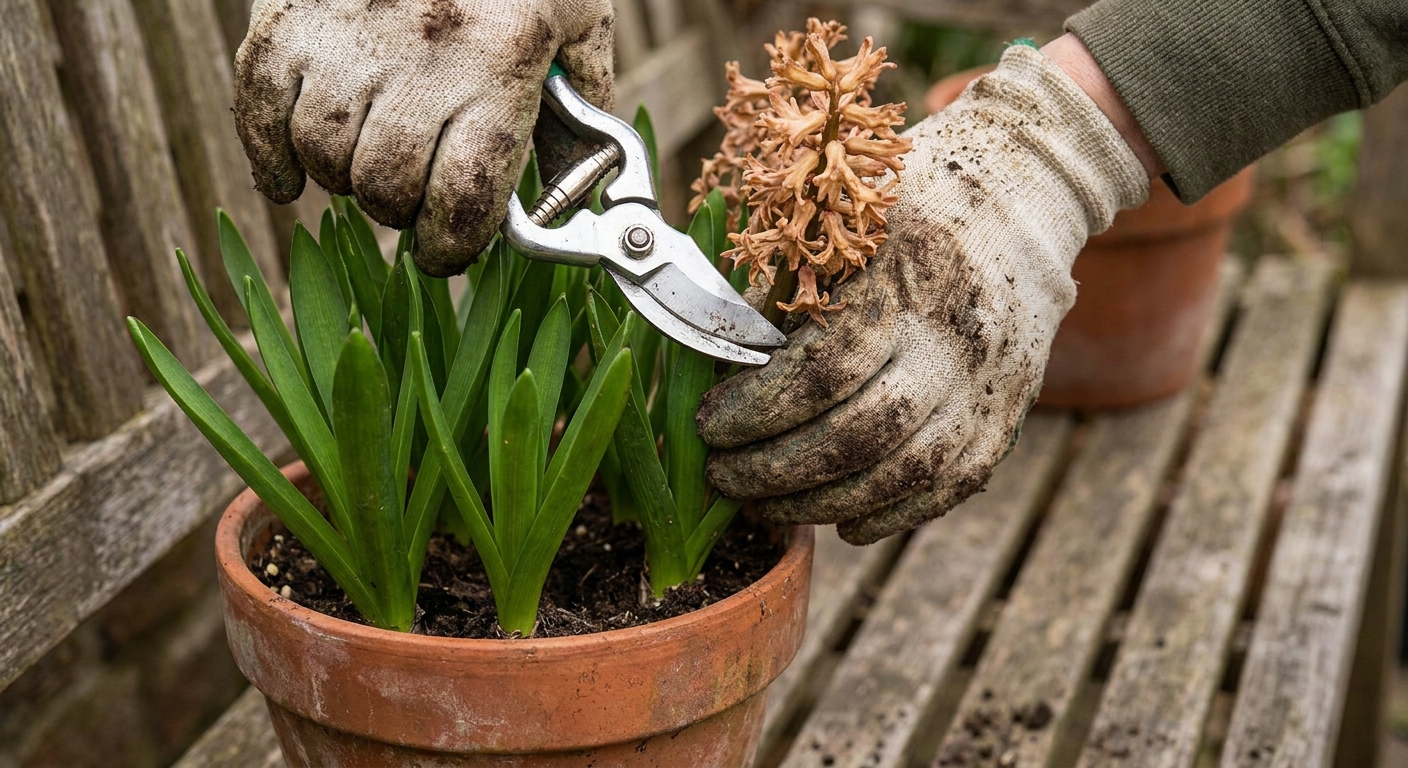
When flowers fade, snip off the spent flower spike close to the base. Leave the leaves. Those leaves are solar panels that help recharge the bulb.
Step 2: Keep the leaves going
- In pots: Keep watering lightly and give bright light for 4 to 6 weeks, or until leaves yellow naturally.
- In water vases: You can keep it in water briefly, but bulbs do not recharge as well in water. If you want to try saving it, pot it up after bloom into a well-draining mix and grow the foliage on.
Option A: Plant it outside
If you garden in a climate where hyacinths can overwinter, plant the bulb outdoors when the soil is workable and hard freezes are no longer the daily forecast. Results vary with spring planting, and performance is often reduced at first. If you can plant bulbs in fall, that is still the gold standard for long-term garden returns.
- Where: Full sun to part sun, well-drained soil
- Depth: About 6 inches deep (a bit deeper in sandy soils), point up
- Expectations: It may skip a year or bloom smaller the first spring back. That is normal.
Option B: Compost it
If the bulb is soft, moldy, or you forced it in water and it looks exhausted, composting is perfectly reasonable. Bulbs are living storage units, and indoor forcing can drain them. Sustainability includes being realistic about what will thrive.
Option C: Enjoy the foliage
Hyacinth foliage can stay attractive for a while, but it is not a true long-term houseplant. If you love the look, enjoy it until the leaves yellow, then let it rest or move it outdoors if possible.
One-time forcing reality check: For many of us, forcing is best treated as a one-season indoor performance. Some bulbs rebound outdoors, but few look as plush the very next year as they did fresh out of the box.
Troubleshooting
No flowers, only leaves
- Likely cause: Not enough chilling time, bulb warmed up too early, or a variety that needs a longer cold spell
- What to do: Enjoy the foliage, and plant the bulb outdoors to recover. Next time, extend chilling closer to 12 to 14 weeks and follow your variety’s label if provided.
Floppy stems
- Likely cause: Too warm and too dim
- What to do: Move to brighter light and a cooler room, rotate regularly, stake if needed. A grow light can help on short winter days.
Mold on the bulb or soil surface
- Likely cause: Poor airflow or excess moisture
- What to do: Improve air circulation, water less, and remove badly affected bulbs so mold does not spread.
Cloudy, smelly vase water
- Likely cause: Bacteria buildup
- What to do: Change water more often, rinse the vase, and keep the bulb base above the waterline.
A gentle reminder
Forcing bulbs is part botany, part calendar math, and part learning your home. If your first try blooms early, late, or leans like it is trying to eavesdrop on you, you did not fail. You just collected useful information for next time.
Give a hyacinth enough cold, a little light, and a cooler corner to bloom in, and it will do the rest. Sometimes I even tell mine they are doing a good job. My ferns are used to it.