
Fittonia (Nerve Plant) Care for Beginners

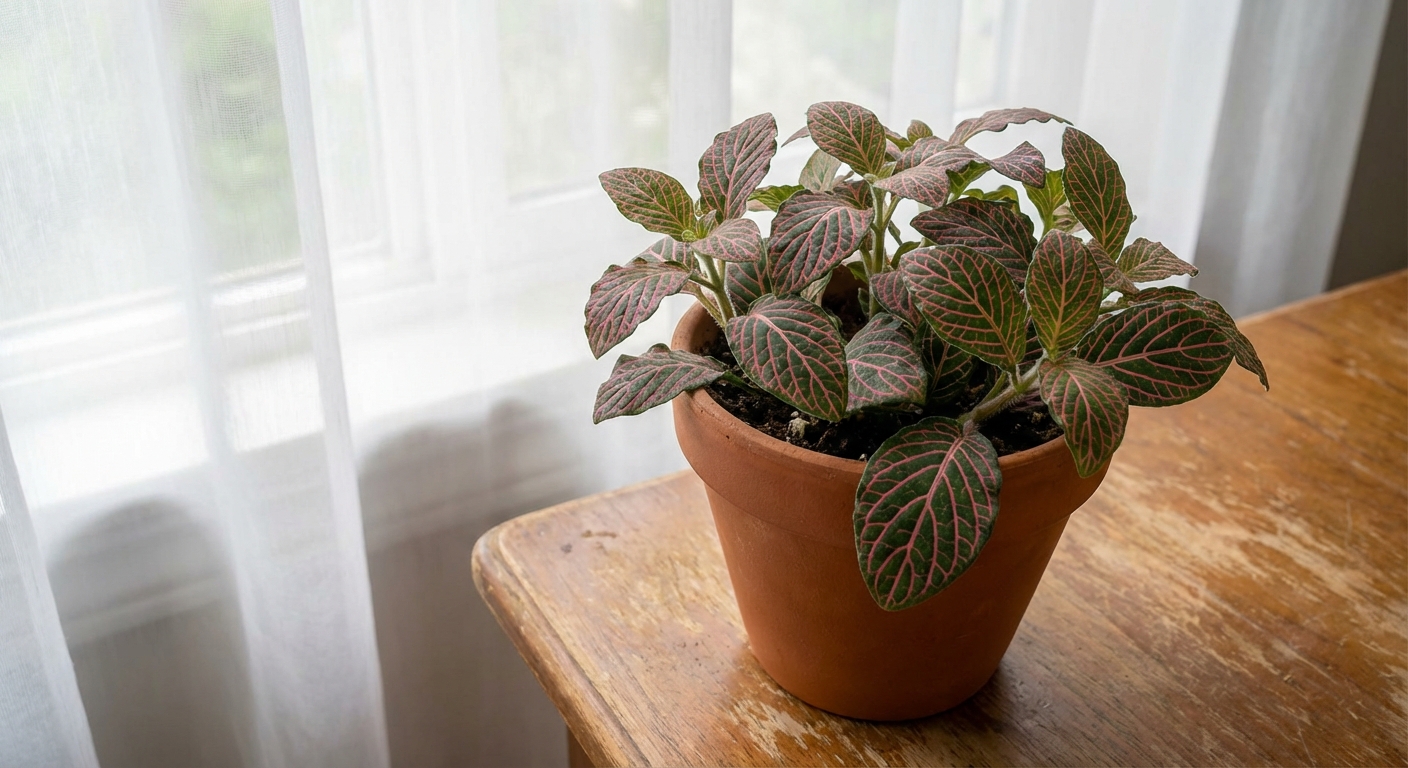
Fittonia, also called the nerve plant, is one of those houseplants that looks fancy but really just wants one thing: steady comfort. Think warm, softly lit rainforest floor, not blazing sun and bone-dry potting mix. Give it humidity, keep the soil lightly moist, and it’ll reward you with those stunning veined leaves that look hand-painted.
One more thing before we dig in: Fittonia is famous for its dramatic “fainting” routine. It can wilt like it’s auditioning for a soap opera when it gets thirsty, then perk right back up after a good drink. I promise it’s not you. It’s just a very expressive plant.
Quick care checklist
- Light: Bright, indirect light. Tolerates medium light.
- Water: Keep evenly moist, not soggy. Don’t let it fully dry out.
- Humidity: High humidity is the secret sauce. Aim for 60%+ if you can, with 50% as a workable minimum in many homes.
- Soil: Airy, moisture-retentive mix with excellent drainage.
- Temperature: 65 to 80°F (18 to 27°C). Avoid drafts.
- Growth habit: Low, spreading, and easy to pinch back for fullness.
Light: bright and filtered
Fittonia thrives in bright, indirect light, like what you’d get a few feet back from an east or north window, or near a sunny window filtered by a sheer curtain. Too little light can lead to slower growth and smaller leaves. Too much direct sun can scorch the foliage and fade the leaf color.
How to find the sweet spot
- If the plant looks “stretched” with longer stems and wider gaps between leaves, it likely needs more light.
- If leaves look bleached, crispy, or curled at the edges, it’s likely getting direct sun or too much heat.
Variety note: Fittonia albivenis comes in pink, white, and red-veined types. Brighter indirect light tends to keep that veining bold, without the sunburn risk of direct rays.
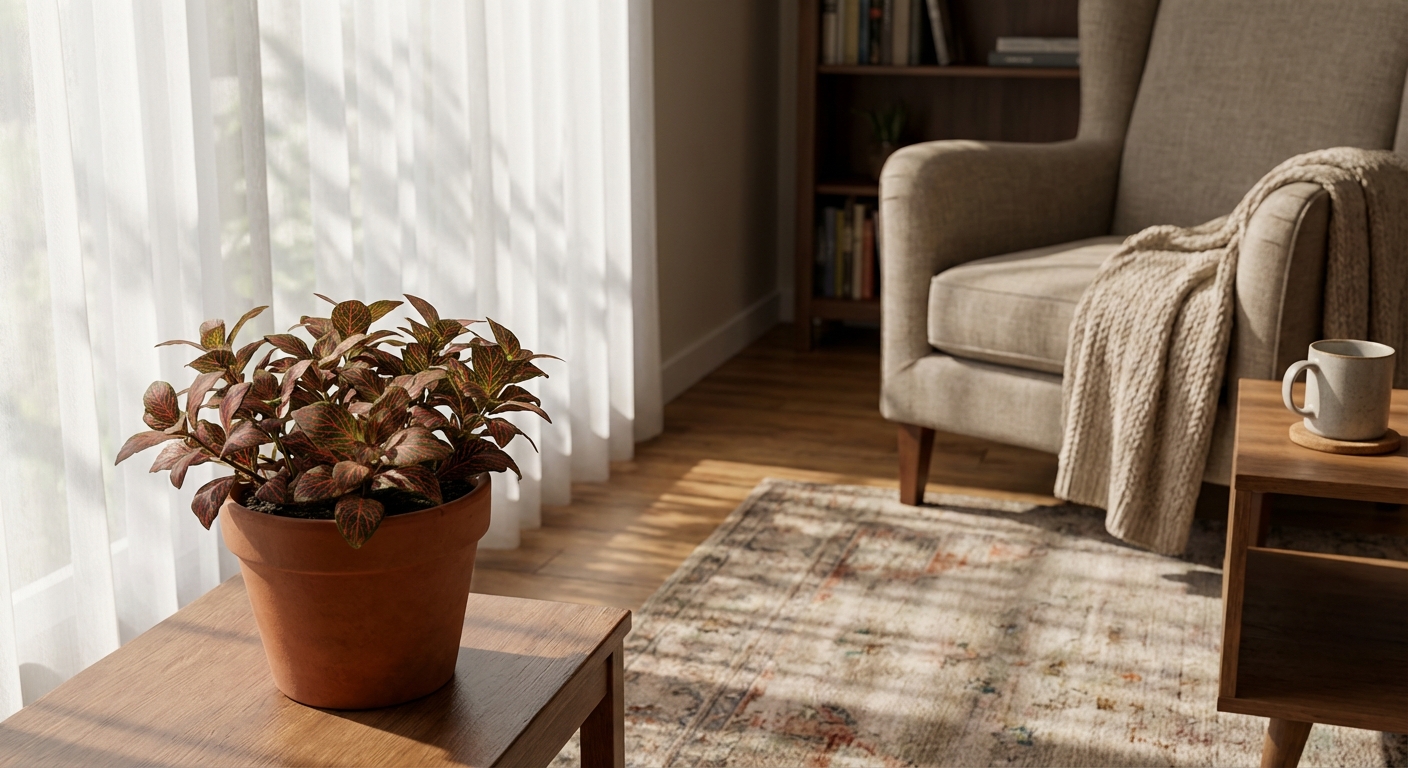
Watering: evenly moist
Fittonia wants the potting mix to stay consistently lightly moist. Not wet, not dusty. If you want a feel test, think a wrung-out sponge.
The tricky part for beginners is that Fittonia has thin stems and relatively shallow roots, so it responds quickly when conditions swing.
A simple watering routine
- Check the top 1 inch of soil with your finger.
- Water when the top inch is dry or just starting to dry, but the soil below still feels slightly damp.
- Soak thoroughly until water drains from the bottom, then empty the saucer.
Seasonal note: In winter, growth slows and the soil stays wet longer. Keep the “evenly moist” goal, but water less often.
Bottom watering: a useful tool
If you struggle with compacted mix or a surface that stays constantly wet, bottom watering can help. Set the pot in a bowl of water for 10 to 20 minutes, then let it drain well. Just don’t do it on a fixed schedule. Only bottom water when the soil is actually ready for a drink, and always let excess drain fully.
Water quality: If your tap water is very hard or treated (chloramine or fluoride), you may see browning tips over time. If that’s a pattern in your home, try filtered or overnight-rested water.
Humidity: the key factor
If Fittonia could talk, it would ask for humidity first and everything else second. In typical homes, especially with heating or air conditioning, humidity can sit around 30% to 40%. Fittonia usually looks and grows best at 60%+, though many plants will manage at 50% with steady watering and gentle light.
Easy ways to boost humidity
- Group plants together: They create a tiny shared humid zone.
- Use a humidifier: The most reliable option, especially in winter.
- Pebble tray: It may slightly boost humidity right around the plant, especially in a small, still space, but it won’t replace a humidifier in a dry house.
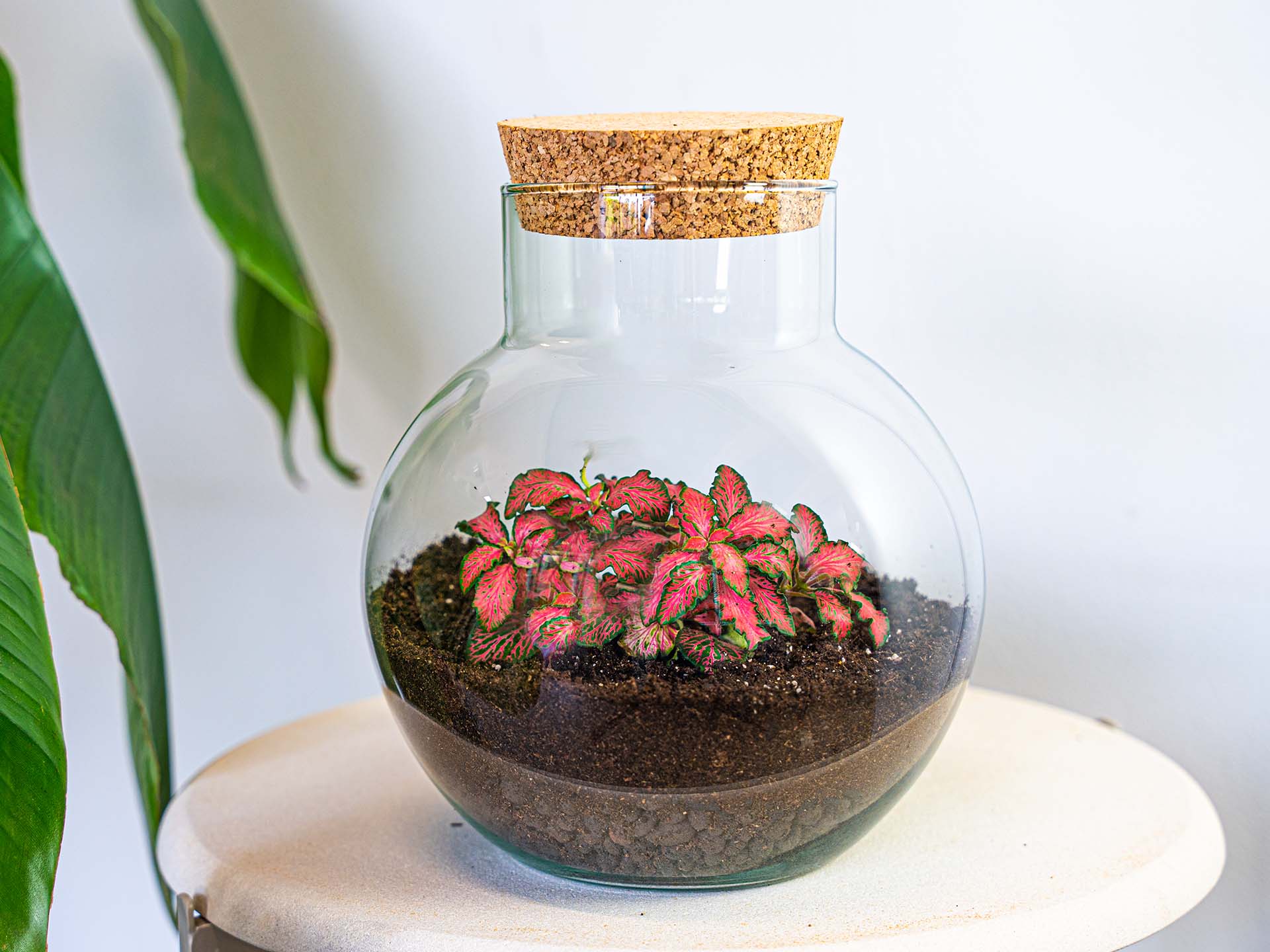
- Terrarium life: Fittonia is a star in closed or semi-closed terrariums.
Misting: It can help briefly, but it’s not a long-term humidity solution. If you mist, do it in the morning so leaves dry by evening.
Soil and pot
The best Fittonia soil mix holds moisture and drains well. A dense mix that stays soggy invites root rot. A gritty mix that dries instantly makes it faint nonstop.
An easy soil recipe
- 2 parts high-quality indoor potting mix
- 1 part perlite or pumice (for airflow)
- 1 part coco coir or fine orchid bark (for structure and gentle moisture retention)
Choose a pot with a drainage hole. Fittonia often does well in a slightly shallower pot since its roots tend to stay closer to the surface, but it’s not a strict requirement. Good drainage matters more than pot shape.
Repotting
Repot every 1 to 2 years, or when roots circle the bottom. Spring is ideal. Size up only 1 to 2 inches wider. Too big a pot holds extra wet soil and can slow the plant down.
Temperature and placement
Fittonia is happiest at 65 to 80°F (18 to 27°C). Avoid cold windows in winter, blasts from heating vents, and AC drafts. Those sudden shifts are a common reason for leaf drop or crispy edges.
If your home runs dry in winter, a bathroom with a bright window can be a perfect Fittonia spot. Mine has enjoyed many steamy showers, like a tiny spa day.
Wilting: when to worry
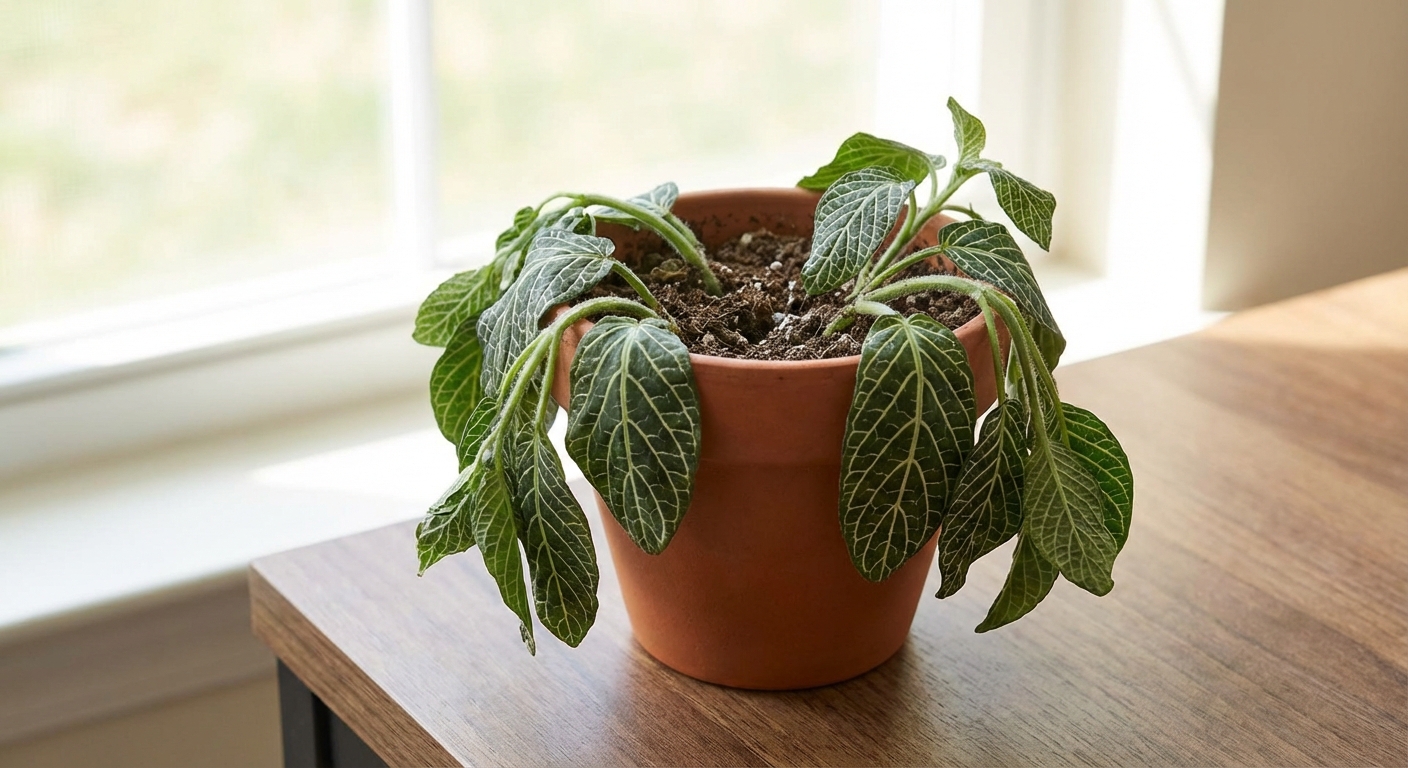
Fittonia’s signature move is sudden wilting when the soil gets too dry. The leaves go limp, stems flop, and you might feel personally betrayed. This is usually just thirst.
Normal wilt
- Soil feels dry near the surface
- Leaves are limp but still mostly green
- Plant perks up within a few hours after watering
Worrisome wilt
- Soil is already wet or smells sour
- Stems feel mushy near the base
- Leaves yellow rapidly or drop in clusters
- Plant doesn’t perk up after watering
Quick tell: under vs over
- Underwatering: soil pulls from the pot edges, feels light, plant rebounds fast after watering.
- Overwatering: soil stays heavy and damp for days, yellowing leaves, soft stems, fungus gnats may appear.
If it’s worrisome wilt, skip the “more water” instinct and jump to the root check in the troubleshooting section below.
Reviving a wilted plant
If it dried out
- Water deeply until excess drains out.
- Let it drain completely. Don’t leave it sitting in water.
- Increase humidity for the next 24 hours. A clear plastic bag loosely tented over the plant can help, but keep it out of direct sun and open it daily for fresh air.
- Recheck in 2 to 6 hours. Many plants perk up fast. If yours was very dry, it may take longer.
If the soil is hydrophobic
Sometimes very dry potting mix turns water-repellent. If water pours out the drainage holes immediately and the soil stays dry, bottom water the pot for 20 to 30 minutes, then drain.
If you suspect root rot
- Slide the plant out of the pot and inspect roots.
- Healthy roots are light-colored and firm. Rotten roots are dark, slimy, or smell bad.
- Trim rotten roots with clean scissors.
- Repot into fresh, airy mix in a pot with drainage.
- Water lightly and keep in warm, bright indirect light.
Feeding
Fittonia isn’t a heavy feeder. During spring and summer, feed with a balanced houseplant fertilizer at half strength about once a month. Skip fertilizer in fall and winter when growth slows.
If you prefer organic options, a gentle liquid seaweed or fish emulsion works well indoors. Just use it sparingly and follow the label.
Pruning
Fittonia naturally creeps and can get leggy. Pinching keeps it dense and bushy.
- Pinch just above a leaf node to encourage branching.
- Trim long runners and root them for free baby plants.
- Remove any yellowing leaves to keep airflow moving.
Propagation
Propagating Fittonia is beginner-friendly and honestly addictive. One plant becomes three. Then five. Then you’re handing nerve plants to neighbors like baked goods.
What to cut
Choose a healthy stem with at least 2 to 3 nodes (nodes are the little joints where leaves attach).
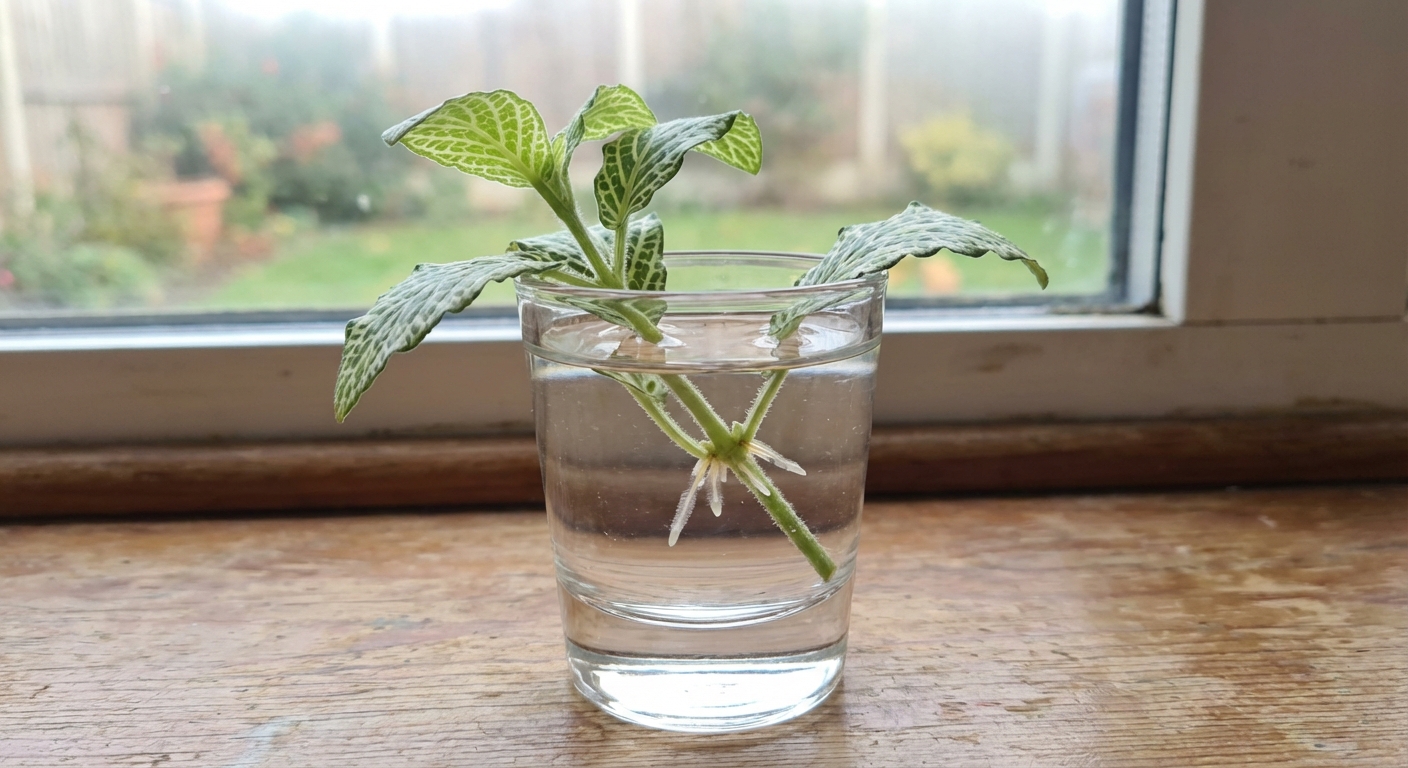
Water propagation steps
- Take a 3 to 5 inch cutting just below a node.
- Remove the bottom leaves so at least one node will be underwater.
- Place in a small glass of water in bright, indirect light.
- Change the water every few days.
- When roots are 1 to 2 inches long, pot it up in moist soil.
Soil propagation steps (my favorite)
- Take a cutting and remove the bottom leaves.
- Dip the cut end in rooting hormone (optional).
- Insert into moist, airy potting mix with at least one node buried.
- Cover loosely with a clear bag or place in a propagation box for humidity.
- Keep warm and evenly moist. Tug gently after 2 to 4 weeks. Resistance means roots.
Common pests
Fittonia’s love of moisture and cozy indoor conditions can occasionally invite uninvited guests. A quick check under the leaves once a week saves a lot of drama later.
Fungus gnats
- What you’ll see: Tiny black flies hovering near the soil, especially after watering.
- Why it happens: The top layer stays damp too often.
- Fix: Let the top 1 inch dry a bit more between waterings, use yellow sticky traps, and consider a top-dressing of sand or fine gravel to keep the surface less inviting.
Spider mites
- What you’ll see: Stippled, dusty-looking leaves, fine webbing, and a generally “sad” look that no amount of watering fixes.
- Why it happens: Dry air and warm indoor spots.
- Fix: Rinse the plant well, wipe leaf undersides, raise humidity, and treat with insecticidal soap if needed. Repeat weekly for a few rounds.
Mealybugs
- What you’ll see: White cottony clusters in leaf joints.
- Fix: Dab with isopropyl alcohol on a cotton swab, then follow up with insecticidal soap. Isolate the plant until it’s clear.
Common problems
Crispy edges or curling leaves
- Most likely: Low humidity or inconsistent watering.
- Fix: Add a humidifier, water before it fully dries, move away from vents.
Yellow leaves
- Most likely: Overwatering, poor drainage, or cold stress.
- Fix: Let the top inch dry slightly, confirm drainage, keep above 65°F.
Leggy growth
- Most likely: Not enough light or no pinching.
- Fix: Move to brighter indirect light and pinch tips regularly.
Brown spots
- Most likely: Sun scorch, mineral buildup, or leaves staying wet too long.
- Fix: Filter direct sun, use filtered water if your tap is hard, and improve airflow.
Pet safety
Fittonia is commonly listed as non-toxic to cats and dogs (per the ASPCA’s toxic and non-toxic plants list), but any plant can cause mild stomach upset if a pet eats a lot of it. If your pet’s a dedicated nibbler, place Fittonia up high or in a terrarium, and check with your veterinarian if you notice symptoms.
Make it boring
The easiest way to “master” Fittonia is to remove the extremes. No scorching sun. No dry spells. No swampy soil. If you can keep the light gentle, the moisture steady, and the air a little humid, this plant becomes wonderfully predictable.
And when it inevitably flops one day, do what I do: give it a drink, tell it you still love it, and watch it stand back up like nothing happened.