
Fiddle Leaf Fig Care


If you have ever felt personally judged by a fiddle leaf fig, welcome. Ficus lyrata is not actually fussy, it is just consistent. Give it steady light, let the soil dry the right amount, and it will stop dropping hints and start growing those big, glossy “violin” leaves you came for.
This guide walks you through the essentials: where to place your plant for the best light, exactly how to water (without guessing), humidity and fertilizing, and how to troubleshoot the most common problems like brown spots, leaf drop, and leggy growth.
Quick safety note: fiddle leaf fig is toxic if ingested (to cats, dogs, and humans). The sap can also irritate skin. Keep it out of reach of curious pets and kids, and wash up after pruning.
Know your fiddle leaf fig
Fiddle leaf figs are tropical trees from West Africa. Indoors, they act like a tree that has been politely asked to live in a pot. That means:
- They crave bright light and respond slowly to changes.
- They dislike soggy soil and often respond to overwatering with spots and leaf drop.
- They can grow fast in the right conditions, but get leggy when light is weak.
One of the biggest mindset shifts: your fiddle leaf fig wants a routine. Sudden moves, inconsistent watering, and drafty corners create the drama we all blame on the plant.
Light
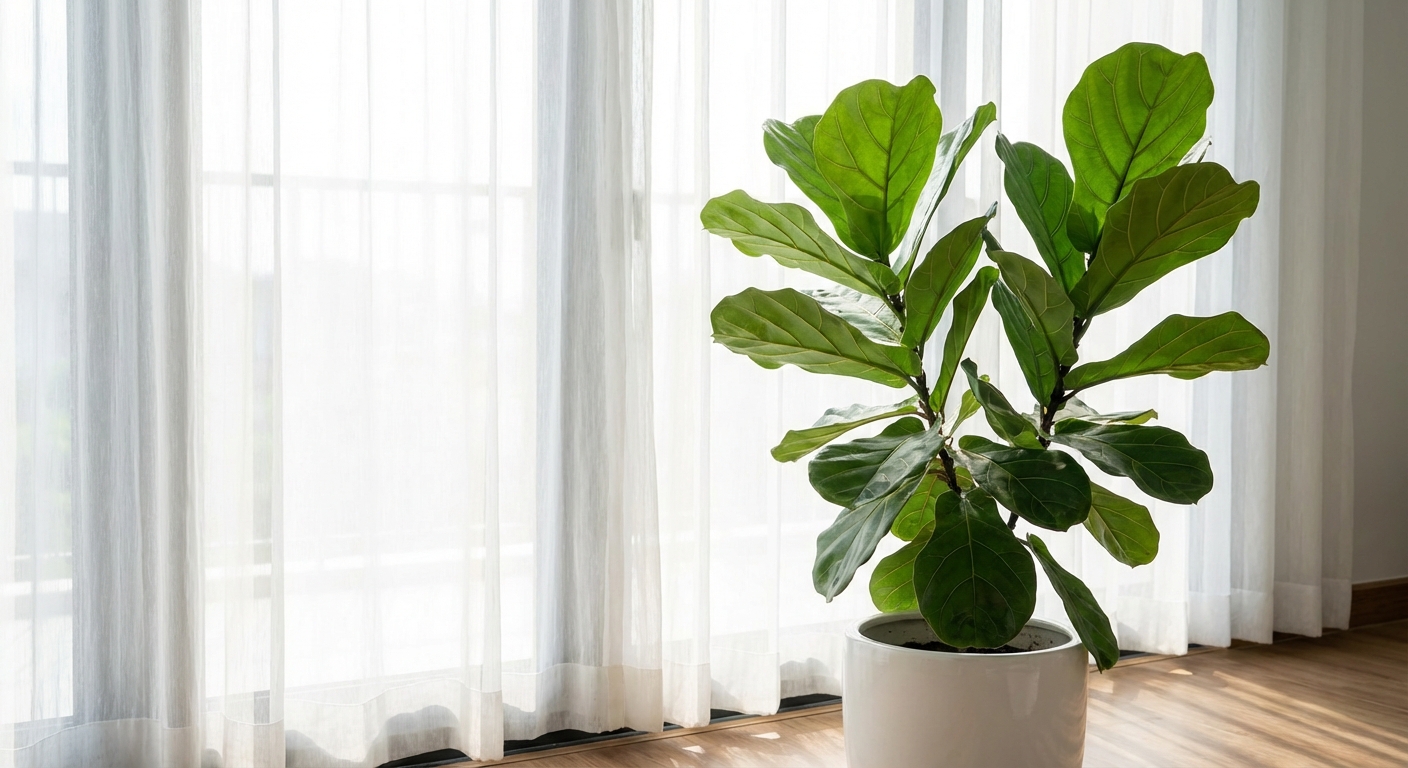
Light is the make or break factor for fiddle leaf fig success. In most homes, “bright indirect light” translates to right next to a bright window, not across the room.
Best placement
- Ideal: near an east window (gentle morning sun) or a bright south or west window with a bit of diffusion if the sun is intense.
- Good: 1 to 3 feet from a very bright window where the plant can “see the sky.”
- Usually too dim: more than 6 feet from a window, hallways, or corners where light feels “nice” to humans but not to plants.
Can it take direct sun?
Yes, with a little common sense. Morning sun is usually wonderful. Hot midday or late afternoon sun through glass can scorch leaves, especially if the plant was grown in lower light. If you are increasing sun exposure, do it gradually over 1 to 2 weeks.
Rotate, but do not shuffle
Rotate your plant a quarter turn every 1 to 2 weeks for even growth. Try not to move it to a totally new location unless you have to. If you do move it, expect a short adjustment period.
Grow lights
If you only have moderate light, a grow light can be a fiddle leaf fig lifesaver. Aim for 10 to 12 hours daily with the light positioned above the plant so it grows upright, not sideways. As a starting point, place a bright LED grow light about 12 to 18 inches (30 to 45 cm) above the top leaves, then adjust based on how the plant responds.
Watering
Most fiddle leaf fig problems trace back to watering patterns: frequent small sips that keep the root zone damp, or long droughts followed by flooding.
The golden rule
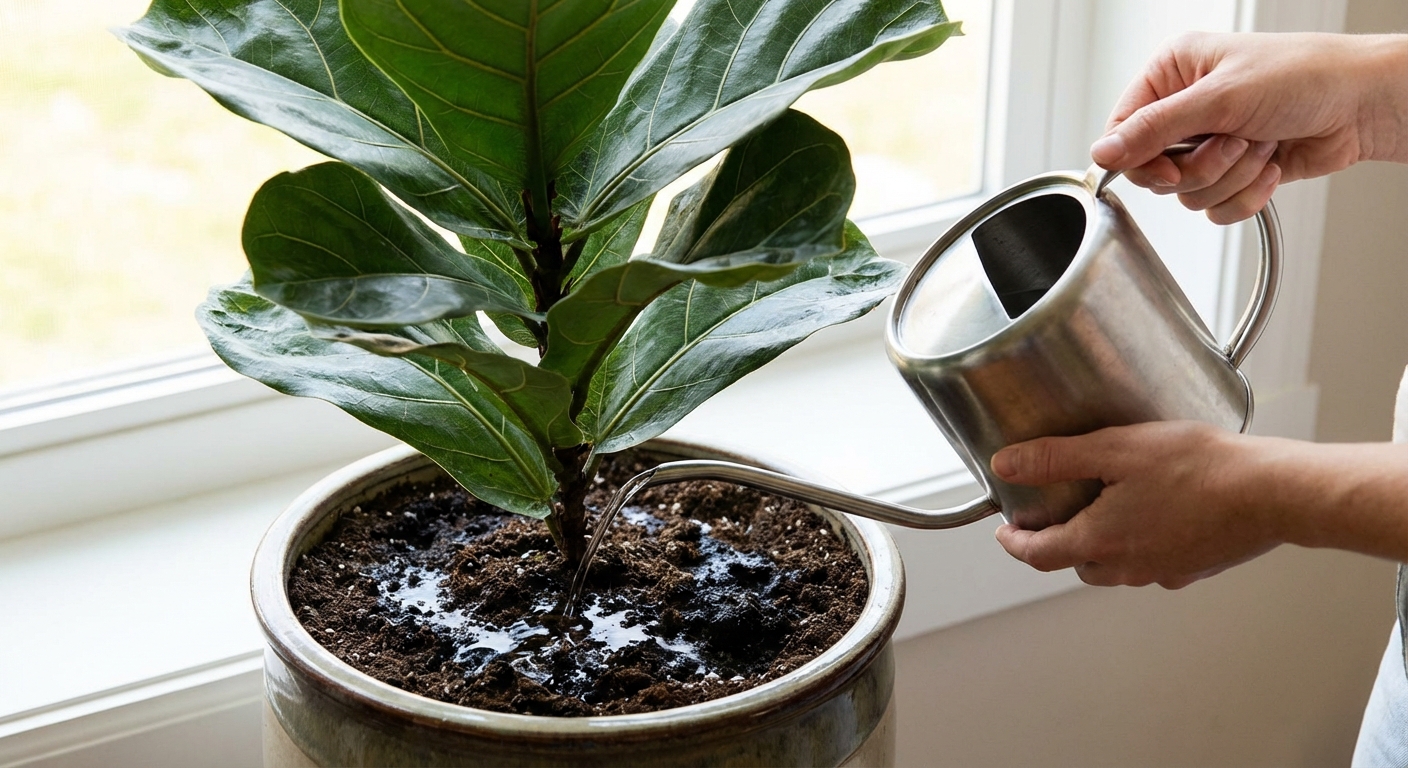
Water thoroughly, then let the top 2 to 3 inches of soil dry out before watering again. In a typical home, that often lands somewhere around every 7 to 14 days, but your light, pot size, and season matter more than the calendar.
How to check if it is time
- Finger test: stick your finger into the soil. If the top 2 to 3 inches are dry, it is time.
- Chopstick test: insert a wooden chopstick deep into the pot, wait 10 seconds, then pull it out. If it comes out clean or lightly dusty, water. If it comes out dark and damp, wait.
- Pot weight: lift the pot. Dry pots feel surprisingly light once you learn the difference.
How to water correctly
- Use a pot with a drainage hole. This is non-negotiable for long-term health.
- Water slowly until water runs out the bottom.
- Empty the saucer after 10 to 15 minutes. Do not let the pot sit in runoff.
- Repeat only when it dries again.
Water quality tips
If your tap water is very hard or heavily treated, you may see browning edges over time. Letting water sit out overnight may help with chlorine, but it will not reliably remove chloramine (common in many cities) or reduce hardness minerals. If you suspect water is a factor, try filtered water, check your local water report, or alternate with collected rainwater if that is available to you.
Seasonal watering changes
- Spring and summer: more light and growth usually means more frequent watering.
- Fall and winter: lower light means slower drying. Overwatering is more common in winter.
Humidity and temperature
Fiddle leaf figs prefer a stable, comfortably warm home. They can adapt to average indoor humidity, but they look their best with a bit more moisture in the air.
Targets
- Humidity: best around 50%+, and typically happy in the 40% to 60% range. They can cope lower, but growth may slow and edges may crisp.
- Temperature: roughly 65°F to 80°F (18°C to 27°C).
Practical humidity fixes
- Run a humidifier near the plant in winter.
- Group plants together to create a slightly more humid microclimate.
- Keep it away from heating vents, radiators, and drafty doors.
Misting is fine if you enjoy it, but it is short-lived and does not replace consistent humidity. If you do mist, do it in the morning so leaves dry by evening.
Soil and potting
Roots need oxygen as much as they need water. The best soil for a fiddle leaf fig holds moisture but drains quickly.
What to look for in a potting mix
- Chunky and airy texture
- Ingredients like bark fines, perlite, pumice, or coco coir
- Avoid mixes that stay muddy or compacted for days
An easy mix (organic-friendly)
If you like mixing your own, a simple starting point is:
- 2 parts high quality indoor potting soil
- 1 part orchid bark
- 1 part perlite or pumice
Pot choice
Choose a pot with drainage. Terracotta can be helpful if you tend to overwater because it dries faster. Plastic holds moisture longer, which can be great in very bright, warm homes.
Skip the “rocks in the bottom” trick. A drainage layer does not improve drainage in a pot with soil, it just reduces root space and can keep the root zone wetter.
Repotting timing
Repot in spring or early summer when the plant is actively growing. Move up one pot size (usually 2 to 4 inches wider). Going too big can keep soil wet for too long and invite root rot.
Fertilizing
Fiddle leaf figs are moderate feeders. The goal is steady growth, not a fertilizer sprint.
Simple schedule
- Spring through early fall: fertilize every 4 weeks with a balanced houseplant fertilizer at half strength.
- Late fall and winter: usually pause, especially in low light. If your plant is under strong grow lights and still growing, feed lightly every 6 to 8 weeks.
Organic options
If you prefer organic inputs, a gentle approach works best indoors: diluted liquid kelp or fish emulsion (watch the smell), or a light top-dress of worm castings in spring. Whatever you use, avoid overdoing it. Fertilizer burn can show up as crispy edges and brown tips.
Pruning and shaping
Left alone, a fiddle leaf fig often grows as a single stem reaching toward light. Pruning helps it branch and look fuller.
How to encourage branching
- Prune in spring or early summer when growth is active.
- Use clean, sharp pruners and cut just above a node (where a leaf attaches).
- Expect milky sap. It can irritate skin, so wipe it and wash your hands.
Notching (optional)
Some growers notch the trunk above a node to encourage a new branch. This can work, but it is less predictable than pruning. If you try it, do it on a healthy plant in strong light, and keep the cut shallow.
Cleaning leaves
Dust blocks light. Wipe leaves with a damp cloth every few weeks. Skip leaf shine products. They can clog pores and attract more dust.
Common problems
When a fiddle leaf fig is unhappy, it tells you in spots, drops, and droops. Here is the quickest way to read the signals without spiraling.
Brown spots
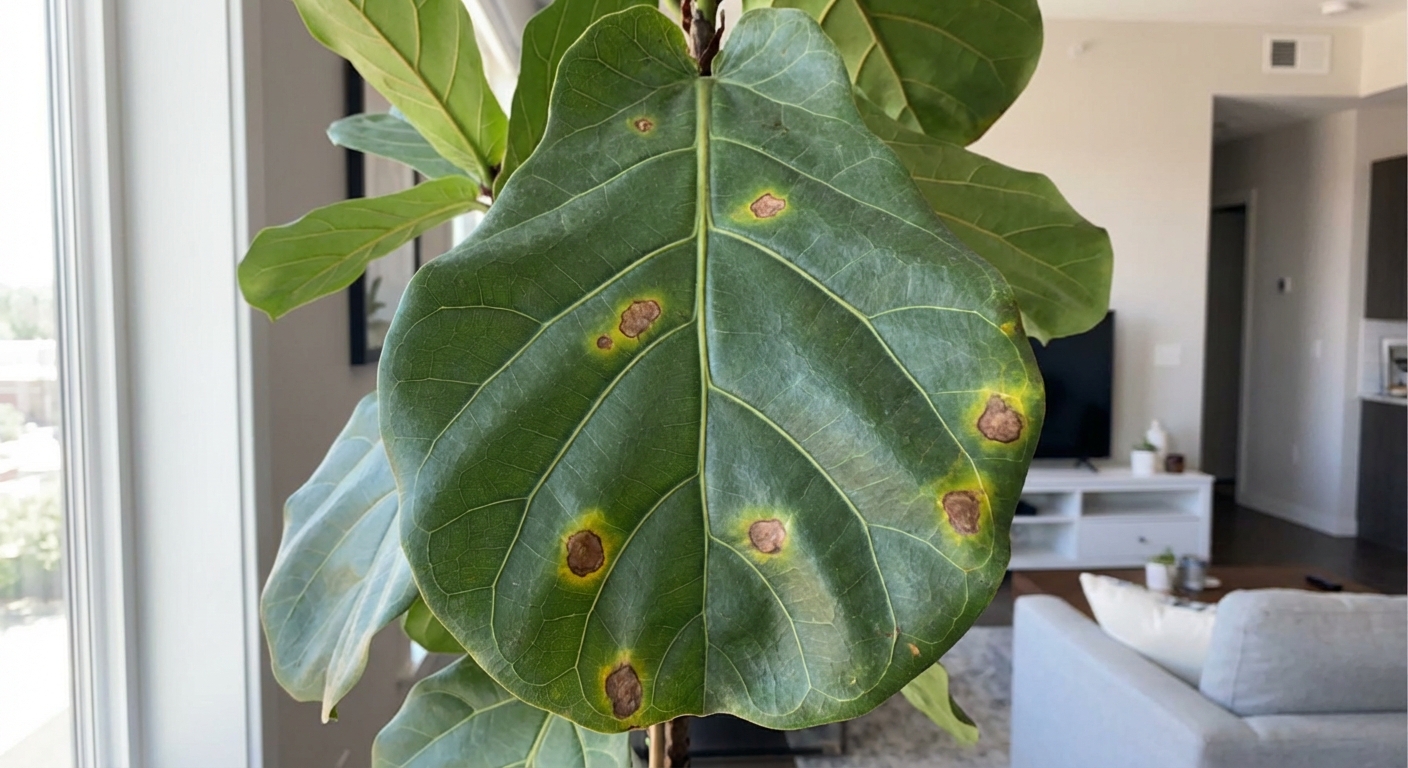
- Dark brown spots with a yellow halo: often linked to excess moisture, poor drainage, or low airflow. It can also overlap with leaf-spot disease. Let soil dry more between waterings, confirm the pot drains, and improve airflow. If spots are spreading, consider isolating the plant while you troubleshoot.
- Dry, crispy brown patches: usually sun scorch or underwatering. Move slightly back from harsh direct sun and water more consistently.
- Small speckled spots that spread: can be fungal or bacterial leaf spot, often linked to wet leaves and poor airflow. Remove the worst leaves, avoid splashing foliage, and improve airflow. Copper-based products may help some leaf-spot issues, but bacterial problems do not respond to many standard fungicides, so focus on hygiene and keeping leaves dry.
Leaf drop
Some leaf drop is normal after a move or seasonal shift, but a lot of dropping means something is off.
- Lower leaves dropping slowly: often low light or natural aging. Increase light and rotate the plant.
- Sudden drop after moving: stress response. Keep conditions stable and avoid additional changes.
- Drop plus mushy soil or sour smell: likely overwatering and root stress. Pause watering, increase light and airflow, and inspect roots if symptoms persist.
Drooping leaves
- Droop with dry soil: underwatering. Water thoroughly until runoff, then return to a consistent dry-down routine.
- Droop with wet soil: overwatering or root issues. Let soil dry, then reassess. If it keeps drooping, check for root rot and repot into fresh, airy mix.
Leggy growth
This is your plant asking for more light. Move it closer to a brighter window or add a grow light. Once light is corrected, you can prune in spring to encourage branching and a fuller shape.
Brown tips and crispy edges
- Inconsistent watering patterns (long dry spells) are common culprits.
- Low humidity or hot air blasts from vents can crisp edges.
- Mineral buildup from hard water or excess fertilizer can show up as tip burn. Flush the pot occasionally by watering heavily and letting it drain completely.
New leaves are smaller
Usually low light, underfeeding during the growing season, or a root system that is struggling in compacted soil. Improve light first, then review your fertilizing routine and soil texture.
Pests
Fiddle leaf figs can attract pests, especially in dry indoor air.
- Spider mites: fine webbing, dusty stippling on leaves. Rinse leaves thoroughly, then treat with insecticidal soap or horticultural oil, repeating weekly for a few rounds.
- Scale: small brown bumps on stems and leaf veins. Gently scrape off, wipe with diluted rubbing alcohol, and follow with horticultural oil.
- Mealybugs: white cottony clusters. Dab with alcohol on a cotton swab, then treat the plant.
Quarantine new plants for a couple weeks if you can. It is the easiest pest prevention you will ever do.
After you bring it home
A lot of fiddle leaf figs come from bright, humid greenhouses and then get dropped into a normal living room like, “Good luck.” A short adjustment period is common.
- Expect a little leaf drop in the first few weeks.
- Give it the brightest stable spot you have, and avoid extra changes while it settles in.
- Hold off on repotting right away unless there is an actual issue (soil staying soaked, pests, or clear root problems).
Root rot check
If you suspect root rot, a quick root check can save you weeks of guessing.
- Healthy roots: firm, light-colored, earthy smell.
- Rotting roots: dark, mushy, slimy, sour smell.
If you find rot, trim the mushy roots, repot into fresh, airy mix, and switch to the “soak then dry down” routine in brighter light. If roots look fine, you can usually correct the issue just by adjusting watering and light.
Quick care checklist
- Light: bright, near a window. Rotate every 1 to 2 weeks.
- Water: soak thoroughly, then wait until the top 2 to 3 inches are dry.
- Soil: airy, fast-draining mix in a pot with a drainage hole.
- Humidity: best around 50%+, avoid vents and drafts.
- Fertilizer: monthly in spring and summer at half strength.
- Safety: toxic if ingested, keep away from pets and kids.
- Troubleshoot: spots and drops usually come back to light and watering consistency.
My gentle reminder
Fiddle leaf figs reward patience. Make one change at a time, then give the plant a couple weeks to respond. If you try to fix light, water, humidity, soil, and fertilizer all in the same weekend, you will never know what actually helped.
And if you catch yourself apologizing to your plant while you wipe dust off its leaves, just know you are in excellent company. My ferns have heard far stranger speeches.