
Fiddle Leaf Fig Brown Spots: 8 Common Causes and How to Fix Them

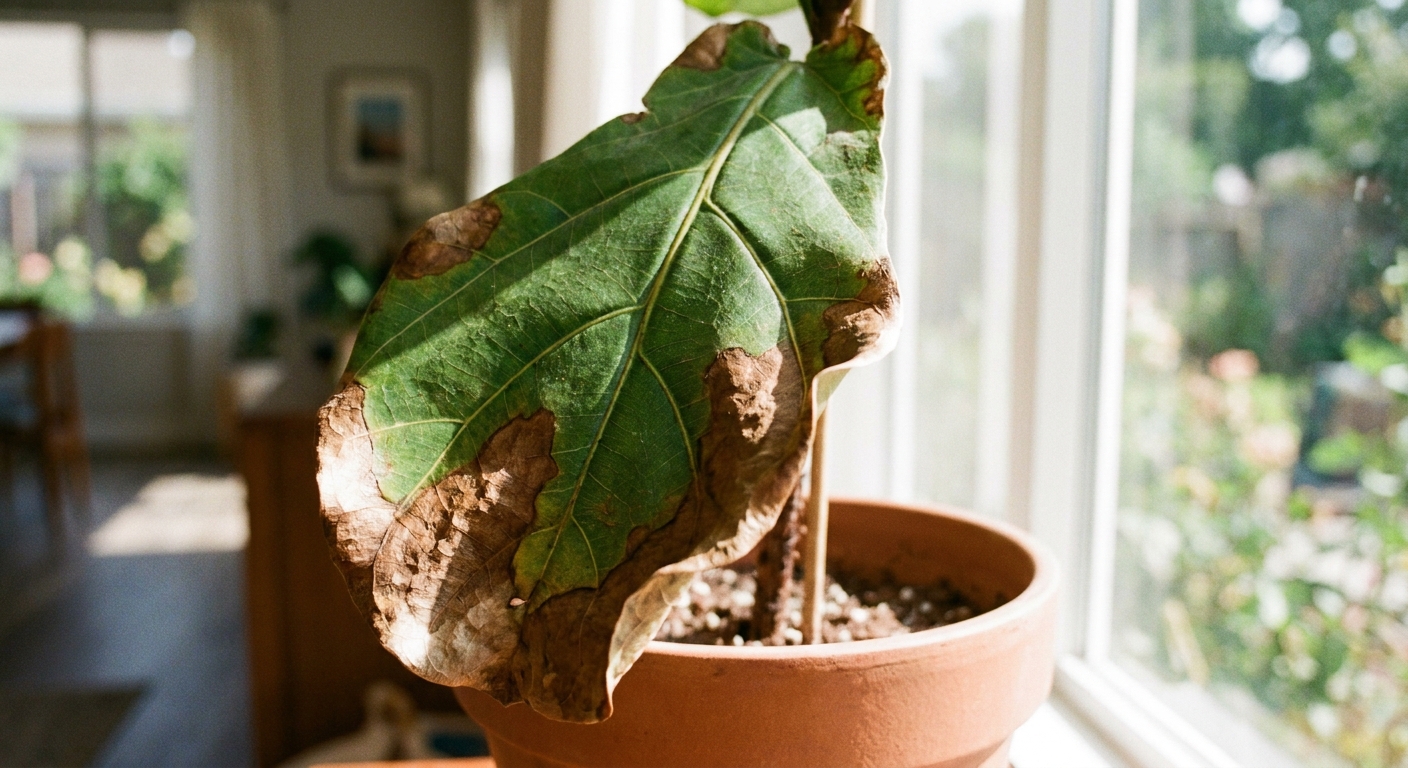
Brown spots on a fiddle leaf fig can feel like betrayal. One day your plant is serving glossy, violin-shaped perfection, and the next it looks like someone took a tiny blowtorch to the leaves. The good news is that brown spots are usually a readable clue, not a mystery curse.
This guide helps you diagnose the most common causes and make a few targeted care tweaks. I’ll also tell you when it’s smart to quarantine your plant, because pests love a free ride to your other houseplants.

First, read the spot
Before you change anything, take 60 seconds to observe. Brown spots look similar from across the room, but up close they tell different stories.
- Location: Are spots on the side facing the window, the bottom leaves, or scattered everywhere?
- Texture: Crispy and papery, or soft and mushy?
- Edges: Sharp border, yellow halo, or water-soaked look?
- Pattern: Tiny freckles, large patches, or irregular blotches?
- Timing: Did this show up after moving the plant, changing watering, or a heat wave?
Also check the basics quickly: stick your finger about 2 inches (5 cm) into the soil, and look at the drainage holes. If the pot feels heavy and the soil is wet days after watering, that points us toward root and moisture issues.
8 common causes
1) Sunburn (leaf scorch)
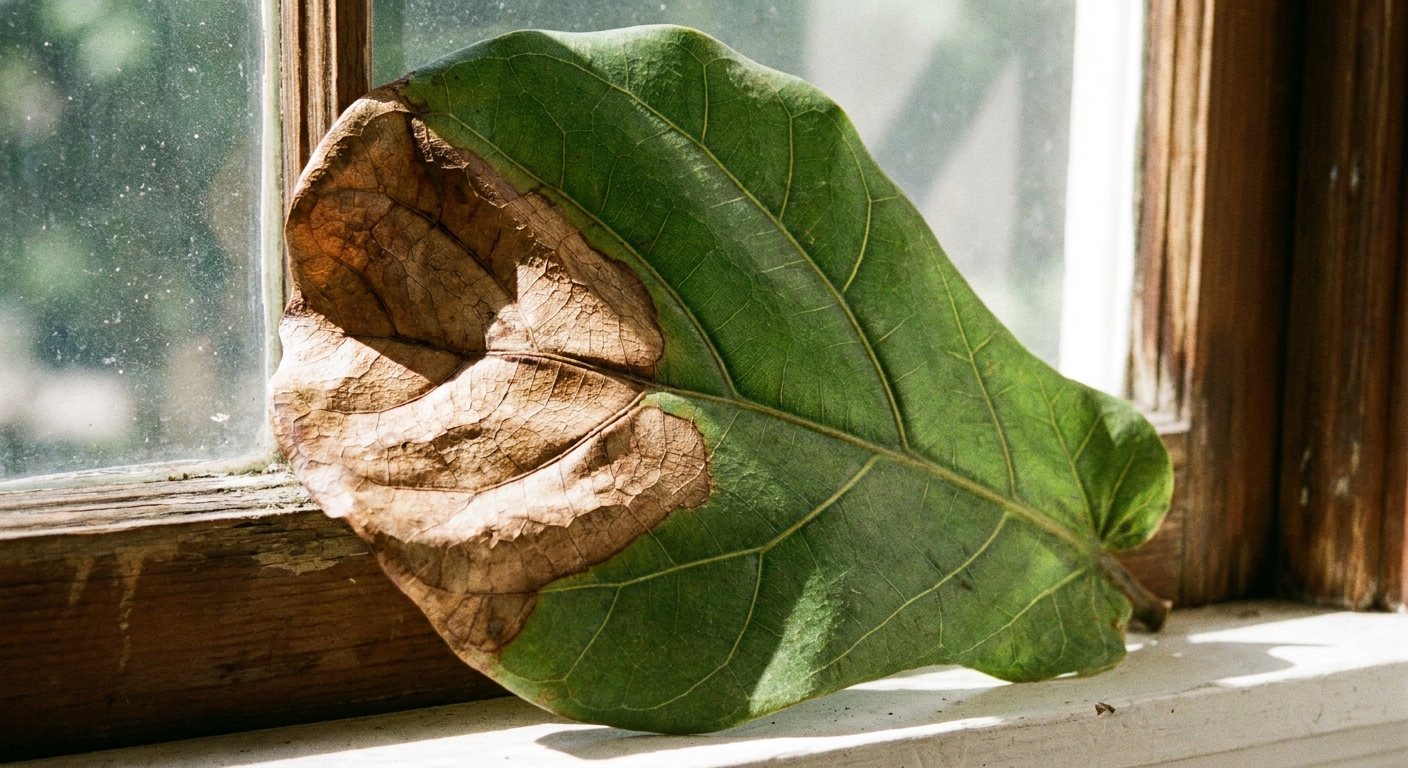
What it looks like: Tan to brown patches that are dry and crispy, often on leaves closest to the window or on the most exposed side. The edges can look bleached or faded first, then turn brown.
Why it happens: Fiddle leaf figs love bright light, but they burn if they go from medium light to direct sun too quickly. This is common after moving a plant closer to a sunny window or placing it outdoors.
Fix it:
- Move the plant back to bright, indirect light or filter direct sun with a sheer curtain.
- Acclimate slowly: increase sun exposure by 30 to 60 minutes every few days.
- Don’t cut off a leaf just because it’s spotted. If most of the leaf is still green, it’s still photosynthesizing.
Will the spots heal? No. Damaged tissue stays damaged, but new growth should come in clean once light is corrected.
2) Overwatering and root stress
What it looks like: Dark brown spots that may start small and expand, sometimes with a yellow halo. Leaves can look dull, and the plant may drop older leaves if stress continues.
Why it happens: Constantly wet soil deprives roots of oxygen. Stressed roots can’t move water properly, and leaf tissue breaks down. This is especially common in low light, cool rooms, or pots without good drainage.
Quick rule: A yellow ring can happen with root stress, but if the spot looks water-soaked or is spreading fast, skip ahead to the bacterial and fungal section and treat it like a possible infection.
Fix it (gentle version):
- Pause watering until the top 2 to 3 inches (5 to 7.5 cm) of soil are dry.
- Empty any saucer after watering. Don’t let it sit in water.
- Make sure the pot has drainage holes and the plant isn’t sitting in a cachepot full of water.
Fix it (if you suspect rot):
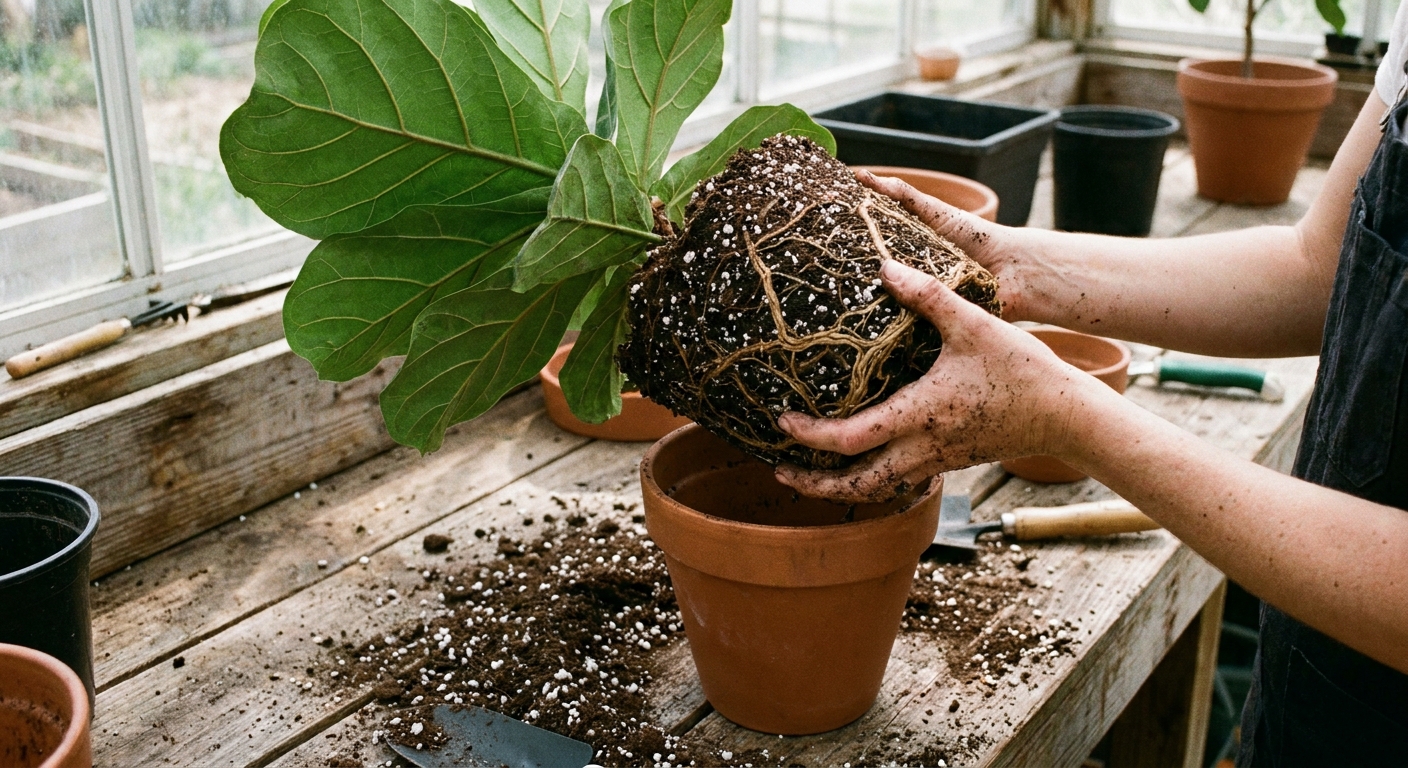
- Slide the plant out and inspect roots. Healthy roots are firm and light colored. Rotten roots look dark, mushy, or smell sour.
- Trim rotten roots with sterilized scissors.
- Repot into fresh, airy mix in a pot that drains well.
Repotting note: If you’re not seeing classic rot signs and the soil is drying at a reasonable pace, try reducing watering first. Root pruning and repotting are great tools, but they’re still stress.
Soil tip I swear by: Fiddle leaf figs do best in a chunky, fast-draining mix. Think potting soil plus bark and perlite so roots can breathe.
3) Underwatering
What it looks like: Brown spots or margins that are dry, crisp, and crumbly, often starting on leaf edges or tips. Soil may pull away from the sides of the pot and feel bone-dry.
Why it happens: When a fiddle leaf fig dries too hard, it can’t keep leaf tissue hydrated. This is common in very warm rooms, near vents, or when watering is too light and only wets the top inch.
Extra sneaky version: Repeated shallow watering can create dry pockets deeper in the pot even if the surface looks slightly damp. If you always “sip” water in, the roots never get a full drink.
Fix it:
- Water deeply until water runs out the bottom, then let it drain fully.
- If soil is hydrophobic (water runs straight through), soak the pot in a sink or tub for 20 to 30 minutes, then drain.
- Set a simple rhythm: water when the top 2 inches (5 cm) are dry, not by the calendar.
4) Edema
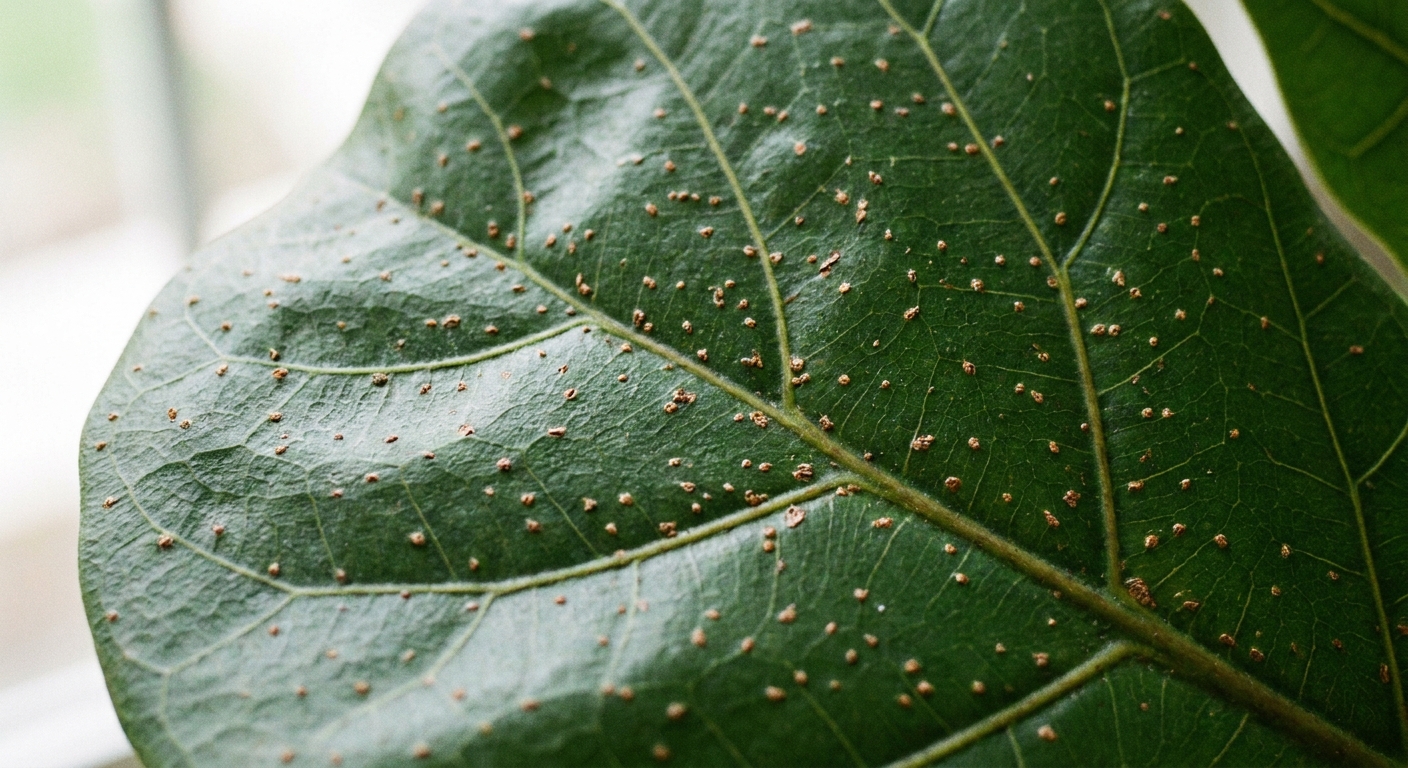
What it looks like: Small, scattered brown spots that can start as tiny water-soaked blisters or raised bumps, often on newer leaves. You may also see reddish speckling early on.
Why it happens: Edema occurs when roots take up water faster than leaves can transpire it. The cells swell, burst, and scar. It’s most common when watering is heavy in cool, low-light conditions.
How to tell it apart: Edema doesn’t come with webbing, frass, sticky residue, or obvious insects. It also tends to scar and then stop, rather than forming rapidly expanding wet patches.
Fix it:
- Let soil dry a bit more between waterings.
- Increase light (bright indirect) and airflow.
- Avoid late-day watering in cool seasons. Morning watering is calmer for the plant.
Note: Edema spots are cosmetic, but they’re a sign to tweak moisture and light so it doesn’t keep happening.
5) Low humidity or hot airflow
What it looks like: Browning at edges and tips, sometimes with irregular dry patches. Leaves may feel less supple. This often shows up in winter when heaters run, or year-round near an HVAC vent.
Why it happens: Fiddle leaf figs are tropical plants. Very dry air increases water loss through leaves, and the most distant tissue (edges and tips) shows damage first. Low humidity also tends to team up with underwatering or heat, so check both.
Fix it:
- Move the plant away from heat and AC vents by a few feet.
- Aim for 40 to 60 percent indoor humidity if you can, but don’t chase a number all day. Stable, decent conditions beat dramatic swings.
- Group plants together to create a slightly more humid microclimate.
Skip this common temptation: Misting isn’t a reliable humidity solution and can encourage leaf issues if water sits on leaves in low airflow.
6) Physical damage or cold shock
What it looks like: One-off brown patches, creases, or scabs, often on a single leaf. Damage can look like a bruise that later dries out. Cold shock can cause blotchy brown areas after a chilly draft.
Why it happens: Those big leaves are gorgeous, but they’re also easy to bump. Leaves can rub against a wall or window, get pinched during transport, or get hit by a cold draft from a door.
Fix it:
- Stabilize the plant so leaves aren’t scraping a surface.
- Keep it away from drafty doors and cold windows on winter nights.
- Don’t overreact with fertilizer or extra watering. Just keep conditions steady.
7) Pests
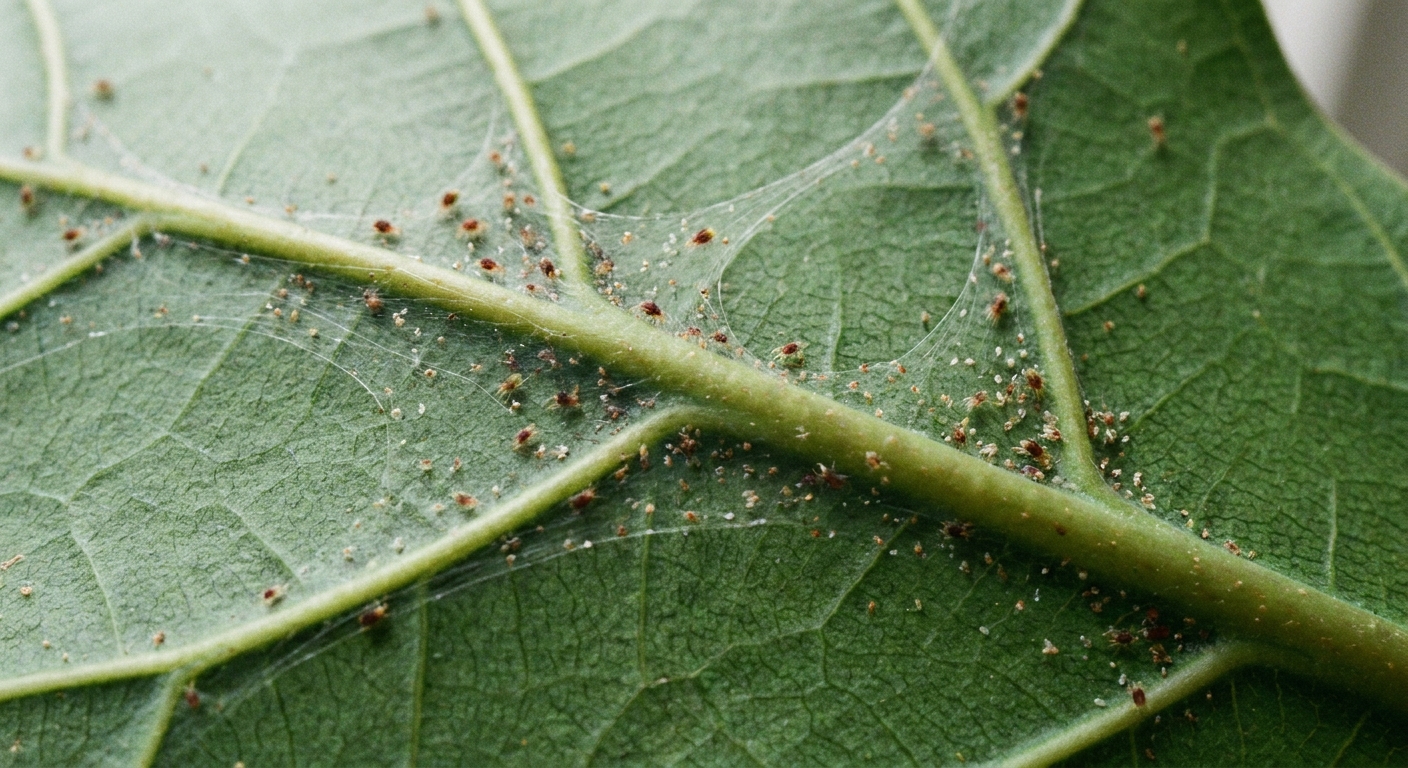
What it looks like: Brown spots plus other signs like stippling, silvery scarring, tiny black specks (thrips frass), webbing (spider mites), or sticky residue (scale and other sap suckers). Leaves may look dusty or tired even after wiping.
Why it happens: Pests pierce leaf cells and drink sap, leaving damaged tissue that can brown. Dry, warm indoor air makes spider mites especially happy.
How to confirm: Check the undersides of leaves and along the main vein with a flashlight. Gently wipe with a white tissue. You may see tiny moving dots or brown smears.
Fix it:
- Quarantine immediately away from other plants.
- Rinse the plant in the shower or wipe leaves (top and underside) with a damp cloth.
- Treat with insecticidal soap or horticultural oil, following label directions. Repeat every 7 to 10 days for several rounds to catch hatchlings.
- Avoid phytotoxicity: Apply soaps and oils in the evening or out of direct sun, test one leaf first, and keep it out of harsh light for about 24 hours after treatment.
- For scale, manually remove the bumps with a cotton swab dipped in rubbing alcohol, then follow with a broader treatment plan.
8) Bacterial or fungal leaf spot
What it looks like: Brown lesions that can look water-soaked at first, often with a strong yellow halo. Spots may expand quickly, merge into larger patches, or show a target-like pattern. This often appears after leaves stay wet, especially with low airflow.
Why it happens: Pathogens take advantage of wet leaf surfaces, crowded plants, and stale air. Overwatering can contribute, but leaf spot isn’t the same thing as root rot.
Fix it:
- Quarantine the plant while you assess. Leaf spot spreads easily from splashing water and handling.
- Remove the worst affected leaves with sterilized scissors. Bag the leaves and toss them.
- Stop overhead watering and avoid getting the leaves wet. Water at the soil line.
- Increase airflow and keep conditions steady (bright indirect light helps).
- Consider a copper-based fungicide or bactericide labeled for houseplants, and follow the label exactly. Test a small area first.
- Sanitize tools between cuts and wash your hands after handling.
Red flag: If spots are spreading fast week to week, or multiple new leaves are getting hit, treat it like an infection sooner rather than later.
When to quarantine
Quarantine isn’t plant paranoia, it’s just good houseplant hygiene. Separate your fiddle leaf fig for at least 2 to 4 weeks depending on what you’re dealing with (thrips can be a long game) if you notice:
- Webbing, crawling insects, or clusters of bumps on stems
- Sticky residue on leaves or the floor
- New spots spreading quickly across multiple leaves
- Silvery streaks or speckling that worsens week to week
- Water-soaked spots with yellow halos that keep expanding
During quarantine, inspect every few days and treat consistently. Most pest issues fail because we stop after one wash, and the next generation throws a comeback tour.
What to do with spotted leaves
- Leave them if most of the leaf is healthy green. The plant still benefits from that leaf.
- Trim cosmetically only if you truly can’t stand the look. Use sterilized scissors and follow the natural leaf shape.
- Remove the whole leaf if it’s mostly brown, soft, or clearly infected, or if you’re dealing with pests and want to reduce hiding spots.
Always cut close to the main stem without nicking it, and clean your blades between cuts.
Quick checklist
If you want the fastest path to “what is this?”, match your symptom to the likely cause:
- Crispy patch on window side: sunburn
- Dark spot with yellow halo and wet soil: overwatering or root stress (or possible leaf spot if it’s water-soaked and spreading)
- Crispy edges with very dry soil: underwatering
- Many tiny spots after heavy watering in low light: edema
- Brown tips near a vent: low humidity or hot airflow (often plus underwatering)
- Single bruised-looking patch: physical damage or cold draft
- Spots plus webbing or black specks: pests
- Water-soaked spots that spread fast with a yellow ring: bacterial or fungal leaf spot
If it’s also dropping leaves
Brown spots are one symptom set. Leaf drop is another, and the causes can overlap but the troubleshooting flow is a bit different. If your plant is shedding leaves along with spotting, pop over to our guide on fiddle leaf fig leaf drop for a full diagnosis and recovery plan: Fiddle Leaf Fig Dropping Leaves: Causes and Fixes.
My best steady tweaks
Fiddle leaf figs don’t need perfection. They need consistency. If you do nothing else, these three habits solve a shocking number of brown-spot situations:
- Bright, indirect light and slow transitions if you change location.
- Water deeply, then wait until the top 2 inches (5 cm) are dry.
- Airy soil and drainage so roots can breathe.
And if you catch yourself apologizing to your plant, join the club. I talk to my ferns, too. The trick is to listen back with your eyes and adjust one thing at a time.