
Epidendrum Orchid Care

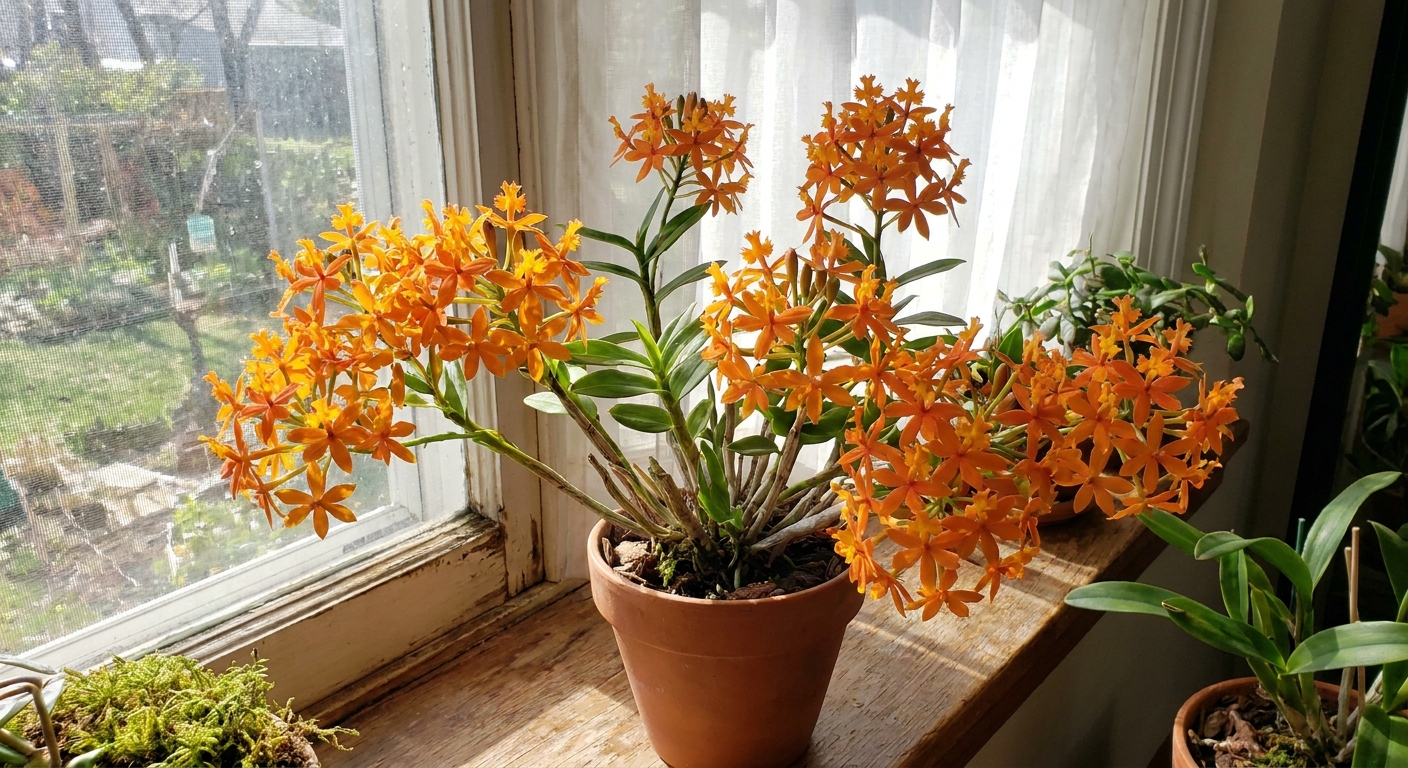
Epidendrum orchids are the friendly, bright-spirited cousins in the orchid world. Many of the ones you see at garden centers are reed-stem Epidendrums (often sold as “crucifix orchids” or simply labeled “Epidendrum”), with upright canes, narrow leaves, and cheerful clusters of starry blooms that can last for weeks. Store tags are often generic, and most plants are hybrids, so your exact care “sweet spot” can vary a little.
If you are bringing one home from the grocery store, you do not need a greenhouse or a PhD in misting. You just need two things: bright light and a steady, sensible watering rhythm. (And a quick heads-up: misting is not a watering plan. It can raise humidity for a minute, but it does not reliably hydrate roots, and it can invite spotting if water sits on leaves.)

Know your plant
Reed-stem Epidendrums grow in upright, cane-like stems that stay leafy. Unlike Phalaenopsis orchids, they do not have thick, floppy leaves or a single arching flower spike. Instead, they make multiple canes (new growths) over time and can bloom at the tips or near the top of mature canes.
- Growth habit: upright “reeds” (canes) that slowly clump outward
- Roots: thinner than many orchids, happier with air but not bone-dry for long
- Light needs: higher than Phalaenopsis, similar to bright indoor light or gentle sun
- Blooms: clusters of small to medium flowers, often orange, red, pink, yellow, or green
They are fairly forgiving and often bloom more than once a year when they get enough light.
Light
If Epidendrums had a love language, it would be bright light. Low light keeps them alive, but it usually steals the blooms.
Best indoor light
- East window: excellent, bright morning sun and gentler afternoons
- South window: great if you soften with a sheer curtain, especially in summer
- West window: can work, but watch for hot afternoon sun scorching leaves
What the leaves tell you
- Medium to slightly lighter green: usually ideal for strong growth and blooming
- Very dark green: often too little light (expect fewer blooms)
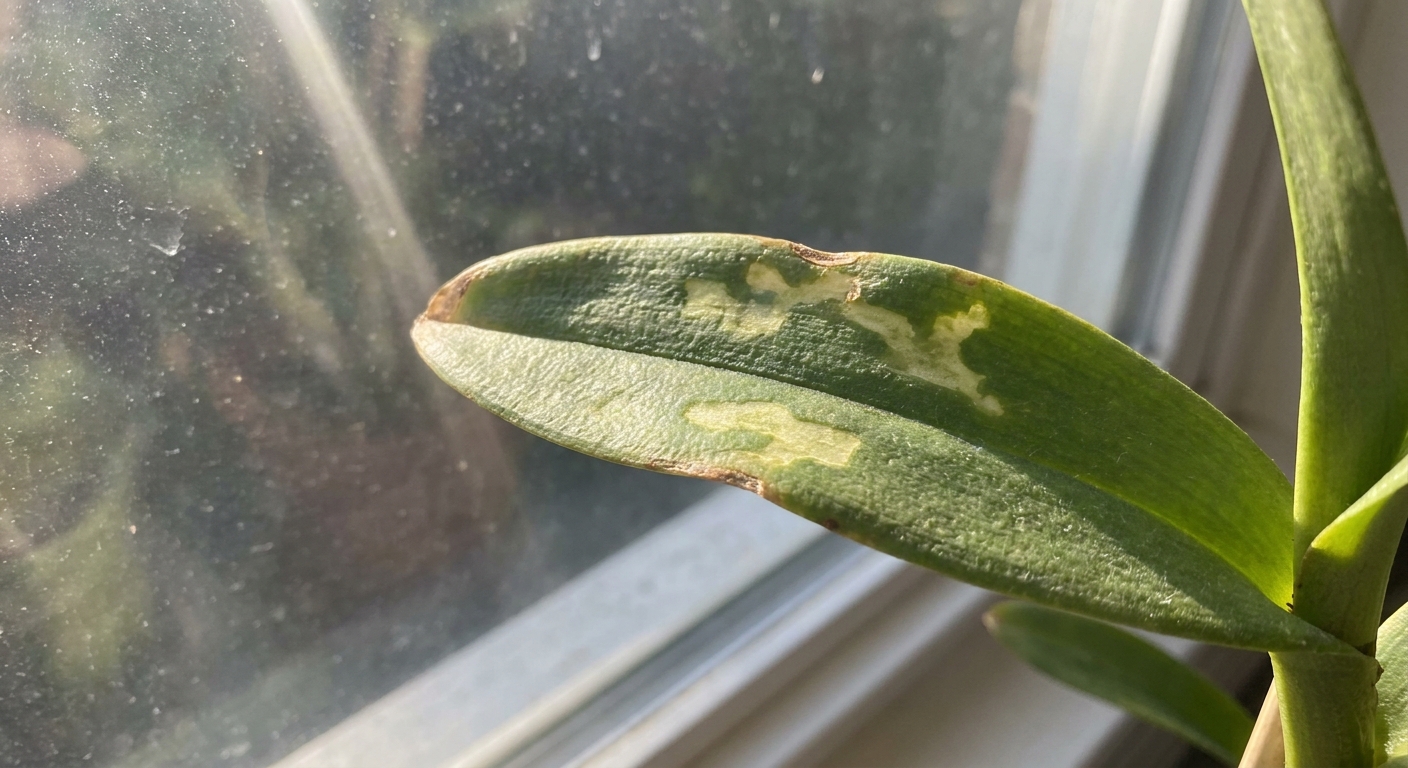
- Yellowing with crispy patches: too much direct sun or heat
If you only change one thing to get reblooming, move the plant a little brighter. Do it in small steps over a week, like introducing a fern to a new roommate, slowly and politely.
Temperature
Most reed-stem Epidendrums sold to beginners are happy in typical indoor temperatures.
- Daytime: 65 to 80°F (18 to 27°C)
- Night: 55 to 65°F (13 to 18°C) is helpful, but not mandatory
A small nighttime drop can encourage blooming. If your plant spends late spring through early fall outdoors in bright shade, it often rewards you with stronger growth and better flower shows.
For a cautious beginner rule, bring it in before nights dip below about 50 to 55°F (10 to 13°C). Some Epidendrum types tolerate cooler, and some prefer warmer, so treat that threshold as a safe default for common garden-center hybrids.
Avoid: blasting HVAC vents, heat registers, and cold drafts from frequently opened doors in winter.
Watering
Epidendrums like a pattern: water thoroughly, then let the potting mix move toward just barely damp before you water again. Think “wrung-out sponge,” not “dry desert” and not “mud pie.”
How to water
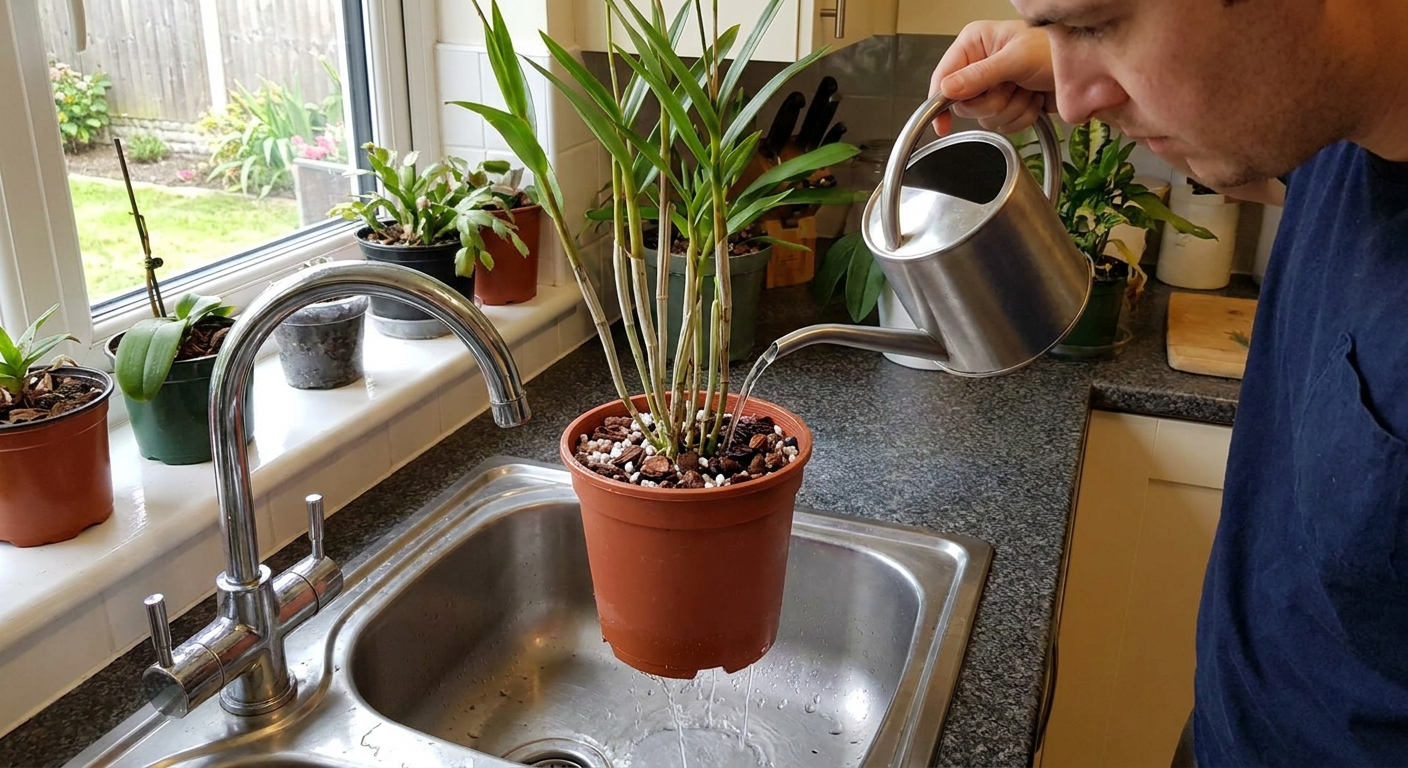
- Take the pot to the sink.
- Run room-temperature water through the pot for 20 to 30 seconds.
- Let it drain completely. No standing water in a cachepot.
- Return it to its spot.
How often
It depends on your home, the pot, and the mix. Use these starting points, then adjust:
- In bark mix indoors: about every 5 to 10 days
- In moss indoors: about every 7 to 14 days (moss holds longer)
- Outdoors in warm months: a few times per week is common, but in hot wind it can be daily, and in humid rainy weather it may be much less
Finger test: if the top inch feels dry and the pot feels lighter, it is usually time.
Warning signs:
- Wrinkled canes or accordion-like leaves: too dry too often, or roots struggling
- Yellowing lower leaves plus a sour smell: staying too wet, possible root rot
Humidity and airflow
Good news: average home humidity is usually fine for common reed-stem Epidendrum hybrids. What matters just as much is airflow. Stagnant, constantly damp conditions are where problems start.
- Aim for: comfortable household humidity, plus gentle air movement
- Avoid: keeping the mix wet all the time, or leaving water sitting in leaf joints
- If your home is very dry: a pebble tray (pot above the waterline) or a small humidifier helps more than constant misting
Potting and mounting
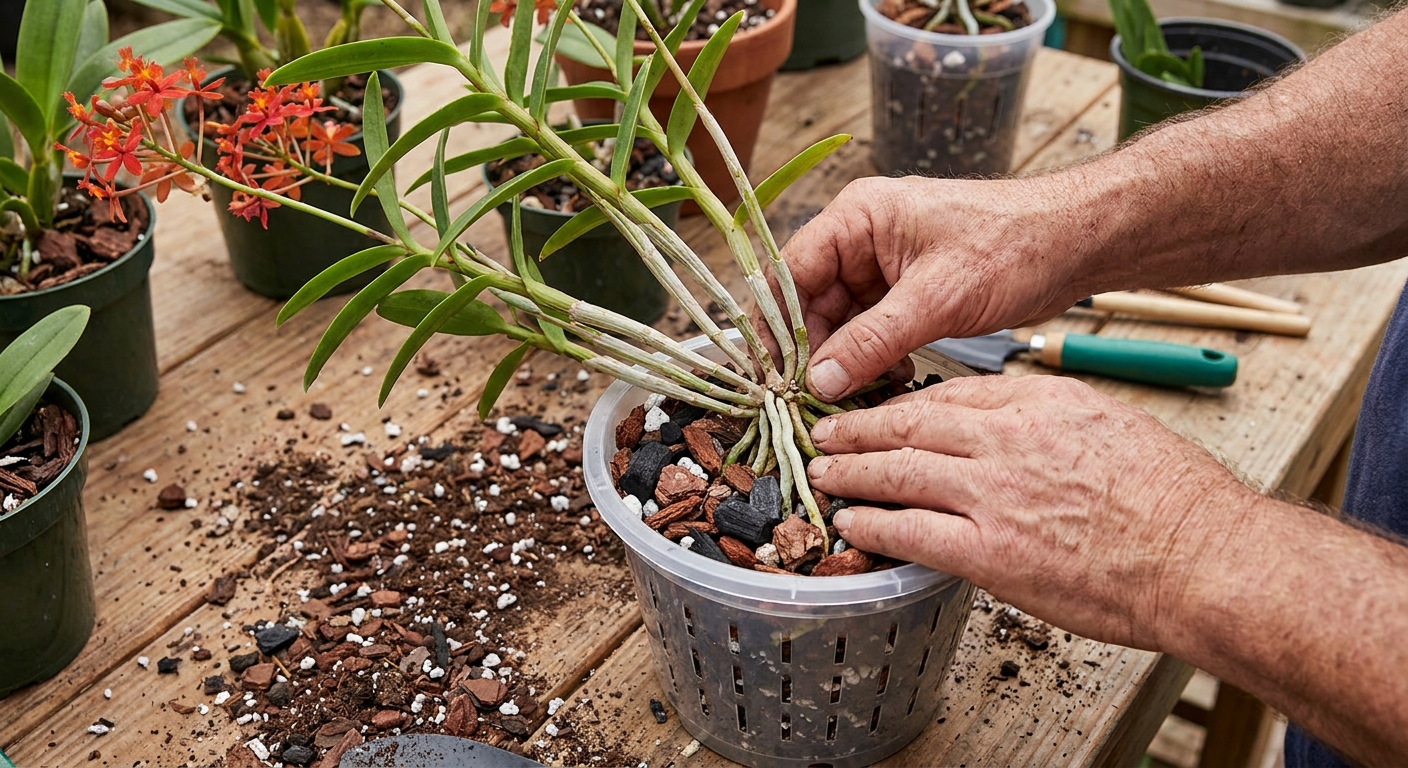
Reed-stem Epidendrums can be grown in pots or mounted. For most people with a store-bought plant, pot culture is easiest.
Potting
A typical beginner-friendly setup is:
- Pot: plastic orchid pot with side holes, or a slotted pot for airflow
- Mix: medium orchid bark, sometimes blended with perlite and a little charcoal
Do not overpot. Choose a pot just large enough to fit the root mass with a little room for new roots. A pot that is too big stays wet too long and can turn your “watering rhythm” into a root-rot hobby.
If your plant came in dense, broken-down mix, consider repotting. Otherwise, wait until after the main bloom flush ends, or when you see fresh root tips and new growth starting.
Repot when:
- the mix smells sour or stays wet for days
- roots look brown and mushy instead of firm
- the plant is top-heavy and wobbly
- bark is crumbling into fine particles
Mounting
Mounted Epidendrums can thrive on cork or wood, especially in humid homes or if you enjoy frequent watering.
- Pros: excellent airflow, natural growth, lower rot risk
- Cons: dries fast, needs frequent watering, often daily in warm dry homes
If you are still building confidence, pot it first. You can always get fancy later.
Outdoor time
Outdoor summer vacations can be amazing for Epidendrums, but treat outdoor light like a new gym routine. Start in bright shade for a week, then increase light gradually. Jumping straight into stronger sun can burn leaves fast, especially after a winter indoors.
- Best start: bright shade under a tree, patio cover, or shade cloth
- Watch for: pale patches, crisp edges, or sudden yellowing
- Rain note: prolonged storms can keep pots too wet, so check drainage and shelter if needed
Blooming
Epidendrums are often generous bloomers, but they bloom on their own schedule. Many hybrids flower in warmer months, and some can bloom more than once a year.
What blooms look like
- clusters of flowers near the top of a mature cane
- flowers can open gradually over time
- spent flowers drop, but the plant may keep growing and forming new buds
How to encourage more blooms
- Increase light gradually, especially in winter
- Feed lightly during active growth (spring through early fall)
- Do not cut green canes unless they are clearly dead, brown, or mushy
- Give a mild night drop if you can, even 5 to 10°F helps
Should you cut the flower stem? If the bloom cluster is fully finished and drying, you can trim the spent flowering portion. Keep the cane if it is green and firm. Those canes are your plant’s pantry.
Feeding
Epidendrums respond well to light, regular fertilizer when they are actively growing.
- Type: a balanced orchid fertilizer (for example 20-20-20 or similar)
- Strength: quarter strength is plenty
- Frequency: every 2 to 4 weeks in spring and summer
Once a month, flush the pot with plain water to rinse out mineral buildup. If you see white crust on the pot or mix, your plant is asking for that rinse.
Pest checks
Garden-center orchids sometimes bring hitchhikers. A 30-second check every watering day prevents a whole soap opera later.
What to look for
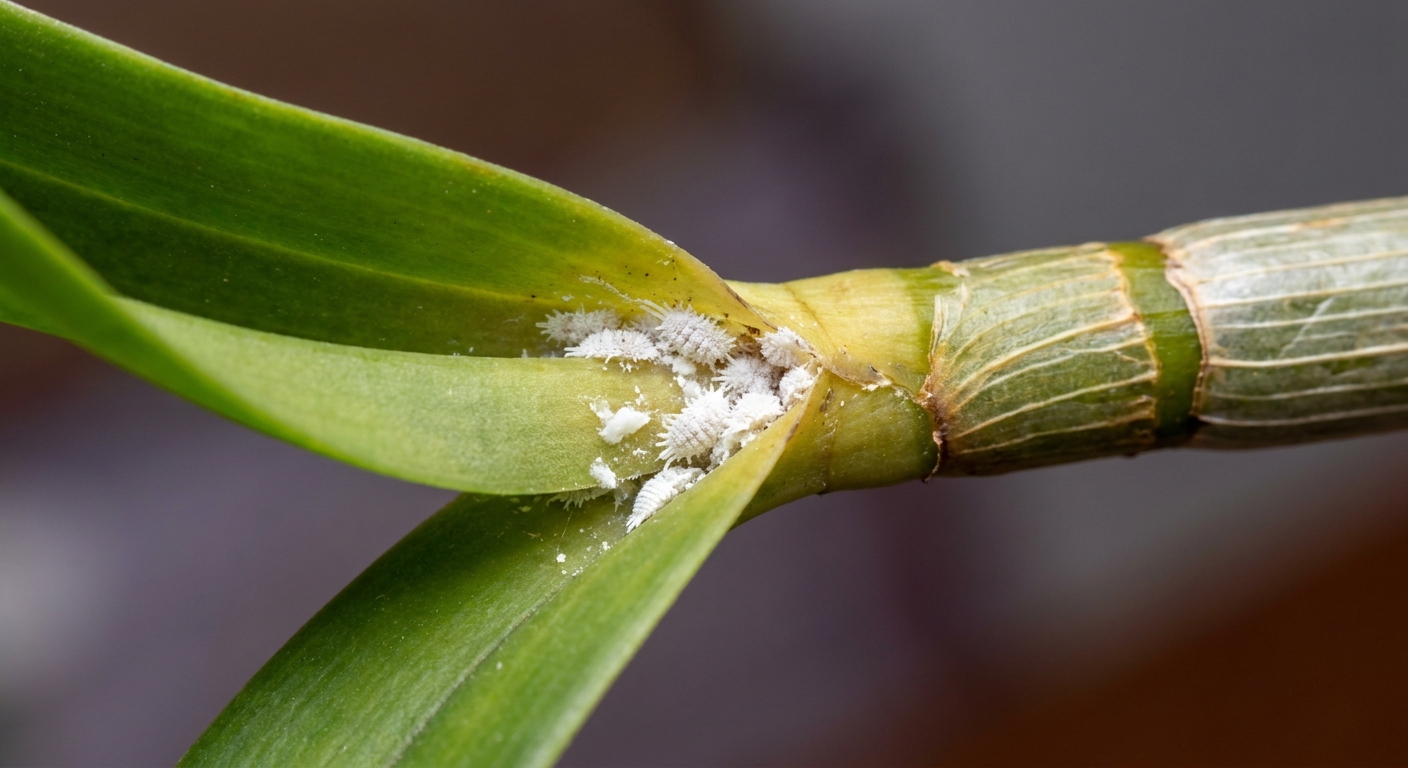
- Mealybugs: white cottony clumps in leaf joints and along canes
- Scale: tan or brown bumps that do not brush off easily
- Spider mites: fine webbing, speckled leaves, especially in dry air
- Thrips: distorted buds, streaky damage on flowers
Simple first response
- Isolate the plant for a couple weeks if you just brought it home.
- Wipe leaves and canes with a damp cloth.
- Spot-treat mealybugs or scale with a cotton swab dipped in 70% isopropyl alcohol.
- If pests persist, use insecticidal soap or horticultural oil, following the label closely.
Tip: treat in the evening or out of direct sun to reduce leaf burn.
Troubleshooting
“My Epidendrum has yellow leaves.”
One or two lower leaves yellowing as new growth appears can be normal. Widespread yellowing usually points to too much water, stale mix, or low light. Check roots and drainage first.
“The canes look wrinkled.”
Wrinkling often means the plant is not taking up enough water. That can be from underwatering, but also from damaged roots. Look at the roots. Firm and pale roots are good. Brown and mushy roots mean it is time to repot and adjust watering.
“It will not bloom again.”
Nine times out of ten, it is light. Move it brighter (gradually), keep watering steady, and feed lightly during growth. Blooming can take a season after a big location change, so give it time.
Simple routine
- Weekly: check moisture, water if needed, and do a fast pest scan
- Every 2 to 4 weeks (growing season): fertilize at quarter strength
- Monthly: flush with plain water to clear salts
- Yearly or every 18 months: repot if the mix breaks down or the plant outgrows the pot
Epidendrums reward consistency. If you miss a day, nothing dramatic happens. Just come back, check the mix, and keep going. Plants are surprisingly forgiving when they feel genuinely cared for, and yes, I still talk to mine while I water.
Pets and safety
If you share your home with curious pets or toddlers, treat orchids like “not a snack,” even when they are gorgeous. Many orchids are listed as non-toxic in common references, but sources can differ and individual sensitivities happen. If ingestion is a concern, check a reliable resource like the ASPCA database (for cats and dogs) or contact your veterinarian or local poison control for guidance.