
Elephant Ear Plant Care Outdoors

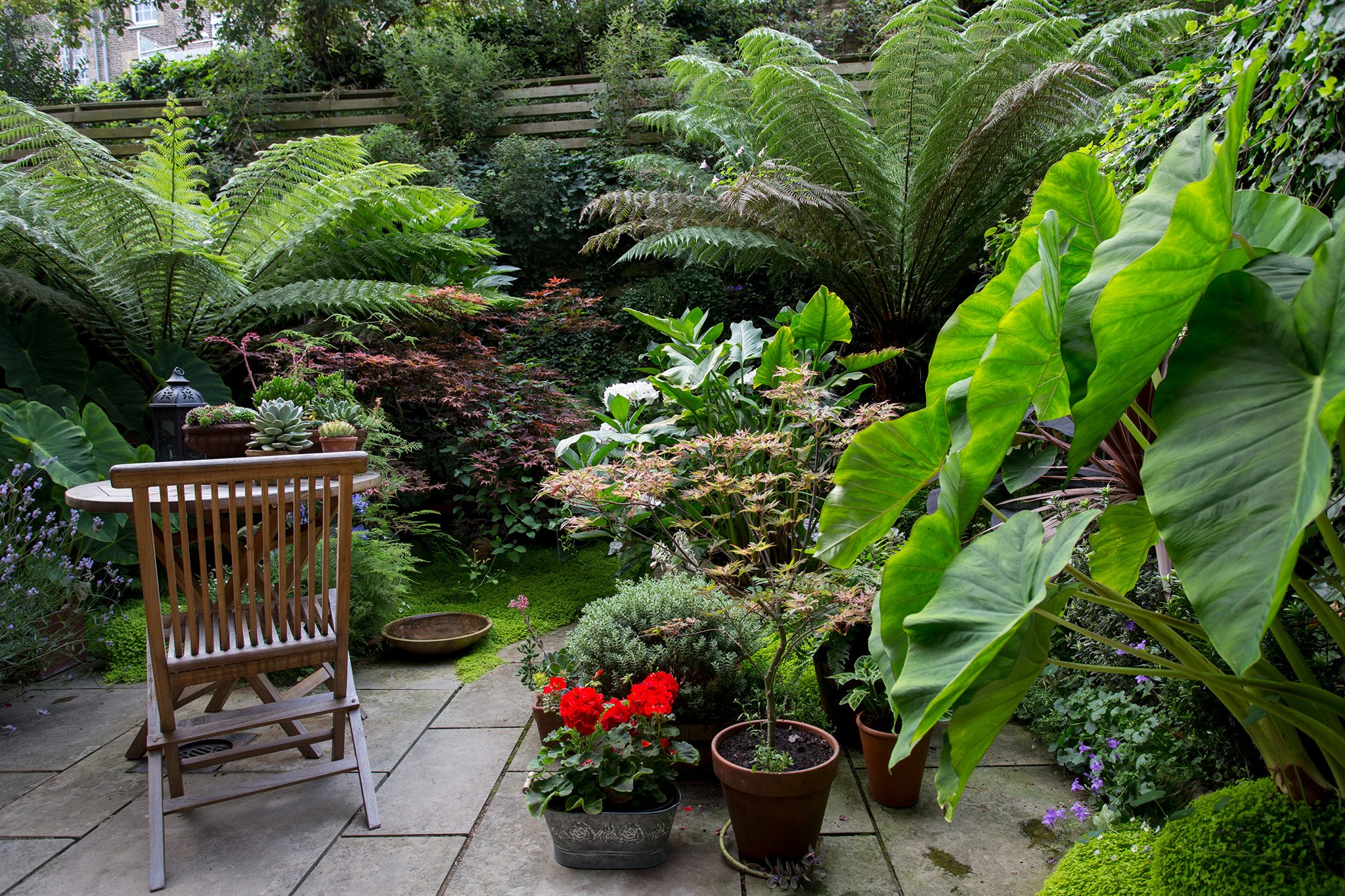
Elephant ears are the plant version of turning the volume up. One warm week and suddenly you have leaves big enough to make your garden feel like a tiny jungle getaway. But “elephant ear” gets used as a catch-all name, and that is where outdoor care can get confusing fast.
Most elephant ears you will grow outside fall into two main groups: Colocasia and Alocasia. (You will also see Xanthosoma sold as elephant ear, especially in warmer regions, and sometimes even Caladium. If your tag says Xanthosoma, use the same general approach as Colocasia: richer soil, steady moisture, and no long cold, soggy stretches.) They look like cousins because they are. They also have very different opinions about water in the soil. If you match the right plant to the right moisture level, you are most of the way to success.

Colocasia vs. Alocasia: key difference
If you remember nothing else, remember this:
- Colocasia is happiest with consistently moist soil and can even handle shallow, boggy conditions. Many varieties genuinely enjoy “wet feet.”
- Alocasia prefers evenly moist soil with excellent drainage. It dislikes sitting in waterlogged soil, especially in cooler weather.
Quick visual clue: leaf angle
It is not a perfect rule, but it helps when you are standing in a nursery aisle.
- Colocasia leaves often droop or point downward. The leaf attaches closer to the center of the blade (a peltate leaf), which contributes to that “umbrella” look.
- Alocasia leaves often face outward or upward and can look more “arrowhead” shaped.
There are exceptions depending on cultivar, age, light, and even wind exposure, so use this as a hint, not a verdict.
Still not sure which you have? Treat unknown elephant ears like Alocasia at first (better drainage, careful watering), especially if nights are cool. In hot weather, check soil daily and do not let a thirsty plant bake. If it sulks, you can always increase moisture. It is harder to rescue a plant from rot than from mild thirst.
Where to plant
In-ground beds
Elephant ears are statement plants, so give them breathing room. Most varieties get wide, and many get tall. Also, those big leaves catch wind like sails, so avoid the most exposed, gusty spots if you can. Near a fence, hedge, or a wall with bright light (not deep shade) can make a big difference.
- Colocasia in beds: Choose a spot where the soil stays consistently moist, like a low area that does not fully dry out. If your soil is sandy and dries quickly, plan to amend heavily with compost and water often.
- Alocasia in beds: Choose a spot that drains well. If you have clay soil, create a slightly raised planting area and mix in compost plus a drainage helper like pine fines or perlite. (Avoid making a “gravel layer” in the hole. It can trap water above it.)
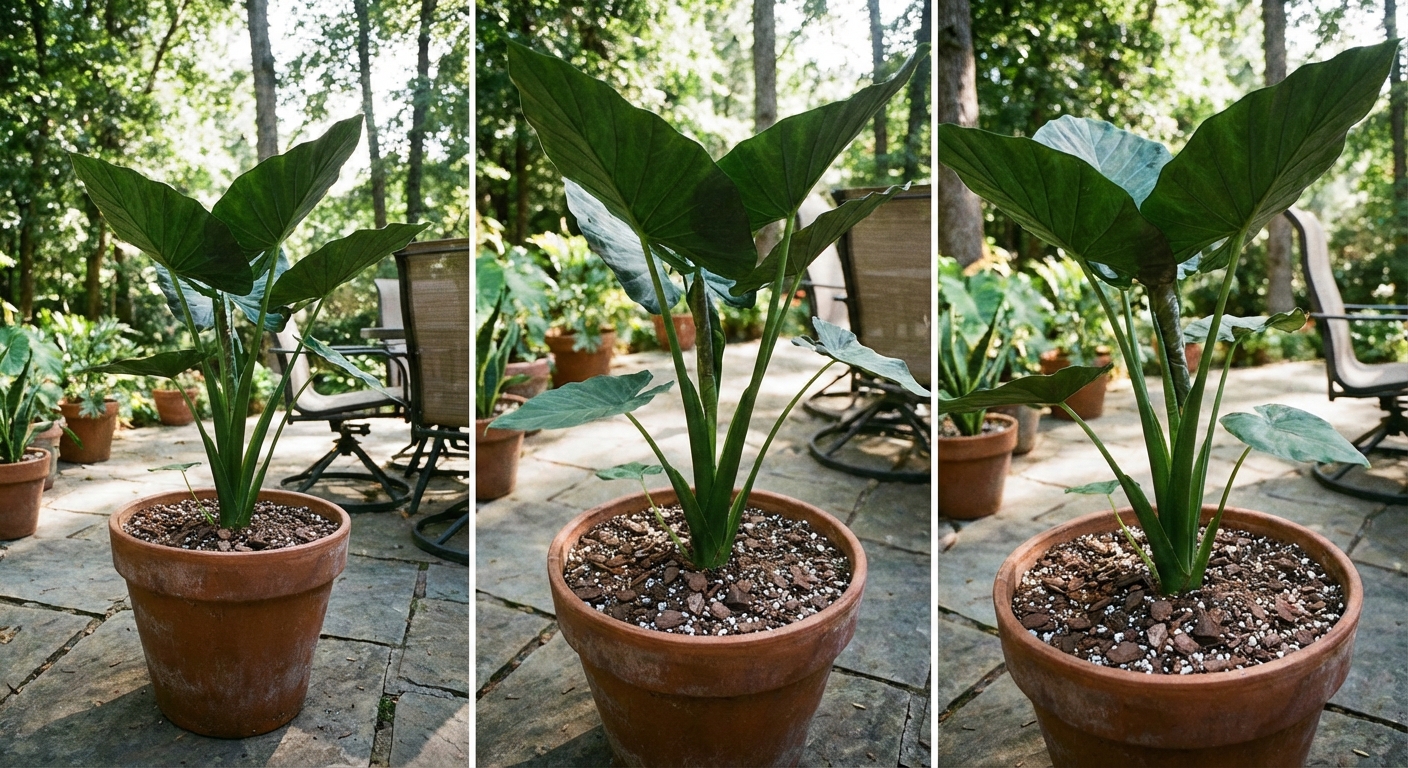
Containers (my favorite for easy control)
Containers let you control soil moisture and also make overwintering easier in cold climates.
- Colocasia in containers: Use a larger pot than you think you need and a rich mix that holds moisture. You will water more often than your other container plants.
- Alocasia in containers: Choose a pot with excellent drainage holes and use a chunky, airy mix. You want moisture, not mud.
Pond edges and water gardens
This is where Colocasia shines. Many colocasias can be grown at the edge of a pond or in a shallow shelf area with water just above the soil line, especially in warm weather. Alocasia generally is not the pond-edge choice unless it is positioned where it stays moist but not submerged.
Sun exposure
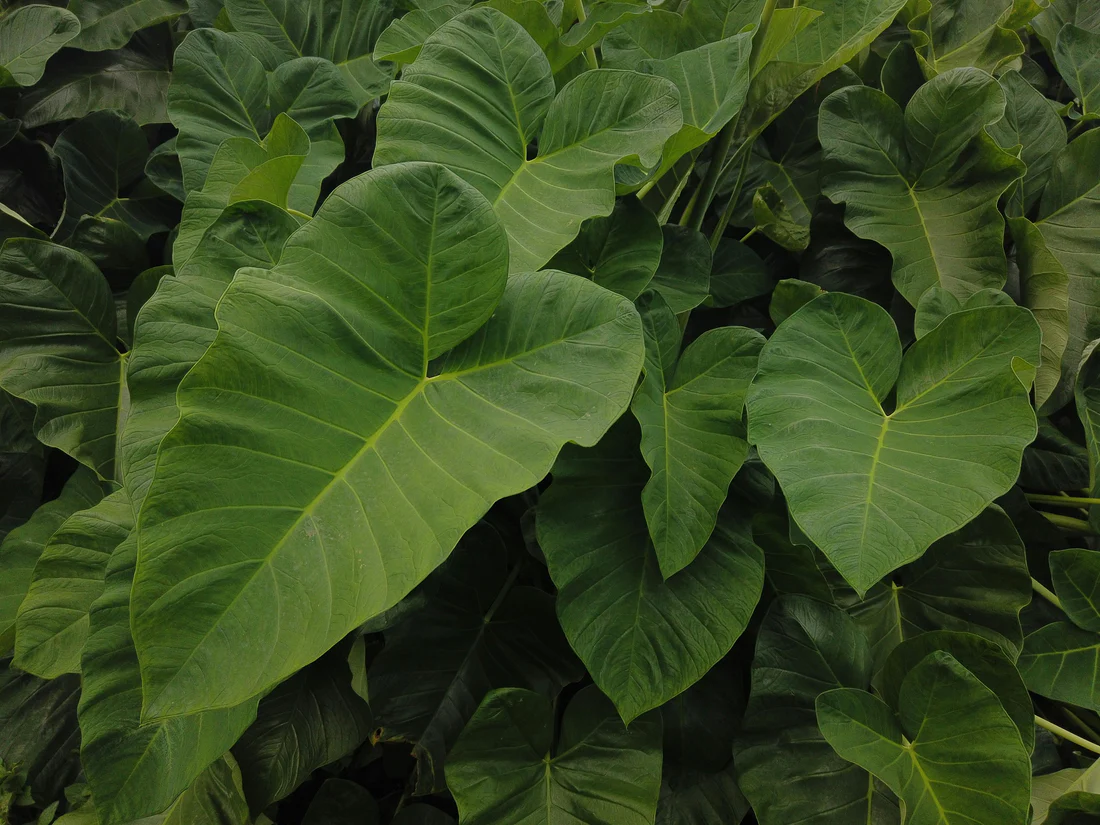
Outdoors, elephant ears can handle more sun than most people expect, but the “best” sun depends on your heat, humidity, and the specific variety.
- In hot climates: Morning sun with afternoon shade is usually ideal, especially for Alocasia. Strong late-day sun can scorch leaves or fade darker cultivars.
- In mild summer climates: Many elephant ears grow beautifully in brighter light, including several hours of direct sun.
- For the biggest leaves: Bright light plus steady moisture plus feeding equals that lush, oversized look.
If your elephant ear looks a little tired by late afternoon but perks up overnight, that can be normal on very hot days. If the leaf edges turn tan and papery, that is usually sun scorch or inconsistent watering.
Watering
Colocasia watering outdoors
Colocasia wants reliably moist soil through the growing season. In peak summer, that can mean watering daily in containers. In beds, mulch helps enormously.
- Water deeply and consistently.
- Mulch 2 to 3 inches to slow evaporation (keep mulch slightly back from the stem).
- If leaves droop dramatically on hot days, check soil moisture. Colocasia will tell on itself fast.
Alocasia watering outdoors
Alocasia likes even moisture, but it hates staying saturated. Let the top inch or two of soil dry slightly, then water thoroughly and let excess drain away.
- Prioritize drainage and airy soil structure.
- Avoid watering late in the evening if nights are cool, since cold, wet soil is a rot invitation.
- If new growth stalls and stems feel soft at the base, suspect overwatering.
Soil
Elephant ears are hungry plants. Big leaves require big resources, and the secret is not fancy products. It is rich soil with steady nutrition.
For Colocasia
- Use compost-rich soil that holds moisture.
- In containers, a quality potting mix amended with compost works well.
- Do not be afraid of moisture-retentive ingredients like coco coir or peat in pots, especially in hotter regions.
For Alocasia
- Use a well-draining mix with compost plus chunky structure for airflow.
- In containers, think “fluffy and rich” instead of dense.
- If you have heavy clay, plant a bit high and build up soil rather than digging a deep bowl.
Fertilizer
If you want those dramatic leaves, plan to feed elephant ears during active growth. Outdoors, they are typically growing hard from late spring through summer, slowing as nights cool.
- When to start: Begin feeding once you see strong new growth and nights are staying reliably warm (about 60°F / 16°C or warmer).
- How often: For many gardens, every 2 to 4 weeks with a balanced fertilizer works well. Slow-release fertilizer at planting can also be very effective for containers.
- What to use: A balanced, all-purpose fertilizer is a safe baseline. If leaves are pale, they often need more nitrogen, but make changes gradually.
- Don’t overdo it: Excess fertilizer can burn roots, especially in containers. Water first, then feed.
My sustainability bias shows here: building soil with compost and mulching heavily reduces how hard you have to push with fertilizer later.
Hardiness
It depends on your winter temperatures and whether you are growing a truly hardy type. Many elephant ears are grown as warm-season corms or rhizomes (often casually called “tubers” in gardening) in cooler zones, then overwintered out of the ground.
Warm zones
In frost-free or mild-winter climates, elephant ears can often stay in the ground year-round, especially with mulch. Colocasia can be more forgiving of moisture in warm winters, but cool plus wet is still risky for both groups.
Cold zones
If your area freezes, treat elephant ears like tender bulbs. Once frost knocks back foliage, it is time to decide: lift and store, or move containers into shelter.
- In-ground plants: Lift corms or rhizomes after the first light frost blackens foliage, but before the ground freezes solid.
- Container plants: You can move the whole pot into a garage or basement, or you can lift and store the corm.
Exact hardiness varies by species and cultivar, so use your local extension guidance and your own microclimate as the final word. A protected courtyard is not the same as an open field. If you want a concrete starting point to ask about locally, some gardeners report good luck with Colocasia ‘Pink China’ in colder zones with protection, but treat that as “possible,” not a promise.
Lifting and storing corms
I like overwintering to feel like putting the garden to bed, not performing surgery. Here is the straightforward approach that works for most home gardeners.
- Wait for dieback. After a light frost, foliage collapses. That is your cue.
- Cut stems back. Leave a short stub a few inches tall so you can handle the plant.
- Dig wide. Use a spade and give yourself room so you do not slice the corm or rhizome.
- Shake off excess soil. Do not rinse unless the soil is extremely heavy and clinging.
- Dry and cure. Let corms dry in a sheltered, airy place for several days so skins toughen up.
- Store cool and barely dry. Think basement, garage, or closet that stays above freezing. Pack in peat, coco coir, or wood shavings that are dry to barely moist so they do not shrivel.
- Check monthly. Remove any soft or moldy pieces. If they shrivel, your storage is too dry. If they rot, it is too damp.
In spring, replant when soil is truly warm and nights are staying above about 60°F / 16°C. Elephant ears hate cold starts. If you plant into chilly soil, they just sit there sulking. If a late cold snap is coming after you plant, cover them overnight with frost cloth or an upside-down pot, and hold off on extra watering until temps rebound.
Common outdoor problems
Yellowing leaves
- Older leaf fading: Normal, especially as new leaves emerge.
- Many leaves yellowing: Often inconsistent watering, poor drainage (especially for Alocasia), or not enough nutrition.
Brown, crispy edges
- Usually drought stress, low humidity, or too much harsh sun.
- In containers, it can mean the plant is rootbound and drying too quickly.
Torn or shredded leaves
- Wind damage is common because the leaves are basically garden kites. Move container plants to a more sheltered spot, or use nearby shrubs, fencing, or a wall as a windbreak.
- Storms can also snap petioles. If a leaf is badly mangled, trimming it off lets the plant focus on new growth.
Holes and chewed leaves
- Slugs and snails love elephant ears, especially in moist colocasia-friendly spots.
- Japanese beetles can skeletonize leaves in some regions.
Sticky leaves or clustered bugs
- Aphids and mealybugs can show up on tender new growth. A strong water spray or insecticidal soap usually handles early infestations.
Stippled leaves and webbing
- Spider mites love hot, dry spells. Rinse leaves (especially undersides) and keep plants evenly watered to reduce stress.
Spots, blotches, or collapsing leaves
- Leaf spot issues can flare in very wet, low-airflow conditions. Water at the soil line when possible and avoid crowding.
- If stems feel soft at the base, think rot: soil too wet for too long, or cool wet conditions. For Alocasia, improve drainage immediately and reduce watering.
Outdoor vs. indoor Alocasia
If you have only grown Alocasia indoors, outdoor care can feel familiar but the rules shift a bit. Outside, you are balancing sun intensity, summer storms, wind, and fast-drying heat. Indoors, the main puzzle pieces are stable light, humidity, and container moisture management.
So if your brain keeps trying to treat your outdoor elephant ear like a living-room Alocasia, you are not wrong, you just need to recalibrate for the elements. If you want to dive deeper into houseplant-specific routines (light placement, indoor watering rhythm, and humidity tips), see our indoor Alocasia care guide.
Success checklist
- Identify the plant: Colocasia tolerates wet soil. Alocasia needs drainage. Xanthosoma often behaves more like Colocasia.
- Choose the right site: Morning sun and afternoon shade is a safe bet in hot areas. Add wind shelter when possible.
- Plant in rich soil: Compost is your best friend.
- Water consistently: Especially in containers and during heat waves.
- Feed through summer: Big leaves need steady nutrition.
- Plan winter ahead: In cold zones, lift corms or move pots before hard freezes.
If you are nervous, start with one elephant ear in a container. It is the gentlest way to learn your plant’s preferences, and I promise it is a lot easier than it looks once you see how quickly they respond to good care.