
Easter Cactus Care: Water, Light, and Blooms

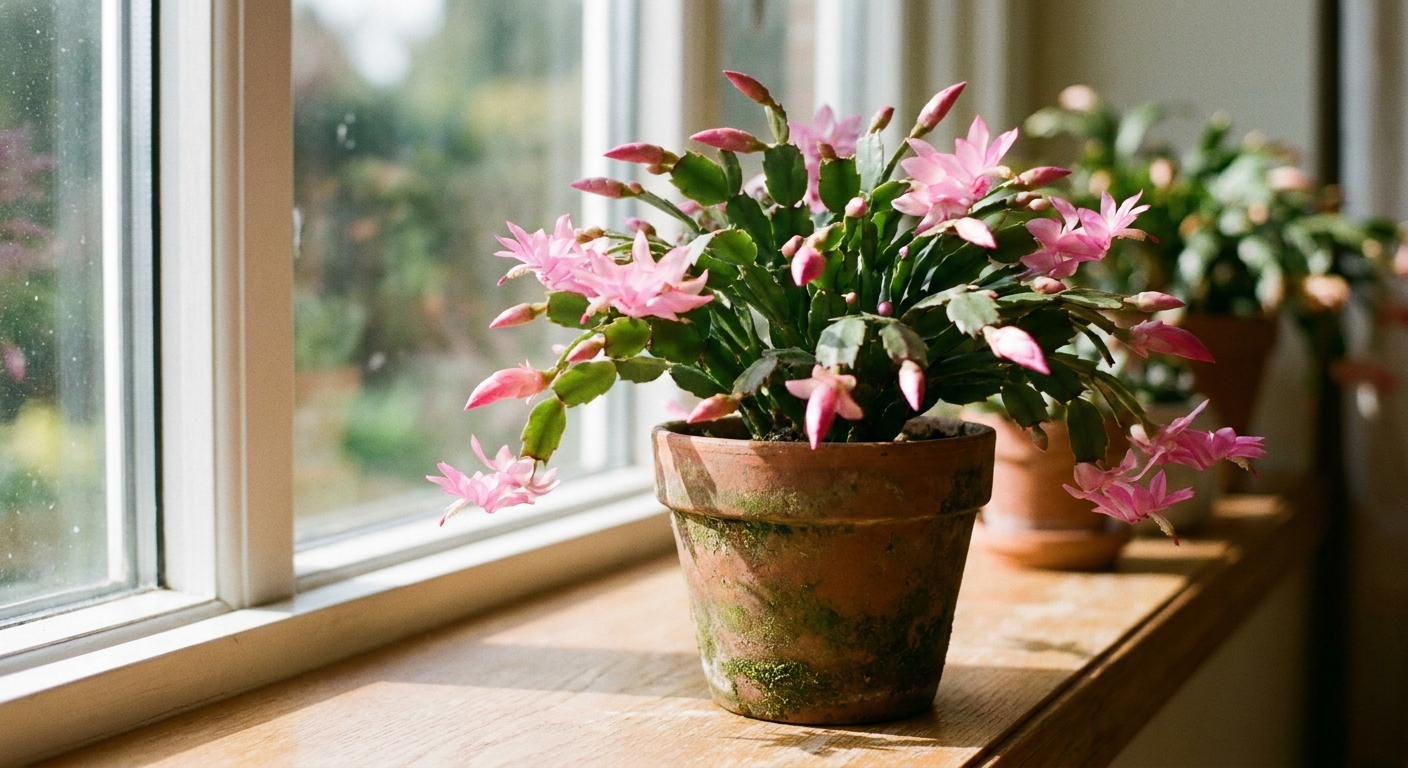
If you have ever looked at an Easter cactus and thought, “It is a cactus, so I should basically ignore it,” you are in good company. Easter cactus is a tropical, rainforest cactus from southeastern Brazil that prefers bright light, airy soil, and a steady rhythm of moisture followed by breathing room. Botanically, it is often sold as Rhipsalidopsis (for example, Rhipsalidopsis gaertneri or Rhipsalidopsis rosea), and you will still see it labeled as Hatiora in shops and older care guides. Same plant, confusing name tags.
This guide walks you through the big three for beginners, which are water, light, and blooms, plus the most common indoor mistakes I see (and have personally made). You can absolutely get those cheerful spring flowers without turning your living room into a greenhouse.

Meet the Easter cactus
Easter cactus is part of the holiday cactus group , but it is not the same plant as Thanksgiving cactus or Christmas cactus (both commonly in the genus Schlumbergera). The care overlaps, but bloom timing and a few details matter.
Quick ID tips
- Easter cactus (Rhipsalidopsis/Hatiora): Segments tend to look more rounded and scalloped, with softer “teeth.” Flowers often look more starry and open, and it typically blooms in spring.
- Thanksgiving/Christmas cactus (Schlumbergera): Segments usually have more pronounced points or “claws.” Blooms are common in late fall through winter.
If your plant is reliably flowering around March to May, chances are good it is an Easter cactus. Nurseries sometimes label all of them as “Christmas cactus,” so bloom season is often the best clue.
Light: bright and gentle
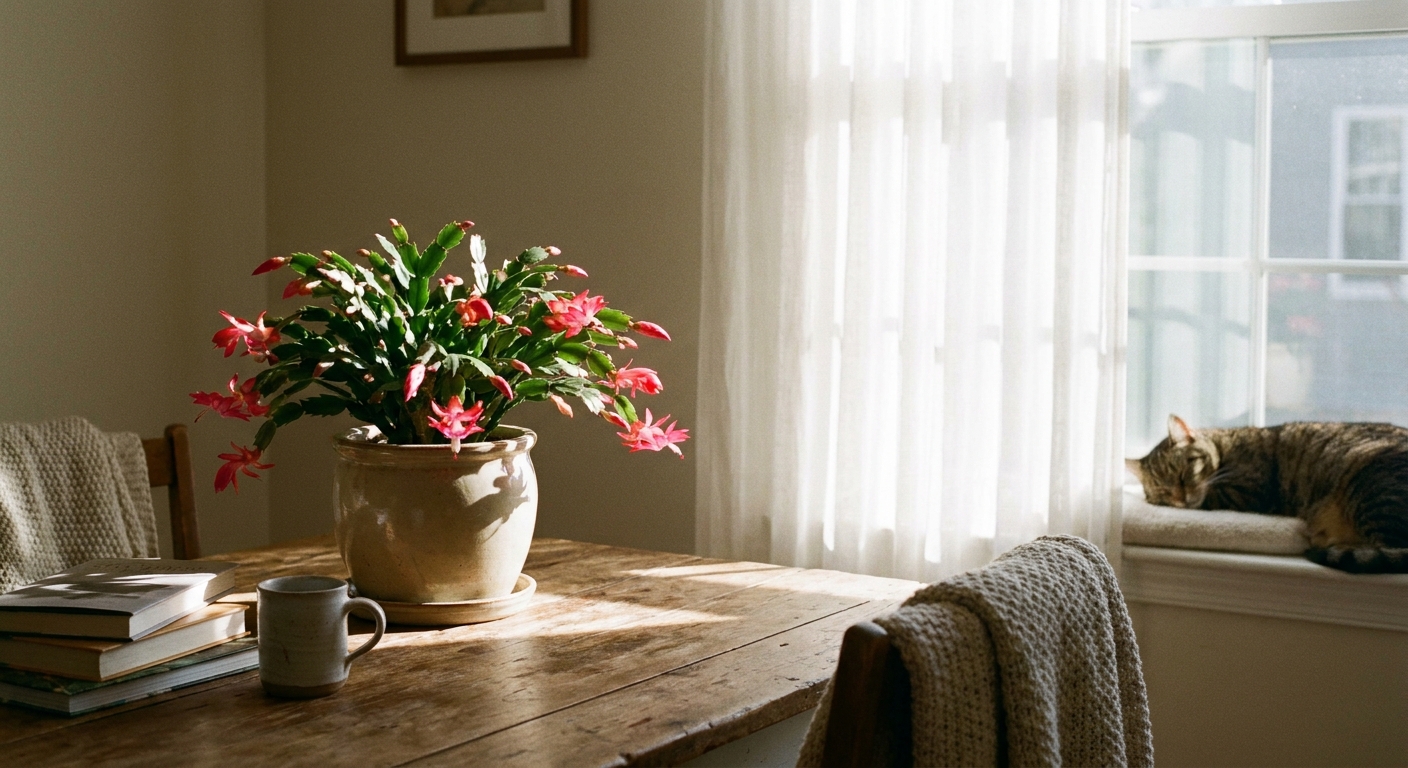
Light is the secret sauce for compact growth and flower buds. Easter cactus wants bright indirect light most of the day.
Best window options
- East-facing window: My favorite for beginners. Morning sun is usually gentle enough.
- South or west window: Works well if you use a sheer curtain or place the plant a bit back from the glass.
- North-facing window: Often too dim long-term. The plant may grow thin and bloom poorly.
Two easy light rules
- Comfort test: You should be able to comfortably read near the plant in daylight without turning on a lamp.
- Placement shortcut: A few feet back from a bright window (especially east) is usually a safe starting point.
Signs the light is off
- Too much sun: Reddish or bleached segments, dry crisping at edges, or the plant looks stressed and dull.
- Too little light: Stretched segments, slow growth, and little to no blooming.
Water: soak, then almost dry
Most Easter cactus problems come from watering like a desert cactus (too little) or like a pothos (too often). The sweet spot is a cycle: water thoroughly, then let the mix dry partway before watering again.
How often to water
Frequency depends on your home, pot size, and season, so use the soil as your guide:
- Spring and summer (active growth): Water when the top 1 to 2 inches of mix feel dry. In many homes, that is about every 7 to 14 days.
- Fall and winter (slower growth): Let it dry a bit more between waterings. Often every 2 to 4 weeks indoors.
How to water correctly
- Check first: Stick a finger into the mix. If it feels damp at finger depth, wait. Water when that zone is just barely dry.
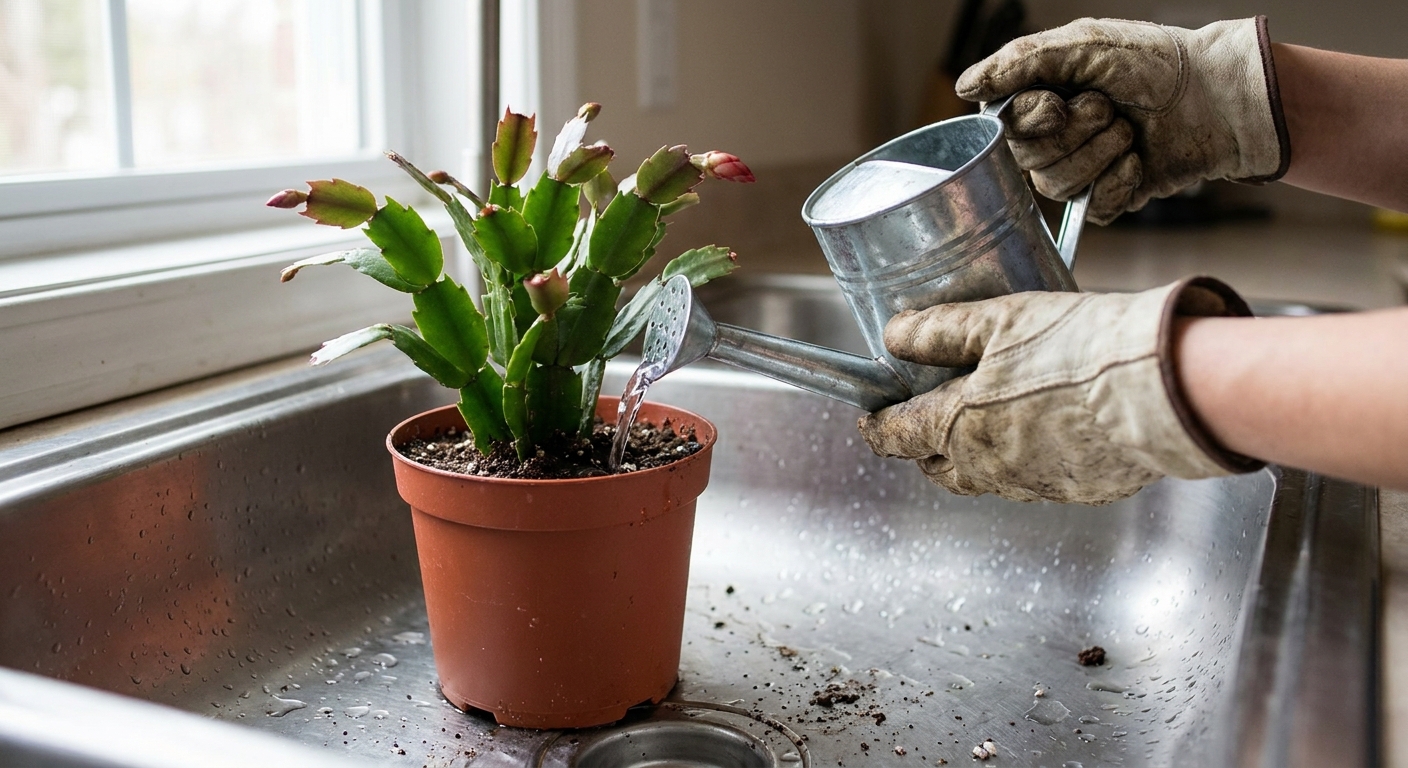
- Soak fully: Water until it runs out of the drainage holes.
- Drain completely: Never let the pot sit in a saucer of water longer than 10 to 15 minutes.
Humidity helps
Easter cactus is happier with moderate humidity (roughly 40 to 60 percent). In very dry homes, buds can drop and segment tips may look a bit tired. Easy fixes:
- Group plants together.
- Use a pebble tray with water below the pot (the pot should not sit in water).
- Run a small humidifier nearby in winter.
Soil and pot: airy and snug
In nature, these plants often grow in leaf litter and debris caught in tree branches or on rocks. That means they want oxygen around their roots. A heavy, water-holding potting soil is the quickest way to root trouble.
The ideal potting mix
- Base: A quality houseplant potting mix.
- Add air: Mix in perlite, pumice, or orchid bark.
A simple beginner blend: 2 parts potting mix + 1 part perlite or fine orchid bark.
Choose the right pot
- Drainage holes are non-negotiable.
- Easter cactus blooms best slightly snug, so do not rush to upsize.
- Terracotta helps if you tend to overwater. Plastic holds moisture longer if your home is very dry.
When to repot
Every 2 to 3 years is plenty, or when the mix breaks down and stays wet too long. Repotting is usually easiest after flowering, in late spring or early summer. Try not to repot during bud set or bloom unless you are dealing with a real emergency like rot.
How to get it to bloom
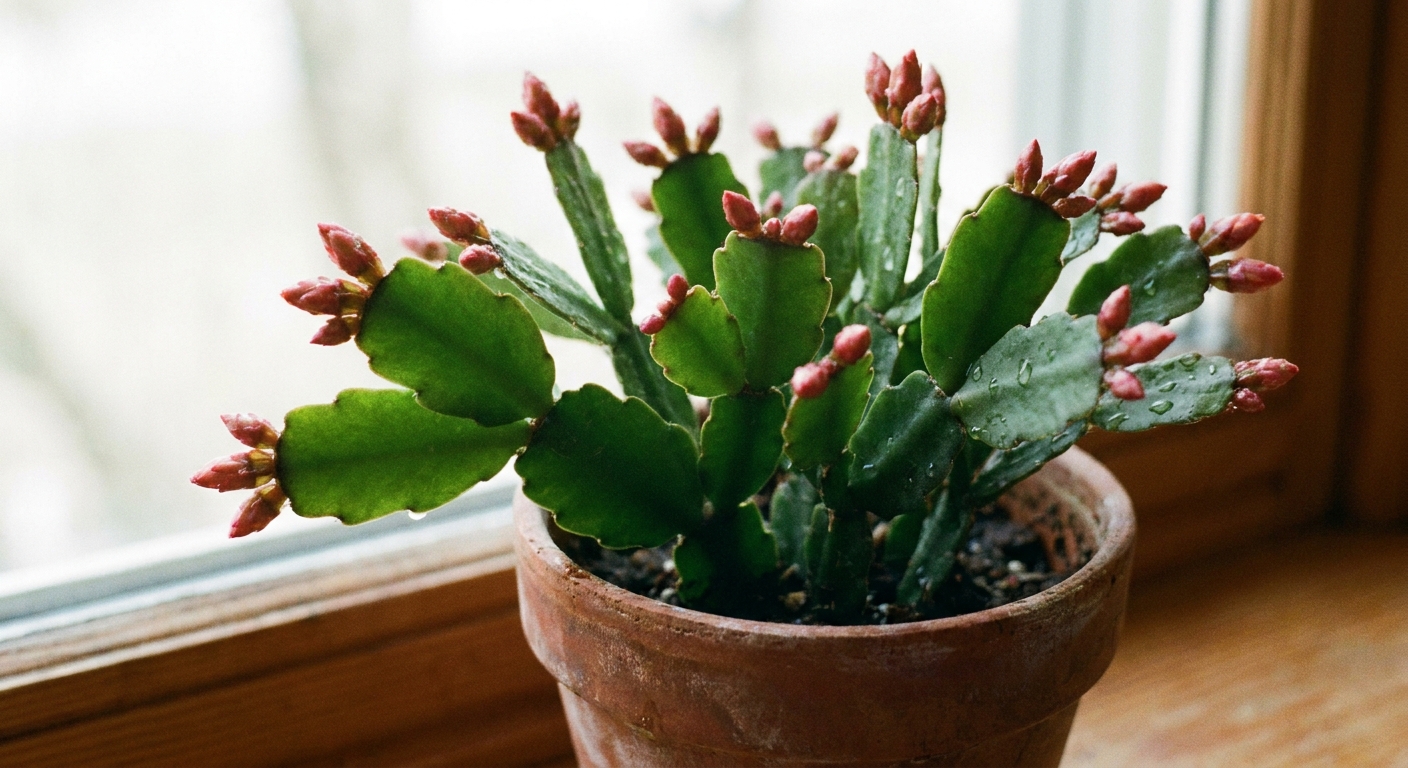
Those spring flowers happen when the plant experiences a seasonal cue. For Easter cactus, bud formation is encouraged mostly by a cooler rest period plus slightly drier watering, more than a strict darkness schedule. In other words, it is more temperature-driven than its Thanksgiving and Christmas cactus cousins, and it naturally finishes developing blooms as days lengthen toward spring.
Bloom cues that work indoors
- Cooler nights: Aim for about 50 to 55°F (10 to 13°C) for 8 to 12 weeks in late winter if you can manage it. If that is not realistic, even consistently cooler nights in the upper 50s can help.
- Drier rest: Do not drought it, but let the mix dry more between waterings during the cool period.
- Bright daytime light: Keep it in strong, indirect light during the day.
- Darkness (optional support): Unlike Schlumbergera, Easter cactus does not usually need a strict 12 to 14 hours of darkness. That said, a room with normal, darker nights and no late-night spotlight treatment can still be helpful.
Once buds appear, treat the plant like a diva who hates surprises: keep the light consistent, avoid drafts and heat blasts, and do not swing between soaking wet and bone dry. Also, avoid rotating the pot while it is in bud. Some plants really do notice.
Why buds drop
- Sudden temperature changes (near a heater, fireplace, or cold window).
- Dry air plus missed waterings.
- Moving the plant repeatedly once buds form (including frequent rotation).
- Overwatering that starts root stress.
Temperature: keep it comfy
For everyday growth, Easter cactus is happiest in typical indoor temperatures, roughly 65 to 75°F (18 to 24°C) during the day, with slightly cooler nights. Avoid frost and freezing temperatures entirely. If you summer it outdoors, bring it in well before nights dip toward the low 50s.
Season-by-season care
Spring (bloom and recovery)
- Enjoy blooms in bright indirect light.
- After flowering, remove spent blooms gently.
- Resume regular watering as growth picks up.
Summer (growth)
- Water when the top couple inches dry.
- Fertilize lightly if you want faster growth and better future blooms.
- It can go outdoors in shade or bright filtered light once nights are consistently above 55°F (13°C).
Fall (slow down)
- Reduce fertilizer.
- Let the plant dry a bit more between waterings.
- Avoid harsh afternoon sun as indoor light shifts.
Late winter (rest and bud set)
- Give a cool rest period if possible, and ease back on water.
- Keep light bright during the day and avoid big temperature swings.
Feeding: less than you think
Easter cactus is not a heavy feeder, but a little nutrition helps with bloom energy.
- When: Late spring through summer.
- What: A balanced houseplant fertilizer at half strength.
- How often: Every 4 weeks is plenty for most indoor plants.
Skip fertilizing while it is in bud or bloom, and pause in winter when growth is slow.
Common mistakes
Mistake 1: Treating it like a desert cactus
Symptom: Wrinkled segments, limp growth, buds dropping.
Fix: Water thoroughly, then return to a consistent dry-down routine. Increase humidity if your home is very dry.
Mistake 2: Letting it sit in water
Symptom: Yellowing, mushy segments, sour smell from soil, fungus gnats.
Fix: Empty the saucer, improve drainage, and consider repotting into a chunkier mix if the soil stays wet longer than about 7 to 10 days in average indoor conditions.
Mistake 3: Too little light
Symptom: Long, floppy segments and no flowers.
Fix: Move closer to a brighter window or add a grow light for 10 to 12 hours per day.
Mistake 4: Heat blasts and cold drafts
Symptom: Buds shrivel or fall, especially in winter.
Fix: Keep it away from HVAC vents, radiators, fireplaces, and icy glass.
Pruning and shaping
If your Easter cactus is getting lanky or uneven, a small trim can make it fuller.
- Wait until after flowering.
- Gently twist off a segment or two at a joint. Do not slice through the middle of a segment.
- New branching usually forms near the break, which encourages a bushier shape.
And yes, I talk to mine while I prune. It does not hurt. It may improve morale.
Propagation
Easter cactus propagates well from stem segments, though it can be a bit slower than some Thanksgiving or Christmas cactus cuttings.
Step-by-step
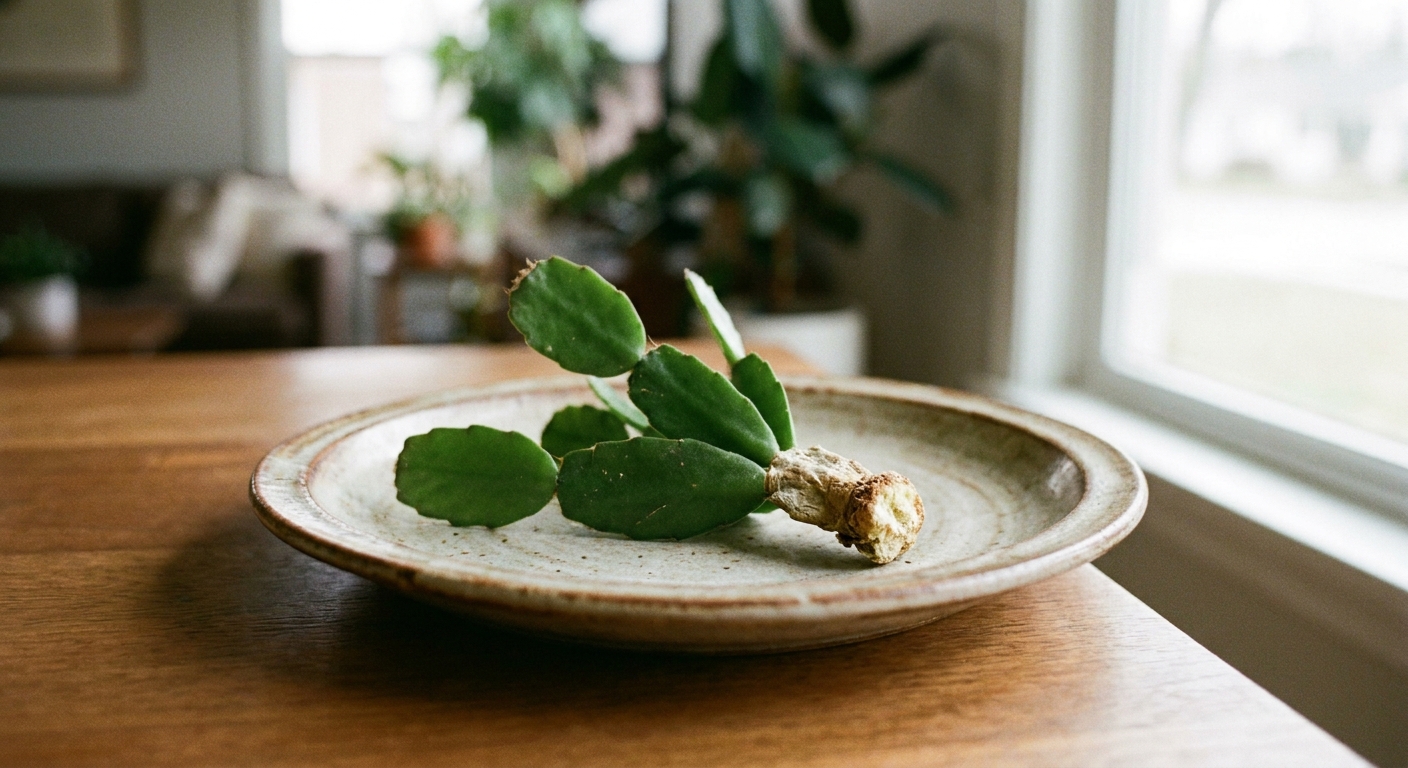
- Twist off a small piece with 2 to 4 segments.
- Let it callus for 1 to 2 days on a clean plate.
- Pot into a lightly moist, airy mix (like the same chunky blend you use for the parent plant).
- Keep in bright indirect light and lightly moist, not wet.
- After a few weeks, give a gentle tug. Resistance means roots.
Pests and problems
- Mealybugs: White cottony clusters in joints. Dab with isopropyl alcohol on a cotton swab and repeat weekly until gone.
- Spider mites: Fine webbing and speckled, dull segments in dry air. Rinse the plant and raise humidity.
- Fungus gnats: Often a sign the soil is staying too wet. Let the mix dry more, use sticky traps, and consider a chunkier mix.
- Root rot: Mushy base, bad smell, collapsing segments. Unpot, trim rotted roots, repot in fresh airy mix, and adjust watering.
Beginner FAQ
Is Easter cactus toxic to cats or dogs?
Easter cactus is commonly listed as non-toxic to cats and dogs (it is often grouped with “holiday cacti” on pet-safety lists). Still, chewing any plant can cause mild stomach upset. If your pet is a dedicated leaf-snacker, place the plant out of reach and check a trusted source like the ASPCA database for the most current listing.
Why is my Easter cactus turning red?
Reddish segments usually mean too much direct sun or general stress. Move it to bright indirect light and keep watering consistent.
Can I put my Easter cactus outside?
Yes, in warm weather. Give it shade or filtered light and bring it in before nights drop into the low 50s. Outdoor sun can burn it quickly, so acclimate slowly.
Do I need a special cactus soil?
Not necessarily. Many cactus soils are designed for desert plants and can be too sandy and fast-drying. A chunky houseplant mix with perlite or orchid bark usually works better for Easter cactus roots.
Quick checklist
- Bright indirect light near an east, south, or west window.
- Water deeply, then wait until the top 1 to 2 inches dry (and finger depth is barely dry).
- Airy, fast-draining mix in a pot with drainage holes.
- For blooms, prioritize a cool rest period (around 50 to 55°F for 8 to 12 weeks) plus slightly drier watering.
- No big moves, rotations, or temperature shocks once buds form.
If you only remember one thing, make it this: Easter cactus thrives on steady routines, not extremes. Give it bright light, an airy root zone, and a sensible watering rhythm, and it will pay you back with those bright spring blooms right when the world is waking up again.