
Dwarf Banana Plant Care Indoors

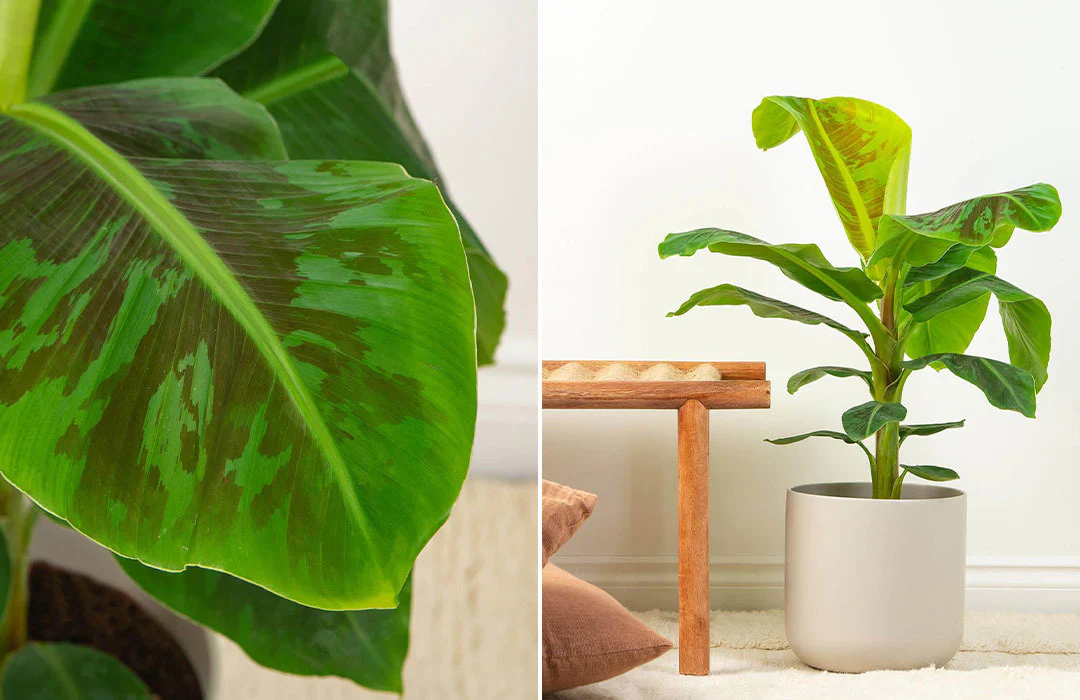
If you have ever wished your living room could feel a little more like a warm greenhouse, a dwarf banana plant (Musa) is one of the fastest ways to get there. Those huge, paddle-like leaves unfurl like green flags, and the whole plant has that lush, tropical “vacation” energy even when it is snowing outside.
Indoor banana care is not difficult, but it is specific. Think of it like this: bananas are giant herbaceous plants from the tropics, built for bright light, steady moisture, and lots of feeding when they are actively growing. Give them those basics and they reward you with big, dramatic foliage. Fruit is possible for a few people, but most indoor growers should plan on foliage-first joy.

Pick the right plant and set expectations
“Dwarf banana” is a catch-all phrase, and it helps to know what you are buying. Most houseplant bananas are Musa varieties grown for ornamental foliage, not supermarket-style bunches.
- Common indoor types: Dwarf Cavendish (Musa acuminata), Super Dwarf Cavendish, and other compact Musa selections.
- Size reality check: “Dwarf” still gets big. Many indoor plants reach 4 to 7 feet tall with a wide spread when happy, especially Dwarf Cavendish. Super dwarf types can stay shorter but still need floor space.
- Fruiting reality check: Fruiting indoors is uncommon because it requires very high light, warmth, consistent feeding, and time. Even if a plant blooms, fruit may not fully size up or sweeten without greenhouse-level conditions.
If you want guaranteed fruit, treat a banana like a seasonal patio plant you overwinter indoors, or grow it in a greenhouse or sunroom. If you want a bold tropical houseplant, you are in the perfect lane.
Light: the make-or-break factor
Most “my banana is sad” problems are really “my banana is starving for light.” In a rainforest, bananas are blasted with bright light for long hours. Indoors, they need the brightest spot you can offer.
Best indoor placement
- Ideal: South or southwest window with several hours of direct sun, especially in winter.
- Good: East window with strong morning sun plus supplemental grow light.
- Challenging: North window without a grow light. The plant may limp along but will stretch and drop older leaves.
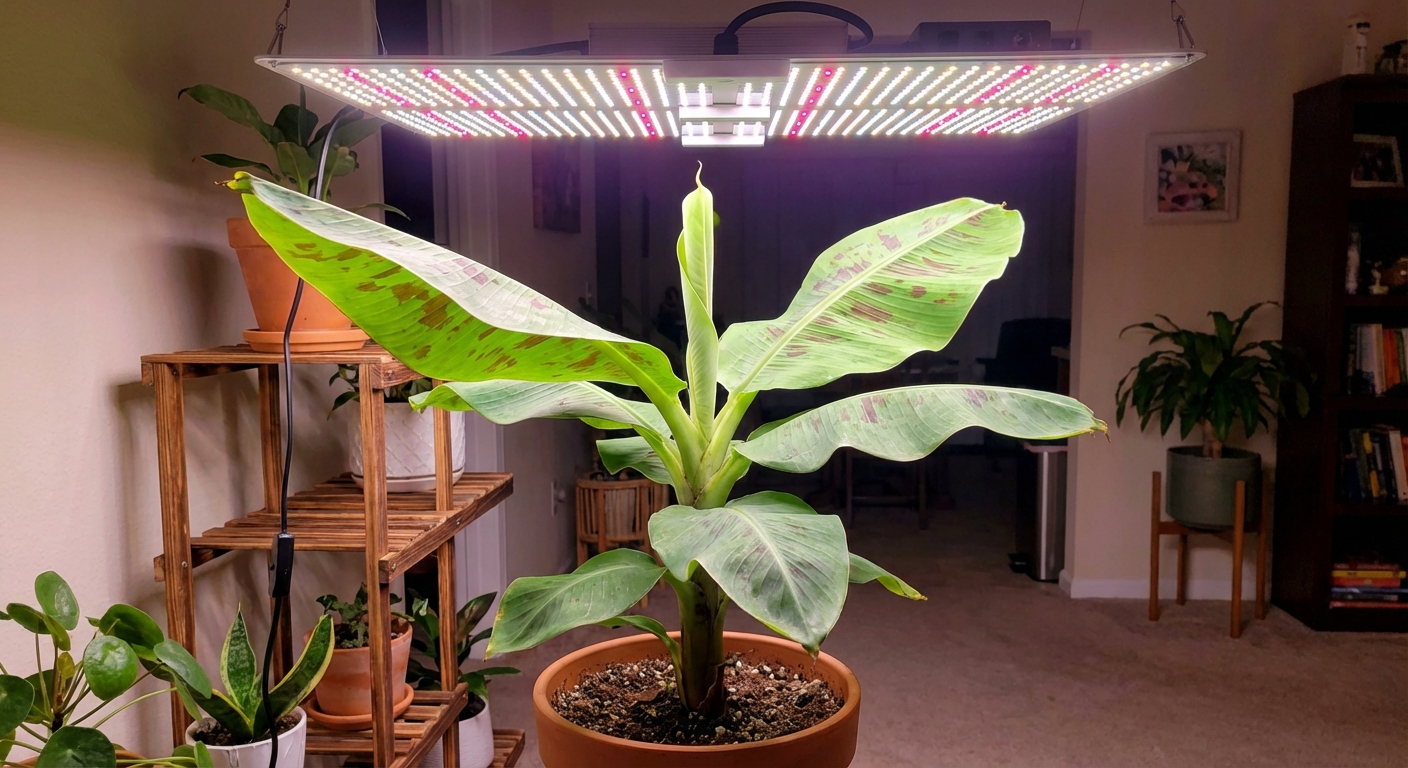
Grow lights (highly recommended in many homes)
If you cannot provide strong direct sun, a grow light can be the difference between a banana that merely survives and one that actually thrives.
- Duration: Aim for 10 to 14 hours/day.
- Distance: Follow the manufacturer guidance, but many strong LEDs do best roughly 12 to 24 inches from the top leaves.
- Tip: Rotate the pot every week or two so the pseudostem grows straight instead of leaning hard toward the window.
Temperature and humidity: keep it warm and gently steamy
Bananas are happiest when your home feels like a summer day, not a drafty hallway. Warmth and humidity directly affect leaf size, speed of growth, and how often edges crisp.
Temperature targets
- Sweet spot: 70 to 85°F (21 to 29°C).
- Slows down: Below about 65°F (18°C).
- Stress zone: Cold drafts, air conditioner blasts, or temperatures near 55°F (13°C) can cause leaf damage and stalled growth.
Humidity targets
- Great: 50 to 70% indoor humidity.
- Okay with care: 40 to 50%, but expect more brown tips and slower unfurling.
- Dry air warning signs: Crispy edges, leaves tearing more easily as they open, spider mites showing up.
Simple ways to raise humidity
- Run a small humidifier near the plant.
- Group plants together to create a more humid microclimate.
- Use a pebble tray, but treat it as “bonus humidity,” not a cure-all.
- Keep the plant away from heating vents in winter.
Misting is fine if you enjoy it, but it is brief. For real results, steady humidity wins.
Pot size, drainage, and the best soil mix
Dwarf bananas love moisture, but they hate soggy, airless roots. Your job is to create a pot that holds water long enough to keep the plant hydrated, while still draining freely and staying oxygen-rich.
Pot essentials
- Drainage holes are non-negotiable. No holes, no banana.
- Choose stability: A heavy pot (ceramic or thick plastic) helps prevent tipping as the plant gets top-heavy.
- Do not oversize too fast: A pot that is too large stays wet too long indoors, inviting root rot.
Pot sizing guidelines
- Small starter plant: 6 to 8 inch pot.
- Established indoor banana: Often 10 to 14 inch pot, sometimes larger depending on cultivar and ceiling height.
- Repot timing: When roots circle the pot and watering becomes frequent because it dries quickly, or when the plant feels unstable.
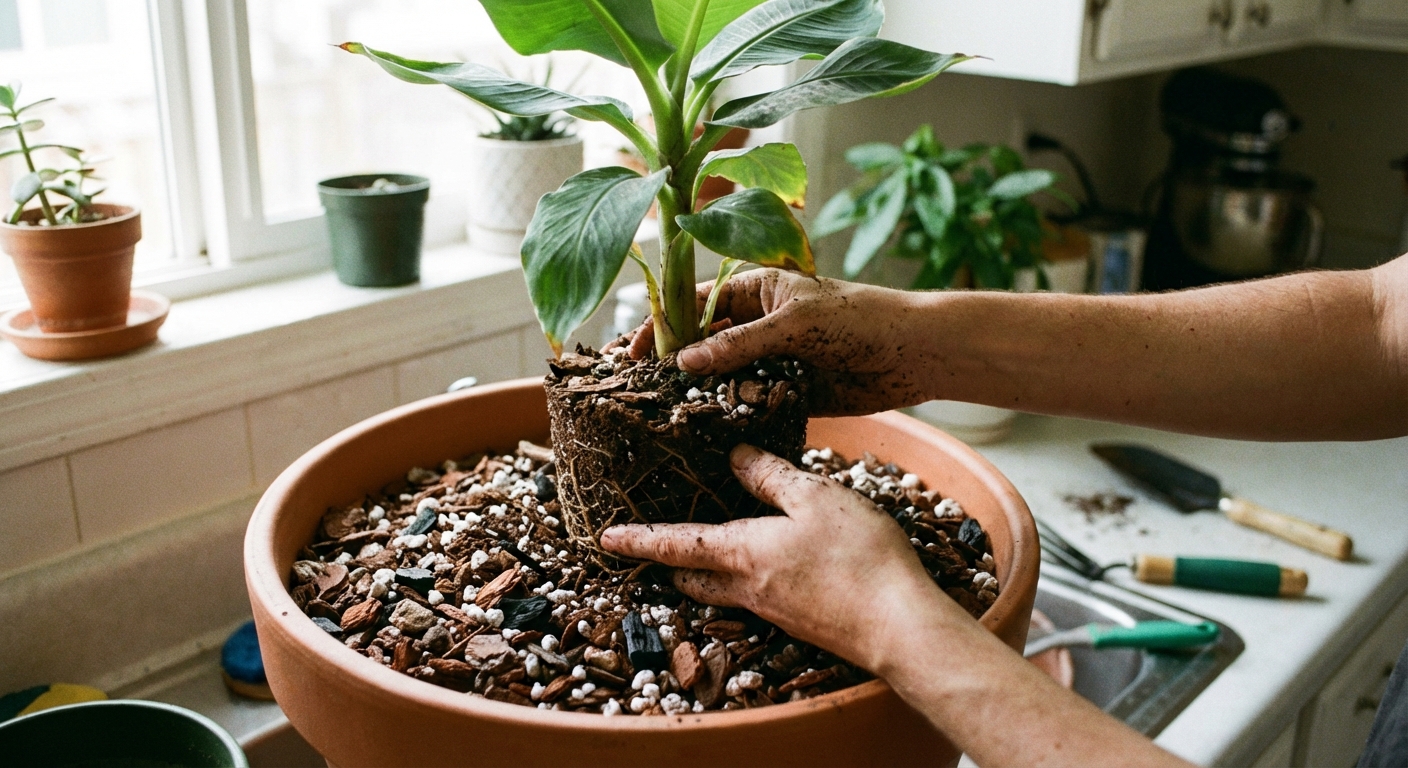
A soil mix bananas actually like
A rich, chunky mix is ideal. You want moisture retention plus airflow.
- 2 parts high-quality indoor potting mix
- 1 part perlite or pumice
- 1 part fine orchid bark or coconut husk chips
- Optional: a small handful of worm castings for gentle, living fertility
Avoid heavy garden soil indoors. It compacts, suffocates roots, and invites fungus gnats.
Watering: steady moisture, not a swamp
Bananas are thirsty during active growth because those big leaves transpire a lot of water. The trick indoors is to water deeply, then let the top layer dry slightly before going again.
How to water
- Water until it flows freely out the drainage holes.
- Empty the saucer after 10 to 15 minutes so the pot does not sit in water.
- Check moisture by feel: when the top 1 to 2 inches of soil are dry, it is usually time to water again.
Seasonal shifts
- Spring and summer: Often weekly, sometimes more in bright light and warm rooms.
- Fall and winter: Growth slows, so watering frequency drops. Overwatering in low light is the fastest path to a struggling banana.
Water quality notes
If your tap water is very hard, salts can build up in the soil. Once a month or so during active growth, flush the pot with plenty of water to rinse excess minerals through. If leaf tips are constantly brown and your care is otherwise solid, water quality may be part of the story.
Feeding: bananas are hungry when they are growing
Indoor bananas are not dainty eaters. For big leaves and steady growth, they need regular nutrients in spring and summer.
When to fertilize
- Active growth (spring through early fall): Feed regularly.
- Low-light winter months: Reduce drastically or pause, depending on whether the plant is still pushing new leaves.
What fertilizer to use
- Balanced liquid fertilizer (for example, something close to 10-10-10 or 20-20-20 diluted): reliable and easy.
- Organic options: Fish emulsion, seaweed, or a gentle organic liquid fertilizer can work well, but they may be slower and milder. Consistency matters more than perfection.
Simple schedule
- Feed at half-strength every 2 weeks during active growth, or full-strength monthly, depending on the product instructions and your plant’s response.
Watch the plant. Pale new growth, smaller leaves, and slow unfurling in good light often signal it is underfed. Brown leaf edges plus a crusty soil surface can signal fertilizer salt buildup, so flush and ease up.
Managing suckers (pups): keep the mother strong
Dwarf bananas grow from a corm underground. As the plant matures, it produces pups, also called suckers. Indoors, too many pups in one pot can turn your banana into an overcrowded, thirsty tangle.
Your options
- Leave one pup: If you want a fuller clump look, keep one strong pup and remove the rest.
- Remove pups for a taller main plant: If you want a single “tree-like” specimen, remove most or all pups so the mother plant puts energy into the main pseudostem and leaf size.
- Propagate pups: If you love plant babies, separate pups once they are sturdy.
When and how to remove or separate
- Best time: Late spring or summer when the plant is actively growing.
- Size cue: Wait until the pup has several leaves and is roughly 8 to 12 inches tall.
- Method: Gently unpot the plant, locate where the pup connects to the corm, then use a clean, sharp knife to separate it with some roots attached. Pot it up in a small pot with the same airy mix.
After dividing, keep the soil lightly moist and humidity a bit higher for a couple of weeks while roots reestablish.
Pruning and leaf care
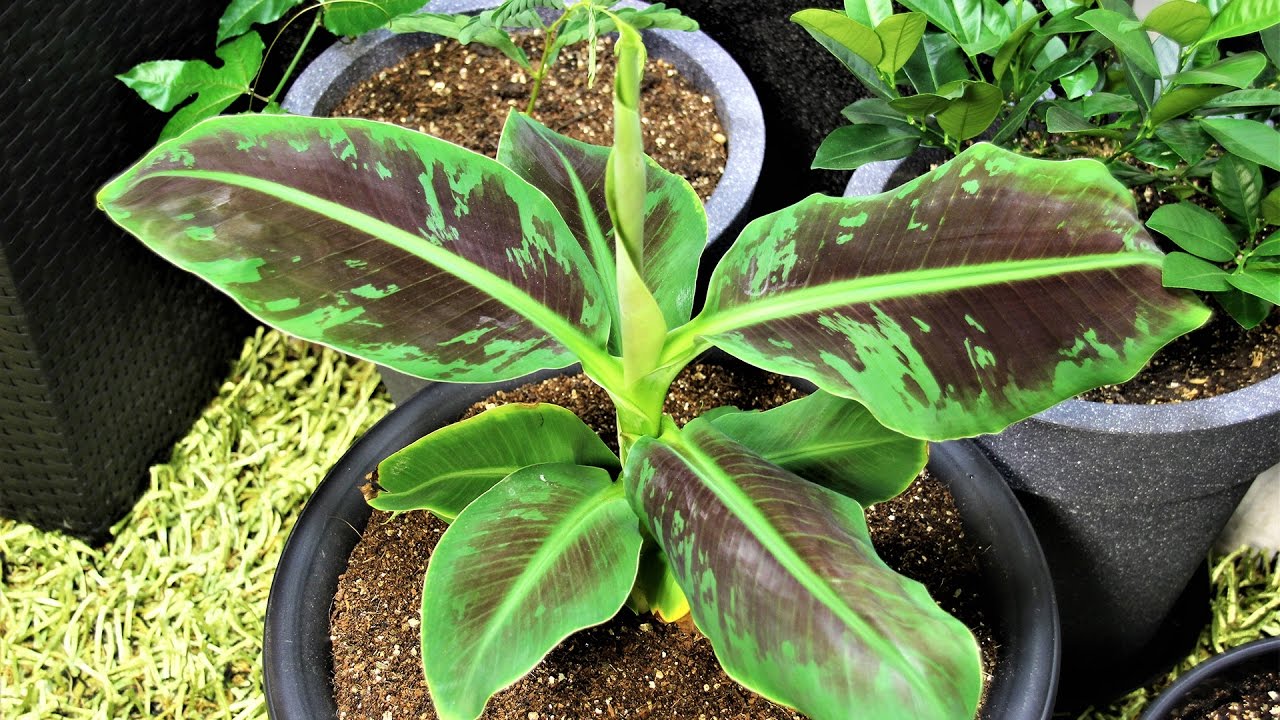
Banana leaves are glorious, and also a little dramatic. They tear easily as they unfurl, especially in dry air or tight spaces. A few tears are normal and do not mean you are failing.
- Remove old leaves: When a leaf is mostly yellow or brown, cut it off near the pseudostem with clean snips.
- Do not “tidy” green leaves: Even slightly imperfect green leaves are still feeding the plant.
- Dust matters: Wipe leaves with a damp cloth so the plant can photosynthesize efficiently. I like to support the leaf from underneath, like you are holding a big green sail.
Common indoor problems (and gentle fixes)
Brown tips and crispy edges
- Usually: Low humidity, inconsistent watering, mineral buildup, or too much fertilizer.
- Fix: Raise humidity, water more consistently, flush the soil monthly, and feed a bit lighter.
Yellowing lower leaves
- Often normal: Older leaves age out as new ones grow.
- If many leaves yellow fast: Check light and drainage. Low light plus wet soil is a classic combo for decline.
Leaf splitting and tearing
- Normal: Bananas split in nature to let wind pass through.
- Extra tearing indoors: Low humidity or leaves rubbing against walls and furniture. Give the plant more space.
Pests
- Spider mites: Most common in dry winter air. Look for fine webbing and stippled leaves.
- Fix: Rinse the plant in the shower, increase humidity, and treat with insecticidal soap or horticultural oil as needed.
- Fungus gnats: Usually a sign the soil stays too wet.
- Fix: Let the top layer dry more, use sticky traps, and consider a chunkier mix.
Will it fruit indoors?
Here is my honest, dirt-under-the-fingernails answer: most indoor dwarf bananas are grown for foliage. Fruiting indoors can happen, but it is the exception, not the expectation.
What fruiting requires
- Very bright light for long hours (often strong sun plus grow lights)
- Warm temperatures day and night
- High humidity
- Large enough pot and root mass
- Consistent feeding during active growth
- Time, often 1 to 3 years depending on cultivar and conditions
If you do get a flower
Celebrate. Take photos. Then keep care steady. Do not suddenly change the light, watering, or feeding. Indoor fruit may be smaller, and it may not fully ripen sweetly, but the experience alone is worth it.
A simple weekly routine
- Check soil moisture: Water when the top 1 to 2 inches are dry.
- Scan for pests: Especially under leaves and along the midrib.
- Rotate the pot: A quarter turn every week or two for even growth.
- Wipe dust: A quick leaf wipe keeps the plant glowing.
And if a leaf unfurls with a tear or two, welcome to banana ownership. They are still one of the most rewarding “instant jungle” plants you can grow indoors, and they teach you to lean into progress, not perfection.