
Dracaena Brown Leaf Tips

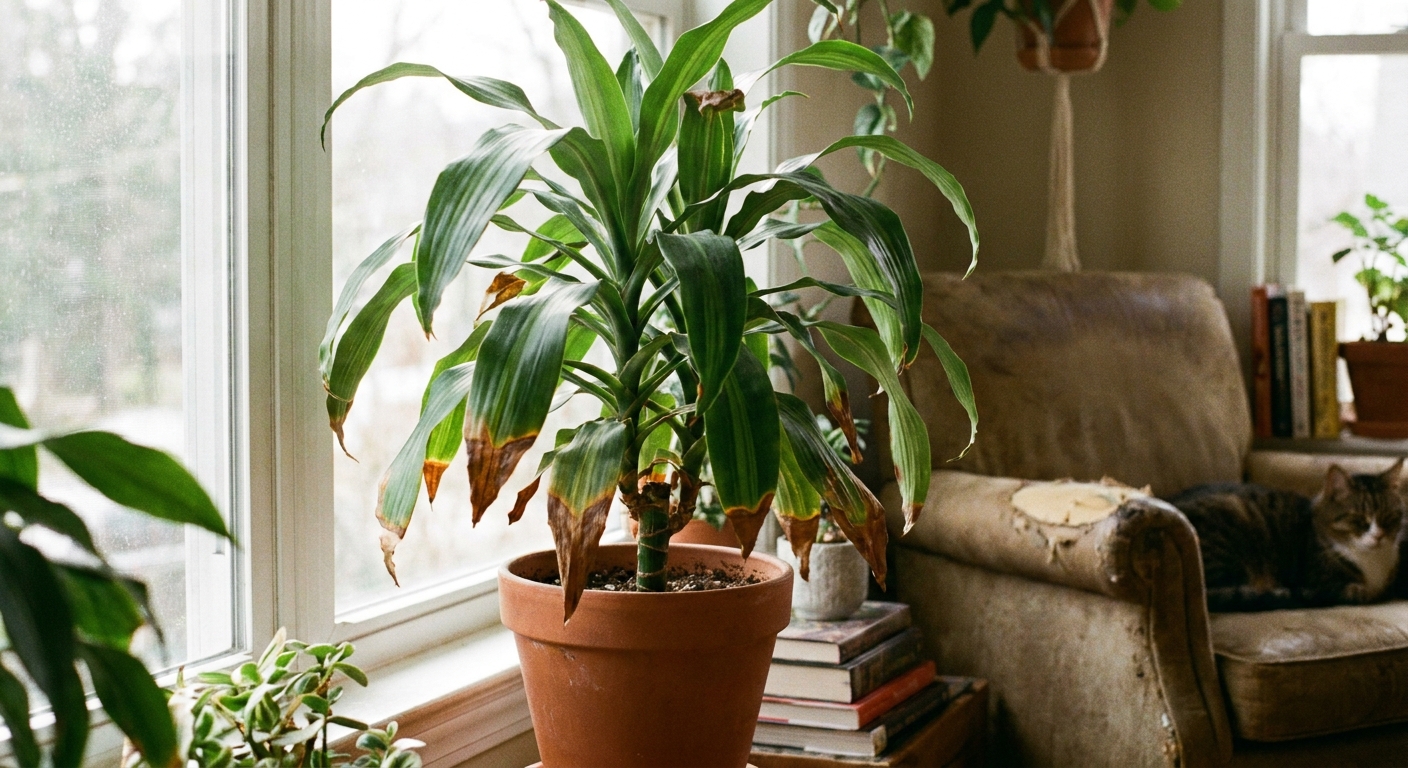
Brown, crispy tips on a dracaena can feel like a personal insult, especially when the rest of the plant looks perfectly fine. I promise it is not you. Dracaenas are just sensitive souls, and tip burn is one of their most common stress signals.
Unlike a full-leaf color change (like yellowing), brown tips are usually about water quality, salt buildup, low humidity, or uneven watering. The good news is that you can almost always stop it, and new growth can come in clean once conditions improve.

What brown tips mean
Dracaena leaf tips and margins turn brown when the plant loses moisture faster than it can replace it, or when minerals build up in the leaf tissue and damage the edges. Think of the leaf tip as the end of the line. It is where stress shows first.
- Brown tips with a yellow halo: often suggests salt buildup (fertilizer or hard water), sometimes combined with dry air. Not a diagnosis, but a useful clue.
- Dry, papery, crisp tips: usually low humidity, drafts, or inconsistent watering.
- Soft, dark brown tips with overall droop: can point to overwatering and root stress, especially if the soil stays wet.
If your dracaena is also developing widespread yellow leaves, that is a different symptom track. Leafy Zen covers that in our dracaena yellowing guide, but it often overlaps with the same root causes: watering rhythm and root health.
Water quality and salts
Dracaenas are famously sensitive to fluoride, which is present in many (but not all) municipal water supplies. They can also react to dissolved salts from hard water and fertilizer residue that accumulates in the pot over time.
Signs it is your water
- Tips brown slowly over time while the plant otherwise grows normally.
- White crust on the soil surface or around the rim of the pot (mineral deposits).
- You water consistently, but the tips still crisp.
What to do
- Switch water sources: Use rainwater, distilled water, or reverse osmosis water if you can. If you only have tap water, letting it sit for 24 hours helps chlorine dissipate, but it does not remove fluoride. Many areas also use chloramine, which does not dissipate by sitting out.
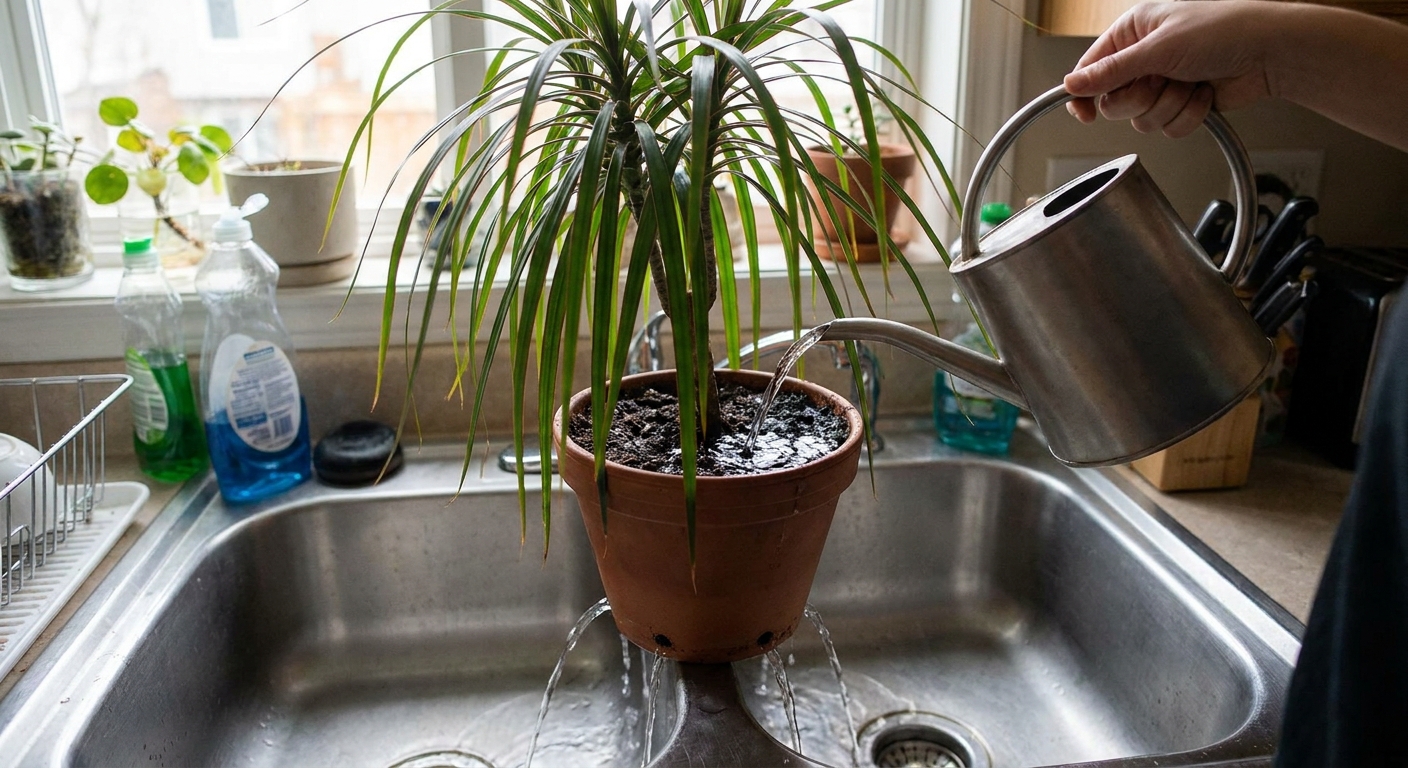
- Flush the soil periodically: Every 1 to 3 months (more often if you fertilize regularly, less often in low light), take the plant to a sink or tub and run room-temperature water through the soil for a minute or two, letting it drain fully. This leaches accumulated salts.
- Reduce fertilizer strength: Dracaena is a light feeder. Use a balanced houseplant fertilizer at 1/4 to 1/2 strength during spring and summer, and skip feeding in winter.
Too much fertilizer
Fertilizer salts can build up quickly in container plants. If you fertilize often, use full strength, or the pot rarely gets a deep soak, salts concentrate right where the roots live. The plant responds with burned tips and margins.
Fix it
- Pause feeding for 6 to 8 weeks.
- Flush the soil (see the flushing method above).
- Resume lightly only when you see active growth, and measure fertilizer like you are seasoning soup for a toddler, not a chili cook-off.
Low humidity and drafts
Most dracaenas tolerate average indoor humidity, but in winter (or in air-conditioned homes) humidity can drop low enough that leaf tips dry out. If your plant lives near a heating vent, it is basically sitting in a leaf-dehydrating wind tunnel.
What helps
- Move it away from vents and drafts. Even 3 to 6 feet helps.
- Group plants together. They create a small humid pocket around themselves.
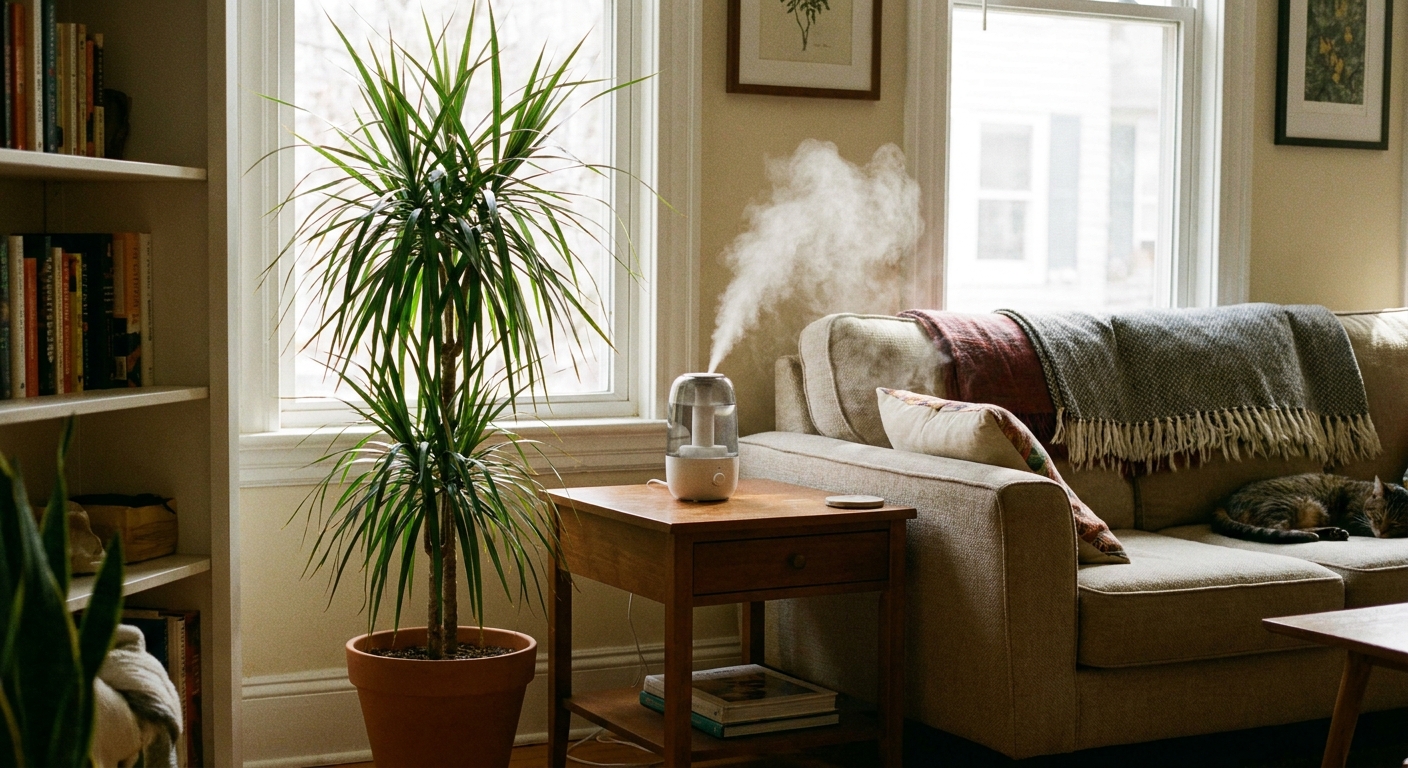
- Use a humidifier in the room during the driest months.
- Pebble trays can help a little in small spaces, but they are not magic. A humidifier is more reliable.
Watering rhythm
Dracaenas like a steady rhythm. If the plant goes bone dry for too long, the leaf tips are often the first tissue to sacrifice. If you then overcorrect and keep the pot soggy, roots struggle to recover and can no longer supply moisture consistently.
A routine that prevents tip burn
- Check before you water. For smaller pots, water when the top 1 to 2 inches are dry. For larger pots, aim for the top 2 to 3 inches dry, or roughly the top one third of the pot drying out.
- Water thoroughly. Soak until water runs out the drainage holes, then empty the saucer or cachepot.
- Never leave it standing in water. Dracaena roots want oxygen as much as they want moisture.
- Make sure drainage is real. Drainage holes should not be blocked, and the potting mix should be airy, not dense and swampy.
Light and placement
Dracaenas prefer bright, indirect light, but they are adaptable. Still, extremes can show up as browning at the tips or edges.
- Too much direct sun: edges can scorch, especially on variegated varieties.
- Very low light: soil stays wet longer, increasing root stress and making browning more likely over time.
If your dracaena sits in a dark corner, try moving it closer to a window with filtered light, or add a grow light for a few hours a day.
Cold and water temperature
A sneaky one: cold damage. Leaves that press up against a chilly window, or plants that sit in a drafty entryway, can develop browned tips and edges. Cold water can also shock roots and slow uptake.
- Keep dracaenas a few inches back from cold glass in winter.
- Avoid cold drafts from doors and windows.
- Use room-temperature water.
Root health and repotting
If browning comes with droop, slow growth, or a pot that never seems to dry, do a quick root reality check. Tip burn is often a surface symptom of what is happening below.
When to check roots
- Soil stays wet for a long time, especially in low light.
- A sour smell from the potting mix.
- The plant looks thirsty even after watering.
- Roots are circling tightly or poking out of the drainage holes.
What you want to see
- Healthy roots: firm, light-colored, earthy smell.
- Root rot signs: black or brown mushy roots, foul smell.
If you find rot, trim damaged roots, repot into fresh, chunky mix, and make sure the pot has drainage. If the mix is simply compacted or the plant is rootbound, a repot into a slightly larger pot can help stabilize watering.
Quick pest check
Pests are not the most common cause of classic dracaena tip burn, but they can add stress that shows up at the edges. Take 30 seconds to look closely.
- Spider mites: fine webbing and pale stippling.
- Thrips: silvery scarring and tiny black specks.
If you see either, isolate the plant and treat before you chase humidity and water tweaks forever.
Trim brown tips
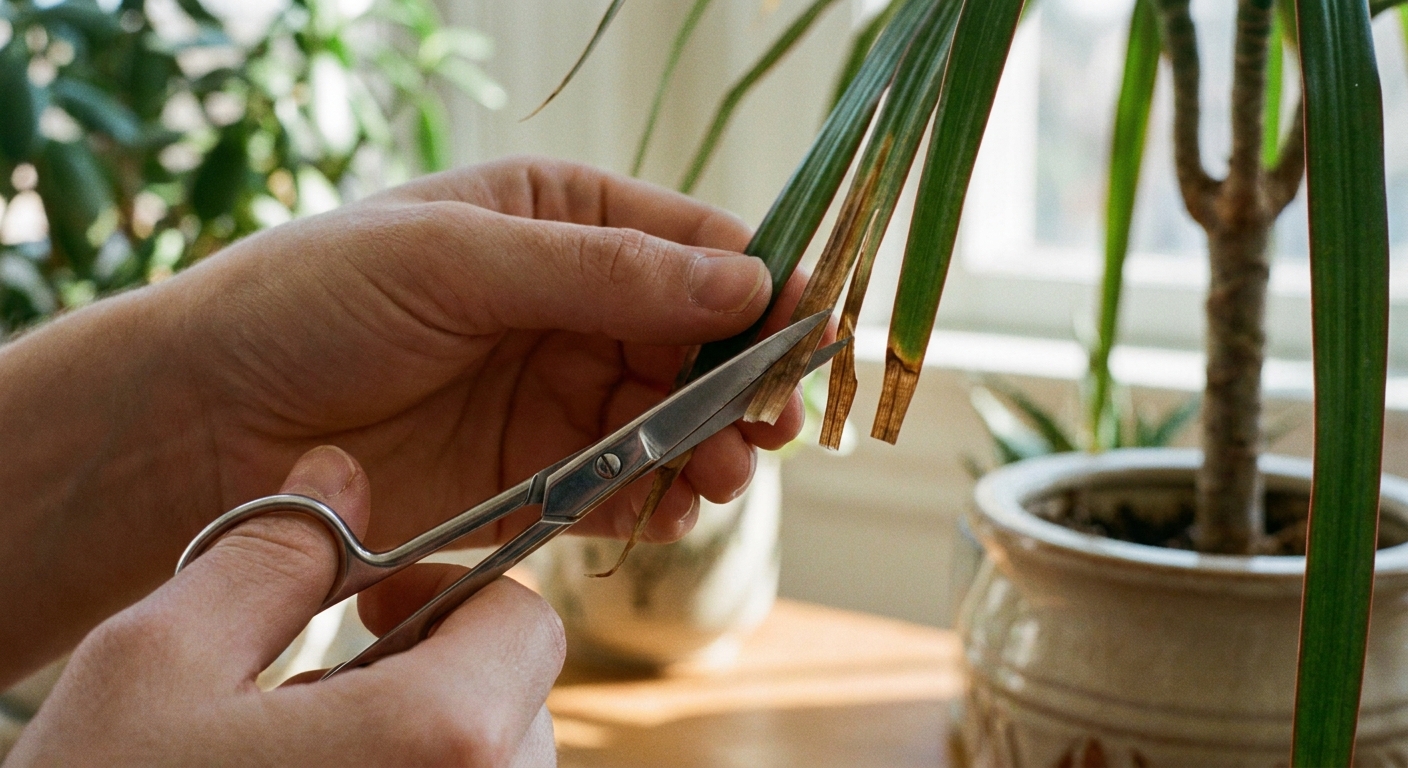
Once a tip turns brown, it will not turn green again. Trimming is purely cosmetic, but it can make your plant look refreshed while you fix the underlying cause.
Clean trim method
- Use sharp scissors or pruners.
- Wipe blades with rubbing alcohol.
- Trim just the brown portion, following the natural leaf shape.
- Leave a hairline of brown if needed. Cutting into healthy tissue can create a new brown edge.
Reset plan
If you want a simple roadmap, here is the routine I give friends when they text me photos of crispy dracaena tips at 9 p.m. with panic in their voices.
- Switch to low-mineral water (rain, distilled, or reverse osmosis).
- Flush the soil to remove built-up salts (every 1 to 3 months as needed).
- Pause fertilizer and restart later at reduced strength.
- Stabilize watering using the dry-top test that matches your pot size.
- Boost humidity and reduce drafts if your home is dry, especially in winter.
- Watch new leaves. You may see cleaner tips on new growth over the next few weeks to a couple months, depending on light and season. Judge success by the new growth, not the old damaged tips.
Most dracaenas respond beautifully once the invisible stress is removed. When those next leaves unfurl with clean, green points, it is such a quiet little victory.
Quick checklist
- Brown tips only: think fluoride, salts, low humidity, drafts, or dry spells.
- Brown tips plus white crust on soil: flush periodically and switch water sources.
- Brown edges after feeding: reduce fertilizer and flush.
- Brown tips plus soggy soil and droop: check drainage, let soil dry more, and consider repotting into a chunkier mix.
- Brown tips plus stippling or webbing: rule out mites or thrips.
- New growth stays clean: you solved it, even if older leaves still show scars.