
DIY Chunky Aroid Soil Mix

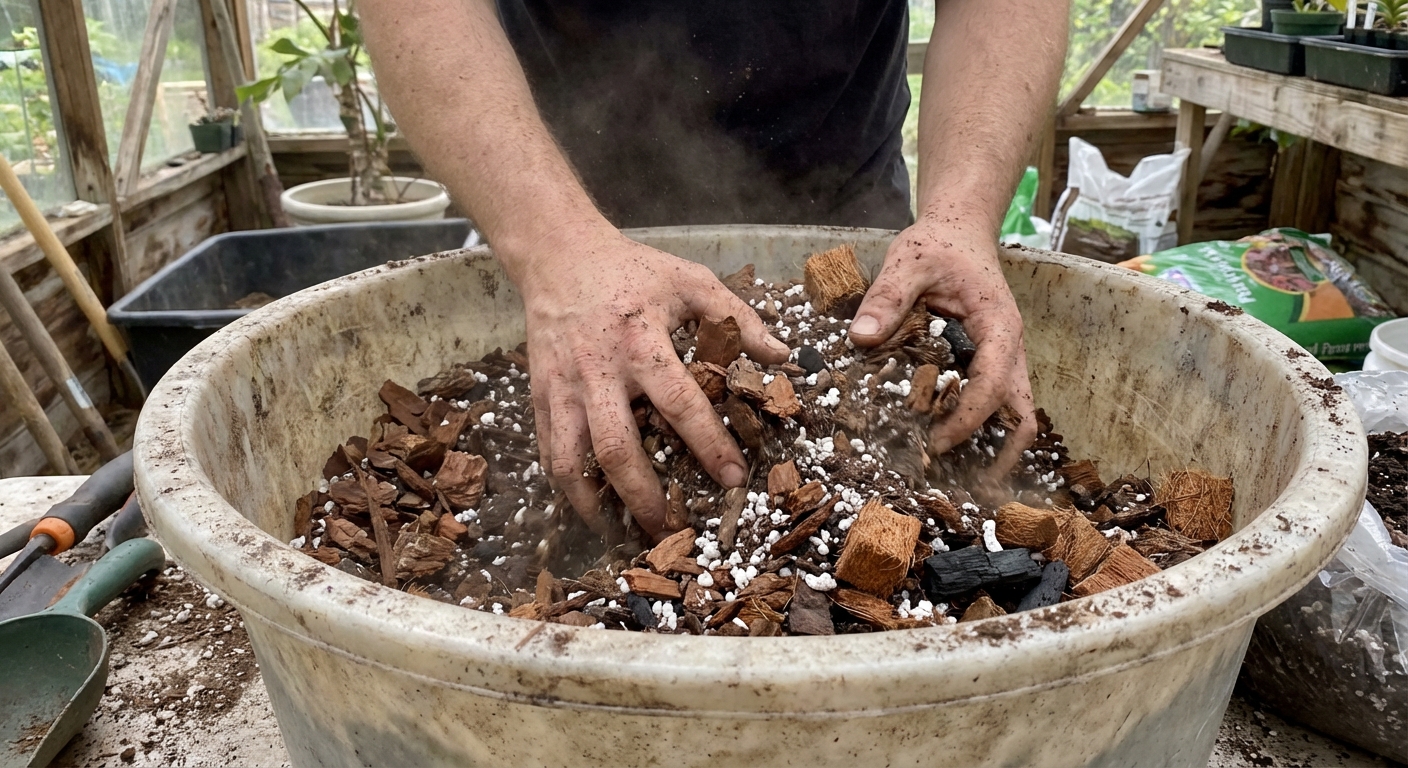
If philodendrons and anthuriums had a love language, it would be air. Air around the roots, air between waterings, air in the potting mix. Many popular house aroids evolved on trees, in chunky leaf litter, or as climbers that never sit in dense, soggy media for long. A heavy peat blanket in a decorative cachepot (a pot with no drainage that holds a nursery pot inside) is basically their villain origin story.
This DIY chunky aroid soil mix is my go-to when someone tells me, “I keep losing plants to root rot.” It drains fast, stays lightly moist (not wet), and gives roots the oxygen they need to keep growing. The best part is you can mix it at home with ingredients you can actually find, then tweak it for your space.
What makes a mix aroid-friendly
A good aroid mix is not about being dry. It is about being airy and fast-draining while still holding enough moisture for the plant to drink between waterings.
- Chunky structure: Big particles create gaps for oxygen, which discourages rot and encourages thick, healthy roots.
- Balanced moisture: Many aroids like evenly moist roots, but they hate “wet feet.” Your mix should re-wet easily and not turn into mud.
- Stable over time: Some ingredients break down quickly and compact. A durable mix keeps working for months, not weeks.
If your current potting soil stays wet for a long time indoors, smells sour, shrinks into a brick, or the plant seems to stall, treat it as a warning sign. Pot size, light, temperature, humidity, and root mass all change drying speed, but consistently slow dry-down is worth investigating.
Who this mix is for
This is designed for most common indoor aroids like philodendrons, anthuriums, monsteras, pothos, and syngoniums in typical home conditions.
Use extra caution if
- You grow in very low light or cool rooms: Chunky mixes can still stay wet if the plant is barely drinking.
- You use self-watering pots or water reservoirs: You may need a more moisture-wicking setup, or a different blend entirely.
- You are potting tiny plants or seedlings: Very chunky mixes can dry too fast and leave gaps around fine roots.
Also, “aroid” is a big family. Some plants sold as aroids (like many Alocasia) can prefer a slightly more moisture-retentive, finer mix than a super chunky philodendron setup. When in doubt, start with the base recipe and adjust one step at a time.
Chunky aroid recipe
This is my “daily driver” mix for most philodendrons, anthuriums, monsteras, pothos, and syngoniums. It is forgiving and easy to adjust.
Base recipe (by volume)
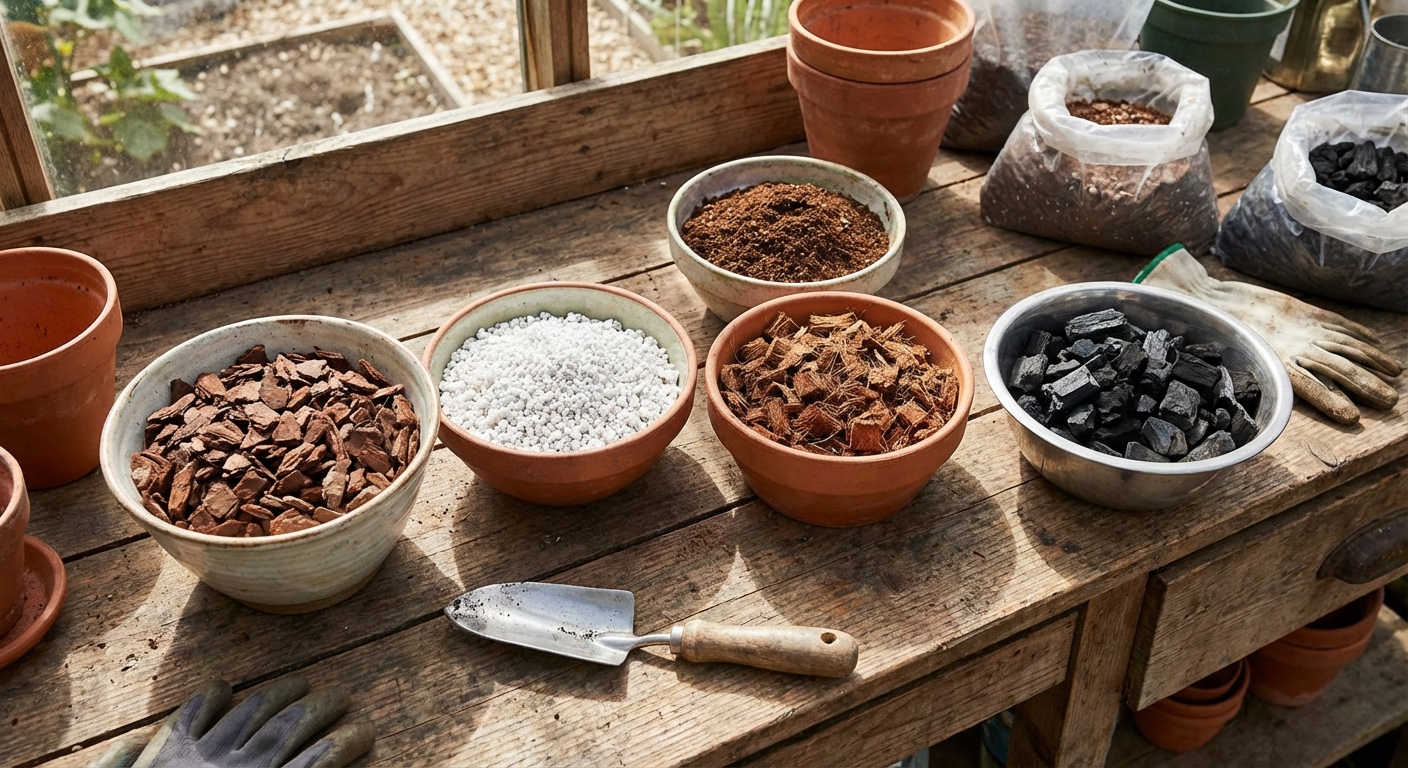
- 2 parts orchid bark (medium grade)
- 1 part coco coir (or peat moss if you prefer)
- 1 part perlite (or pumice)
- 1 part quality indoor potting soil (peat or coir based)
- 1/2 part horticultural charcoal (optional)
- 1/2 part worm castings (optional, gentle nutrition)
Measuring tip: “Parts” can be anything: a scoop, a cup, an old yogurt container. Just keep the ratio the same.
How it should feel
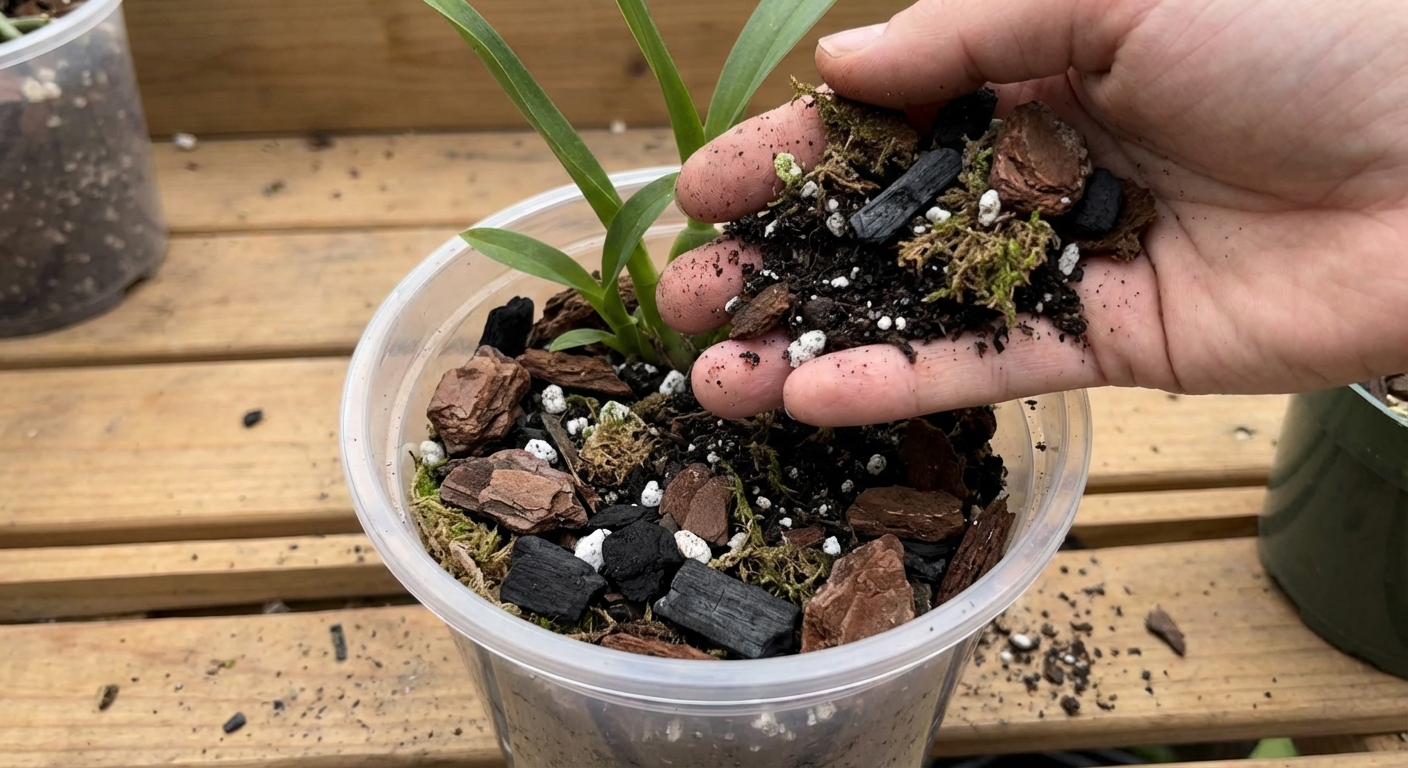
- When you grab a handful, it feels springy and textured, not powdery.
- Water runs through quickly, but the coir and soil keep it from drying out instantly.
- You can see bark and perlite throughout, not just on top.
Particle size matters
“Chunky” is not just a vibe. The size of the pieces is a big part of why this works.
- Orchid bark: Medium bark is ideal, roughly 1/4 to 1/2 inch (6 to 12 mm). If it is mostly tiny bits (fines), the mix can pack down and stay wet.
- Perlite: Coarse perlite tends to perform better than very fine perlite, which can migrate downward and fill air gaps.
- Fines check: If the bottom of the bag is mostly dust and tiny particles, sift a little out or compensate by adding extra bark or pumice.
Ingredients and swaps
Do not let “perfect” stop you from mixing something better than straight bagged potting soil. Here is what each ingredient does and what you can swap in.
Orchid bark
- Role: Structure, airflow, fast drainage, slower breakdown.
- Substitutions: Pine bark fines (smaller), coconut husk chips, or a chunky “orchid mix” (check it is mostly bark and not overloaded with fine particles).
- Quality note: Avoid dyed, scented, or treated landscape mulches.
Coco coir (or peat)
- Role: Moisture retention without getting swampy, helps the mix re-wet.
- Substitutions: Peat moss, or a small amount of fine compost (use lightly indoors).
- Note: If using coir bricks, rinse and expand fully before mixing. Some coir can carry salts, so a rinse is a kindness.
Perlite (or pumice)
- Role: Air pockets, lighter pots, improved drainage.
- Substitutions: Pumice (heavier, less floaty), lava rock (also heavier), or coarse horticultural grit.
- Safety note: Perlite dust is irritating. Consider wearing a mask and rinsing it before mixing.
Potting soil
- Role: A little “body” for moisture and nutrients so the mix is not too dry indoors.
- Substitutions: A high-quality peat or coir based mix. Avoid heavy garden soil and avoid mixes that are mostly compost indoors if fungus gnats are an ongoing battle.
Horticultural charcoal (optional)
- Role: Helps with structure and freshness. Some growers find it can help keep the mix from getting funky over time.
- Substitution: Skip it if you do not have it.
- Important: Do not use charcoal briquettes. They contain additives.
Worm castings (optional)
- Role: Gentle nutrition and microbial life.
- Substitutions: A small handful of compost, or skip and fertilize lightly later.
How to mix it
I mix aroids the way I make bread dough: clean hands, a big tub, and a little intuition. Here is the reliable method.
1) Prep ingredients
- Moisten coir or peat: Slightly damp is ideal. Bone-dry coir can repel water and make your first watering frustrating.
- Rinse perlite if dusty: A quick rinse reduces the floating white snowstorm later.
- Soak very dry bark (optional): If your bark is crispy-dry, a 10 to 20 minute soak helps it hydrate so it does not steal moisture from the root zone at first.
2) Combine in a bin
Add your measured parts, then fold the mix from the bottom up until the bark and perlite are evenly distributed. If you can scoop from three spots and each scoop looks similar, you are done.
3) Squeeze and flow test
- Squeeze a handful. It should barely hold together, then crumble when you poke it.
- Run water through a pot of it. Water should move through quickly, not puddle on top.
4) Adjust for your home
- If you tend to overwater: Add more bark or perlite (about 10 to 20%).
- If your home is very dry or you under-water: Add a little more coir or potting soil (about 10%).
- If you are battling fungus gnats: Reduce the fine, moist components and lean chunkier. Let the top couple inches dry between waterings.
Philodendron vs anthurium
These plants are cousins, not twins. Here is how I nudge the recipe depending on who is moving in.
For most philodendrons
- Stick close to the base recipe.
- If it is a vining philodendron (like hederaceum), you can use slightly less bark and slightly more potting soil for steadier moisture.
- If it is a big climber (and yes, gloriosum is actually a crawler, but you get the idea), keep it chunky so roots stay oxygenated as the plant sizes up.
For anthuriums
- Go extra airy. Many anthuriums sulk in mixes that stay wet too long.
- Try: 2 parts bark, 1 part perlite or pumice, 1 part coir, 1/2 part potting soil, plus charcoal if you have it.
- If you keep anthuriums in higher humidity (60%+), you can often afford a touch more fine material. In average home humidity, chunkier is usually safer.
Pot choice matters
You can mix the most perfect chunky soil on Earth and still get root rot if the pot cannot breathe or drain.
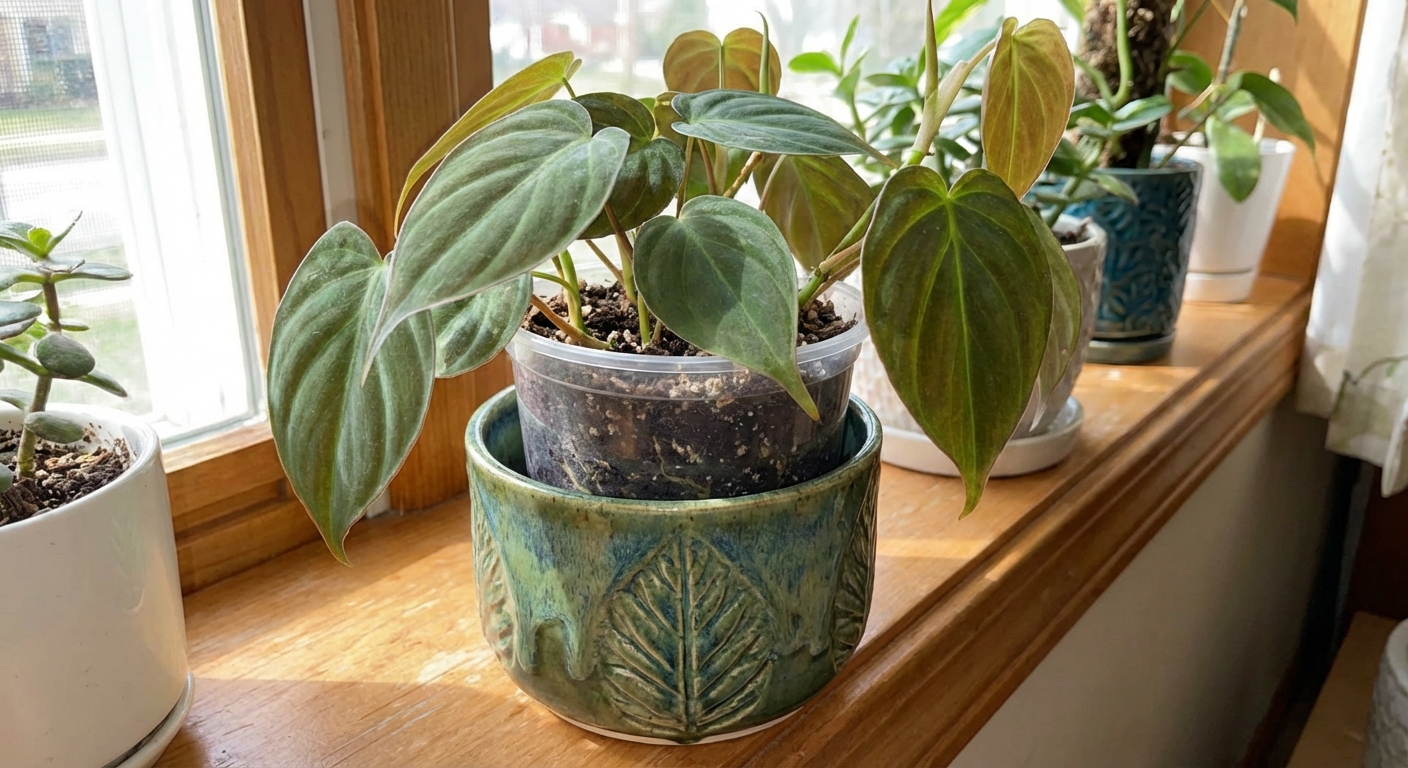
- Drainage holes are essential. If your pot does not have them, use it as a cachepot and keep the plant in a nursery pot inside.
- Clear pots are underrated. Being able to see roots and moisture levels is like having plant x-ray vision.
- Terracotta dries faster. Great for heavy waterers and cool homes. Plastic holds moisture longer, which can be helpful in very dry homes.
- Size up gently. Jumping to a pot that is too large leaves a lot of mix staying wet with no roots to drink it.
How to repot
I talk to my ferns, so yes, I also reassure my philodendrons during repotting. The goal is firm support with minimal root damage.
Quick steps
- Water the day before if the plant is very dry. Slightly hydrated roots are more flexible.
- Slide the plant out and inspect roots. Healthy roots are usually pale, firm, and not smelly.
- Trim only what is rotten using clean scissors. Rot is typically brown or black, mushy, and may smell sour.
- Remove the worst of the old soil if it is dense and wet. You do not have to scrub roots spotless.
- Position at the same height in the new pot, then backfill with your chunky mix.
- Tap the pot to settle rather than packing hard. Crushing the mix removes the air you worked so hard to create.
- Water thoroughly until it drains. This helps the mix settle around roots and flushes dust.
Aftercare (2 weeks)
- Keep light bright but not scorching.
- Do not fertilize right away if you trimmed many roots. Give it a little recovery time.
- Expect watering frequency to change. Chunky mixes often mean you water a bit more often, but with far less risk of suffocation.
Watering and fertilizing
This is where many people get surprised: airy mixes drain faster, so your schedule shifts. That is not a problem. It is a feature.
When to water
- Lift the pot: Lightweight usually means it is time.
- Finger test: If the top 2 inches are dry, check deeper. If it still feels cool or slightly damp near the root zone, wait a bit.
- Wooden skewer test: Push a skewer down near the root zone. If it comes out mostly dry, water.
Watering style: Water deeply until it runs out the bottom, then let it drain completely. No sitting in a saucer of water.
Fertilizer basics
- Chunky mixes often have less built-in nutrition than denser, more compost-heavy blends. It depends on how much potting soil and castings you include.
- Use a balanced houseplant fertilizer at 1/4 to 1/2 strength during active growth.
- If you add worm castings, consider that your plant already has a gentle baseline, so you can fertilize a little lighter.
Troubleshooting
“My mix dries out too fast.”
- Add 10 to 20% more coir or potting soil next batch.
- Use a slightly larger particle perlite or switch to pumice for steadier moisture.
- Check light and airflow. A fan and hot window can dry pots quickly.
“My mix stays wet for days.”
- Increase bark and perlite.
- Make sure the pot has enough drainage holes and the plant is not in an oversized pot.
- Consider temperature. Cool rooms slow drying dramatically.
“I have fungus gnats.”
- Let the top layer dry more between waterings.
- Top-dress with a thin layer of orchid bark to keep the surface drier.
- Use sticky traps and a BTI product (often sold for fungus gnat larvae) as needed.
“White crust is forming on top.”
- That is usually mineral buildup from hard water or fertilizer salts.
- Occasionally flush the pot thoroughly with water, or use filtered water if your tap is very hard.
Storage and batch mixing
If you fall in love with this mix, you will start making it in bigger batches. I support this fully.
- Store dry in a lidded bin or contractor bag to keep fungus gnats and moisture out.
- Pre-moisten only what you need for repotting day, especially if your home is warm.
- Label your ratios on masking tape on the bin so you can repeat your best batch.
Simple version
If you only have a couple ingredients, this minimalist blend is still a big upgrade for many aroids:
- 2 parts orchid bark
- 1 part potting soil
- 1 part perlite
It is not fancy. It is just breathable. And most of the time, that is exactly what your philodendron and anthurium have been begging for.