
Dieffenbachia Care

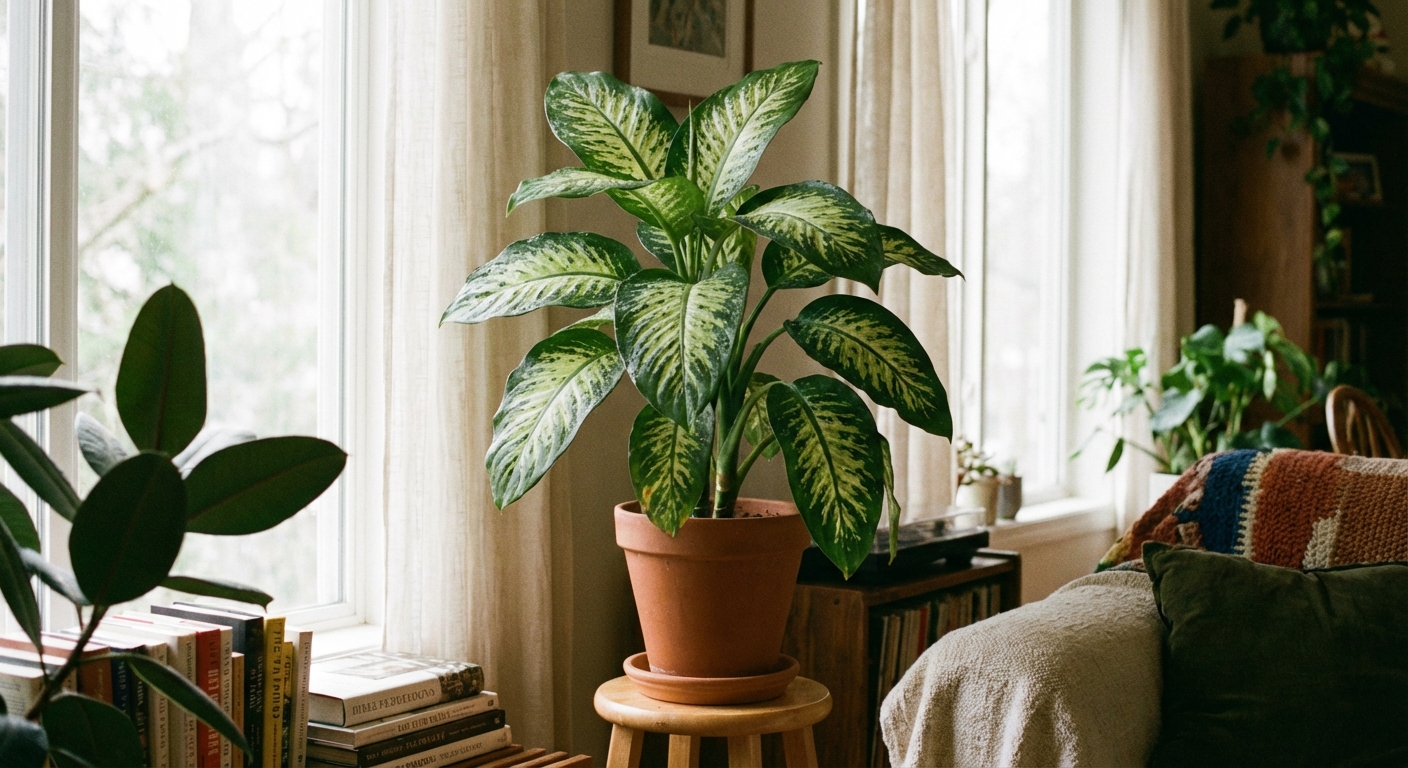
Dieffenbachia, often called dumb cane, is one of those houseplants that can make a room feel instantly lush. It’s got big, patterned leaves, strong upright growth, and a forgiving personality, as long as you give it the basics: bright, gentle light and a watering routine that lets the soil breathe.
I’ve got a soft spot for dieffenbachia because it’s the kind of plant that teaches you to observe. When it’s happy, it holds its leaves like little green sails. When something’s off, it tells you fast with droop, yellowing, or crispy edges. Let’s translate those signals together.
Quick care snapshot
- Light: Bright, indirect light is best. Tolerates medium light, grows slower.
- Water: Water when the top 1 to 2 inches of soil feel dry.
- Temperature: 65 to 80 F (18 to 27 C). Avoid cold drafts.
- Humidity: Average home humidity is usually fine, but it tends to do best around 50 to 60 percent and up.
- Soil: Airy, well-draining potting mix.
- Pet and child safety: Toxic if chewed or ingested.
Light needs
Dieffenbachia comes from tropical forest understories, which is a fancy way of saying it wants bright light that’s filtered, not harsh sun blasting its leaves.
Best placement
- Near an east window is often perfect: gentle morning sun, then bright shade.
- A few feet back from a south or west window works well if the light’s intense. A sheer curtain helps if the room is bright enough to read comfortably, but you’re getting direct sun patches on the leaves.
- Medium light is acceptable, but growth slows and variegation can fade a bit.
If your plant is highly variegated, it’ll usually want brighter indirect light than a greener variety. More pattern typically means it needs more light to keep that contrast.
Signs the light is off
- Too much sun: bleached patches, brown crispy spots, leaf edges that look scorched.
- Too little light: leggy stems, smaller new leaves, slower growth, less contrast in the leaf pattern.
If your plant leans toward the window, rotate the pot a quarter turn every week or two. That one small habit makes dieffenbachia look fuller and more balanced.
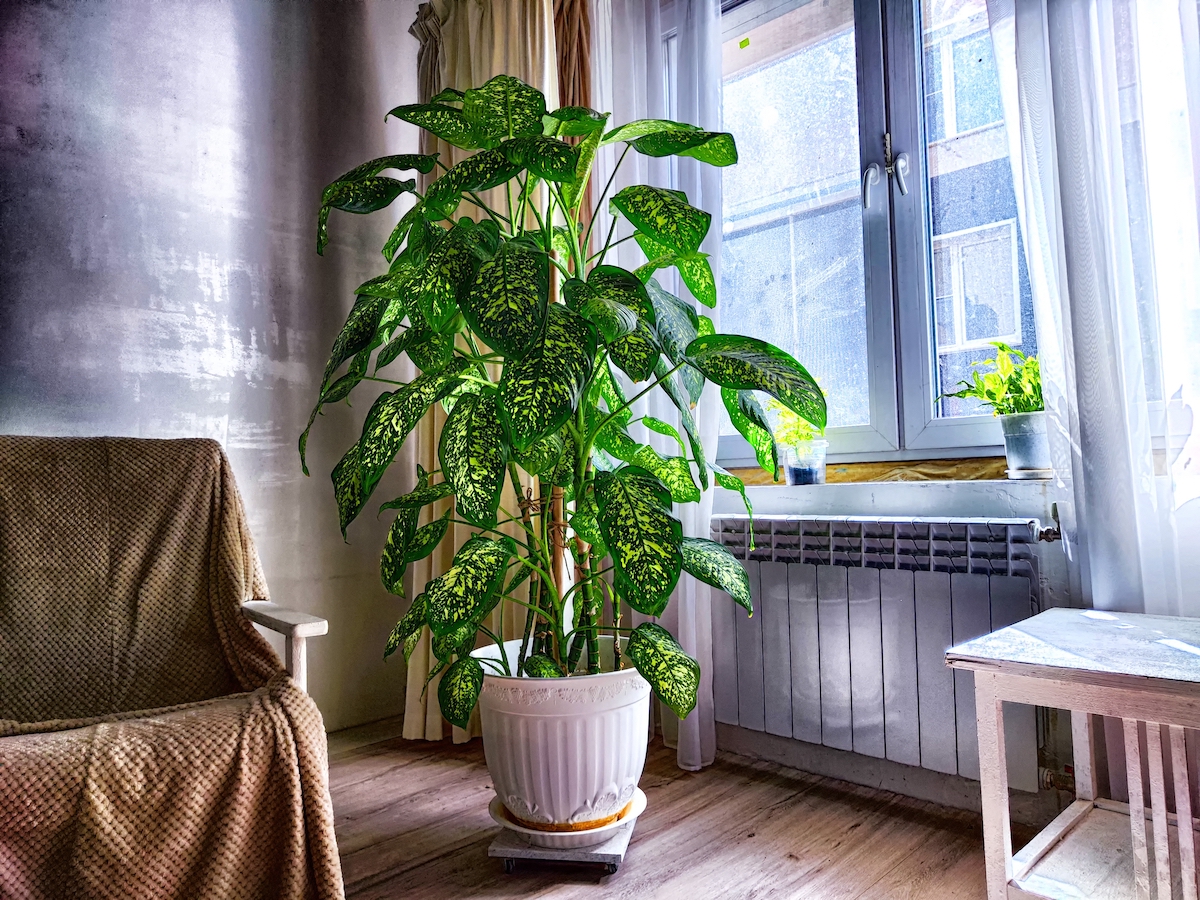
How to water dieffenbachia
One of the most common mistakes with dumb cane isn’t underwatering. It’s watering again before the soil has used the last drink. Dieffenbachia likes consistent moisture, but it also needs oxygen around its roots.
A simple watering routine
- Check the soil with your finger. When the top 1 to 2 inches feel dry, it’s time.
- Water thoroughly until water runs out of the drainage holes.
- Empty the saucer after 10 to 15 minutes so the pot doesn’t sit in runoff.
In brighter light and warmer months, you might water weekly. In winter or lower light, it may stretch to every 10 to 14 days. Your home is the real calendar here.
Water quality tips
Most dieffenbachia does fine with tap water, but if your water is very hard or heavily treated, you may notice leaf tip browning over time. Letting water sit out overnight can help if your city uses chlorine, but it won’t reliably remove chloramine. If you suspect chloramine or you’re seeing ongoing tip burn, try filtered water (carbon filtration may help), or use distilled or rainwater. You can also occasionally flush the pot with a deep watering to rinse out mineral buildup.
Temperature and drafts
Dieffenbachia is a warm-weather creature. Keep it in the same temperature range that feels comfortable to you in a T-shirt.
- Ideal: 65 to 80 F (18 to 27 C)
- Try to avoid: below 60 F (15 C), sudden swings, and cold air from leaky windows
If your plant looks great all summer and then suddenly starts drooping or yellowing in winter, check for a drafty spot near a door, window, or an air conditioner vent.
Humidity
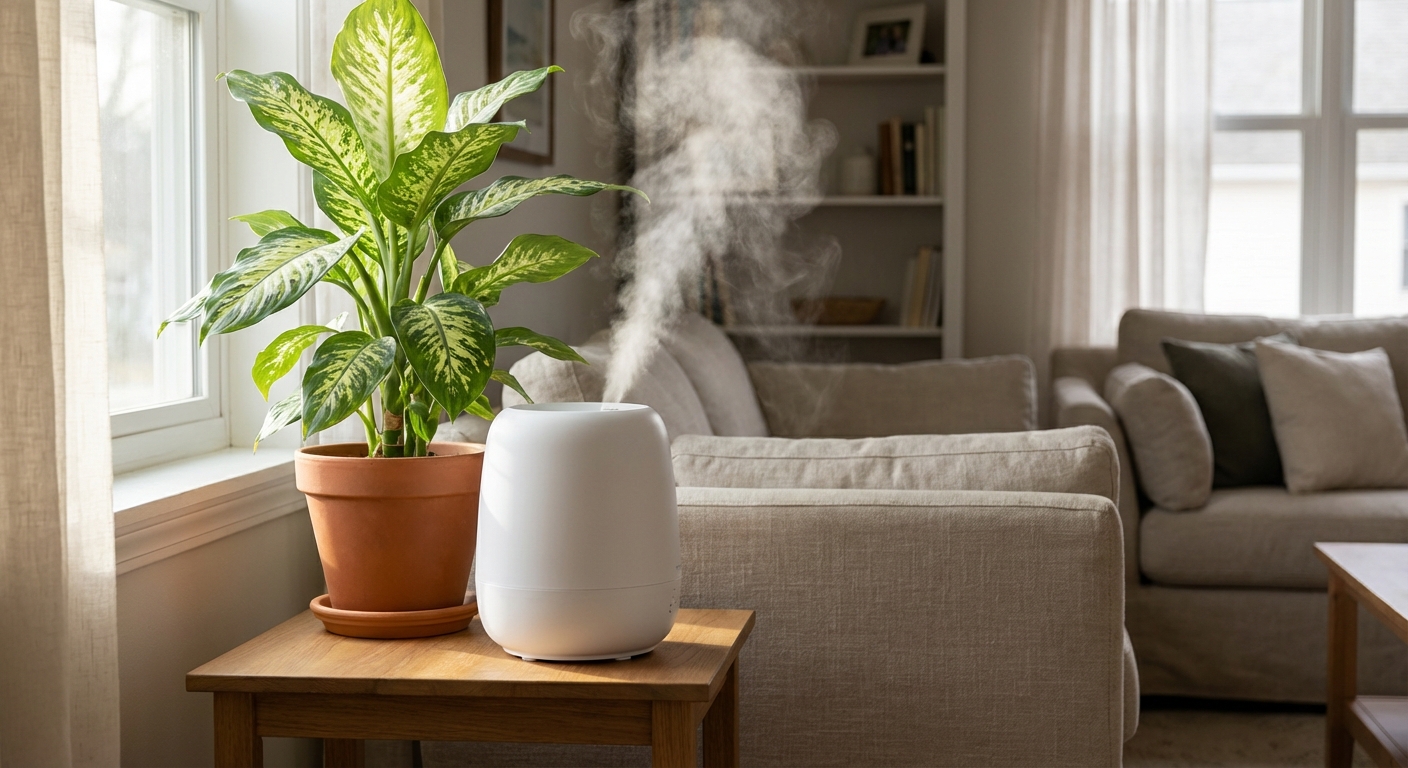
Dieffenbachia will survive in average household humidity, but it looks its best with a bit more moisture in the air. Higher humidity helps leaves unfurl smoothly and keeps edges from crisping.
Easy ways to raise humidity
- Group plants together to create a small humid pocket.
- Use a pebble tray with water under the pot (the pot sits on the pebbles, not in the water).
- Run a humidifier nearby, especially in winter heating season.
Misting is fine if you enjoy it, but it’s usually temporary. Think of it as a quick refresh, not a long-term humidity plan.
Soil and potting
For dieffenbachia, the best soil is one that holds some moisture but drains well and stays airy. Roots want water and oxygen, not a soggy swamp.
Simple potting mix recipe
- 2 parts quality indoor potting soil
- 1 part perlite or pumice
- 1 part orchid bark or coco chips (optional, but great for airflow)
Pot choice
Always use a pot with drainage holes. Dieffenbachia can get tall and top-heavy, so a slightly wider, heavier pot can help prevent tipping.
When to repot
Repot every 1 to 2 years, or when you see roots circling the bottom and water seems to rush straight through. Spring and early summer are ideal. Move up only 1 to 2 inches in pot diameter so the extra soil doesn’t stay wet for too long.
Fertilizer and growth
Dieffenbachia isn’t a heavy feeder, but regular light feeding supports bigger leaves and steadier growth.
- When to fertilize: spring through early fall
- How often: every 4 to 6 weeks
- What to use: a balanced houseplant fertilizer diluted to half strength
If your plant slows down in winter, let it rest. Continuing to fertilize when light is low can contribute to weak, stretched growth and salt buildup in the soil.
Also, a little “cane-ing” is normal. As dieffenbachia grows, it often drops its lower leaves and shows more stem. You can embrace the palm-like look, or prune and propagate to keep it fuller.
Leaf cleaning
Those broad leaves collect dust, and dust blocks light. Every few weeks, wipe the leaves with a soft damp cloth. Skip leaf shine products, since they can clog leaf pores and attract more buildup over time.
Toxicity warning
This is the serious part. Dieffenbachia is toxic if chewed or ingested. The sap contains calcium oxalate crystals that can cause intense mouth irritation, drooling, swelling of the lips and tongue, and difficulty swallowing. The common name “dumb cane” comes from the temporary speech difficulty that can occur after exposure. Severe airway compromise is uncommon, but any significant swelling is still serious.
Safety tips
- Place the plant out of reach of children and pets, or choose a non-toxic alternative if nibbling is likely.
- Wear gloves when pruning or propagating if you’ve got sensitive skin.
- Avoid touching your eyes after handling the plant.
If ingestion happens: Rinse the mouth gently and contact your veterinarian or poison control right away for guidance. If there’s facial swelling, trouble swallowing, or breathing issues, seek urgent medical help.
Common problems
Once you’ve got light and watering dialed in, dieffenbachia is pretty easygoing. When it does complain, it’s usually giving you a useful clue. Here are the most common symptoms I see and what typically solves them.
Drooping leaves
- Most common cause: dry soil
- Also possible: cold draft, recent repot shock, root rot from chronic overwatering
What to do: Check soil moisture. If it’s dry, water thoroughly and the plant often perks up within hours. If soil is wet and the plant’s still droopy, pause watering and inspect for root issues.
Yellowing leaves
- Older bottom leaves yellowing: normal aging, especially as the plant grows taller
- Multiple leaves yellowing at once: overwatering, poor drainage, or low light
- Yellow with soft stems: potential root rot
What to do: Let the top layer dry before watering again, increase light if needed, and confirm the pot drains freely. If you suspect rot, unpot and trim mushy roots, then repot into fresh, airy mix.
Brown tips or edges
- Likely causes: low humidity, inconsistent watering, mineral buildup from hard water, too much fertilizer
What to do: Stabilize your watering routine, raise humidity, and flush the soil every couple of months. If you fertilize often, cut back and dilute more.
Leaves turning pale or scorched
- Likely cause: too much direct sun
What to do: Move it back from the window or add a sheer curtain. Damaged tissue won’t heal, but new growth should look better.
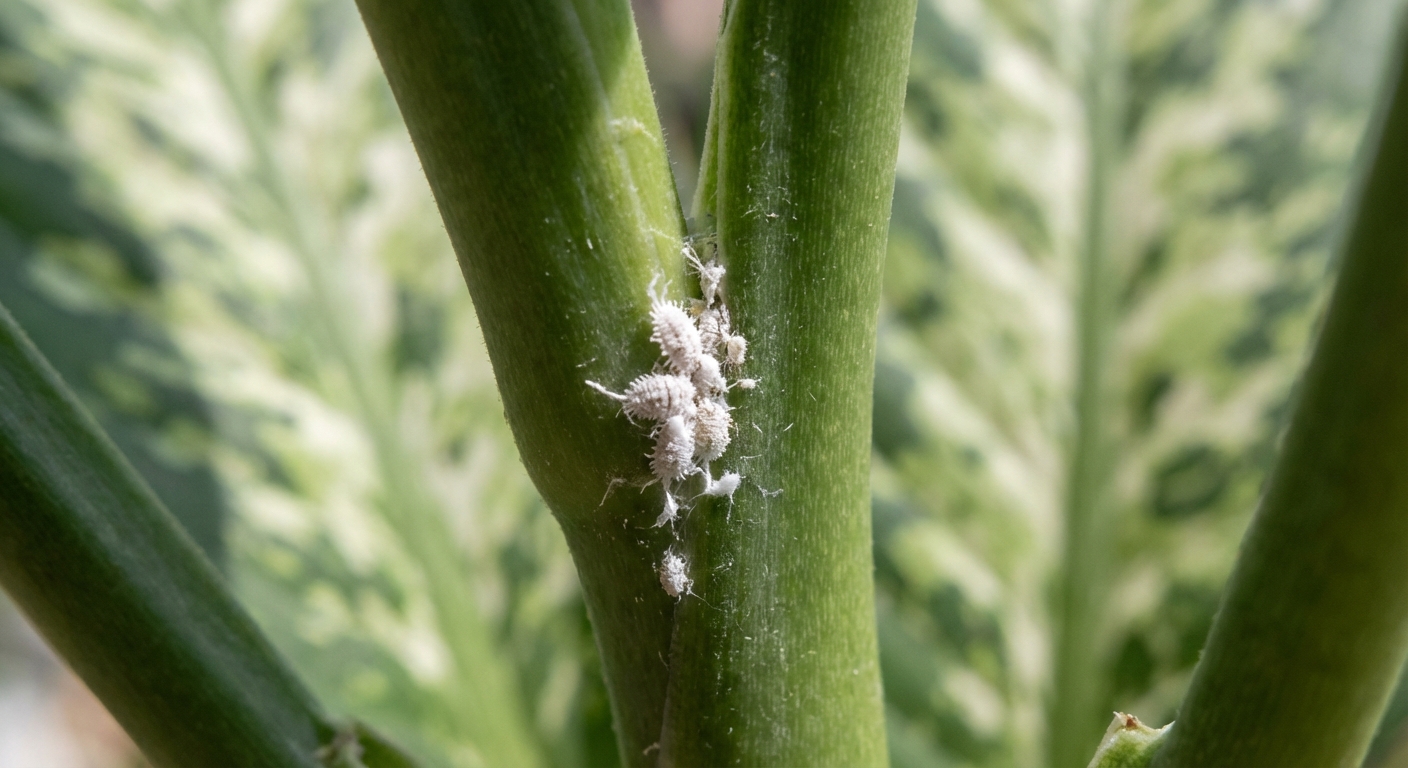
Pests (spider mites, mealybugs, scale)
Dieffenbachia can occasionally attract pests, especially in dry indoor air.
- First step: isolate the plant and rinse leaves with lukewarm water
- Then: wipe leaves and stems with insecticidal soap, repeating weekly for a few rounds
- Optional: neem oil can help, but test it on one leaf first to make sure your plant doesn’t react
Check the undersides of leaves and along the leaf stems. That’s where the troublemakers like to hide.
Propagation
Dieffenbachia is wonderfully easy to propagate, and it’s also one of the best ways to rescue a leggy plant. If your dumb cane has a tall bare stem with a tuft of leaves on top, propagation is your glow-up moment.
Before you start
- Wear gloves and wash hands after handling. Sap can irritate skin and is dangerous if it gets in mouths or eyes.
- Use clean, sharp pruners or a knife.
Option 1: Top cutting
- Choose a healthy top section with several leaves.
- Cut the stem just below a node (where a leaf attaches).
- Optional: let the cut end dry for 30 to 60 minutes to reduce sap mess.
- Root in water or in a moist, airy mix (potting soil plus perlite).
- Keep it in bright, indirect light and warm temperatures.
When to pot up: If you root in water, transplant once roots are a few inches long. Expect a brief adjustment period as water roots transition to soil.
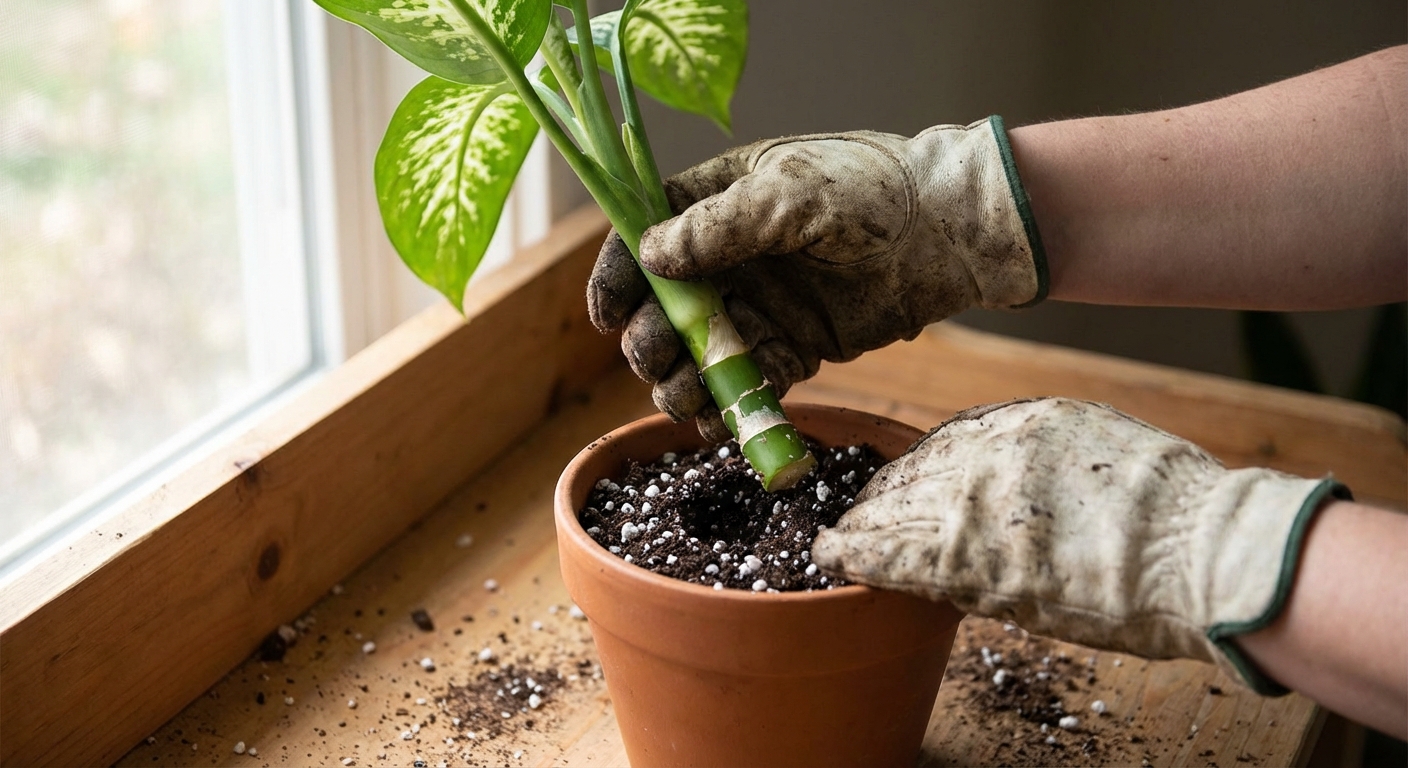
Option 2: Cane cuttings
- Cut a bare stem into segments 2 to 4 inches long. Make sure each piece has at least one node.
- Lay the segments horizontally on damp potting mix, or stand them upright with the original top end facing up.
- Cover lightly with mix, keep warm and lightly moist.
- New shoots and roots can take several weeks.
This method feels slow at first, then one day you’ll notice tiny green points pushing up like a little miracle.
Pruning and shaping
Dieffenbachia can get tall over time. Don’t be afraid to prune. Cutting encourages branching and can help you keep a fuller, bushier look.
- To reduce height: take a top cutting and propagate it, then let the base regrow.
- To tidy: remove yellowing lower leaves by cutting close to the stem.
After pruning, place the plant in bright, indirect light and keep watering steady. New growth usually follows.
Dieffenbachia care FAQs
Is dieffenbachia a low-light plant?
It tolerates low to medium light, but it thrives in bright, indirect light. In lower light you’ll typically see slower growth and less vibrant variegation.
How often should I water dumb cane?
Water when the top 1 to 2 inches of soil are dry. For many homes that lands around once a week in summer and less in winter, but always trust the soil over the calendar.
Why is my dieffenbachia losing leaves at the bottom?
A little bottom leaf loss is normal as it grows, especially on older plants. If leaf drop is rapid or accompanied by yellowing higher up, check for overwatering, low light, or cold drafts.
Can dieffenbachia live outside?
Only in warm, frost-free climates and in shade or filtered sun. Most people keep it as an indoor plant year-round.
My best tip
If you do just one thing for your dieffenbachia, do this: pair bright, indirect light with a soil mix that drains well. That combination makes watering easier, prevents the most common problems, and helps those gorgeous leaves keep coming.
And if you make a mistake, welcome to the club. Plants are forgiving teachers. Dieffenbachia included.