
Dendrobium Orchid Care

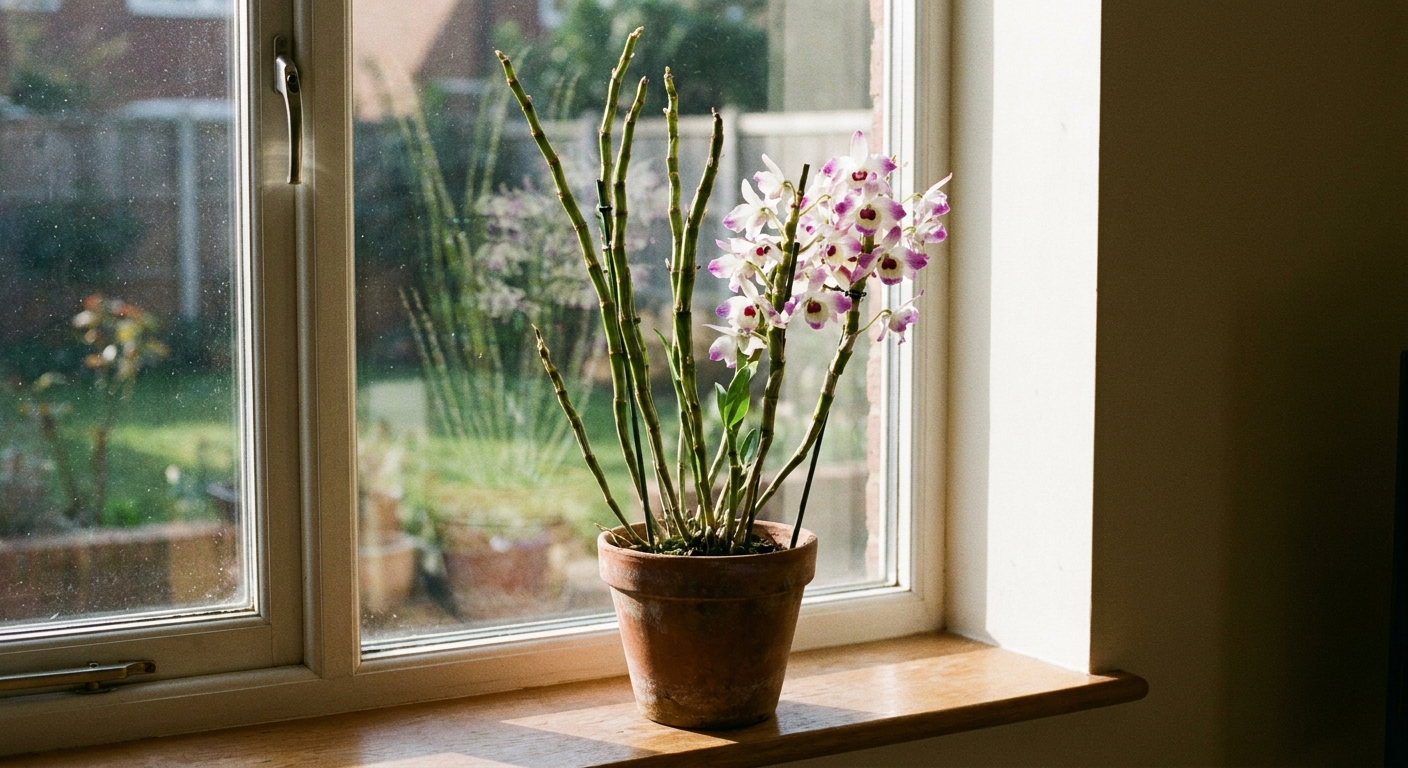
Dendrobium orchids have a reputation for being “diva plants,” but most of the drama comes down to two things: light and watering rhythm. Once you match those to your particular type of Dendrobium, the plant settles into a steady routine and can bloom for weeks. Let’s walk through it like we are strolling the nursery aisle together, pot in hand, checking roots and reading leaves.

Meet your Dendrobium type
“Dendrobium” is a huge orchid group, and care varies depending on the kind you have. Many of the Dendrobiums most commonly sold as houseplants fall into one of these two buckets:
- Den-Phal (Phalaenanthe-type, evergreen) Dendrobiums often labeled “Den-Phal” or sometimes Dendrobium phalaenopsis in the trade (a name that is frequently used loosely). Many are Dendrobium bigibbum hybrids and relatives. These keep their leaves on the canes for a long time and usually do not need a cool, dry winter rest to bloom.
- Nobile-type (deciduous) Dendrobiums often sold as Dendrobium nobile hybrids. These can drop leaves on older canes and typically bloom best after a cooler, brighter winter rest with reduced water.
If your tag is long gone, use clues: nobile-types often bloom all along the cane nodes. Den-Phals usually bloom from the upper nodes on a cane, often on longer flower spikes.
Light: the make or break factor
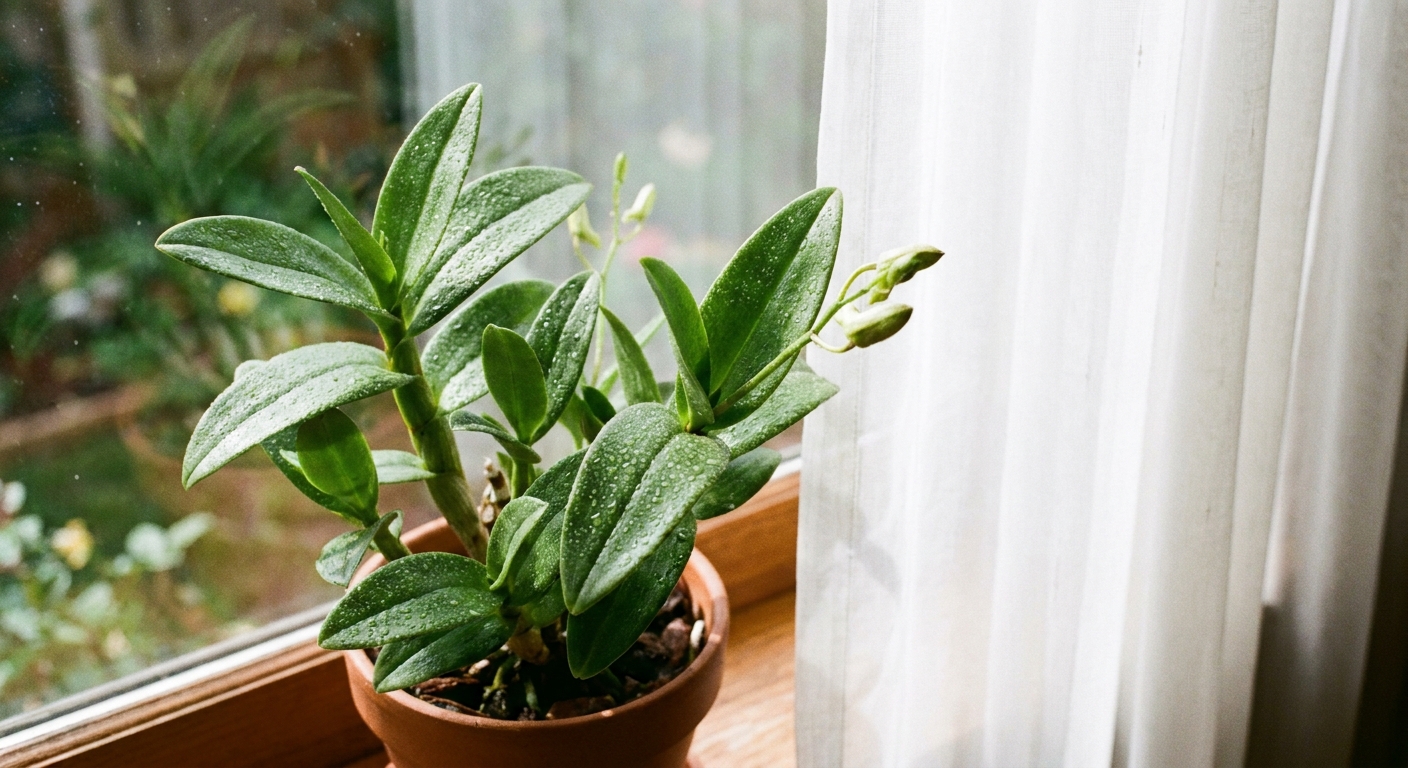
Dendrobiums like brighter light than many beginner orchids. Think “bright enough to cast a soft shadow.”
- Best indoor spot: an east window (gentle morning sun) or a bright south or west window with a sheer curtain.
- Target: bright, indirect light with a little direct sun early or late in the day.
- Too little light: dark green leaves, weak skinny canes, no flowers.
- Too much light: yellowing leaves, bleached patches, crispy edges.
Clara tip: If you are choosing between “a bit too bright” and “a bit too dim,” go slightly brighter and adjust watering accordingly. Dendrobiums are sun-lovers by orchid standards.
Watering: soak, drain, then wait
Dendrobium roots hate staying soggy, but they also dislike drying into brittle dust for long stretches. The sweet spot is a thorough soak followed by excellent drainage.
How to water
- Check the potting mix: water when the mix is nearly dry but not bone-dry. For bark, this usually means the top feels dry and the pot feels light.
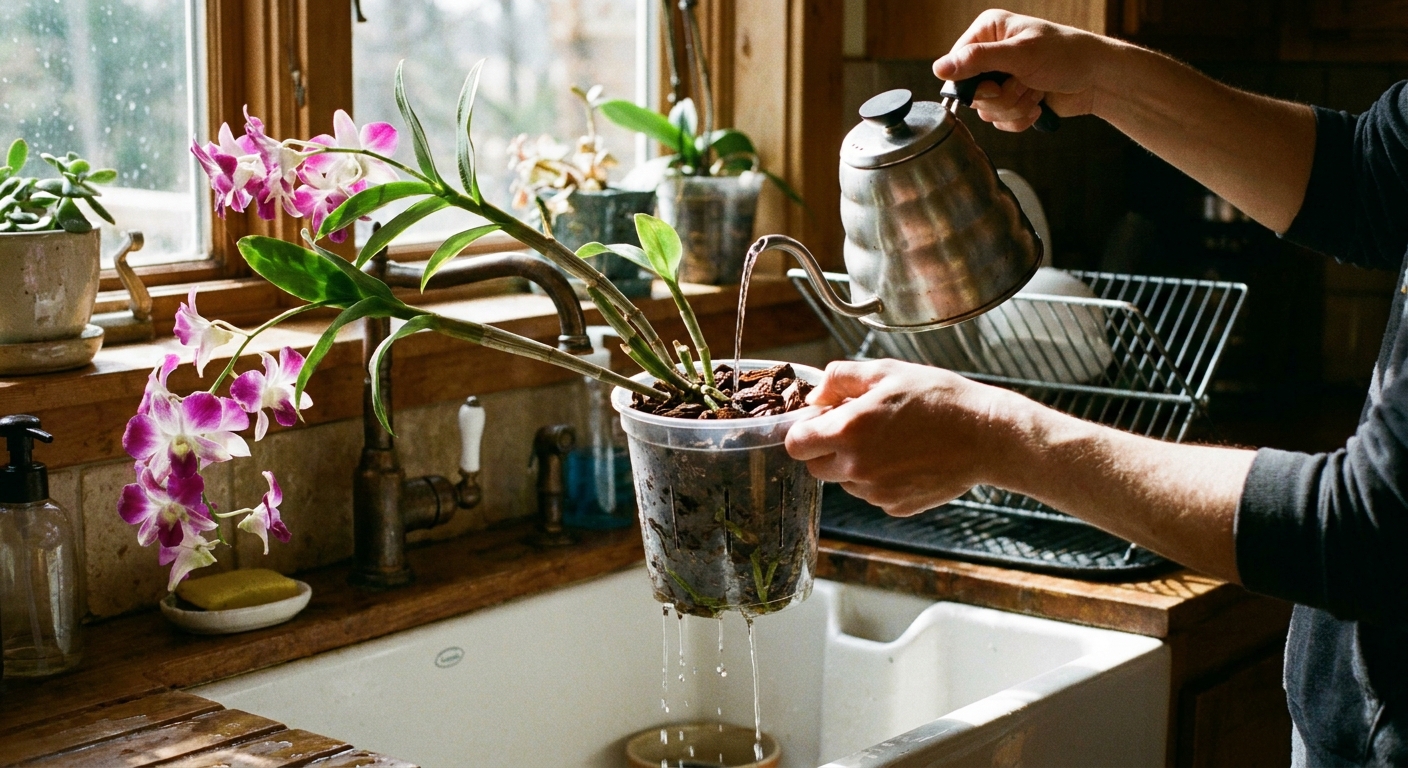
- Soak deeply: run room-temperature water through the pot until it is fully saturated and water runs freely from the bottom for several seconds, or soak the pot for about 10 minutes.
- Drain completely: never leave the pot sitting in water.
How often is “normal”?
- In active growth (spring through early fall): often every 5 to 10 days indoors, depending on light, pot size, and mix.
- In winter: usually less often, especially for nobile-types that want a rest.
Fast read on plant signals:
- Wrinkled canes: often underwatering, low humidity, or damaged roots. Mild wrinkling can also happen during a nobile-type winter rest. The line is “slightly wrinkled but firm” versus “shriveling fast.” If wrinkles keep worsening, peek at the roots. Water will not fix bad roots.
- Yellow lower leaves: can be normal aging, but sudden yellowing plus mushy canes points to overwatering.
Humidity and airflow
Dendrobiums do well around 40% to 60% humidity, which is achievable in many homes. Higher humidity is fine if air moves.
- Easy boost: a pebble tray with water under the pot (pot sits on pebbles, not in water). Results are usually modest unless the tray is wide and you use several plants together.
- Best boost: a small humidifier nearby.
- Airflow: gentle air movement helps prevent fungal spots and bud issues. A small fan across the room is plenty.
Temperature
Most common Dendrobiums enjoy household temperatures, but they really appreciate a nighttime dip.
- Daytime: 70 to 85°F (21 to 29°C)
- Night: 60 to 70°F (16 to 21°C)
Note for nobile-types
To encourage blooms, many nobile-type hybrids respond well to a brighter, cooler period in late fall and winter. Aim for nights around 50 to 60°F (10 to 16°C), sometimes a bit cooler depending on the hybrid, with reduced watering. Extended warmth during the “rest” period can reduce blooming because the plant never gets the seasonal cue.
Fertilizer
Dendrobiums are steady growers when happy, and they appreciate regular feeding during active growth.
- During growth: fertilize every 2 to 4 weeks at 1/4 to 1/2 strength using a balanced orchid fertilizer.
- In lower light or winter: reduce feeding, especially for resting nobile-types.
- Flush monthly: run plain water through the pot to rinse away salts, especially if you use tap water.
Clara tip: If your water is very hard, consider filtered or rainwater. Dendrobiums can tolerate tap water, but mineral buildup is a sneaky growth-staller.
Mix and pots
Most Dendrobiums do best in a chunky, fast-draining orchid mix. The goal is air around the roots with enough moisture to bridge waterings.
- Common mix: medium orchid bark with a little perlite and charcoal.
- Drier homes: add a small amount of sphagnum moss mixed through bark, not packed tight.
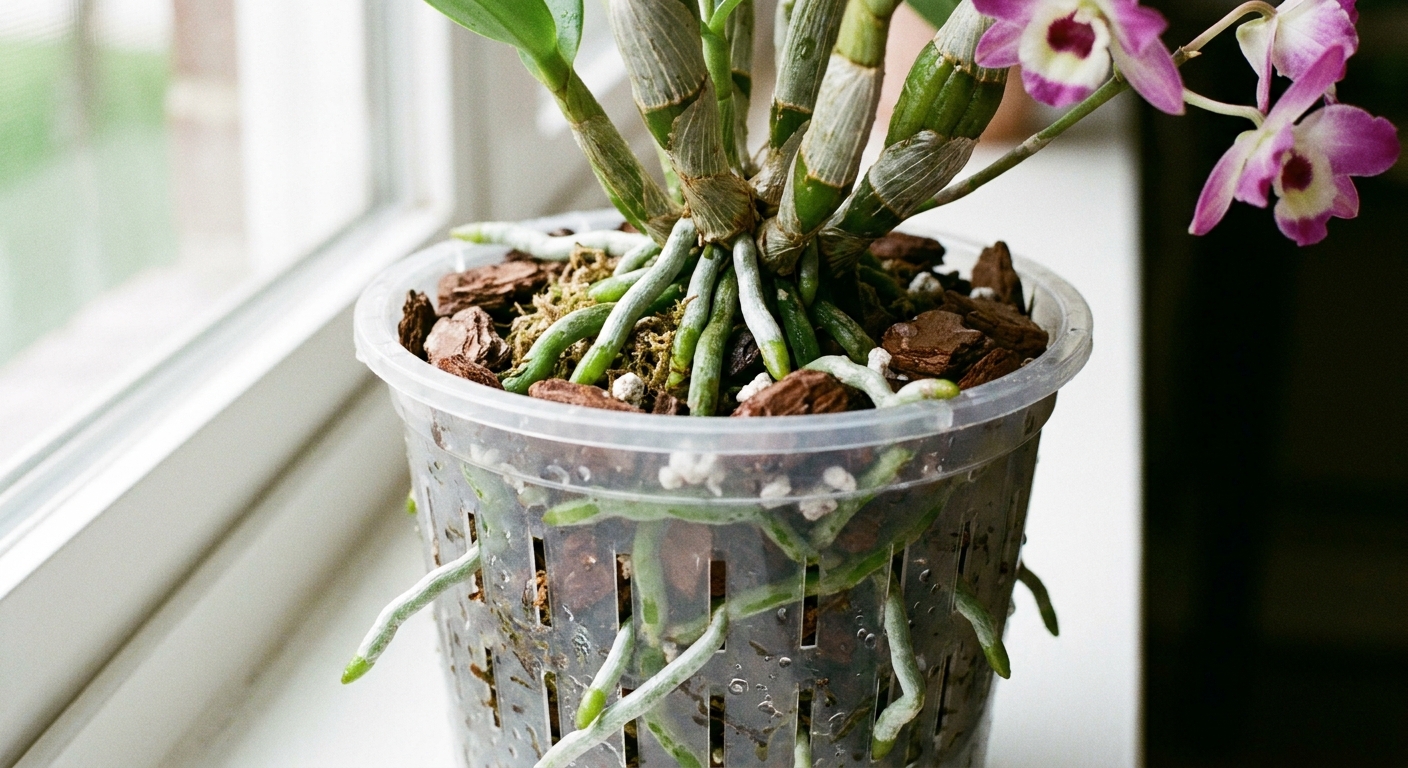
- Pot choice: a slotted orchid pot or a pot with extra side holes helps roots breathe.
Mounted plants: If your Dendrobium is mounted on cork or wood, expect to water more often, sometimes daily in warm, bright weather. Mounted roots dry fast, which is great for oxygen, but it changes the schedule.
Growth cycle cues
If you ever feel unsure about watering or “rest,” look at what the plant is building.
- New canes forming: this is active growth. Water and feed more consistently. Do not let it sit dry for long stretches.
- Canes maturing: the newest cane firms up and stops lengthening. This is when many plants slow down. You can begin easing back on water, especially for nobile-types in late fall.
- Bud season: nobile-types often set buds on mature canes after cooler nights and brighter light. Den-Phals tend to initiate spikes from upper nodes when light is strong and conditions are steady.
Repotting
Repot every 1 to 2 years, or sooner if the mix breaks down into fine particles, the plant becomes unstable, or roots look unhappy.
Best timing
Repot when you see new root tips starting, often in spring. That way the plant can quickly re-establish.
Step-by-step
- Gently remove the plant and tease away old mix.
- Trim dead roots (brown, hollow, mushy). Keep firm roots, even if they look silvery.
- Place the oldest canes toward the pot edge and allow room for new growth.
- Fill with fresh bark mix, tapping the pot to settle mix without packing it tight.
- Water lightly at first, then return to normal watering once roots begin to grab.
Note: Dendrobiums often like being slightly snug. Oversized pots stay wet too long, and that is where root rot creeps in.
Reblooming
If your Dendrobium has great leaves and canes but no flowers, it is almost always one of these: not enough light, no temperature drop, or the wrong seasonal routine for its type.
For Den-Phal types
- Increase light gradually (this is usually the biggest lever).
- A small nighttime drop (around 10°F, about 5°C) can help encourage spikes, but it is not always required if light is excellent.
- Keep watering steady during growth, then slightly reduce after canes mature.
For nobile types
- Give bright light in fall and winter.
- Provide cooler nights.
- Reduce watering when new canes have matured. Do not keep the plant bone-dry for months, but let it dry more between waterings.
- Resume more regular watering when buds swell or new growth begins.
Important: Those leafless older canes are not “dead weight.” They store energy. Unless a cane is mushy or diseased, keep it. Many nobile-types bloom right off older canes.
Spikes, canes, and keikis
What to cut
- Den-Phal flower spikes: when blooming is finished, you can trim the spike once it browns and dries. If it is still green, you can leave it until it clearly stops doing anything. The plant will decide.
- Canes: do not cut green canes. Even older, leafless canes feed the plant and may bloom again (especially nobile-types).
Keikis (baby plants)
Keikis are little clones that pop up on canes. They are common on Dendrobiums and not always a problem.
- Why they happen: genetics, low light, stress, or sometimes too much nitrogen.
- When to remove: wait until the keiki has several roots that are about 2 to 3 inches (5 to 8 cm) long, then gently detach and pot it up in a small orchid mix.
- If keikis keep appearing instead of flowers: increase light, ease up on nitrogen-heavy feeding, and double-check that your seasonal routine matches your plant type.
Problems and quick fixes
Wrinkled canes
- Most likely: underwatering or low humidity.
- Also possible: root rot, especially if mix stays wet.
- Seasonal note: nobile-types can wrinkle a bit during winter rest, but they should stay firm, not collapse.
- Try this: check roots, repot if mix is old, then return to a soak-and-drain schedule.
Bud blast (buds shrivel and drop)
- Causes: sudden temperature swings, very dry air, moving the plant, or ethylene exposure (ripening fruit nearby).
- Try this: keep the orchid stable, away from heaters and cold drafts, and raise humidity slightly.
Yellow leaves
- Normal: an older lower leaf yellowing slowly.
- Not normal: many leaves yellowing quickly or soft canes.
- Try this: reassess watering and light, and inspect roots.
Sticky residue or speckled leaves
- Watch for: scale, mealybugs, spider mites.
- Try this: isolate the plant, wipe pests with cotton swabs dipped in isopropyl alcohol, and repeat weekly until gone.
A simple weekly routine
- Once a week: lift the pot to feel its weight, check mix moisture, and inspect leaves and canes.
- When watering: soak thoroughly, drain fully, and empty saucers.
- During growth: fertilize lightly every few weeks, then flush with plain water monthly.
- Seasonally: increase light and warmth for growth, then provide cooler nights and less water if you have a nobile-type that needs a rest.
If you take one thing from me, let it be this: Dendrobiums reward consistency. They are not impressed by panic-watering or random fertilizer guilt. Give them bright light, airy roots, and a predictable rhythm, and they will do what they do best, which is bloom like they are trying to show off.