
Dendrobium Orchid Care

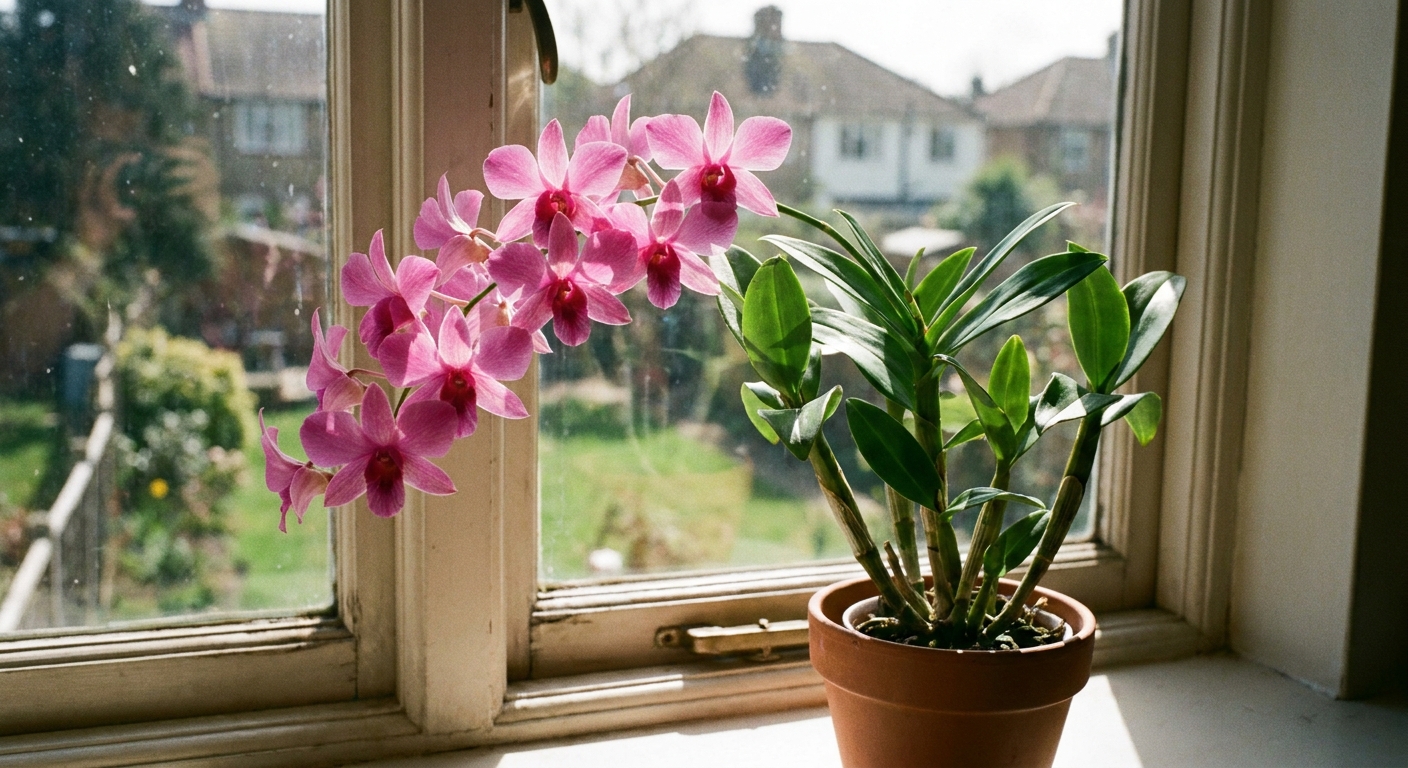
Dendrobium orchids are the kind of plants that make you stop mid-aisle at the nursery and whisper, “How is that real?” Tall canes, crisp little leaves, and sprays of flowers that look like they were painted on. They’re also wonderfully doable at home once you understand one big truth: “Dendrobium” is a large group, and different types follow slightly different rhythms.
In this guide, I will help you figure out which Dendrobium you have, then walk you through light, watering, potting, feeding, and the seasonal cues that nudge these orchids into bloom.

Main Dendrobium types
There are hundreds of species and lots of hybrids, but most home growers run into a few common “care groups.” If you can place yours into one of these, everything gets easier.
Phalaenopsis-type (evergreen) Dendrobiums
Often sold simply as “Dendrobium.” In the trade you’ll also hear “Den-phals.” They are not Phalaenopsis orchids, they just have a similar flower shape. These typically have thicker, upright canes and hold leaves most of the year. They like warm temperatures and fairly steady care. When happy, they often bloom more than once a year.
Nobile-type (deciduous or semi-deciduous) Dendrobiums
These are the ones with charming clusters of blooms along the cane. Many nobile-types and their hybrids benefit from a cooler, drier winter rest to set buds. If you keep them too warm and wet in winter, they may grow leaves and keikis instead of flowers.
Antelope-type Dendrobiums
These have twisty, horn-like petals and a more tropical vibe. Many prefer warm temperatures, bright light, and consistent moisture while growing.
Latouria-type hybrids
These are showing up more and more in retail stores. They tend to have sturdier, thicker leaves and chunky, long-lasting blooms. Care is usually closer to warm-growing evergreen types: bright light, even watering during growth, and no hard winter rest.
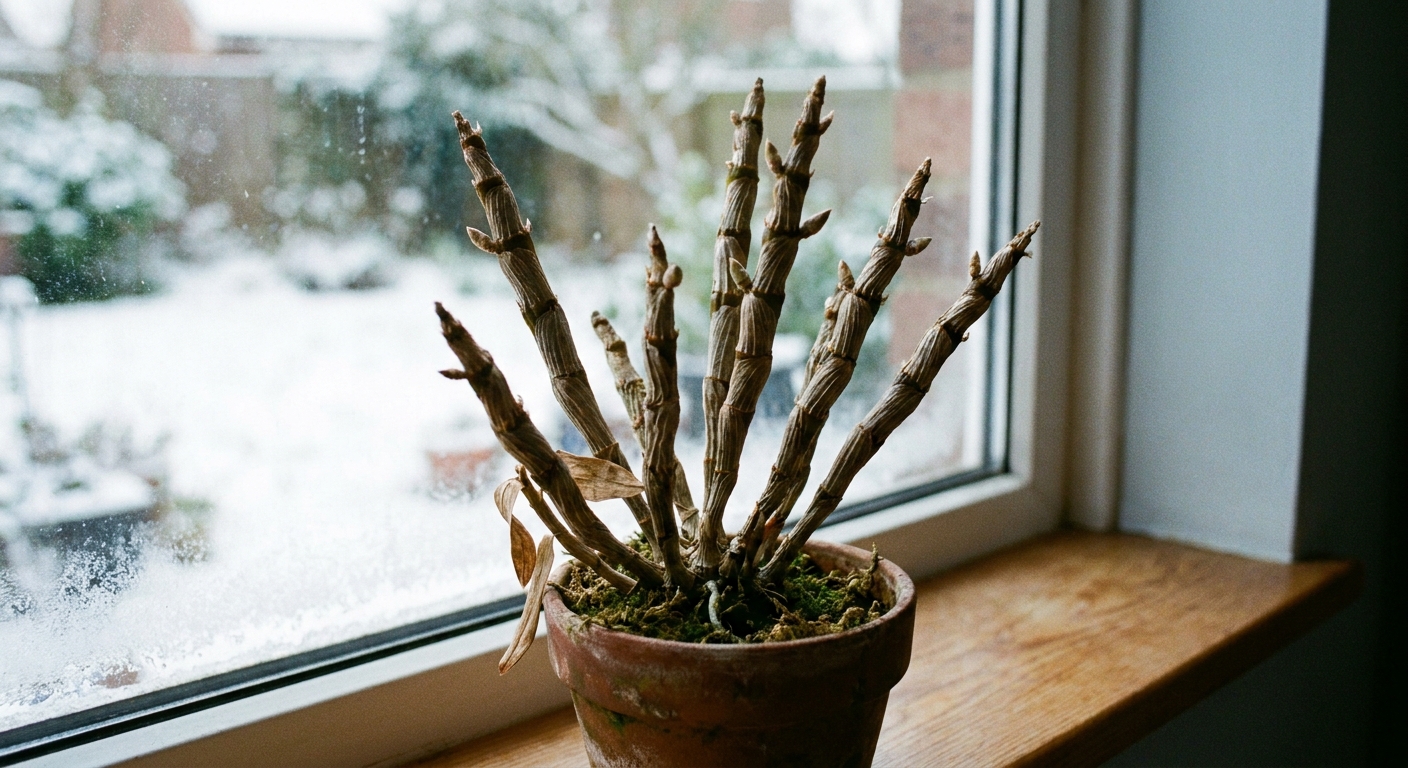
Quick ID clue: If your plant drops lots of leaves in fall or winter and looks like a bundle of canes, it may be a nobile-type that wants a rest. If it stays leafy year-round, it is often a phalaenopsis-type or Latouria-type.
If you are not sure what you have: Use the plant’s signals more than the calendar. New cane growth and new root tips mean “go time” (more water and light feeding). Mature canes with slowed growth, especially with leaf drop, often mean “ease up” (less water, and for nobile-types, cooler nights).
Light
If I could sneak one note into every Dendrobium pot, it would say: bright light equals blooms. Many Dendrobiums want more light than common moth orchids (Phalaenopsis), especially nobile-types.
- Best placement: An east window or a bright south window with light filtering (sheer curtain) is a great start.
- Leaves as a “light meter”: Medium green is usually ideal. Very dark green often means too little light. Yellowing or scorched patches can mean too much direct sun.
- Outdoor summer time: If temperatures are mild, Dendrobiums often thrive outside in bright shade. Acclimate slowly to avoid sunburn.
My practical check: The “can I read a book here?” test is a quick, imperfect shortcut, not a true light measurement. Pair it with the leaf color clue above, and if you can, aim for a spot that gets bright light for several hours a day without harsh midday sun on the leaves.
Watering
Dendrobium roots like air. They want a soak, then a chance to breathe. The goal is not “always moist.” The goal is even cycles of wet to almost-dry.
How to water
- Water thoroughly until it runs freely out the bottom.
- Let it drain completely. Never leave the pot sitting in water.
- Water again when the mix is approaching dry and the pot feels noticeably lighter.
Adjust by season and growth
Evergreen types (phalaenopsis-type, many antelope, many Latouria): keep a fairly consistent routine year-round, watering a bit less in lower light months.
Nobile-type: after canes mature in fall, many varieties benefit from a cooler, lighter-water winter pause. That often means watering much less, just enough to keep canes from shriveling hard. When you see buds, new shoots, or fresh root tips in late winter or spring, gradually increase watering again.
Watch the canes: slight wrinkling can be normal during that winter pause. Deep, accordion-like shriveling means it is too dry for too long, or the roots are struggling.
Humidity and airflow
Dendrobiums appreciate moderate humidity, but they do not want stale air. A little airflow helps prevent spotting and rot.
- Humidity target: roughly 40 to 60% is comfortable for most homes and most Dendrobiums.
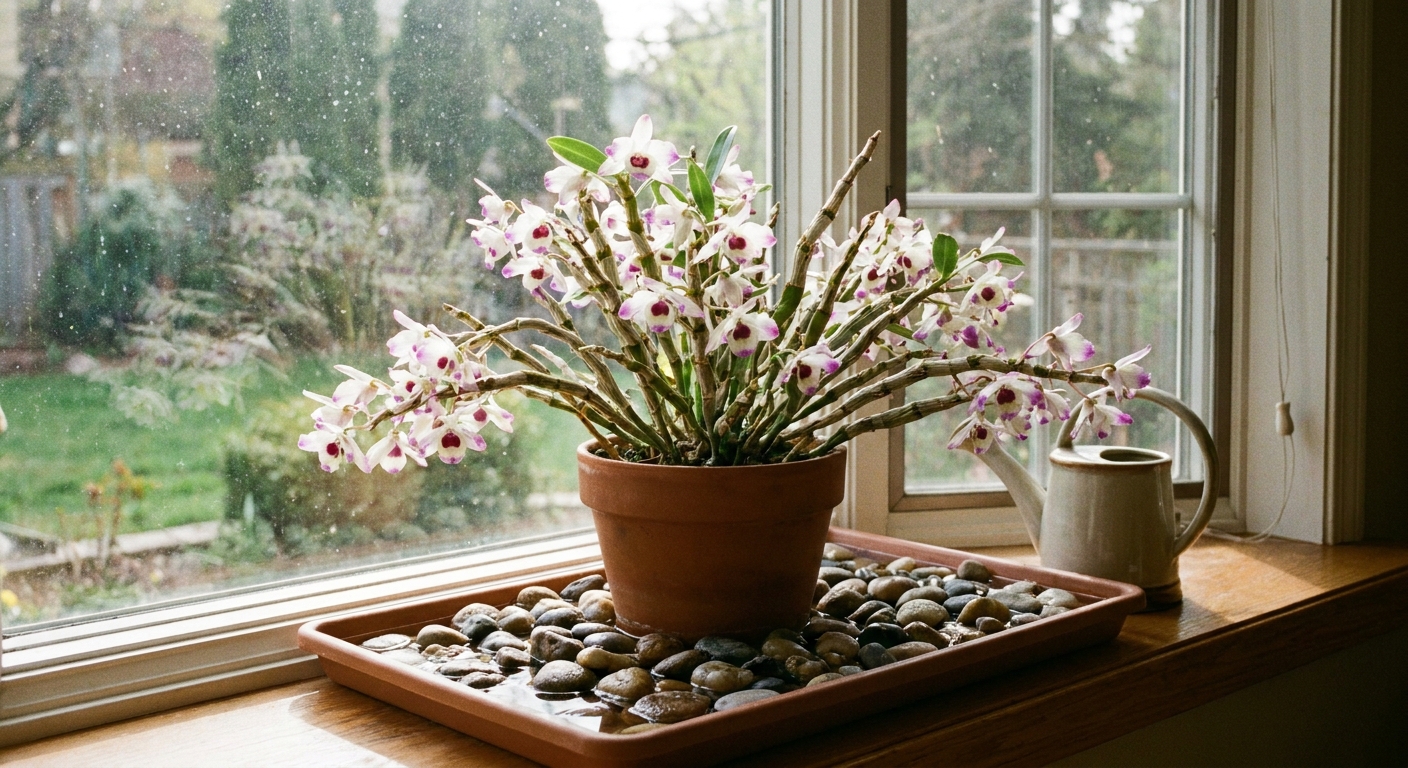
- Easy boost: a pebble tray can help a little right around the plant, but in many rooms the effect is modest. For a real bump, a small humidifier nearby is often more effective.
- Air movement: a small fan across the room on low is often enough, especially in winter.
Temperature
Temperature influences bloom timing, especially for nobile-types.
- Warm-growing Dendrobiums: many evergreen, antelope, and Latouria types enjoy typical indoor temps, around 65 to 85°F (18 to 29°C).
- Nobile-type cue: cooler nights in fall and winter (often around 50 to 60°F, 10 to 16°C) can help set flower buds, paired with reduced watering. Avoid chilling below about 45 to 50°F (7 to 10°C) unless you know your plant tolerates it.
If you have a bright, slightly cooler room or an enclosed porch that stays safely above chilly lows, that can be a secret weapon for reblooming nobile-types.
Potting mix and pots
Dendrobiums prefer an airy orchid mix that drains fast. They also tend to bloom better when slightly snug in their pot.
Mix options
- Medium orchid bark (a common, reliable choice)
- Bark blended with a little sphagnum moss if your home is very dry (do not pack moss tightly, it can smother roots)
- Charcoal or perlite additions for extra airflow
Pot choice
- Plastic pots hold moisture longer. Great for dry homes.
- Terracotta dries faster. Great if you tend to overwater.
- Slotted orchid pots improve airflow, especially useful in humid climates.
When to repot: typically every 1 to 2 years, or when bark breaks down and starts staying soggy. The best time is when new roots are just starting, often after flowering or as new growth begins. Repotting into fresh mix right as roots start growing helps the plant bounce back faster.
Fertilizer
Dendrobiums respond beautifully to gentle, regular feeding during active growth.
- During growth: feed at about 1/4 to 1/2 strength with a balanced orchid fertilizer every 2 to 4 weeks.
- Flush monthly: water thoroughly with plain water to wash out salt buildup.
- During the nobile winter pause: reduce or pause fertilizer until new growth resumes.
If your water is very hard, consider using rainwater, distilled, or a blend. Your orchid roots will often look cleaner and happier.
Reblooming
This is the part where most “black thumb” anxiety shows up. So let us make it simple.
Evergreen types (Den-phals and similar)
- Increase light gradually, aiming for bright conditions.
- Keep watering consistent, letting the mix approach dry between soaks.
- Maintain moderate fertilizer during active growth.
- Look for spikes from nodes near the top of mature canes.
Nobile-type
- Give brighter light in fall.
- Allow canes to fully mature (stop pushing leafy growth with heavy fertilizer late in the season).
- Provide cooler nights and a lighter-water winter pause.
- Resume watering when buds, new shoots, or fresh root tips appear.
Important: Old canes are not trash. Even if they are leafless, they store energy. I only remove a cane if it is completely brown, hollow, or clearly dead.
Pruning and keikis
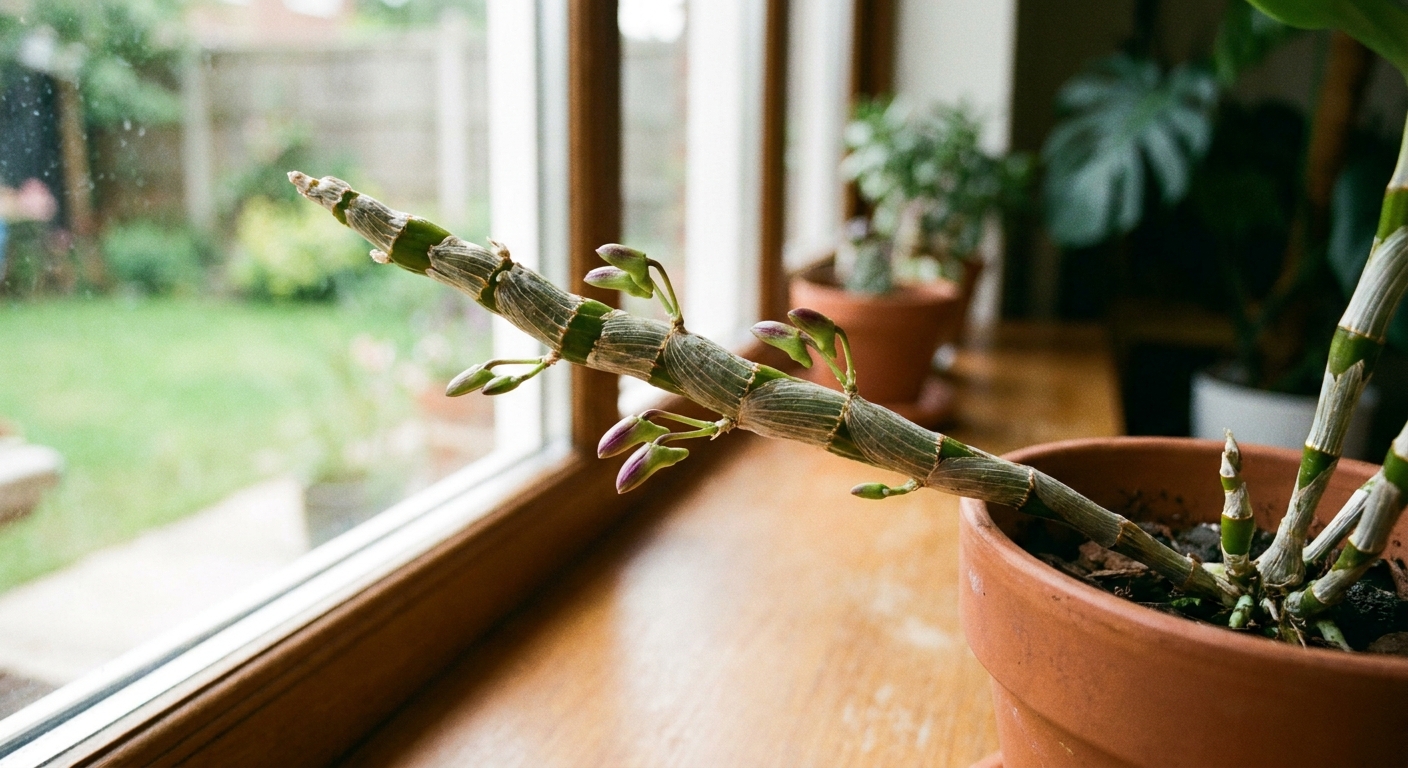
Dendrobiums can grow keikis, little baby plants that pop out along the cane. It is adorable, and it is also a clue.
- Why keikis happen: often from warm, wet conditions when the plant would otherwise be setting buds, or from stress.
- When to remove: wait until the keiki has several roots that are at least 2 to 3 inches (5 to 7 cm) long.
- How to pot: use a small pot and airy mix. Keep slightly more humid at first, but do not smother the roots.
For pruning, remove only dead flower spikes or truly dead canes. Green canes are working canes, even if they look a little tired.
Common problems
Wrinkled canes
Often underwatering, or roots that have failed and cannot drink. Check roots and the age of the potting mix. If bark is broken down, repot.
Yellow leaves
A few lower leaves aging out is normal. If many leaves yellow quickly, look at water habits, salt buildup, or sudden light changes.
No blooms
Most often: not enough light. For nobile-types: missing the cool nights and winter pause.
Black spots or mushy areas
Usually moisture sitting too long plus low airflow. Improve ventilation, avoid wetting leaves late in the day, and check that the mix drains fast.
Pests
Mealybugs and scale love hiding in leaf joints. Swab with isopropyl alcohol on a cotton swab, then follow up with insecticidal soap as needed. Caution: alcohol and soaps can damage tender tissue and open flowers, and sprays can burn leaves in bright light. Test a small area first, treat out of direct sun, and repeat weekly until you stop seeing pests.
A simple weekly routine
- Once a week: check pot weight and mix moisture, then water if needed.
- Every 2 to 4 weeks: fertilize lightly during active growth.
- Monthly: flush with plain water to reduce fertilizer salts.
- Seasonally: increase light in fall, and for nobile-types consider cooler nights and a winter pause.
If you remember nothing else: give your Dendrobium bright light, let the roots breathe, and follow its growth cues. These orchids have a rhythm, and once you catch it, they bloom like they have been waiting to show you all along.