
Dendrobium Orchid Care

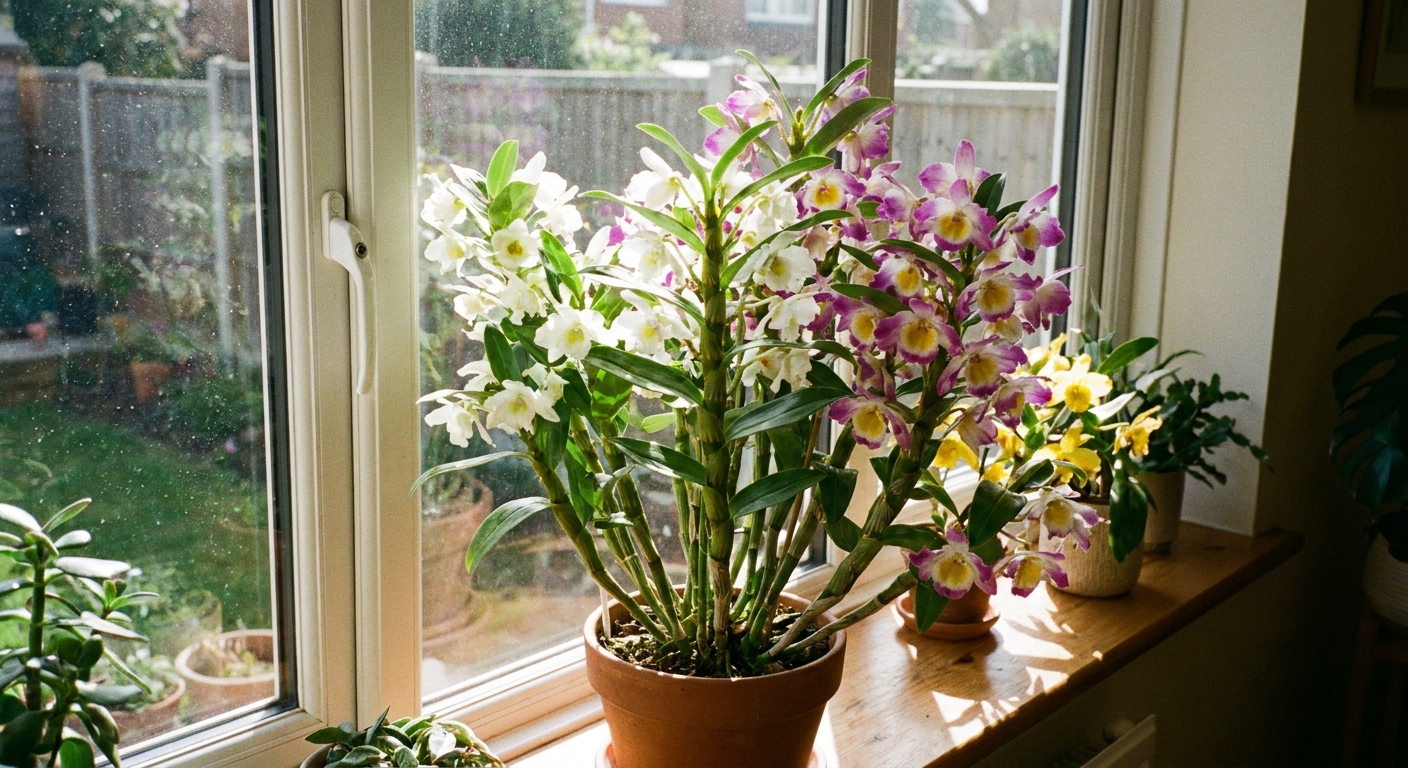
Dendrobium orchids are the kind of plant that make you stop mid-aisle at the nursery and whisper, “Oh wow.” They can bloom in sprays like confetti, grow upright like little bamboo canes, and somehow look both delicate and tough at the same time. And here’s the good news: they aren’t “too advanced” for regular plant people. You just have to learn one big secret.
The secret is that “Dendrobium” is a huge family. Different types want different seasonal cues. Once you figure out which group you’ve got, caring for it gets wonderfully straightforward.

Meet your Dendrobium type
Most Dendrobiums you’ll see in shops fall into a few common groups. If you can identify yours, you’ll know whether it wants steady warmth year-round or a cooler, drier rest to trigger blooms.
Phalaenanthe type (warm-growing)
Often sold in the trade as “Den-Phal” or labeled “Dendrobium phalaenopsis” (the naming is messy, but the care guidance holds). These warm-growing hybrids usually like warm temperatures most of the year and don’t need a chilly winter rest. They’re a great first Dendrobium.
Nobile type (often needs a winter rest)
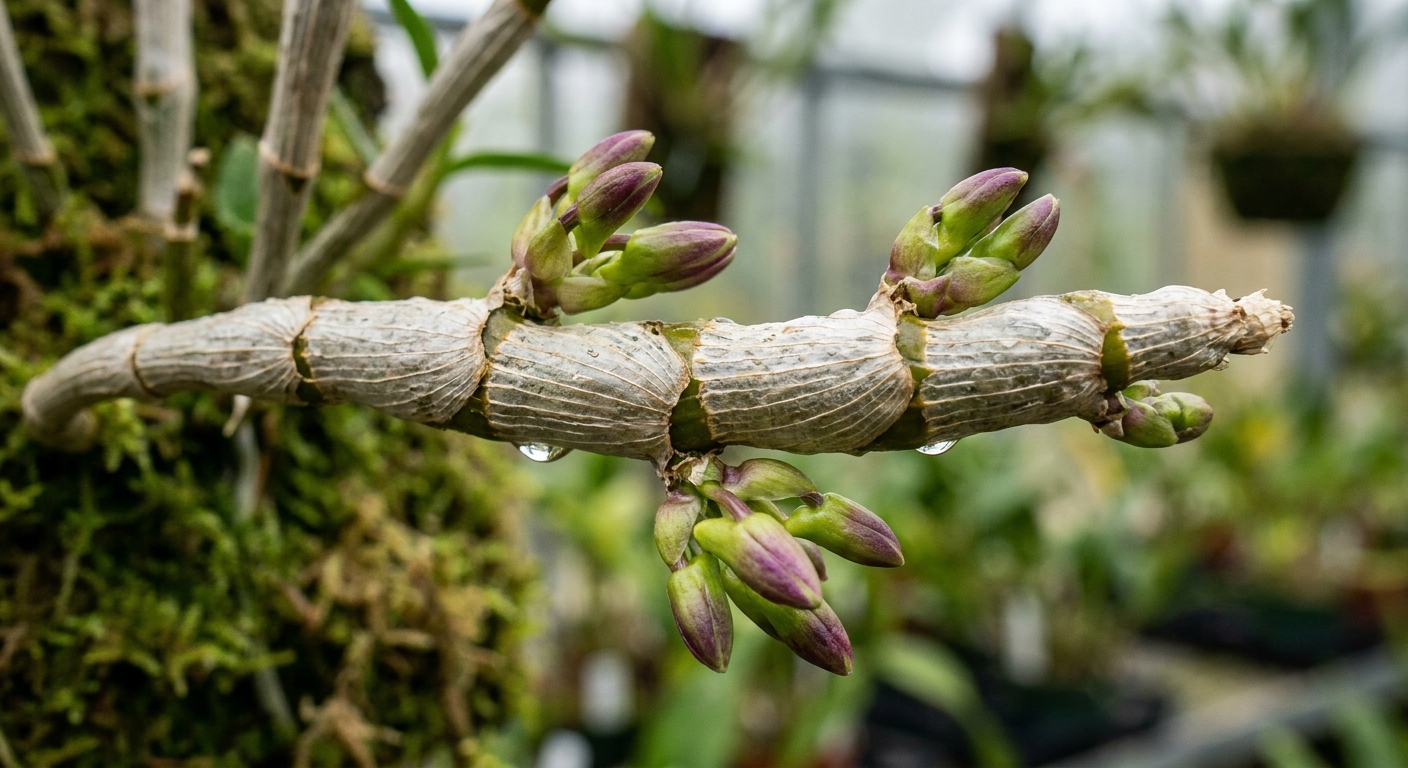
These are famous for rows of blooms along the canes. Many, though not every hybrid, need brighter light and a cooler, drier period in fall and winter to set buds. If you know your plant’s background, follow that first. If not, the classic nobile pattern is a good starting point.
Antelope type (twisty petals)
Flowers have narrow, curled petals that look like little horns. Care is similar to warm-growing types, with bright light and a steady routine.
Quick ID hints:
- Blooms along the cane nodes in a tidy line often suggests nobile types.
- Big sprays from the top often indicates Phalaenanthe (Den-Phal) hybrids.
- If your plant tag includes “Dendrobium phalaenopsis” or “Den-Phal,” treat it as warm-growing.
Light: the make-or-break factor
If I could slide one note into every Dendrobium pot at the store, it’d say: give me more light than your average houseplant.
- Best indoor spot: an east window or a bright south window with a little protection from harsh midday sun.
- Goal: bright light that casts a soft shadow. Leaves should look fresh green, not deep forest green.
- Know your type: nobile types typically want brighter light than warm-growing Den-Phal types, and they can often take some direct morning or late-afternoon sun once acclimated.
- Too little light signs: skinny new canes, slow growth, no blooms.
- Too much light signs: yellowing, scorched patches, crispy leaf tips.
If you’re using grow lights, aim for a bright setting for 10 to 12 hours daily and keep the plant close enough to benefit, but not so close that the leaves heat up.
Watering: soak, drain, then breathe
Dendrobiums like thorough watering, followed by air around the roots. Think of it like a good rainstorm and a breezy afternoon.
How to water (my no-fuss method)
- Check the mix with a finger or wooden skewer. If it feels nearly dry, water.
- Soak fully until water runs out of the drainage holes.
- Drain completely. Never let the pot sit in water.
How often?
It depends on your home, your pot size, and your potting mix. A general rhythm looks like this:
- Spring and summer (active growth): water when the mix is approaching dry. In many indoor setups this could be every 3 to 10+ days (bark dries fast, sphagnum holds longer, cool rooms slow everything down).
- Fall and winter: water less as growth slows.
Important exception: many nobile type Dendrobiums want a cooler, drier rest once the new canes mature. That usually means stretching watering way out, just enough to prevent severe shriveling, and pausing fertilizer during the rest.
Clara tip: If your canes are slightly wrinkly but firm, you’re probably just a bit dry. If they’re wrinkly and the roots look poor, you may have a root problem rather than a simple thirst problem.
Humidity and airflow
Dendrobiums appreciate moderate humidity, but they hate stale, soggy air.
- Ideal humidity: roughly 40 to 60 percent is comfortable for most homes and orchids.
- Air movement: gentle airflow from a fan across the room helps prevent fungal issues.
- Easy humidity boost: a pebble tray (pot above water line) or grouping plants together.
If you mist, do it in the morning and keep it light. Wet leaf joints overnight can invite rot.
Also: quarantine new orchids if you can. A quick two-week “getting to know you” period away from your other plants catches pests early and saves everyone a lot of drama.
Mix and pots
Most Dendrobiums do best in an airy orchid mix. The goal is roots that can grab onto something while still drying out between waterings.
Good potting mix options
- Chunky fir bark with a bit of perlite or charcoal
- Bark plus sphagnum (useful in very dry homes, but easy to overwater)
- Mounted on cork or wood for experienced growers who can water more frequently
Pot choice
- Plastic pots hold moisture longer, great for dry indoor air.
- Clay pots breathe more, great if you tend to overwater.
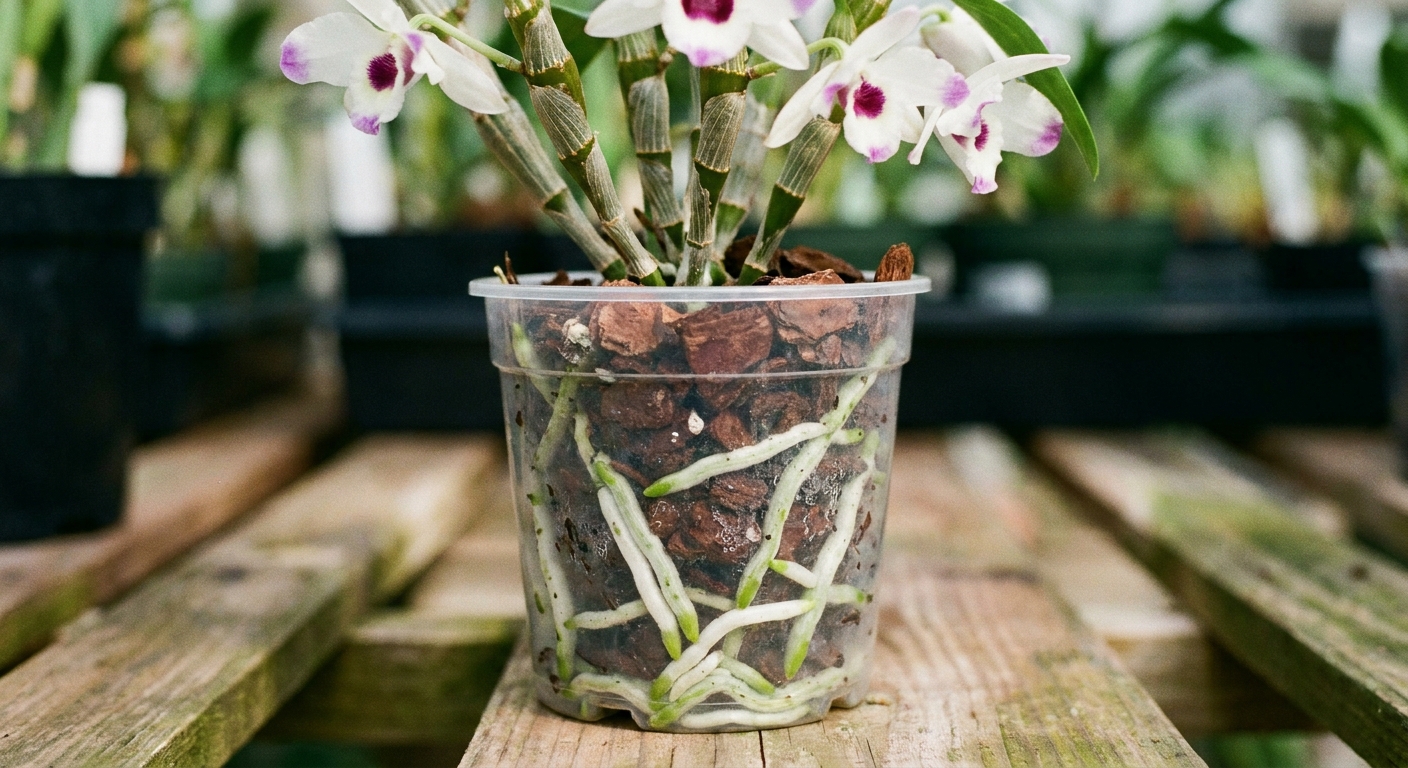
- Clear pots make root checks easy and help you learn your plant faster.
Stability matters: tall canes can tip. Use a heavier outer cachepot, a clay pot, or a discreet stake.
Fertilizer
Dendrobiums aren’t heavy feeders, but they do appreciate regular nutrition during active growth.
- When: spring through early fall, when you see new roots or new canes.
- What: a balanced orchid fertilizer or a general houseplant fertilizer diluted to 1/4 to 1/2 strength.
- How often: every 2 to 4 weeks, depending on your watering habits.
Flush the pot with plain water about once a month to reduce fertilizer salt buildup, especially if you’ve got hard tap water.
Temperature
Temperature is where Dendrobiums can feel “mysterious,” but it’s really just about matching the group.
Warm-growing types (Den-Phal and many hybrids)
- Day: about 70 to 85°F (21 to 29°C)
- Night: about 60 to 70°F (16 to 21°C)
Nobile types (common bloom trigger pattern)
After the new canes finish growing, many nobile types respond to:
- Cooler nights: often 50 to 60°F (10 to 16°C) if you can manage it
- Less water: reduced watering for several weeks
- Bright light: keep light high while water drops
A typical rest is about 6 to 10 weeks, or until you see buds forming. When buds appear, gradually resume normal watering. If you keep watering heavily during the rest period, you can encourage keikis (baby plants) instead of blooms, especially combined with warmth or high nitrogen.
Get it to bloom again
Blooms aren’t luck. They’re the result of bright light, mature canes, and the right seasonal cue for your plant type.
Bloom checklist
- Light: increase brightness first. This solves more bloom issues than anything else.
- Mature growth: a cane typically needs to mature before it can flower well.
- Don’t cut green canes: old canes store energy and can rebloom or support new growth.
- Temperature cue: warm-growers want steady warmth, many nobile types want cool, drier weeks.
One more gentle truth: if your Dendrobium came from a greenhouse, it may need a season to adjust to home conditions. Consistency wins.
After-bloom care
What you do after flowering depends on the type, but the overall rule is simple: don’t rush to “tidy” the plant into weakness.
- Warm-growing Den-Phal types: once the flower spray is done, you can cut the spent spike back to the cane. Keep the cane itself.
- Nobile types: flowers come from cane nodes, so there’s usually no separate spike to trim. Let the cane be. Even leafless older canes can help power new growth.
Remove only truly dead parts: brown, crispy canes that are hollow and papery, or spikes that are fully dried out.
Repotting
Dendrobiums like being slightly snug, but they don’t love decomposed mix.
When to repot
- Every 1 to 2 years, or when bark is breaking down and staying soggy
- When roots are crawling out and the plant is unstable
- Best timing is usually after flowering and as new roots start growing
One more thing: many store-bought orchids are potted in a tight nursery plug that slowly turns into a soggy sponge. If you find one at repotting time, gently remove as much as you can without shredding the roots.
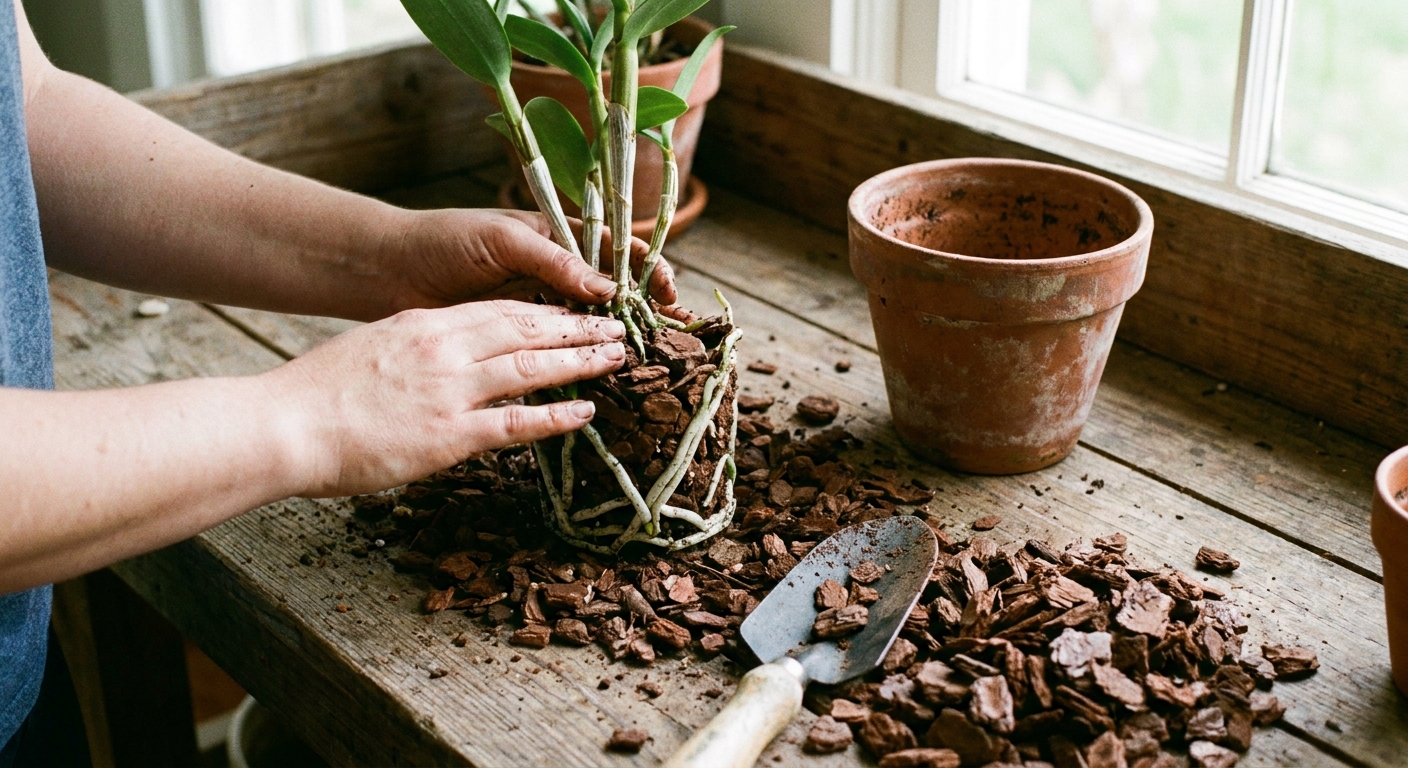
How to repot (step-by-step)
- Water the plant first so roots are flexible.
- Gently remove old mix and trim mushy, hollow roots with sterilized scissors.
- Choose a pot only slightly larger.
- Set the oldest canes near the pot edge so new growth has room.
- Fill with chunky mix, tapping the pot to settle without packing tight.
- Hold off on heavy watering for about a week if many roots were disturbed.
Common problems
Wrinkled canes
- Most common cause: underwatering or too dry air during active growth
- Also possible: root loss from old, broken-down mix
- Try: soak thoroughly, then adjust your schedule. Check roots. Consider repotting if mix stays wet and roots look unhealthy.
Yellow leaves
- Normal: older leaves can yellow and drop as canes mature
- Concern: fast yellowing with soft spots can signal overwatering or rot
- Try: improve airflow, reduce watering frequency, ensure the pot drains freely.
Bud blast (buds shrivel and drop)
- Common triggers: sudden temperature swings, very dry air, moving the plant, or letting it go too dry right as buds form
- Try: keep conditions steady, raise humidity slightly, water consistently without soaking cold mix.
Keikis instead of flowers
- Often: too warm and too wet during the period when the plant wanted a rest (especially nobile types)
- Also possible: high nitrogen, low light, or genetics
- Try: brighter light and a cooler, drier rest next season. Ease up on nitrogen going into fall.
Sticky leaves
Check for scale, mealybugs, or aphids. Sticky residue is often honeydew from pests. Isolate the plant, wipe leaves, and treat with insecticidal soap or horticultural oil, repeating weekly until clear.
Pet safety
Dendrobium orchids are generally regarded as non-toxic to cats and dogs (many owners reference lists like the ASPCA’s toxic and non-toxic plants). Still, pets can get an upset stomach from chewing plants, and spikes can be pokey. Also note that fertilizer residue or pesticide sprays are often the bigger risk than the orchid itself. If your pet is a dedicated plant snacker, place orchids out of reach and check with your veterinarian if any chewing happens.
A simple weekly routine
If you want a calm, repeatable approach, try this:
- Once a week: check moisture, water if nearly dry, rotate the pot for even growth.
- Every 2 to 4 weeks (spring to early fall): fertilize lightly.
- Monthly: flush with plain water to wash out salts.
- Seasonally: increase light in winter, and if you’ve got a nobile type, plan for a cooler, drier rest after canes mature.
And yes, I talk to my orchids. They’ve heard worse. The real magic isn’t the pep talk. It’s showing up, noticing small changes, and adjusting before a small problem becomes a dramatic one.