
Dendrobium Orchid Care

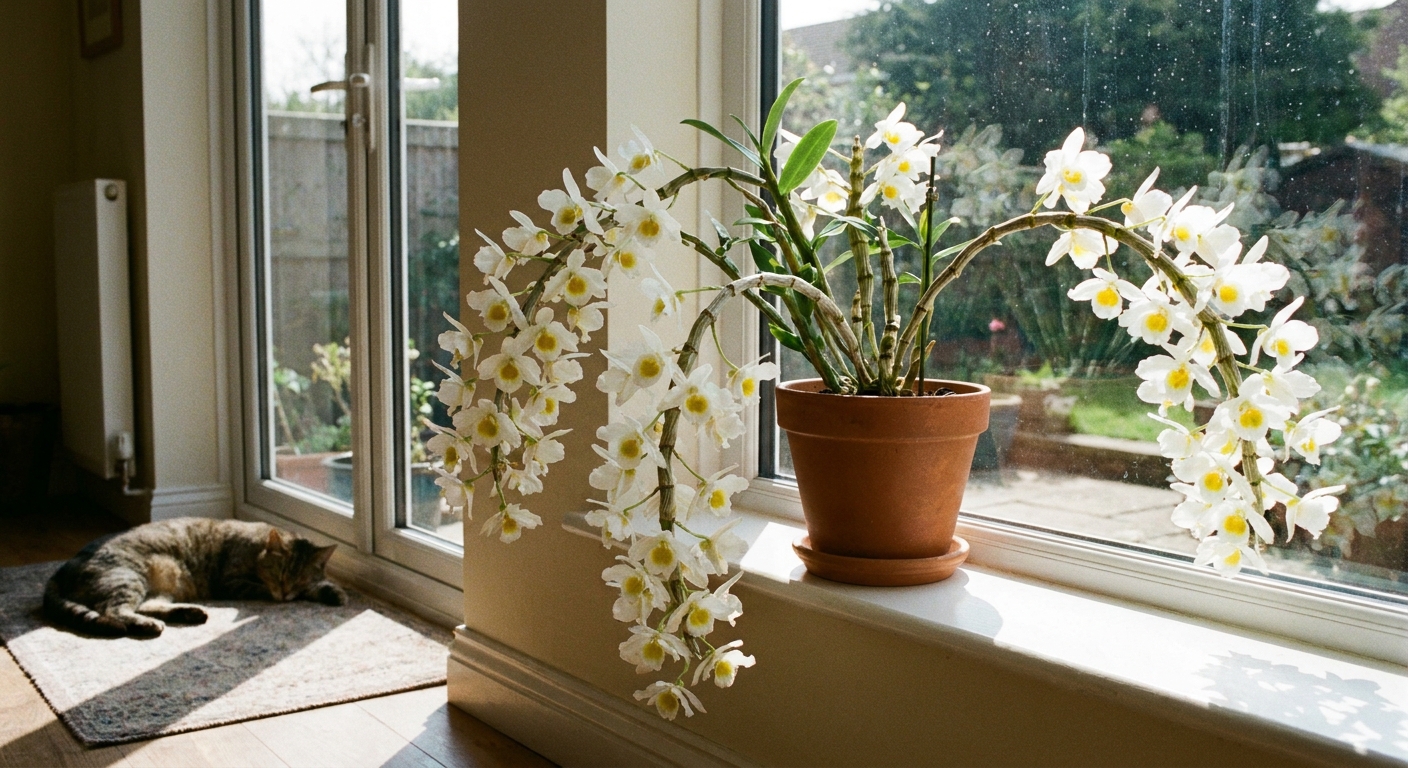
Dendrobium orchids are the kind of plant that makes you pause mid-grocery run and whisper, “Okay, fine, you are coming home with me.” They bloom like little fireworks, they can handle a normal home better than many commonly sold orchids, and once you learn their rhythm, they become wonderfully predictable.
The trick is that Dendrobium is a big group with a few different “personalities.” I will help you figure out which type you have, then dial in care that fits your plant instead of forcing it to follow a one-size-fits-all rulebook.

Meet the Dendrobium: why care varies
Dendrobium orchids grow across a wide range of climates in Asia and the Pacific, from warm lowlands to cooler mountain forests. That is why your neighbor might water theirs twice a week while yours sulks if you try the same schedule.
Quick beginner translation: a cane is the tall, thick stem. It stores water and energy, and it is where blooms (and sometimes keikis) appear.
Two of the most common home types
- Phalaenopsis-type Dendrobiums (often called Den-Phal): evergreen, prefer warm temperatures year-round, and usually bloom from the tops or upper nodes of canes.
- Nobile-type Dendrobiums (Dendrobium nobile and hybrids): can drop leaves, often need a cooler, drier winter rest to bloom well, and flower along the length of the canes.
If your plant tag says “nobile,” treat it like it wants seasons. If it says “Den-Phal,” treat it like it wants steady warmth and more even moisture through the year.
Light: bright, gentle, and consistent
Light is the number one lever for strong canes and reliable blooming.
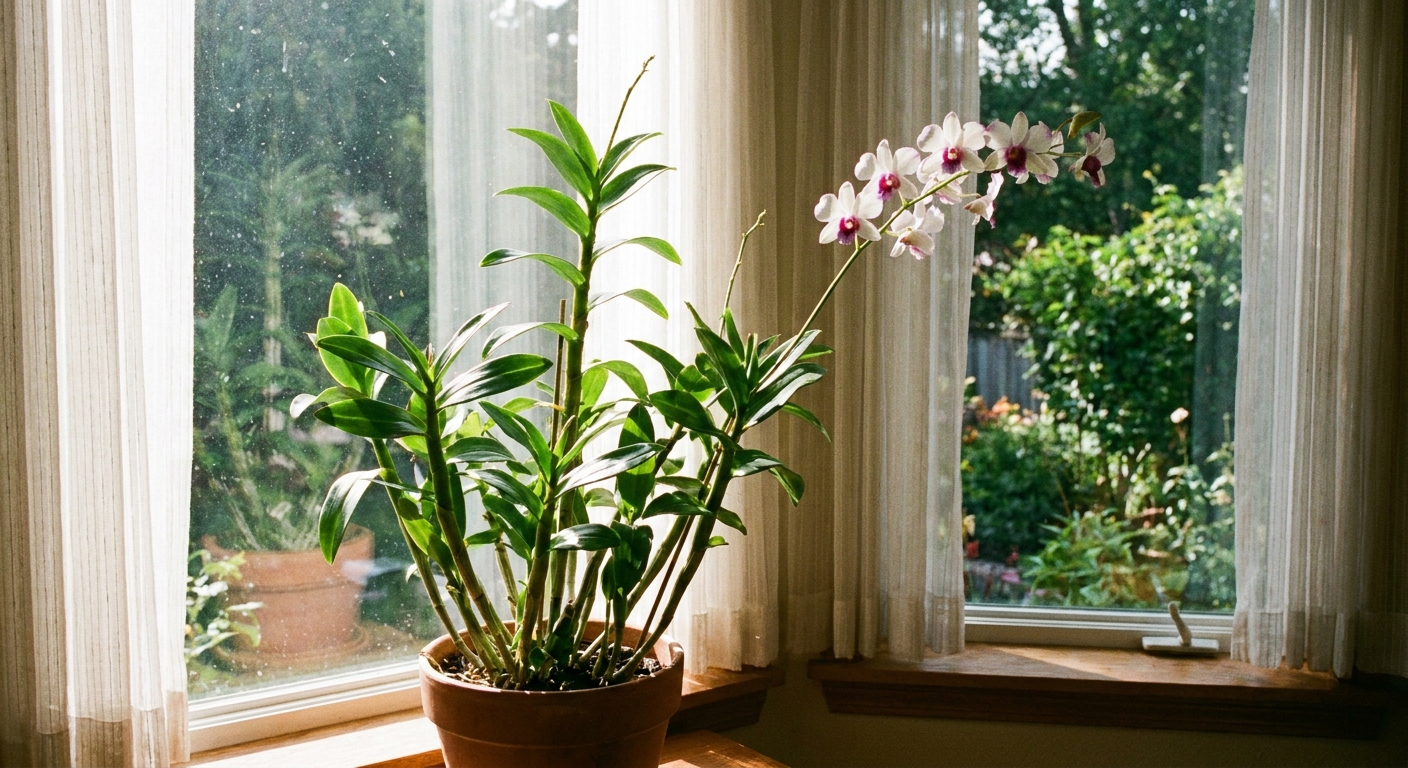
- Best indoor spot: an east window (gentle morning sun) or a bright south or west window with a sheer curtain.
- Target: bright indirect light, with a little direct sun in the morning or late afternoon.
- Leaf cues: medium green is ideal. Very dark green often means too little light. Yellowing or sun-scorched patches mean too much direct midday sun.
If you only change one thing to encourage blooming, increase light gradually over 2 to 3 weeks.
Watering: soak, drain, then let it breathe
Dendrobiums like a thorough drink, then a chance for roots to pull oxygen again. Think “monsoon then dry breeze,” not “constant damp socks.”
How to water
- Check dryness: stick a finger into the potting mix or lift the pot. It should feel lighter before you water again.
- Soak: water until it runs freely from the bottom.
- Drain completely: never leave the pot sitting in water.
How often
- Warm, active growth (spring and summer): usually every 5 to 10 days indoors, faster in bark, slower in moss.
- Cooler, slower months (fall and winter): often every 10 to 14 days.
Den-Phal types: usually prefer more even moisture year-round. You can still slow down a bit in winter if the plant is growing more slowly, but do not force a hard dry spell.
Nobile types: many bloom best with a cooler, drier rest in late fall and winter. That does not mean bone dry for months, it means water sparingly, just enough to keep canes from shriveling severely.
Water quality matters
If you can, use rainwater, distilled, reverse osmosis, or filtered water. If your tap water is chlorinated (not chloramine), letting it sit out overnight can help the chlorine dissipate. Hard water can still leave mineral crust on bark and roots over time, so flushing the pot regularly matters.
Humidity and airflow: the calm balancing act
Dendrobiums enjoy moderate humidity, but they hate stagnant air. If you give them humidity without airflow, fungal issues can sneak in.
- Ideal humidity: 40 to 60 percent is a sweet spot for most homes, and many tolerate a bit lower if watering is on point.
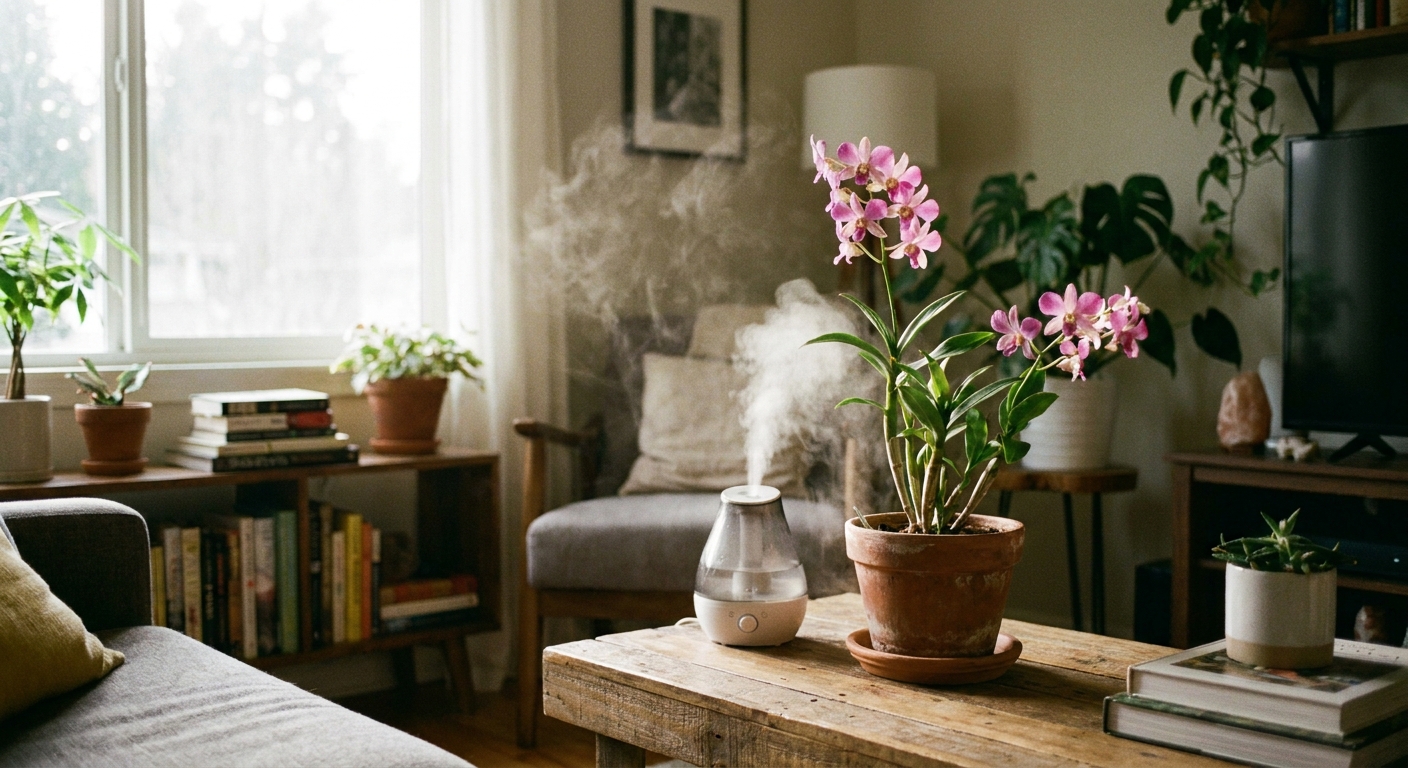
- Easy boost: a pebble tray with water (pot sits on pebbles, not in water) or a small humidifier nearby.
- Airflow: a gentle fan in the room, not blasting the plant, helps keep leaves dry and roots healthy.
Temperature: warm growers vs winter resters
Here is where Den-Phal and nobile types part ways.
Den-Phal (warm and steady)
- Day: about 70 to 85°F (21 to 29°C)
- Night: about 60 to 70°F (16 to 21°C)
Nobile (cooler nights encourage blooms)
- Growing season: similar warmth to Den-Phal is fine.
- Late fall and winter: aim for cooler nights around 45 to 60°F (7 to 16°C) if possible, paired with reduced watering. Many nobiles bloom best toward the cooler end of that range, as long as the plant is protected from frost.
If your home is very warm all winter, nobile types may grow well but bloom less. A bright, cooler room or enclosed porch can make a big difference.
Potting mix and pots: keep roots airy
Dendrobium roots want oxygen. The best potting setup is one that drains quickly and does not collapse into sludge.
Great beginner mixes
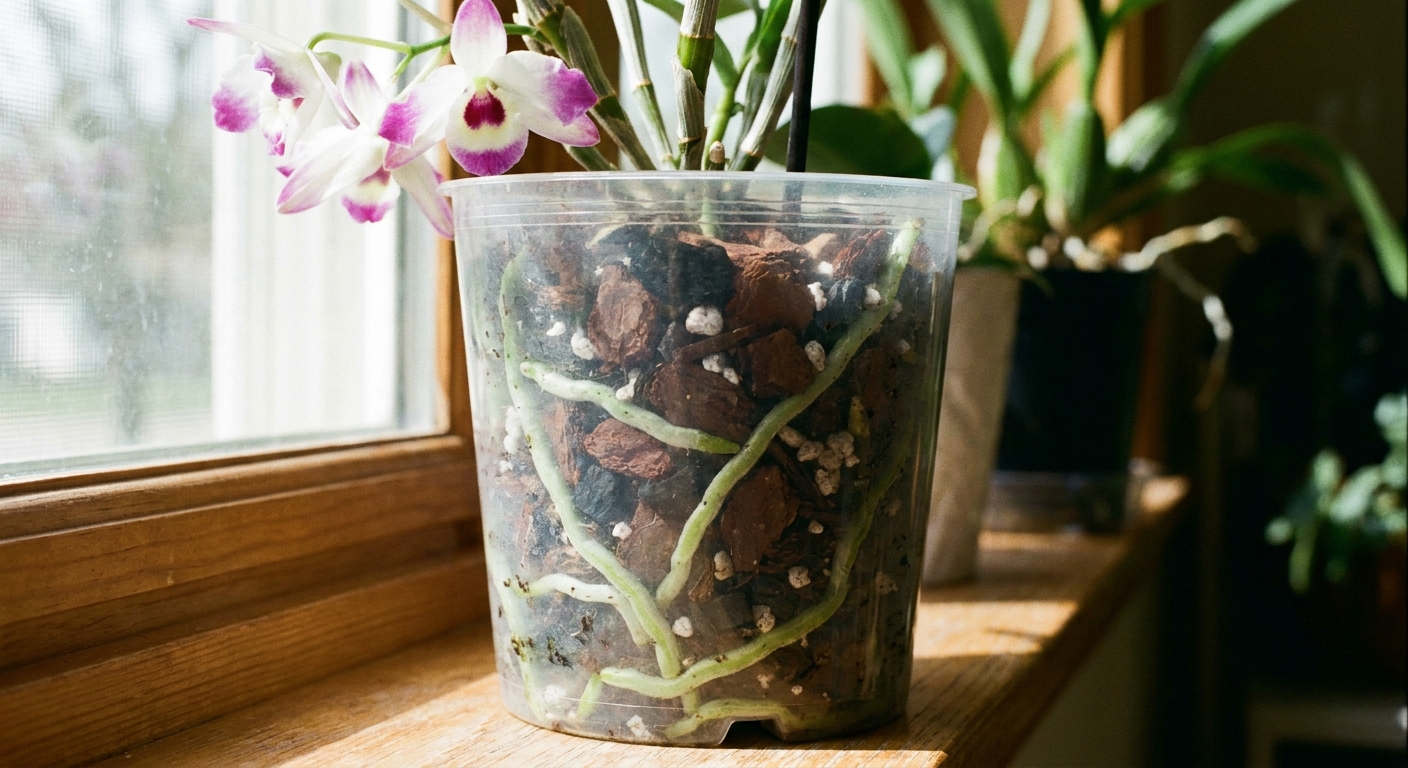
- Medium orchid bark (often with a bit of perlite or charcoal) for most indoor conditions.
- Bark plus a little sphagnum moss if your home is very dry and you struggle to keep up with watering.
Pot choice
- Clear plastic orchid pot: my favorite for learning, because you can see root health and moisture level.
- Clay pot: dries faster and is heavier, great for tall canes that tip.
Repotting timing: repot when you see fresh root tips starting, usually in spring or early summer. Avoid repotting a plant in full bloom unless the mix is breaking down badly or roots are rotting.
Typical repot cadence: about every 1 to 2 years, or anytime the bark starts to soften, sour, or stay wet too long.
Feeding: gentle, consistent, and media-aware
Orchids are light feeders, but Dendrobiums appreciate steady nutrition during growth, especially while making new canes.
- When to feed: spring through early fall during active growth.
- How often: every 2 to 4 weeks at quarter to half strength.
- What to use: a balanced orchid fertilizer works well. If you lean organic, look for a gentle, low odor organic orchid fertilizer and use it lightly to avoid buildup in the potting media.
Flush monthly: once a month, water heavily with plain water to rinse out salts and residues. Your roots will thank you.
Blooms, canes, and pruning: what to cut and what to keep
Dendrobiums grow in canes, and those canes are not just stems, they are storage batteries. Even if a cane is done blooming, it often feeds the plant later.
After flowering
- Do not cut healthy green canes: they can rebloom on some types and they support new growth.
- Cut flower spikes: once blooms fade, trim the spent flower spike back to the cane.
- Remove dead canes: if a cane is fully brown, papery, and hollow, it is safe to remove at the base with clean snips.
If your plant looks messy, you can stake canes neatly. I talk to my ferns, but I do not expect my orchids to be tidy on their own.
How to get a Dendrobium to rebloom
When a Dendrobium refuses to bloom, it is usually one of these: not enough light, not enough maturity, or the wrong seasonal cues.
Rebloom checklist
- Increase light: move closer to a bright window, introduce gentle direct morning sun.
- Support strong canes: feed lightly during growth and do not overwater in winter.
- Let new canes mature: many Dendrobiums bloom on mature canes, not baby ones.
- Nobile types: provide cooler nights and a drier rest in late fall through winter, then resume regular watering when buds begin to swell.
Watch for bud formation along the cane. Tiny bumps can become buds or keikis, which brings us to the next topic.
Keikis: cute babies with a plan
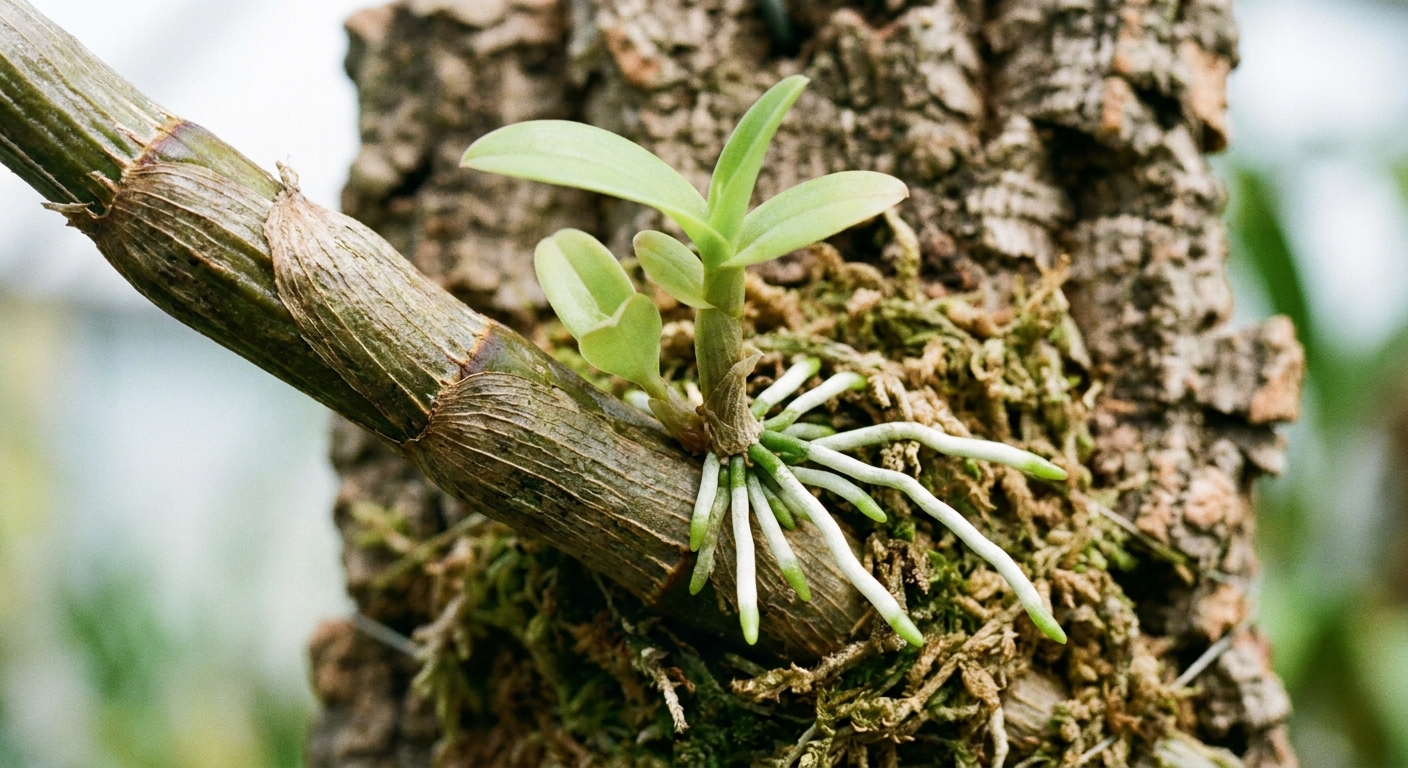
A keiki is a baby plant that forms on the cane. It is adorable, and sometimes it is also your orchid quietly telling you something about its conditions.
- Why keikis happen: genetics, warm temperatures, high nitrogen fertilizer, or a plant that is not receiving the cues it needs to bloom.
- Bud or keiki: flower buds tend to look like tighter, rounder nubs that swell and cluster (often with more of them), while keikis quickly show tiny leaves, then roots.
- When to remove: once the keiki has 2 to 3 roots that are at least 2 to 3 inches long.
- How to pot: use a small pot and airy bark mix, keep evenly moist until established.
Common problems and quick fixes
Wrinkled canes
- Likely cause: underwatering, low humidity, or damaged roots.
- Fix: check roots, adjust watering, consider a bit more humidity and less midday sun.
Yellowing leaves
- Likely cause: natural leaf drop on older canes, too much sun, or staying too wet.
- Fix: evaluate which leaves are yellowing, improve drainage, and confirm light is filtered.
Black spots or mushy areas
- Likely cause: fungal or bacterial issues encouraged by wet leaves and poor airflow.
- Fix: increase airflow, avoid wetting foliage late in the day, remove badly affected tissue with sterile tools.
Root rot
- Likely cause: broken down potting mix, pot too large, or watering too often.
- Fix: repot into fresh, chunky mix, trim dead roots, and water only when the mix approaches dry.
Pests (the usual suspects)
- Mealybugs and scale: look for cottony clusters or flat brown bumps on canes and leaf joints. Wipe with isopropyl alcohol on a cotton swab, then follow up with insecticidal soap or horticultural oil as needed.
- Spider mites: fine webbing and stippled, dusty-looking leaves, especially in dry air. Rinse the plant well, raise humidity slightly, and treat with insecticidal soap, repeating weekly for a few rounds.
- First rule: isolate the plant while you treat it. Orchids are friendly. Pests are not.
A simple weekly routine
If you like structure, here is an easy rhythm that works for many indoor Dendrobiums.
- Weekly: check moisture, check for pests, rotate the pot a quarter turn for even growth.
- Every watering: soak and drain fully.
- Every 2 to 4 weeks (growing season): feed lightly.
- Monthly: flush with plain water.
- Seasonally: increase light in fall, and if you have a nobile type, introduce cooler nights and a drier rest.
The goal is not perfection. The goal is paying attention. Orchids are surprisingly forgiving when you meet them halfway.
Quick Dendrobium care summary
- Light: bright indirect, a little gentle sun
- Water: soak, drain, let mix dry slightly
- Humidity: 40 to 60 percent with airflow
- Potting: chunky bark, snug pot, repot in active root growth
- Fertilizer: light and consistent in growth season
- Rebloom: more light, mature canes, and for nobile types, cooler and drier winter rest