Dendrobium Orchid Care

Dendrobium orchids are the ones that make people say, “I can never keep orchids alive,” and then quietly change their minds. They look elegant, yes, but they are also tough little survivors once you understand one important truth: “Dendrobium” is a big family, and different types want slightly different rhythms.
If you have ever watered faithfully and still ended up with wrinkled canes or stubborn no-bloom years, you are not a failure. You just have a plant with opinions. Let’s match your Dendrobium to the care it actually wants.

Meet the Dendrobium family
Dendrobium is one of the largest orchid genera. This guide focuses on the two groups most people bring home as houseplants. Other types exist (and have their own quirks), so if your plant seems to ignore these rules, you may have a different Dendrobium style.
Most indoor growers run into one of these common groups:
- Phalaenanthe type (often called “Den-phal”): Tall, slender canes, evergreen, and typically bloom on mature canes. On many hybrids, new flower sprays can emerge from upper nodes on older canes, but they do not behave like Phalaenopsis spikes. Usually happiest with even moisture and warm indoor temps.
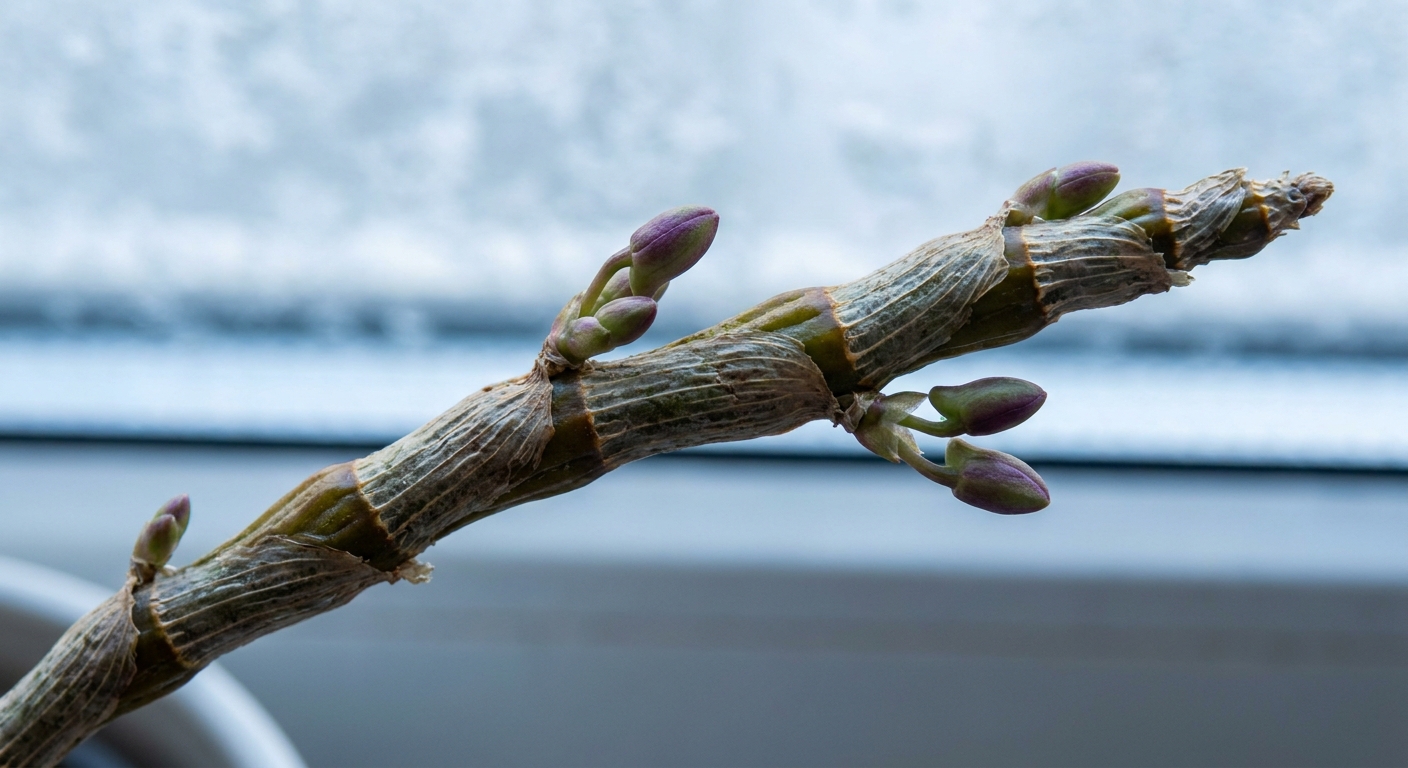
- Nobile type: Chunkier canes, often drop some leaves in winter, and tend to bloom along the canes after a cooler, drier rest.
Not sure which you have? Look at the canes and how it behaves in fall and winter. If it holds leaves year-round and acts like it wants to keep growing, it is often Den-phal. If it starts shedding leaves and sulking when days get shorter, you may have a nobile type.
Light: the make-or-break ingredient
Dendrobiums want brighter light than Phalaenopsis (the classic grocery store orchid). If you get the light right, almost everything else becomes easier.
Best indoor light
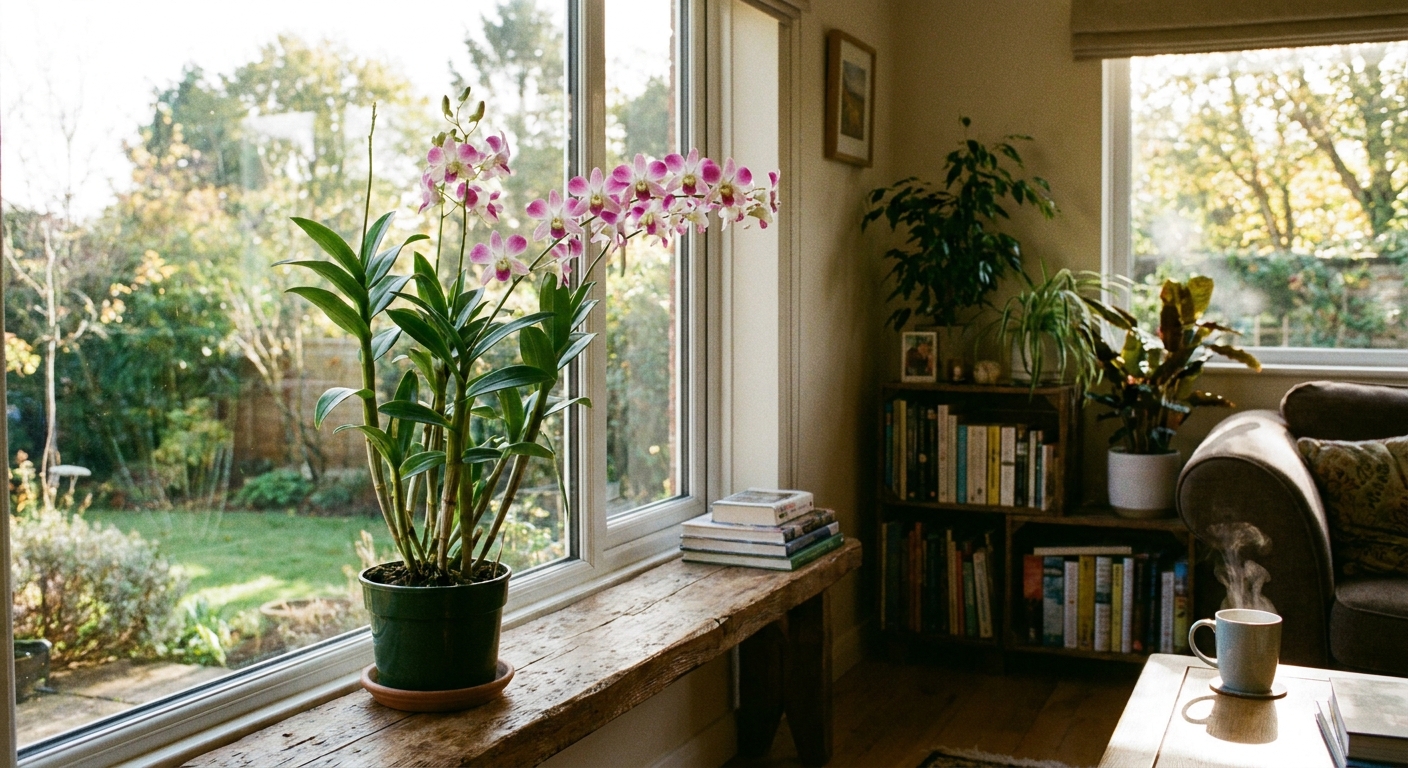
- East window: Ideal for many homes. Gentle morning sun, bright the rest of the day.
- South or west window: Works beautifully if you diffuse hot sun with a sheer curtain, especially in summer.
- Grow light: A fantastic option in darker homes. Aim for strong, bright light for 12 to 14 hours in winter.
How to read your plant
- Too little light: Dark green leaves, long weak canes, few or no blooms.
- Good light: Medium green leaves, firm canes, steady growth, better blooming.
- Too much light: Yellowing, bleached patches, crispy tips, or red-purple stress tint on some varieties.
My favorite “low-stress” test: stand where your orchid sits at midday. If you can comfortably read a book there without squinting, it is often in the ballpark. Then confirm with the orchid-specific cues above, especially leaf color and cane strength.
Watering: soak, drain, then breathe
Dendrobiums like a thorough watering, but they hate staying soggy. Think tropical rainstorm followed by breezy drying.
The core method
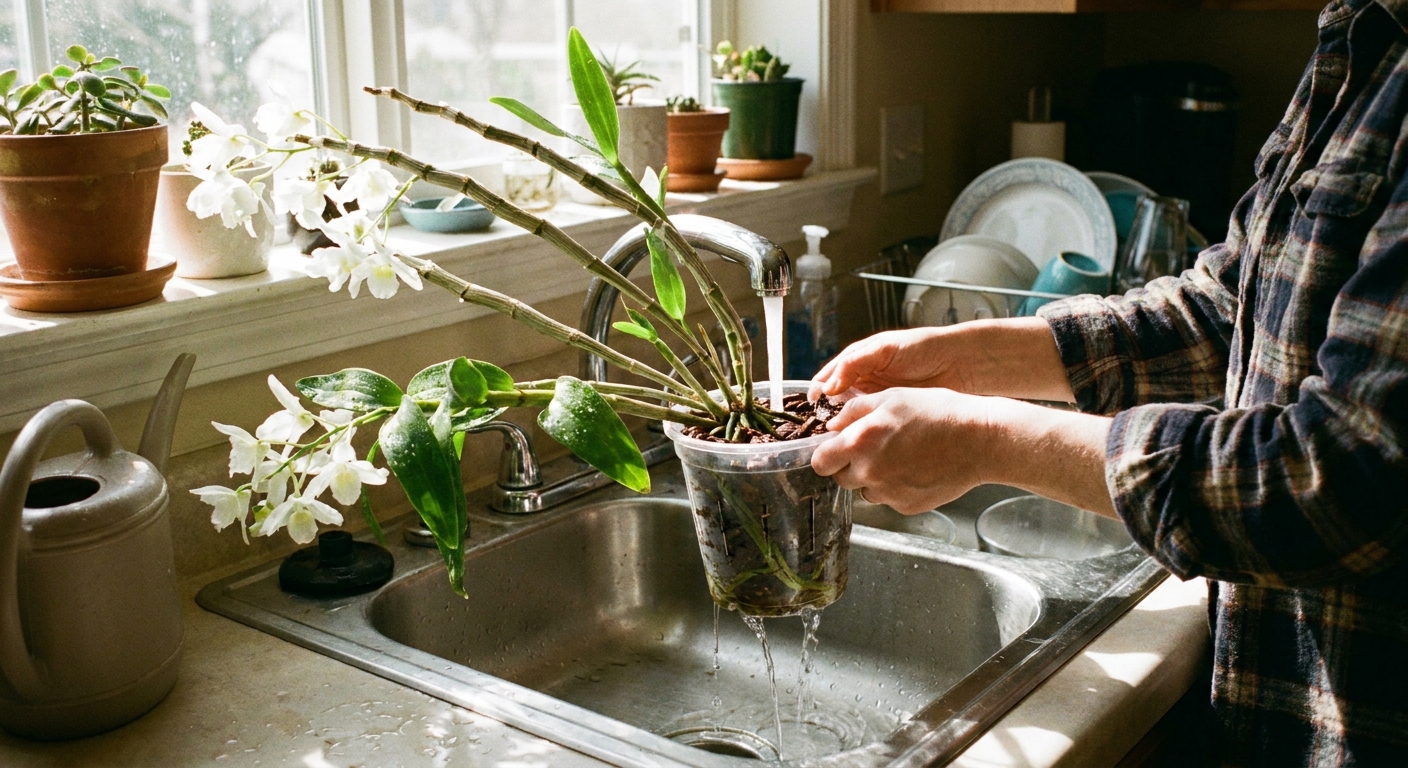
- Water deeply until it runs freely from the drainage holes.
- Let it drain completely. Never leave the pot standing in water.
- Wait to water again until the mix is approaching dry, not bone-dry unless your type prefers a winter rest.
How often?
Frequency depends on pot size, mix, home humidity, and season. Use these as typical indoor ranges, then adjust based on how fast your mix dries:
- Spring and summer (active growth): Often every 5 to 10 days indoors.
- Fall and winter: Often every 10 to 21 days, depending on temperature and type.
Special note: nobile winter rest
Many nobile types bloom better with a cooler, drier period in late fall and winter. That does not mean “no water forever.” It means watering lightly and less often, keeping canes from shriveling while avoiding a constantly damp mix. Once buds are forming and blooming begins, you can resume more regular watering.
Humidity and airflow: the quiet superpowers
Dendrobiums appreciate 40 to 60 percent humidity as a comfortable home range, plus gentle airflow. Many will grow even more enthusiastically with higher humidity during active growth (think 60 to 80 percent) as long as airflow is good.
In most homes, you can get there with a few simple habits:
- Humidity tray: A shallow tray with pebbles and water under the pot, with the pot sitting on the pebbles, not in the water.
- Small fan: Aim for indirect airflow, especially if you run a humidifier.
- Cluster plants together: Plants create a tiny microclimate, and they like company.
If you see persistent black spotting that spreads quickly, water-soaked patches, or a musty smell in the pot, treat it as a hint to zoom in. Improve airflow, keep water off the leaves (especially overnight), and isolate the plant while you assess. Some spotting is sun or age, but fast-moving spots can be fungal or bacterial and may need targeted treatment.
Temperature: warm growers vs cool-night bloomers
Most Dendrobiums do well at typical indoor temperatures, but nobile types often bloom more reliably with cooler nights.
- Den-phal types: Prefer warm, steady temperatures. Think 65 to 85°F (18 to 29°C) with no cold drafts.
- Nobile types: Like a seasonal cue. In fall and winter, aim for cooler nights around 45 to 60°F (7 to 16°C) depending on the hybrid, while keeping days brighter. Avoid frost and cold, wet conditions.
If you have a bright, cooler room, an enclosed porch, or a sunny windowsill that naturally drops at night, you may already have the perfect bloom trigger.
Potting mix and containers
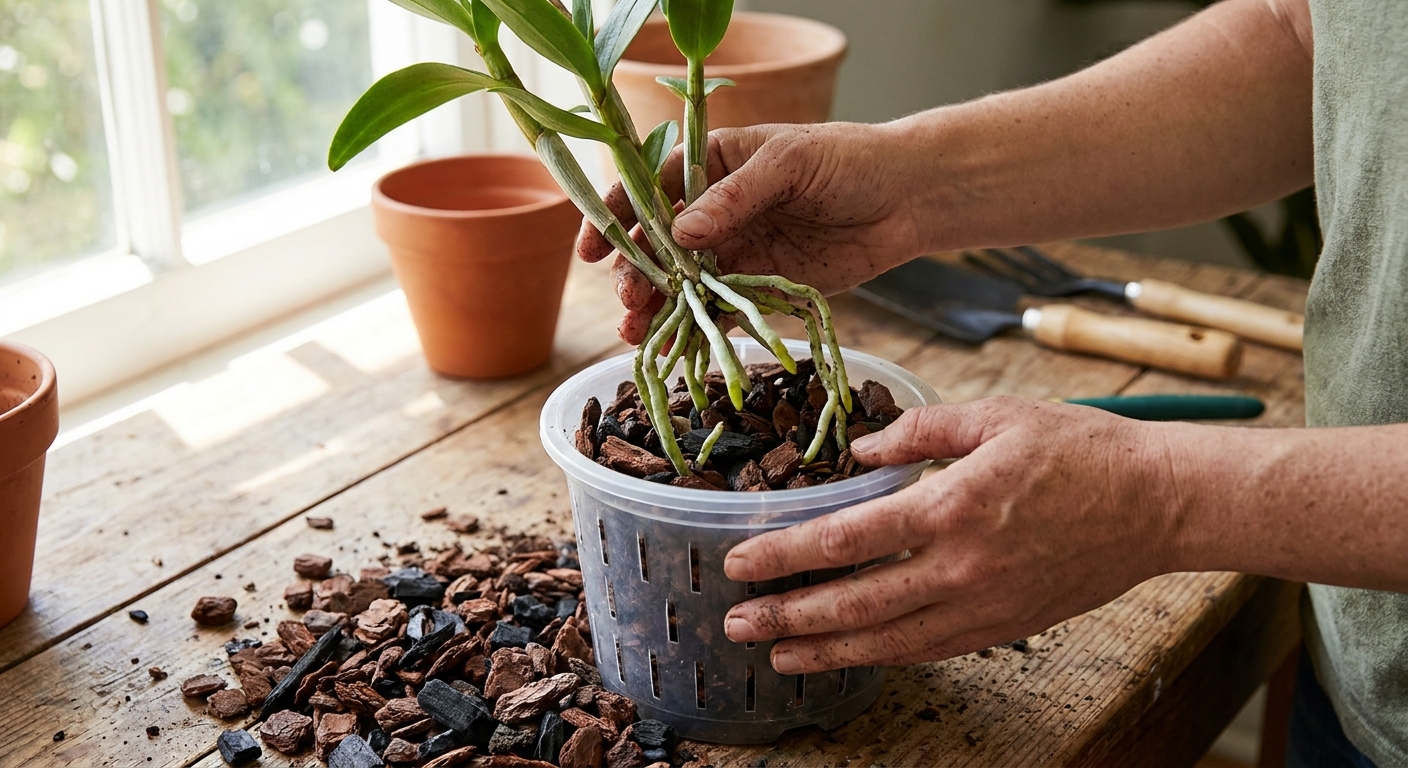
Dendrobiums want roots that can breathe. Most do best in a chunky, fast-draining orchid mix.
Good mix options
- Medium orchid bark (classic choice)
- Bark + perlite + a little charcoal for extra airflow
- Sphagnum moss (only if you can water carefully and your home is very dry)
Pot choice
- Clear orchid pot: Makes it easier to judge root health and moisture.
- Slotted pot or basket: Excellent airflow, dries faster.
Pick a pot that is just snug enough to hold the plant stable. Orchids do not need a big “upgrade” like many houseplants.
Fertilizer: feed lightly, but consistently
Dendrobiums are not heavy feeders, but they do appreciate regular nutrition during active growth.
- When to fertilize: Spring through early fall, when you see new roots or new cane growth.
- How: A balanced orchid fertilizer at quarter to half strength, every 2 to 4 weeks.
- Flush salts: Once a month, water thoroughly with plain water to rinse built-up fertilizer salts from the mix.
Water quality matters more than people expect. If your tap water is very hard, consider rainwater, distilled, or RO water (or at least flush more often) to reduce mineral buildup.
During a nobile winter rest, many growers reduce fertilizer significantly or pause, especially high-nitrogen feeding, until new growth resumes. Some nobile-type hybrids are less strict, so if your plant keeps actively growing, you can scale back rather than stop completely.
How to get a Dendrobium to rebloom
This is the part everyone wants, and I promise it is less mysterious than it looks.
Step 1: Confirm the type
Den-phal and nobile types have different bloom triggers. If you treat a nobile like a Den-phal, you can grow gorgeous canes and still get zero flowers.
Step 2: Increase light
Bright light is the most common missing piece. Move the plant closer to a bright window or add a grow light.
Step 3: Respect the seasonal cue (for nobile types)
- Brighter light in fall and winter
- Cooler nights
- Less water, but do not let canes shrivel dramatically
- Reduce or pause fertilizer, especially nitrogen-heavy feeding
Step 4: Do not cut green canes
Those canes are storage batteries. Even after blooming, they can support the plant and may bloom again from mature canes depending on the type. Only remove canes when they are fully brown and dry.
Step 5: Be patient with new canes
Many Dendrobiums bloom on mature canes. A new cane often needs time to harden off before it is ready to set buds.
Pruning and post-bloom care
Once flowers fade:
- Den-phal types: Cut the spent flower spray off close to where it emerges from the cane (near the base of the spray). Do not cut into the cane itself. Unlike Phalaenopsis orchids, Dendrobiums generally do not branch and rebloom from old flower spikes.
- Nobile types: Blooms appear along the cane, not just on a spike. After flowering, leave the cane alone and focus on good light and balanced watering.
Always use clean snips. I wipe mine with isopropyl alcohol between plants, especially if I am troubleshooting a sick orchid.
Keikis: the surprise bonus plant
Dendrobiums are famous for making keikis (baby plants) along the canes. Sometimes it is just genetics, and sometimes it is the plant responding to stress (low light, uneven watering) or extra nitrogen.
- Leave it attached if the mother plant is small or the keiki is still tiny. It can share resources for a while.
- Remove and pot it up once it has a decent root system. A common guideline is the “rule of 3”: about 3 roots that are around 3 inches long. It is a guideline, not a law.
If your plant produces keikis but refuses to bloom, treat it as a gentle nudge to increase light and review fertilizer.
Common problems and simple fixes
Wrinkled canes
- Most common causes: Underwatering, roots not functioning, or too-dry winter rest.
- What to do: Check roots. If roots are firm and pale green when wet, increase watering slightly. If roots are mushy or hollow, repot and remove dead roots.
Yellow leaves
- Normal: Older leaves may yellow and drop, especially on nobile types in winter.
- Concerning: Multiple leaves yellowing fast plus soggy mix can indicate overwatering or root rot.
Bud blast (buds drop before opening)
- Common triggers: Sudden temperature swings, dry air, moving the plant, or drying out too much during bud development.
- What to do: Keep conditions steady, raise humidity modestly, and avoid relocating the orchid once buds are set.
Sticky spots on leaves
This can be natural nectar, but also check for pests like scale or mealybugs. Wipe leaves and inspect along the midrib and cane nodes.
Pests
Look for mealybugs, scale, and spider mites. Isolate the plant, rinse thoroughly, and treat with insecticidal soap or horticultural oil according to the product label. Repeat treatments are usually needed.
Repotting: when and how
Repot every 1 to 2 years, or when the bark breaks down and starts holding too much moisture.
Best time
Right as new roots begin, often in spring. Repotting into fresh mix when roots are ready to grow helps the plant recover quickly.
Quick repot steps
- Slide the orchid from the pot and gently remove old mix.
- Trim dead roots (brown, mushy, hollow) and keep firm roots.
- Set the plant so the base of the canes sits just above the mix line.
- Fill with bark mix, tapping the pot to settle it without packing tightly.
- If you trimmed a lot of roots, let cuts callus for 2 to 5 days before watering (especially in cool or humid conditions). If roots were mostly intact, water lightly to settle the mix, then return to normal watering as needed.
Dendrobium care checklist
- Light: Bright, indirect, with some gentle sun
- Water: Soak and drain, then let the mix approach dry
- Humidity: 40 to 60 percent minimum comfort, higher is great with airflow
- Temps: Warm for Den-phal, cooler nights help many nobile types bloom
- Fertilizer: Weakly, during active growth; flush monthly
- Rebloom: Bright light, mature canes, and the right seasonal cue
By observing your plant’s cane shape and winter behavior (evergreen vs leaf drop, steady growth vs rest), you can usually pinpoint whether you have a Den-phal or a nobile type and fine-tune care from there.