
Dendrobium Orchid Care

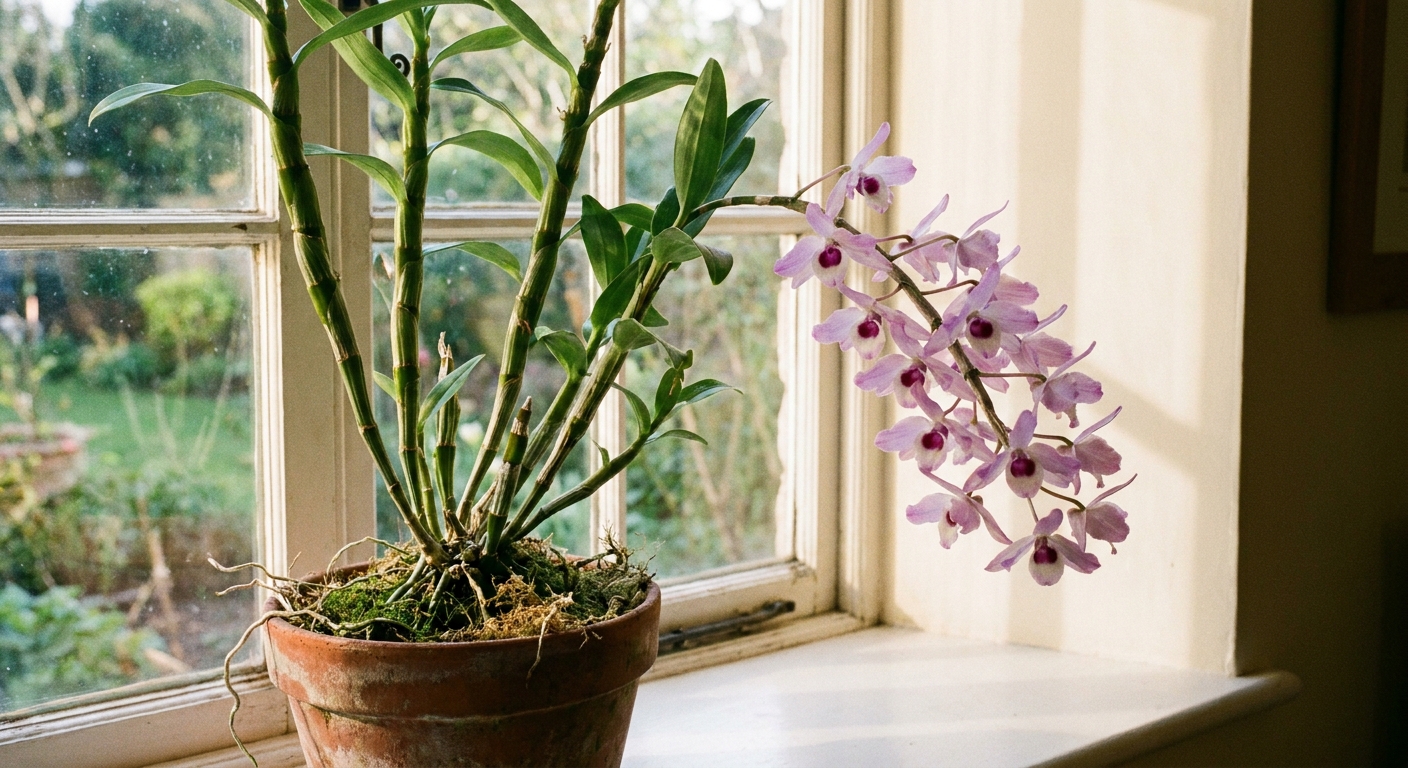
Dendrobium orchids are the kind of plant that can make you feel like a botanical wizard when they bloom, and a little confused when they do not. I have been there, whispering encouragement to a stubborn cane like it can hear me. The good news is that Dendrobiums are not “fussy,” they are just specific. Once you match the care to the type you have, they settle in and reward you with sprays of flowers that last for weeks.

This page will help you identify your Dendrobium group, dial in a realistic routine, and troubleshoot the most common hiccups, especially the classic: healthy leaves, no flowers.
Meet the Dendrobium orchid
Dendrobium is a huge orchid genus with many species and hybrids. Most of what we grow at home falls into a few main “care groups.” They all share a basic structure: upright or arching stems called canes that store water and energy, plus thick roots that prefer lots of air.
Why type matters
Dendrobiums can look similar at the store, but their bloom triggers can be totally different. Some want warm, steady care year-round. Others need a cooler, drier rest to set buds. If you do not know which you have, your care can be perfect for the plant, but wrong for blooming.
If you are stuck on ID: A plant tag name or a clear photo of the canes and flowers is the fastest way to confirm. There are other semi-deciduous types beyond classic nobile hybrids, and their seasonal cues can overlap.
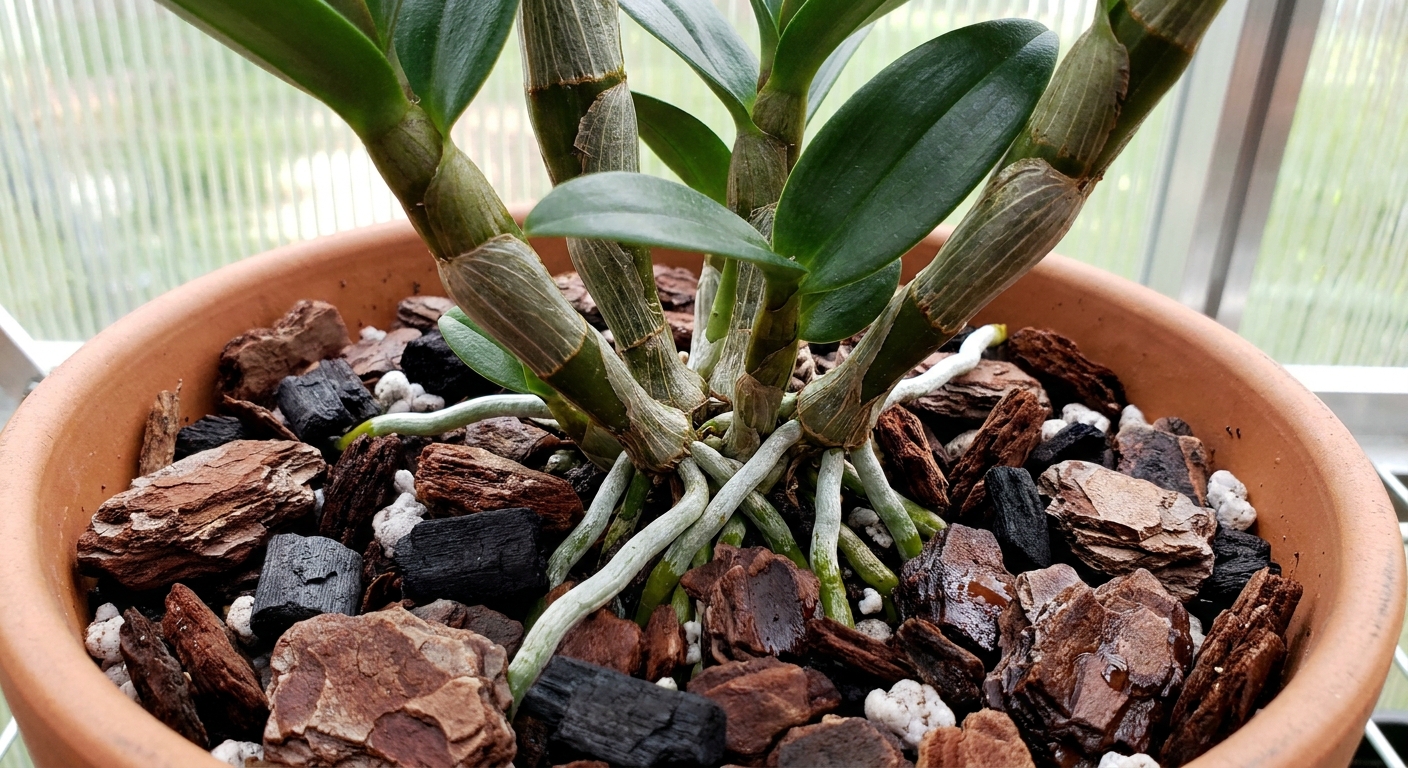
Quick ID: Which Dendrobium do you have?
Here are the most common groups in home collections. If your plant tag gives a name, you can often search it plus “type” to confirm.
Phalaenopsis-type (Den-Phal)
- Look: Evergreen, sturdy canes with leaves along the upper portion. Flowers often resemble phalaenopsis orchids and can appear more than once a year.
- Care vibe: Warm-growing, no true winter rest.
- Bloom trigger: Bright light and good feeding, with slightly cooler nights helping.
Nobile-type (Den. nobile hybrids)
- Look: Canes often drop leaves in fall or winter. Flowers pop along the canes, sometimes very fragrant.
- Care vibe: Needs a cooler, brighter, drier rest in late fall and winter.
- Bloom trigger: The rest period is the magic key.
Antelope-type (Spatulata section)
- Look: Twisty, horn-like petals, flowers can last a long time. Tall, vigorous plants.
- Care vibe: Bright light, warm, and consistent moisture while growing.
- Bloom trigger: High light and steady nutrition.
If you are not sure: A reasonable default is to treat it like a warm-growing Den-Phal while you figure it out. Then watch whether it drops leaves seasonally and where buds form. Leaf drop plus buds along bare canes often points to nobile-type. When in doubt, confirm by tag or photo since some other Dendrobiums can look similar but want different seasonal cues.
Light: the make-or-break factor
Dendrobiums want more light than most people expect, especially if you are chasing blooms.
Best indoor placement
- East window: Great starter spot with gentle morning sun.
- South or west window: Often ideal for blooming, but use a sheer curtain if leaves feel hot or show bleached patches.
What the leaves tell you
- Too little light: Very dark green leaves, slow growth, no blooms.
- Good light: Medium green leaves, steady new cane growth.
- Too much light: Yellowing, scorched spots, crispy edges.
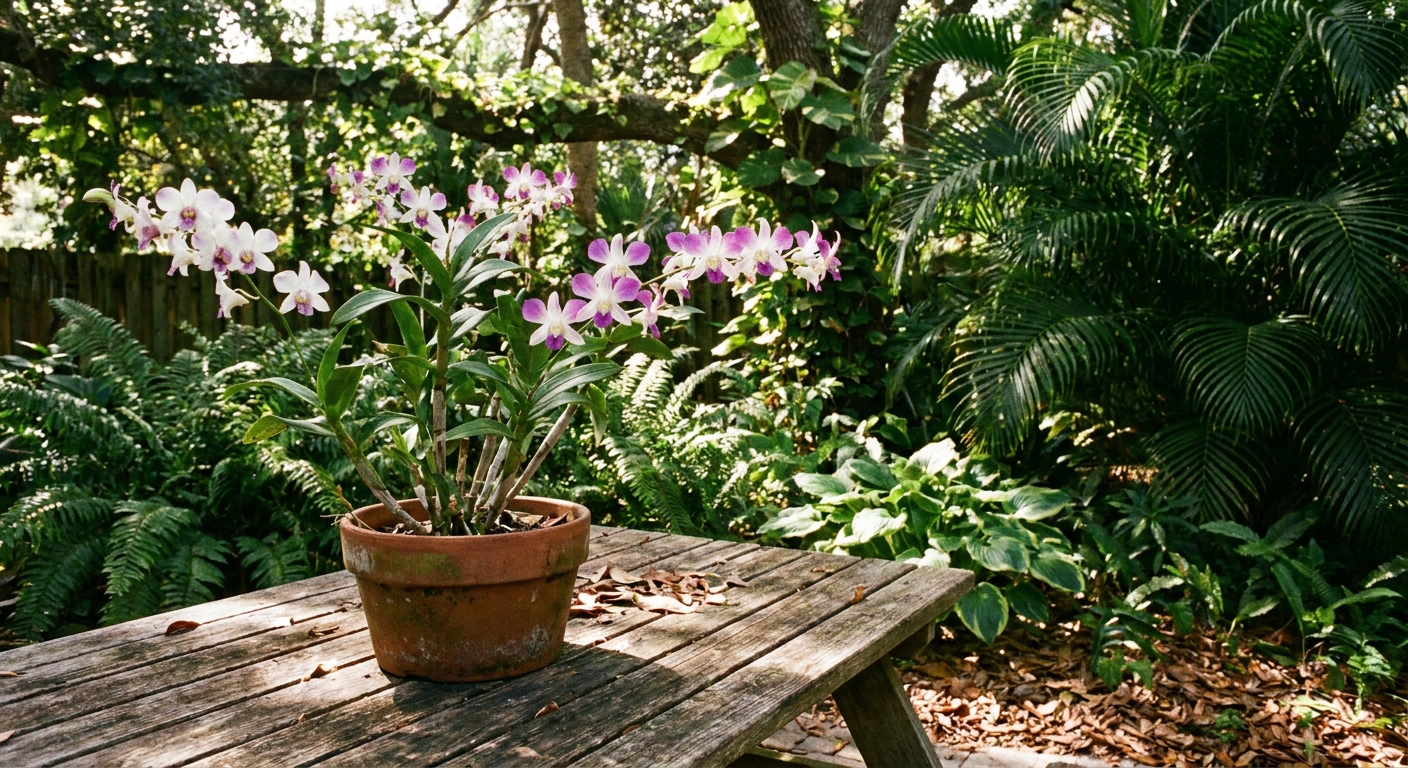
Outdoors in warm months, Dendrobiums usually thrive in bright shade or morning sun. Acclimate gradually for a week or two so leaves do not burn.
Outdoor note: Check for hitchhikers like snails, slugs, scale, and ants before bringing plants back inside.
Watering: a rhythm, not a calendar
The goal is simple: soak thoroughly, then let the mix dry to the right point before watering again. Dendrobium roots hate staying soggy.
How to water correctly
- Take the plant to the sink.
- Water until the pot is fully saturated and water runs freely from the drainage holes.
- Let it drain completely. Never let the pot sit in water.
When to water again
- Den-Phal and many evergreen types: Water when the mix is nearly dry, but not bone-dry for days.
- Nobile-type in active growth (spring and summer): Water when the top is dry and the pot feels lighter.
- Nobile-type rest (late fall and winter): Water sparingly, just enough to keep canes from shriveling severely.
Quick tip: Lift the pot after watering, then lift it again a few days later. Your hands will learn “heavy” versus “light” faster than any schedule.
Humidity and airflow
Dendrobiums enjoy moderate humidity, but they crave fresh air just as much.
- Ideal humidity: About 40 to 60 percent indoors.
- Easy boost: Run a small humidifier nearby.
- Avoid: Constantly misting leaves in a still room. That can invite spotting and rot.
Keep gentle airflow, especially if your home is warm or humid. A small fan across the room is perfect.
Temperature: where blooms are decided
Many Dendrobiums bloom best with a day-night temperature difference.
Den-Phal and warm growers
- Days: 70 to 85°F (21 to 29°C)
- Nights: 60 to 70°F (16 to 21°C)
Nobile-type winter rest
In fall, aim for brighter light, cooler nights, and reduced watering for several weeks. Many growers target nights in the 50s°F (10 to 13°C) if possible, but exact targets vary by hybrid and your home setup.
Important: Cool plus wet is where problems start. Keep the plant on the dry side during rest, protect from frost, and avoid cold drafts.
Potting mix, pots, and repotting
Dendrobiums want an airy mix that dries reasonably fast. Think “forest bark,” not “houseplant soil.”
Best mix for most home growers
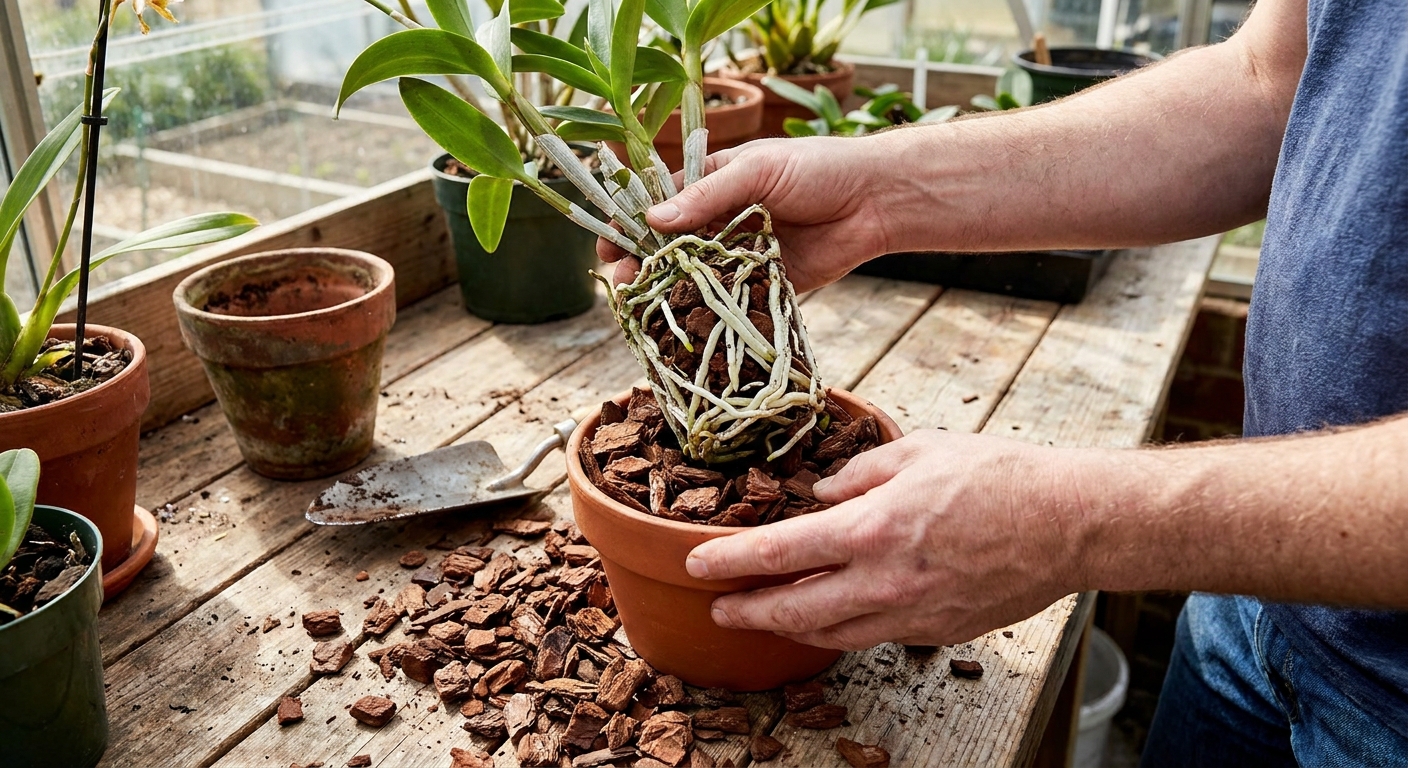
- Medium orchid bark as a base
- Add a little perlite or pumice for extra air
- Add a small amount of sphagnum moss if your home is very dry
Pot choice
- Clear plastic orchid pots: Great for learning because you can see root health and moisture.
- Clay pots: Dry faster and can help if you tend to overwater.
When to repot
- Best time is usually when new roots start, often in spring.
- Repot if the mix breaks down, stays wet too long, or the plant has outgrown the pot.
Do not oversize the pot. Slightly snug is fine, and often preferred.
Fertilizing for strong canes and blooms
Dendrobiums are moderate feeders. They do best with consistency during active growth. Some vigorous groups, including many antelope types, may appreciate a bit more during strong growth, but you still want to avoid fertilizer buildup.
A simple, sustainable routine
- Spring through early fall: Feed at 1/4 to 1/2 strength every 1 to 2 weeks.
- Winter: For Den-Phal types, reduce feeding. For nobile-type during rest, stop or feed very lightly until buds appear.
Use an orchid fertilizer or a balanced fertilizer that includes micronutrients. Flush the pot with plain water about once a month to reduce salt buildup, especially if you use tap water.
How to get a Dendrobium to rebloom
This is the heart of the matter for most people. Let’s make it practical.
Know what “on time” looks like
Many Dendrobiums bloom on mature canes, not brand-new ones. For many nobile types, the new canes you grow this spring and summer often bloom the following season after their rest. So if your plant is busy making new canes, that can be good news, not failure.
For Den-Phal types
- Increase light gradually until leaves are a healthy medium green.
- Keep watering steady in growth, letting the mix dry slightly between soakings.
- Feed regularly during active growth.
- Give cooler nights when possible, even a 10°F (5°C) drop can help initiate flower spikes (the stems that carry blooms).
For nobile types
- In summer: Bright light, regular watering, regular feeding to build strong new canes.
- In fall: Reduce fertilizer, then reduce water.
- In winter rest: Keep cool and bright, water sparingly, and do not baby it with constant moisture.
- When buds form: Resume gentle watering and normal care.
Please do not cut old canes just because they look “done.” Many Dendrobiums bloom from mature canes and those canes also feed new growth. Only remove canes that are fully brown, dry, and hollow.
Common problems and gentle fixes
Wrinkled canes
- Usually: Dehydration or root trouble.
- Check: Are roots firm and pale, or mushy and brown?
- Fix: Adjust watering, and repot if the mix is broken down or roots are failing.
Yellow leaves
- Sometimes normal: Older leaves can yellow and drop.
- Not normal: Fast yellowing plus black spots, a smelly mix, and or mushy roots.
- Fix: Improve airflow, avoid wet leaves at night, and reassess watering and light.
Sticky residue
- Often: Scale, mealybugs, or aphids.
- Fix: Isolate the plant, then wipe pests with cotton swabs dipped in isopropyl alcohol. Test first and keep alcohol off tender new growth, buds, and flowers since it can damage tissues. Follow up weekly. Horticultural soap can help, but test on a small area first.
Keikis instead of flowers
A keiki is a baby orchid that can pop out along the cane. It is common in Dendrobiums. It can happen from genetics, but it is also a classic response to conditions that favor growth over blooming.
- Common trigger: For many nobile types, watering and fertilizing too much during winter rest can encourage keikis instead of buds.
- What to do: If you have a nobile type, tighten up the cool, bright, drier rest next season. If you want to remove a keiki, wait until it has several roots that are a few inches long, then gently detach and pot it up in airy orchid mix.
No blooms
- Top causes: Not enough light, too much nitrogen, missing the cool, drier rest for nobile types, or expecting a brand-new cane to bloom immediately.
- Fix: Increase light, switch to a more bloom-friendly feeding approach, and match seasonal care to your plant type. If you keep getting keikis on a nobile type, cut back winter water and fertilizer.
Is a Dendrobium good for beginners?
Yes, especially Den-Phal types. They tolerate typical home humidity, they handle a missed watering better than many orchids, and their flowers are wonderfully long-lasting. If you want a low-drama start, pick a plant with firm green canes, healthy roots, and no black spots at the cane base.
If you fall in love with a nobile-type, just remember: the rest is not neglect. It is a season. You are mimicking the plant’s natural cue to bloom, and it works.
Quick care cheat sheet
- Light: Bright, indirect to some direct sun, especially for blooming
- Water: Soak then drain, water again when mix is nearly dry
- Humidity: 40 to 60 percent with good airflow
- Temperature: Warm days, slightly cooler nights. Nobile types need a cooler, drier winter rest
- Mix: Chunky orchid bark with lots of air
- Fertilizer: Weakly, regularly during growth