
Delphinium Care and Staking

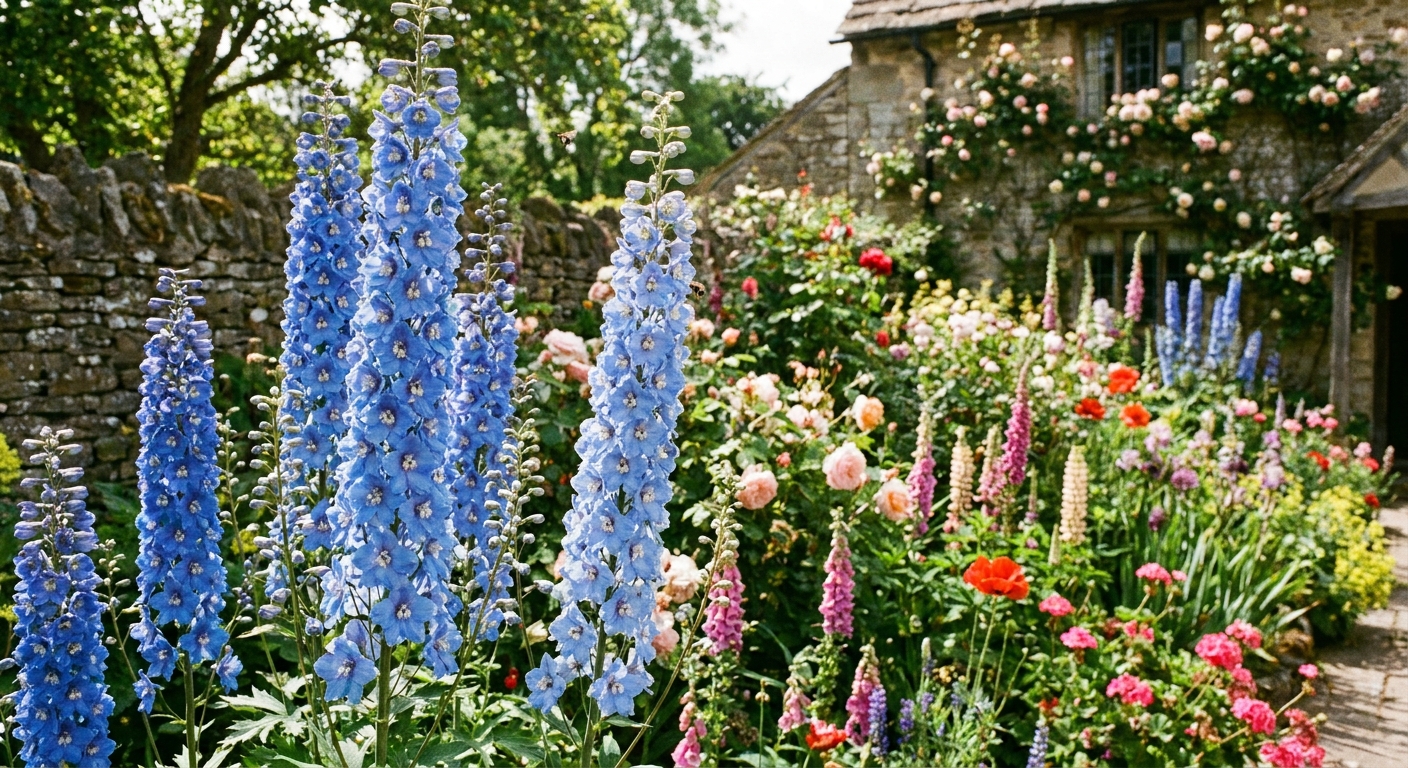
Delphiniums are the cottage garden’s exclamation point. Those tall, candle-like spires can make a border feel instantly enchanted. They can also flop, get chewed, or sulk if we plant them in the wrong place and hope for the best. The good news is that delphinium success is mostly about three things: smart siting, steady moisture, and support before the blooms arrive.
Most classic garden delphiniums shine as perennials in USDA Zones 3 to 7. In Zones 8 and warmer, they often behave like short-lived perennials or even cool-season annuals unless you can give them afternoon shade and consistent moisture.
Let’s set you up for sturdy stems, longer bloom, and fewer heartbreak moments with collapsed stems and mysterious dieback.

Siting: sun, airflow, and wind
If I could “move” one thing in a garden, it would be the wind. Delphiniums are tall and top-heavy, so your planting spot matters as much as your care routine.
Best light
- Cooler climates (Zones 3 to 7): Full sun is ideal, typically 6 to 8 hours.
- Warmer climates (Zones 8+): Morning sun with light afternoon shade helps prevent stress and short bloom cycles. If you only have blazing sun all day, consider growing them as spring stars and letting summer performers take over.
Airflow (yes, they need space)
Delphiniums appreciate good airflow to reduce powdery mildew and problems at the crown (where stems meet roots). Plant so mature clumps are not pressed against dense shrubs or a solid wall of foliage. A little breathing room makes a big difference.
Wind, rain, and flop zones
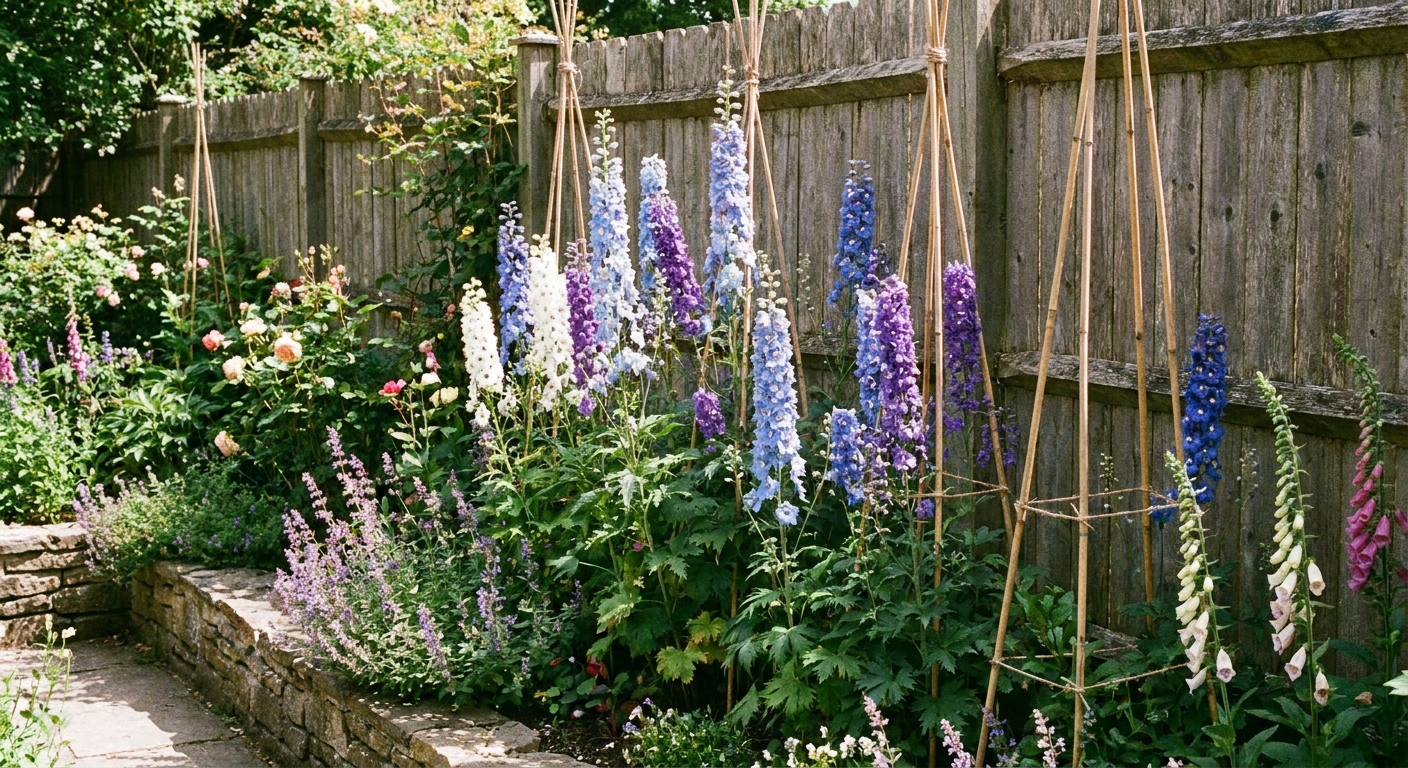
A sheltered spot is perfect, but avoid still, soggy pockets. Aim for a location that blocks harsh wind but still gets moving air. Near a fence, hedge, or the sheltered side of a building works well, as long as the soil drains.
Soil and pH: feed the roots
Delphiniums are hungry plants with deep roots and big ambitions. They thrive in soil that is rich, moisture-retentive, and well-drained. That sounds contradictory until you build structure with organic matter.
Ideal soil texture
- Loamy soil with compost mixed in is the sweet spot.
- In clay soil, add compost and leaf mold to improve drainage and reduce winter waterlogging around the crown.
- In sandy soil, add compost plus aged manure or worm castings to hold moisture and nutrients.
pH preferences
Delphiniums generally perform best in slightly acidic to slightly alkaline soil, roughly pH 6.0 to 7.5 (often happiest near neutral). If your soil is very acidic, blooms and vigor can suffer.
- Test first with a basic soil test.
- If you need to raise pH, use garden lime according to test recommendations. Go slow and re-test later, since over-liming can lock up nutrients.
Planting and feeding basics
- Work 2 to 4 inches of compost into the planting area.
- Keep the crown at soil level, do not bury it deeply.
- In spring, top-dress with compost and use a balanced organic fertilizer. Too much high-nitrogen feed can create lush growth that flops and invites pests.
Quick safety note: Delphiniums are toxic if ingested. If you garden with curious kids or pets, place them thoughtfully and wash hands after handling.
Watering: steady, deep, and at the base
“Even moisture” is the delphinium refrain because it works. As a starting point, aim for about 1 inch of water per week from rain or irrigation, adjusted for heat, wind, and soil type (more in sandy soil, less in heavy soil that stays damp).
- Water deeply so moisture reaches the root zone, then let the top inch or two dry slightly before watering again.
- Water at the base, not over the leaves, to help reduce powdery mildew and other foliar issues.
- Mulch lightly to stabilize moisture, but keep mulch pulled back from the crown so it does not stay soggy.
Staking before bloom: upright spires
Here is the classic delphinium mistake, and I say it with love because I have done it: waiting until the flower spikes are tall and glorious, then trying to wrestle in a stake without snapping anything.
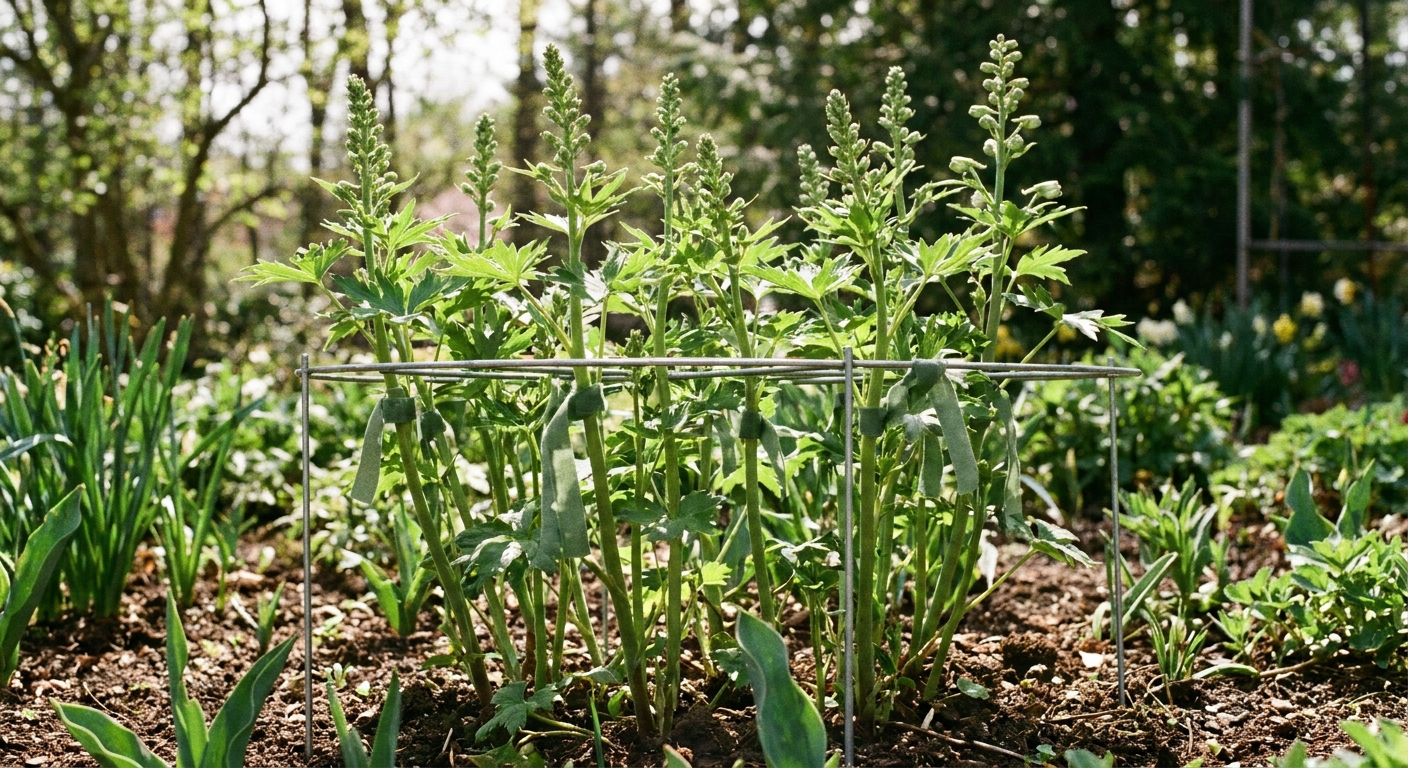
Stake early, when stems are 8 to 12 inches tall. You are not “predicting failure.” You are planning for success.
Staking options that work
- Single sturdy stakes: Bamboo, metal, or fiberglass. Use 2 to 3 stakes around a large clump rather than one in the middle.
- Peony rings or grow-through supports: Put them on early so stems grow up through the grid.
- Soft ties: Use stretchy plant ties or twine in a figure-eight so the stem does not rub against the stake.
How to tie without damage
- Make the first tie low, around 10 to 14 inches.
- Add ties as growth speeds up, especially before storms.
- Leave a little slack for thickening stems.
Slug and snail protection: new shoots
Slugs love delphiniums the way kids love popsicles. The tender spring shoots can be shredded overnight, which sets the whole season back.
Most effective organic approaches
- Night patrol: Go out after dusk with a flashlight for a week when shoots first emerge. It is oddly satisfying.
- Iron phosphate bait: A widely used, low-toxicity option when applied correctly. Reapply after heavy rain.
- Copper barriers: Helpful around containers or small plantings, less practical for large borders.
- Habitat tweaks: Pull back thick mulch from the crown in early spring, remove boards and debris nearby, and water in the morning so soil surfaces dry by nightfall.
A quick note about beer traps: they can work, but results vary, and they may increase slug activity in the immediate area. I treat them as a short-term tactic, not the main plan.
After bloom: deadhead or cut back
Delphiniums can reward you with a smaller second bloom, especially in cooler climates, if you handle the first flush thoughtfully.
Deadheading for repeat bloom
Once the main spike finishes, you have two choices depending on how the plant looks.
- If side shoots are forming low on the plant, cut the finished flower spike down to just above a strong leafy side shoot.
- If the plant looks tired or heat-stressed, a deeper cutback is often kinder.
Cutting back hard (the reset)
If stems are ragged, disease-prone, or the plant is done for the season, cut stems back to a few inches above the crown. Keep watering during dry spells so the crown stays healthy. New basal growth is your goal, not immediate flowers.
Leave seedheads or not?
- For a tidy border and repeat bloom: deadhead promptly.
- For self-seeding: leave a few spikes to mature, then collect seed when pods dry and rattle. Keep in mind seedlings may not come true to the parent cultivar.
Dividing clumps: when and how
Delphiniums are often treated as short-lived perennials, but good division and crown care can keep them going longer. Division also helps when the center of a clump gets woody or sparse.
When to divide
- Early spring as new growth starts is often easiest on the plant.
- Early fall can work in regions with mild winters and good drainage, giving roots time to settle before cold.
How to divide cleanly
- Water the day before so roots are hydrated.
- Dig the clump with a generous root ball.
- Use a clean spade or knife to separate vigorous outer sections with strong buds and roots.
- Discard old, soft, or hollow-centered portions.
- Replant immediately at the same crown height, in improved soil.
- Water in well and keep evenly moist for a few weeks.
If you only want one plant, a gentle refresh can help too: remove weak crowns from the center and top-dress with compost.
Troubleshooting common problems
Delphiniums can be dramatic, but they are also readable. Most problems leave clues if you know where to look.
Powdery mildew
This is the classic white, dusty coating on leaves, often worse in late spring and summer or when plants are stressed.
- Likely causes: crowded plants, still air, drought stress followed by heavy watering, and overhead irrigation.
- What to do: improve spacing and airflow, water at the base, keep moisture steady, and remove heavily affected leaves. If it returns every year, choose a more open site and avoid pushing soft growth with high-nitrogen fertilizer.
Weak or collapsing stems
Many delphiniums naturally have hollow stems, so hollowness alone is not the issue. The concern is stems that become weak, splitting, collapsing, or rotting.
- Likely causes: wind and rain, rapid lush growth from excess nitrogen, drought swings that lead to brittle growth, or occasional stem-boring pests in some regions.
- What to do: stake early, avoid high-nitrogen feeds, keep watering consistent, and remove and trash any stems that are soft, blackened, or oozing. If you suspect borers, cut a failing stem and look for tunneling or frass, then remove affected stems promptly.
Crown rot
Crown rot is the heartbreak issue. You will see wilting despite moist soil, blackened tissue at the crown, and a plant that collapses at ground level.
- Likely causes: poorly drained soil, winter waterlogged soil, mulch piled against the crown, or planting too deep.
- What to do: improve drainage immediately, pull mulch back from the crown, and avoid overwatering. If the crown is actively rotting, remove the plant and discard it. You can often replant delphiniums in that spot after removing infected material and improving drainage (a raised bed or slight mound can be a game-changer), but do not rush it.
Short bloom flushes
If your delphinium blooms beautifully for a minute, then fades fast, it is usually stress, not spite.
- Heat stress: Afternoon shade and steady watering help.
- Drought swings: Water deeply when the top few inches of soil dry, and mulch lightly to stabilize moisture.
- Underfeeding: Top-dress with compost in spring and after the first flush, then water it in.
- Overcrowding: Divide or thin to improve airflow and vigor.
- Spent spikes left too long: Deadhead sooner to encourage side shoots.
If you live where summers turn hot quickly, it is normal for delphiniums to act like early-season stars. Lean into it by pairing them with later bloomers that take over once the spires finish.
A simple seasonal checklist
Early spring
- Pull mulch back from crowns
- Start slug protection when shoots emerge
- Set supports when stems are 8 to 12 inches tall
- Top-dress with compost, check pH if plants struggled last year
Late spring to early summer
- Water deeply and evenly, aiming for about 1 inch per week total
- Add ties before storms
- Enjoy the spires and cut a few for vases, they last best when about 1/3 of florets are open
After the first flush
- Deadhead to a side shoot for a second round, or cut back hard if the plant is tired
- Light feed with compost or a balanced organic fertilizer
Fall and winter
- Clean up diseased foliage
- Keep crowns from sitting wet, especially in heavy soil
Delphiniums ask for a little planning, but they pay you back in vertical color that makes the whole garden feel taller and brighter. Give them rich soil, steady water, and early support, and they will do what they do best: steal the show.