Dahlia Pinching and Disbudding

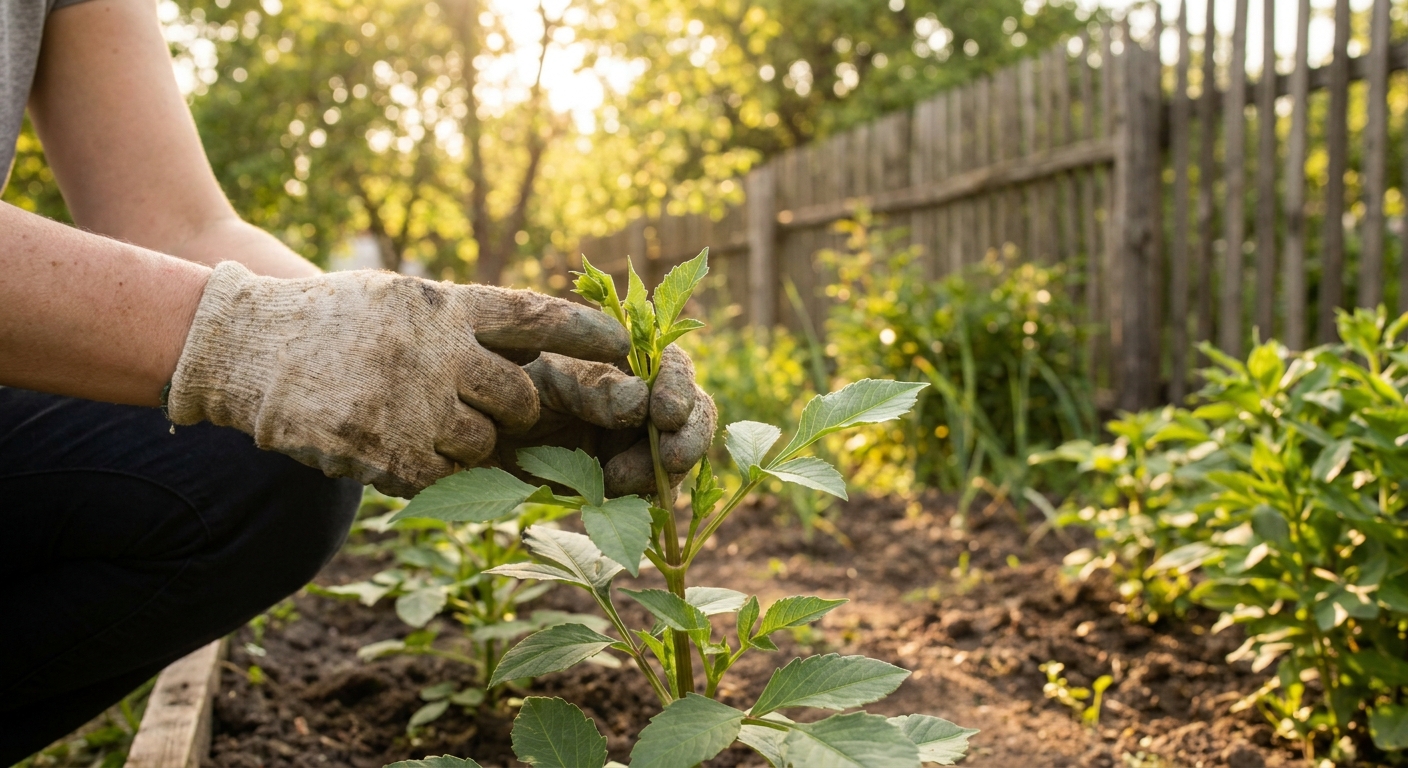
Dahlias have a funny way of making gardeners feel bossy, in the best possible way. One week they are a tidy little plant, the next they are reaching, flopping, and budding like they have a deadline. Two simple techniques, pinching and disbudding, help you steer all that energy toward the kind of blooms you actually want: either more flowers, sturdier stems, or fewer but jaw dropping dinnerplates.
The trick is knowing which move to make and when. Pinching is about building the plant. Disbudding is about editing the flowers. Do both well and your dahlia patch starts looking a lot more intentional.

Pinching vs. disbudding: same plant, different goals
Pinching
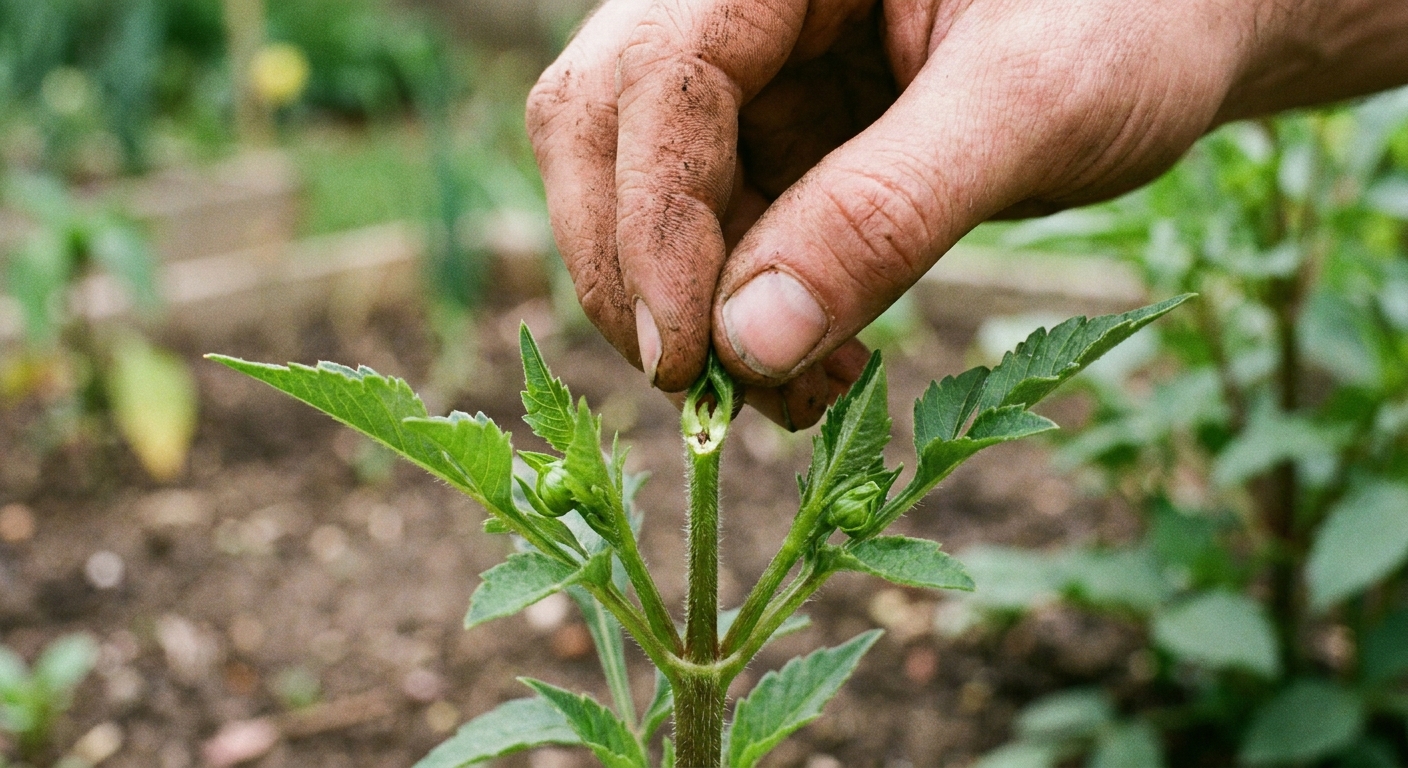
Pinching means removing the soft growing tip at the top of the main stem when the plant is young. This encourages the dahlia to branch, which usually means:
- More flowering stems
- A bushier plant that fills out earlier
- Potentially sturdier growth because weight is distributed
If you want lots of bouquets, pinching is your friend.
Disbudding
Disbudding means removing extra flower buds after the plant is grown and producing bud clusters. This directs energy into one main bud so it can open larger and more perfectly.
If you want big, exhibition-style blooms and longer, cleaner stems, disbudding is the tool.
When to pinch dahlias (and how to pick the pinch height)
Pinching is all about timing and node count. You are aiming for a plant that has enough leaf area and roots to rebound quickly, but is still young enough that branching changes the whole structure.
The sweet spot
- Pinch when the plant is about 8 to 12 inches tall, or has 3 to 5 sets of true leaves.
- In many gardens this lands around 3 to 5 weeks after planting out, depending on warmth and variety.
You can pinch earlier for shorter, bushier plants, or later for taller plants with fewer branches. Neither is “wrong”, you are just choosing a shape.
How pinch height affects branching
Think of pinch height as choosing where the plant’s “fork in the road” happens.
- Lower pinch (around 8 to 12 inches): More branching closer to the ground, a fuller plant, often more total blooms. Can create a wider plant that needs thoughtful spacing.
- Mid pinch (around 12 to 18 inches): A balanced approach for most home gardens. Good branching without making the plant too squat.
- Higher pinch (18 to 24 inches): Taller stems and a later branching point. This can be helpful if you want longer cut stems, but the plant may be a bit leggier early on.
How to pinch, step by step
- Find a node, the spot where leaves attach to the stem.
- Count up from the base so you leave at least 3 to 4 strong sets of true leaves below your pinch point.
- Remove the growing tip just above a node using clean snips, or your fingers if it is soft.
- Keep the cut clean. Ragged tears invite stress and disease.
Within a week or two, you should see new shoots pushing from the nodes below the pinch point.
Should you pinch every dahlia?
Not necessarily. Pinching is a strategic choice, and your variety and your goals matter.
- For maximum flower count (cutting garden, pollinator patch, casual color): pinch most varieties once.
- For earliest blooms (short seasons, impatient gardeners like me): skip pinching, or pinch only a portion of plants so you still get early flowers.
- For ultra large blooms (dinnerplate goals): many growers still pinch once to create multiple strong stems, then later choose one or two stems to manage for big flowers via disbudding.
If your dahlia is already stressed by cold nights, slug damage, drought, or nutrient issues, hold off. A pinch is a growth signal, and a stressed plant may sulk instead of branching.
How to disbud dahlias for bigger blooms
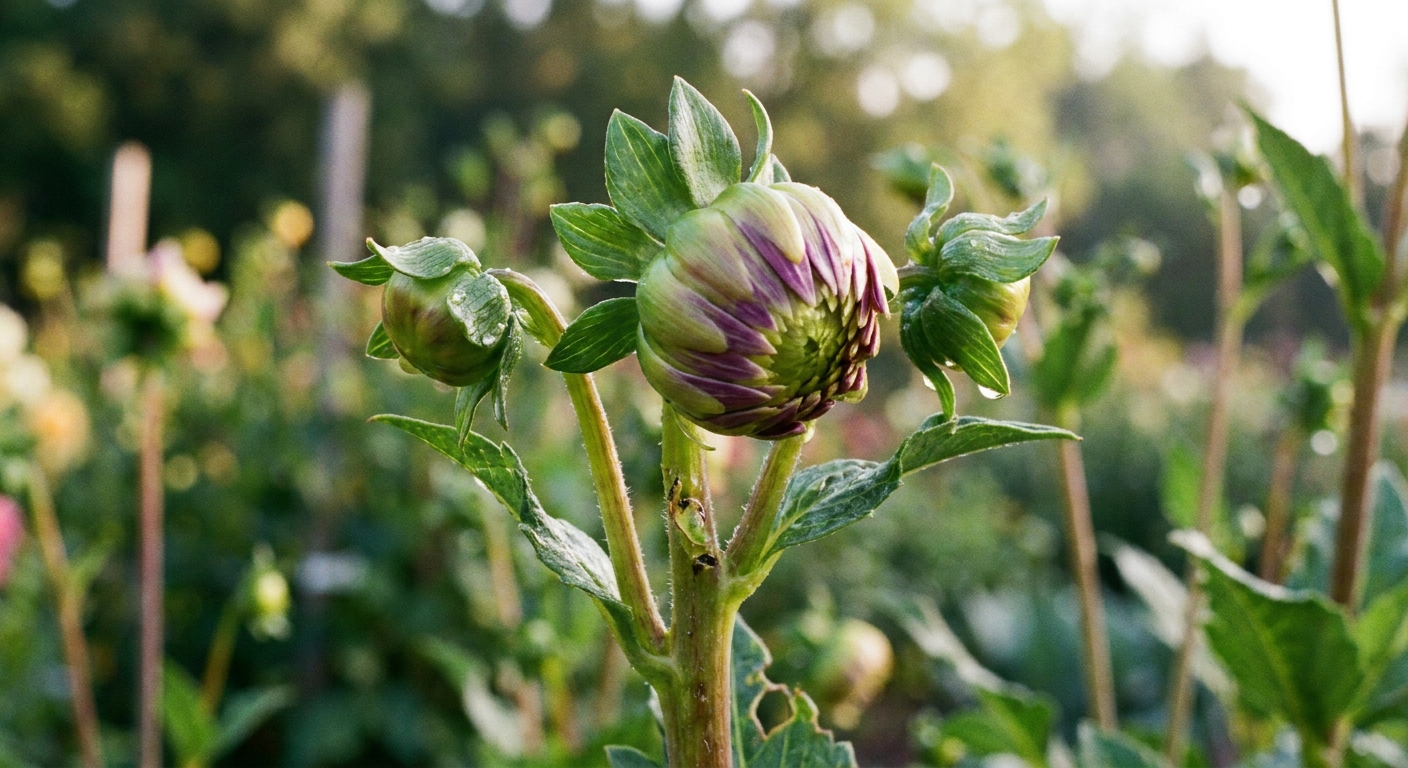
Disbudding happens later than pinching, when the plant is forming flower buds. Dahlias commonly produce a cluster of three buds: one center bud and two side buds on short little stems.
What to remove
For a single, large, symmetrical bloom on a long stem:
- Keep the center bud.
- Remove the two side buds when they are small, usually pea sized to marble sized.
Use clean snips or pinch them off with your fingers. I like to do it in the morning when stems are crisp and less likely to tear.
When to disbud
- Disbud as soon as you can clearly see the bud cluster.
- Earlier is easier. If the side buds grow large, removing them leaves bigger wounds and wastes more of the plant’s energy.
How far down to strip
Exhibition style stems are not just about the main bud. They are also about a clean stem that does not waste energy on lower side shoots.
- On the flowering stem you are saving, remove small side shoots and buds for the lower 25 to 50 percent of the stem.
- Leave enough leaves up top to power the bloom. Leaves are the plant’s solar panels.
Formal vs. informal dahlias: does disbudding change?
Yes, a bit. Flower form influences what “best” looks like, and how strict you need to be.
Formal decorative and ball types
These are the tidy, symmetrical showstoppers. They reward careful disbudding because:
- The goal is a perfectly formed bloom with even petals.
- Too many buds per stem often means smaller flowers and shorter stems.
If you are growing formal decorative, ball, or pompon dahlias for cut flowers or shows, disbudding is usually worth the effort on your best stems.
Informal decorative, cactus, and semi-cactus types
These have a looser, more fireworks feel. Disbudding can still increase size, but you can be more relaxed about it.
- For big statement blooms, keep one bud per stem.
- For a fuller garden look, keep the center bud and one side bud, especially if your plants are vigorous.
Singles, collarettes, anemone types
These tend to shine in quantity and pollinator value. Many gardeners skip disbudding entirely here, or only do it occasionally for longer stems in bouquets.
Exhibition timing: when to cut
If you are chasing that “how is this flower even real” look, the cut timing matters almost as much as the disbudding.
For showing or peak display
- Cut when the bloom is nearly fully open, but the petals are still fresh and firm.
- On many formal varieties, that is when the flower looks complete, yet the outer petals have not started to relax downward.
Dahlias do not open much after cutting if harvested too tight, especially in cool indoor conditions. If you cut at a hard, tight stage, you can end up with a bloom that never reaches its full size.
For vase life at home
- Cut when the flower is fully open and showing its true form.
- Avoid blooms that feel soft in the center, have fading outer petals, or have papery back or bottom petals. That dry texture is a quiet sign the bloom is already past its best.
Always cut with sharp snips, then get stems into clean water quickly. A quick recut under water can help, especially during hot weather.
Staking reminder
Pinching creates more branches. Disbudding creates heavier, top loaded stems. Either way, your dahlias are going to need support, especially through wind and late summer rain.
If you have not already, pop over to our dahlia staking guide on Leafy Zen for the best timing and methods. The short version is this: stake early, tie gently, and adjust ties as the plant grows so stems are supported without being strangled.
Quick decision guide
- Want more flowers and a bushier plant? Pinch once at 8 to 12 inches.
- Want fewer but bigger, showier blooms? Disbud, keeping the center bud on select stems.
- Want both? Pinch early to build structure, then disbud later on your “best” stems and let the rest bloom freely for bouquets.
If you are nervous to try, do it on just one plant first. Dahlias are wonderfully forgiving, and experimenting is half the fun. The other half is walking outside and realizing you grew something that makes you stop in your tracks.