
Cymbidium Orchid Care for Beginners

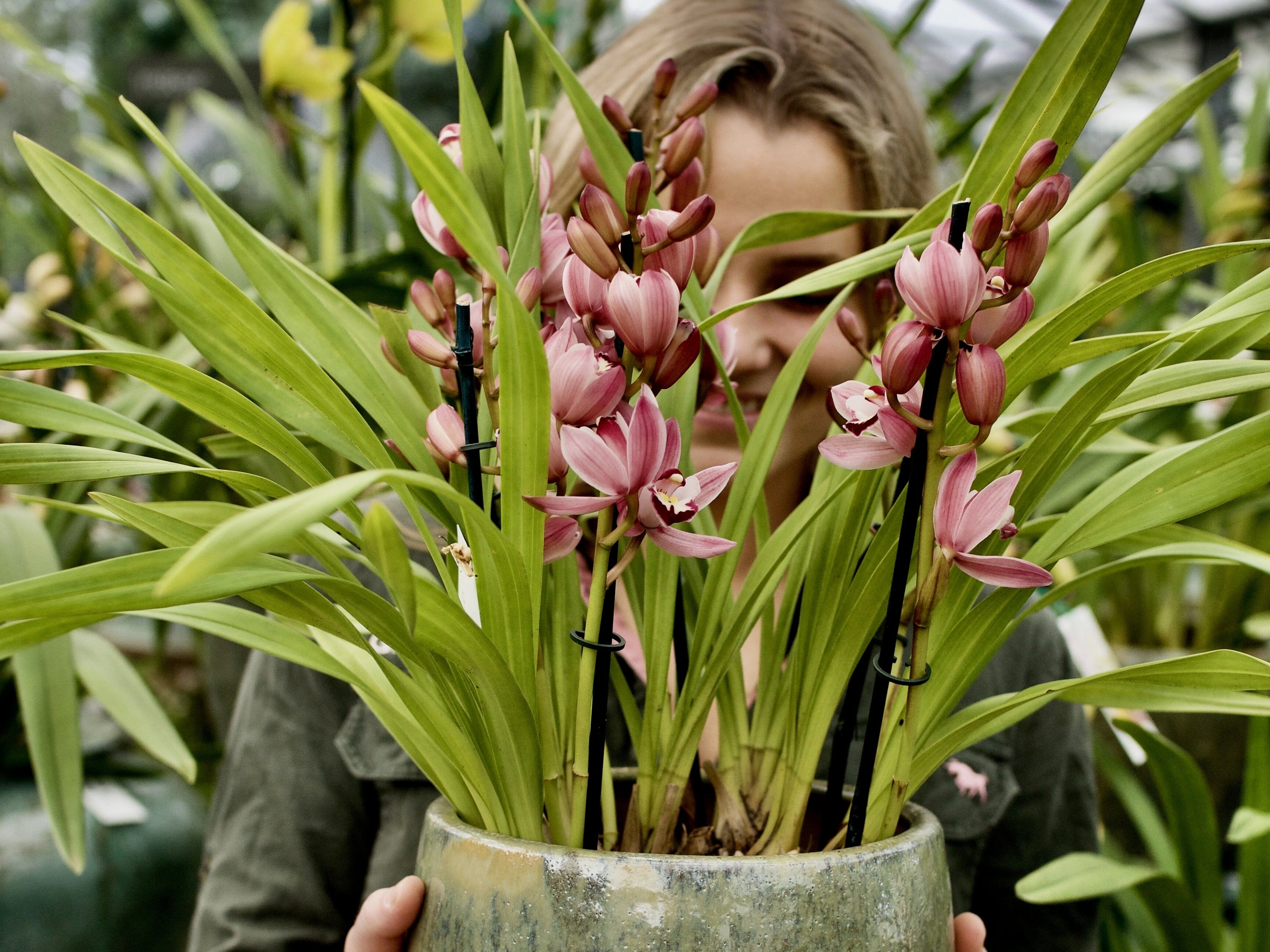
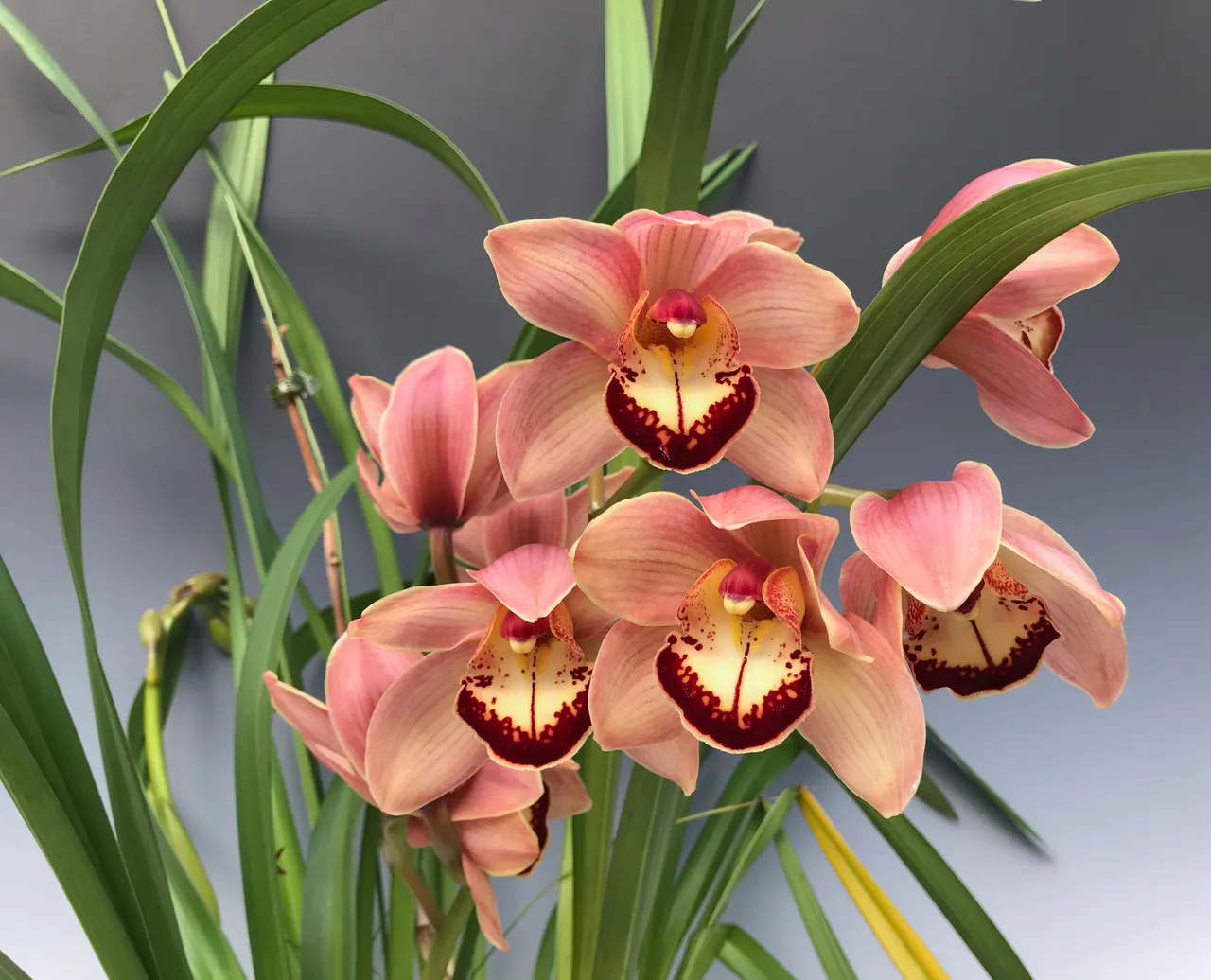
Cymbidiums are the orchids that make people say, “Wait, that’s an orchid?” because their arching flower spikes can look almost too generous to be real. They are also one of the more forgiving orchids for beginners, especially if you can give them bright light and cooler nights in late summer and fall to trigger blooms.
I like to think of Cymbidiums as sturdy, outdoorsy orchids with tidy little storage tanks called pseudobulbs (technically storage organs). Those pseudobulbs help the plant cope when you miss a watering, but they also give you clear clues about what your plant needs. Let’s set you up with a simple routine that works in real life, not just in perfect greenhouse conditions.

Meet your Cymbidium
Most Cymbidiums sold to home growers are “standard” or “intermediate” hybrids. They typically have long, strap-like leaves and grow in clumps. New growths emerge at the base, swell into pseudobulbs, and later produce flower spikes.
- Leaves: long, grassy straps. Torn tips and a few cosmetic blemishes are common and not an emergency.
- Pseudobulbs: oval, slightly flattened bulbs at the base. Firm is good. Wrinkled is a sign to adjust watering or check roots.
- Roots: thick and pale, happiest with air around them. They hate sitting in soggy, broken-down mix.
Beginner win: Cymbidiums do not need a terrarium, humidity dome, or daily misting. They need a predictable rhythm.
Light: bright, not blazing
Light is the number one lever for Cymbidiums. Too little light equals lush leaves and no blooms. Too much equals scorched leaves. Aim for bright light with some gentle direct sun.
Indoor light targets
- Best window: east or bright south window (with light filtering if your sun is intense).
- Clue you are close: leaves are medium green, not deep forest green.
- Clue you need more light: very dark green leaves, floppy growth, no spikes year after year.
- Clue you have too much: yellowing patches or dry, bleached spots that look like sunburn.
Quick note on types: standard and intermediate Cymbidiums typically tolerate and even enjoy more light than many common house orchids. Some mini and warm-tolerant types can scorch a little faster, so make changes gradually and watch the leaf color.
Outdoor summering (highly recommended)
If you can, give your Cymbidium a summer vacation outside. Outdoors the light is stronger and the day to night temperature drop is easier, which helps with bloom initiation later.
- Start in bright shade for 7 to 10 days to prevent sunburn.
- Move toward morning sun and afternoon shade.
- Protect from hot, harsh mid-day sun and strong wind.
Watering: soak, drain, repeat
Cymbidiums like more water than many “grocery store orchids,” but the roots still need oxygen. The goal is a thorough watering followed by good drainage, then a partial dry-down.
How to water (simple method)
- Carry the pot to the sink, shower, or outdoors.
- Water generously until it runs freely from the bottom for 20 to 30 seconds.
- Let it drain completely. Never let the pot sit in a saucer of water.
If you just repotted into fresh bark: new bark can be a little hydrophobic at first. For the first couple of waterings, a 5 to 10 minute soak (then full drain) helps the mix wet evenly. After that, your normal thorough watering is usually fine.
How often?
Frequency depends on light, pot size, and mix, but these starting points work for most homes.
- Spring and summer (active growth): water when the top 1 to 2 inches of mix feel dry. Often every 4 to 7 days indoors, faster outdoors.
- Fall (cooler nights): reduce slightly, but do not let the plant stay bone dry for long periods.
- Winter (indoors): usually every 7 to 14 days, depending on heat and humidity. Blooming plants still need steady moisture.
Your best “meter”: the pot weight
Lift the pot right after watering and again a few days later. Your hands will learn the difference between “still moist” and “time to water” faster than any schedule.
Potting media: bark vs mixes
Cymbidiums are typically grown in chunky, airy media. The right choice is less about “perfect” and more about matching your watering habits and your home climate.
Option 1: Orchid bark
- Best for: people who tend to water often, humid climates, outdoor summering, or anyone prone to overwatering.
- Pros: lots of airflow, lower risk of root rot.
- Cons: dries faster, may require more frequent watering in hot weather or heated homes.
Option 2: Cymbidium mix
A “Cymbidium mix” often includes bark plus things like perlite, pumice, charcoal, or a small amount of coco chips or sphagnum. It holds moisture a bit longer while staying airy.
- Best for: dry indoor air, smaller pots, or growers who cannot water as frequently.
- Pros: more forgiving if you forget a watering.
- Cons: if the mix is too fine or breaks down, it can stay wet and suffocate roots.
Beginner rule of thumb
If your home is dry or you are a “sometimes I forget” waterer, choose a Cymbidium mix with mostly bark plus a little moisture retention. If you are an enthusiastic waterer or you summer outdoors, lean toward chunky bark.
Pot choice
Extra drainage helps. Slotted orchid pots or a pot with lots of holes makes it harder to accidentally keep the roots soggy, especially indoors.
Repotting: when and how
Cymbidiums like being slightly snug, but they do need fresh media before it turns into compost. Old, broken-down media is a common reason for wrinkled pseudobulbs, stalled growth, and overall stress.
When to repot
- Every 2 to 3 years, or sooner if the mix smells sour, looks mushy, or stays wet too long.
- Best timing is usually after flowering when new growth and new roots are starting.
- Repot urgently if you suspect rot (black, mushy roots and a persistently wet pot).
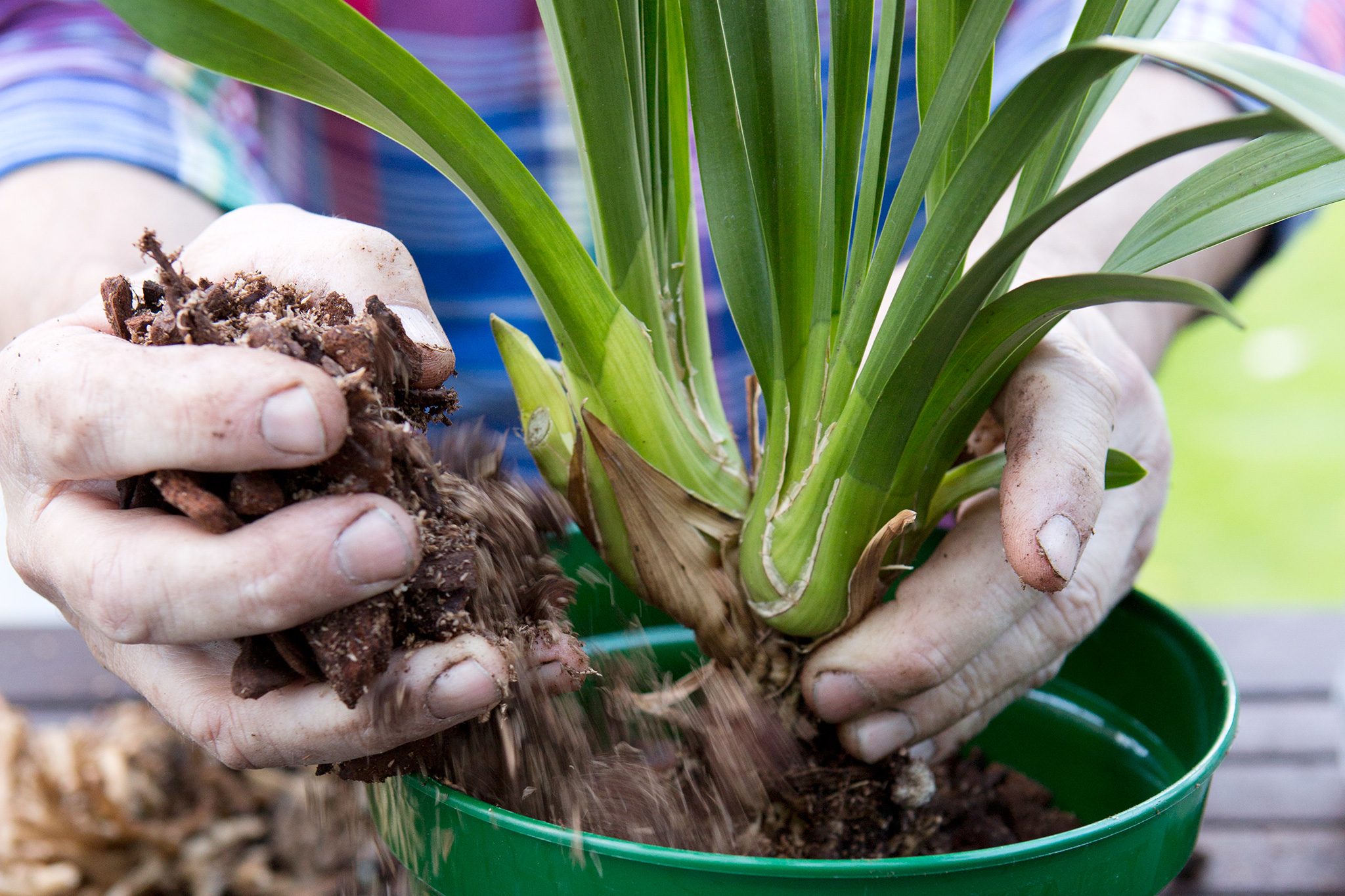
Step-by-step repotting
- Water the day before so roots are more flexible.
- Slide the plant out and gently tease away old media.
- Trim dead roots with clean snips. Dead roots are hollow, mushy, or papery. Healthy roots feel firm.
- Choose a pot only 1 to 2 inches wider than the root mass. Cymbidiums do not need a huge upgrade.
- Position the plant so there is room for new growth to expand. New growth usually advances in one direction from the newest pseudobulbs.
- Backfill with pre-moistened media, tapping the pot to settle it. Do not pack it down hard.
- Water lightly, then resume normal watering once you see the plant settling in and new roots engaging.
If your Cymbidium has become a monster clump, you can divide it, but beginners should do this only if the plant is very large. A good division has at least 3 to 4 pseudobulbs so it can rebound.
Feeding: steady and gentle
Cymbidiums are heavier feeders than many orchids because they put on lots of leafy growth. The trick is “low dose, consistent timing,” especially during active growth.
Easy fertilizer plan
- Spring through late summer: fertilize every 2 weeks at 1/4 to 1/2 strength with a balanced orchid fertilizer.
- Early fall: switch to monthly feeding, or continue every 2 to 3 weeks at a lower dose if growth is still strong.
- Winter: if the plant is actively growing (or you keep it in very bright conditions), fertilize monthly at 1/4 strength. If growth is paused in low light, it is fine to reduce significantly or skip until days lengthen.
Flush salts
Once a month, water thoroughly with plain water to rinse out fertilizer salts. If you see white crust on the pot rim or media surface, it is definitely time to flush.
Water quality
If your tap water is very hard, mineral buildup can happen faster and show up as crusting or browned leaf tips. Flushing helps, and if crusting is constant, consider rainwater, distilled, or filtered water for routine watering.
Bonus soil-nerd note from me: even though many orchids grow on trees in the wild, they still need minerals. You are feeding the little ecosystem in that pot, not just the leaves.
Temps and blooming
Cymbidiums often need a noticeable day to night temperature drop to set flower spikes, especially in late summer and fall. This is why outdoor summering is so effective.
- Summer: warm days are fine, but provide shade from extreme heat.
- Late summer to fall: cooler nights help trigger spikes. Many standard and intermediate hybrids respond well when nights dip into the 50s to low 60s F (10 to 16 C).
- Type matters: some mini and warm-tolerant Cymbidiums can spike with slightly warmer nights, while consistently warm nights can delay spikes for cooler-growing types.
- Freeze warning: protect from frost. If your nights approach freezing, bring it in.
If your Cymbidium grows beautifully but never blooms, light and that late-season temperature drop are the first two things to tweak.
If you cannot hit cool nights indoors, the workaround is simple: keep it outside into fall as long as your nights are safely above freezing, then bring it in to your brightest spot once spikes are forming.
Common issues
Wrinkled pseudobulbs
Wrinkling means the plant is using stored water faster than it can replace it. That can come from underwatering, damaged roots, or mix that stays too wet and suffocates roots.
- Check the roots: if many are mushy or hollow, repot into fresh airy media.
- Adjust watering: water thoroughly, then water again when the mix is approaching dry, not days after it is dust-dry.
- Humidity helps a little: a pebble tray (pot sitting above water, not in it) can slightly raise local humidity, but it is not a cure-all for very dry air.
Do not panic over mild wrinkling on the oldest backbulbs. If the newest pseudobulbs are firm and new growth looks good, you are usually fine.
Bud blast
Bud blast is heartbreaking and common. It is usually stress during bud development.
- Temperature swings: keep away from heating vents, fireplaces, and cold drafts.
- Sudden changes in location: once buds form, avoid moving the plant around the house.
- Dryness: do not let the plant dry out hard while buds are swelling.
- Ethylene exposure: keep away from ripening fruit (especially apples and bananas), which can trigger bud drop.
- Low light indoors: if you bring it in for winter, place it in your brightest spot.
- Root stress can contribute: old, broken-down media and unhappy roots can make the plant less resilient during bud set, even if they are not the only cause.
Yellowing leaves
- One or two older leaves yellowing: often normal aging.
- Many leaves yellowing: check for overwatering, compacted mix, or insufficient light.
- Bleached patches: sunburn. Move to brighter shade and avoid sudden sun exposure.
No blooms
- Increase light gradually.
- Provide cooler nights in late summer and fall if possible.
- Do not overpot. Too large a pot can push leafy growth over blooming.
- Repot if media is old. Stressed roots rarely bloom well.
Pests: quick action
Cymbidiums are pretty tough, but pests love predictable plants. Catch them early and you will save yourself a lot of drama.
- Scale: little brown bumps along leaves and at the base. Wipe off with cotton swabs and isopropyl alcohol (test a small spot first), then follow with horticultural oil or insecticidal soap.
- Spider mites: fine webbing, speckled leaves, worse in hot dry air. Rinse the plant well, raise humidity if you can, and use insecticidal soap or horticultural oil on a schedule.
- Mealybugs: white cottony clusters in leaf joints. Isolate, dab with alcohol, and treat thoroughly.
First rule: isolate any plant with pests. Second rule: repeat treatments. One round rarely gets everything.
Seasonal care
Use this as a gentle compass, not a strict rulebook. Your plant will tell you what it needs if you watch the leaves, pseudobulbs, and how fast the pot dries.
Spring (March to May)
- Indoors: increase watering as days lengthen. Start fertilizing every 2 weeks. Give the brightest window you have.
- Outdoor summering: after frost danger passes, begin hardening off in bright shade for 7 to 10 days.
- Repotting: ideal time after flowering if you see new growth starting.
Summer (June to August)
- Indoors: watch for faster drying if you run air conditioning. Maintain bright light.
- Outdoors: morning sun, afternoon shade is perfect. Water more often. Fertilize every 2 weeks.
- Pest check: inspect for scale and spider mites, especially in hot, dry spells.
Fall (September to November)
- Indoors: keep bright light and steady moisture. Avoid drafts as heaters start up.
- Outdoors: let it enjoy cooler nights to encourage spikes, but bring it in before frost.
- Feeding: reduce to monthly or lower-dose feedings as growth slows.
- Spikes: once buds form, stop moving the plant around and keep watering consistent.
Winter (December to February)
- Indoors: brightest spot, away from heat vents and cold windows at night. Water less often, but do not let it stay dry for weeks.
- Bloom time: many Cymbidiums flower in winter through spring. Keep conditions stable to prevent bud blast.
- Fertilizer: monthly at 1/4 strength only if the plant is actively growing. In low light, it is fine to ease off.
Beginner checklist
- Bright light, with gentle sun if possible.
- Water thoroughly, then let the pot drain fully.
- Fresh bark can repel water at first, so soak 5 to 10 minutes for the first couple waterings after repotting.
- Use chunky bark or a bark-based Cymbidium mix, not tight, soggy soil.
- Repot every 2 to 3 years, sooner if mix breaks down.
- Fertilize lightly but regularly during spring and summer.
- For blooms, aim for brighter light and cooler nights in late summer and fall.
If you want, tell me whether you grow indoors only or you can summer outdoors, plus your rough climate and window direction. I can help you fine-tune a watering and light plan that fits your exact situation.