
Crown of Thorns Care

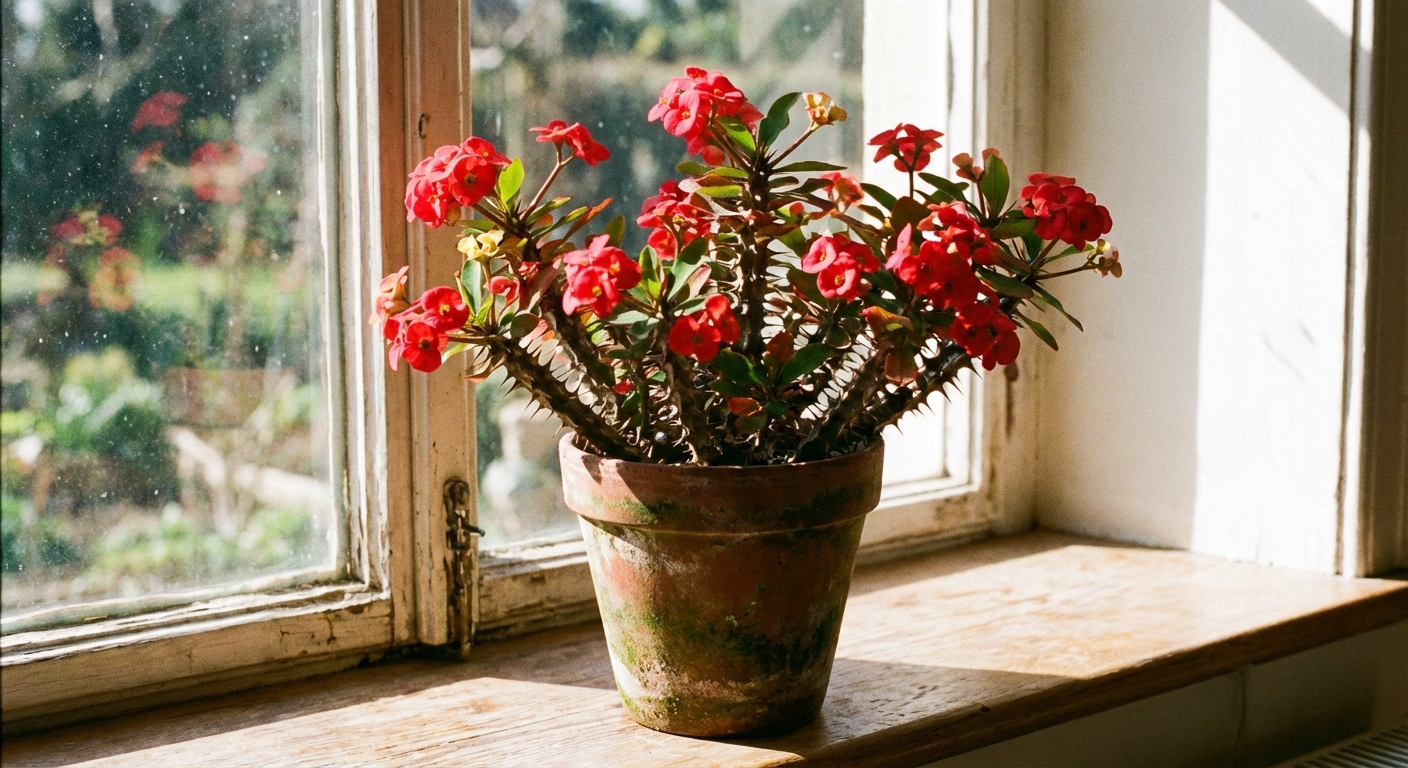
Crown of Thorns (Euphorbia milii) is one of those plants that looks a little intimidating at first glance, like it is daring you to get close. Thorns, woody stems, and that tough, succulent attitude. But once you learn its rhythm, it becomes a loyal bloomer that can flower for months and months with very little fuss.
Think of it as a sun-loving, drought-tolerant houseplant that rewards you for being slightly hands-off. If you tend to love plants a little too much with the watering can, this one will gently train you into better habits.
Quick care snapshot
- Light: Outdoors, full sun is best. Indoors, aim for several hours of direct sun in your brightest window.
- Water: Let the soil dry almost completely, then water deeply and drain.
- Soil: Gritty, fast-draining cactus or succulent mix.
- Temp: Warm is ideal. Protect from frost and cold drafts.
- Blooming: Bright light, lean watering, light feeding in spring and summer, and occasional pruning.
- Safety: Sharp thorns and irritating milky sap. Handle with care.
Light: give it real sun
If Crown of Thorns had a love language, it would be sunshine. This plant blooms best in full sun outdoors, or the brightest indoor light you can give it.
Indoors
- Best placement is a south- or west-facing window with several hours of direct sun.
- If it stretches, leans, or drops lower leaves, it is usually asking for more light.
- Rotate the pot every week or two so it grows evenly.
Outdoors
- In warm climates, it thrives outside in full sun, especially in containers.
- If you live somewhere with intense summer heat, a little protection from the harshest late-afternoon sun can prevent scorch, especially right after moving it outdoors.
- If your plant has been indoors, acclimate it slowly to outdoor sun over 7 to 10 days to prevent sunburn.
Water: less is more
Crown of Thorns is a succulent euphorbia, which means it stores water in its stems. Overwatering is the fastest way to turn a tough plant into a sad one.
How to water the right way
- Water only when the potting mix is dry most of the way down. Instead of following a strict schedule, follow the soil. Many homes land somewhere around every 10 to 21 days in bright conditions, and less in winter.
- When you water, water thoroughly until it runs out of the drainage hole.
- Empty the saucer. Never let the pot sit in water.
Seasonal rhythm
- Spring and summer: More light and warmth means it uses more water. Still let it dry between soakings.
- Fall and winter: It slows down. Water much less often, especially in cooler rooms.
My favorite test: Lift the pot. A dry pot feels surprisingly light. A wet pot feels heavy and cold.
Soil and pot: drainage is everything
This plant wants oxygen around its roots and quick drainage. Standard potting soil is usually too moisture-retentive on its own.
Best soil mix
- Use a cactus or succulent mix as your base.
- For extra drainage, mix in pumice, perlite, or coarse sand.
Choose the right pot
- Always use a pot with a drainage hole.
- Terracotta is wonderful because it breathes and helps soil dry more evenly.
- Do not oversize the pot. A pot that is too large holds excess moisture.
Temperature and airflow
This is a warm-weather plant at heart. Indoors, average home temperatures are perfect, and outdoors it is happiest where frost is not part of the plan.
- Ideal range: Roughly 65 to 85°F (18 to 29°C).
- Cold sensitivity: Protect it below about 50°F (10°C). Cold windows at night can be sneakier than you think.
- Outdoor growing: It is commonly grown outdoors year-round in USDA Zones 9 to 11 (sometimes 10 to 11 depending on local conditions). When in doubt, keep it in a pot so you can move it.
- Humidity: Average indoor humidity is fine. Skip routine misting. Good airflow and a proper dry-down are your best defenses against rot and pests.
Handling safely
Crown of Thorns protects itself in two ways: sharp thorns and a milky latex sap that can irritate skin and can be especially dangerous to eyes. It is not a plant to casually wrestle with.
Safety basics
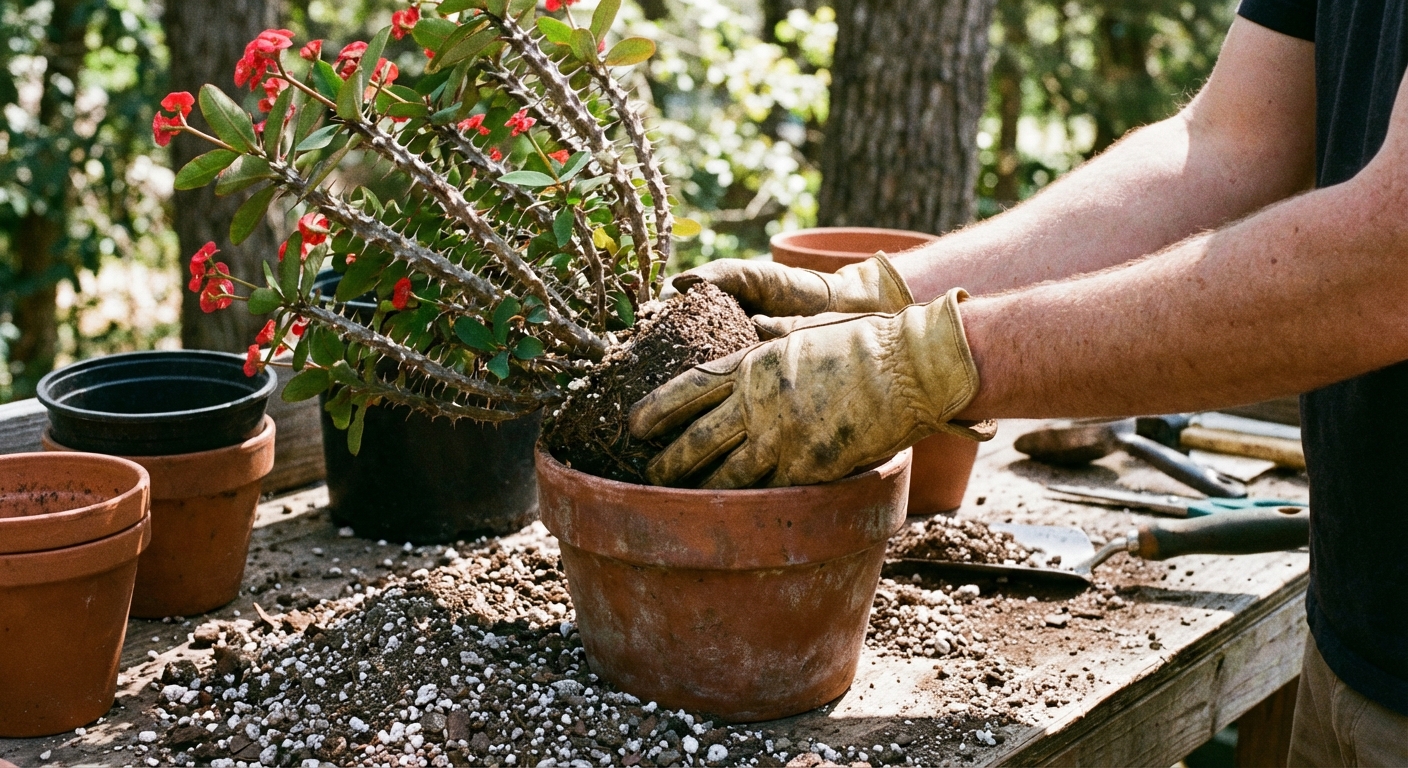
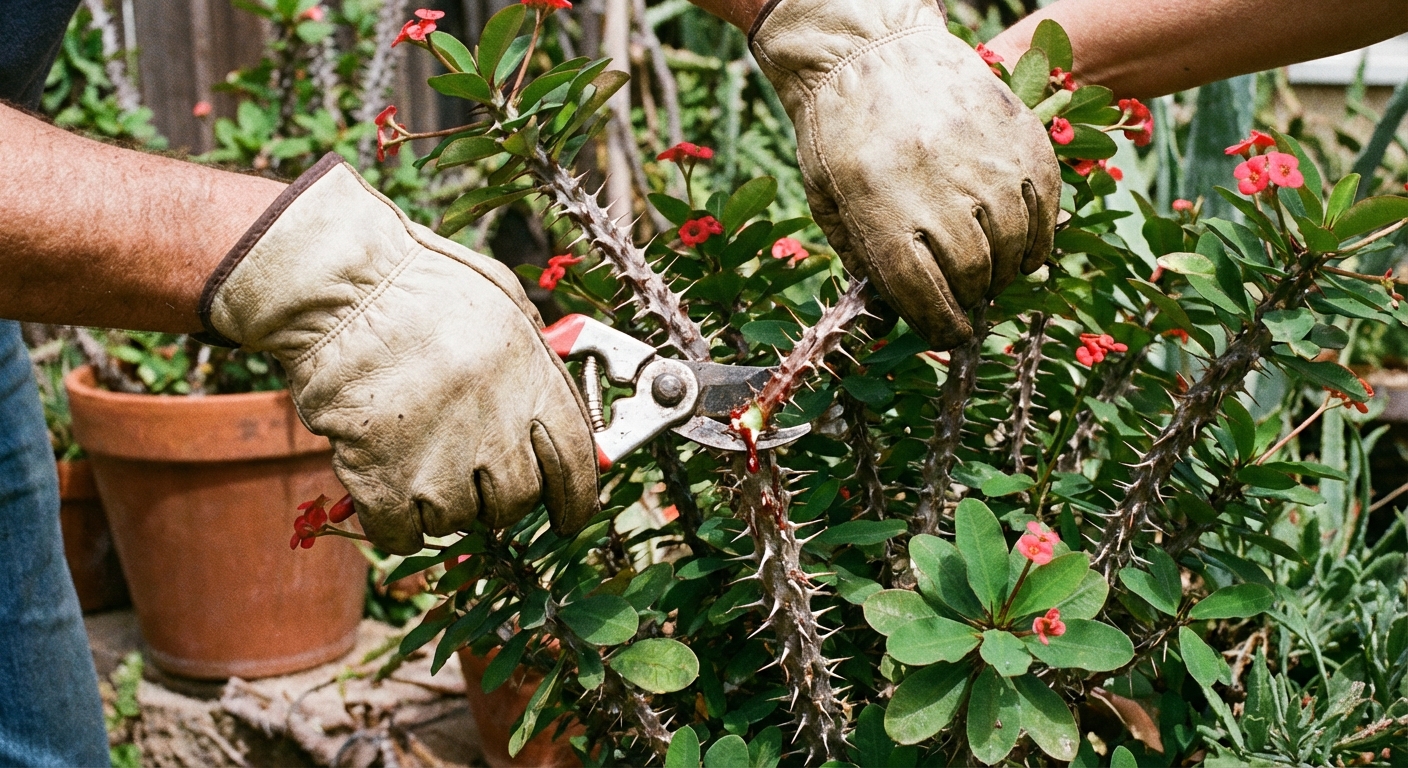
- Wear thick gloves and long sleeves when pruning or repotting.
- Wear eye protection anytime you might snap a stem or trigger sap flow.
- Use tongs, folded newspaper, or a thick towel to hold stems if needed.
- Keep away from curious kids and pets, especially during pruning when sap flows.
Sap warning
The sap can cause a rash and serious irritation if it gets in eyes. If you get sap on your skin, wash with soap and water. If it gets in eyes, flush with water for several minutes and seek medical advice promptly. If ingested by people or pets (including cats and dogs), contact a medical professional, Poison Control, or your veterinarian.
Tip: I keep a damp paper towel nearby when I prune. Wipe sap off tools and stems right away, then wash tools with warm soapy water.
More blooms
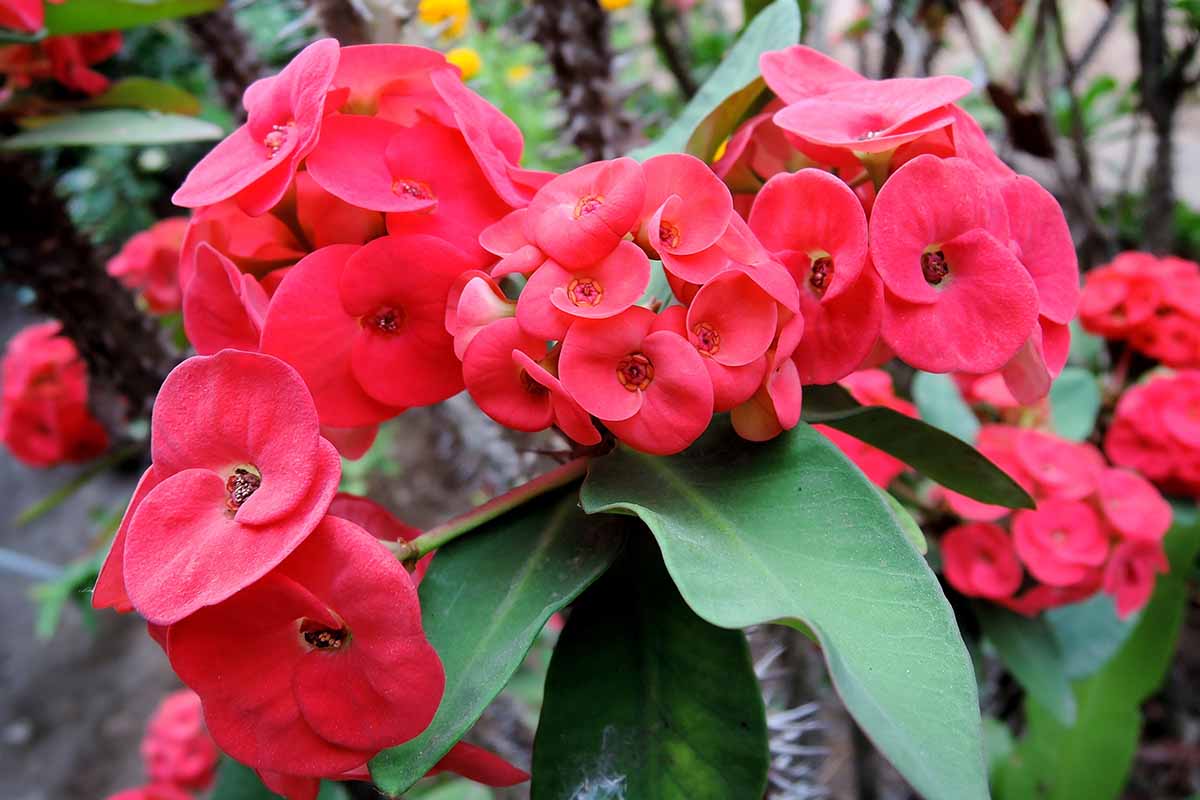
Those cheerful “flowers” are actually colorful bracts, and the tiny true flowers sit in the center. The good news is that Crown of Thorns can bloom for long stretches when its needs are met.
Bloom boosters that work
- Give it maximum light: Bright, direct sun is the number one factor for flowering.
- Keep watering lean: Too much water often leads to leafy growth with fewer blooms.
- Feed lightly: In spring and summer, use a balanced fertilizer or cactus fertilizer at half-strength about once a month. Pause feeding in winter or in low light.
- Warmth helps: Steady warmth and bright light can keep blooms coming.
- Prune to branch: Light pruning encourages bushier growth, and more tips usually means more bloom clusters.
What not to do
- Do not move it constantly. Find the sunniest spot and let it settle.
- Do not keep it soggy “just in case.” Dry intervals are part of its normal life.
Pruning and shaping
Crown of Thorns can get leggy over time, especially indoors. Pruning helps it branch, look fuller, and bloom more evenly.
When to prune
- Best time is spring through early summer when it is actively growing.
- You can remove dead or damaged stems anytime, carefully.
How to prune
- Put on gloves and eye protection.
- Use clean, sharp pruners.
- Cut just above a node or branching point.
- Let cut ends stop “weeping” sap before returning the plant to its spot. This usually takes a few minutes. Blot gently with a damp paper towel if needed.
Extra tip: A light mist of water on the fresh cut can help the sap coagulate and stop flowing faster. Mist the cut itself, not the soil.
Common problems
Leaf drop
Leaf drop is the most common panic moment, and it is usually fixable. Crown of Thorns can drop leaves when stressed, especially from changes in light, temperature, or watering.
- Sudden move to low light: Put it back in brighter sun. Expect some adjustment time.
- Overwatering: Let soil dry out fully. Check for soft stems or a sour smell, which can signal root rot.
- Underwatering: If soil has been bone dry for weeks and leaves crisp, give a deep soak and then return to a dry-down cycle.
- Cold stress: Keep it away from cold windows at night and drafty doors.
No blooms
- Almost always not enough direct sun. Move to a brighter window or add a grow light.
- Too much fertilizer, especially high nitrogen, can push leaves over flowers.
- Overpotting can slow blooming. A slightly snug pot is fine.
Wrinkled stems
Mild wrinkling can mean it is thirsty. Deep wrinkling plus mushy spots can mean root trouble. Check soil moisture and root health.
Soft stems or blackened base
This points to rot, usually from too much water or poor drainage.
- Unpot the plant and inspect roots.
- Trim away mushy roots with clean snips.
- Repot into dry, gritty mix and a pot with good drainage.
- Hold off watering for several days after repotting.
Pests
Dry, sunny plants are generally less pest-prone, but pests can still show up.
- Mealybugs: Dab with isopropyl alcohol on a cotton swab, then rinse and monitor.
- Scale: Gently scrape off and treat with horticultural oil or insecticidal soap.
- Spider mites: Rinse the plant and increase airflow, then treat if needed.
When treating pests, avoid getting sprays in the soil repeatedly, and always protect your skin from sap if you need to handle the stems.
Repotting
Repot every 2 to 3 years, or sooner if the plant is top-heavy or the soil has broken down and stays wet too long.
- Choose a pot only 1 to 2 inches wider than the current one.
- Use fresh gritty succulent mix.
- After repotting, wait several days before watering so any root nicks can callus.
Propagation
If you want more plants (or a backup plan), Crown of Thorns can be propagated from stem cuttings. Take your time and treat the sap like it deserves respect.
- Wear gloves and eye protection.
- Take a 3 to 6 inch cutting from a healthy stem.
- Rinse or mist the cut end to help slow sap flow, then blot.
- Let the cutting callus in a dry, shaded spot for a few days.
- Plant in dry, gritty mix. Wait about a week before the first light watering, then water sparingly until roots form.
Is it toxic?
Crown of Thorns is considered irritating and potentially toxic because of its latex sap. The sap can irritate skin and eyes, and ingestion can cause gastrointestinal upset. If you have pets that chew plants or toddlers who explore with their mouths, place this plant up high or choose a safer option.
The Leafy Zen way
Crown of Thorns does not want you to hover. It wants sun on its shoulders, gritty soil under its feet, and a good long dry stretch between drinks. If you can give it those three things, it will bloom like it is showing off.
If your plant drops a few leaves or looks awkward after pruning, you did not fail. You are just learning its personality. And honestly, the best gardeners I know are the ones who keep showing up, even after a few prickly moments.