Confederate Jasmine Care

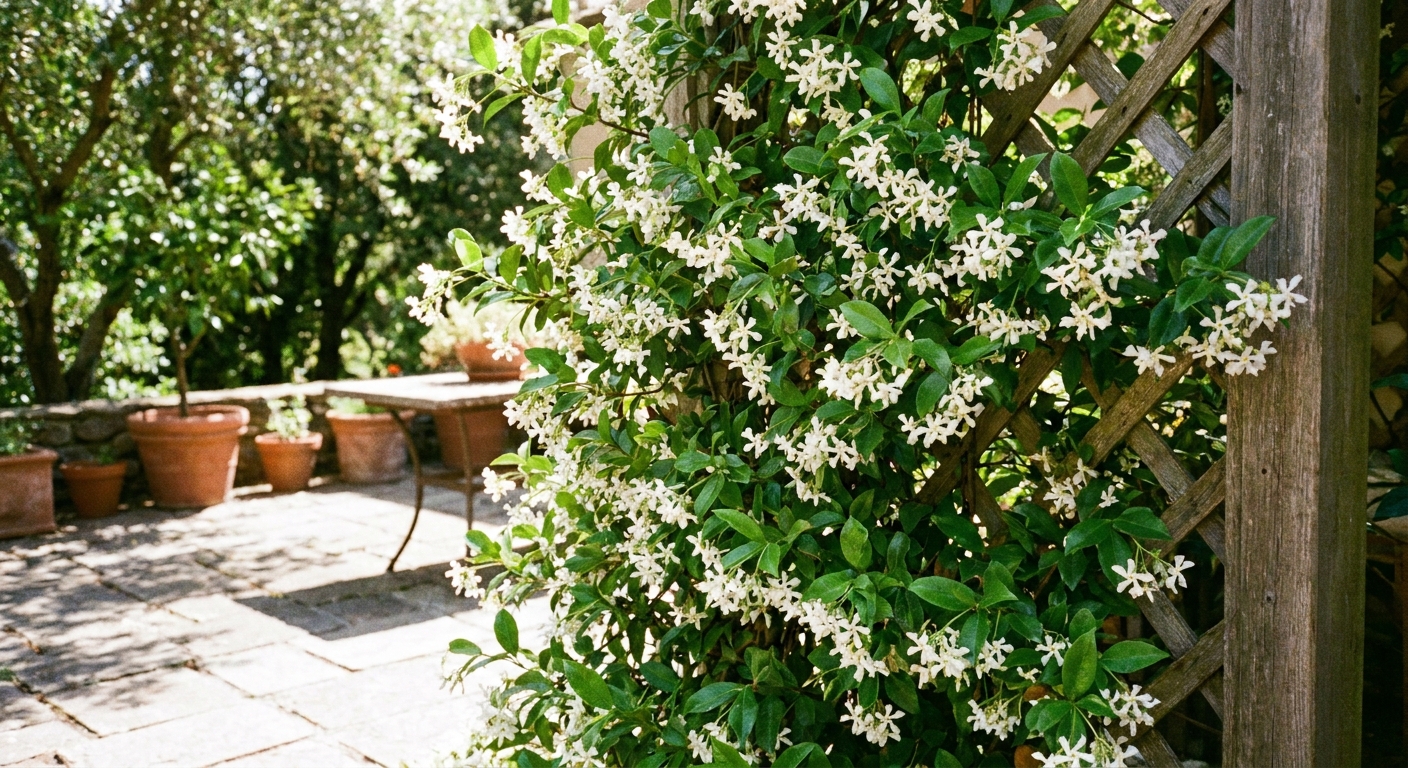
Confederate jasmine, also sold as star jasmine in many nurseries, is one of those plants that can make you stop mid-walk and inhale like a cartoon character floating toward a pie. When it is happy, it covers itself in pinwheel-white blooms and perfumes an entire patio or entryway.
Quick clarity up front: in U.S. garden-center talk, both “Confederate jasmine” and “star jasmine” are commonly used for Trachelospermum jasminoides. It is also not a true jasmine (those are usually in the genus Jasminum), which is why labels can get messy.
It is refreshingly cooperative: give it sun, something to climb, and a haircut right after flowering each year, and it will repay you with glossy evergreen leaves and a tidy wall of green.

Know your plant
Confederate jasmine is a twining, evergreen vine in the genus Trachelospermum. The most commonly grown species is Trachelospermum jasminoides, prized for its intense fragrance and shiny leaves that can bronze a bit in winter.
- Growth habit: Twining vine that wraps around supports. It can also be used as a groundcover if you do not give it anything to climb.
- Bloom time: Typically late spring into early summer, with lighter repeat blooming in warm climates.
- Size: Commonly 10 to 20 feet with support, sometimes more in ideal conditions.
- Sap and pets: The white, latex-like sap can irritate skin for some people. Wear gloves if you are sensitive. If chewed, it may cause mild stomach upset, so keep it away from curious pets and kids.
Zones and winter reality
In the ground, Confederate jasmine is generally reliable in USDA Zones 8 to 11 for evergreen growth and consistent flowering. In parts of Zone 7 (often 7b), established plants can survive in sheltered microclimates, but expect some winter cosmetic damage and occasional dieback. Cultivar, wind exposure, and how protected the roots are all matter.
What cold looks like
- Light frost: Usually fine, maybe a little bronzing on leaves.
- Hard freeze (roughly low 20s °F): Leaf burn and dieback on exposed stems are common.
- Deep cold (roughly low teens °F and below): Top growth may die back hard. Prolonged cold can kill roots, especially in exposed sites.
If you garden where winters are unpredictable, the easiest path to success is: grow it in a container and move it to shelter when temperatures threaten to drop below about 25°F to 20°F. Think of that as a precautionary range, not a hard rule. Pots lose heat fast, and roots in containers are more cold-sensitive than roots in the ground.
Sun and light
If you want that famous cloud of white flowers, prioritize light. Confederate jasmine will grow in part shade, but it blooms heaviest with more sun.
- Best for bloom: Full sun (about 6 to 8+ hours).
- Best for hot climates: Morning sun, afternoon shade to prevent stress and scorched leaves during extreme heat.
- Will it bloom in shade? Sometimes, but typically fewer flowers and looser growth.
My personal rule: if the vine is lush but stingy with blooms, it usually needs more sun or it is getting too much nitrogen (or both). That does not mean “starve it.” It means ease up on high-nitrogen lawn fertilizer drift and choose a more balanced feed when you do fertilize.
Soil and watering
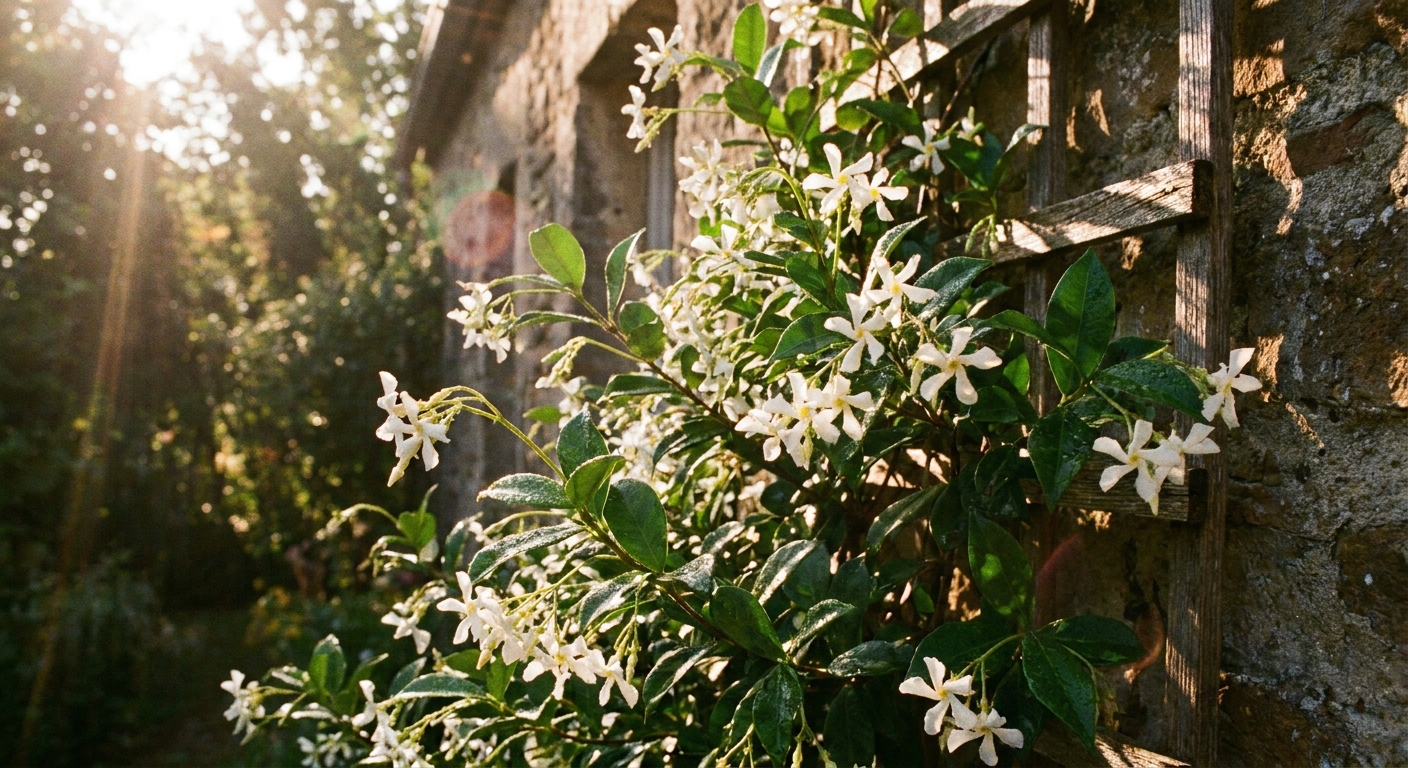
This plant is not fussy, but it is happiest in well-drained soil. It tolerates a range of pH levels and soil types, as long as the roots do not sit soggy.
- In-ground soil: If you have heavy clay, plant slightly high and mix in compost and pine bark fines to improve structure and drainage over time. Avoid turning the planting hole into a “bathtub” that holds water.
- Watering to establish: For the first growing season, water deeply when the top few inches of soil are drying out. Consistent moisture early on builds a better root system.
- Once established: It is fairly drought-tolerant, but it will look and bloom best with occasional deep watering during long dry spells.
Support that works
Confederate jasmine is not a vine with grabby tendrils like peas, and it does not cling with suction cups like ivy. It climbs by twining , meaning stems wrap around whatever is nearby. That gives you two big takeaways:
- It needs something narrow enough to wrap, like lattice, wire, or slender slats. As a practical visual, think wire, cord, or strips about pencil-width to broom-handle width, not a flat wall.
- It benefits from initial training until it learns the route.
Good options
- Wire trellis on a wall: Standoff the trellis a few inches from the wall for airflow and easier maintenance.
- Wood lattice on a fence: Helps it climb faster and look evenly filled in.
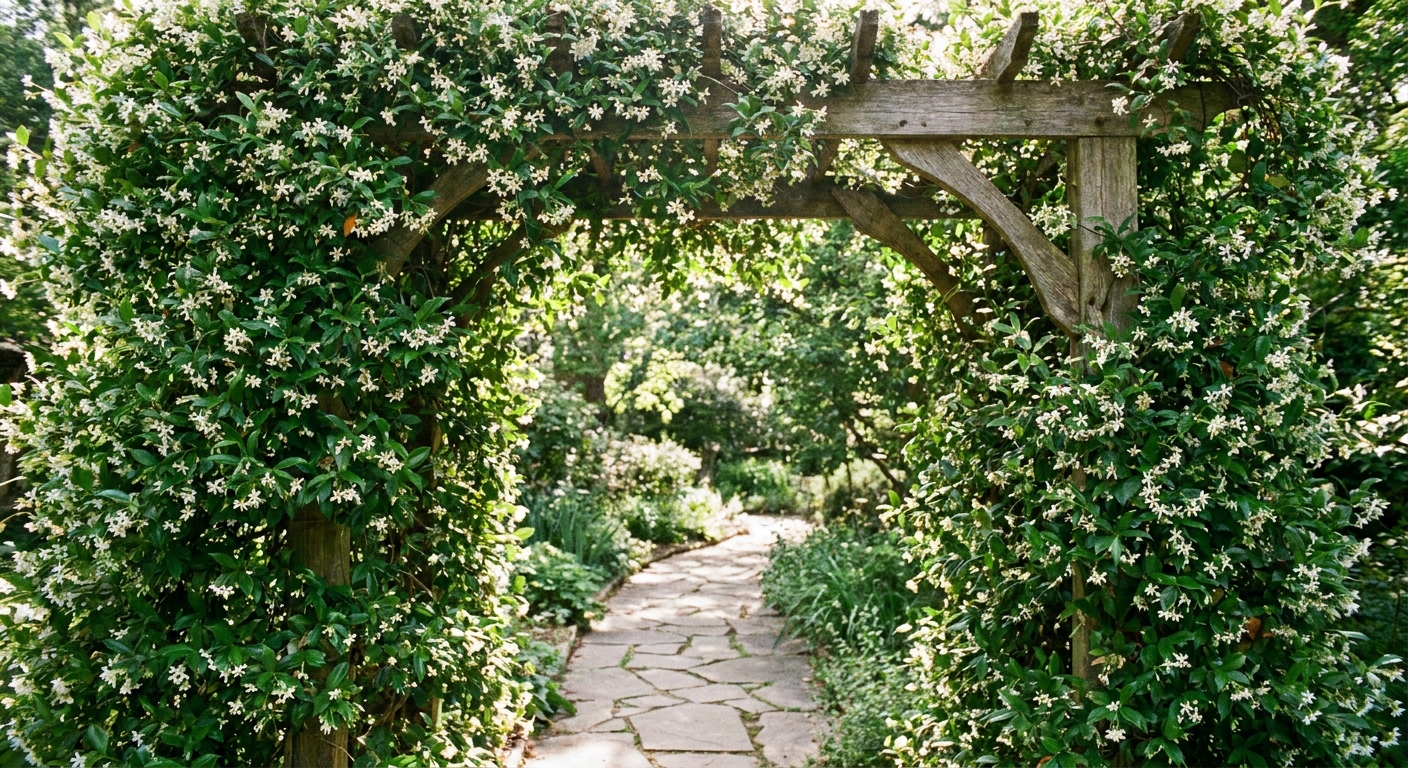
- Arbors and entry arches: Classic choice, especially near paths where fragrance can drift.
Quick caution
This vine can get thick and woody with age. Keep it from invading gutters, lifting shingles, or worming behind shutters. You will be happier if you choose a support that makes it easy to prune and inspect.
How to train it
Training is easiest when the stems are young and flexible. Think gentle guidance, not force.
Step-by-step
- Plant with intention: Set the plant 12 to 18 inches from the base of the trellis or fence so the root ball has room and the crown is not cramped.
- Pick 3 to 5 main stems: These become your framework vines.
- Loosely tie stems up and out: Use soft plant ties, twine, or stretchy tape. Make figure-eight ties so you do not pinch stems.
- Encourage sideways growth: For a full fence, angle stems horizontally along wires or lattice. Sideways training stimulates more flowering spurs over time.
- Check ties monthly in growing season: Remove or loosen anything that is starting to bite.
If a stem snaps, do not panic. It happens. Confederate jasmine is forgiving, and it will send new shoots from lower nodes.
Pruning
Yearly pruning keeps this vine blooming, breathable, and polite. The key is timing.
Best time
Right after the main bloom flush is the sweet spot in most climates. Prune too late in the season and you may remove next year’s flower buds, since buds often set on growth that matures after summer.
What to do
- Shape and contain: Trim long runners back to the outline you want.
- Thin for airflow: Remove a few of the oldest, woodiest stems at the base or where they fork. This reduces tangles and mildew risk.
- Clean up damage: Cut out any winter-burned tips or broken stems anytime.
How hard can you cut?
Confederate jasmine can handle a moderate hard prune if it has become a shaggy beast, especially in warm zones. Just know that a severe cutback may reduce bloom for a season while the plant rebuilds.
My small-but-mighty tip
After pruning, rake out fallen leaves and stems at the base. Less debris means fewer hiding places for pests and less fungal pressure. Soil health is not just what you add, it is what you keep from festering.
Fertilizer
This vine does not need a complicated feeding plan. It needs enough nutrition to grow and flower, but not a heavy hand with nitrogen.
- When: Feed in early spring as new growth starts. In long growing seasons, a light second feed after the main bloom can be helpful.
- What: Use a balanced slow-release fertilizer (or one slightly lower in nitrogen). Compost as a spring top-dress also works nicely.
- What to avoid: Repeated blasts of high-nitrogen fertilizer can make the vine look like a green champion and bloom like a miser.
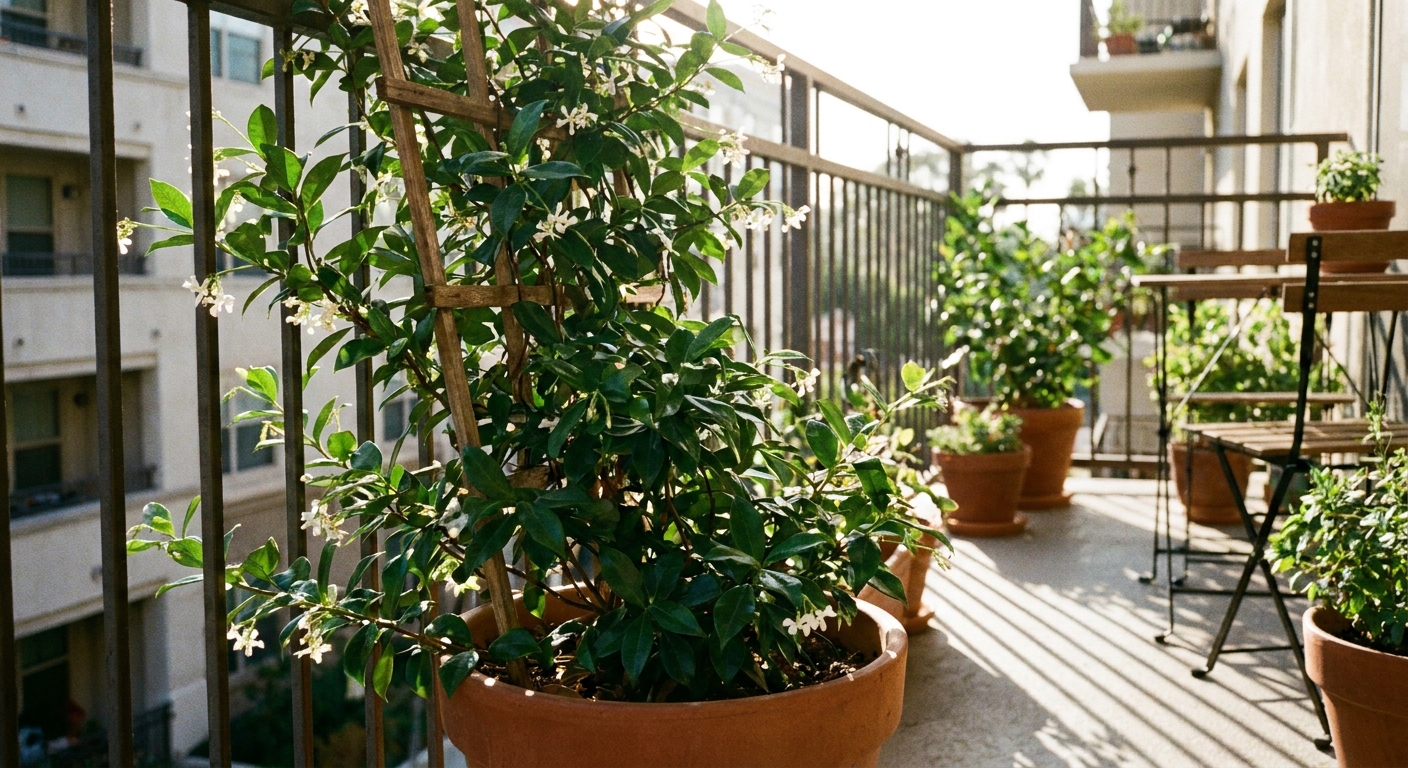
Container care for cold areas
If you are outside its comfort zone, pots let you enjoy the fragrance without gambling on winter survival.
Pot, soil, and watering
- Container: Choose a pot with drainage holes, ideally 16 to 20 inches wide to start.
- Soil: Use a high-quality potting mix with extra perlite or pine bark for drainage. Roots hate sitting wet in winter.
- Water: Deeply when the top 1 to 2 inches of mix are dry. In summer, that might be often. In winter, it is usually much less.
Overwintering options
- Bright, cool indoor spot: Sunroom, bright garage window, enclosed porch.
- Unheated but protected: Only if temps stay above the plant’s danger zone and the pot will not freeze solid.
Do not expect heavy flowering indoors. The goal is simply to keep it healthy until spring, then gradually reintroduce it to outdoor sun.
Pests and problems
Confederate jasmine is generally tough, but a few issues show up often enough to be worth knowing.
- Scale and aphids: Can cause sticky honeydew, which can lead to sooty mold (a black coating on leaves). A strong spray of water, horticultural oil, or insecticidal soap (used per label) usually handles light infestations.
- Spider mites: More common in hot, dry conditions, especially on stressed container plants. Look for fine webbing and stippled leaves.
- Powdery mildew: More likely in crowded, shaded, low-airflow situations. Thin the vine and avoid overhead watering late in the day.
If you are seeing repeated pest pressure, the fix is often boring but effective: more sun, more airflow, and less drought stress.
Fragrance and look-alikes
This is where gardeners sometimes feel duped, so let us clear it up.
How fragrant is it?
When it is in full bloom, the scent is sweet, rich, and noticeable from several feet away, especially in warm evenings. In cooler weather or in shade, the fragrance can be lighter. A young plant may also bloom sparsely until established.
Look-alikes
Nursery tags can be inconsistent. Here are common mix-ups:
- True jasmines (Jasminum spp.): Different genus. Many are fragrant, some are not, and hardiness varies widely.
- Confederate jasmine cultivars: Variegated types are gorgeous but can bloom a bit less if light is limited because variegated leaves have less chlorophyll.
- Carolina jessamine (Gelsemium sempervirens): Yellow flowers, very fragrant, but a different plant entirely and notably toxic if ingested.
If you want the classic experience, look for Trachelospermum jasminoides and give it enough sun to actually power those flowers.
Vigorous, not usually invasive
This is a fast, enthusiastic grower in warm climates. It is not typically listed as invasive in many regions, but “vigorous” can feel invasive if it is allowed to wander. If you live near natural areas, it is always smart to check local guidance and keep it pruned where you want it.
Quick care checklist
- Zones: Best in USDA 8 to 11; possible in parts of 7 with protection; container-grown elsewhere.
- Sun: Full sun for most blooms; morning sun with afternoon shade in extreme heat.
- Soil: Well-drained; amend heavy clay and avoid waterlogged spots.
- Water: Regular deep watering to establish; occasional deep watering in drought once established.
- Support: Trellis, fence lattice, or arbor. Train young stems and tie loosely.
- Prune: Once yearly right after flowering, plus anytime for damage.
- Fertilizer: Light feeding in spring; avoid high nitrogen excess.
- Containers: Great option in cold regions; protect pots during freezes.
- Fragrance: Strong in bloom; lighter in shade or cool conditions.
If you are deciding where to plant it, choose the spot you walk past most often. This is a vine that earns a place near your everyday life, because the best part is not just how it looks. It is that moment the air turns sweet and you realize your garden is greeting you back.