
Climbing Hydrangea Care on Walls and Trees

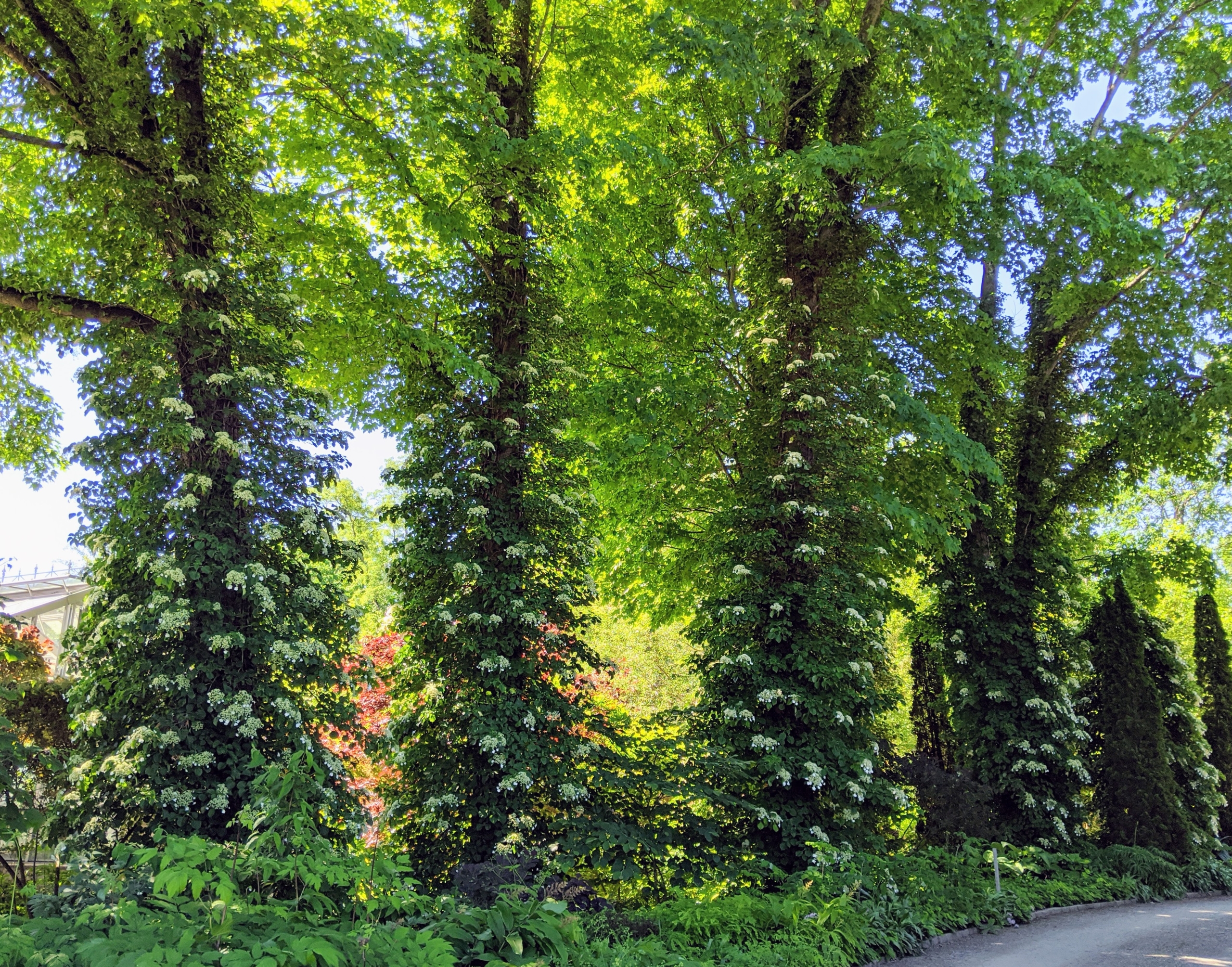
I still remember the first climbing hydrangea I planted, tucked into a shady corner where nothing else wanted to cooperate. For two full seasons it looked like a polite green houseguest, not doing much besides staying alive. Then one spring it grabbed hold, literally, and started climbing with quiet determination. That is the deal with climbing hydrangea, Hydrangea anomala subsp. petiolaris. It is slow to introduce itself, then it becomes the kind of plant that changes the whole mood of a wall or an old tree trunk.
This page is all about establishment and support: how it attaches, what it can safely climb, why blooms can take patience, and how to guide it without treating it like a hydrangea shrub.

How climbing hydrangea attaches
Climbing hydrangea is a woody vine that climbs using aerial rootlets along its stems. Those rootlets behave like tiny anchors, gripping textured surfaces as the vine grows. It is not a twining vine that wraps around supports, and it is not a tendril climber that needs wires to latch onto. It wants a surface it can press against.
What that means in real life
- It climbs best on texture. Brick, stone, rough stucco, and aged wood are easier for it to grip than smooth, glossy surfaces.
- It can cling hard. Once established, stems and rootlets can be very difficult to remove without leaving marks or pulling off bits of paint or old mortar.
- Young plants need help staying in contact. In the first year or two, it often needs light tying so stems stay pressed to the surface while rootlets and woody stems develop.
If you have ever seen an older vine with thick, woody stems hugging a wall like it grew there naturally, that is the aerial rootlets doing their steady work over time.
Why it can take years to bloom
Climbing hydrangea is famous for testing a gardener's patience. It often takes 3 to 5 years to bloom after planting. In deeper shade, tougher climates, or lean soil, it can take 5 to 7 years or more. Sometimes a larger, older plant blooms sooner. This is not you doing something wrong. It is the plant investing in roots and framework first.
Factors that influence bloom timing
- Age and size at planting: Larger, older nursery plants often bloom sooner than small liners.
- Light: Morning sun with afternoon shade usually produces faster growth and better flowering than full shade.
- Moisture consistency: Drought stress during establishment can slow everything down, including bud formation.
- Overfeeding with nitrogen: Too much high-nitrogen fertilizer pushes leafy growth at the expense of flowers.
My best advice is to watch the plant's body language. If you are seeing steady new growth and healthy leaves, you are on track, even if blooms have not arrived yet.
Picking a wall that is a safe support
Because climbing hydrangea attaches directly to surfaces, the wall you choose matters. The goal is a structure that can handle long-term moisture, weight, and clinging rootlets without damage.
One more reality check: a mature plant can reach 30 to 50 feet in good conditions, and it becomes genuinely heavy over time. If you are not sure a surface or support is solid, assume the vine will eventually test it.
Generally safe surfaces
- Brick and stone in good repair: Best when mortar is sound and not crumbling.
- Concrete or masonry block: Usually sturdy enough for mature vines.
- Rough stucco: Can work well if the stucco is intact and not flaking.
Surfaces to think twice about
- Painted wood siding: Rootlets can pull paint, trap moisture, and complicate maintenance. Healthy, well-painted siding with decent airflow is less at risk, but existing moisture problems tend to get worse once a vine is tight to the surface.
- Older, soft mortar: Rootlets can exploit tiny gaps and worsen deterioration over time.
- Vinyl siding: The vine cannot grip well, and it can creep behind panels.
If you want the look without direct clinging
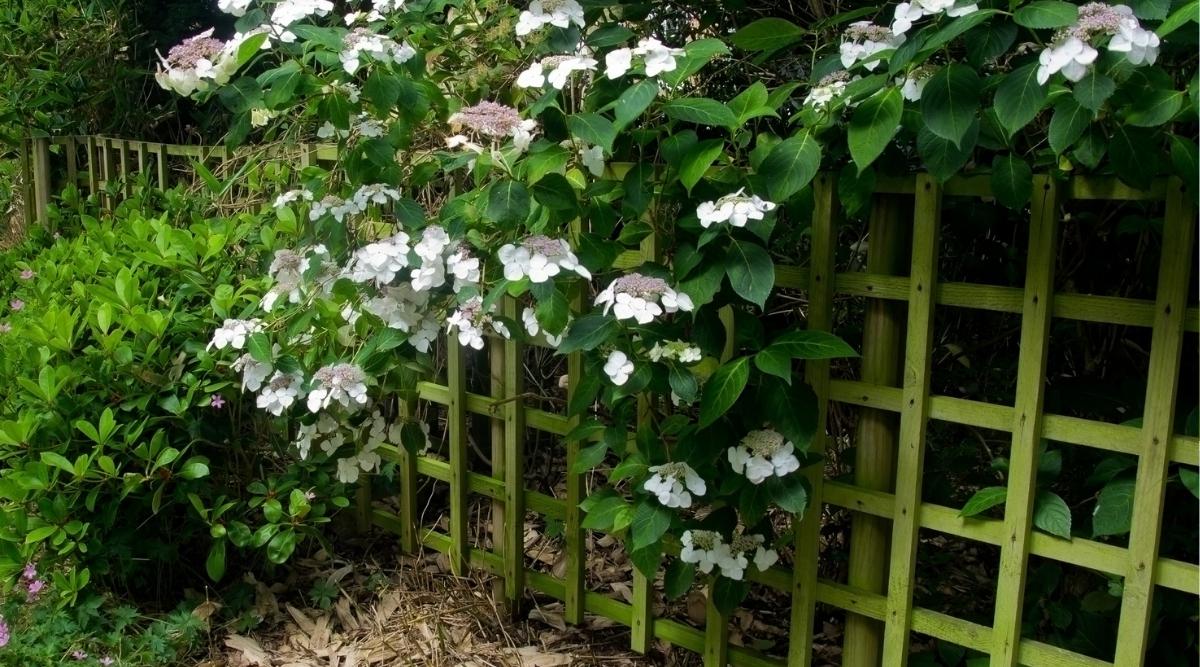
Use a sturdy trellis system spaced off the wall by a few inches. This gives airflow, protects siding, and makes the vine easier to manage. Just make sure whatever you install is anchored into studs or masonry, because a mature climbing hydrangea can get heavy.
Choosing a tree that can handle it
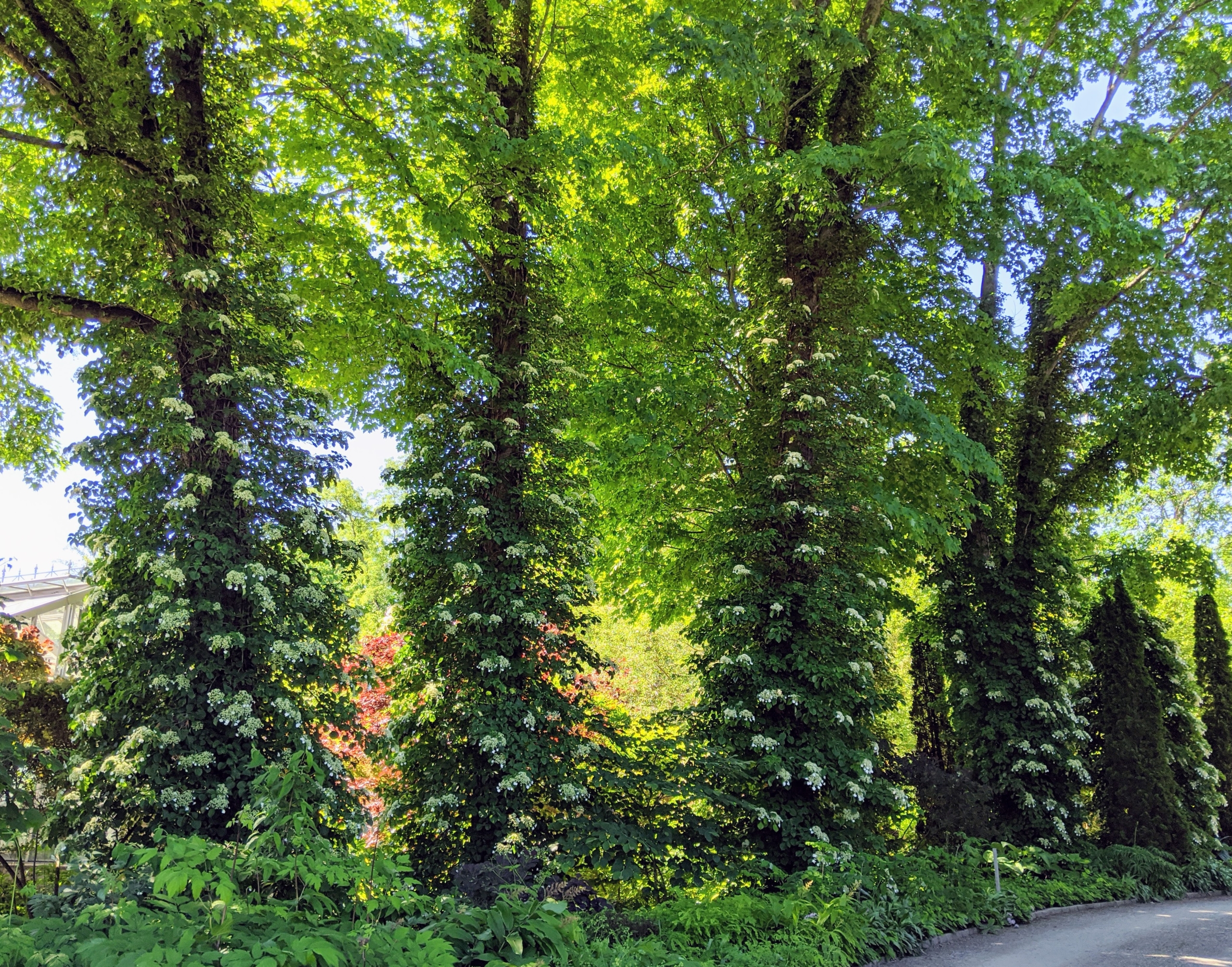
Climbing hydrangea can be stunning on a mature tree, especially one with textured bark and a broad trunk. But a tree is a living support, and not every tree is a good candidate.
Good tree candidates
- Large, established trees with thick trunks and strong branching structure.
- Rough-barked species where rootlets can grip without constant slipping.
- Healthy trees that are not already stressed by drought, disease, or storm damage.
Trees to avoid
- Young trees: The vine can outpace them and increase shade and wind load before the tree is sturdy.
- Thin-barked or easily damaged trees: The vine itself is not a parasite, but added weight and shade can stress sensitive trees.
- Already declining trees: Extra competition at the root zone and heavier canopy load can accelerate problems.
Important nuance: climbing hydrangea does not usually strangle trunks the way some twining vines can. The bigger issue is weight and shading over time, plus the fact that a densely covered trunk makes it harder to inspect a tree for pests, rot, or structural cracks.
Planting for establishment: where and how
If you want a climbing hydrangea to attach well and bloom sooner, set it up for steady, stress-free growth from day one.
Best placement
- Light: Partial shade is ideal, especially morning sun and afternoon shade. In cooler climates it can handle more sun if soil stays evenly moist.
- Soil: Rich, well-draining soil that holds moisture. Think woodland edge soil, not sandy drought ground and not swamp.
- Spacing from the wall or trunk: Plant it close enough to reach, but not jammed against the foundation. I like 12 to 18 inches away from a wall so roots have room and water can soak in evenly.
Planting steps that actually help
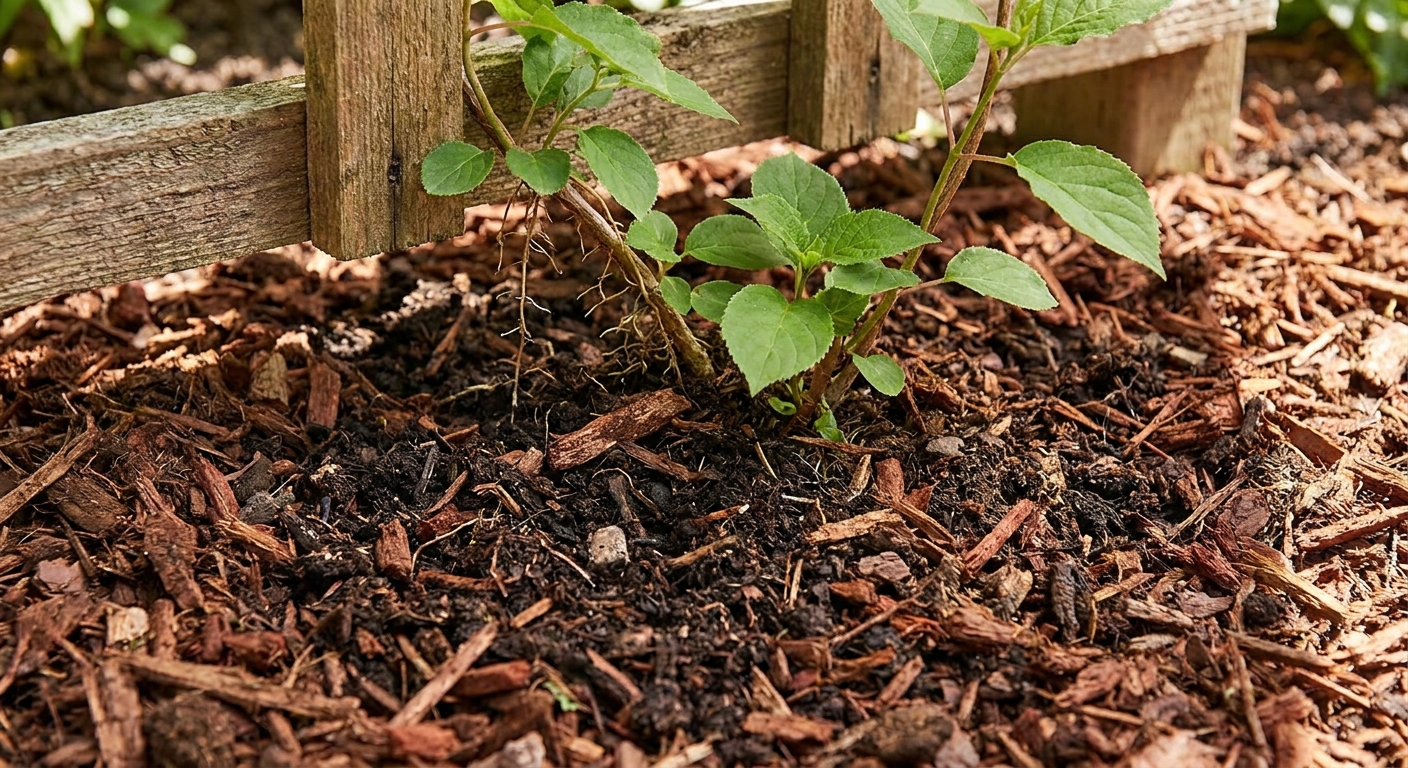
- Dig a hole as deep as the root ball and about two times as wide.
- Set the plant at the same depth it was in the pot.
- Water deeply at planting, then keep the root zone consistently moist during the first growing season.
- Mulch with 2 to 3 inches of leaf mold, compost, or shredded bark, keeping mulch a few inches away from the stem.
After that first year, treat it like a long-term establishment plant. For the first few summers, a weekly deep watering during dry spells helps more than occasional sprinkles. Refresh mulch as it thins so the root zone stays cool and evenly moist.
Skip the temptation to heavily amend just the planting hole with rich compost if your surrounding soil is poor. Instead, topdress broadly and mulch yearly so the whole root zone improves, not just the tiny pocket right around the plant.
Training it up a wall or onto a support
Training climbing hydrangea is more like guiding a slow-moving friend through a doorway than pruning a shrub into shape. Early training is about contact, direction, and stability.
Simple training method
- Pick 2 to 4 main stems to become your framework.
- Gently attach those stems to the support using soft plant ties, jute twine, or stretchy garden tape. Avoid thin wire that can bite into woody stems.
- Create contact points every 12 to 18 inches so stems do not flop away from the surface before rootlets form.
- Check ties a couple times per season. Loosen or move them as stems thicken.
Once the vine is clinging confidently, you will do far less tying. At that point your job becomes redirecting growth away from gutters, downspouts, windows, utility boxes, and rooflines.
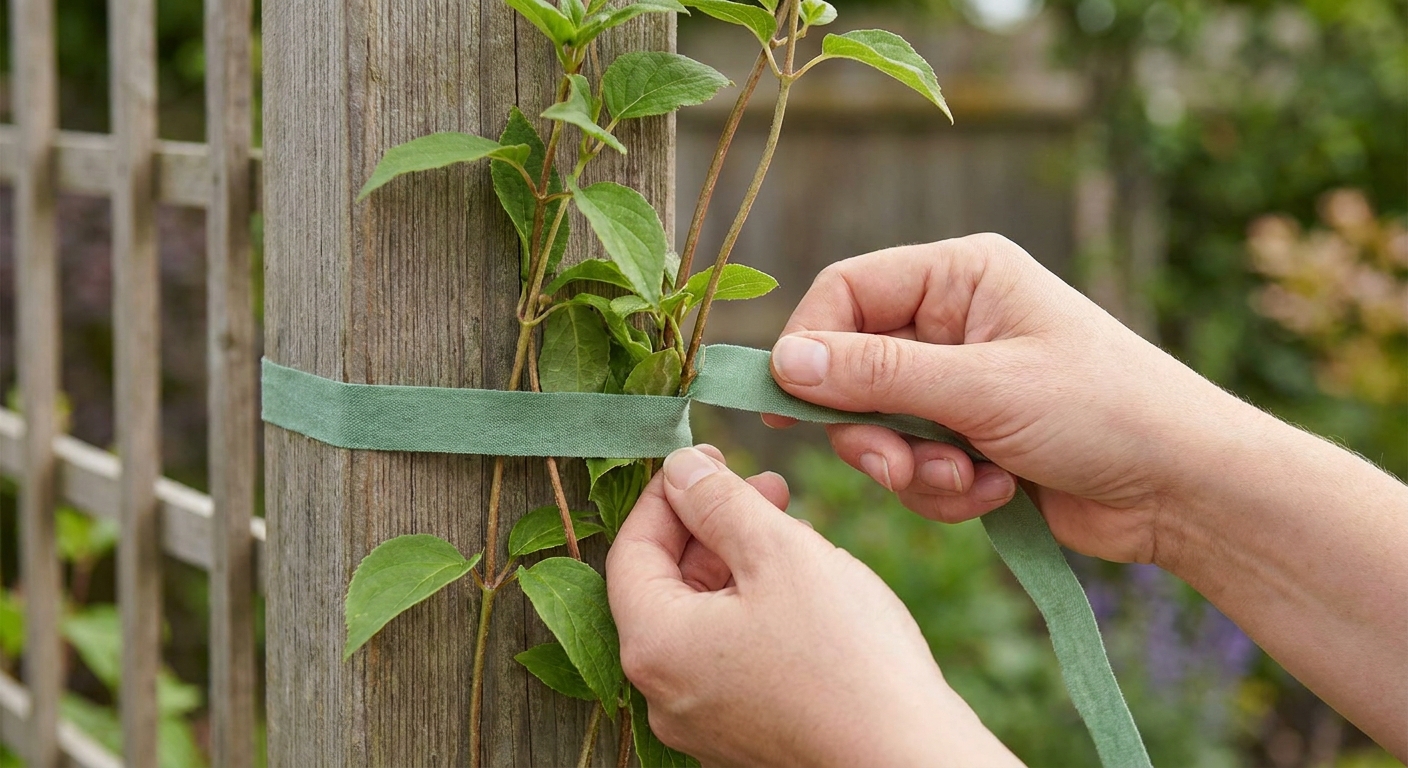
Light training is not shrub pruning
This is where many gardeners get tripped up. Most hydrangea advice on the internet is written for shrubs. Climbing hydrangea is a vine with a different goal: build a permanent woody framework, then flower along mature stems.
When to prune
If you are pruning for shape, the safest window is right after flowering, because it blooms on mature wood. If it is not blooming yet, keep pruning minimal. Dead, damaged, or hazardous stems can be removed whenever you notice them.
What to do instead of hard pruning
- Train for direction: Tie and guide stems while they are flexible. You will need fewer cuts later.
- Do small, targeted cuts: Remove broken, dead, or clearly misplaced stems that head into shutters, soffits, or under siding.
- Thin for airflow only when needed: If the vine becomes a dense mat, selectively remove a few stems to reduce rubbing and improve drying after rain.
What to avoid
- Aggressive cutbacks “to make it bushier” during establishment. This can delay flowering by forcing the plant to rebuild wood.
- Shearing the outer surface like a hedge. It creates a tight shell of growth and can reduce flowering potential.
- Cutting it back hard because it did not bloom yet. Slow bloom is normal. Cutting removes mature wood that is on the path to flowering.
If you need to reduce size, do it gradually, over a couple seasons, and prioritize redirecting and selective removal over a full reset.
Weight, moisture, and long-term maintenance
A climbing hydrangea can live for decades. The long game matters, especially when it is growing on a home.
Smart boundaries to set early
- Keep it off the roofline: Redirect stems before they reach shingles, flashing, or gutters.
- Leave breathing room around windows and doors: A vine plastered to trim can trap moisture and invite rot on woodwork.
- Plan for access: You will someday need to paint, repair, or inspect. A trellis offset can make that possible without tearing the vine apart.
On trees, keep an eye on balance. If the vine becomes very heavy on one side or starts shading out a large portion of the canopy, thinning the vine a bit can reduce stress on the tree.
Troubleshooting slow growth
Slow is normal, but “stuck” is different. If your vine has not put on meaningful growth after a full season, check these basics.
- Too dry: One of the most common issues. Mulch and deep watering beat frequent light sprinkling.
- Too much deep shade: It will survive, but it may crawl. If possible, give it brighter shade or a bit of morning sun.
- Root competition: Under big trees, water and nutrients disappear fast. Water slowly and deeply, and topdress with compost in spring.
- Transplant stress or compacted soil: If the root ball dried out before planting, was planted too deep, or is sitting in hard, airless soil, growth can stall until conditions improve.
- Cold wind exposure: In exposed spots, winter and early spring winds can dry stems and buds. A more sheltered placement, consistent moisture, and mulch help.
- Deer browsing: Deer can nip off tender tips, which looks like a plant that never grows. Check for ragged ends and hoof traffic.
FAQ
Will climbing hydrangea damage brick?
On solid, well-maintained brick with sound mortar, it is usually fine. On older brickwork with crumbling mortar, rootlets can worsen existing weakness and removal can pull loose material. If your masonry is aging, a freestanding or wall-mounted trellis is the safer choice.
Can I grow it on a wooden fence?
Yes, as long as the fence is sturdy and you accept that the vine will cling tightly. On painted or stained wood, it can trap moisture and make refinishing difficult. A heavy-duty trellis panel attached to the fence can give you a buffer.
Does it need wires like ivy?
Not once it is attached, but young plants often need temporary ties to stay in contact with the surface until the rootlets develop. Think of ties as training wheels, not permanent hardware.
Is it okay if it sprawls along the ground at first?
Yes. Many plants creep before they climb. You can gently lift and tie stems upward when they are long enough, but do not force sharp bends. Slow and steady training prevents snapped stems.