
Clematis Pruning Groups 1–3 Explained

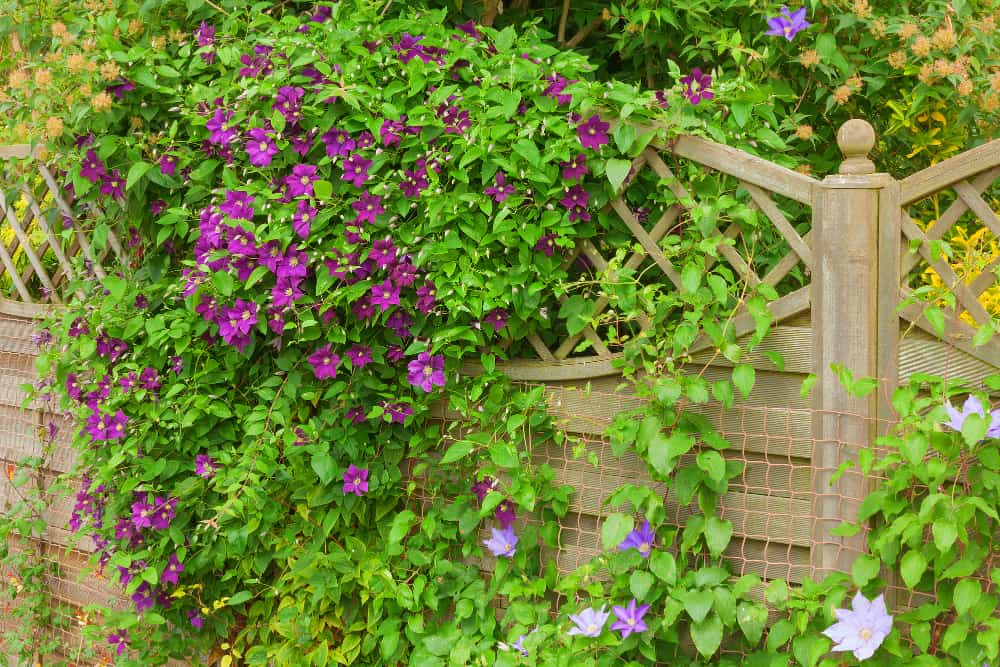
If clematis pruning has ever made you feel like you need a secret handshake, you are not alone. The good news is this: clematis are not “hard,” they are just particular about when they set buds. Once you understand that timing, pruning becomes simple.
Clematis are sorted into three pruning groups based on when they bloom and which stems carry the flower buds. Prune at the wrong time and you can snip off this year’s show. Prune at the right time and you get a vine that is fuller, healthier, and loaded with blooms.

The one idea that makes it click
Before we talk Group 1, 2, and 3, here is the golden rule I repeat to myself every spring (and yes, sometimes out loud to the plants):
Prune after flowering if the plant blooms on old wood. Prune before growth starts if it blooms on new wood.
In clematis language:
- Old wood = stems that grew last year (or earlier).
- New wood = fresh stems that grow this season.
Timing note: “Late winter” and “early spring” mean before active growth in your area, not a specific calendar date. If your clematis is already pushing a lot of soft new growth, you are on the late side for major pruning.
Now let’s match that idea to the three groups.
Group 1: Early bloomers
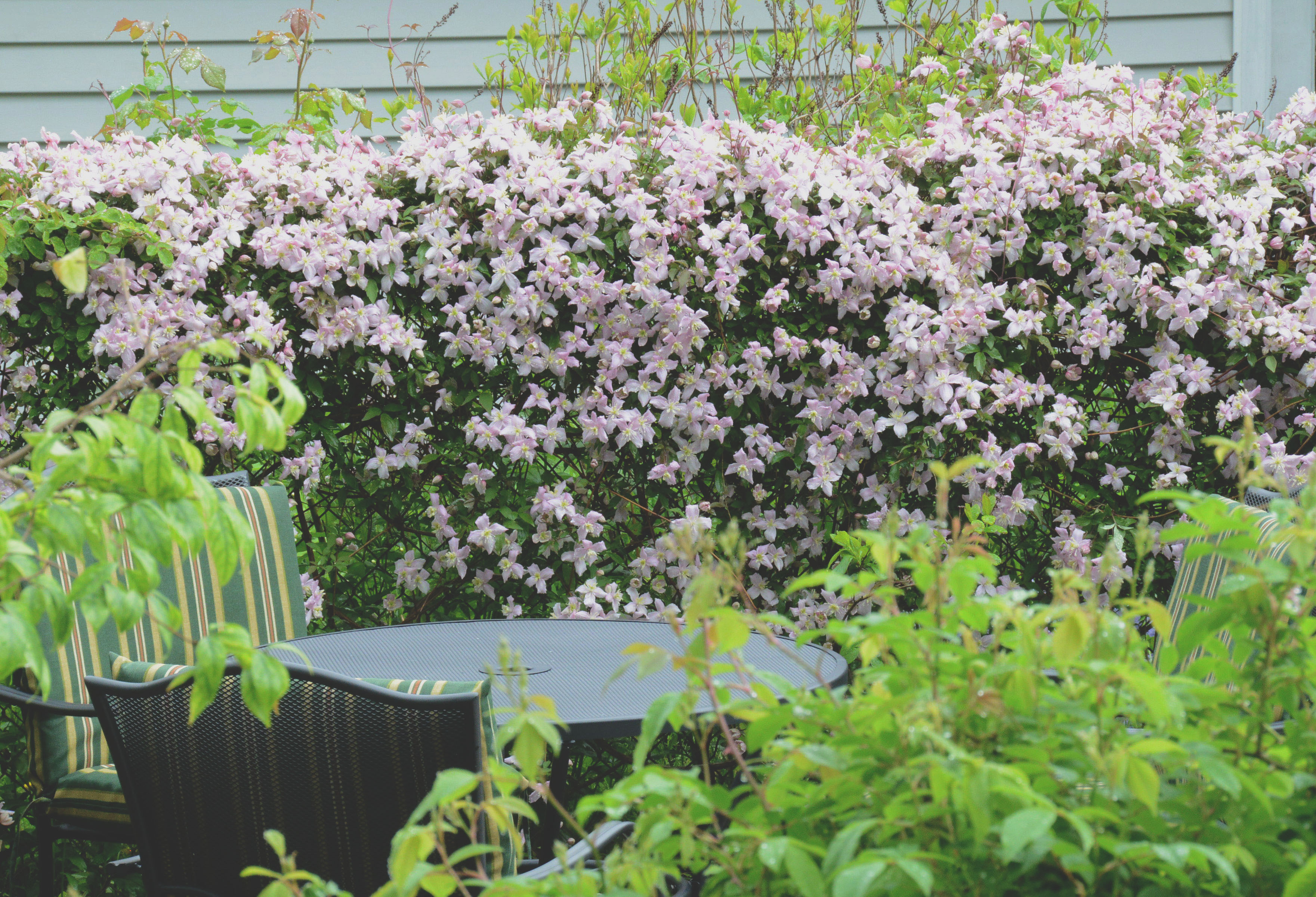
Group 1 clematis flower in early spring on stems that were made last season. Think of them like the first brave bloomers that show up when the garden is still shaking off winter.
Common types in Group 1
- Clematis montana (often a vigorous, fragrant spring show)
- Clematis alpina
- Clematis macropetala
- Some evergreen clematis, like C. armandii (check your cultivar, because “evergreen” is not a pruning group all by itself)
When to prune Group 1
Right after flowering finishes. For many gardens, that is mid to late spring.
If you prune in late winter or early spring, you will remove the flower buds that were already set.
How to prune Group 1
- Step 1: Wait until the main flush of blooms is done.
- Step 2: Remove dead, damaged, or tangled stems at their base or back to healthy growth.
- Step 3: Lightly shorten overly long shoots to keep the vine within bounds.
Yearly tips for more flowers
- Do not shear the whole plant. Light shaping is enough.
- Thin a little if it is crowded. Better airflow helps prevent mildew.
- Feed the soil, not the plant. A top dressing of compost in spring keeps roots happy.
Group 2: Big flowers
Group 2 clematis bloom in late spring to early summer and often bloom again later. They flower mainly on old wood, but many will also produce additional blooms on new growth after the first flush.
This is the group that makes people nervous because the pruning feels like a “choose your own adventure.” I promise it is manageable.
Common types in Group 2
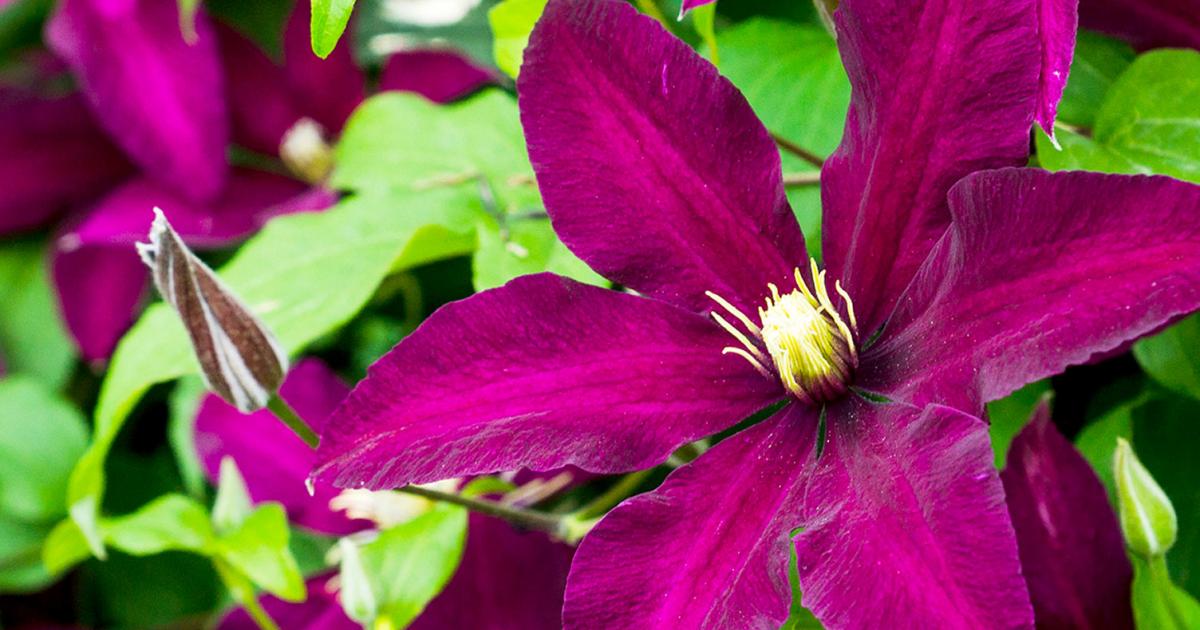
- Many large-flowered hybrids like 'Nelly Moser', 'The President', 'Henryi', and similar classics
When to prune Group 2
Most gardeners prune in late winter to early spring, when the plant is still mostly dormant but buds are swelling.
Also common: In some regions and with some varieties, gardeners do a lighter main prune right after the first flush of flowers to preserve maximum early blooms. If you are happy with your vine’s shape and just want more flowers, that approach can make sense.
How to prune Group 2
Your goal is to keep plenty of older stems for early blooms, while encouraging fresh growth for fullness.
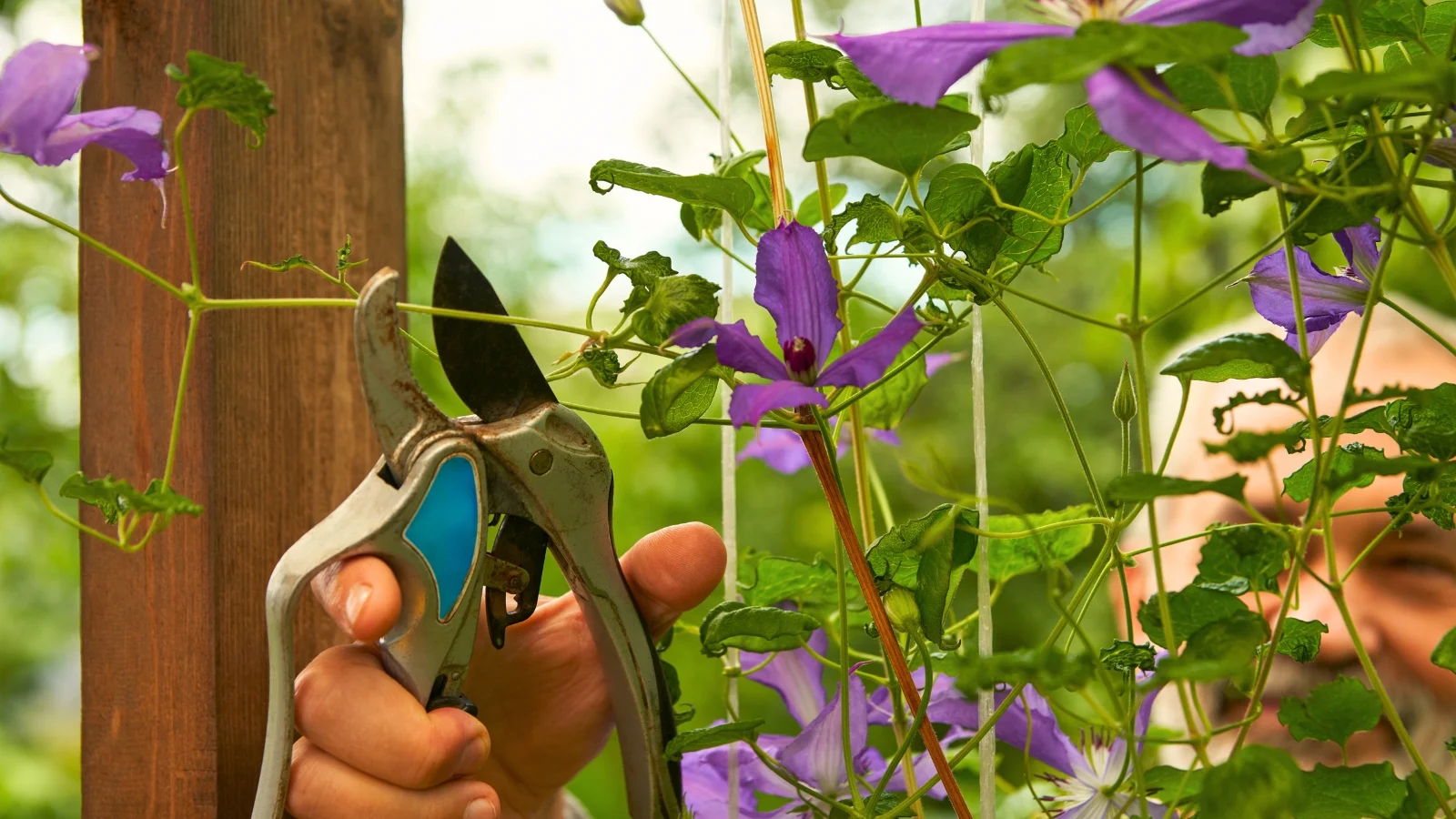
- Step 1: Start by removing anything dead. Dead stems are often brittle and may snap easily.
- Step 2: On each living stem, start at the top and work downward until you find a strong pair of healthy, plump buds. Prune just above that pair.
- Step 3: If the plant is tall and bare at the bottom, prune a few stems a bit lower (still above strong buds) to encourage growth down low.
How hard should you prune? Most Group 2 vines do well with a moderate prune. Often that means taking stems down to somewhere around 2 to 4 feet, but let the buds guide you, not a tape measure.
After the first bloom
If your variety tends to rebloom, you can deadhead spent flowers and lightly trim straggly growth after the first flush. This can encourage another round of blooms.
Yearly tips for more flowers
- Support matters. Tie in new stems gently so the vine fills its trellis instead of clumping at the top.
- Mulch the root zone. Clematis like cool roots and sunny tops.
- Watch congestion. Remove a stem or two at the base if the center gets too dense.
Group 3: Summer and fall
Group 3 clematis bloom later, typically summer into fall, and they bloom on new growth. That means you can prune with confidence because you are not chopping off pre-made flower buds.
Common types in Group 3
- Viticella types (often hardy and generous bloomers)
- Tangutica types (often nodding yellow flowers and fluffy seedheads)
- Texensis types
- Many later-blooming hybrids like 'Jackmanii'
When to prune Group 3
Late winter to early spring, before vigorous new growth takes off.
How to prune Group 3
- Step 1: Locate the lowest set of healthy, strong buds on each stem.
- Step 2: Cut all stems back to just above those buds.
- Step 3: Remove dead stems entirely at the base.
How low is “low”? Many gardeners cut to about 12 to 18 inches. On some plants, the best buds may be a little lower or a little higher. Let the buds decide.
Yes, it can feel dramatic. Then spring arrives and the vine surges back, fresh and flower-focused.
Yearly tips for better flowers
- Train early. New shoots are flexible. Guide them onto supports while they are still soft.
- Water during heat. Group 3 clematis often bloom through summer, so steady moisture helps flower production.
- Feed lightly. Compost plus a balanced organic fertilizer in spring is usually plenty.
How to ID your pruning group
If you planted your clematis years ago and the tag is long gone, you can still make a smart guess. Here are the easiest clues for a mature vine.
Clue 1: When does it bloom?
- Blooms in early spring (often April to May): likely Group 1.
- Big flowers in late spring, often with a second flush later: likely Group 2.
- Blooms in summer to fall (June onward): likely Group 3.
Clue 2: Where do the first flowers appear?
- Flowers appear on last year’s woody stems: points to Group 1 or 2.
- Flowers appear on fresh green growth that emerged this spring: points to Group 3.
Clue 3: What does it look like in late winter?
- Woody framework with buds along older stems: often Group 1 or 2.
- A tangle of old stems that reliably regrows strongly from low down every year: often Group 3.
If you are still unsure
If you can only try one thing this year, do this: prune lightly in late winter, removing dead stems and making only small cuts back to healthy buds. In other words, no major height reduction. Then watch when it blooms.
Once you see the timing, you can prune with total confidence next season.
A pruning calendar
- Group 1: Prune after flowering in spring. Mostly tidy and shape.
- Group 2: Prune late winter to early spring (or lightly after first flush in some gardens). Selective, moderate cuts above healthy buds. Optional deadhead after first flush.
- Group 3: Prune late winter to early spring. Cut back hard to strong low buds, often 12 to 18 inches.
Overgrown or bare at the base
Leggy clematis are incredibly common. They race to the top for light, then leave you with a “bloom hat” and a bare, twiggy bottom. The fix depends on the pruning group and how patient you feel.
Option 1: Gentle renovation
This spreads the reset over 2 to 3 years so you do not lose all blooms at once. This is usually the best fit for Group 1 and Group 2.
- Year 1: After flowering (Group 1) or in late winter (Group 2), remove about one third of the oldest stems at the base.
- Year 2: Remove another one third of the oldest stems.
- Year 3: Remove the final one third, leaving the strongest younger stems.
As you renovate, keep tying new shoots lower on the support. I like to weave them horizontally for a bit before letting them climb. That encourages more flowering along the stem.
Option 2: Hard reset
Group 3: You already hard prune yearly, so if it is a mess, simply cut back as usual and improve training in spring.
Group 1 and Group 2: A hard reset is riskier because you can sacrifice a season of flowers. But if the vine is truly unmanageable or mostly dead wood, you can cut it back hard and let it rebuild. Expect fewer blooms the next year, then a better-shaped plant afterward.
Option 3: Layering
If the base is bald but the top is healthy, you can create a new rooted section without buying a new plant.
- In spring, choose a flexible stem.
- Bend it down to the soil and pin a section under 1 to 2 inches of compost or soil, leaving the tip exposed.
- Keep it evenly moist. Once it roots, you can cut it free from the original stem and train it where you want fullness.
Bonus trick: A “skirt”
Even with perfect pruning, clematis often appreciate a “skirt.” Plant something low and gentle nearby: shallow-rooted groundcovers, small perennials, or even a little pot of annuals. The goal is shade for roots and beauty at eye level, without heavy competition.
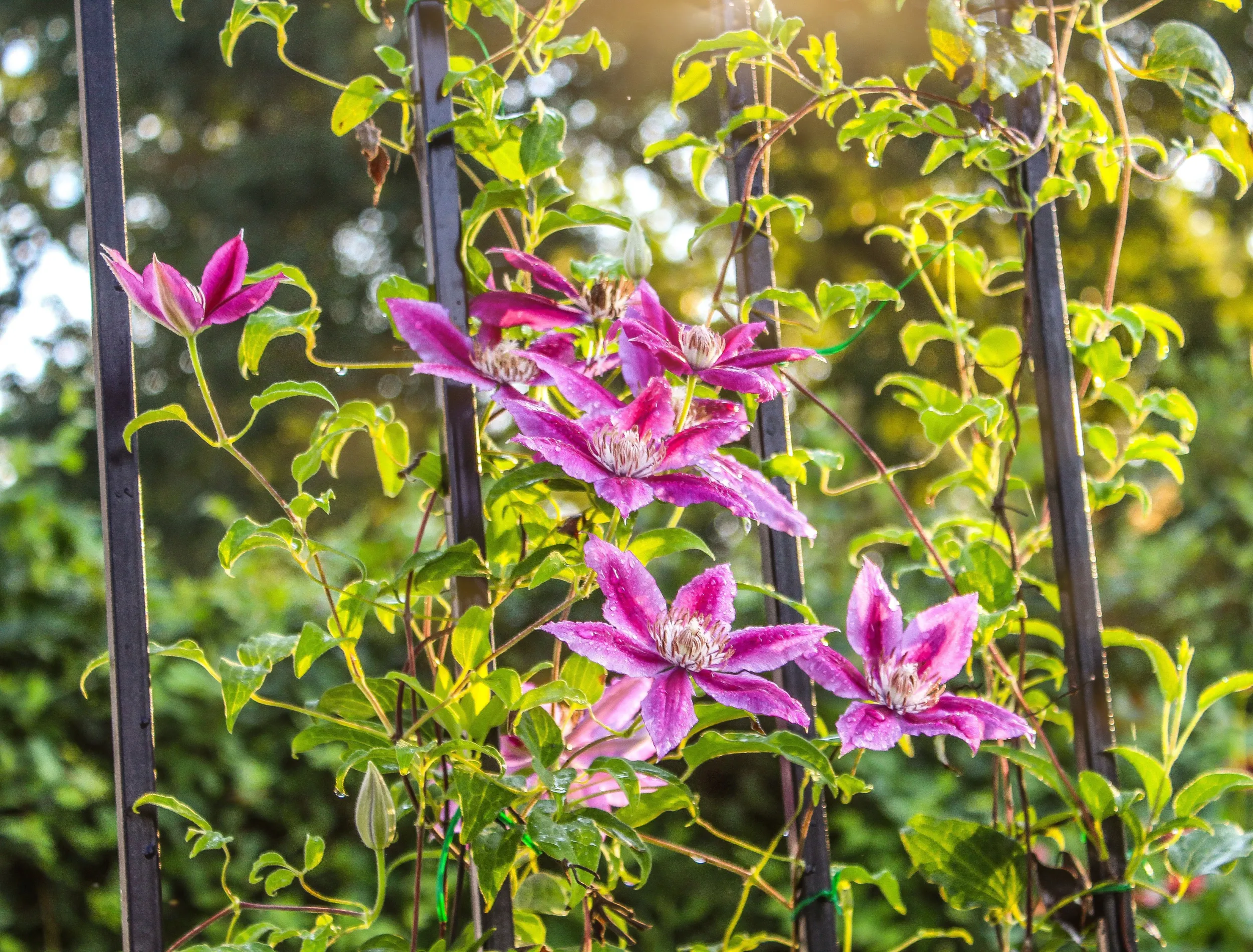
Pruning basics
Use clean, sharp pruners
Clean cuts heal faster. If you are moving between plants, wipe blades with 70% isopropyl alcohol and let them stay wet for a moment before cutting again. This helps reduce disease spread.
Cut above a pair of buds
Aim for about 1/4 inch above the buds. Too close can damage them. Too far leaves a stub that can die back.
Train, do not just trim
A lot of “pruning problems” are actually “training problems.” Gently tie in new growth early and often. A vine that is guided will flower along its length instead of only at the top.
Keep roots cool and evenly moist
Mulch, compost, and consistent watering are your bloom boosters. Clematis are famous for liking their roots shaded and their tops in the sun.
Quick troubleshooting
“I pruned and got no flowers.”
- If it was an early bloomer, you may have pruned off old-wood buds. Next time, prune after flowering (Group 1) or prune more selectively (Group 2).
- If it was a summer bloomer and you barely pruned, it may be congested. Group 3 typically needs a hard cutback to bloom best.
“My clematis blooms only at the top.”
- Train stems more horizontally at the bottom and tie in new shoots lower.
- Consider gentle renovation, removing older stems over time.
“It looks dead in spring.”
Be patient. Clematis can be late to wake. Scratch the bark lightly. If it is green underneath, it is alive. If it is brown and brittle all the way down, cut back until you find green, or to the base if needed.
Clematis wilt
If a healthy vine suddenly collapses in summer, it may be clematis wilt. It is not caused by pruning, but quick action helps. Cut the affected stems down to healthy tissue (or to the base if needed), remove fallen debris, and keep the plant watered. Many clematis resprout from below.
New plants
One extra note for brand-new clematis: some gardeners prune a newly planted clematis down to a low set of buds to encourage branching and a fuller base. This is common advice, but it depends on the type and on how much growth you want to sacrifice in year one. If you know your pruning group, follow it. If you do not, a gentle approach is fine, and good training early often solves the “bare ankles” problem without drastic cuts.
My favorite beginner move
If you do nothing else, make one little note on your phone this season: the month your clematis first blooms. That single detail practically hands you the pruning group.
And if you ever prune “wrong” once, welcome to the club. Clematis are forgiving plants with long memories for good soil and steady care. Give them compost, a cool root run, and the right timing with your pruners, and they will reward you with the kind of flowers that make you stop mid-walkway just to stare.