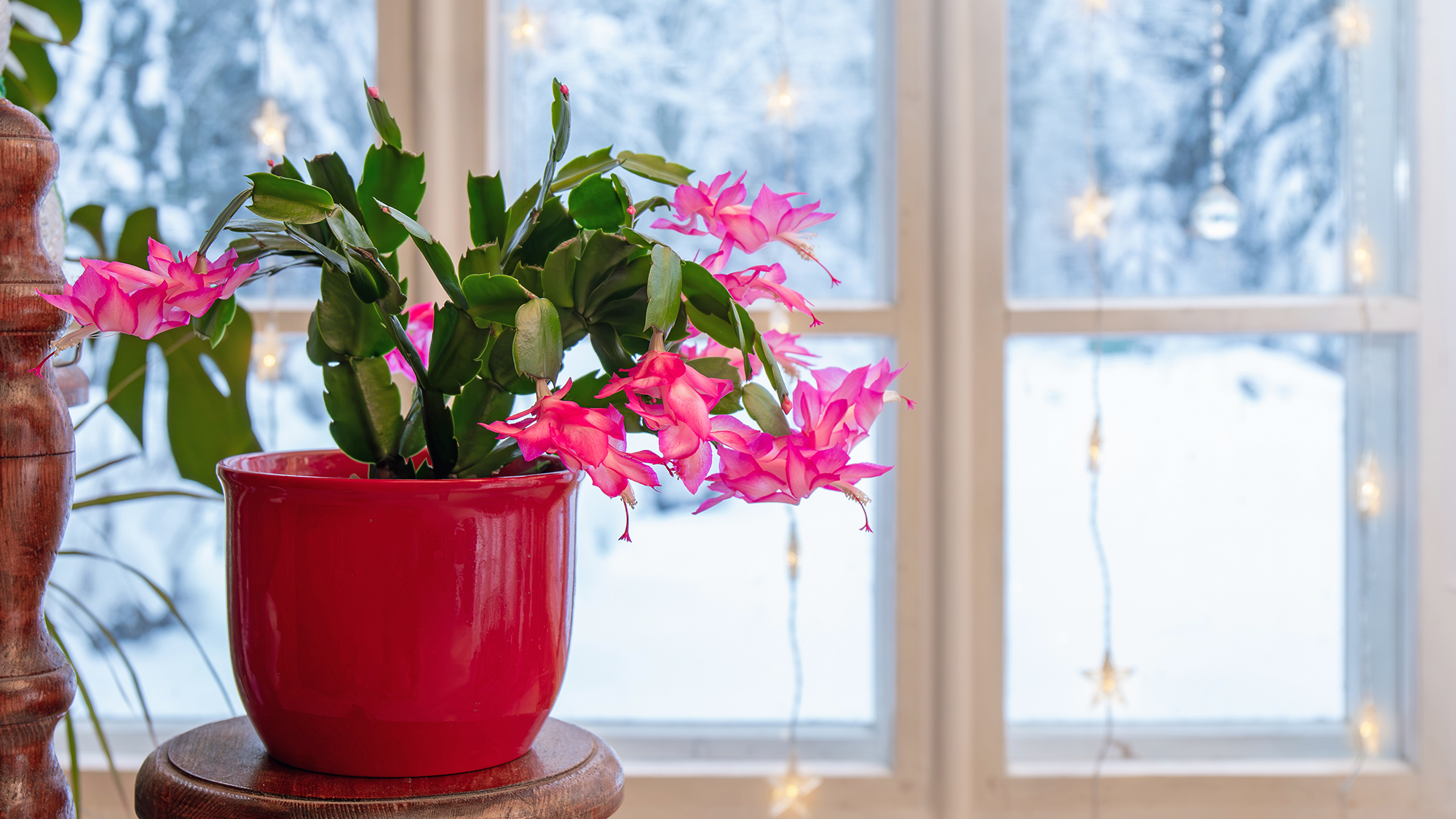
Christmas Cactus vs Thanksgiving Cactus vs Easter Cactus

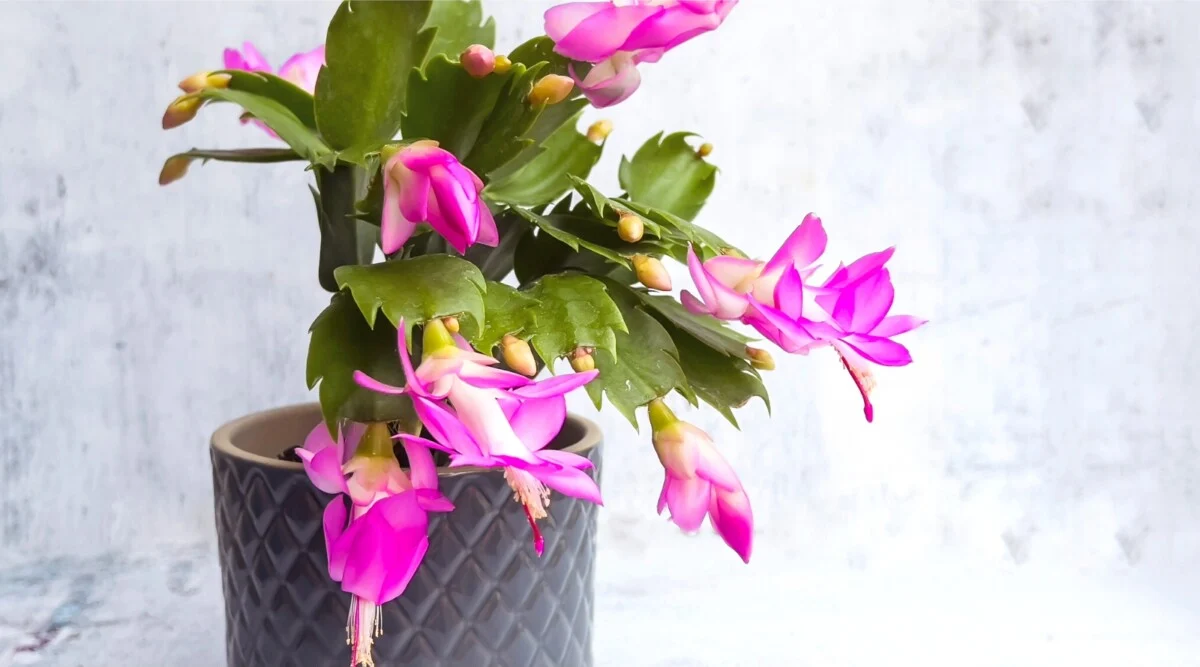
If you have ever brought home a “Christmas cactus” only to watch it bloom in November, you are not alone. Holiday cacti are famously mislabeled in stores, and the three look similar enough that most of us do not question the tag until the buds show up at the “wrong” time of year. The good news is that you can ID them at a glance once you know what to look for.
We will use three practical clues for identification: stem segment edges, flower shape, and bloom season. Then I will give you a simple care table so you can get reliable blooms year after year, even if you swear you have a black thumb.

Meet the three holiday cacti
All three are forest cacti that are typically epiphytic (and sometimes lithophytic), meaning they naturally grow in tree crooks, branch crotches, and rocky nooks where water drains quickly and air circulates freely. That is why they dislike heavy, soggy potting soil and why they love bright, indirect light.
- Thanksgiving cactus (Schlumbergera truncata) is the most common one sold today.
- Christmas cactus (Schlumbergera × buckleyi) is an older hybrid that is less common in big box stores, but often passed down as a family plant.
- Easter cactus (Hatiora, syn. Rhipsalidopsis) is a different genus and tends to bloom in spring.
One quick reality check: many store plants are S. truncata cultivars or complex hybrids, so traits can overlap. Use more than one clue when you ID yours.
Fast ID: stem segments
Before you even look at a bloom, check the edges of the flat stem segments (also called pads or cladodes). Pick one segment near the end and examine the edge profile and the tips under good light.
Thanksgiving cactus: sharp “claws”
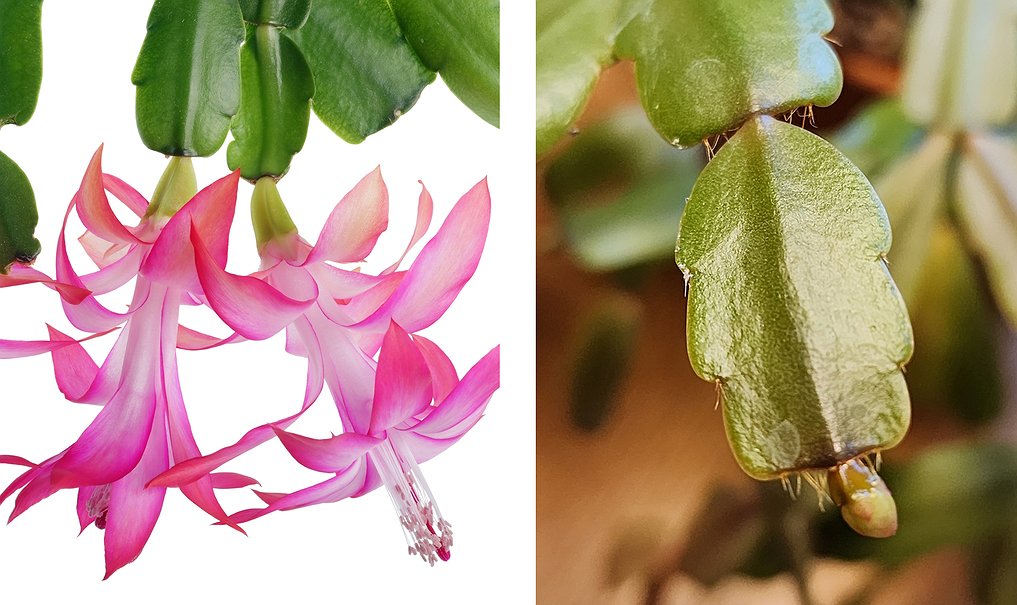
Thanksgiving cactus segments have pointed teeth that look a bit like crab claws. The tips are noticeably angular, not rounded.
- Edge shape: pointed and jagged
- Overall look: more “spiky” and crisp
Christmas cactus: rounded scallops
Christmas cactus segments have rounded scallops along the margins. Nothing looks sharp. If Thanksgiving cactus is a little punk-rock, Christmas cactus is the soft cardigan version.
- Edge shape: rounded scallops
- Overall look: gently wavy, smoother
Easter cactus: rounded edges with tiny bristles
Easter cactus also has rounded segments, but the overall texture is often different. Many plants have small bristles at the tips of the segments (they are not dangerous, just noticeable), and the segments can look a bit thicker.
- Edge shape: rounded, often with subtle points at the ends
- Extra clue: fine bristles at segment tips on many plants
Flower ID: shape and posture
Flowers give excellent confirmation, especially if your plant is a mystery rescue with mixed segment shapes. Look at two things: how symmetrical the bloom is, and whether it sits more upright or hangs.
Thanksgiving cactus flowers: angled and one-sided
Thanksgiving cactus blooms tend to look slightly one-sided and angled outward. Many varieties have prominent stamens that extend forward. The plant often holds flowers more horizontally.
Christmas cactus flowers: softer and more even
Christmas cactus flowers are often described as more symmetrical than Thanksgiving cactus and can have a slightly more relaxed, draping look. This is subtle and cultivar-dependent, so treat it as a confirmation clue, not a foolproof test.
Easter cactus flowers: starry and upright
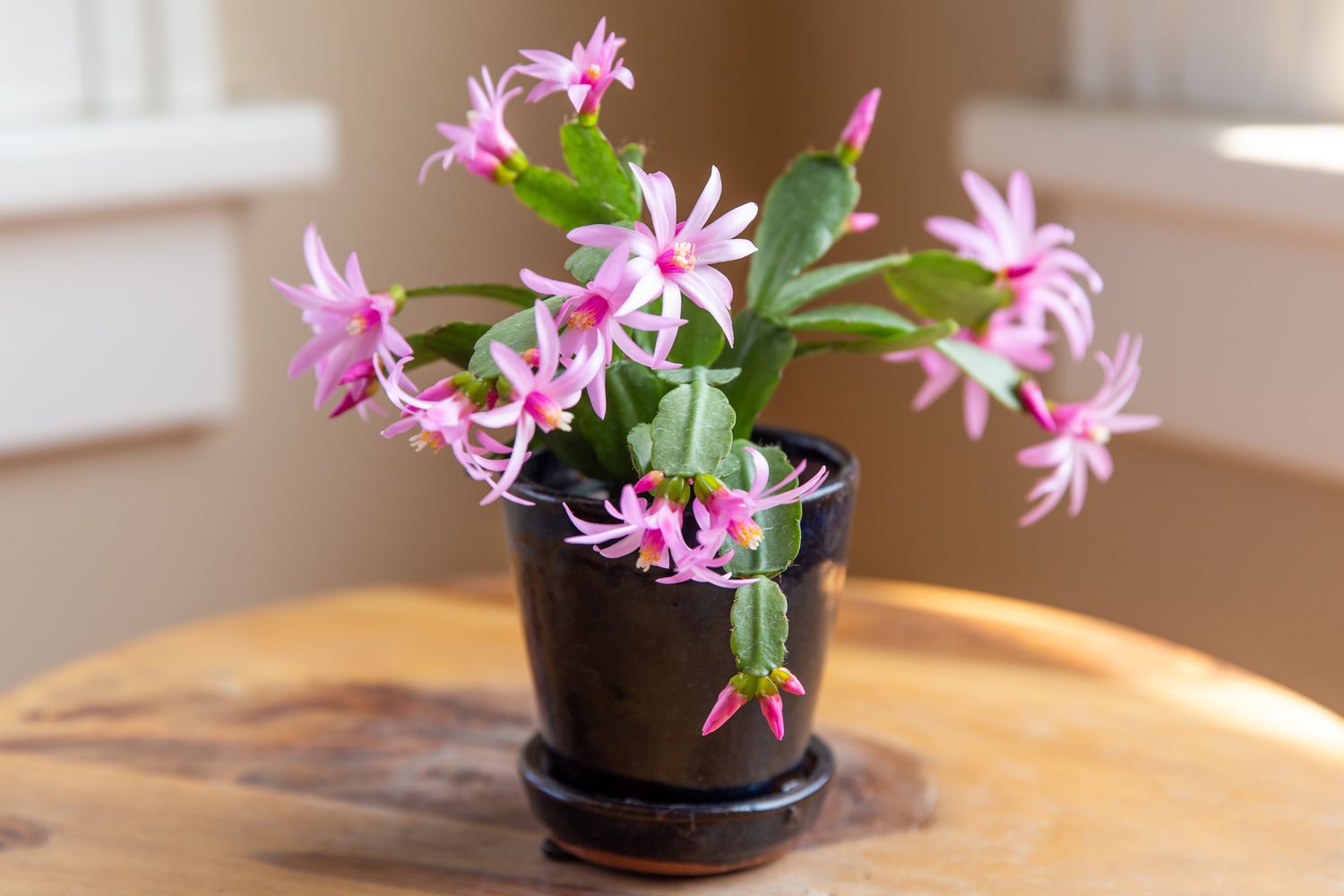
Easter cactus blooms are usually more star-shaped and open wide. They also tend to be held more upright compared with Schlumbergera types. If your plant throws up cheerful, open-faced blooms in spring, it is very likely the Easter cactus.
Bloom season
Bloom timing can vary with indoor conditions, but the usual window is a great reality check. Also note that store plants are sometimes forced (cooled and timed) to bloom for sales, so they may flower earlier or later than “typical.”
- Thanksgiving cactus: typically late fall, often November, and can continue into December or later.
- Christmas cactus: typically December into January under classic conditions.
- Easter cactus: typically late winter into spring, often March to May.
If your “Christmas cactus” blooms like clockwork in November, it is probably a Thanksgiving cactus. Stores often label them all as Christmas cactus because that is the name shoppers recognize.
Why labels are wrong
Most retail holiday cactus displays are dominated by Thanksgiving cactus cultivars because they ship well, bloom readily, and line up perfectly with pre-holiday sales. Many growers and stores still use “Christmas cactus” as a catch-all label for anything with flat segments and festive blooms.
True Christmas cactus is less common in mass-market supply chains. You will often find it through plant swaps, older garden centers, or as a hand-me-down from someone who has had the same pot for a decade and can tell you exactly which windowsill it prefers.
Care comparison
All three want similar day-to-day care: bright, indirect light and a potting mix that drains fast. Where people get tripped up is the rest period that triggers buds.
Soil and pot basics
Give them a fast-draining mix and a pot with drainage holes. A reliable DIY blend is potting mix cut with perlite and orchid bark (or a cactus mix amended the same way). Slightly snug pots are your friend. Oversized pots stay wet too long.
These are not cold-hardy plants. Protect them from frost and cold drafts.
| Plant | Light | Water | Rest period for buds |
|---|---|---|---|
| Thanksgiving cactus Schlumbergera truncata |
Bright, indirect. Can take gentle morning sun. | Water when top 1 to 2 inches dry. Do not leave standing in water. | In early fall: 6 to 8 weeks of cooler nights (about 55 to 65°F) and longer nights. Aim for about 12 to 14 hours of uninterrupted darkness. Reduce watering slightly, but do not let it shrivel. |
| Christmas cactus Schlumbergera × buckleyi |
Bright, indirect. Slightly less sun than desert cacti. | Even moisture, then let the top dry a bit. Sensitive to soggy soil. | In mid to late fall: similar cool nights and long nights (12 to 14 hours of uninterrupted darkness). Consistency matters. Avoid moving the plant once buds form. |
| Easter cactus Hatiora (syn. Rhipsalidopsis) |
Bright, indirect. Tolerates a bit more shade than Schlumbergera. | Water when top inch is dry. Likes humidity, hates waterlogged roots. | After blooming: a drier, cooler rest for several weeks helps set next season’s buds. Then resume regular watering as new growth starts. |
My practical rule: during the rest period, you are not trying to “stress” the plant into misery. You are simply giving it a predictable signal: cooler, darker nights and slightly less frequent watering.
After-bloom care
Once the flowers are done, your holiday cactus is ready for its “back to normal” routine.
- Feed lightly during active growth (spring and summer). Avoid heavy nitrogen blasts.
- Pinch or prune a segment or two after flowering to encourage branching and a fuller plant. It also makes easy cuttings.
- Repot only when it is truly crowded, usually every few years, and ideally after blooming or in spring. Keep the pot size modest.
Bud and bloom fixes
If you get no buds
- Too much night light: Holiday cacti can be sensitive to lamps and bright room lighting at night. Give them 12 to 14 hours of uninterrupted darkness during the bud-setting window.
- Too warm at night: Budding is easier with cooler nights in the 55 to 65°F range.
- Too much nitrogen: Heavy fertilizer can push lush segments instead of flowers. Feed lightly during active growth, not during the rest period.
If buds form, then drop
- Sudden changes: Moving the plant, drafts, heater blasts, or big swings in watering can trigger bud drop.
- Overwatering: Soggy roots and bud drop go hand in hand. Let the mix partially dry between waterings.
- Underwatering: Crispy, limp segments and bud drop can also happen if it dries out too hard during bud development.
If your plant is full of buds, treat it like a cat that finally fell asleep on your lap. Keep conditions steady and resist the urge to fuss.
ID checklist
- Pointy “claws” on segments + blooms around November: Thanksgiving cactus.
- Rounded scallops + blooms around late December: Christmas cactus.
- Starry, open flowers held more upright + spring blooming: Easter cactus.
If you are still unsure, take a clear photo of the segment edges and the whole flower and compare them to the traits above. Most IDs click into place once you focus on the margins of the stem segments.